When you look for skincare containing hyaluronic acid, you will find toners, serums, emulsions, and creams highlighting the same ingredient. Before choosing solely by the number of varieties or the words "low molecular weight," decide where you want to use it in your moisturizing routine.
This article explains what to look at when choosing cosmetics to moisturize your skin. It introduces a way to narrow your options by comparing ingredient names, each product's role, its feel, and how it fits with what you already use. Consider these cosmetics separately from aesthetic medical procedures such as injections.
1. Decide whether you want a toner, an emulsion, or a cream
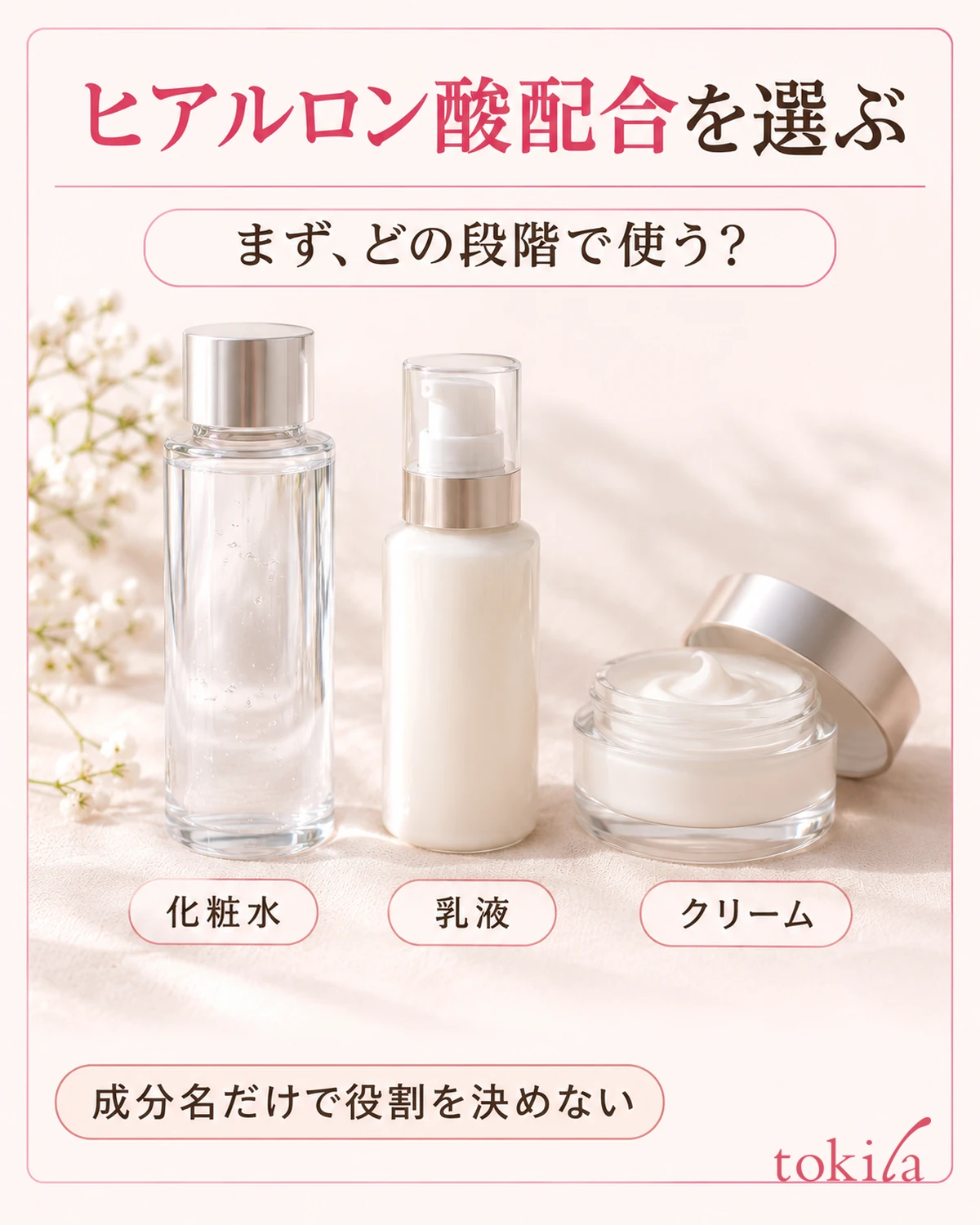
First, line up your current products in the order you use them after cleansing. Separate replacing a product from adding a category you do not currently use. A goal of "adding hyaluronic acid" alone does not tell you whether to buy a toner or a cream for the final moisturizing step.
After the prominently displayed ingredient name on the front, read the product category, such as toner, serum, emulsion, or cream. Sharing an ingredient does not mean products share the same application stage or amount. Do not assume a product containing hyaluronic acid completes your entire routine; check the role specified for that product.
For example, if your current toner is almost finished and you want a replacement, start by comparing toners. If you want a cream to layer on your cheeks, check the cream's application area and amount before adding more kinds of toner. Treat the ingredient name and product category as separate items to check.
Your existing products may contain the same ingredient. Its presence in several products does not by itself mean the overlap is bad or that the effects add up. If you are unsure whether you need another product, describe what you want to change in concrete terms, such as "the feel of my morning toner."
Noting dry areas and the time you plan to use it also makes questions easier to ask in a store. Rather than deciding you need a rich product because it is winter, first choose whether you want it before morning makeup or in your evening routine. If your current products present no problems, you do not need to replace everything just because an ingredient interests you.
2. Read ingredient names and purposes without ranking by the number of varieties
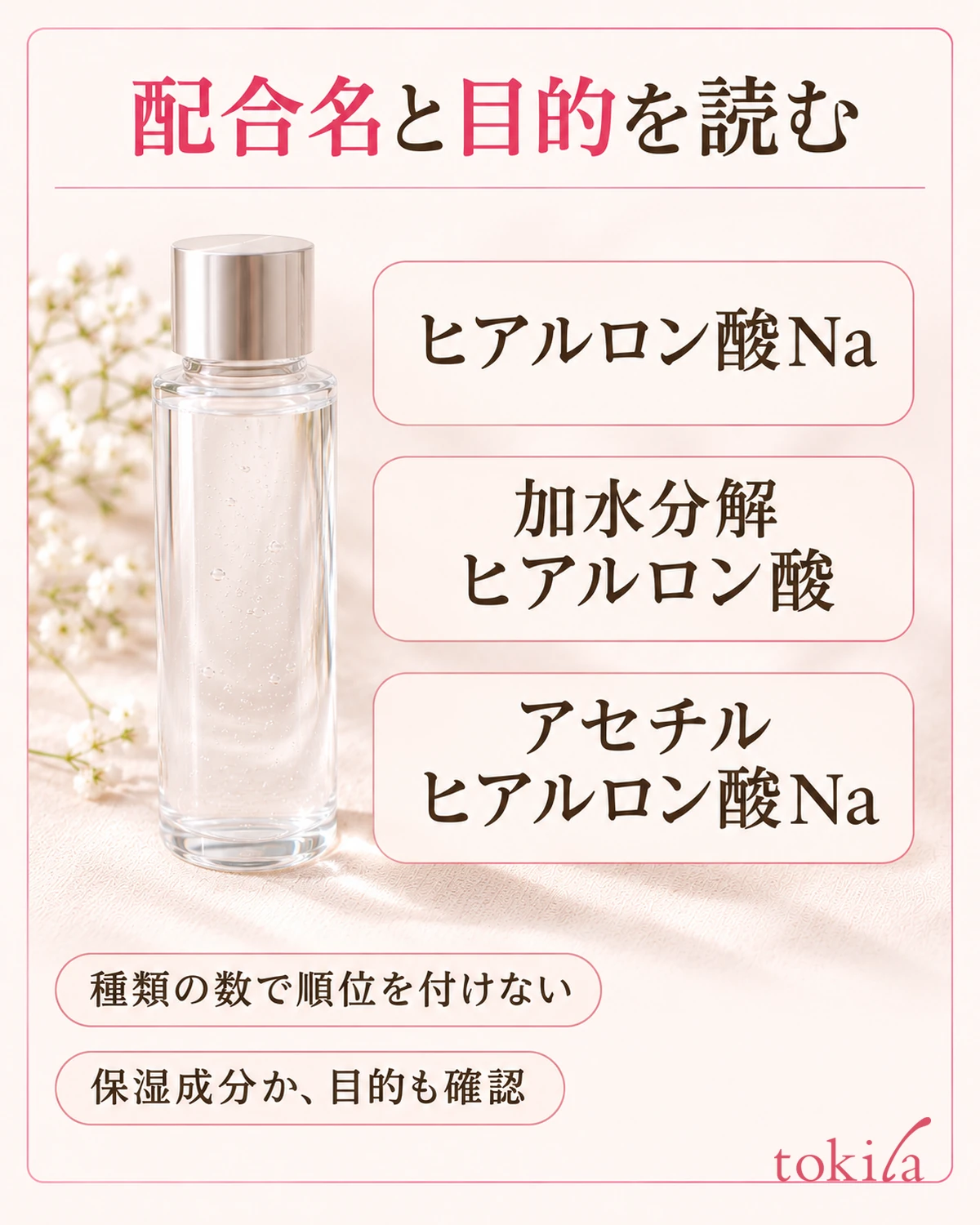
Ingredient lists may include names such as sodium hyaluronate, hydrolyzed hyaluronic acid, and sodium acetylated hyaluronate. If a prominent nickname on the container differs from the ingredient list, read the note explaining the correspondence. First check how the ingredient is named on the product you have.
Some products contain several varieties, but the number of ingredients alone cannot determine which product suits you. Avoid ranking more varieties as necessarily more moisturizing, or fewer as insufficient. Checking names helps you understand a candidate's features; it does not replace checking the finished product's feel and directions.
Also look for an explanation of its purpose, such as moisturizing or a moisture-providing ingredient. A prominent mention of hyaluronic acid is not the same as its listing as an active ingredient in a quasi-drug cosmetic. For quasi-drug products, check active and other ingredients separately, and do not infer additional benefits from the name of a moisturizing ingredient alone.
When noting candidates, write the identifying product name separately from the ingredient name. "Contains hyaluronic acid" alone can lead you to confuse different products in the same series. Recording the sales name and distinctions such as rich or light lets you check them just before buying.
For words such as "low molecular weight" or "penetration," read the notes explaining their target and scope. Do not assume an ingredient name means it reaches deep into the skin or rebuilds its interior. If an explanation is unclear while choosing, compare verifiable product features rather than guessing its meaning to rank products.
3. Do not equate thickness with satisfaction with moisturization
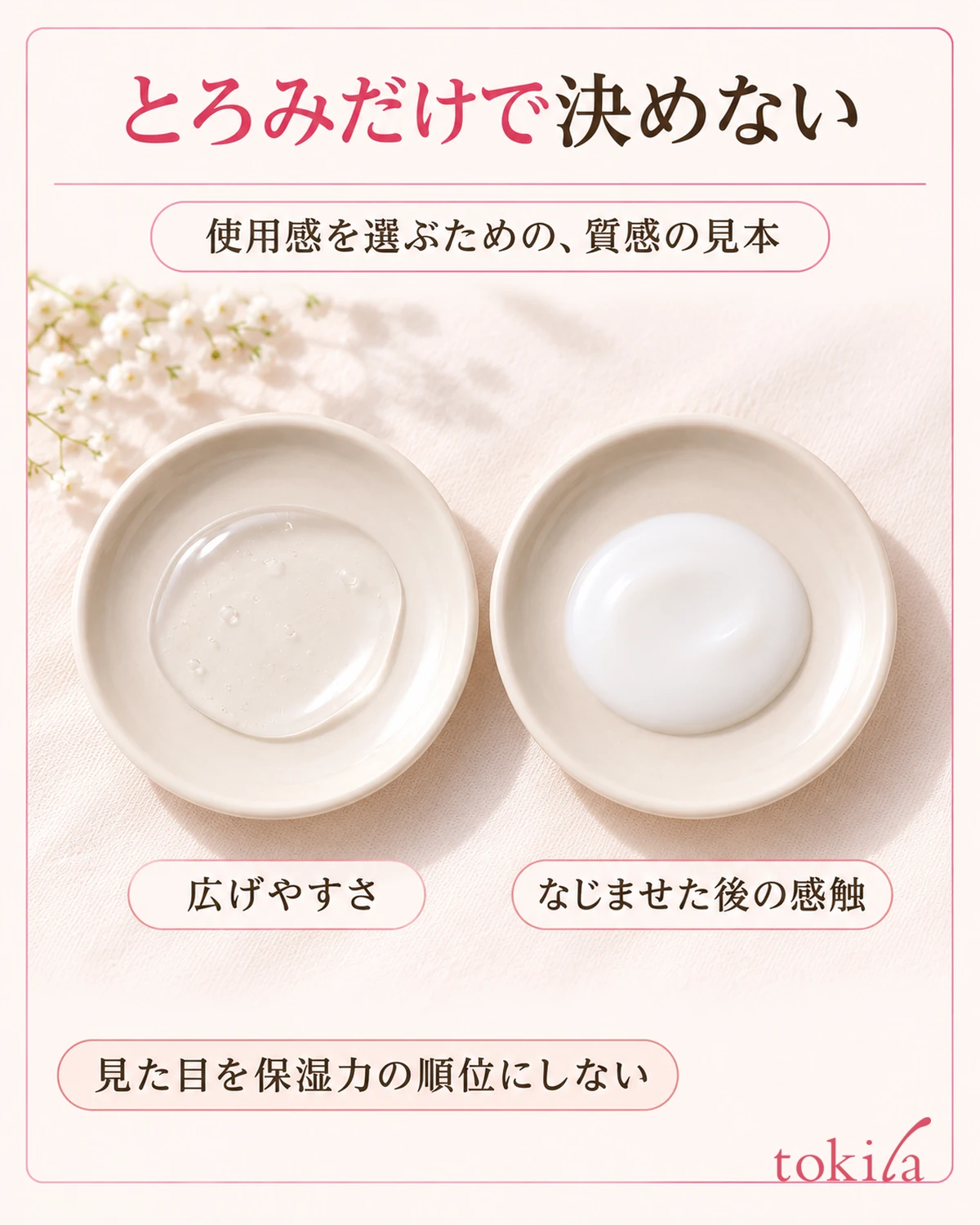
Products range from watery to thick liquids, emulsions, and creams, with different feels in your hand. Compare the overall product feel without turning visible viscosity or spreadability into a ranking of moisturizing performance. Do not attribute thickness to an ingredient solely because a hyaluronic acid name appears.
If testers are available, use the indicated clean method and amount, and check how easily the product spreads and how the surface feels afterward. Do not touch your skin directly to a shared container opening or apply it to your face without checking directions. A hand test also does not guarantee suitability for your face.
For a morning product, consider the sunscreen and makeup you will apply afterward. Even if you like the word "rich," using more does not necessarily suit your routine. Check the amount specified, and if stickiness bothers you, compare products with a different feel instead of diluting one yourself.
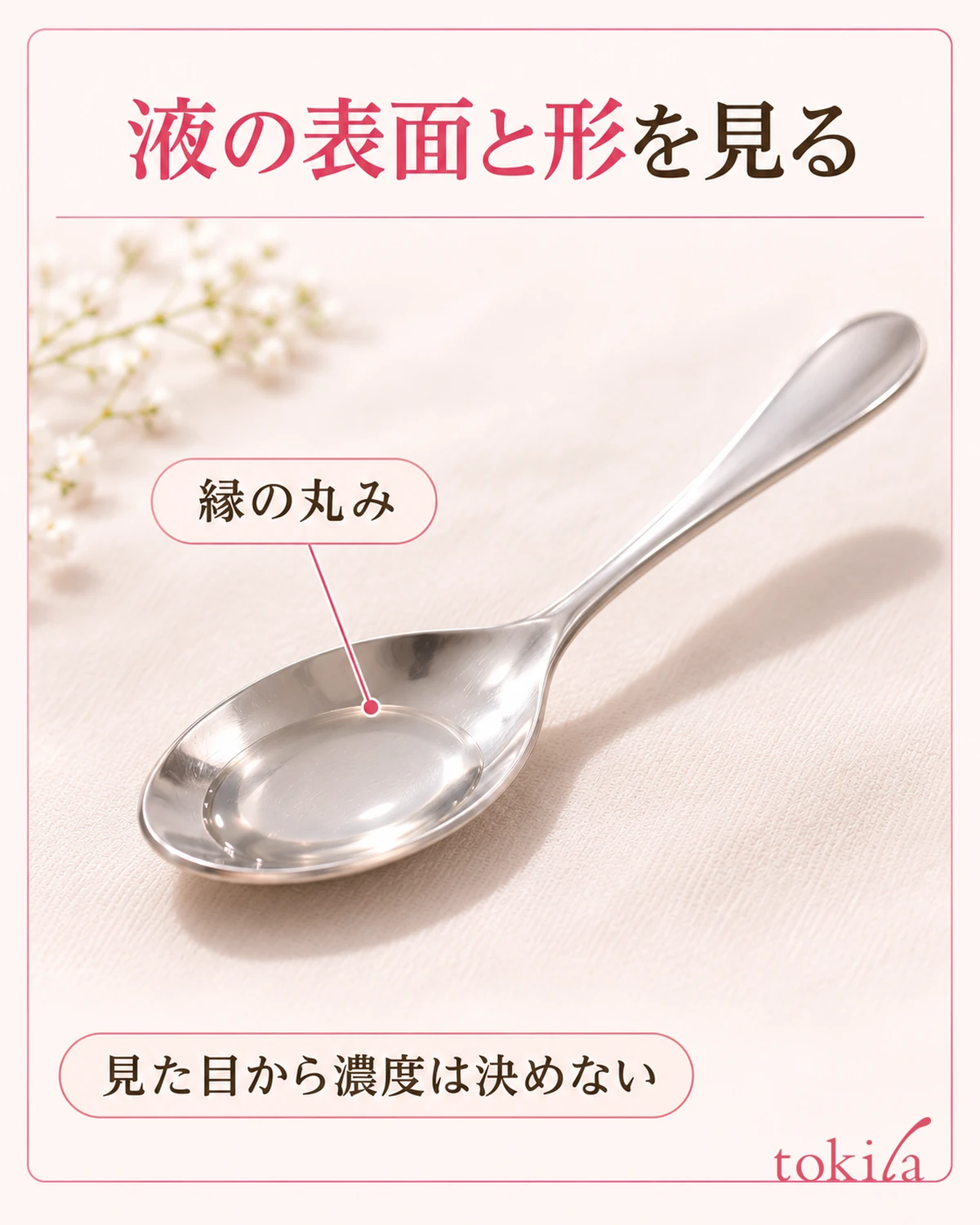
The photo shows clear liquid collecting in the shallow bowl of a spoon, with a rounded edge. It is an example for observing a liquid's surface and shape, which a full-container photo may not show clearly. Do not treat this appearance as a measurement of hyaluronic acid concentration, an actual product's viscosity, or effects on skin.
Limit your shopping notes to what you actually checked, such as "easy to spread with my fingers" or "the feeling left on the surface bothered me." Do not extend them to conclusions that touch alone cannot establish, such as "reached deep into my skin." Leaving untested items unconfirmed makes candidates easier to compare later.
Scent and container shape are also points to compare for daily use. Do not focus on one ingredient and overlook ingredients you usually avoid or precautions. A label such as "fragrance-free" does not mean that no one will experience irritation.
4. Check where it fits in your routine and how much to use
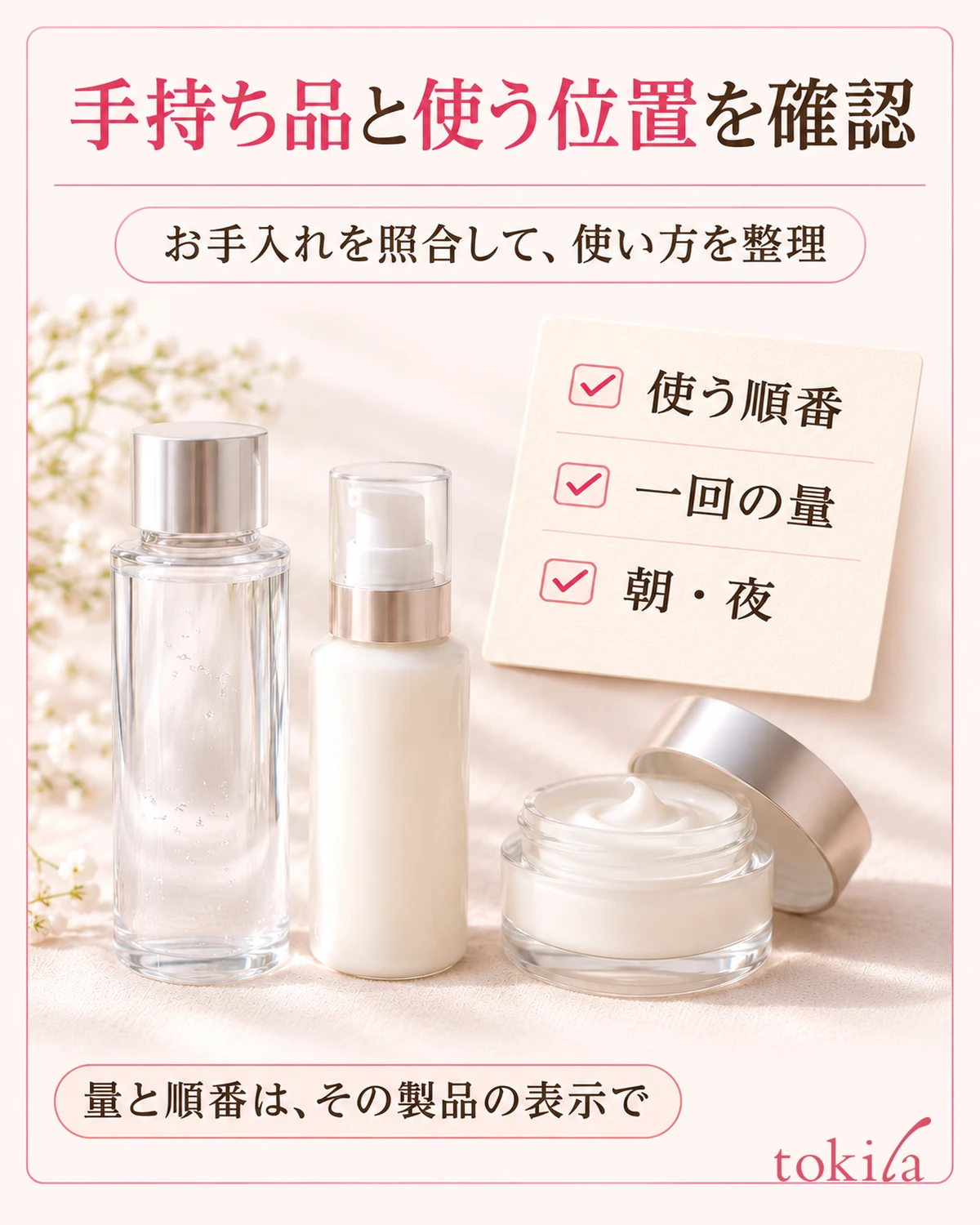
Before buying, read a candidate's directions from beginning to end. Check whether it is a toner used after cleansing or a serum used after toner, for example, and align it with your existing products. Sharing hyaluronic acid does not mean you should carry over another product's amount or application order.
If the amount is given in pumps, drops, or a size, treat it as guidance for that container. The same number of pumps or drops does not necessarily yield the same amount from different containers. Read the amount for the intended area, and do not choose on the assumption that you will take a large amount at once or dilute it with water.
Even if you want to add several products with the same ingredient, write the steps on paper. Adding more toners with similar roles is different from replacing your current toner. Rather than layering for its own sake, first plan a combination that lets you use one product as directed.
If you want to reorganize your post-cleansing routine,this guide to checking the order of your existing productscan also help. Some products, such as pre-treatment types, are used at different stages, so do not place every watery liquid first based on texture alone. If your morning and evening products differ, writing each routine separately can help prevent mix-ups.
If something bothers you after trying a product, review the amount applied, the products layered with it, and the time of use separately. Do not immediately conclude that stickiness means adequate moisturization or a light feel means it is insufficient. If redness, itching, or other abnormalities occur, do not keep adjusting the amount and continue using it; follow the product's precautions.
5. Finally, narrow candidates by category, feel, and ease of handling
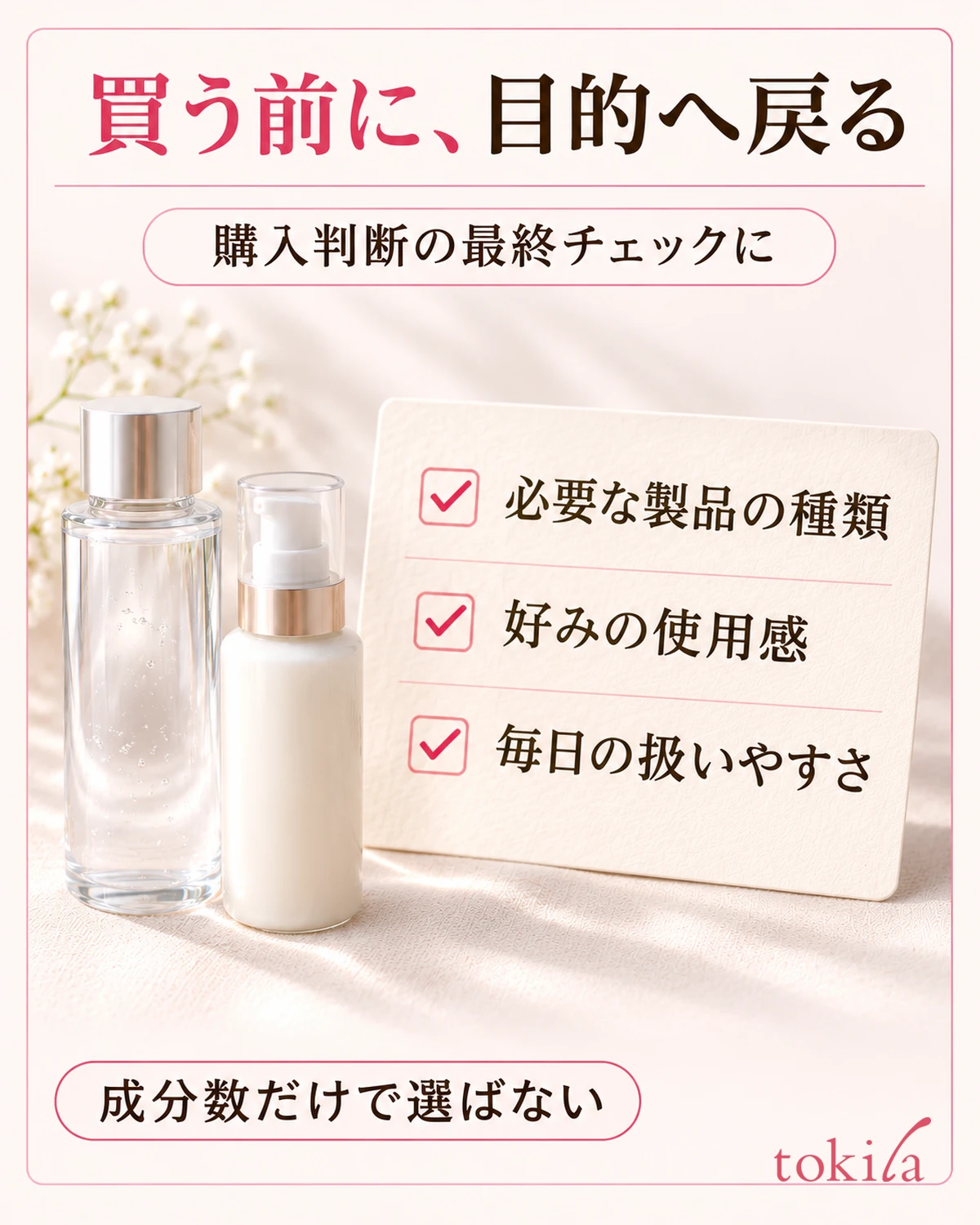
Finally, review the product category you need, ingredient names and purposes, feel, application stage, and amount in that order. Rather than seeking the best in every category, check whether a candidate fulfills the role of the product you want to replace. This order also clarifies questions about products you had considered based only on ingredient counts or container appearance.
When looking at capacity and price, do not assume you will transfer the contents into a container you already own. Match refills to the compatible container and product, and do not mix different products. Whether the pump or lid is easy to handle where you normally keep it also matters in everyday use.
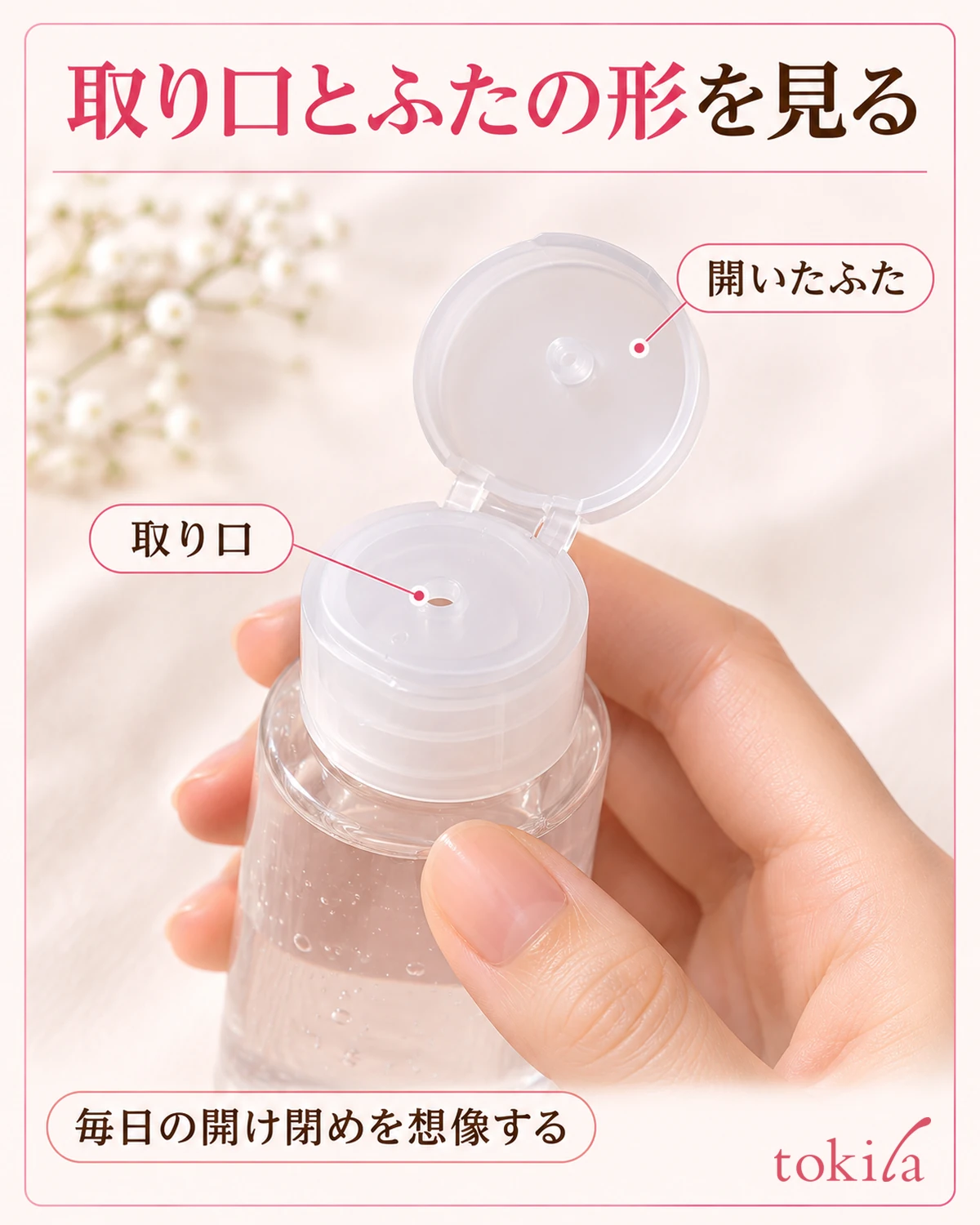
The supplemental photo gives a close view of the hinge of an open lid and a small round opening. Looking at where your fingers hold the container and where it opens and closes, as well as its overall shape, helps you imagine using it at the sink. Do not infer a single-use amount from the hole's size; check the product's stated amount.
If two products remain, return to your initial purpose, such as "use as a morning toner" or "replace my current cream." There is no need to compare products with different purposes by the number of hyaluronic acid varieties. Separate the feel you checked in-store from what remains unknown, and narrow your questions.
When you begin using a product, do not replace the rest of your routine all at once based on expectations for an ingredient; check how it fits with what you own. While you should not decide whether a new product suits you solely from the first day's feel, you should not endure abnormalities while waiting to get used to it. Follow the precautions for changes you cannot assess.
Cosmetics containing hyaluronic acid are easier to choose when you first decide what role the product will serve, rather than buying on a prominent ingredient name alone. Read the ingredient names and purposes, then check the feel and daily steps to find options that fit your moisturizing routine.