When choosing liquid blush, do you wonder whether any favorite pink will work the same way? Even though the products are all liquid, the sheen, color translucency, applicator, and placement within your base makeup routine vary by product.
Before buying, consider how you want your cheeks to look and how the product fits your usual routine, rather than choosing a shade number first. Here, we explain how to compare new liquid blushes, rather than how to dispense the right amount of one you already own.
1. Decide what finish you want liquid blush to add
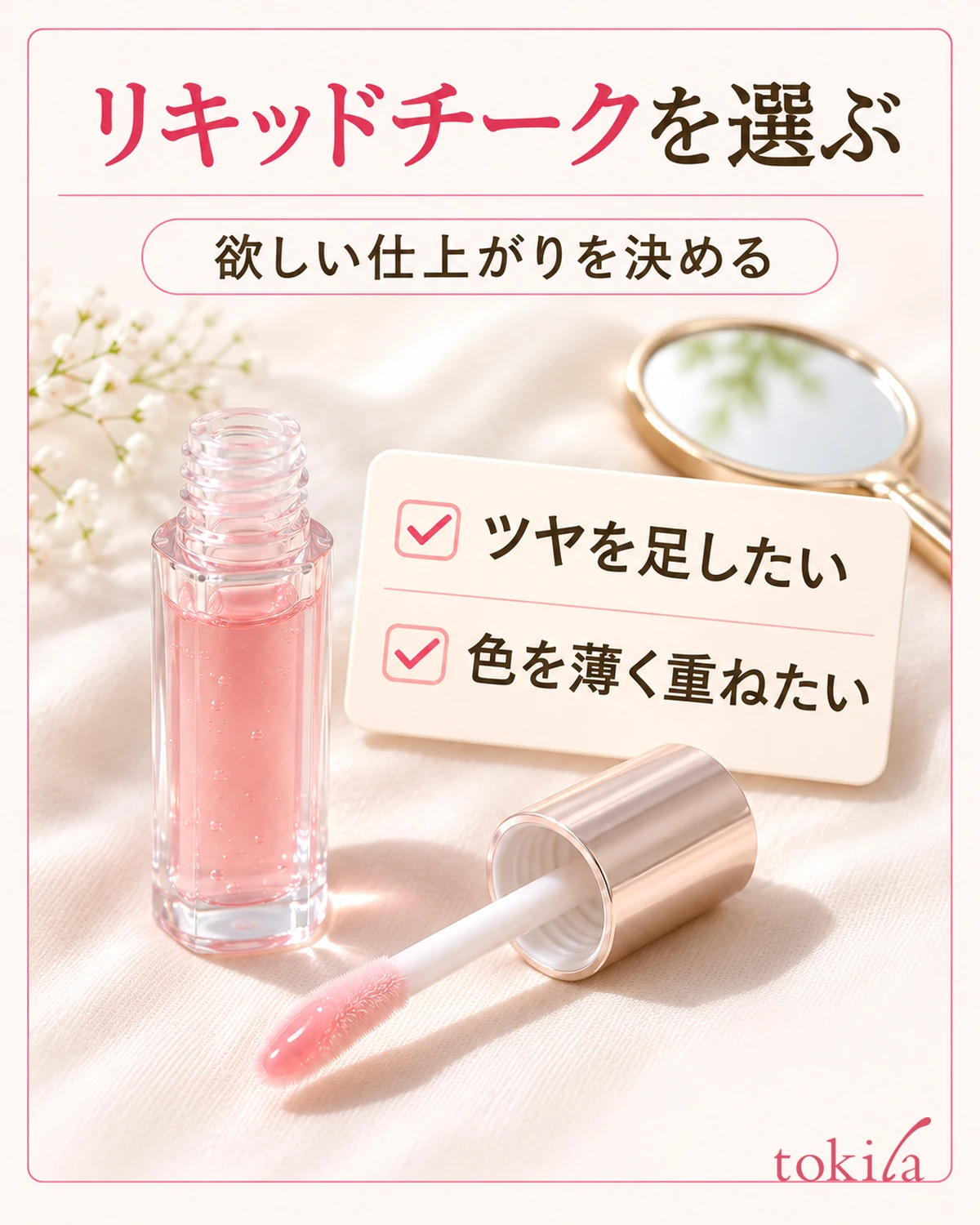
First, choose one thing you want this purchase to change, such as adding glow or building light layers of color. If both appeal to you, note which matters more. Do not assume that every liquid product gives a glowy finish or sheer coverage.
Read the descriptions of sheen and color separately. Surface gloss, pearly shimmer, and translucent color are different features. Rather than stopping at the phrase "natural finish," ask whether you want light or color; this makes your comparison more specific.
If your usual foundation leaves a glow, consider whether you want to add more light on top. On days you set your base with powder, how much blush sheen you want to retain can guide your choice. Do not assume that adding a liquid always changes your base finish; continue reading the application instructions.
If your only concern is that your current blush goes on too strongly, you may not need to replace it. For ways to adjust the amount and blend the edges, see how to fix too much blush as well. Separate your desired finish from difficulties using a product you already own.
2. Look beyond shade names to brightness and translucency
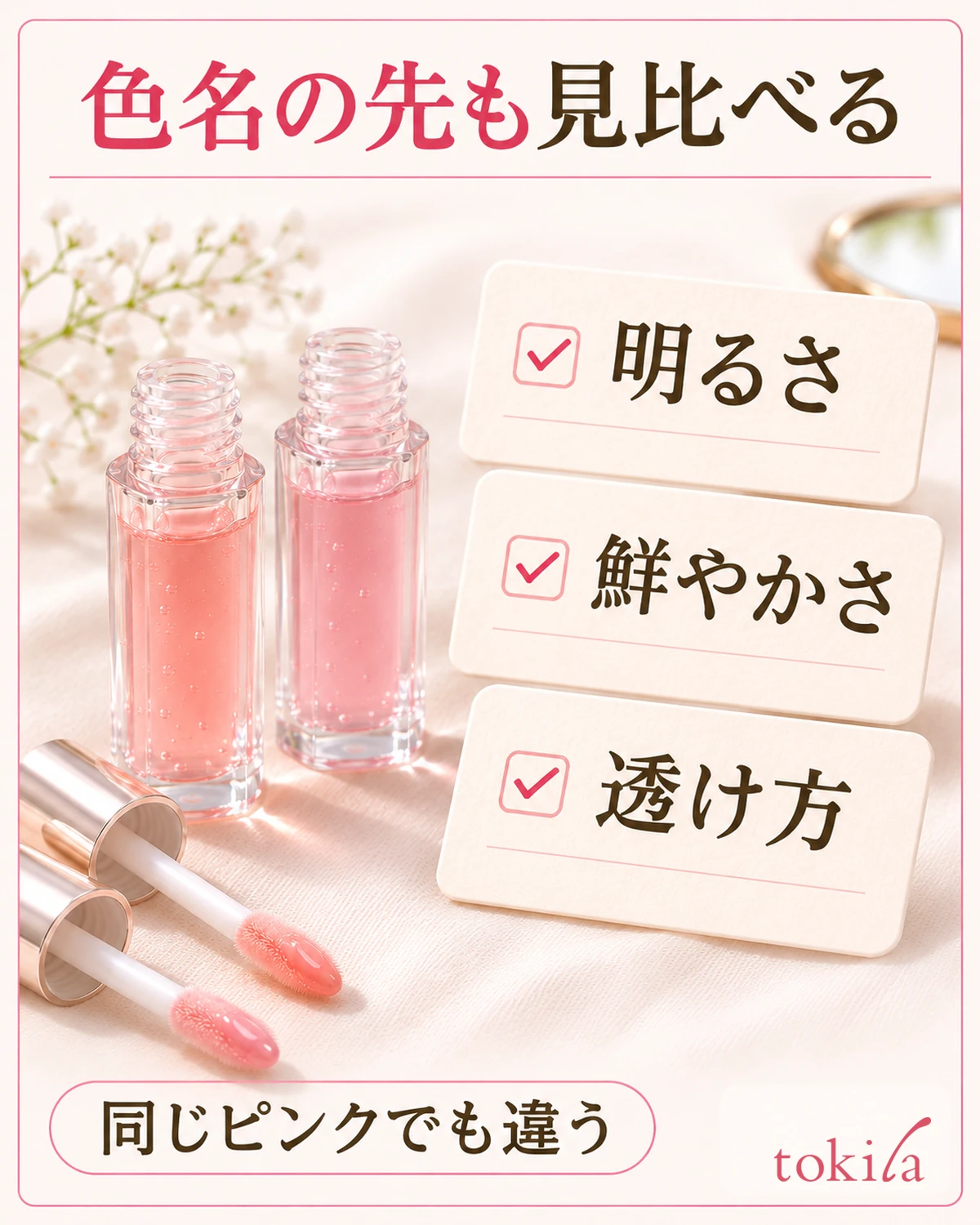
Names such as pink, rose, and coral are useful starting points. However, shades with the same name can vary in whiteness, vividness, and depth. When seeking a color similar to your current blush, compare the stated finished color as well as the packaging color.
Next, check whether the product is designed to let your skin tone show through a thin layer or provide a more distinct color. A shade that looks strong in its container may not look the same on your cheeks. Conversely, do not assume that a liquid that looks lightweight will give pale color even in a small amount.
If you can try it in a store, follow the store's instructions and use a clean tester, without layering different shades on the same spot. Differences in quantity and area can blur the distinction between color and intensity. You do not need to try it on your face. Stop testing if it feels unsuitable for your skin.
When viewing the contents through a container as in the photo, notice the thickness of the glass and where the liquid collects. However, color in a bottle cannot be treated as identical to color spread thinly. Distinguishing the contents in the container from the applied finish helps you interpret product photos.
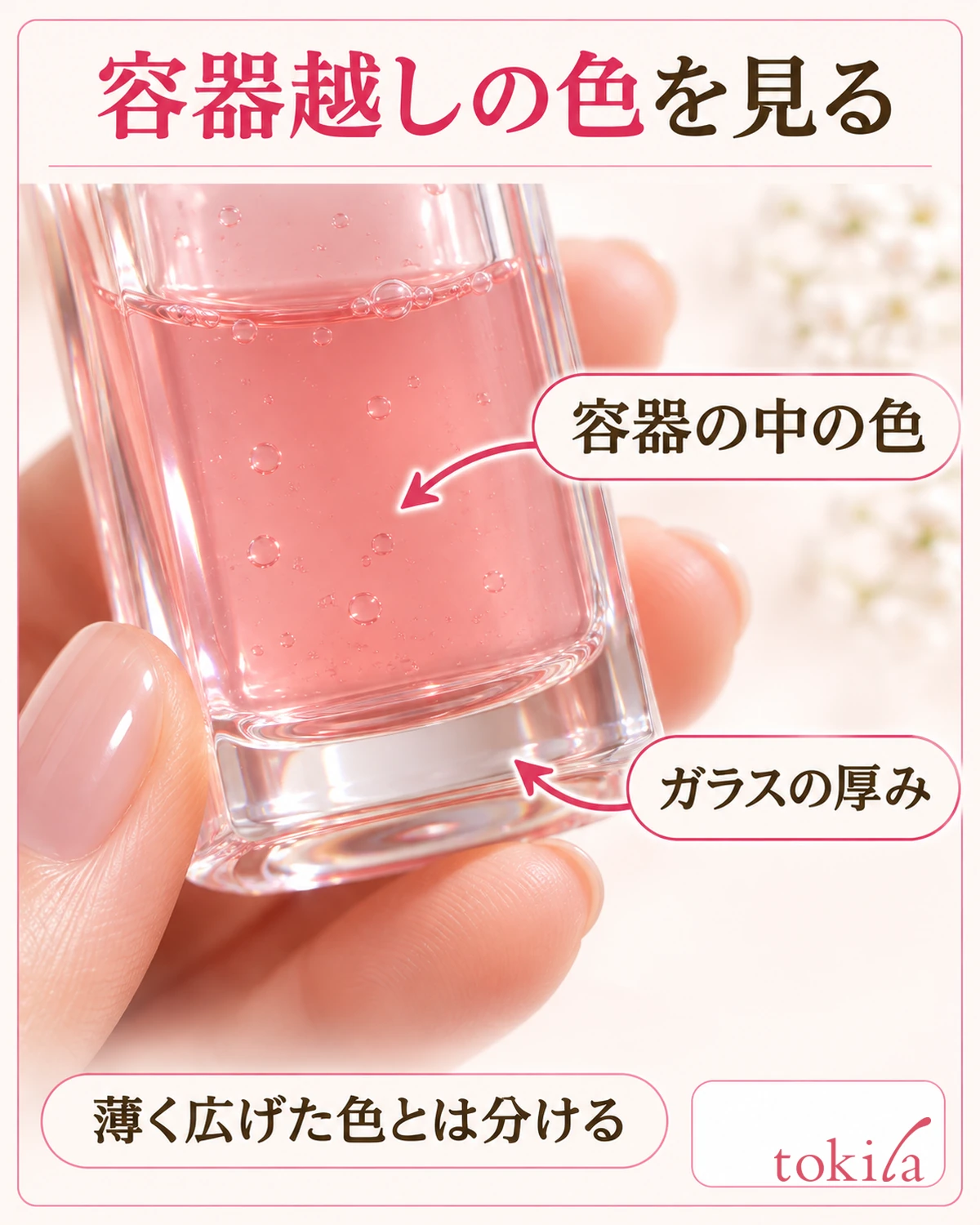
Do not take a shade checked on your hand as an exact prediction of its finished appearance on your cheeks. Foundation and powder create a different base on your cheeks. When recording comparisons, note whether the color was on bare skin or over base makeup so you can recall the conditions later.
To coordinate it with lipstick, first decide which feature you want to emphasize instead of matching two shades simply called pink. Defining the occasion, such as keeping cheeks subtle when enjoying a bold lip, helps narrow the options.
3. Check where it goes over your existing base makeup
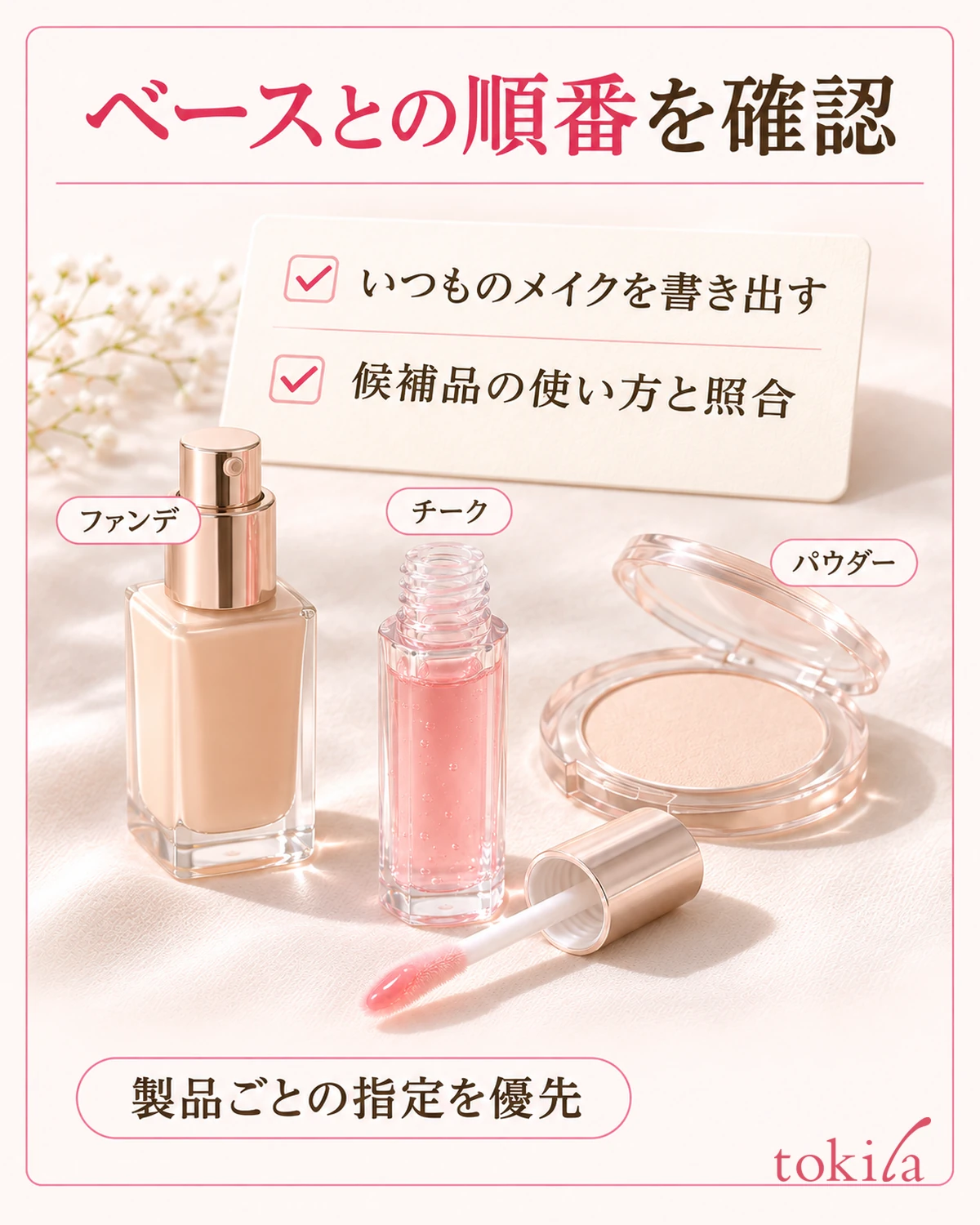
Before buying, check where the liquid blush fits into your routine. Read the candidate product's instructions, such as after foundation and before finishing powder. Do not transfer the order stated for another product to this one.
Write your usual routine, such as primer, foundation, and powder, on paper and add where the blush belongs. This helps you picture your morning steps. If you normally finish with powder foundation alone, check whether instructions cover applying it over that base. If the order is unclear, avoid buying on the assumption that you will mix it in yourself.
Being liquid does not mean it can be mixed with foundation. Unless mixing is an instructed method, consider using the products separately. Neither the shape of the container nor ingredient names alone determines how it will finish with products you own.
Also check whether the instructions specify fingers, a brush, or a sponge for spreading it on your cheeks. If no tool is supplied, find out what you will need after purchase. Preferences such as keeping color off your fingers in the morning or using existing tools can also guide your comparison.
When both the order and the tool fit your usual makeup, it is easier to picture using the blush than when choosing by color alone. If you prefer to keep your daily routine largely unchanged, start by comparing products with instructions that fit it.
4. Consider daily handling through packaging and applicators
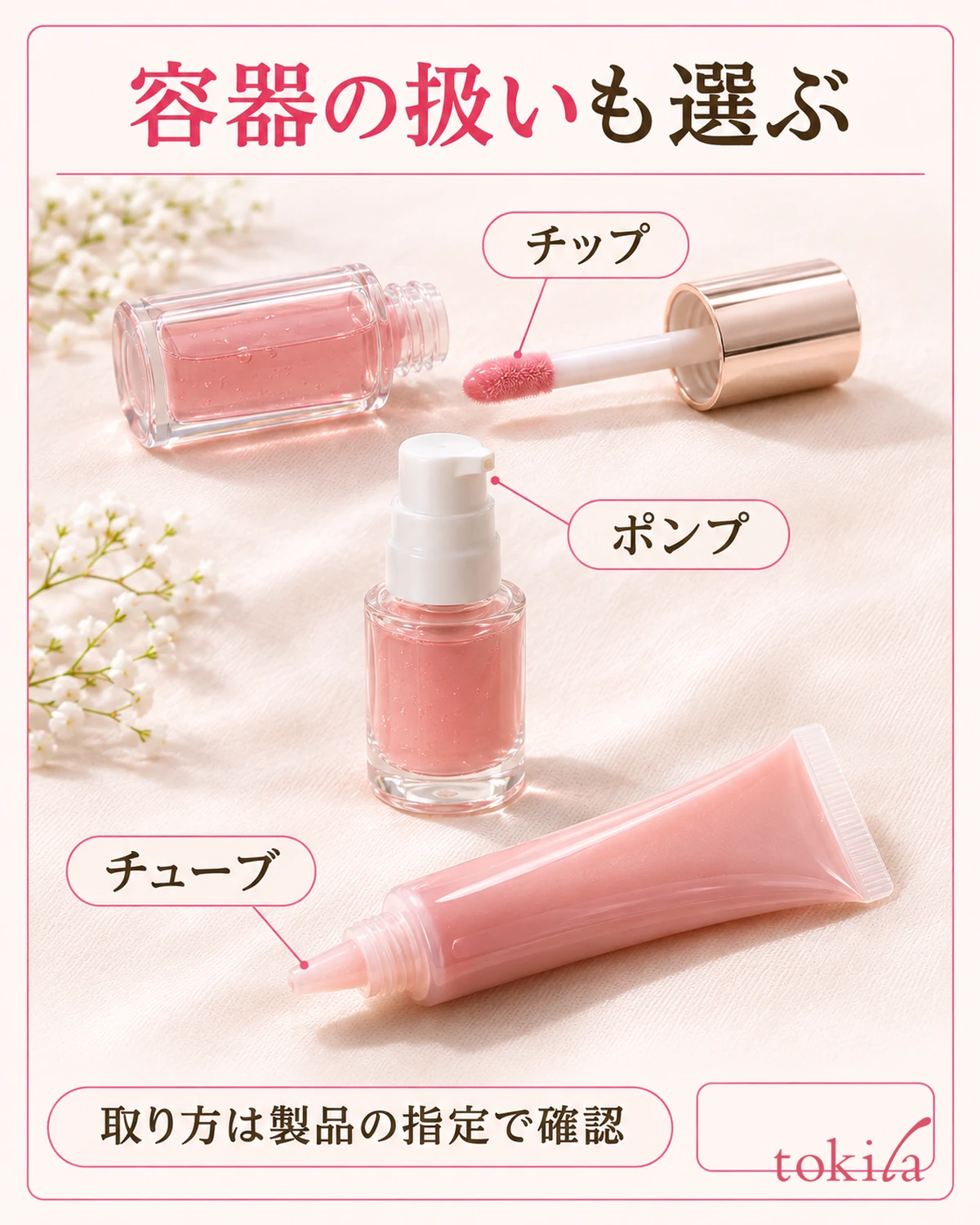
Liquid blush comes with wand tips or brushes attached to caps, in pump dispensers, and in tubes. Packaging affects not only appearance but where the liquid is dispensed before reaching your skin. Check the instructions rather than guessing from the shape whether to apply directly to your cheeks or take some onto your fingers first.
For products with a tip or brush, look at its size and shape. You can identify differences such as broad surfaces and fine tips, but a small tip does not guarantee sheer color. The liquid it holds and the application method also matter, so avoid equating shape with a particular finish.
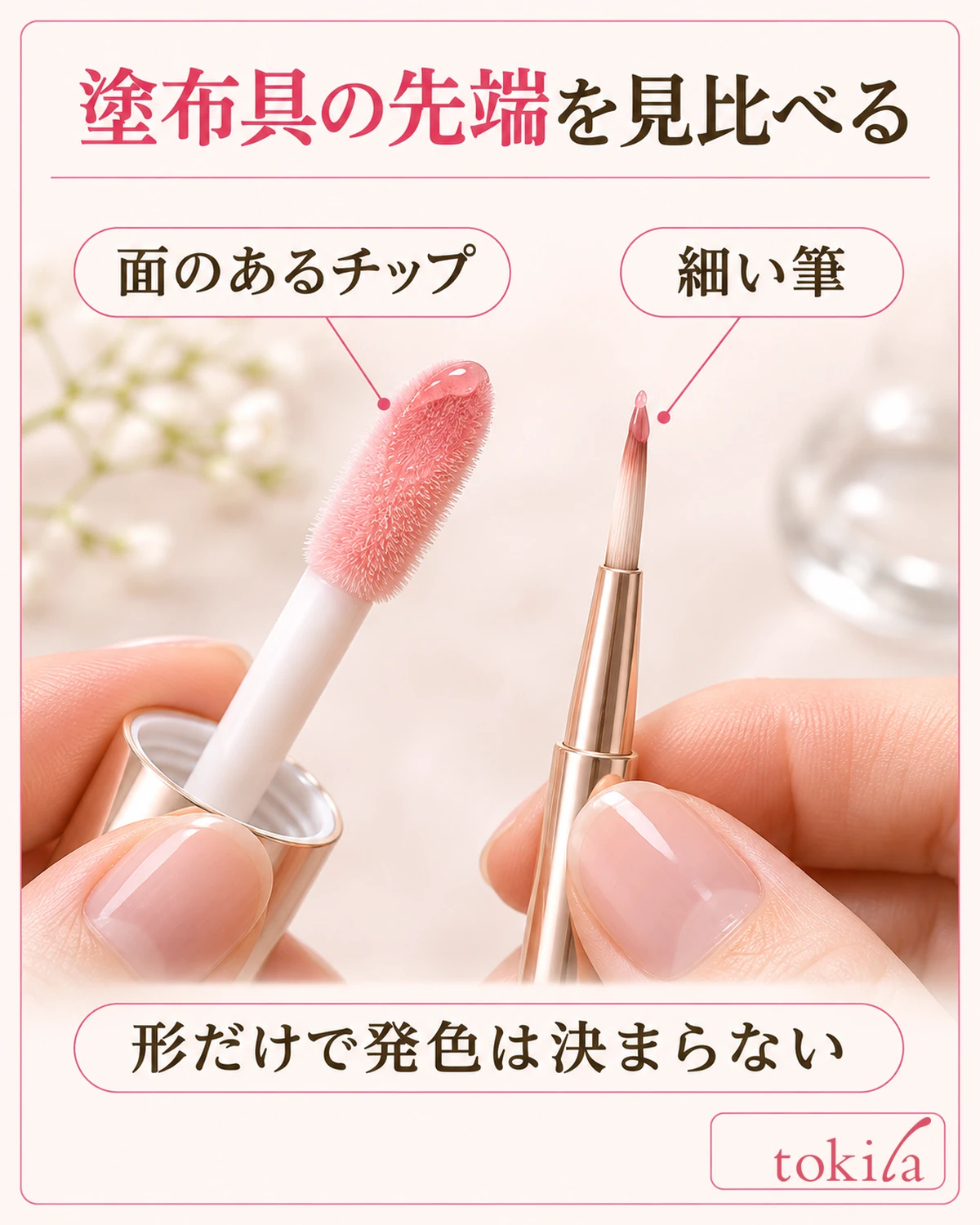
If carrying it with you, consider the length when the cap is removed and whether you need somewhere to set it down. If maintenance instructions call for wiping the applicator before returning it or keeping the opening clean, consider whether you can do that each time. A small container is not necessarily easy to handle away from home.
With pumps and tubes, you may wonder how to portion out the amount you need. If you cannot test it in the store, you do not need to make firm assumptions about the amount per press from its appearance. Read how to dispense it and consider whether adjusting the amount by hand suits you.
If you are unsure how to dispense a liquid blush you already own, rereading its instructions may be more useful than comparing new purchases. Separating criteria for a new container from operating the one you have makes your reason for buying clearer.
5. Narrow the options to one that suits the occasion
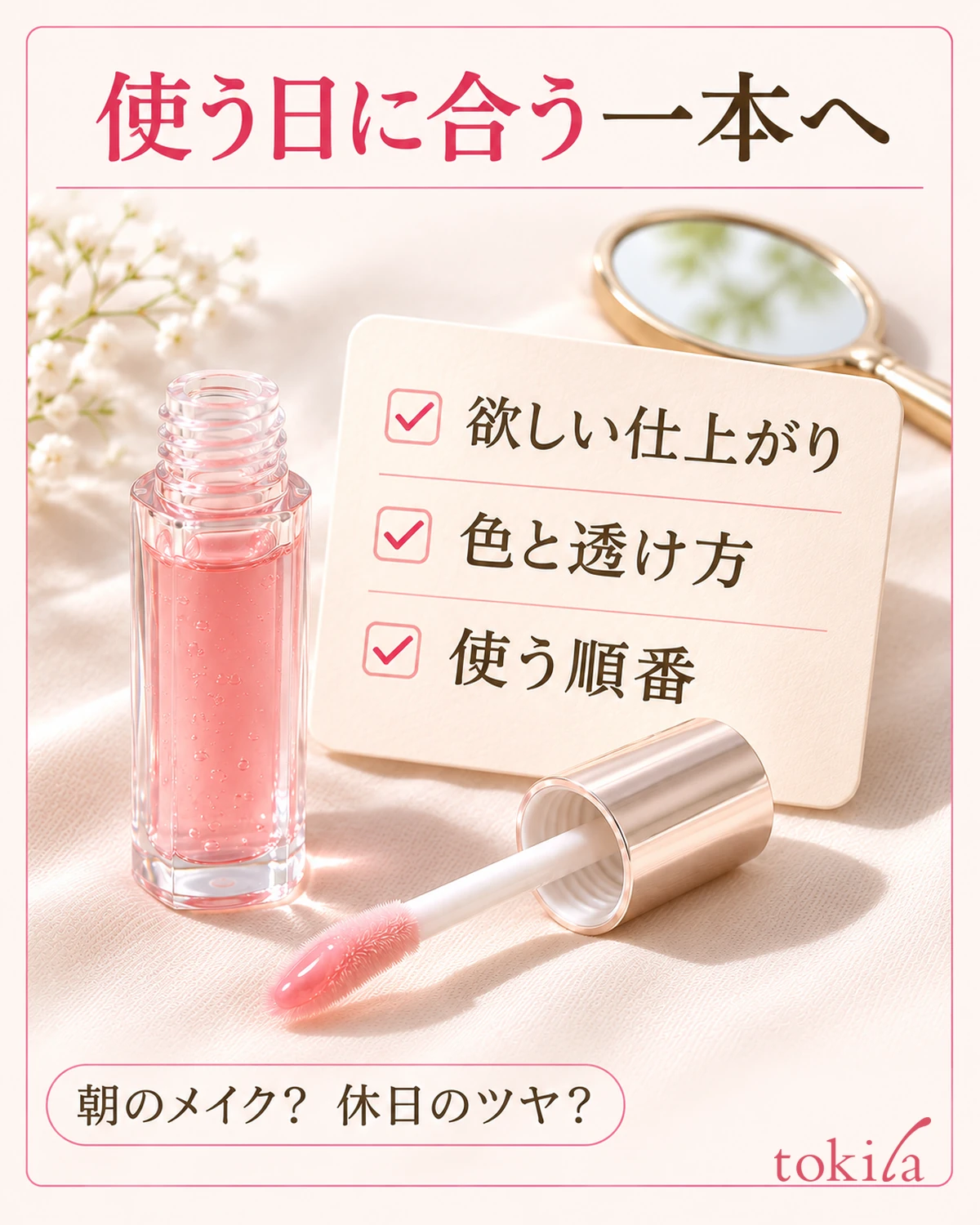
If two or more candidates remain, write down desired finish, color and translucency, and placement in your usual routine in the same order for each. Then add the applicator, maintenance, price, and volume. Avoid multiplying criteria unnecessarily; return to your original priority.
For example, if you do not want extra morning steps, you can set aside a product that changes your routine substantially even if you like its shade. If you want to enjoy cheek glow on days off, another approach is to try products whose finish and application steps are clear. Picturing when you will use it helps prioritize the conditions.
When comparing prices, a larger volume is not automatically better for you. Consider frequency of use, whether you will carry it, and handling after opening. Avoid calculating uses or cost per use from an unverified application amount and presenting those estimates as certain figures.
Screen brightness and surrounding light also change how shades appear. Compare candidates on the same screen at the same brightness rather than viewing just one on a dark display. Even then, screen colors may not match the real product exactly, so do not judge subtle differences from photos alone.
If conditions remain unclear after reading, you do not have to force a first-place choice. Note your current blush color and usual makeup steps, and decide on one thing to check next. Simply separating "I want a slightly lighter shade" from "I want the same color in different packaging" makes the next comparison more specific.
The key to liquid blush is to connect the color and light you want on your cheeks with your existing base makeup and daily handling, rather than choosing by the word liquid alone. To enjoy a shade that catches your eye, look for one that suits how you will use it.