When you pick up an eyebrow coat, do you wonder whether to use it before or after drawing your brows? For a product designed to finish drawn brow makeup, the basic sequence is to complete the color and shape, lightly trace a small amount over it, and let it dry. A clear liquid does not necessarily share the use instructions of a brow-styling gel or an eyelash product.
This article explains reading labels on coats used over brow makeup, preparing the brush, placement, handling until dry, and removal. It is a guide to organizing use of your own product, not a test measuring wear time. If you want to change your brow shape itself, return to drawing before setting it with a coat.
1. Check whether it finishes drawn brows, its purpose, and order
First check the container or box to confirm it is a finishing coat for brow makeup. Products intended to preserve drawn color and those intended to arrange brow hairs serve different roles even when both are clear. Look beyond the name for two points: what to apply it after and where to apply it.
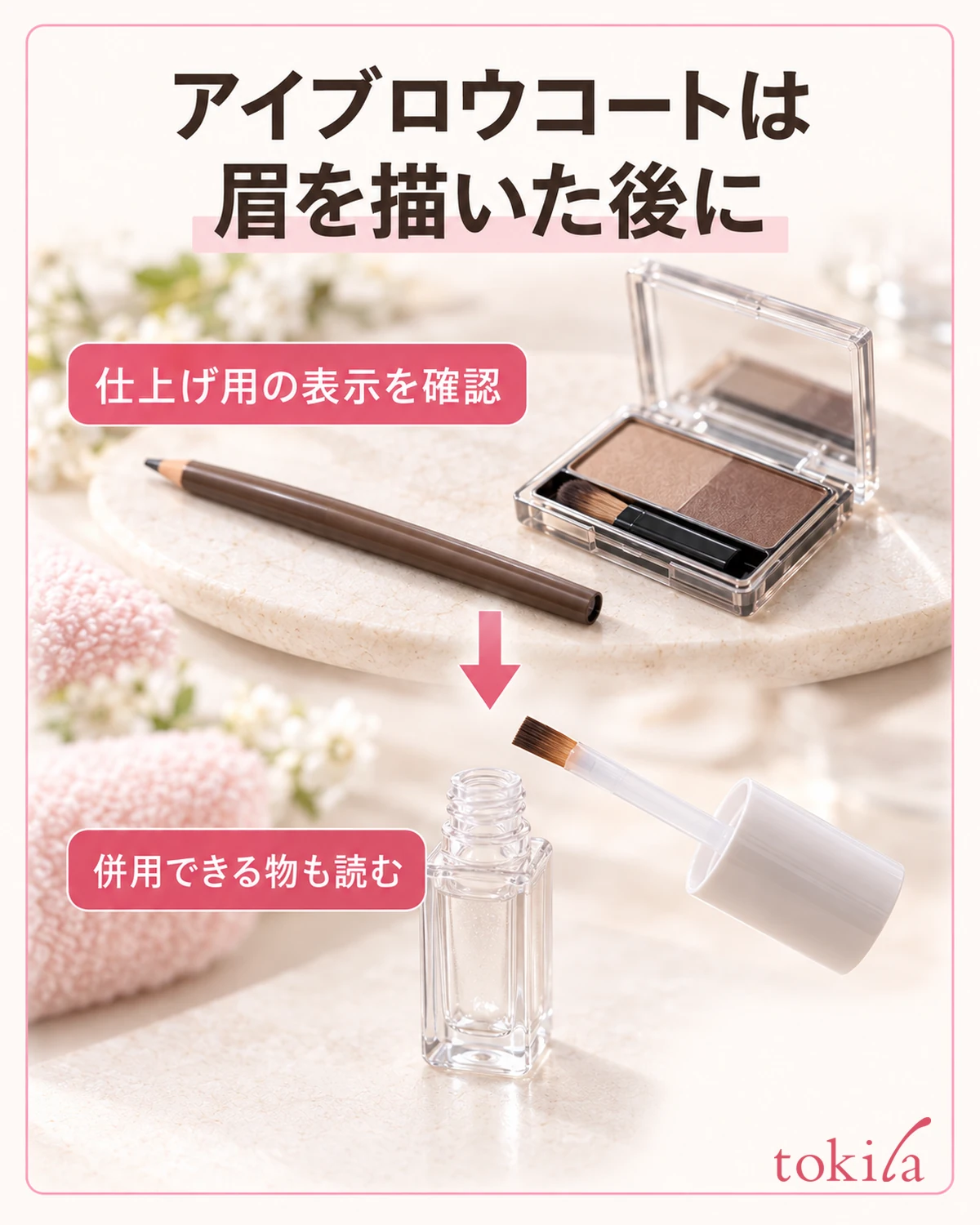
If directed to use after brow makeup, finish the shape with pencil or powder first. Do not switch to applying the coat first like a primer. Also do not change the method to mixing brow color liquid and coat liquid on the back of your hand or in a container.
Read the product’s instructions to see whether it can be used over brow mascara or liquid color. Even if one product works with several types, that condition cannot be extended to every coat. If you are unsure about your combination, check compatibility before use rather than forcing the layers together.
If freshly applied liquid color or brow mascara must dry, finish that step. Reaching the coat stage and the underlying makeup being ready to handle are separate checks. Rather than rushing to layer everything while wet, connect each product’s steps one at a time.
A small bottle with a flat brush and a brow mascara with a spoolie also provide visual clues. However, brush shape alone does not determine purpose. Do not substitute eyelash liquid or clear nail liquid on your brows because the containers look similar.
Even when you are concerned about rubbing from bangs or sweat, do not expect the product to make makeup completely irremovable. Choose a finishing step with its use conditions and removal in mind. For identifying why only the tails fade, Steps for Touching Up Faded Brow Tails can also help.
2. Finish the brow shape and adjust the brush to a small amount
Before applying, check the shape in a mirror that shows both brows and the eye area together. If a tail is too long, the front too dark, or color extends outside the shape, correct that first. A coat is not a liquid for erasing mistaken color or automatically making the shapes symmetrical.
Clean your hands and position yourself so bangs do not fall onto your brows. If holding a mirror in one hand, keep it from blocking the path between the brush hand and brow. Place the container on a stable flat surface; avoid pulling out the brush while tilting a bottle held near your face.
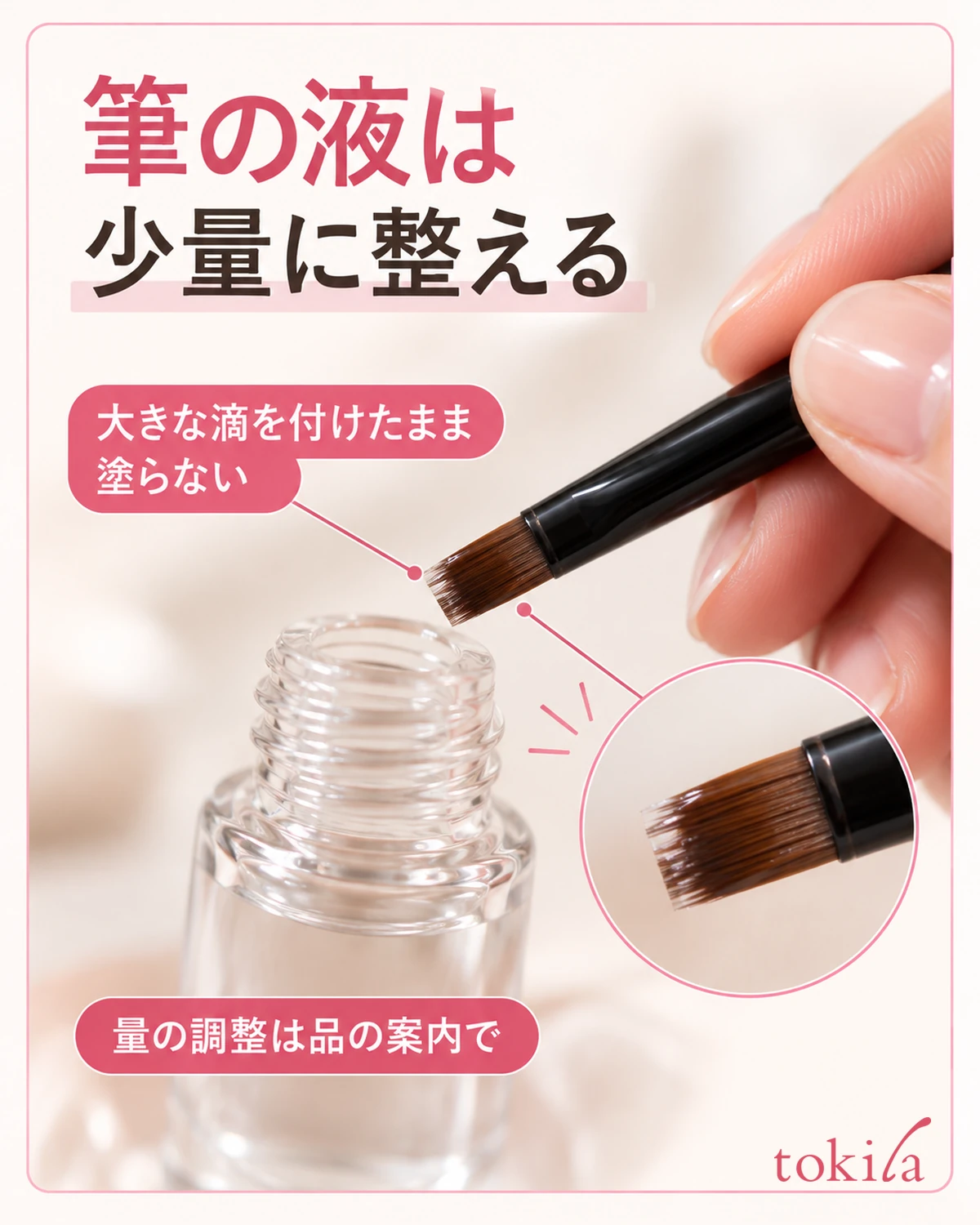
After removing the brush, check for a large drop hanging from the tip. If a small amount is directed, do not carry a heavily loaded brush straight to your brow; adjust it as the product instructs. Do not set universal numbers for wiping the brush or drops per use.
If directed to wipe the brush at the bottle opening, adjust the excess there. There is no need to crush and spread the bristles or wipe all liquid away until the brush is dry. Keep both reducing the liquid and protecting the brush shape in mind.
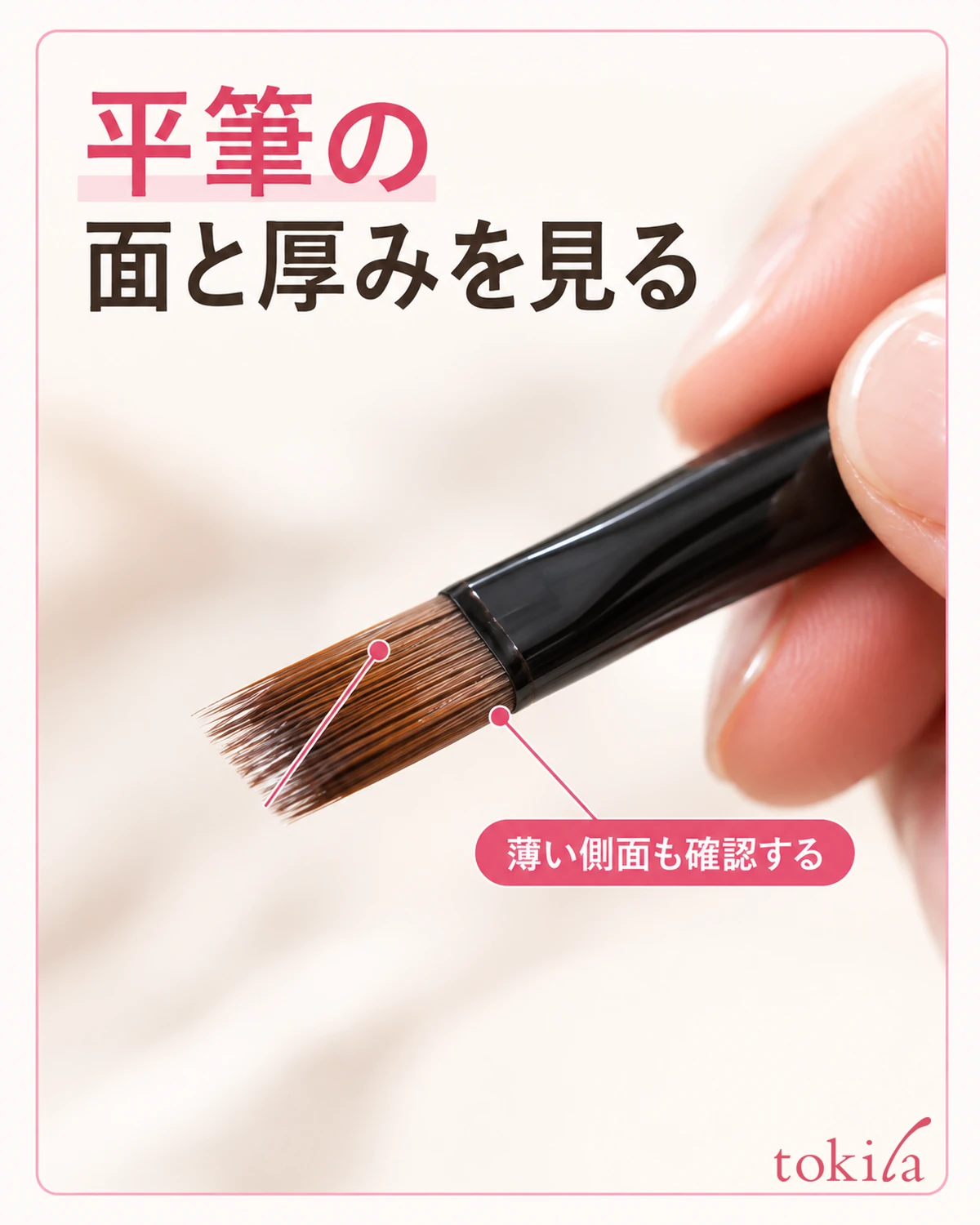
Look at the broad face and thin side of a flat brush from the side as well. When your hand is hard to see at the narrow brow tail, this helps you consider which part of the bristles makes contact. The photograph is an example of structure, not a specification for actual application width or amount.
If the brush is already splayed, dried liquid is attached, or the contents look unusual before use, do not keep testing it on your brows. Return to the product’s cleaning or replacement instructions. Do not add water or toner to dilute the liquid as a personal adjustment.
3. Lightly trace the drawn line with the brush
While looking at the drawn brow line in a mirror, lightly place the bristles against it. If the product directs tracing over brow makeup, follow its shape. Keep this separate from styling hairs straight upward or broadly coating the skin around the brow.
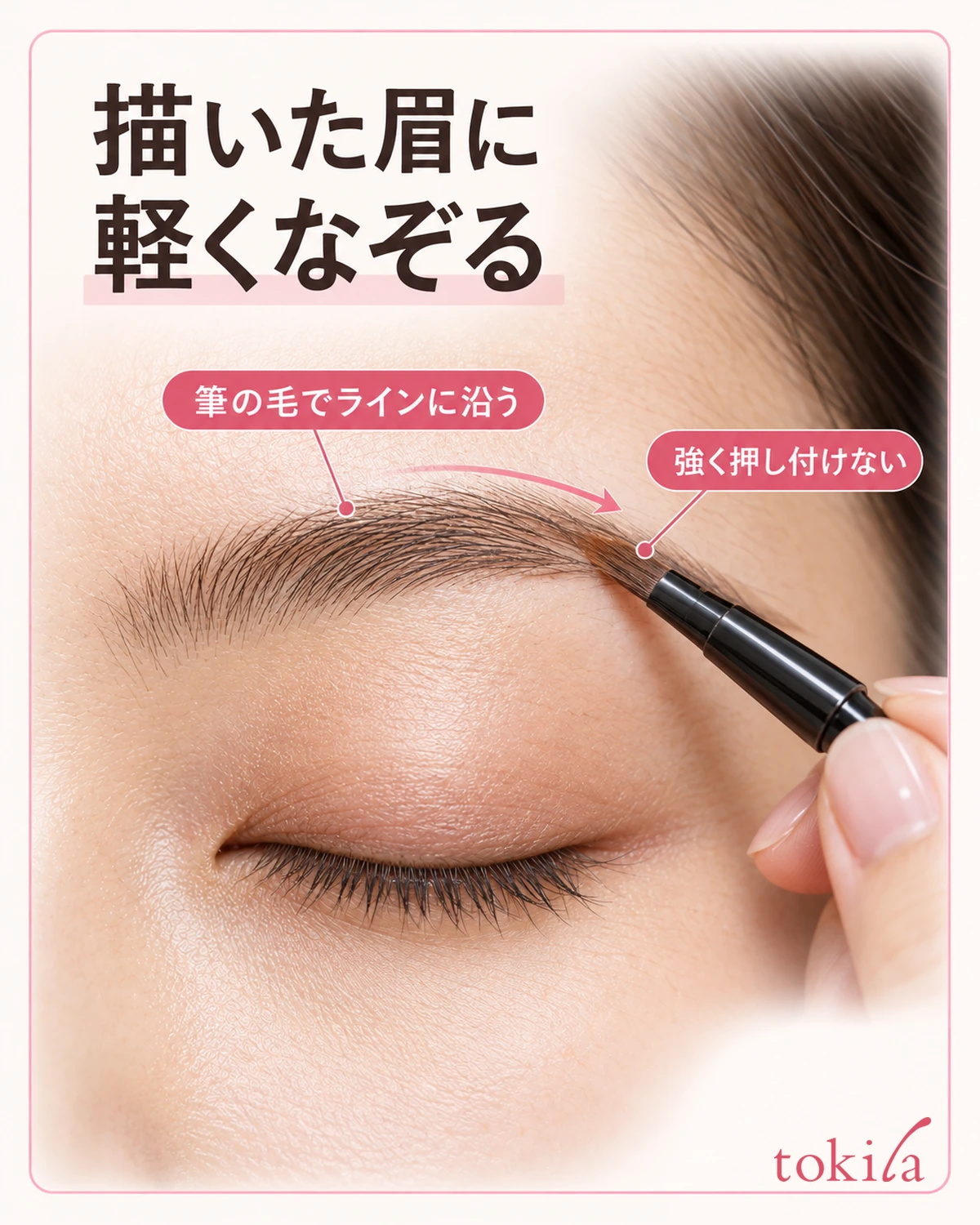
Do not press hard enough to indent the skin or repeatedly brush the same spot back and forth. Moving the underlying color can lead to more touching as you try to fix it with coat. Trace lightly with a small amount, then lift the brush and reassess the hand and brow position.
At the narrow tail, change your grip so it does not hide where the brush reaches. Keep the shaft and hard base off the skin, angling the soft tips onto the drawn line. Do not move the brush toward the eye without being able to see it.
Prioritize following each side’s drawn shape over rubbing both sides the same number of times. If one side is hard to see, lift the brush and reposition the mirror. There is no need to reload the liquid repeatedly just to make application feel more noticeable.
Stay within the directed brow area to keep liquid out of the eyes and mucous membranes. Follow any precautions about avoiding use immediately after brow grooming or at other times. Stop if stinging, redness, or another abnormality appears, and act according to the product’s precautions.
Consider applying brow color and applying finishing coat as separate steps. Do not use coat to fill pale areas; if color needs adding, check the product’s layering or redoing instructions. It is also important not to press a pencil straight onto wet coat.
4. Leave it untouched until dry rather than fixing it with more layers
After application, lift the brush from your brows and follow instructions not to touch or rub until dry. Repeatedly pressing with a finger to check dryness means continuing to touch your brows throughout drying. Follow your product’s drying instructions rather than assigning the same number of seconds to every product.
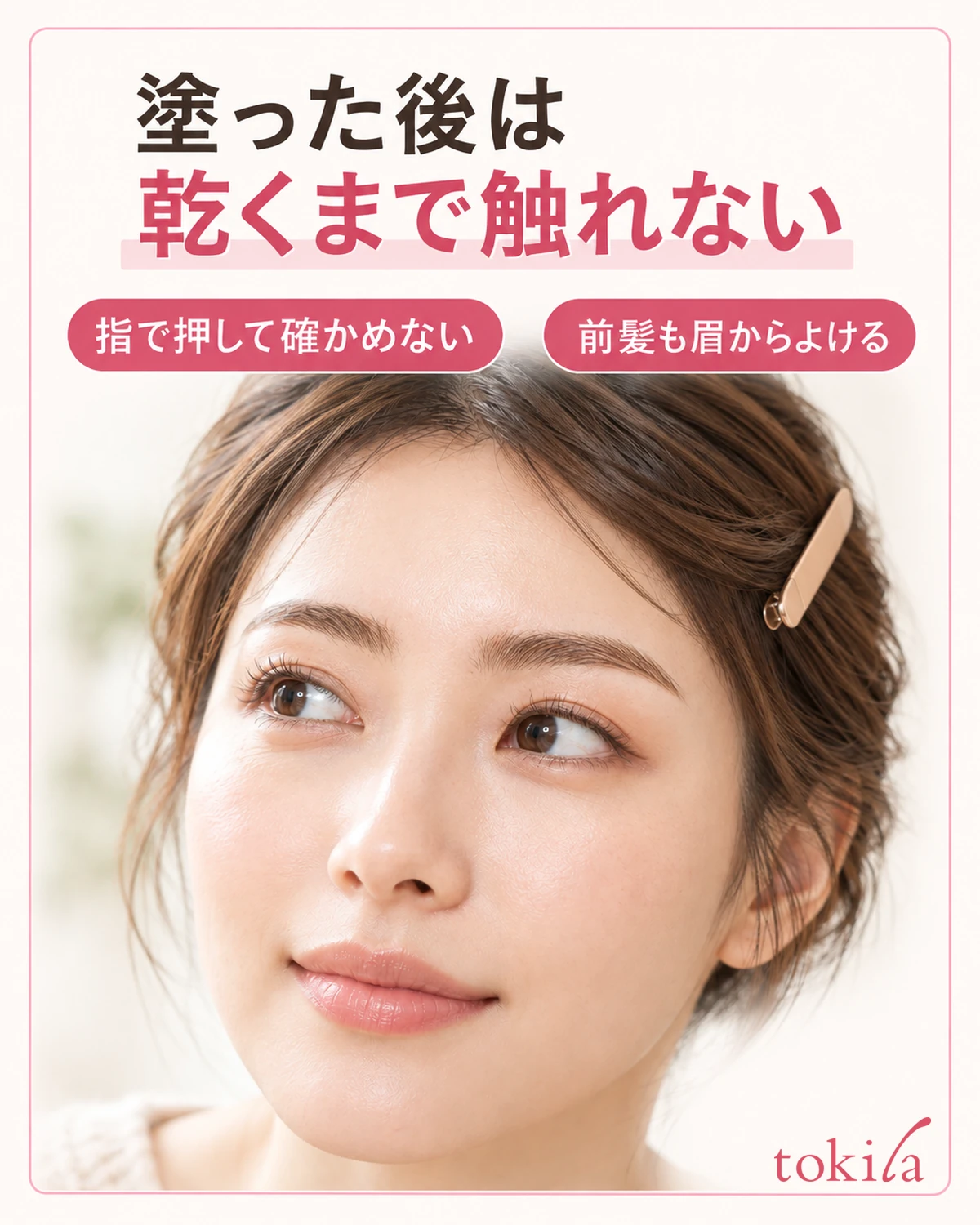
While waiting, choose preparations that keep bangs from falling onto your face or clothing from rubbing your brows. Simply separating the position for keeping hair away from when you return it to its usual place helps build a sequence without brow contact until dry. There is no need to hurry drying with nearby hot air.
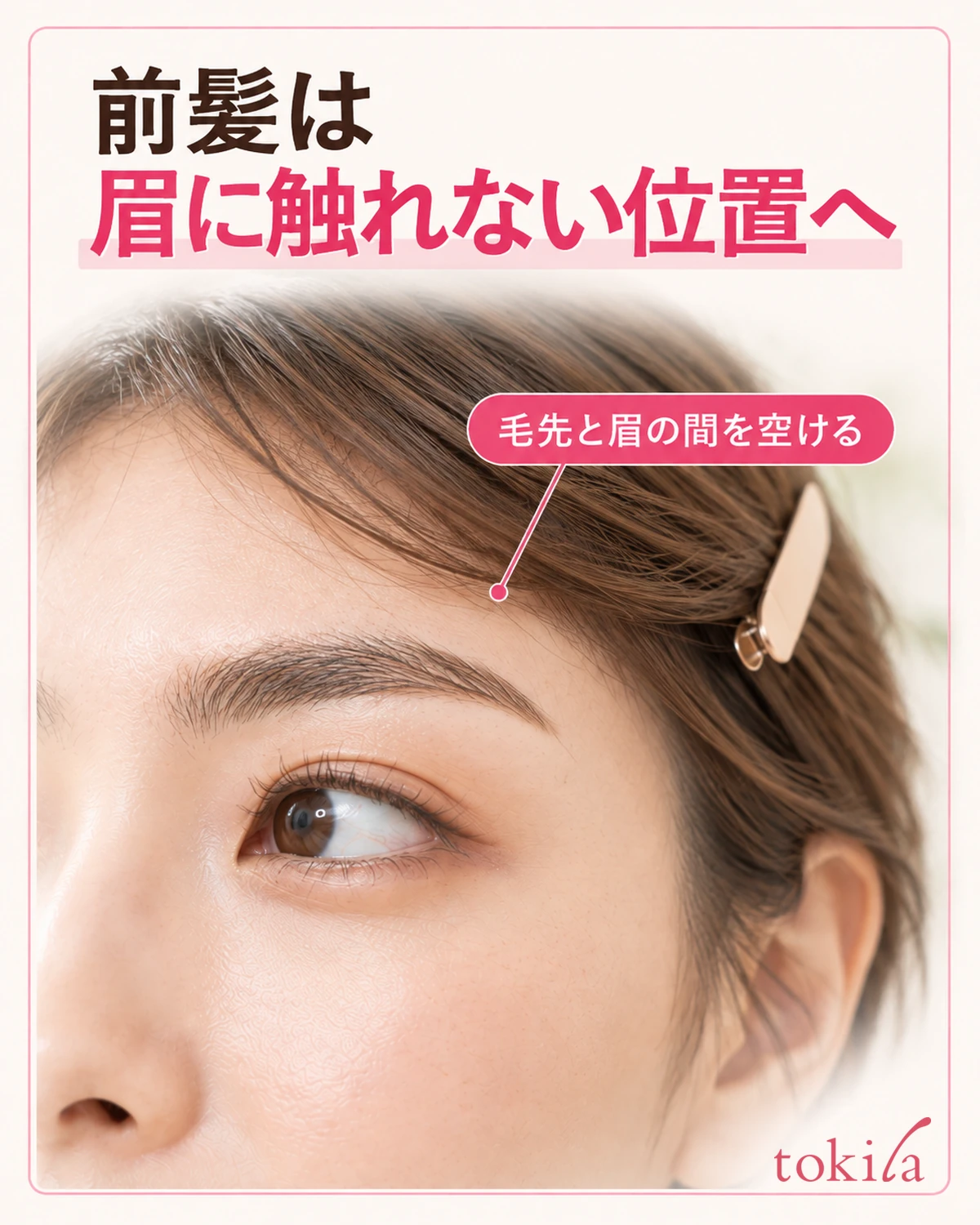
Even if surface shine concerns you, do not repeatedly press tissue against it or cover it with powder before it dries. Do not judge dryness by appearance alone; finish the directed drying step first. Avoid a chain of trying to correct thick liquid by adding yet another product.
If color moves during application or clumps bother you after drying, pause rather than adding more coat to fix it. If needed, remove it as directed and start again. Do not scrape hardened product with a nail or pull it off together with brow hairs.
When redoing, also check whether surrounding base makeup or sunscreen has been removed. Finish removal, restore necessary care and UV protection, then decide whether to finish again today. On a rushed day, choosing a stopping point instead of forcing every layer back on is also an option.
If the problem is the hair direction itself reverting, before increasing liquid over drawn color, consider Steps for Reviewing Brow Hair Direction separately. Increasing coat and arranging hair direction are not the same adjustment.
5. Remove with the underlying brow makeup in mind and close the container
At day’s end, check the removal needed for the coat and the makeup underneath. Do not assume from its clear color that water alone or warm water will remove everything. If cleansing and face wash are directed, follow those steps.
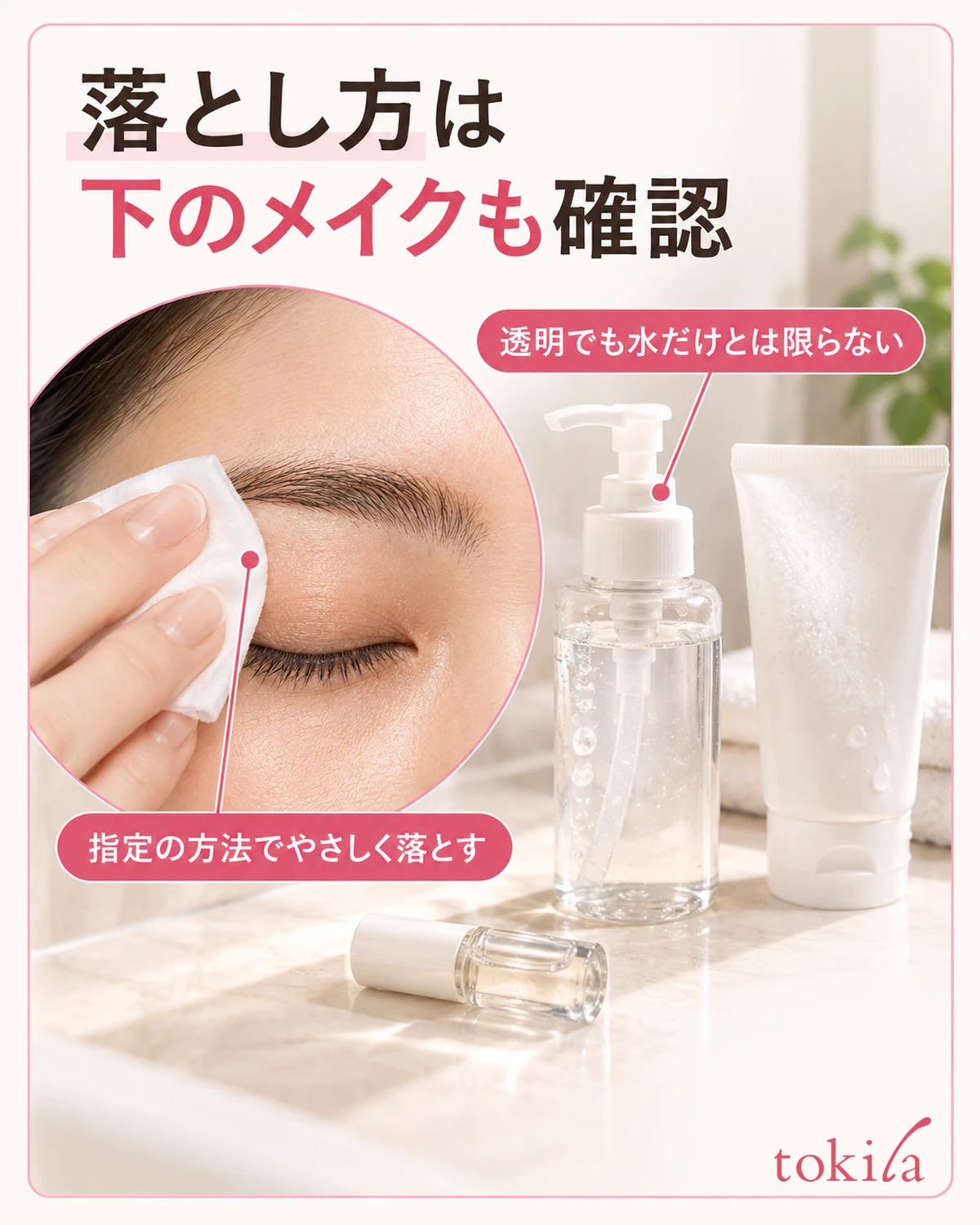
When using point makeup remover or another product, also check the area, tools such as cotton, and whether wiping or rinsing is needed. Follow the remover’s working-in method rather than rubbing hard to peel off the coat film. Do not take a catching sensation in brow hairs as proof of removal.
Handle the used brush and bottle opening as the product specifies. Do not add an unapproved step of washing the brush with water and returning it wet because brow color transferred to it. A brush built into the cap may not be handled like a washable tool.
If liquid gets on the container opening, do not reuse the dirty tissue on your brows; separate container cleaning from items touching skin. Close the cap as directed and put the container where it will not tip over. Keeping storage and use-period information before discarding the box makes it easier to review.
The next morning you use it, recall just one point that was unclear: drying the underlying makeup, the amount on the brush, or the number of touches. Start with steps you can return to the instructions for. There is no need to measure wear hours every time or deliberately rub to test durability.
An eyebrow coat is used after finishing drawn brows, in a small amount, with handling during drying included. Before buying, check purpose and compatibility; on the morning of use, check the brush and application line; at the end, check removal. Build it into your routine separately from increasing brow darkness.