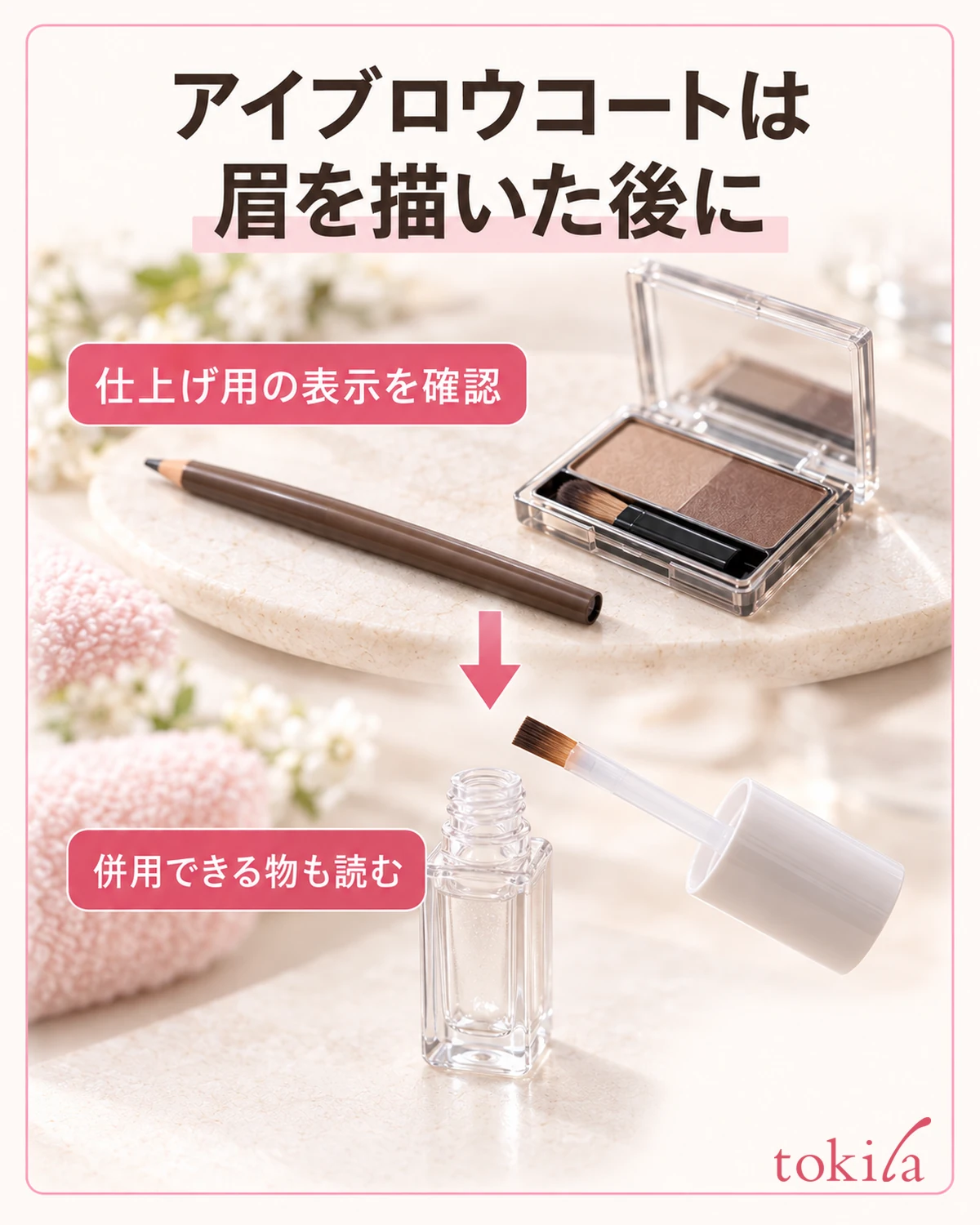
With cushion foundation, the first press may pick up more than expected, or the spot where you first touch your cheek may look thick. You want a light finish, yet repeated swiping makes unevenness more noticeable. In that case, review the pressure used to pick up foundation separately from the movements used after bringing it to your skin.
This article mainly explains picking up foundation from the cushion with the included or a compatible puff, then gently tapping to spread it. The number of presses and whether primer is needed vary by product. Do not treat the amount shown in the images as right for everyone; follow your product's instructions and check the finish on one cheek as you go.
1. Read the cushion instructions and the steps through primer
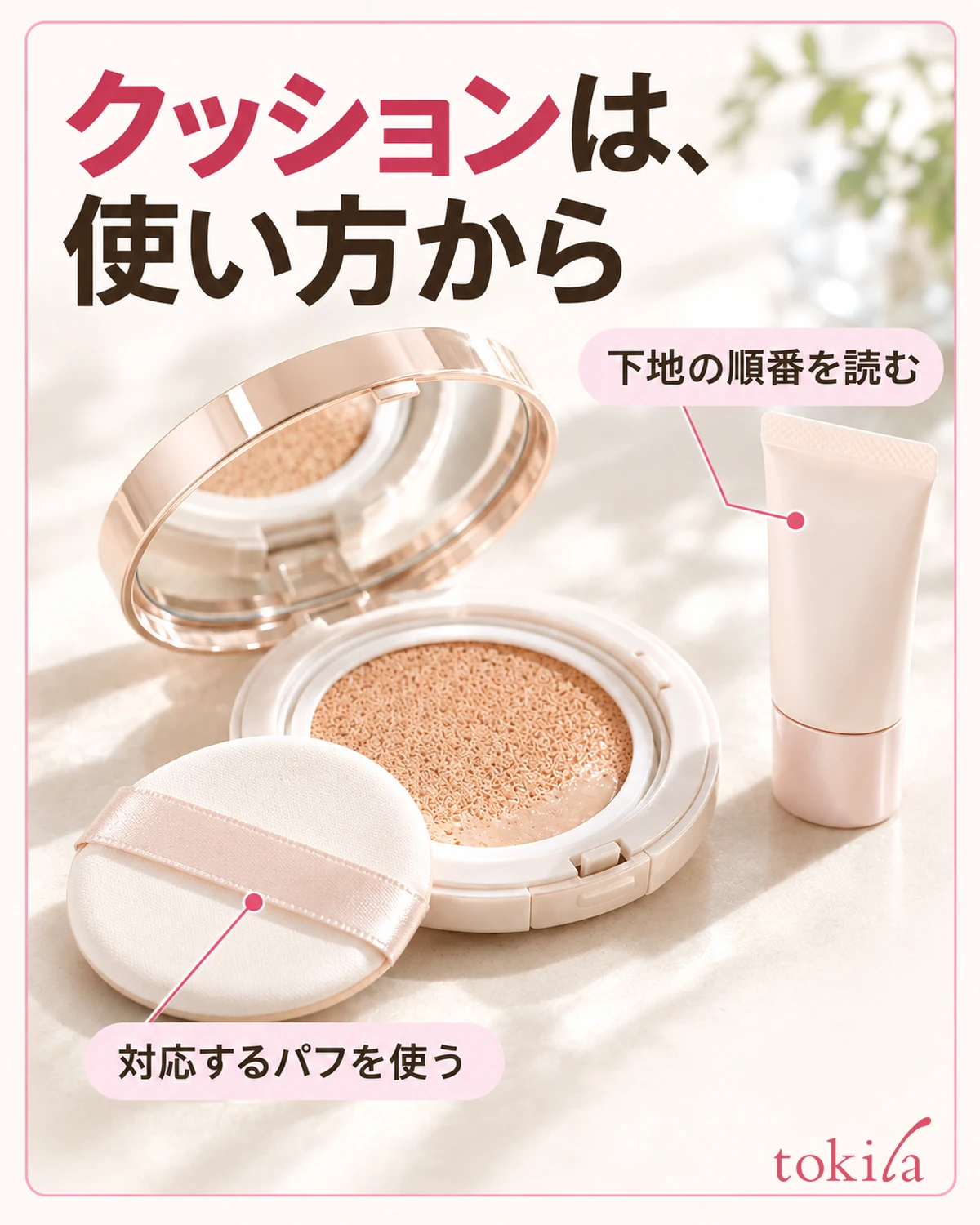
First, read the directions on the container or outer box for when to apply primer, which puff to use, and the suggested amount. The same cushion-shaped container does not mean the formula and method are identical. Start by avoiding the assumption that your previous product's steps also apply to a new one.
If the product is used after primer, prepare your skin in that order. Even if the directions allow you to skip primer, separately check the amount and order of any sunscreen and skincare you use. Do not automatically omit necessary steps just because you have heard that one product does everything.
Check whether skincare or primer is sitting thickly on part of your cheek. Do not keep layering foundation while liquid or cream is still moving over the surface. Rather than setting the same waiting time for every product, prepare the base first according to the products you use.
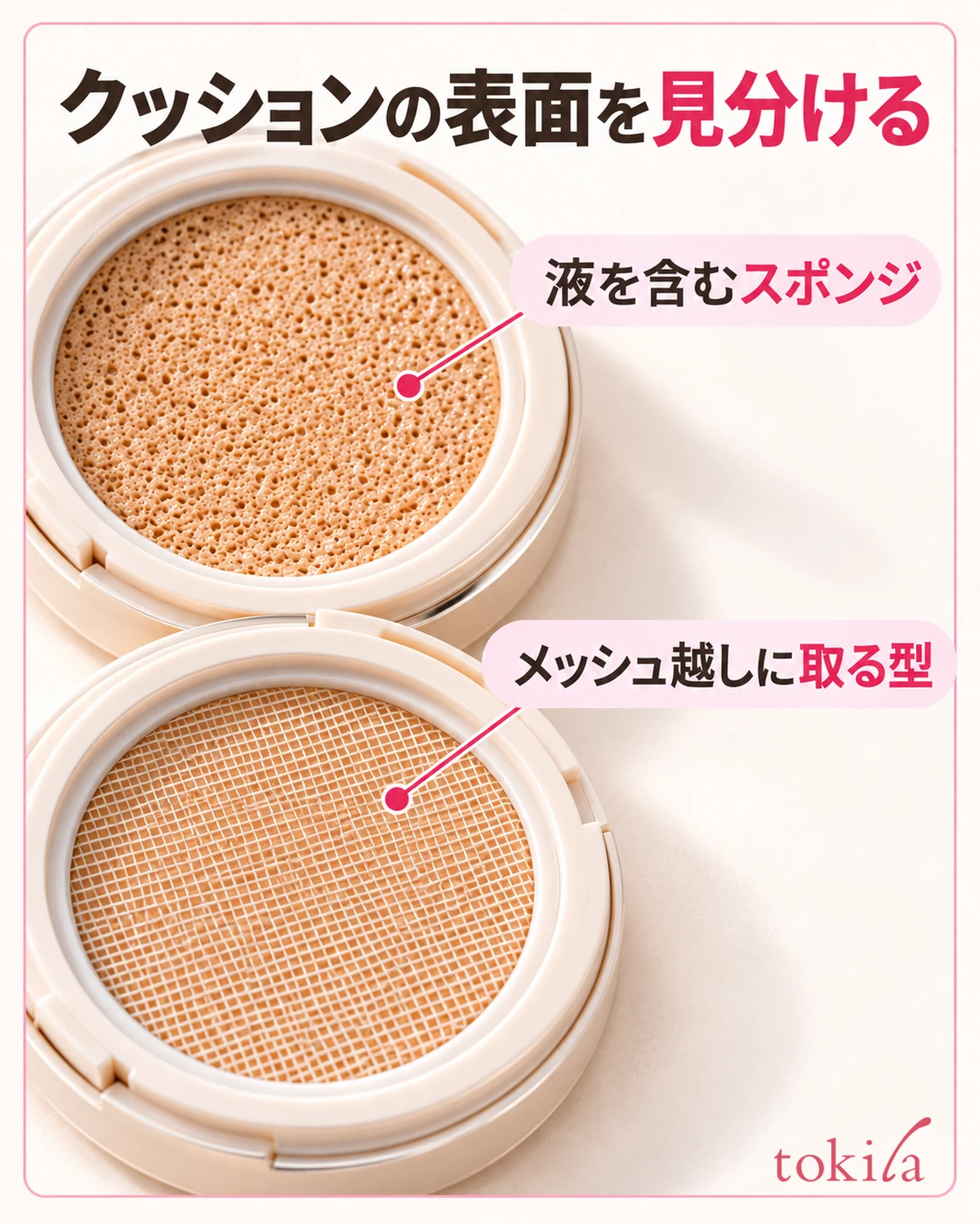
The container surface also differs between a type with a visible liquid-soaked sponge and a type accessed through mesh. Check where to place the puff rather than taking apart the holes or mesh. If several presses are required only at first use, do not confuse this with the amount needed every time.
Even within a cushion compact, the surface sponge and the puff serve different roles. Follow their respective instructions to decide whether the puff can be dampened or another tool can be used. Start in the specified condition rather than adding water or toner to the container to change how the foundation spreads.
If you are unsure about the overall base routine,this guide to the basic makeup ordermay also help. Consider what goes before and after your cushion together with the instructions for the foundation and other products you combine with it.
2. Check the amount on the puff before bringing it to your cheek
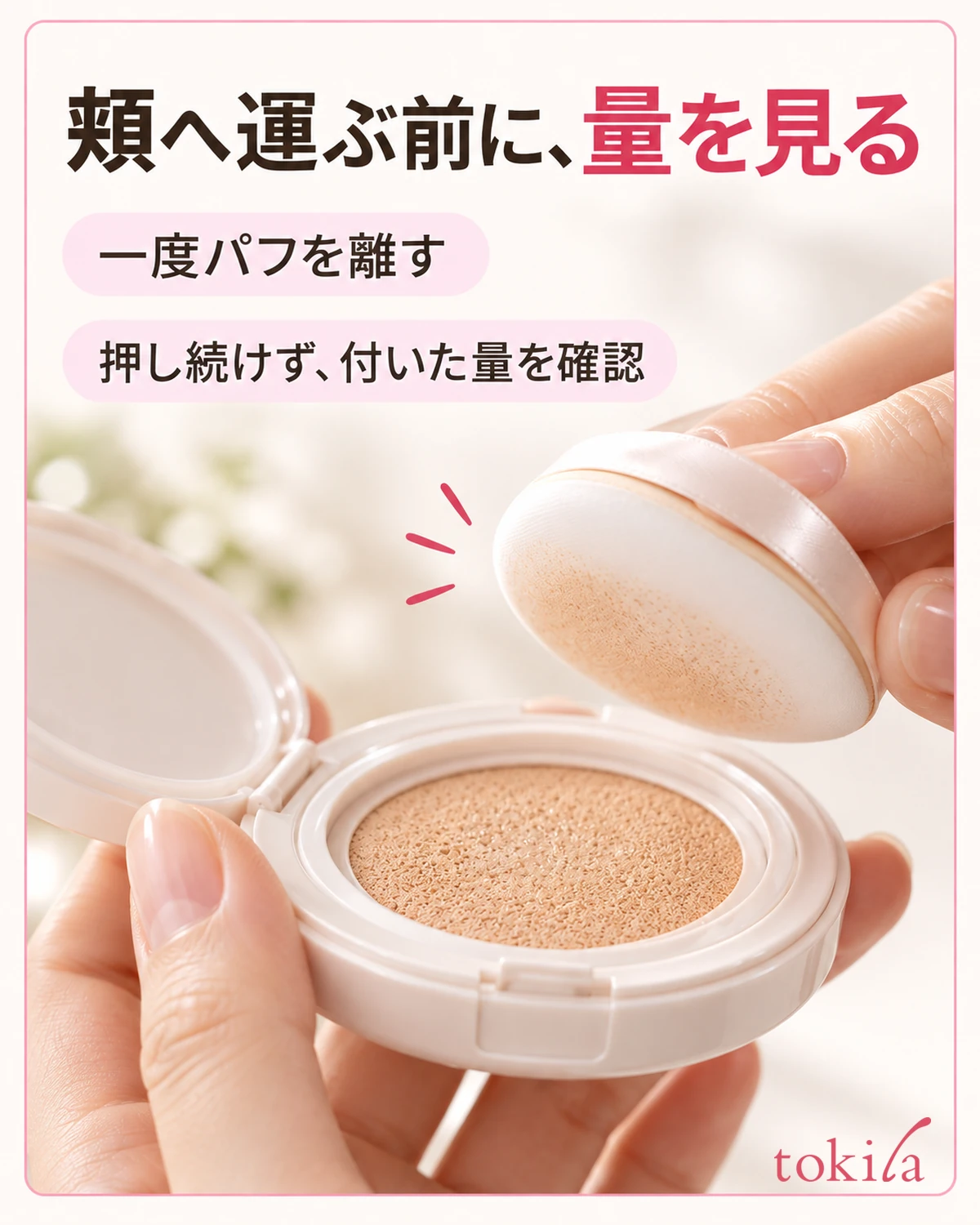
Prepare a clean puff. If it has a ribbon, slip your fingers through to support the application surface. Hold the surface steadily rather than pinching a corner tightly. Do not press a surface with leftover powder or another color into the cushion.
If a suggested amount is provided, use it as your starting point. Touch the puff to the cushion without excessive pressure, lift it away, and look at the amount on its surface. Avoid pressing repeatedly without checking simply because you are unsure whether it has picked up enough.
Even if the directions specify an area such as half the puff, this does not mean piling a thick lump of liquid onto that area. Check whether the coating is thin and whether liquid is collecting at the edge. Application surfaces vary in size, so covering the same area on another puff does not necessarily give the same amount.
With mesh types, pressing harder is not always better. Follow the product's pickup method instead of pushing until the surface sinks deeply or scooping directly with your fingers. If pickup changes between first use and later use, look at the foundation on the puff before deciding what to do next.
If you feel you have picked up too much, do not immediately transfer all of it to your cheek. Check the product's directions for adjusting the amount. Not every inner lid can be used as an adjustment surface. Avoid rubbing foundation onto an unspecified area or returning used foundation to the container.
Looking closely at the puff's application surface from below lets you distinguish the thickness of the edge from the flat center. While wearing it on your hand, check that the ribbon side is not the side touching your skin and that the edge is not folded inward. Stabilize the tool before moving to one cheek.
Also check whether your fingernails or finger joints protrude into the application surface when your fingers are through the ribbon. A grip that bends the puff sharply reduces the surface touching your cheek. Avoid crowding in your fingers, and adjust your grip so you can support the surface comfortably.
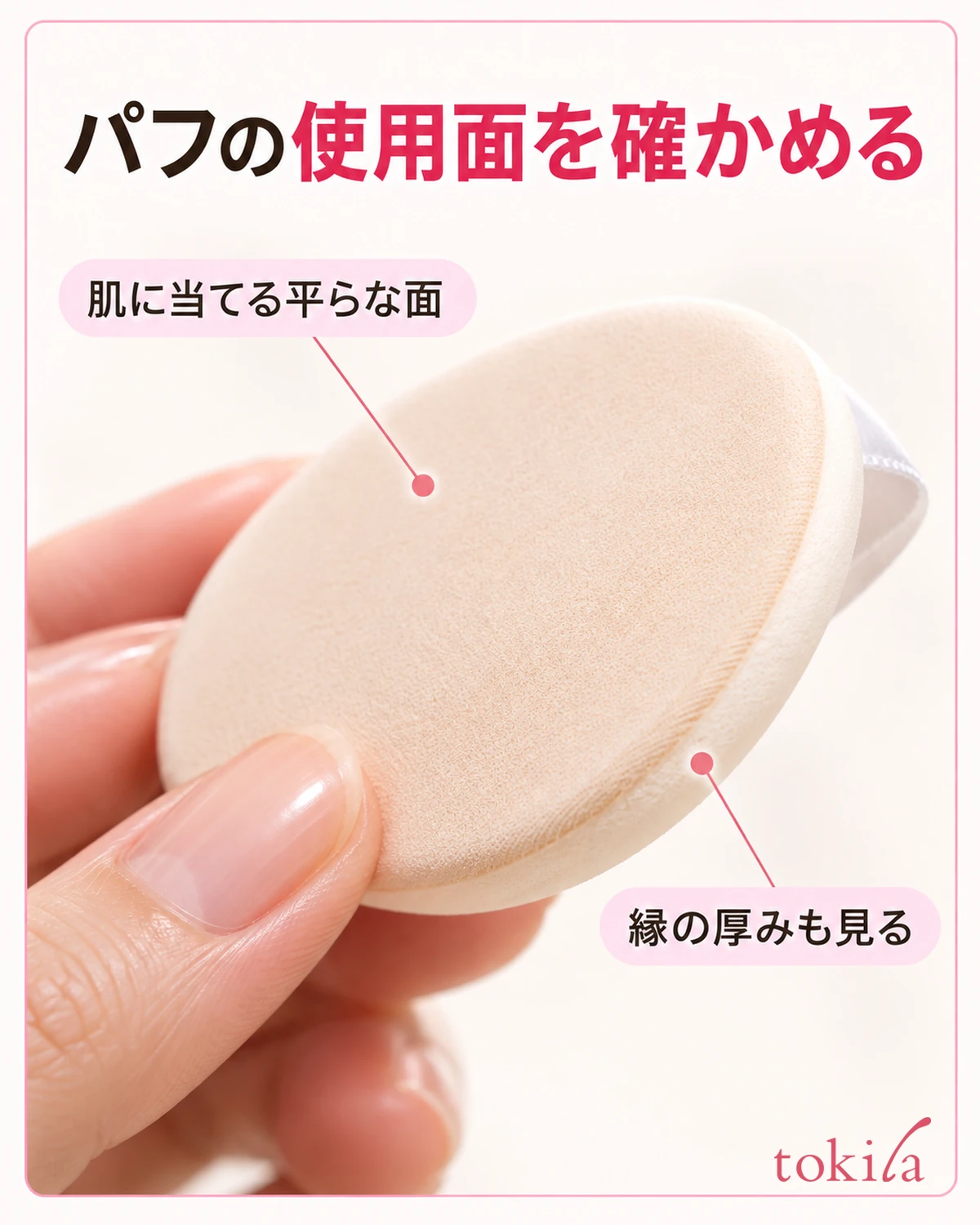
3. Start with one cheek, tapping gently outward without rubbing
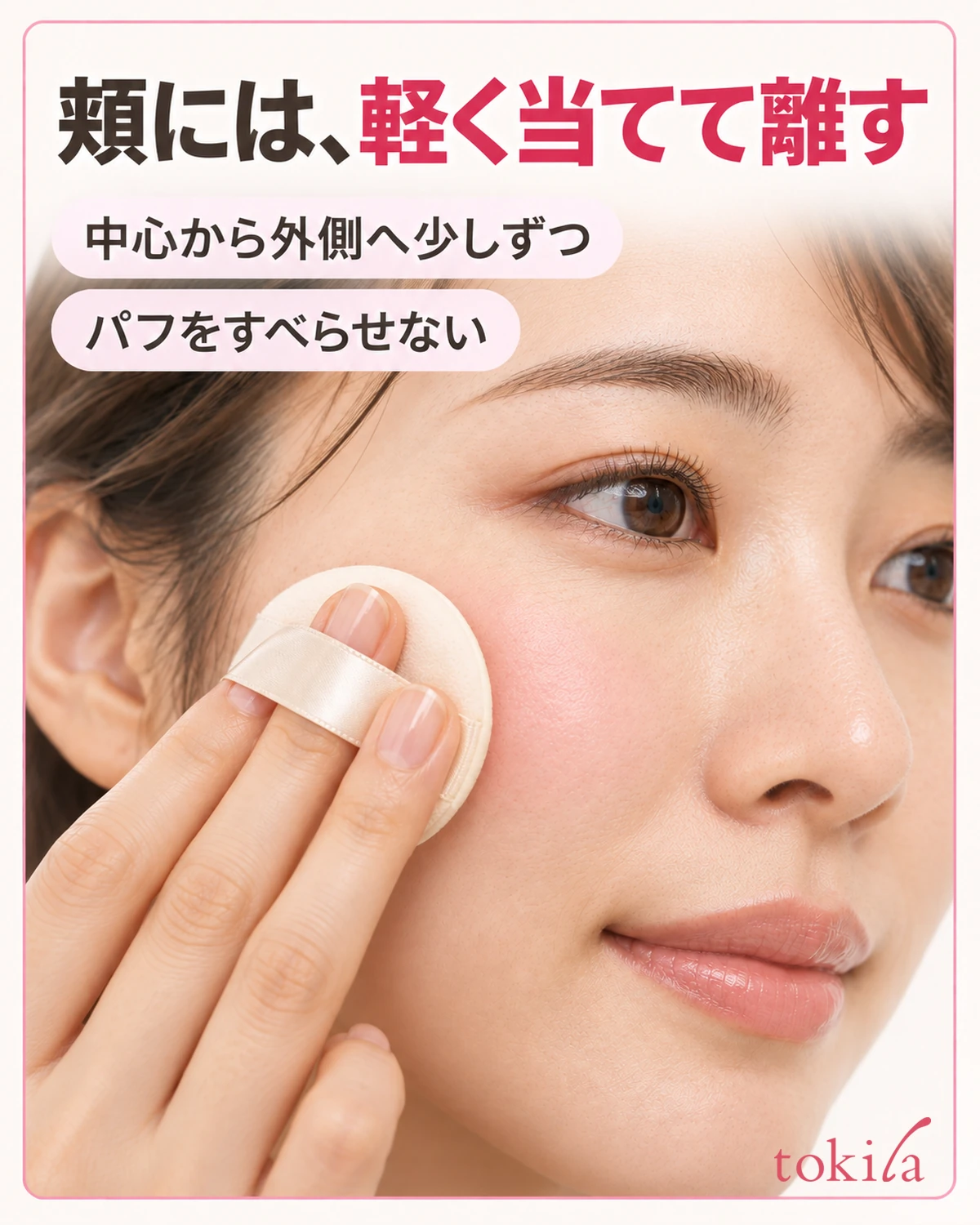
Begin on the broad part of the cheek where you want to apply foundation. Lightly touch and lift the puff, moving gradually from the center of the face outward. Rather than using pressure to make the layer thin, control how much you pick up and avoid rubbing the same spot firmly.
If more color lands on the first spot, finish the surrounding area with what you have already picked up before adding fresh foundation. Checking the finish as you work across the cheek makes it easier to judge how much to bring to the edges than applying plenty near the hairline or jawline from the outset.
Do not hold the puff pressed against your cheek or slide it while pulling your skin. Separate each light touch-and-lift movement. Small repeated movements can lead to extra pressure, so pause and check that you are not pressing hard enough to flatten the puff.
After finishing one cheek, move the mirror a little farther away before moving to the other side. This is a pause to check whether more color is needed or enough is already present. If the directions say to use what remains on the puff, check that amount and decide each time whether to pick up more.
Even when examining sheen closely, avoid moving your face extremely near the light. Adding powder or liquid only where reflections become strong can make it harder to judge the finish at your usual distance. Return to the same position and distinguish layer thickness from the appearance of light.
Even if the color looks different on each side, do not immediately add a large amount to the lighter-looking side. Check under the same light and angle so that shadows and reflections are not mistaken for differences in color amount. Do not make uniform opacity over every natural contour your only goal.
At the jawline, check whether the edge of the foundation appears to change abruptly into the neck. You do not need to keep adding fresh foundation outward to match a thickly covered cheek. If your whole face looks lighter than your neck, review not only the amount but alsohow to choose your foundation shadeas a separate issue.
4. Add coverage only to small areas and details
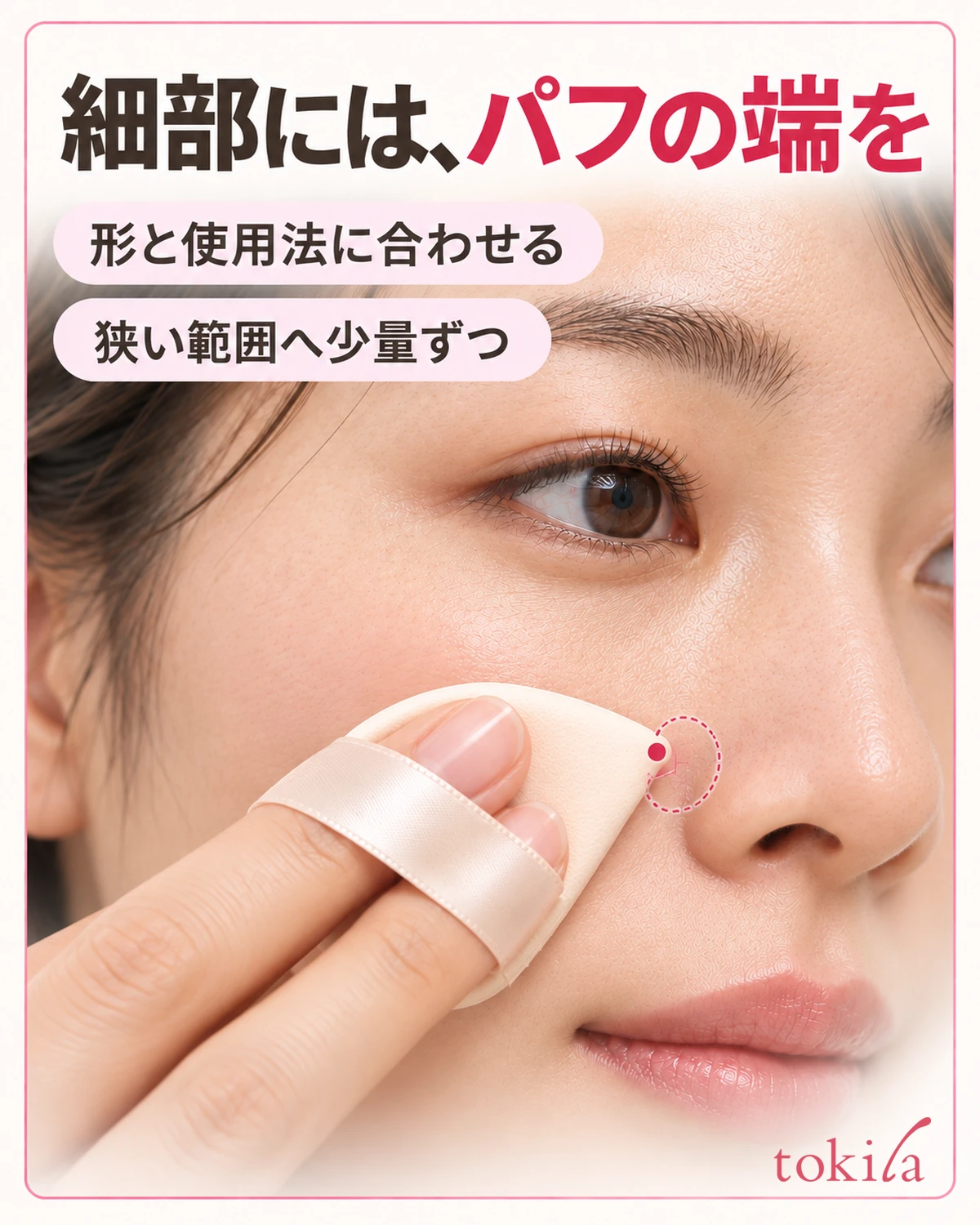
For details around the nose or mouth, use the edge or tip of a compatible puff rather than forcing the same broad surface used on your cheeks into a narrow area. Match the shape and instructions of your tool: the pointed end of a teardrop puff, for example, or a folded edge only if folding is permitted.
Do not deposit a large amount of fresh foundation in a small area. Check what remains on the puff and how much color that area needs. Avoid contact with the inside of the eyes or mucous membranes; covering right up to the eye is not an essential step. Work within the area you can reach without pulling the skin firmly.
If an area still needs coverage, look at the whole face after applying a light first layer, then add a small amount only there. Avoid building several thick layers over the entire cheek to hide one concern. Each time you move the mirror away, check that the area you are layering has not expanded.
If adding concealer, use the instructions for the products you combine to decide whether it goes before or after the cushion. Do not make a universal rule that liquid must go first or anything other than powder must go last. Read the conditions for spot application before broadly rubbing and moving the layer you have finished.
If thick clumps or obvious patchiness form on your cheek, do not fill them by layering on the same amount again. Check whether you picked up too much or the base underneath is moving, and stop within the range you can adjust. In some cases, removing that area using a method suited to the product and reapplying may be better than continuing to correct it.
5. Move the mirror away to finish, then review the next amount you pick up
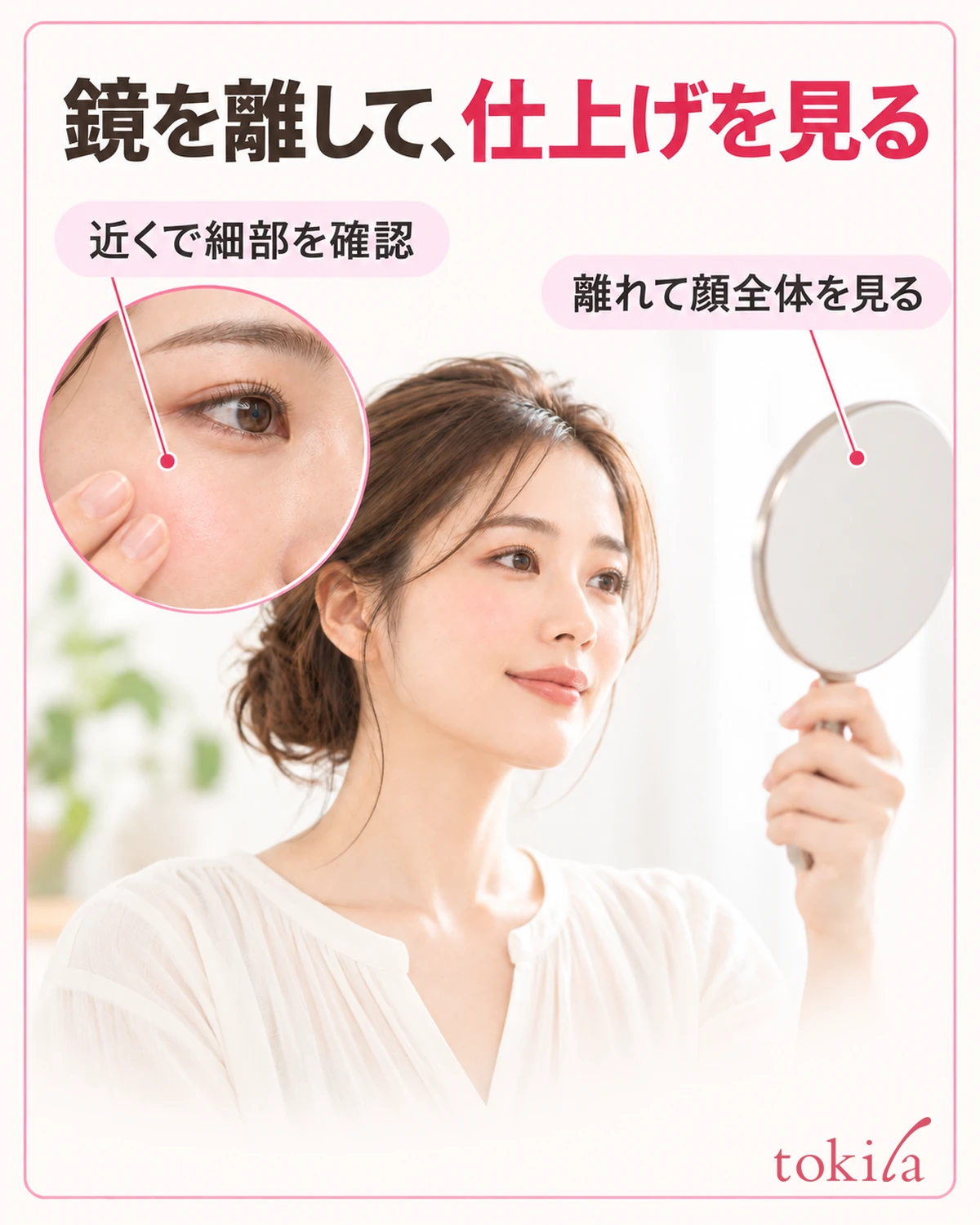
Finally, after checking details close up, also look from a distance where the whole face is visible. Staying close to only one side can make you want to add more color there. Check how the cheeks, nose area, and jawline connect, and consider whether you can stop at the current finish.
Do not decide that finishing powder is always necessary or never needed with cushion foundation. Follow the product's directions and consider the sheen you want to retain and where you use it. Also avoid trying to correct thick foundation by layering on a large amount of powder.
Check a light foundation application separately from UV protection. The SPF and PA labels do not mean that a tiny amount on the skin provides the stated protection. If using sunscreen as well, follow its directions for amount and reapplication, and do not assume that a thin finish completes your sun protection.
After use, put away the puff and container according to their respective instructions. If washing the puff, use a compatible method and dry it thoroughly instead of storing it damp. If the lid will not sit flat, seethis guide to checking the puff, rim, and case. You can review application adjustments separately from storage problems.
For next time, reflect on one actual action, such as checking the amount after the first press, pausing after one cheek, or avoiding picking up too much extra for details. Instead of pressing harder to achieve thinness, pick up, tap, and look from a distance. Use these pauses to find a finishing method for your own cushion.
When switching products, do not rush to judge a new puff by comparing pickup with your previous one; start again with the new product's instructions. Even a small press can pick up a different amount. Looking at what is on the puff together with the cheek's finish, rather than counting container presses alone, helps guide the next adjustment.