When choosing body milk, you may wonder whether to choose a lighter or richer feel, or how to use it differently from cream. First decide whether you want to spread it over broad areas such as your arms and legs, or focus on areas where dryness concerns you. Then compare the feel and the stage after bathing at which it is used to find a place for it in your daily routine.
The name 'milk' alone does not tell you how the formula spreads or how wet or dry your skin should be when using it. Here we organize what to check before buying body milk for moisturizing your body. Enjoy considering fragrance and packaging as you look for one you can comfortably keep using.
1. Decide whether to apply it broadly or focus on particular areas
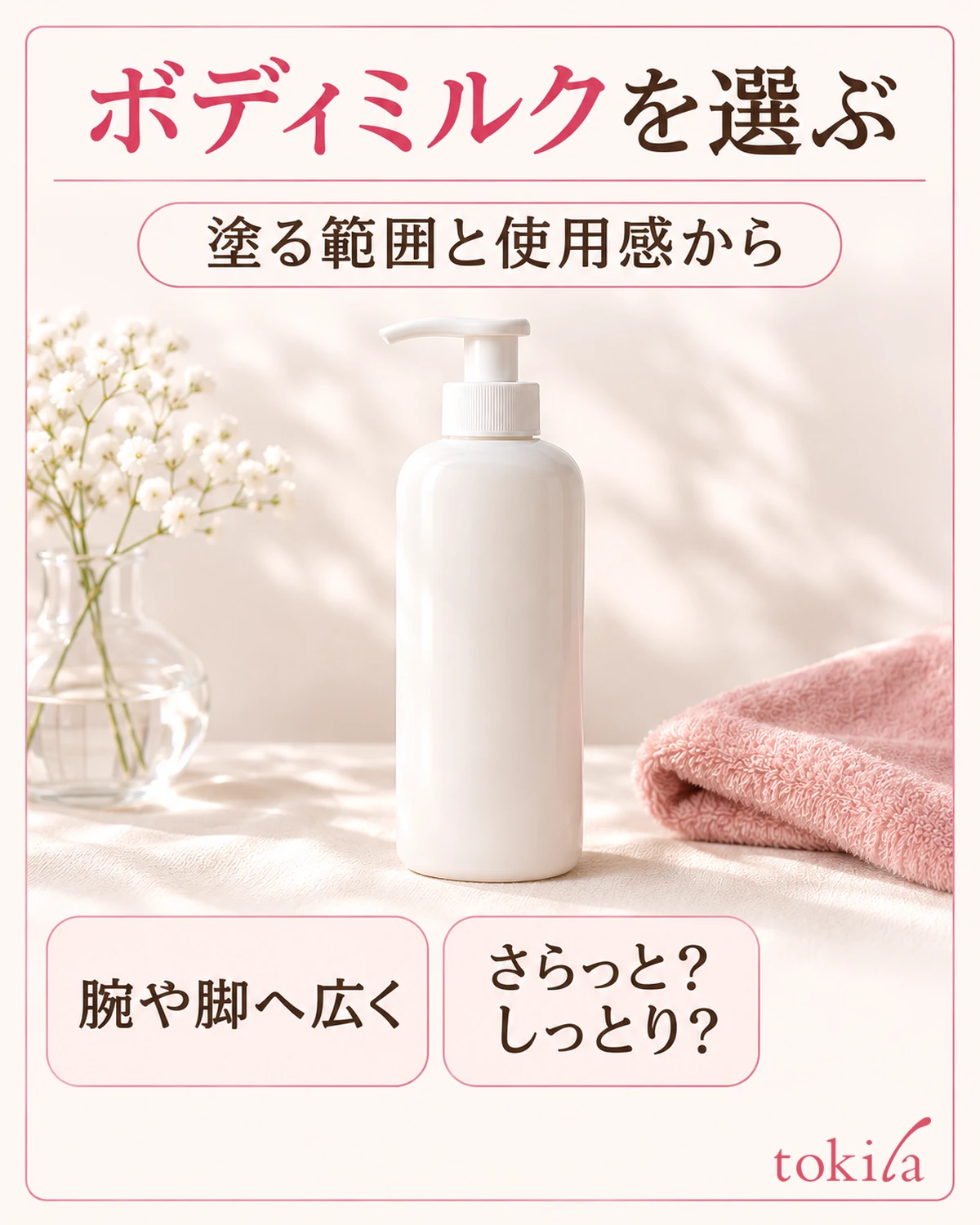
Start by picturing exactly where you want to use it. Do you want to moisturize your arms and legs after bathing, or use it on areas such as elbows and knees? Rather than trying to change your whole-body routine at once, identify one area where your current care feels insufficient to make product descriptions easier to assess.
For broad areas, how easily a product spreads with your palms can guide your choice. For targeted use, check how easily it works into that area. However, milk is not always light, nor cream always heavy. Products in the same category can feel different, so prioritize individual descriptions over the category name.
If you already own body cream, put into words when it feels inconvenient. Does it take time to spread over your legs, do you dislike the feeling left on your palms, or do you want a different fragrance? Knowing what you want to change about your current product helps you avoid simply accumulating products with similar roles.
If you also want to use it on your face, read which areas it can be used on rather than assuming a body product can serve both purposes. Check use around the lips and eyes separately too. If sharing with family members, choosing also involves checking age guidance and suitability for each person's skin condition.
You do not need to assign a medical diagnosis to an area that looks dry. Do not try to resolve redness, severe itching, wounds, or similar problems by testing a new moisturizer there. If your skin has abnormalities, read the precautions and consult a healthcare provider as needed.
2. Compare the details behind a light or rich feel
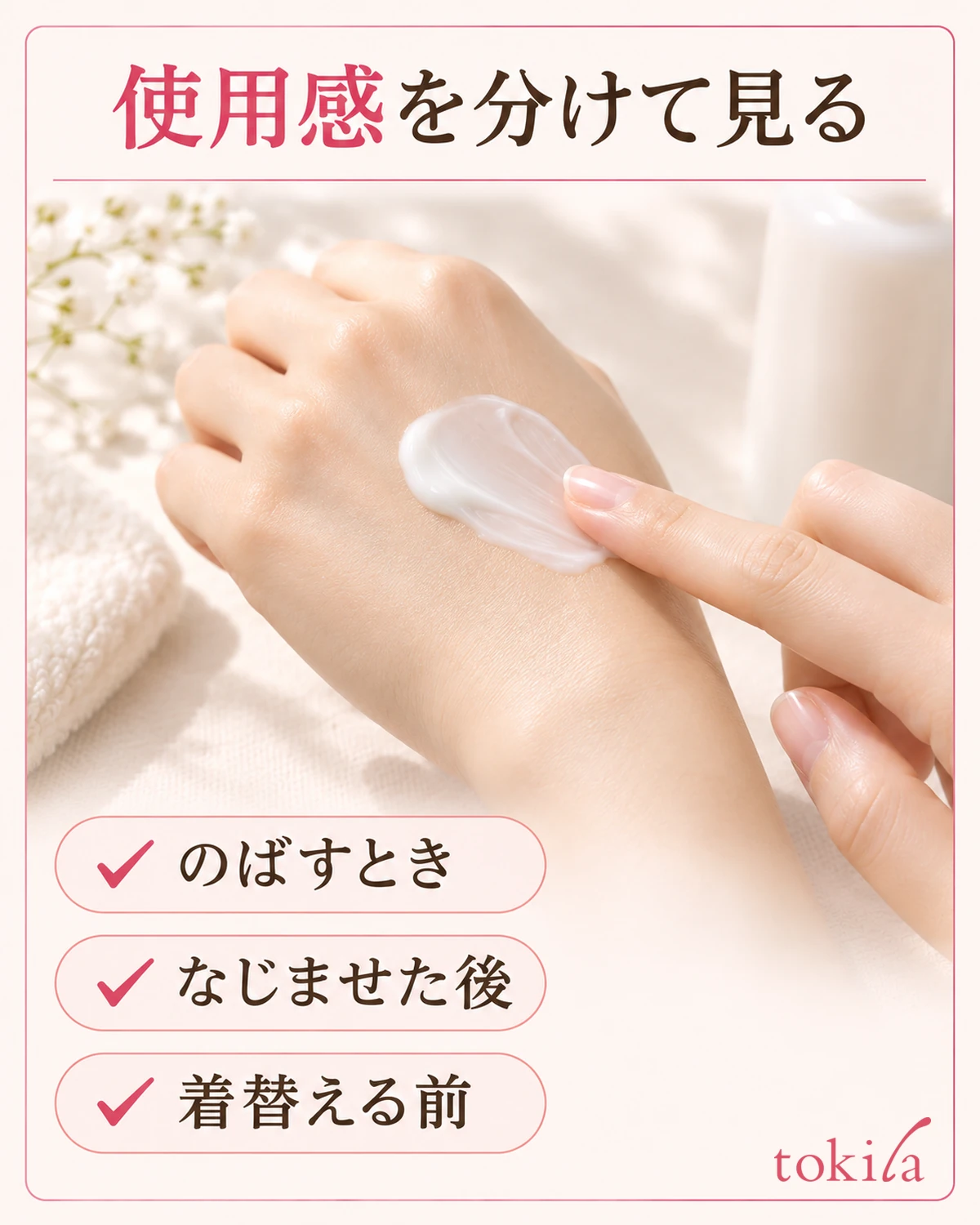
'Light' and 'rich' are useful starting points for describing your preferred feel, but being more specific makes choosing easier. Consider separately how the product spreads as you move your hands, what remains on your palms afterward, and how your skin feels before you get dressed.
If testing is available, follow the store's instructions and start with a small amount on skin without abnormalities. Layering several products on the same spot makes their individual feel harder to distinguish. Check how one spreads first, then its feel afterward, so you do not decide solely from the immediate impression.
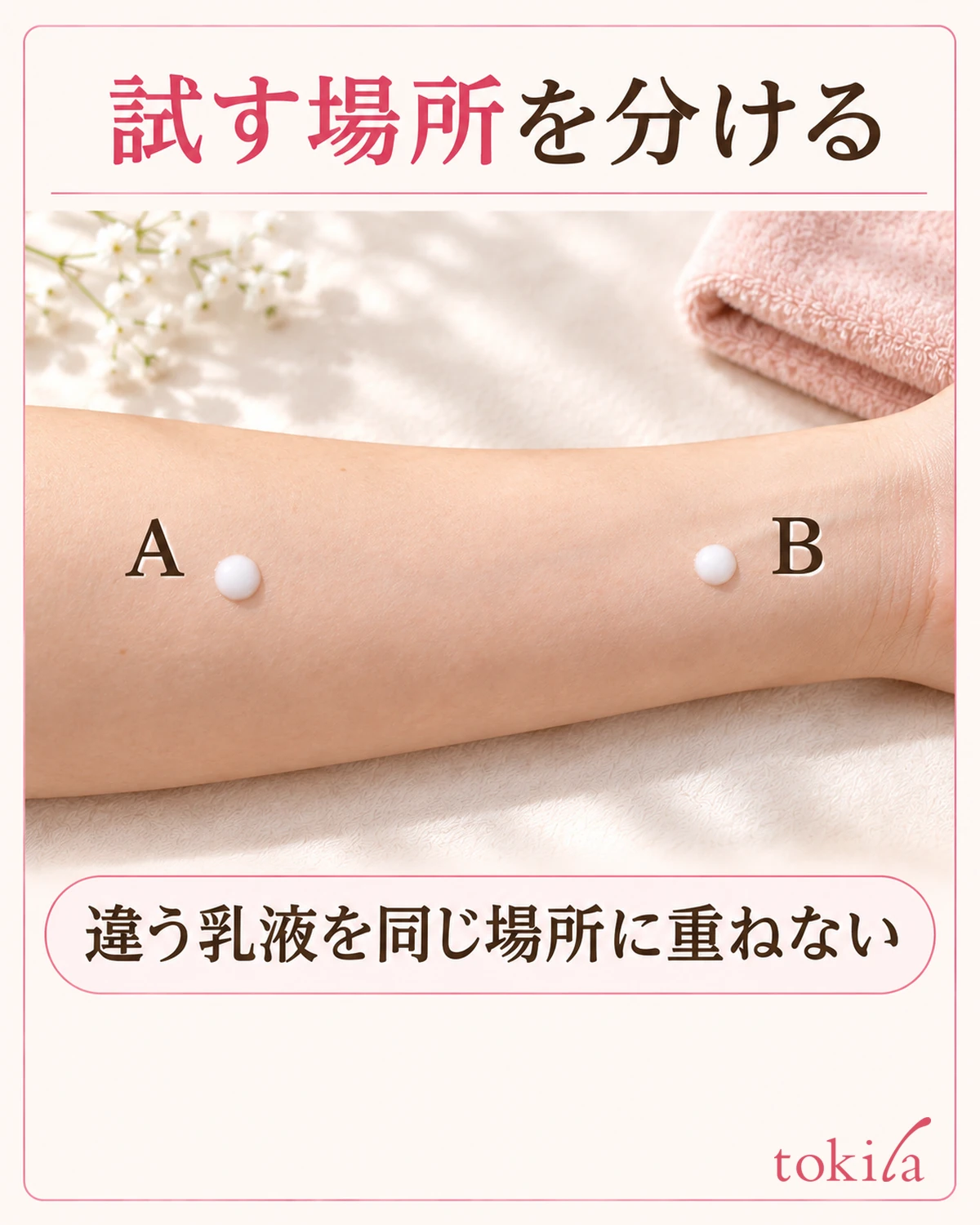
However, the feel on the back of your hand will not necessarily be the same on your legs or after bathing. If you cannot test it, compare the described feel with what you like and dislike about your usual product. Do not rank moisturizing performance solely by the shape or height of the white liquid in a photograph.
Feel and suitability for your skin are separate checks. Do not assume that a nonsticky product suits everyone or that a richer feel necessarily improves dryness. If redness, irritation, or other abnormalities occur, stop using it and follow the product precautions rather than continuing until you get used to it.
Even if ingredient names catch your attention, avoid choosing solely on the basis of one ingredient. Assess application feel as a feature of the whole product. Terms such as 'intensive moisturizing' do not make it a substitute for treatment; check whether it fits the body moisturizing and everyday feel you want.
3. Check how wet or dry your skin should be after bathing
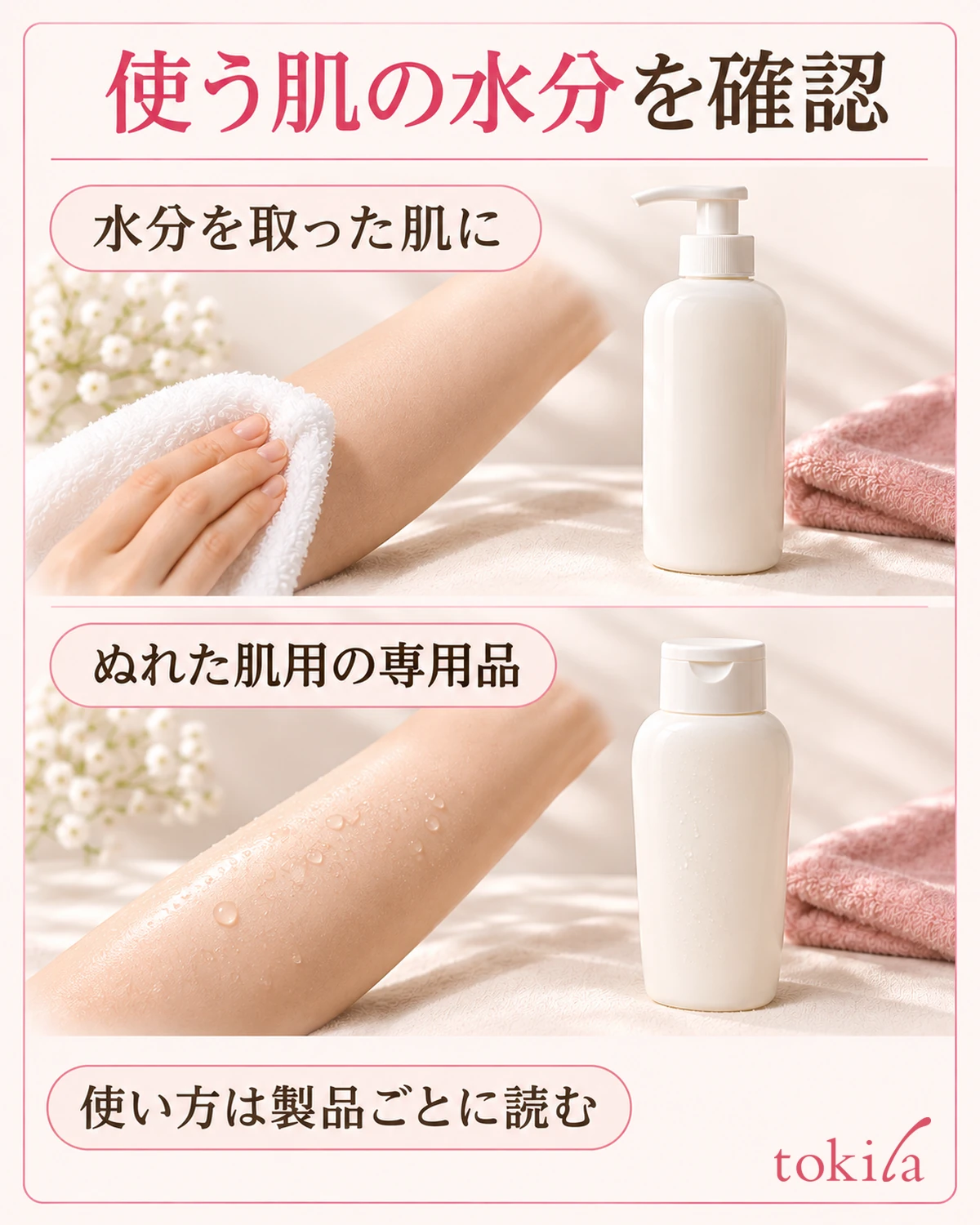
If you want to use it after bathing, check before buying whether it is for towel-dried skin or specifically for wet skin. Even emulsion-like products do not necessarily share the same timing. Match the instructions to your routine: do you want to finish in the bathroom, or apply it at the sink before getting dressed?
If a product is for use after toweling off, do not change the assumption to skin with water droplets remaining. Conversely, instructions for wet-skin use apply to that particular product. This distinction is about choosing conditions you can follow comfortably, not universally ranking which moisturizes better.
If you are considering an emulsion for wet skin, how to use body emulsion on wet skin also explains the application sequence and the towel step. Do not transfer instructions that are not given for your current product directly to it.
Read the amount per use for each product too. Different pumps do not necessarily dispense the same amount, so do not compare cost or feel using the same number of pumps as your current product. Knowing the application area and indicated amount also helps you picture dispensing and applying it.
If you also want to use it in the morning, consider where it fits into getting ready. Do not substitute moisturizer for sunscreen; check each product's purpose when UV protection is needed. Rather than inventing a method of mixing and applying them together, treat them as separate steps according to their instructions.
4. Choose fragrance and packaging for when and where you use it
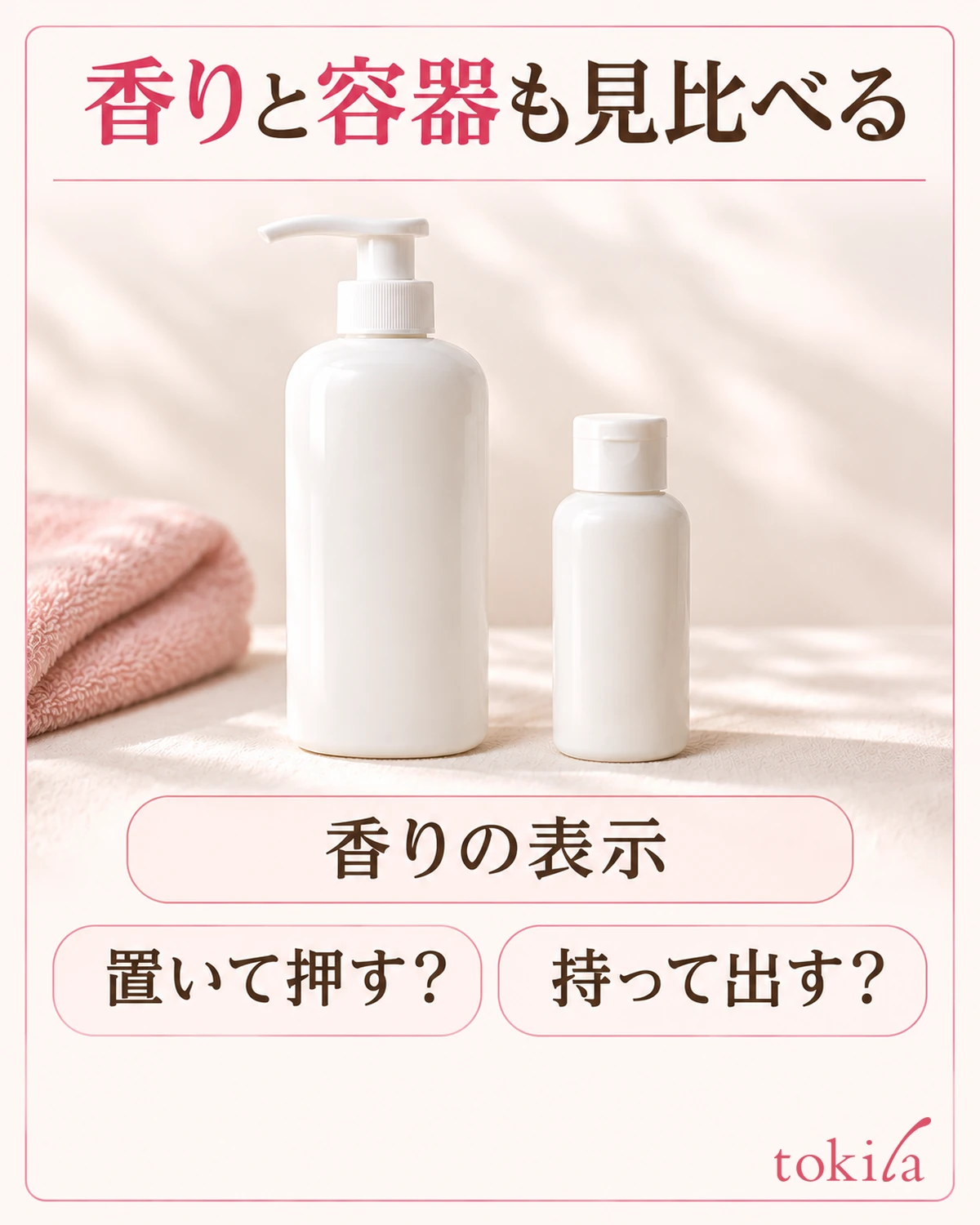
Whether you want to enjoy fragrance or prefer a less scented routine affects everyday convenience too. Think about more than preference: will you use it before bed or in the morning, and alongside other scented cosmetics? Check scented or fragrance-free labeling rather than judging by the bottle's color.
Fragrance-free does not guarantee absolutely no smell or that nobody will experience irritation. Assess your impression of the scent and suitability for your skin separately. If you cannot check the fragrance, keep it as a candidate based on the description rather than deciding as though you had tried it.
Packaging includes pumps operated while standing and bottles or tubes held while dispensing. Which feels convenient depends on whether you want to dispense several times for broad areas or carry a small amount. Do not infer formula properties from packaging, such as assuming a pump means a light formula or a small container means targeted use.
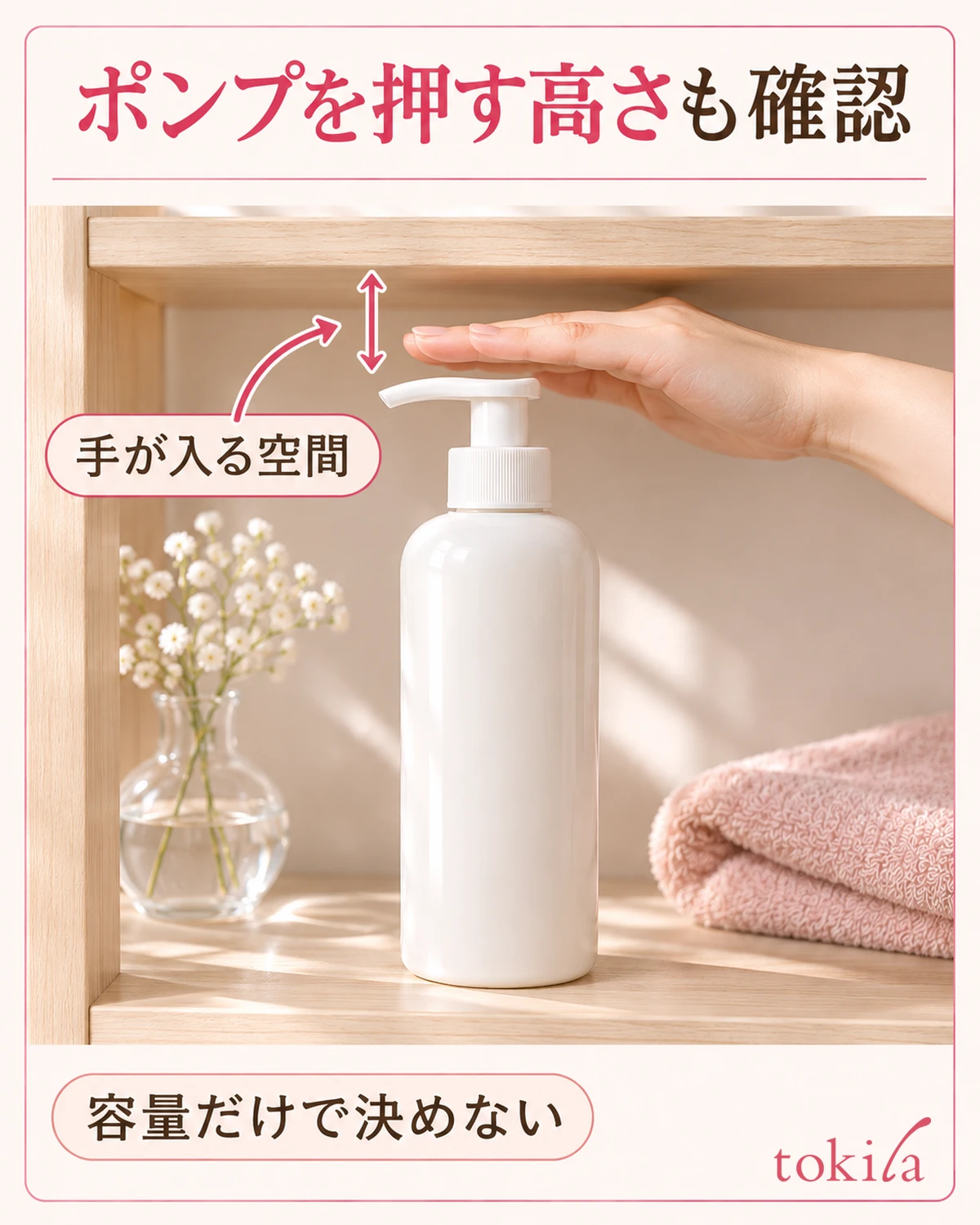
Where you plan to place it, check whether the base is stable and whether there is room above the pump for your hand. Capacity alone will not reveal inconveniences such as being unable to fit your hand into a shelf to press the pump or close the opening for carrying. Relate the container's shape to the actual movements involved.
When choosing a refill, check the compatible original container and product type. The same brand or similar packaging does not necessarily mean different contents can be mixed. For your first purchase, understanding the container and storage method also makes later replenishment less confusing.
5. Narrow remaining candidates using three everyday conditions
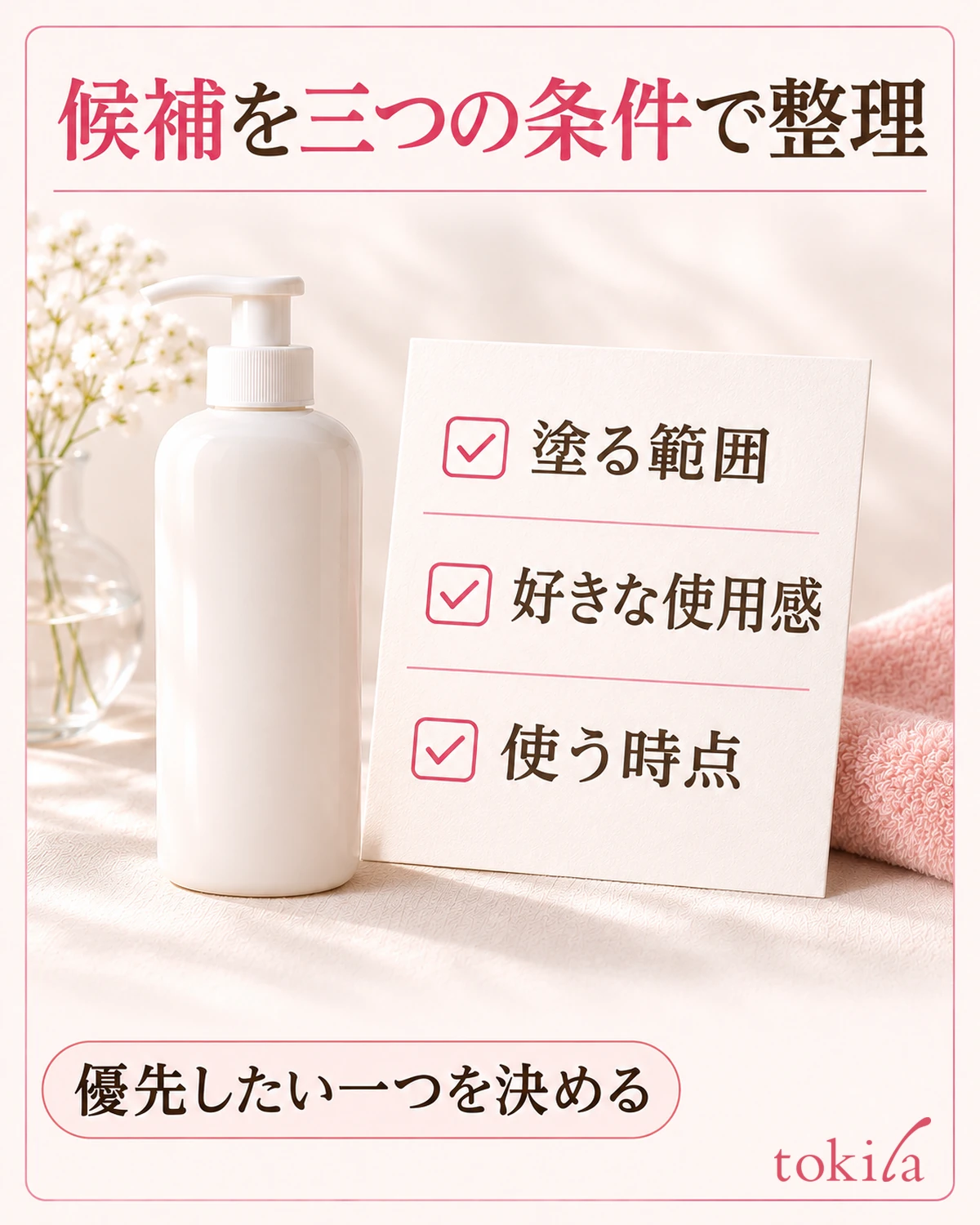
If you are undecided between two or more products, list 'application area,' 'preferred feel,' and 'timing of use' in one note. Choose your first priority, then compare fragrance and packaging to keep your criteria clear even when descriptions contain many details. You do not need a product that ranks first in every category.
For example, if you want to cover your arms and legs after bathing, first check spreadability over those areas and whether it is used after toweling off. For targeted moisturizing before bed, prioritize suitability for that area and your preferred feel. This organizes selection; it does not prescribe identical amounts or application methods for all products.
When considering capacity and price, bigger is not necessarily better suited to you. For a new product, consider frequency of use, where it will sit, and handling after opening. Rather than setting an arbitrary daily amount or reducing the indicated amount to make it last, check whether you can use it as directed.
If clumps remain or spreading feels difficult after purchase, review the indicated amount and skin moisture conditions before immediately layering another moisturizer. If you are unsure about hand surfaces or spreading movements, how to spread body cream may also help. Distinguish stopping because of abnormalities during use from reviewing application movements.
Start your choice with where, when, and what feel you want, rather than competing over ingredient counts or bottle size. Have one reason for adding it to your existing routine, check the labeling, and choose a body milk you would like to welcome into everyday life.