Bubbles gradually appear on the black sheet taken from its packet. You may wonder whether you can simply pat in the remaining liquid and foam after removal, as with your usual hydrating sheet. The first thing to check is not the sheet's color, but whether the label says to rinse after use.
This article covers sheets that bubble on the skin, are removed after the stated time, and require the remaining foam to be rinsed off. Distinguish them from foaming gel packs applied directly, packs made by mixing two ingredients, and hydrating masks that do not require rinsing. Looking ahead from packet preparation through cleanup helps you proceed calmly once it is open.
1. Check the rinsing instructions before using a bubbling sheet
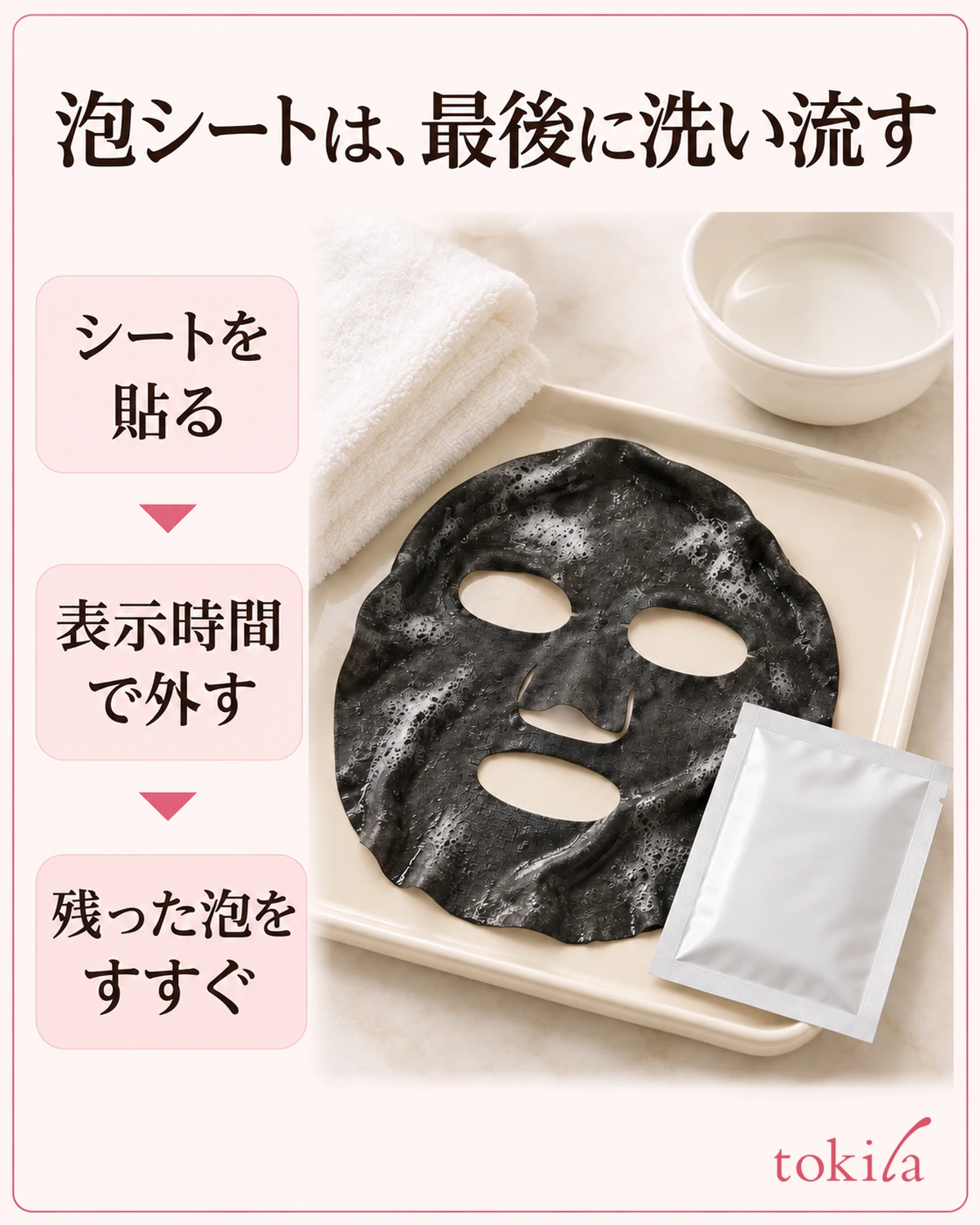
First read the back of the packet for the order of use, wear time, and removal method. Do not assume that anything called a sheet mask is a leave-on product. Look for instructions to rinse the foam with water or lukewarm water. Similar packets can have a different finishing step from ordinary serum-soaked sheets.
If the instructions say to use it after cleansing, do not add a step of applying it over makeup. Remove makeup and cleanse according to your products' directions first. Do not assume that bubbling means it also removes makeup, or that the sheet's black color represents removed dirt.
Before use, check that you can reach a sink and have water for rinsing and a clean towel ready. There is no need to fit a rinse-off product into travel without access to water or a moment when you want to sleep immediately after removal. Choosing a time that allows you to finish the entire routine is part of choosing how to use it.
When buying, packaging with readable finishing instructions lets you review the procedure at home. Rather than comparing only sheet counts or colors, decide whether you want an addition to your usual hydrating sheet or a rinse-off treatment. The need to rinse changes where and when the mask is convenient to use.
Follow the packet for frequency as well. If it specifies a number of uses per week, stay within that range first. A small amount of foam is not a reason to use another sheet the same day, nor is wearing it longer last time a reason to use it daily next time. Plan its use separately from a regular cleanser used whenever you wash your face.
2. Prepare the unopened packet and unfold the layered sheet
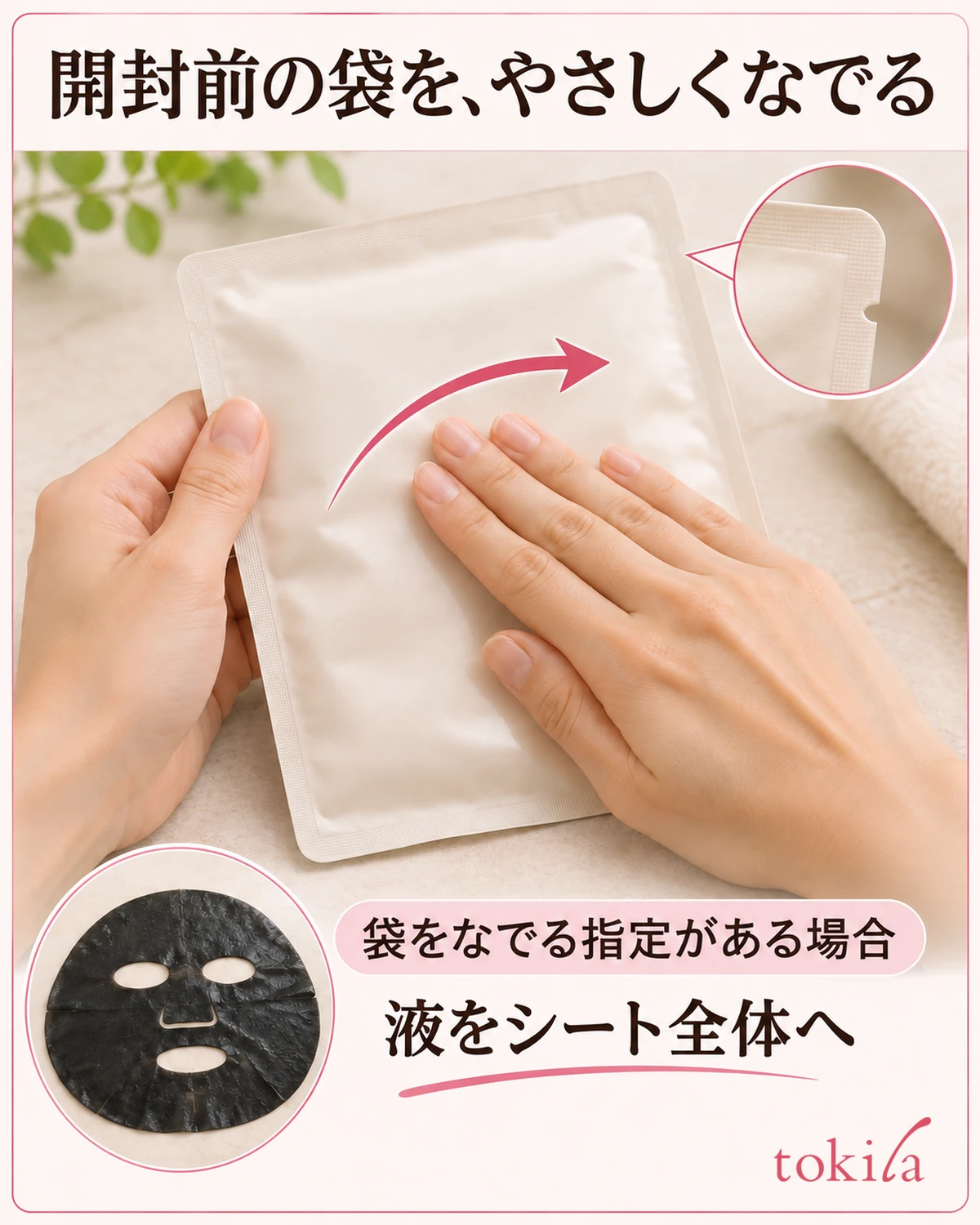
For a product that instructs you to smooth the packet before opening to distribute liquid throughout the sheet, gently stroke the unopened packet with your palm. This prepares the liquid inside to spread through the sheet. Do not substitute forcefully squeezing or swinging the packet; follow the instructions for your product.
With clean hands, locate the opening notch and open the packet. If instructed to lightly remove moisture from your face or hands, do so before handling the sheet. If wet hands make the packet slippery, do not force it apart; dry and organize your hands and work surface first. Read the wear time and rinsing steps beforehand so you do not search for instructions after opening.
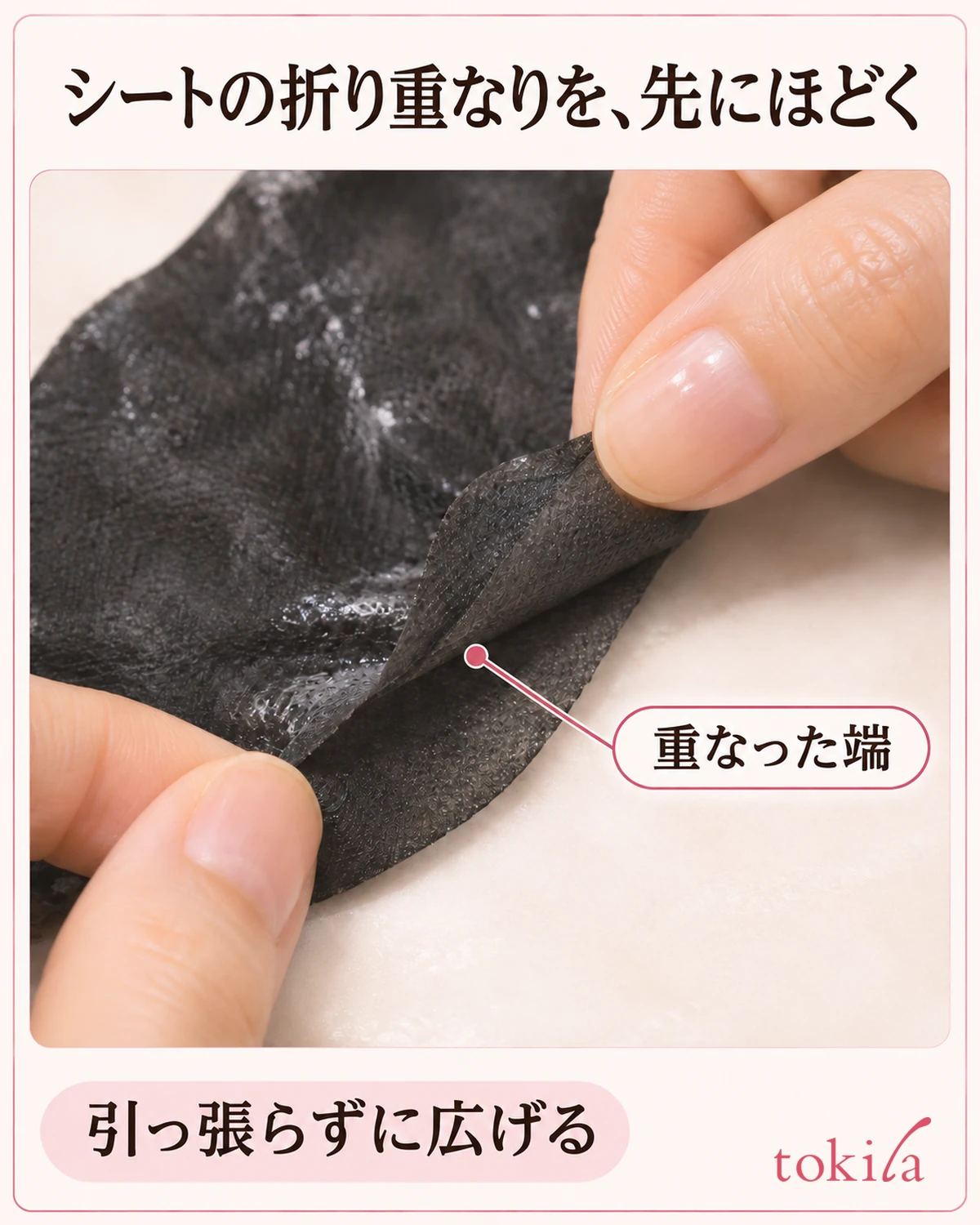
Find the folded edges of the removed sheet and unfold it little by little. Layers of wet black fabric can look like a single layer. Gently change your grip on the edges to separate the layers and find the eye and mouth openings. Do not pull thin areas with your fingernails or press the folded sheet against your face.
When changing your grip, bring the part you are unfolding into view before looking for the next edge. Unfolding it in front of your face makes it easier to lose track of the top, bottom, and openings. Check the whole shape at hand first. If liquid may drip around you, handle it over a clean work surface before bringing it to your face.
Once unfolded, identify the top, bottom, eyes, nose, and mouth. Before stretching hard to fit your face, check whether it is upside down or still folded somewhere. Follow any instruction to use immediately after opening. Do not return it to leftover liquid for storage or wash and reuse a used sheet.
3. Align the eyes and mouth, and follow the stated wear time
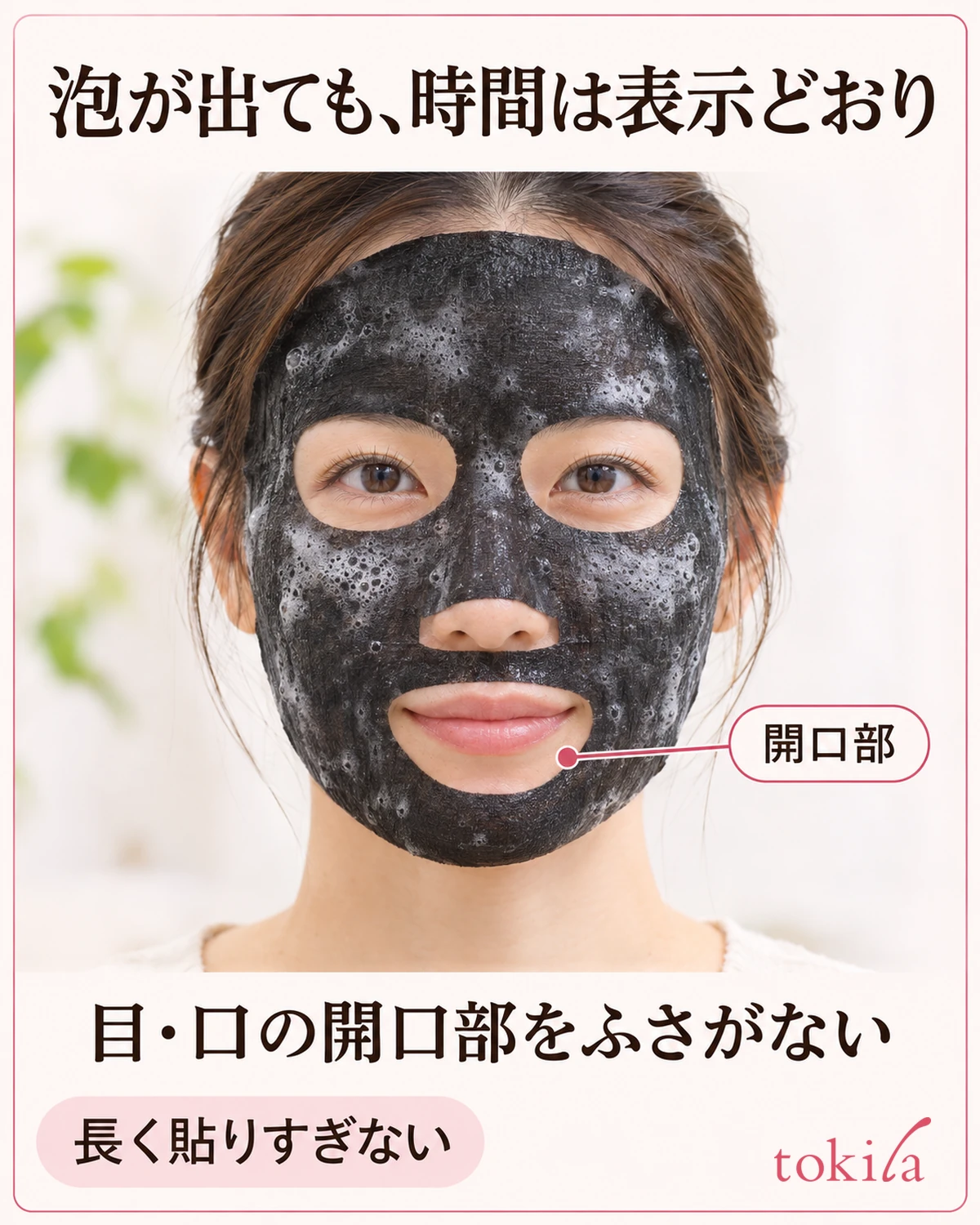
Move hair aside first if necessary, then place the sheet with its eye and mouth openings aligned. Keep the areas around the eyes, nose, and mouth unobstructed, and gently adjust it along the face. If an edge lifts, check folds and alignment rather than pressing it down hard. Also check the boundary with your hair to keep foam from spreading into the hairline.
Once applied, use a timer or similar tool to follow the time on the packet. Even bubbling products have different wear times, so read the packet you have just opened instead of memorizing one fixed number of minutes. Follow any instruction on when timing starts, and do not extend wear until more foam develops.
Even when bubbles begin appearing, there is no need to rub repeatedly over the sheet. Do not press with your fingers to increase foam or add another cleanser or water; leave it and observe. Do not interpret bubble size or speed as the amount of dirt or strength of action on the skin. You are not waiting for the same foam volume as in a photograph.
Place the timer where you will not need to operate it repeatedly with wet hands. Having a mirror and a way to check the time ready means you need not watch only the foam. If you lose track of the time, do not restart the count and extend the wear period.
If the sheet shifts while you wait, pause tasks involving large movements. Avoid continuing while merely wiping away foam when the sheet has slipped toward your eyes or mouth. Assess whether it can be adjusted to fit, and do not keep wearing it if it does not fit or feels uncomfortable.
4. Remove the sheet before rinsing foam from the skin
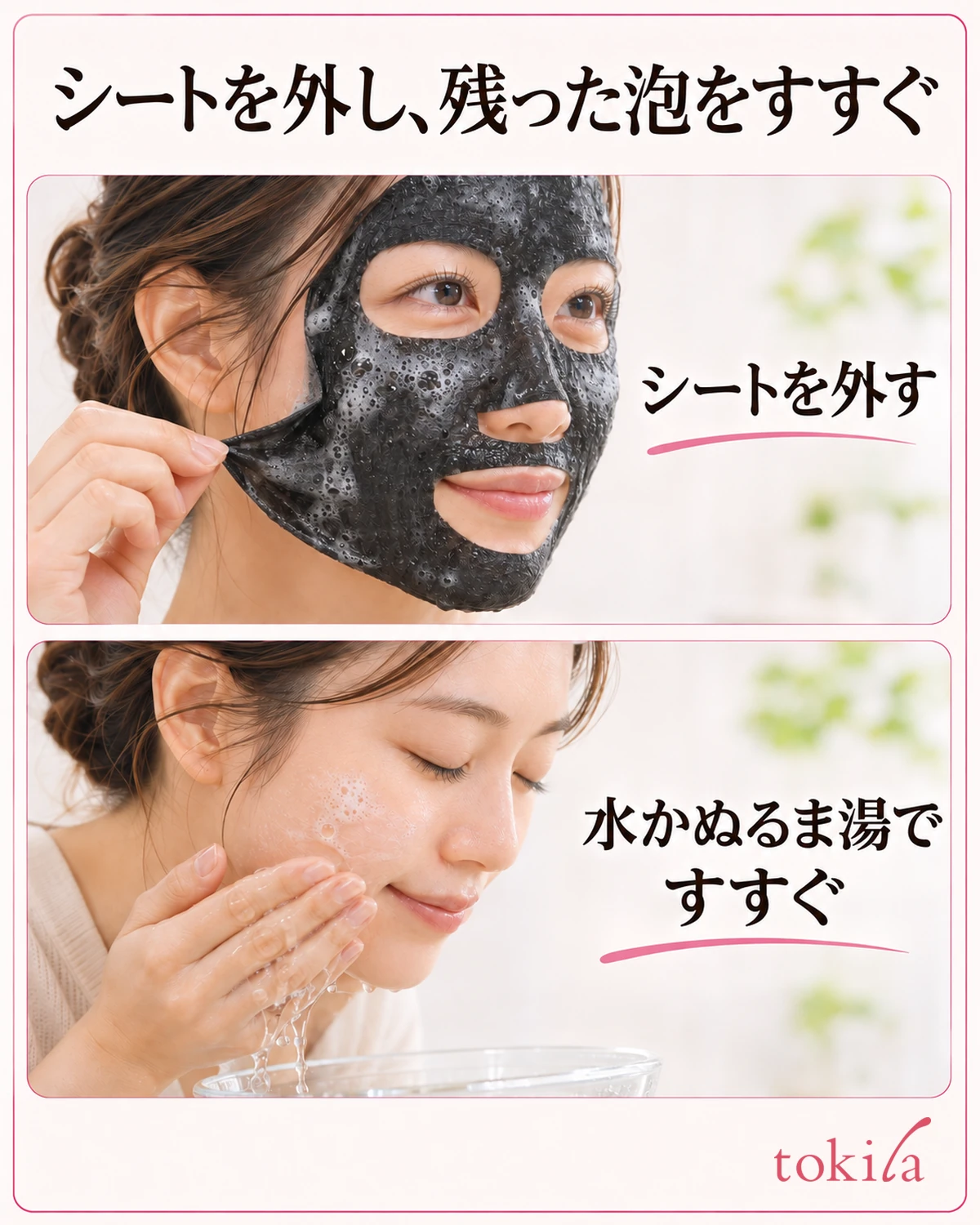
When the stated time is up, hold an edge and remove the sheet from your face. Continued bubbling is not a reason to wear it beyond that time. Removing the sheet and rinsing afterward are separate steps. Do not flush the used sheet away; discard it according to the disposal instructions.
Rinse remaining foam with water or lukewarm water as directed for your product. Do not finish by pressing it into the skin like a hydrating liquid. Gently rinse your face with water cupped in your hands without adding forceful rubbing. Pay attention to your angle and hand placement to keep foam out of your eyes and mouth.
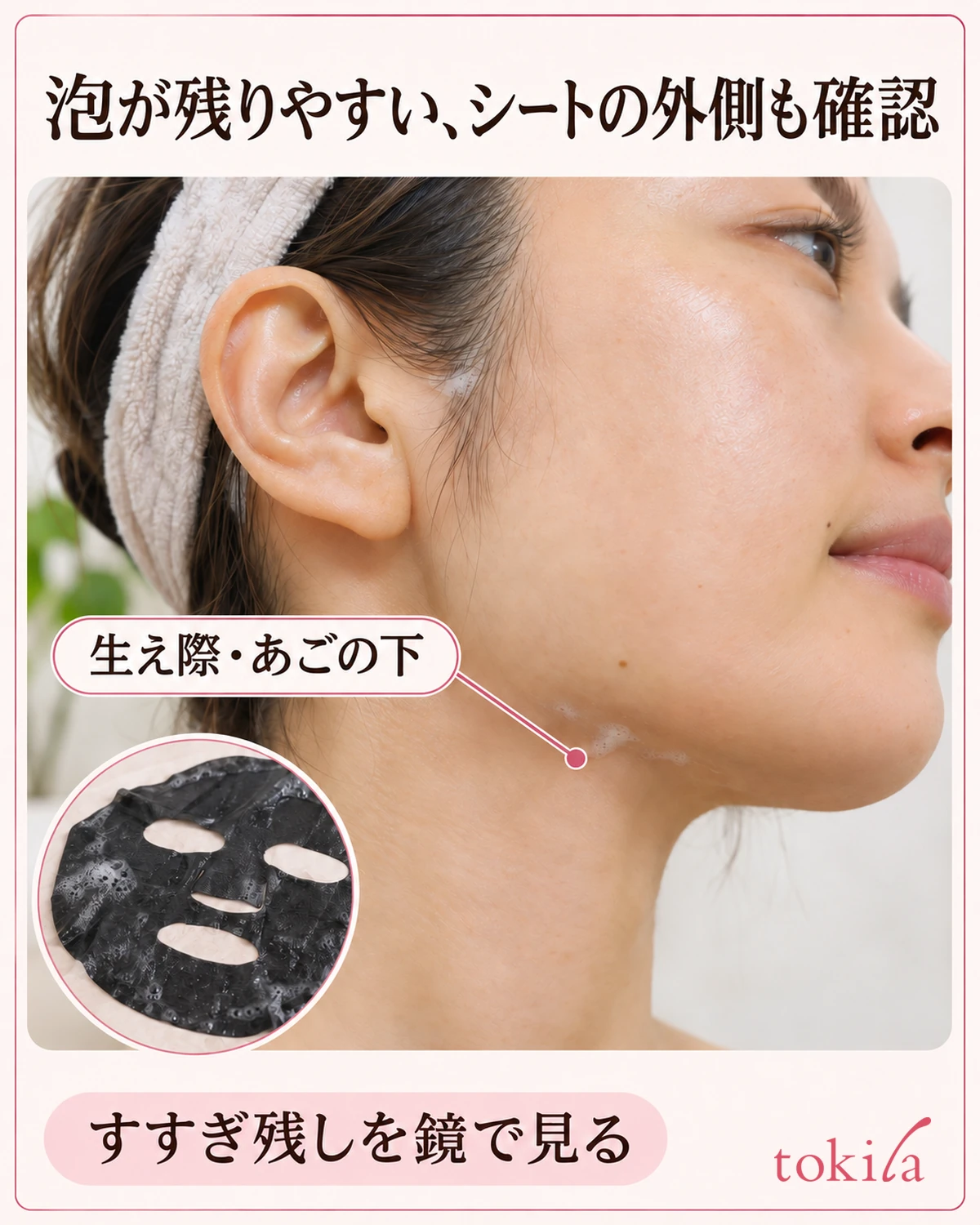
As the foam disappears, use a mirror to check near the sheet's outer edges, including the hairline, in front of the ears, and under the chin. These areas are hard to see straight on, so turn slightly to check. Bring water to remaining foam instead of finishing by rubbing hard with a towel to hide it.
After rinsing, gently remove moisture with a clean towel and continue with your usual moisturizing routine. For towel use, see how to remove moisture after cleansing without rubbing with a towel. Finish rinsing first rather than trying to blend unremoved foam into your next toner or cream.
Keep the used packet where its directions remain readable until you finish rinsing and subsequent skincare. Instead of touching your phone and other containers with foamy hands, first organize your hands and sink area. Consider both the removal time and the time you have available afterward.
Do not assume an additional cleanser is always needed afterward. If instructed to use after cleansing and rinse at the end, follow that sequence. Decide whether to add another cleansing or exfoliating step after removal by checking each product's directions and your skin's condition. Adding steps is not the goal.
5. Stop if foam approaches the eyes or mouth, the sheet shifts, or discomfort occurs
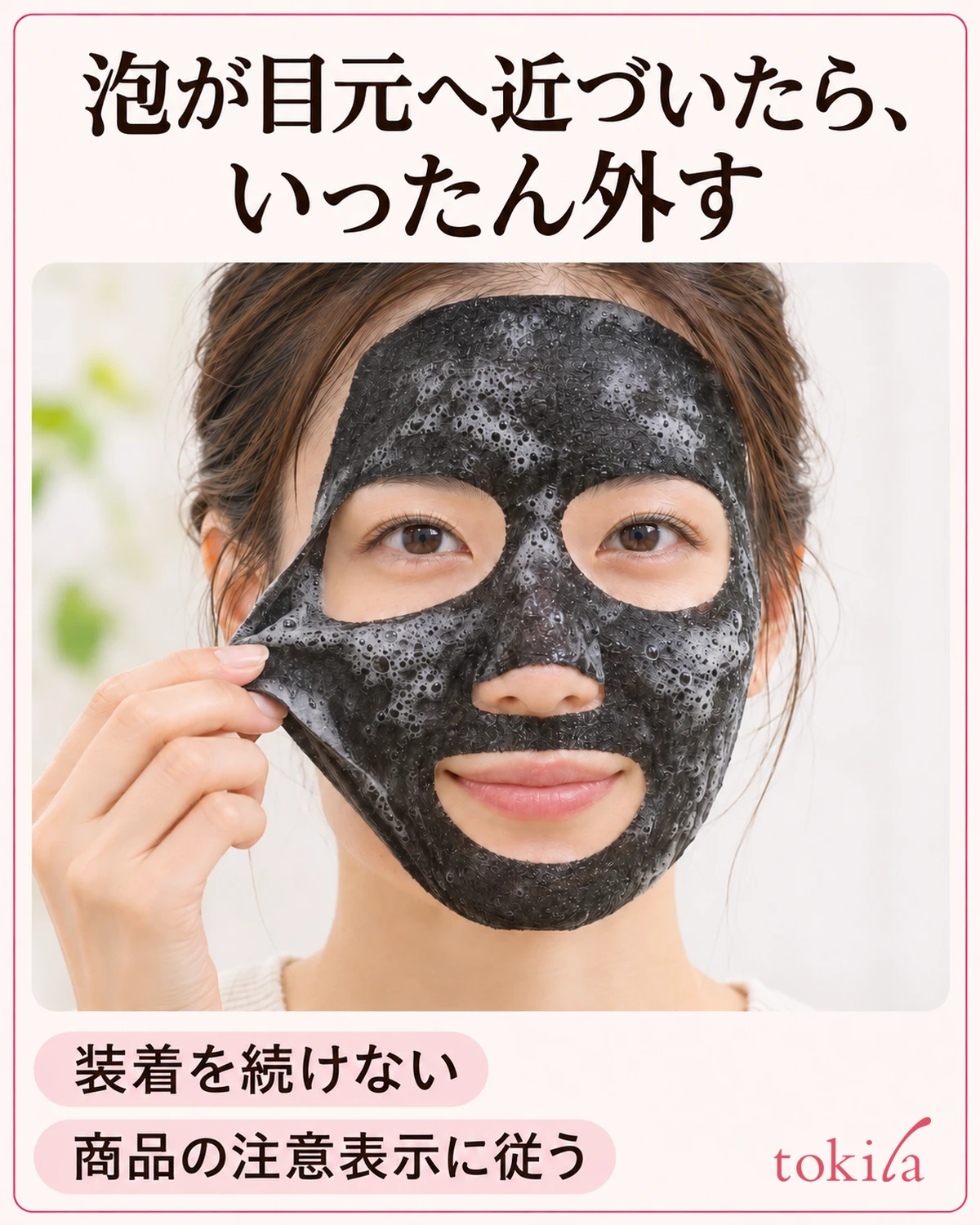
If foam approaches your eyes or mouth, or the sheet shifts significantly, remove it rather than enduring it until the timer sounds. Do not keep wearing a displaced sheet by closing your eyes and putting up with it or continuously holding its openings in place. Follow the product's precautions for handling after removal as well.
If it gets in your eyes, follow the instructions on the packet. Do not rub to remove it; rinse or take other measures as directed. Stop use if the product does not suit your skin. Do not assume every intensity of sensation during bubbling is normal or proves stronger action on your skin.
If little foam appears, do not add other ingredients or extend wear time. First check the label for any preparation before opening and for issues with the expiration date or storage conditions. If something remains uncertain, such as an unusual condition or damaged packet, stop using it and check according to the product guidance.
Before next time, review one step that caused difficulty, such as moving hair aside, unfolding the sheet, or positioning the timer. This type needs a different procedure from an ordinary hydrating mask. To compare basic handling, choose an article matching your mask type from the skincare know-how list.
What matters is using your sheet in the stated order and completing rinsing after removal, rather than creating lots of foam. Checking first whether it is rinse-off and following the wear time and opening positions helps you distinguish its routine from your usual hydrating sheet.