Can a scrub cleanser be used every day, and should you lather it first? Feeling particles may make you think you should rub harder than with your usual cleanser. Before starting, check the product's frequency and instructions rather than the size of the particles.
This article covers facial scrub cleansers, from dispensing and rinsing to moisturizing afterward. Products you lather first and those you apply directly before adding water follow different steps. Rather than trying to remove all roughness at once, follow the method for the product you are using.
1. Check that it is for the face, how often to use it, and where it fits in your cleansing routine
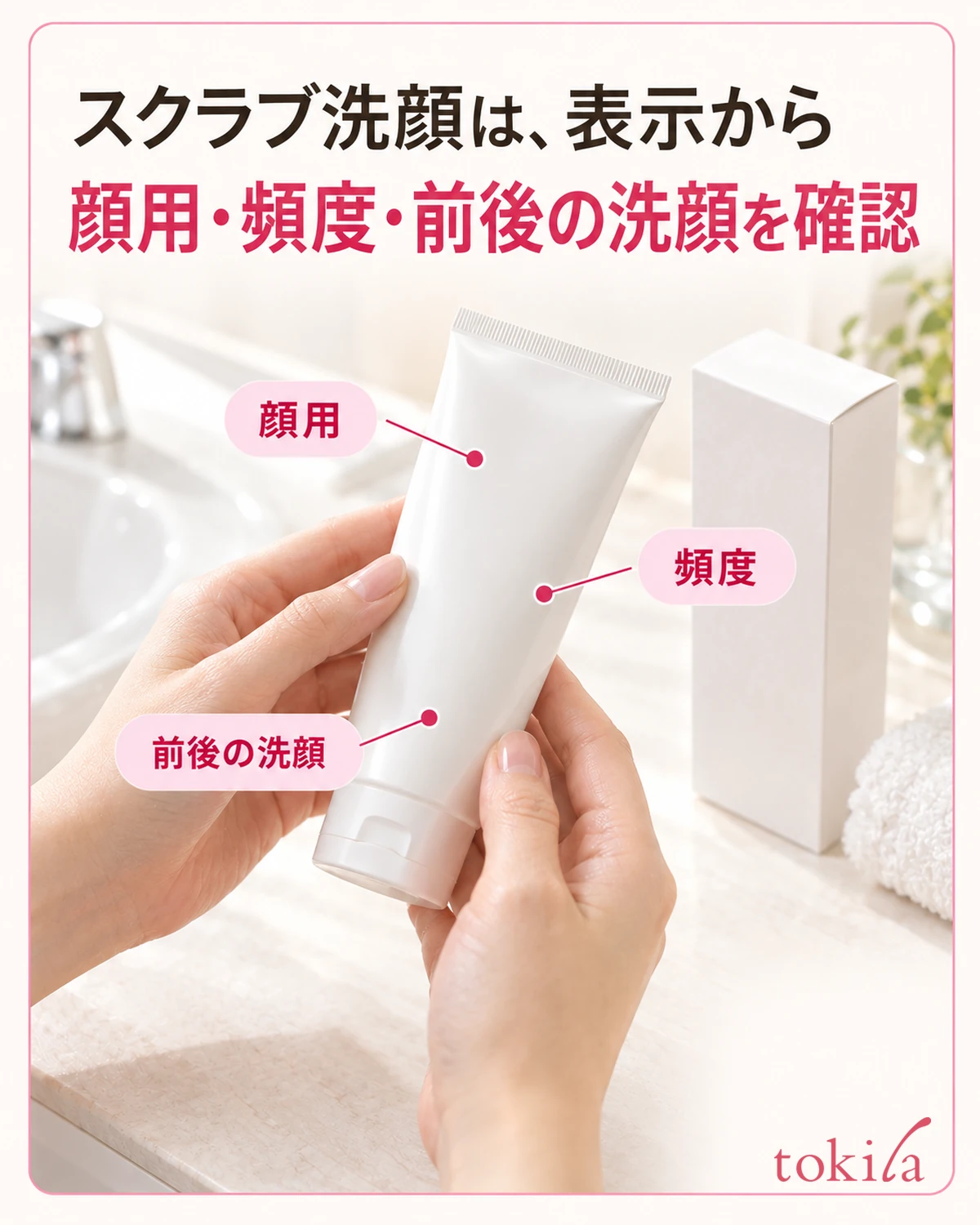
First, check the container to confirm that it is a facial cleanser. Body scrubs and lip scrubs have different uses even if they also contain particles. Do not use a body product on your face or sleep with a rinse-off product on. Read both where to use it and how to rinse it off.
Next, look for frequency instructions such as daily cleansing or a certain number of times a week. Some products specify morning and evening use, while others recommend a few times a week; not every scrub should be used once a week. Do not carry the frequency of your previous product over to a new one.
Also check separately whether it replaces your regular cleanser or requires regular cleansing after the scrub. Some rinse-off treatments are used after cleansing, so do not decide the order by the name alone. Map out the steps needed before and after the product you will use today.
On days you wear makeup or sunscreen, check how to remove it first. Containing scrub particles does not necessarily make a product a substitute for makeup remover. Consider the conditions for removing layered cosmetics separately from removing sunscreen and makeup, and do not scrape color off with the particles.
Do not apply it to areas excluded in the precautions or to areas with wounds, swelling, or eczema. Do not assume that invisible particles mean no irritation or that a quasi-drug is suitable for every skin condition. If your skin is already red or painful, avoid use and seek advice as needed rather than repeatedly experimenting with how you wash.
If you cannot find the frequency, check the outer packaging and instructions before increasing use yourself. Keeping the instructions before discarding the container helps distinguish products on days you switch cleansers. Decide whether you can use it tonight before preparing at the sink.
2. Dispense one use and match the lathering order and moisture conditions
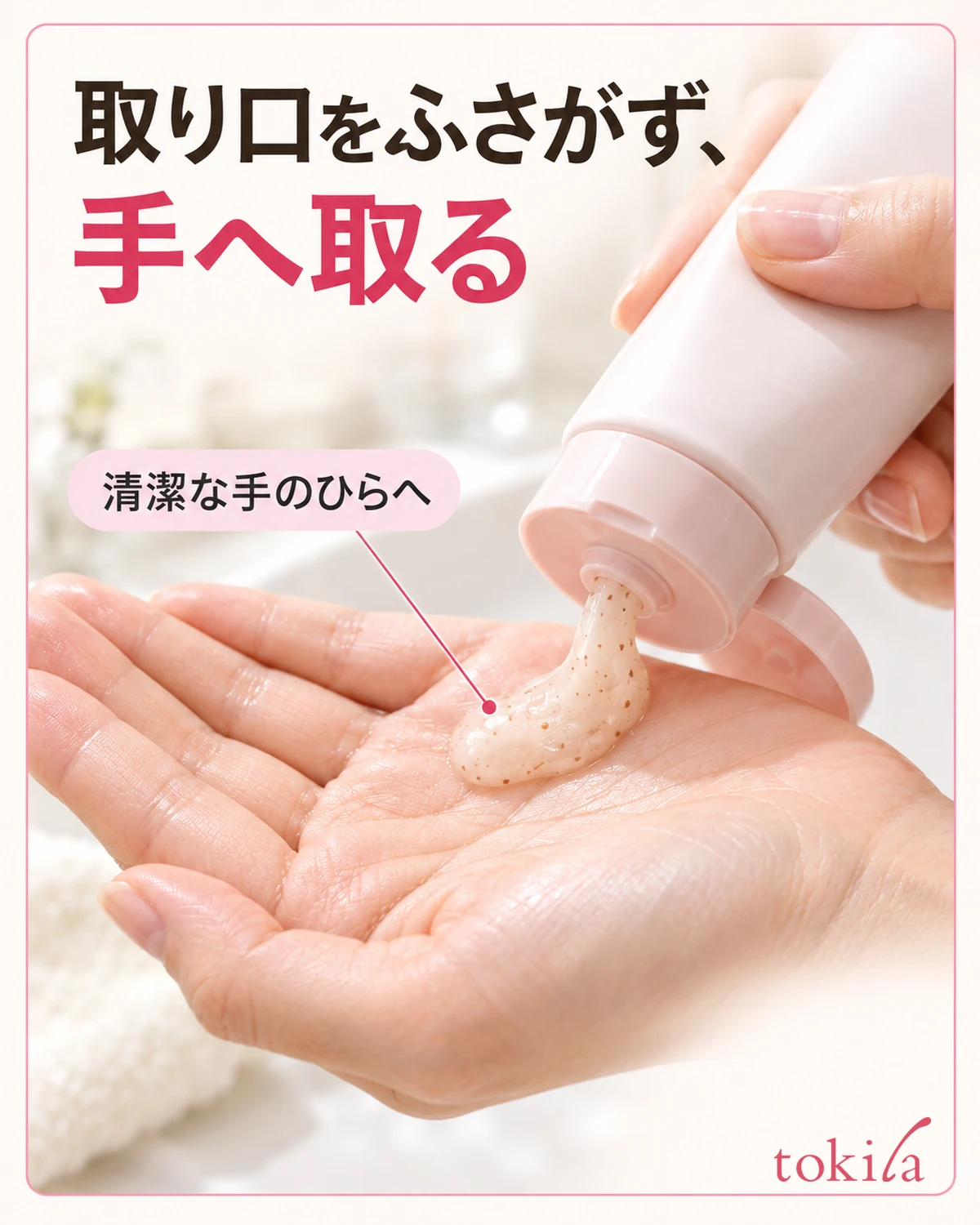
Clean your hands and read the recommended amount. Follow the described dispensing method, whether it is a length squeezed from a tube or an amount on a finger. Do not take another product's amount or the scoop shown in an image as your own dose. Avoid spreading too little with force or dispensing a lot and rubbing for a long time.
If instructed to wet your face or hands, do so before dispensing. If a separate method for dry skin is described, do not mix it with regular use. When one container gives methods for both regular use and a targeted mask, read the amount, moisture conditions, and time as a set for the method you will use today.
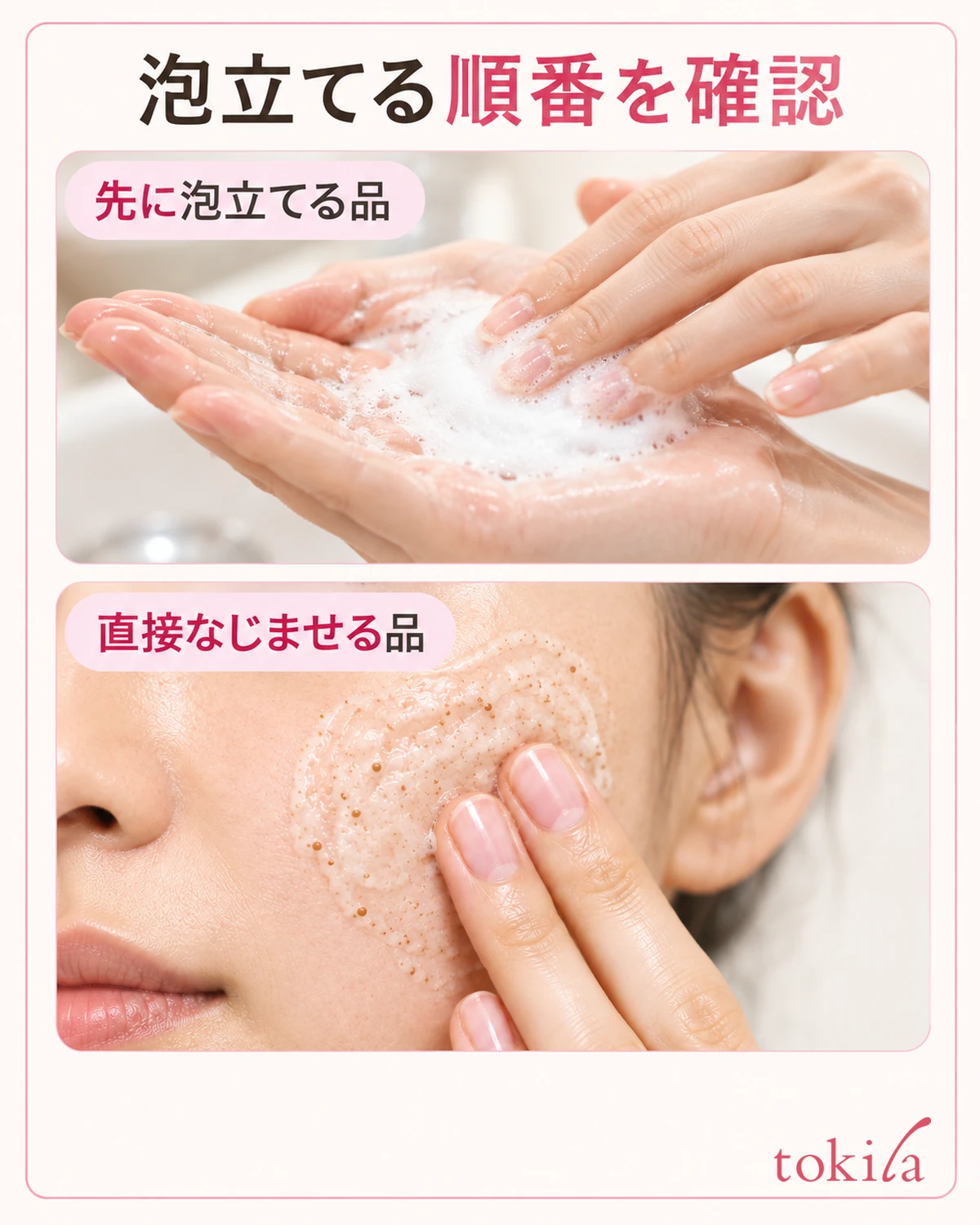
For a product that must be lathered first, add water or lukewarm water in your palm and bring it to the specified state before applying it to your face. You do not have to add this step to a product applied directly without lathering. Conversely, do not ignore instructions to lather first and rub hard on your face to make foam.
For products that require adding water after direct application, spread them on the skin first and follow the subsequent moisture and lathering order. Little foam alone is not a failure; check at which stage the product should lather. Do not add steps such as kneading it in your palm to crush particles or mixing in another cleanser to adjust their amount.
When dispensing, keep your finger away from the opening and transfer the required amount to a clean palm. Do not add water to the container or put dispensed product back. If residue is around the opening, check how it may be cleaned; do not insert tools into the hole to remove it.
The basics to prepare are your cleanser, water for rinsing, and a clean towel. Check each product's instructions to see whether a cleansing brush or sponge may be used. Do not make adding friction from tools to a product with particles a standard step.
3. Spread lightly with finger pads instead of repeatedly rubbing one area

Spread lightly with finger pads within the permitted area. Keep your nails away and aim for contact that does not strongly pull the skin or press into the cheeks. Pressing until you distinctly feel the particles is not a way to check the right pressure.
For direct-application products, begin with the specified moisture conditions. If directions for movement or a stage for adding water are given, follow that order. For lathered products, start by spreading the prepared foam. In either case, do not press a finger into one rough spot and rub it back and forth repeatedly.
Even if your nostrils or chin concern you, read the permitted area before increasing repetitions or time there. Do not try to push material out of pores with particles or scrape dark-looking spots with your nails. Color in a mirror or texture alone cannot identify the type or amount of dirt removed.
Keep the product away from areas you are instructed to avoid, such as around the eyes and lips. Directions to wash the face broadly do not mean bringing particles to the lash line or eyelids. Do not try to use up cleanser left on your hands at the edges of the face; stay within the specified area.
Even when a method includes leaving the product on, use only the stated areas and duration for that method. Do not make spontaneously leaving it longer during regular washing or waiting until it dries a general tip. You do not need to extend facial contact time to match your time in the bath.
If abnormalities such as redness, itching, irritation, or pain occur, stop use and follow the precautions, including rinsing off as directed. Do not continue with lighter pressure or try another product again the same day. Consult a dermatologist or another appropriate clinician if the abnormality persists.
4. Rinse away particles and cleanser around the hairline and nostrils

After washing, rinse as instructed, using water or lukewarm water as specified. Bring water cupped in your hands to your face and rinse carefully so that cleanser and particles do not remain. Do not assume hot water will finish faster; move to rinsing with water instead of rubbing hard.
Also check the hairline, around the brows, the sides of the nostrils, and under the chin in a mirror. Rather than rubbing repeatedly to search for particles, bring water again to places where some may remain. Follow the product's instructions and check residue instead of assigning everyone the same rinse count.
If it enters your eyes, do not rub; rinse thoroughly right away. Consult an ophthalmologist or another appropriate clinician if symptoms remain, and do not try to remove particles with a finger or cotton swab. Avoid opening your eyes and bringing hands covered in cleanser toward them while rinsing.
If instructed to use your regular cleanser afterward, complete that step. Do not add repeated washing until skin feels squeaky to a product that does not call for extra cleansing. A moisturized feel alone does not mean residue remains; finish as directed for the product.
Finally, gently place a broad area of a clean towel against the face to absorb water. Do not rub with a corner rolled into a small ball or move the towel back and forth to remove particles. If particles remain, revisit rinsing rather than scraping them off by wiping.

5. Follow with moisturizing and decide the next use from the instructions and your skin's condition
After removing water, proceed with skincare according to your toner or moisturizer's instructions. You do not need to keep rubbing your cheeks to repeatedly check their texture immediately after washing. Distinguish adding moisture from layering cosmetics to conceal discomfort.

If your skin feels tight, review the amount, moisture conditions, pressure, rinsing, and cleansing steps before and after use. Post-cleansing tightness and the transition to moisturizing may also help. Next time, do not change everything at once; first restore any step that departed from the instructions. Persistent symptoms should not be handled as a routine adjustment.
Decide the next use from the product's frequency and your skin's current condition. You do not need to make up for a missed use with two uses the following day. A set weekday can help you keep track, but it is not a commitment to use it even on days with redness or pain.
If you also use exfoliating toner or rinse-off masks, read each product's compatibility instructions before combining them on the same day. Do not assume that more treatments with similar purposes are better; organize the names and order of products to check unclear combinations. Using a scrub does not establish a rule to increase or reduce serum as well.
After use, check how to handle the opening and cap, and close the container properly. Next time you choose a product, look beyond the appearance of particles or a strong sensation: consider whether it replaces daily cleansing or is an occasional addition, and whether the lathering effort and permitted areas fit your routine.
With a scrub cleanser, start by aligning frequency, moisture conditions, application, and rinsing rather than aiming to polish hard. After checking your product's method, choose a day and steps you can comfortably follow now.