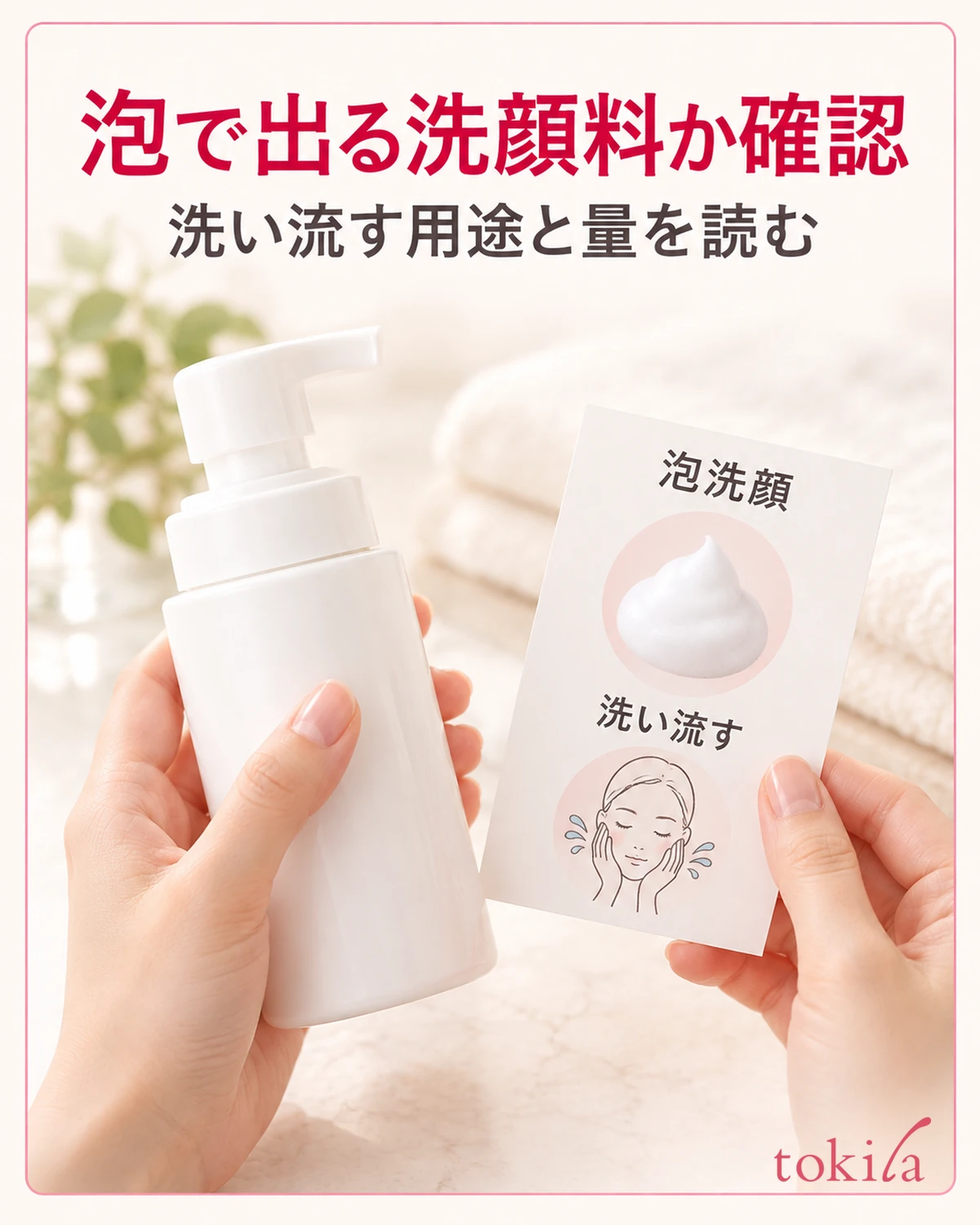
If you want to try bronzer but are unsure whether it goes where contour does or whether you can also wear blush, first decide what color you want to add to your cheeks, rather than focusing on the brown powder. Deepening shadows and adding warmth call for different placement and areas to check.
Here is how to introduce powder bronzer applied with a brush, focusing on the cheeks. Creams and liquids can involve different tools and product order, so start with your own product’s directions rather than substituting the same technique. Skin tone and lighting affect color. Check your whole face instead of trying to reproduce the color in the photos.
1. Decide what color and purpose you want from bronzer
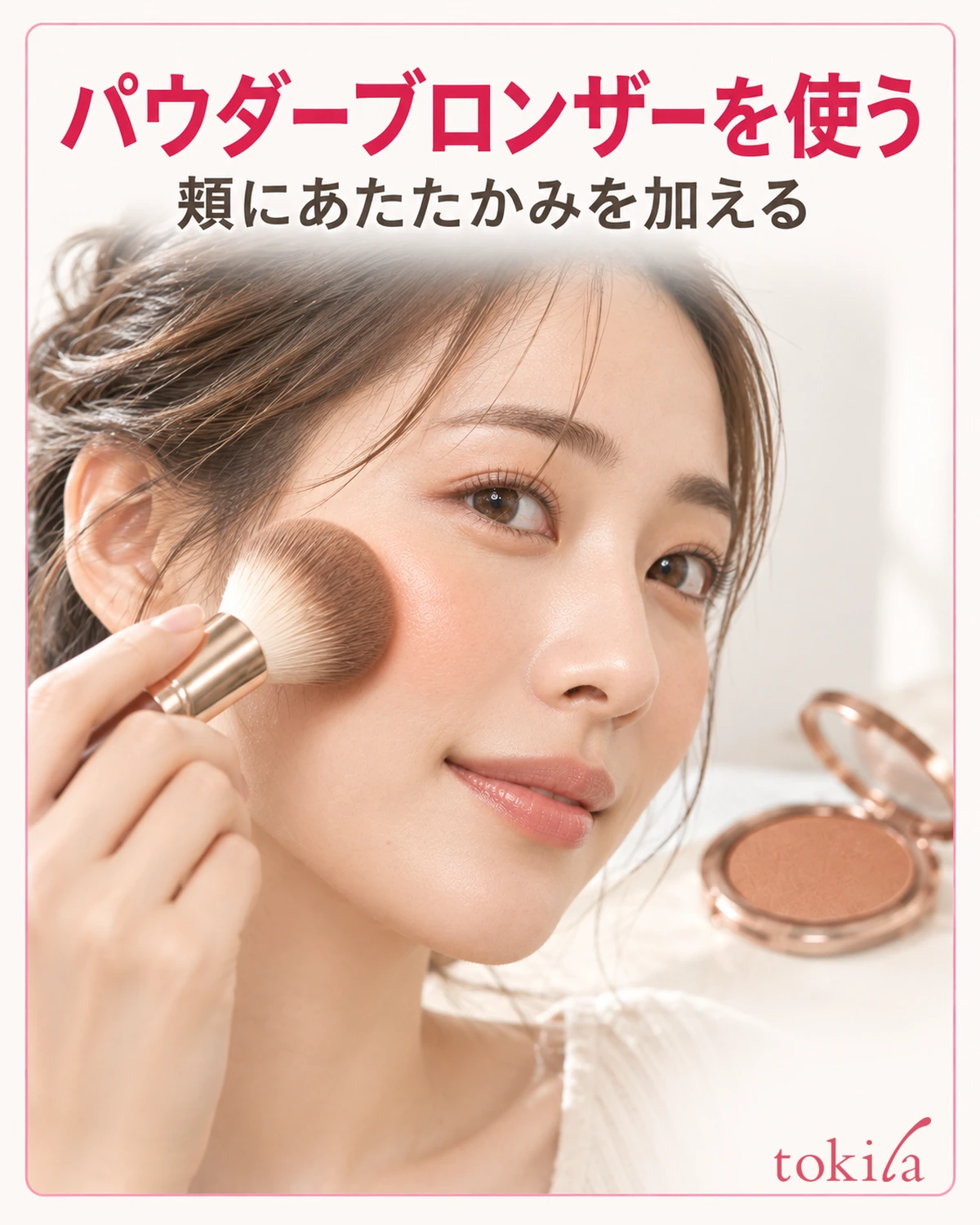
First distinguish adding warmth to your cheeks from adding dimension around the face. Some bronzers use makeup to suggest a sun-kissed color. They serve a different purpose from products intended for tanning, and application does not necessarily provide sun protection. Prepare sunscreen separately according to its label.
When choosing a shade, consider redness, yellowness, and sheen as well as how light or dark it is against your skin. Browns that look warm on the cheeks and those that look subdued as shadows create different impressions. Match the product’s shade description to your desired finish rather than insisting on a fixed number of shades darker than your skin.
When adding warmth high on the cheeks, you do not need to outline the chin and sides of the nose from the start. Check color on a small part of the cheek before deciding whether to extend it. Mixing the aims of shaping contours and adding color makes placement unclear; briefly deciding your initial purpose makes it easier to proceed.
Some products also work for contouring, but distinguish their shade and placement directions for that purpose from adding warmth to the cheeks. Even with the same compact, placement changes with the purpose. Rather than applying solely according to face-shape categories, use a mirror to see where the added color actually appears.
You do not have to show bronzer, blush, and highlighter at equal intensity. If bronzer is today’s focus, you can begin with a small amount of blush. If color is already on your cheeks, consider where to add bronzer, including how the colors change when layered.
2. Prepare your base and pick up powder gradually
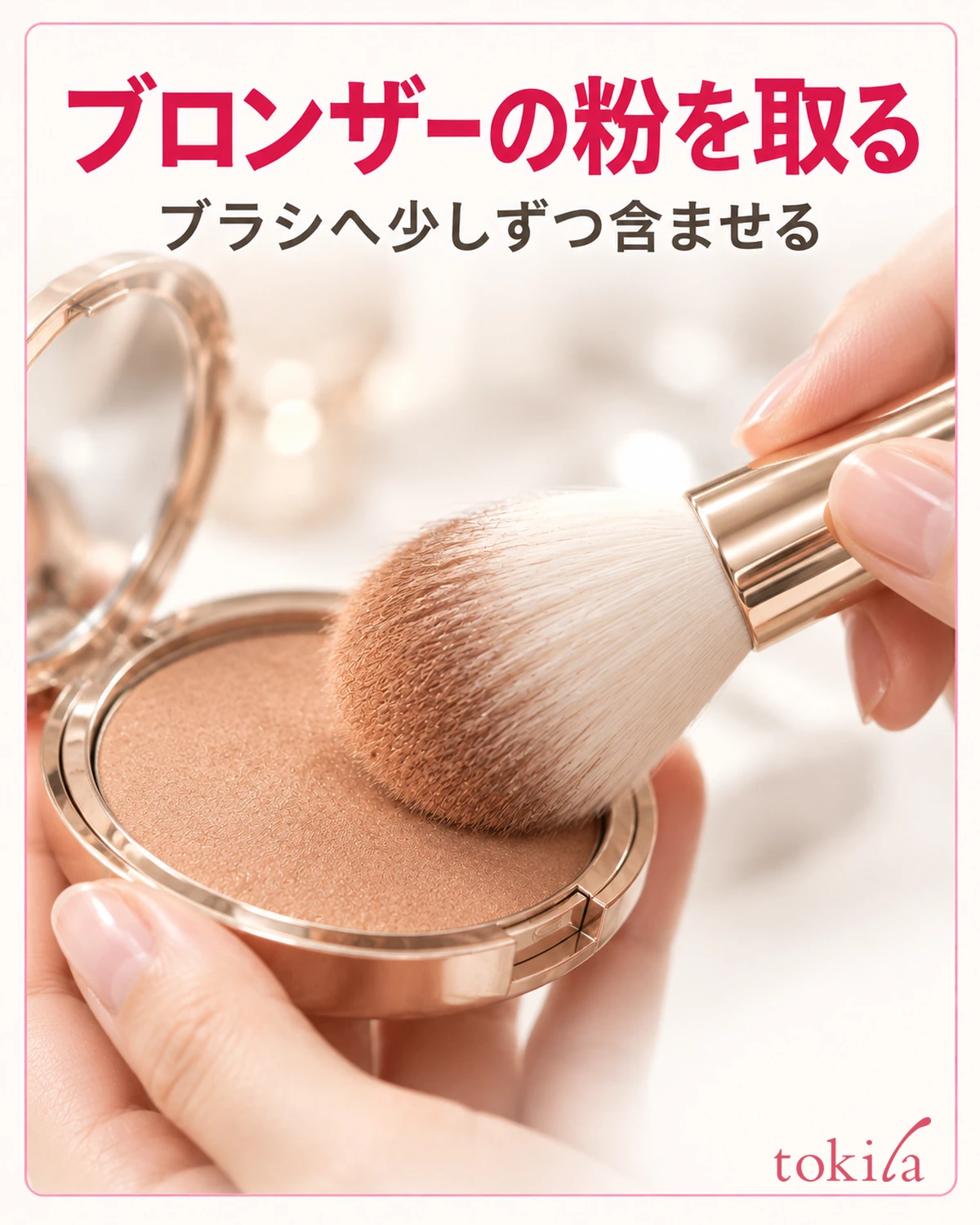
Check your base makeup before picking up powder. If primer or foundation remains thick in one area, powder may apply unevenly despite similar brush movements. Check product order and gently even the base before proceeding. This does not mean every base must first be set with face powder.
Use the kind of brush recommended for your bronzer. Choose according to whether you want soft bristles to apply a thin layer broadly or work in a smaller area. Residual blush or other colors make bronzer’s own shade harder to judge. Inspect the tips first and switch to a clean brush if substantial powder remains.
Touch the bristles lightly to the pressed powder and pick up a little at a time. Instead of pressing hard to produce strong color at once, limit the initial application. Brush size and powder hardness affect how many passes it takes. Do not assume the same number of strokes always produces the same amount; also inspect the bristles.
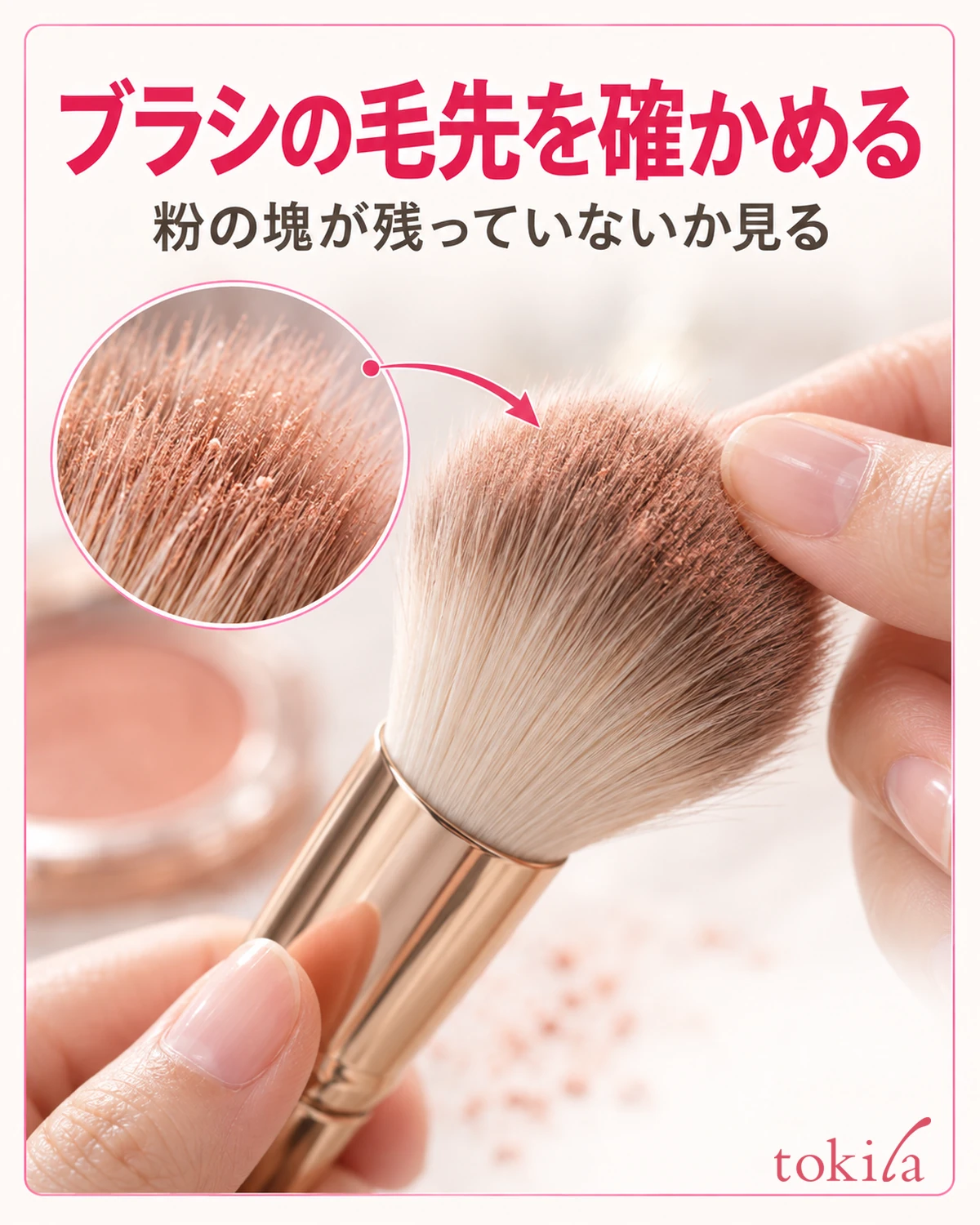
In the supplementary photo, look for clumps at the bristle tips and between the hairs. Brown-looking bristles alone do not measure how much will reach your face. If large clumps remain, adjust the excess according to the product’s directions before bringing the brush to your face. Do not shake so hard that powder flies or blow on it.
Because color can concentrate where the brush first touches, avoid trying to use up all the powder over a wide area at once. Begin knowing you can add more and avoid controlling intensity by pressing harder. Do not grip the handle too tightly; hold it so the bristles move naturally and position yourself so you can see your cheek in the mirror.
3. Place high on the cheek and blend gently outward
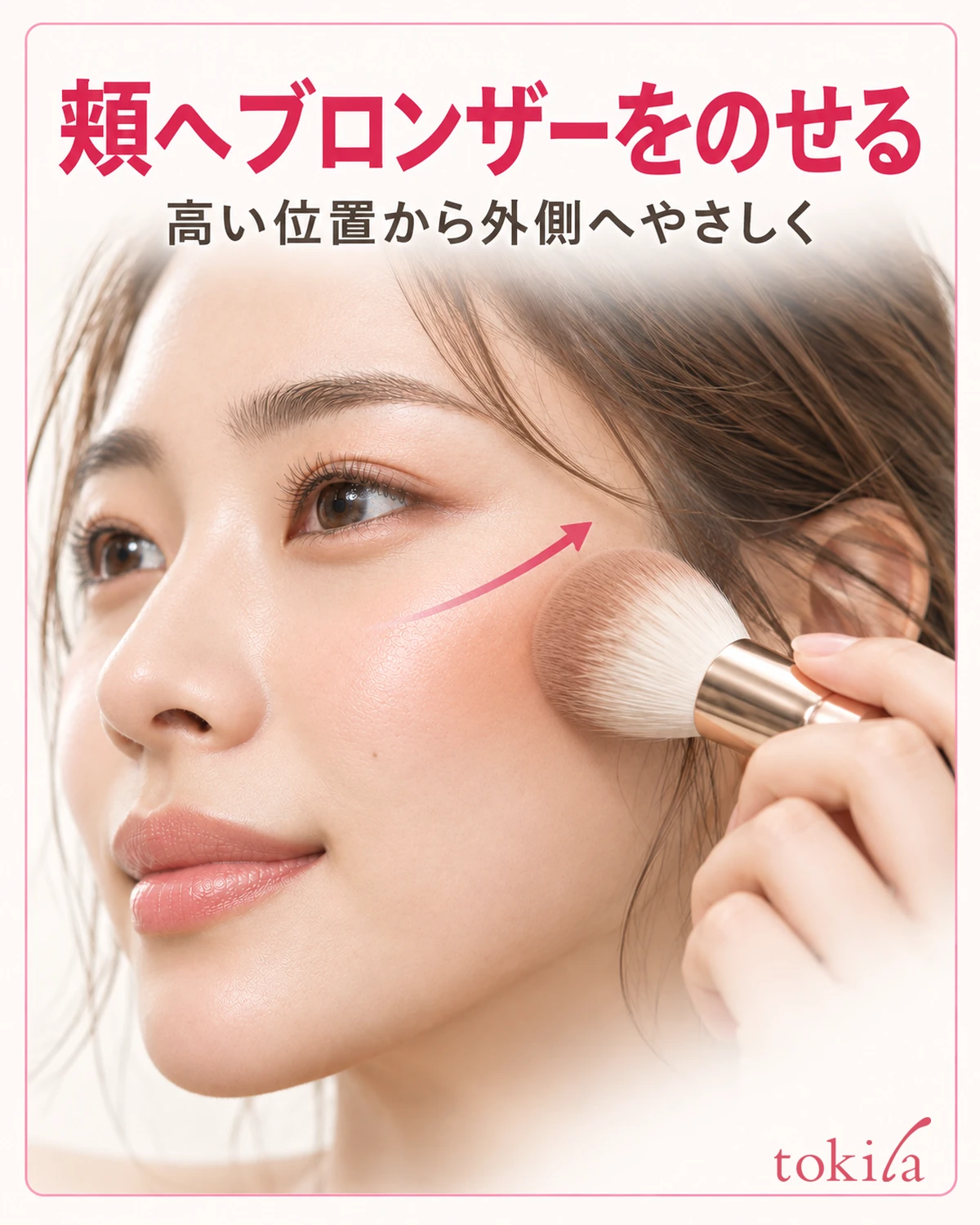
For products whose directions include adding warmth to the cheeks, start high on the cheek. Place the mirror in front of you and check the cheekbone and the skin above it. Instead of drawing a dark band from the ear toward the mouth, lightly touch a small area where you want color.
Blend gently upward and outward without crushing the bristles. If circular movements are recommended, keep them light within that area rather than increasing pressure to buff the skin. Lift the brush to inspect the edges and see whether the color fades outward.
Creating a dark line below the cheekbone is separate from this purpose. Repeatedly blending color downward from its high placement changes the area of color. Return to whether you want contour shadows or warm cheeks, and stop within the area needed.
Check color intensity across the whole face rather than counting equal strokes on both sides. A brush used on one cheek has a different amount of powder remaining for the other. Also check whether the light falls on only one side; face forward again before reflexively adding color to the side that looks lighter.
Some products recommend use on the forehead or nose bridge, but these are not mandatory additions after the cheeks. When trying a product for the first time, you can assess the overall impression with cheeks alone. For small areas, check the directions and tools, respect the intended application area, and keep powder out of the eyes and mucous membranes.
4. Check front and side views and adjust overlap with blush
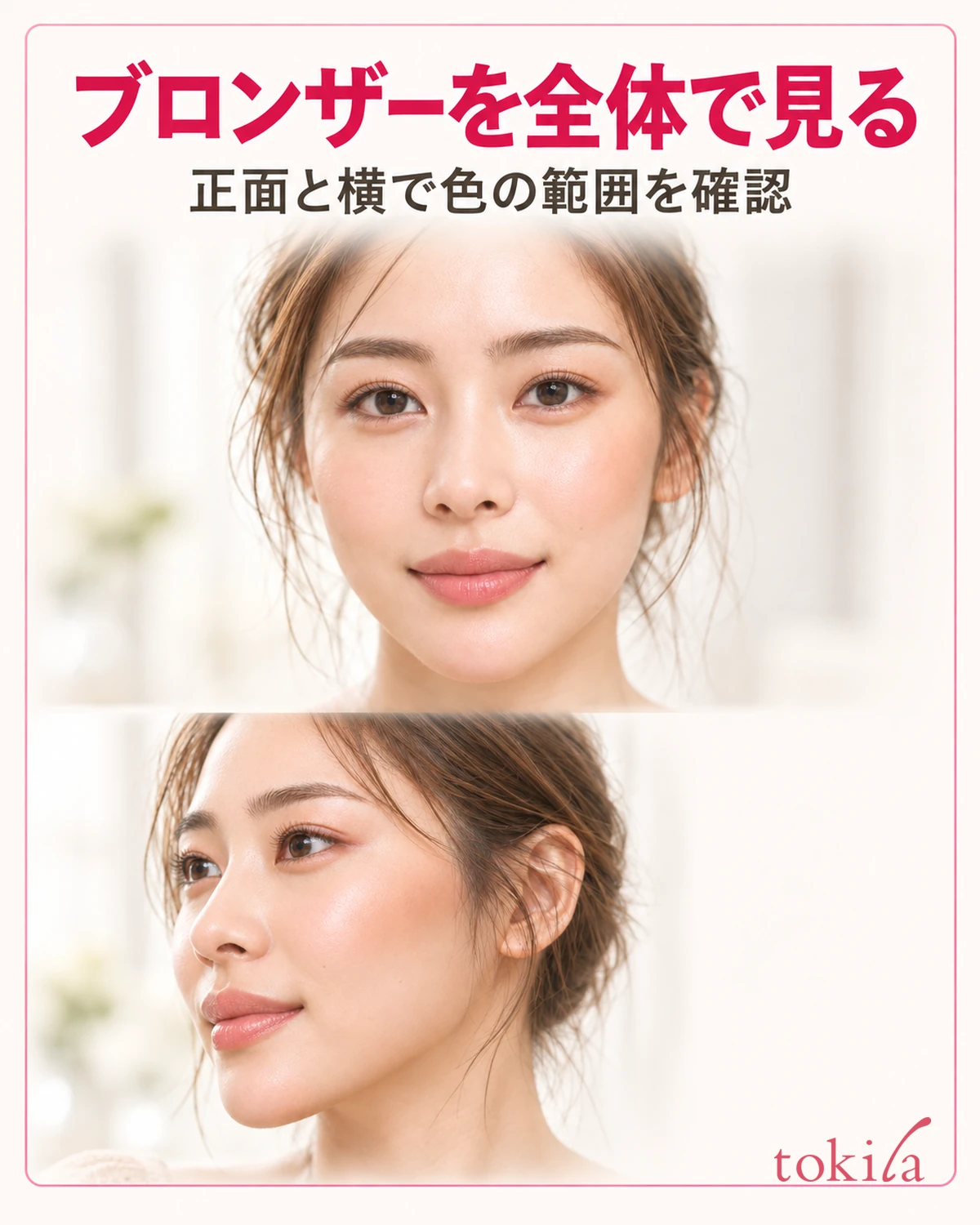
After the cheeks, move a little away from the mirror. Up close, fine powder and sheen draw attention; at a distance, check cheek color in relation to the eyes and lips. See whether your intended warmth is visible and whether overlap with blush has created a stronger reddish brown than expected.
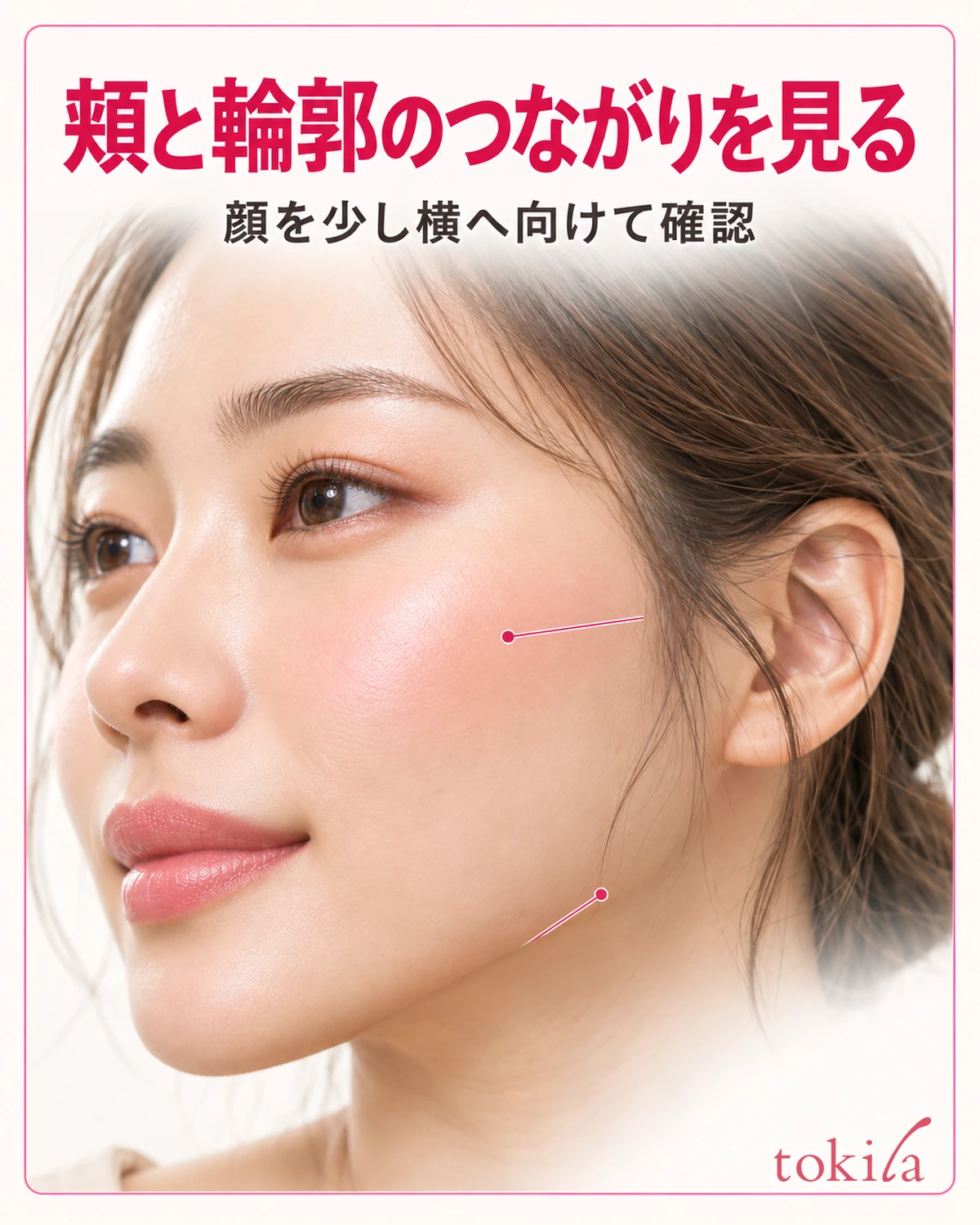
Next turn slightly to inspect the edges toward the front of the ear and outer cheek. Move hair aside to check areas hidden from the front. Lighting and angle change where sheen appears, so do not label every shiny area patchiness. Return to the same angle to assess the color boundary.
The supplementary photo helps you inspect the skin contours from cheek to ear and chin. It does not instruct you to apply equal bronzer along the outline. If face and neck seem different in color, before adding new powder over the whole neck, consider separately whether cheek color has spread too far and whether your base shade matches.
When adding blush afterward, you do not have to cover the same area as the bronzer. Decide where you want a flush and start with a small amount. If the two colors mix and look dark, return to which should lead instead of adding more blush to compensate.
You can also choose highlighter after checking the bronzer’s sheen. When added light and warm color occupy the same place, the distinction can be hard to see up close. Look from the front at cheeks, eyes, and lips in turn, and allow yourself to finish by balancing the current combination rather than adding more color.
5. Review dark areas and decide the amount for next time
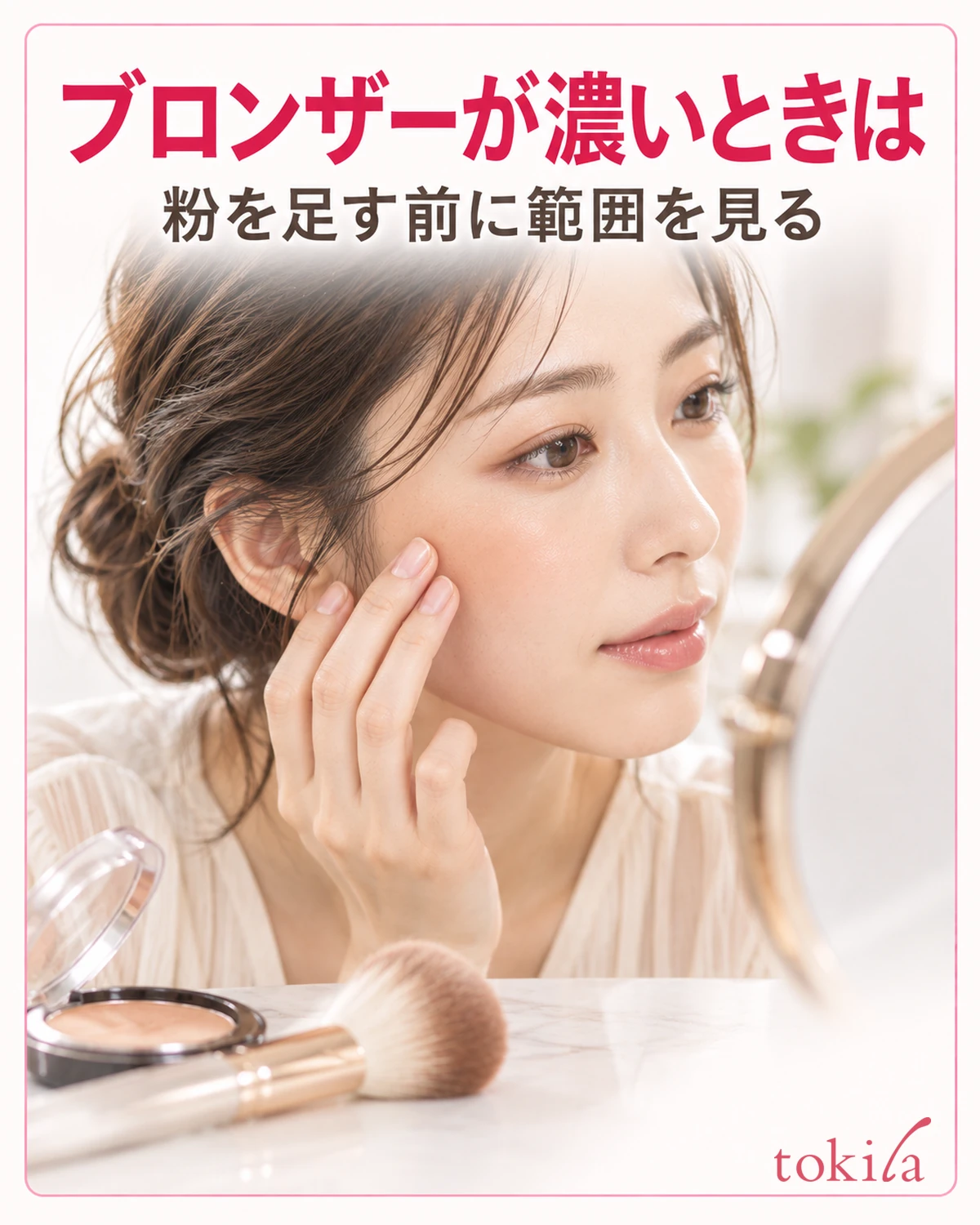
If color looks strong, stop picking up fresh powder. Distinguish a dark cheek center, color spread too far outward, and a remaining sharp edge. Trying to lighten everything the same way can move color beyond the area you meant to correct.
If the base is intact and only the edge is sharp, one option is to touch the boundary lightly with a clean brush containing no fresh powder. Avoid repeated passes over the whole face; watch the change in the mirror and stop. If it will not move without hard rubbing, switch to redoing that area rather than forcing it to blend.
If the base has shifted too, repeatedly adding lighter powder or foundation also changes the thickness. Consider removing the necessary area with a suitable cleanser and rebuilding from skincare and base makeup. For adjusting shadow color along the outer face, seeReviewing face-line contouringfor additional guidance.
Close the compact after use and follow the brush’s care instructions. Avoid forcing a powder-covered brush into a case; put it somewhere that preserves the bristle shape. When removing makeup, check the removal directions for the layered primer and sunscreen as well as the bronzer.
Next time, review one thing: how much powder you pick up, where you first place it, or its overlap with blush. Returning to the stage that became too dark helps clarify the adjustment more than changing amount, brush, and color together. Decide what color to add, apply lightly, and inspect your whole face as part of your routine. Stop use if your skin develops an abnormal reaction and follow the product’s precautions.