A facial cleanser that dispenses foam with a press of the pump lets you skip lathering it yourself. Still, you may wonder whether you can add water or shake the container as you would with your usual tube cleanser. Rather than trying to make the foam uniform in size, check what that particular product is for and how much to use each time, then organize the steps of spreading it over your face and rinsing it off.
This guide introduces first-use steps for a rinse-off facial cleanser dispensed as foam from a pump. Cleansers in aerosol cans and leave-on foaming serums differ in both container handling and how you finish using them. Start with your product’s label rather than deciding how to use it from the appearance of the foam.
1. Check what the foaming cleanser is for and when to use it
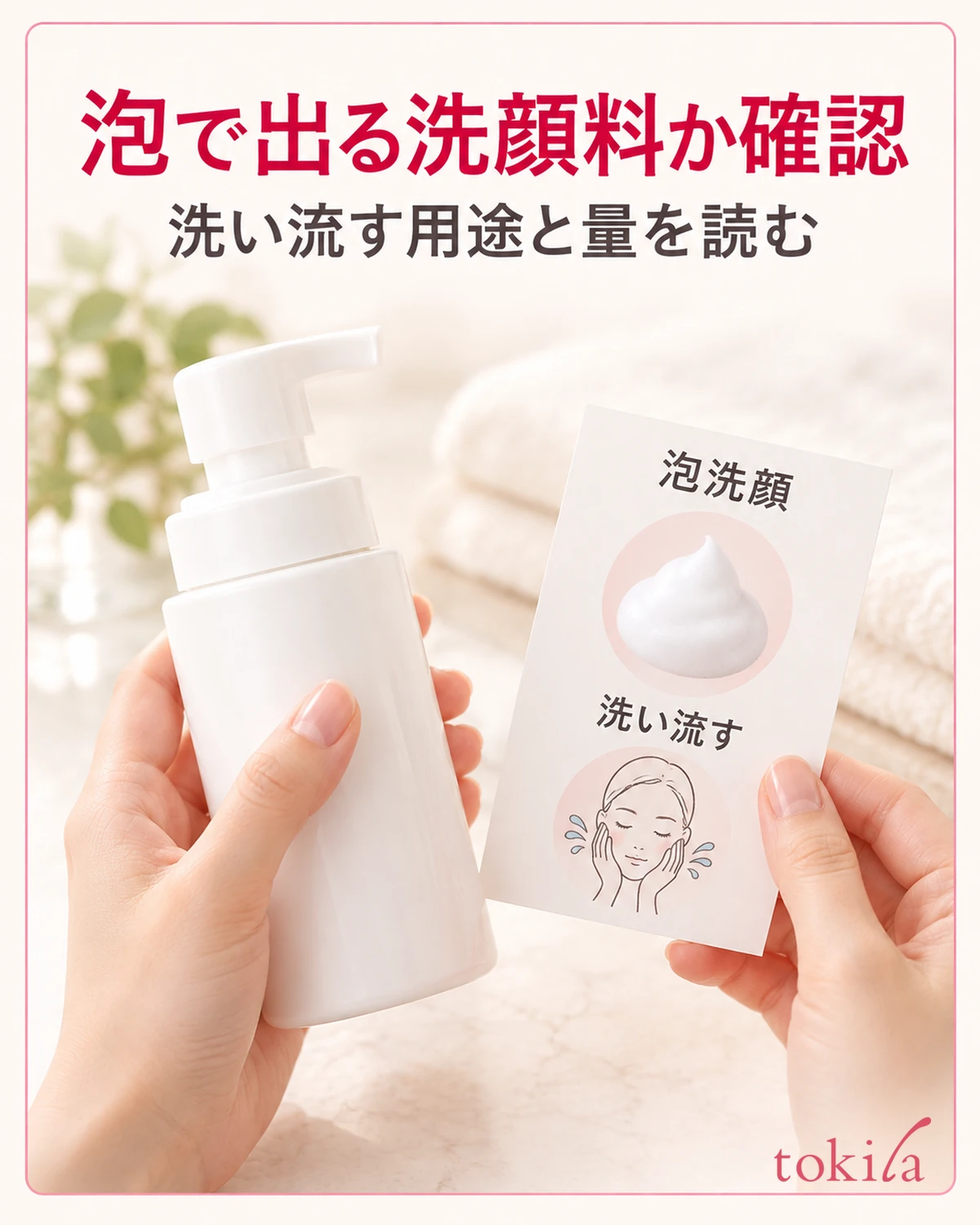
First, read the container’s directions and confirm that the product is dispensed as foam, used to wash the face, and then rinsed off. Do not substitute the same sequence for a liquid you lather in another container or a serum whose foam is worked into the skin and left on. Even if pumps look alike, check which step of your routine the cosmetic belongs in.
On days you wear makeup, also check whether the cleanser is intended to remove makeup. You cannot assume that adding more foam from an ordinary facial cleanser will remove stubborn mascara. Even if a product removes makeup, follow any directions for using a separate cleanser on hard-to-remove eye makeup or similar areas.
On days you wear sunscreen, consider the sunscreen’s removal directions together with any makeup layered over it. The key is not to assume that one item’s “removable with soap” label also applies to everything layered on top. How to remove sunscreen can also help you organize your choice of cleanser.
Decide how often to use it from your product’s guidance, including whether it is for both morning and evening and how to respond to your skin’s condition. Rather than assuming you can wash repeatedly because it comes out as foam, or washing again and again to check the finish, first decide where it fits within a single routine.
2. Wet your face and dispense the labeled amount into your hand
Prepare with clean hands and secure your hair away from your face. For a product used on a wet face, lightly wet your face with water or lukewarm water before dispensing it. Follow any different wetting conditions specified for your product. Also set a clean towel by the sink for after rinsing.
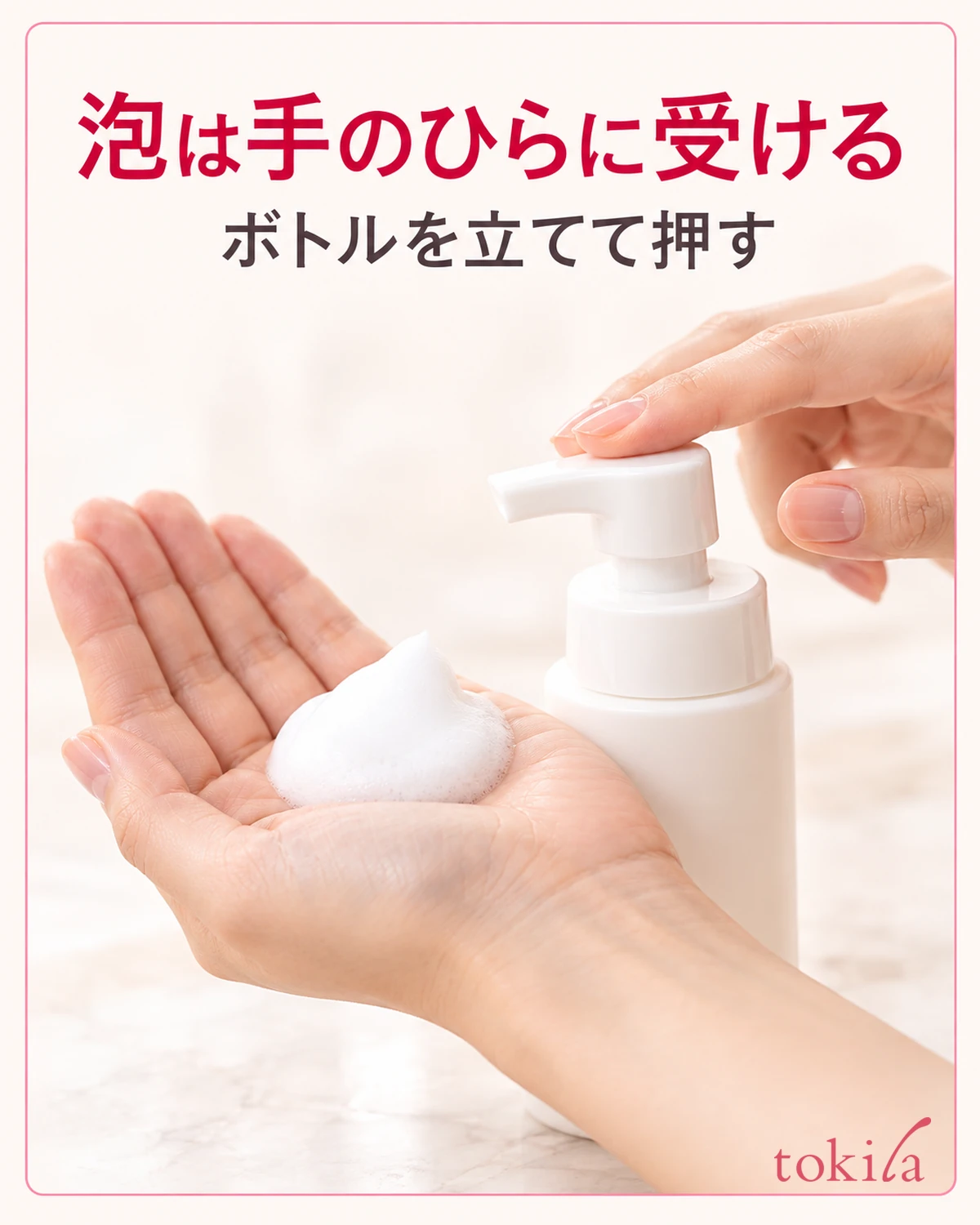
Stand the bottle on a stable surface and check how its lock or stopper works. Base the number of presses on the product label, rather than treating “one pump” learned from another bottle as a universal amount. If a pressing method is specified, follow it to dispense one use’s worth. The mound of foam in the photograph is not a measure of the actual amount to use.
Hold your palm below the outlet and receive the foam without pressing your hand against it. Rather than bringing the bottle to your face to dispense directly, check the foam in your hand before moving it to your face. Keep the pump away from direct water and place it a little away from the faucet or shower stream.
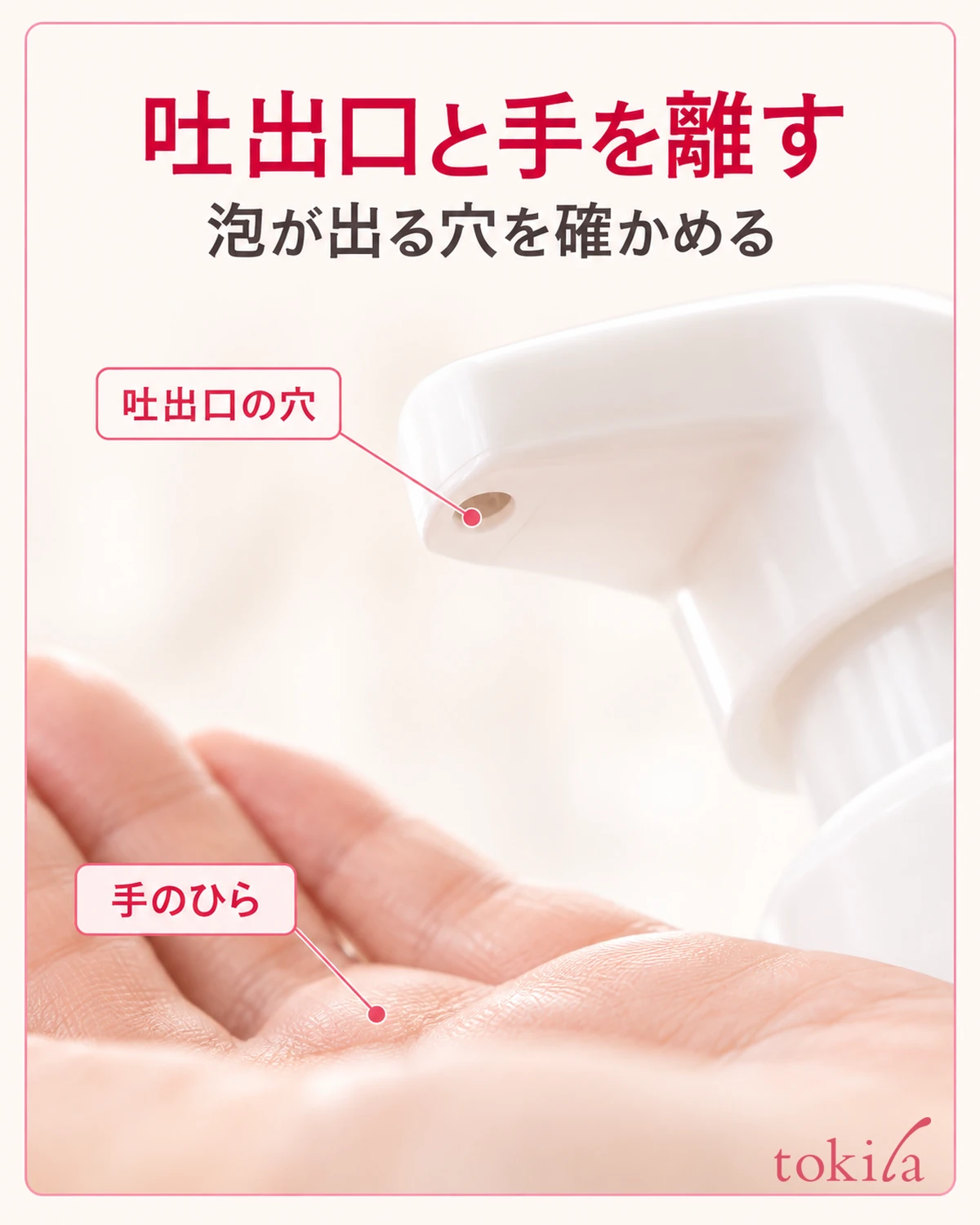
The supplementary photograph shows the space between the outlet and the receiving hand. This close-up helps you check not only where the whole bottle sits, but where the foam comes out and where it is caught. If receiving it is difficult, adjust the bottle and hand positions before pressing harder.
For a product that already dispenses foam, check the label to see whether further lathering in your palm is needed. Avoid carrying over the habit of adding water and stirring when lathering a tube cleanser. Also avoid adding water inside the container to increase foam or mixing in another cleanser.
Choose a bottle position where you can see both the pressing hand and the receiving hand, rather than one that requires an outstretched arm. If your palm tilts and the foam seems likely to fall, adjust your hands’ height first rather than bringing your face toward the foam. Do not pick up foam dropped in the sink and put it back on your face; if dispensing again, consider both the labeled amount and what is currently in your hand.
3. Spread the foam over your face and wash gently with your finger pads

Bring the foam to your face and spread it gently with your finger pads. If the product directs you to spread from the T-zone to both cheeks, that sequence can help distribute it across your face rather than leaving it around your nose. Follow any specified starting area, and keep foam out of your eyes and mouth while washing.
Think of wrapping your face in foam rather than rubbing back and forth with your fingertips in a way that pulls the skin. Do not dig forcefully beside the nostrils with nails or fingertips. Gently wash areas your finger pads can reach, without pushing foam into your nostrils or inside your lips.
If the foam diminishes partway through, do not use that to conclude that pore dirt has been removed or that cleansing power is gone. Review the starting amount, water on your face, and washing movements separately. Rather than compensating for poor glide with force, be prepared to check the directions and move on to rinsing.
There is no universal waiting time during which more foam should be left on longer. Do not turn a product directed to be spread over the face and rinsed off into a foam pack; rinse once washing is finished. Follow that product’s conditions if it specifies a washing duration or frequency.
If you feel irritation or notice an abnormal skin reaction while washing, stop using the product and rinse thoroughly rather than continuing to practice the steps. Do not try to resolve discomfort by adding foam, rubbing harder, or washing longer.
4. Rinse the hairline, sides of the nose, and under the chin, then moisturize

Carefully rinse foam from the entire face with water or lukewarm water. Bring water held in your hands to your face and check not just the cheeks but also beside the nostrils, the hairline, in front of the ears, the jawline, and under the chin in turn. Aim to bring water to remaining foam rather than rubbing it off with your fingers.
Hair falling back onto your forehead can get in the way when rinsing the hairline. Before dispensing foam, use a headband or similar item to keep hair away and expose the forehead and temple boundaries so you can check the washing area. There is no need to tighten a hair accessory enough to pull the skin.

The supplementary photograph separately shows how to expose the hairline before washing, rather than the rinsing movement itself. What you can check differs between seeing only the center of your face and seeing the boundary with your hair. Arrange your hair according to its length so it does not cover areas you want to rinse.
If foam gets in your eyes, rinse them thoroughly immediately and follow the product’s precautions for further action. Consult a medical institution if pain or similar symptoms persist after rinsing. Do not treat a cooling or refreshed sensation as evidence that rinsing is complete.
Gently press a clean towel against the skin to absorb water without rubbing. Think of repositioning its surface where needed rather than dragging the cloth from forehead to chin. Then proceed to your usual moisturizing routine in the order directed for your toner, emulsion, and other products. If tightness bothers you, this article on reviewing post-cleansing tightness can help you organize washing conditions and the transition to moisturizing.
While rinsing, tilt your face in the mirror to check under the chin, which is difficult to see from the front. Distinguish where you intended to apply water from where foam is actually visible. Bring water to any remaining foam again. Do not make repeatedly rubbing freshly washed skin to check for a squeaky feel your goal for finishing.
5. Separate possible causes when foam dispensing or skin condition differs
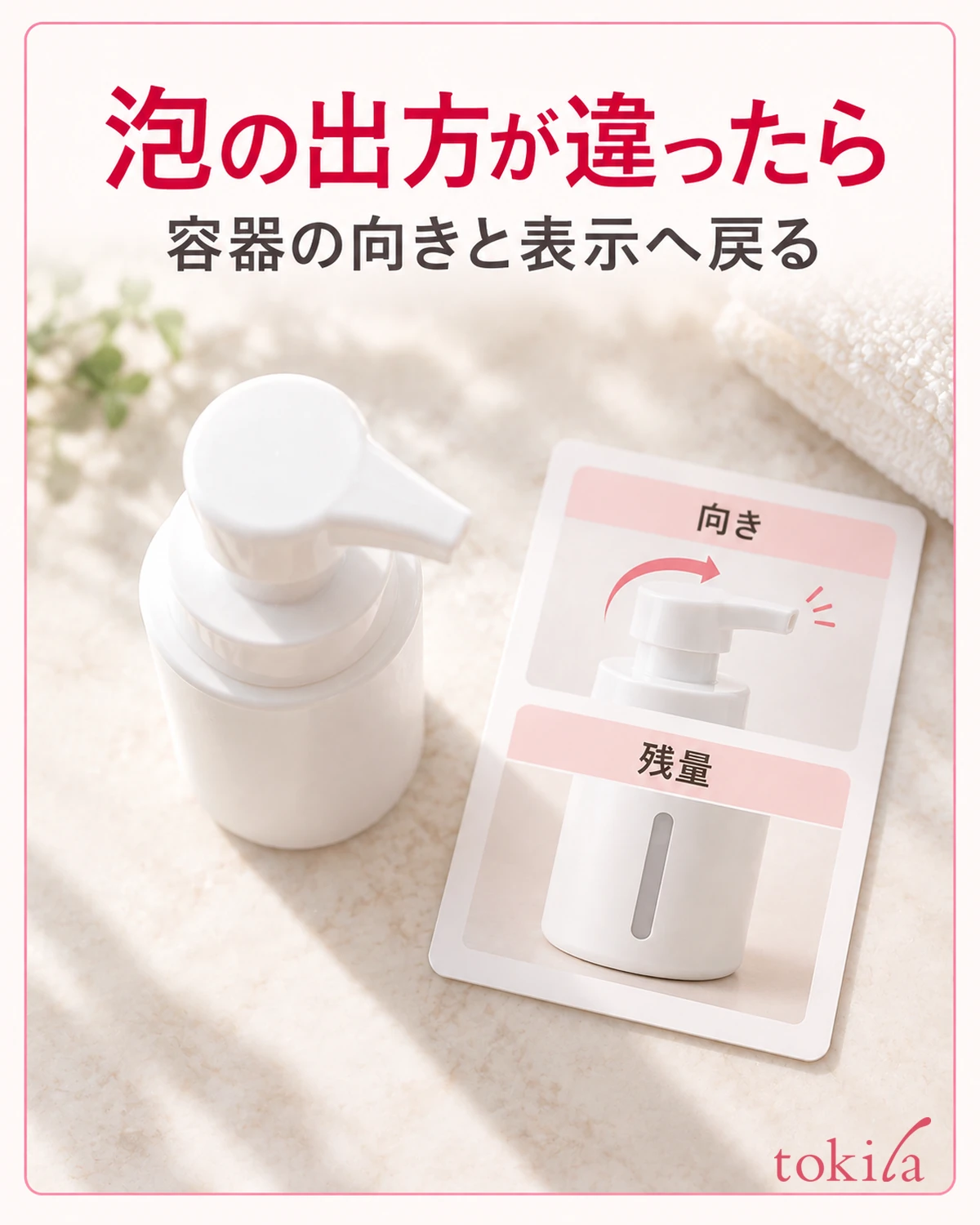
If foam comes out as liquid, the pump is difficult to press, or something otherwise seems different, first review whether the bottle is upright, whether shaking is directed, the remaining amount, and first-use handling. Some products specify no shaking or tilting. Do not automatically shake or press a bottle on its side because there is less foam.
Also check the pairing of the compatible bottle and refill. Even foaming facial cleansers from the same brand may specify different bottles for different types. Rather than deciding that diluting with water will improve dispensing or that a similar pump will work, use the original bottle and refill labels as your reference pair.
Whether to wash before refilling also differs by product. Rather than automatically switching to rinsing with water from general care habits, read your product’s instructions about using it up, wiping the opening, or adding the entire refill. Choose to check with the manufacturer before attempting repairs involving disassembly or cutting the tube.
Treat container trouble separately from a product not agreeing with your skin. Stop use if redness, swelling, itching, irritation, or other abnormalities occur, and consult a dermatologist or similar professional according to the precautions. Repeatedly washing to check your skin’s condition is separate from adjusting how foam is dispensed.
Before next use, briefly review the product used, its labeled amount, preparation to wet your face, and any areas where remaining foam concerned you. Rather than judging completion by foam height or photogenic appearance, check the whole sequence with your own product: receive it in your hand, spread gently over your face, rinse through the boundaries, and follow with moisturizing.