Face powder made of round pearls is used by picking up powder from their surface with a tool, rather than rolling the pearls directly over your skin. For a brush-applied type, start by supporting the container on a counter and gently sweeping the bristle tips over the pearls. There is no need to press them flat or shake the container to crush them to obtain more powder.
This guide explains using a brush with finishing powder consisting of several round pearls in a container. This differs from a single pressed surface containing multiple colors or granular facial cleanser. Follow your product's directions for tools, application order, and areas of use.
1. Identify the round powder pearls and the purpose of the included accessories
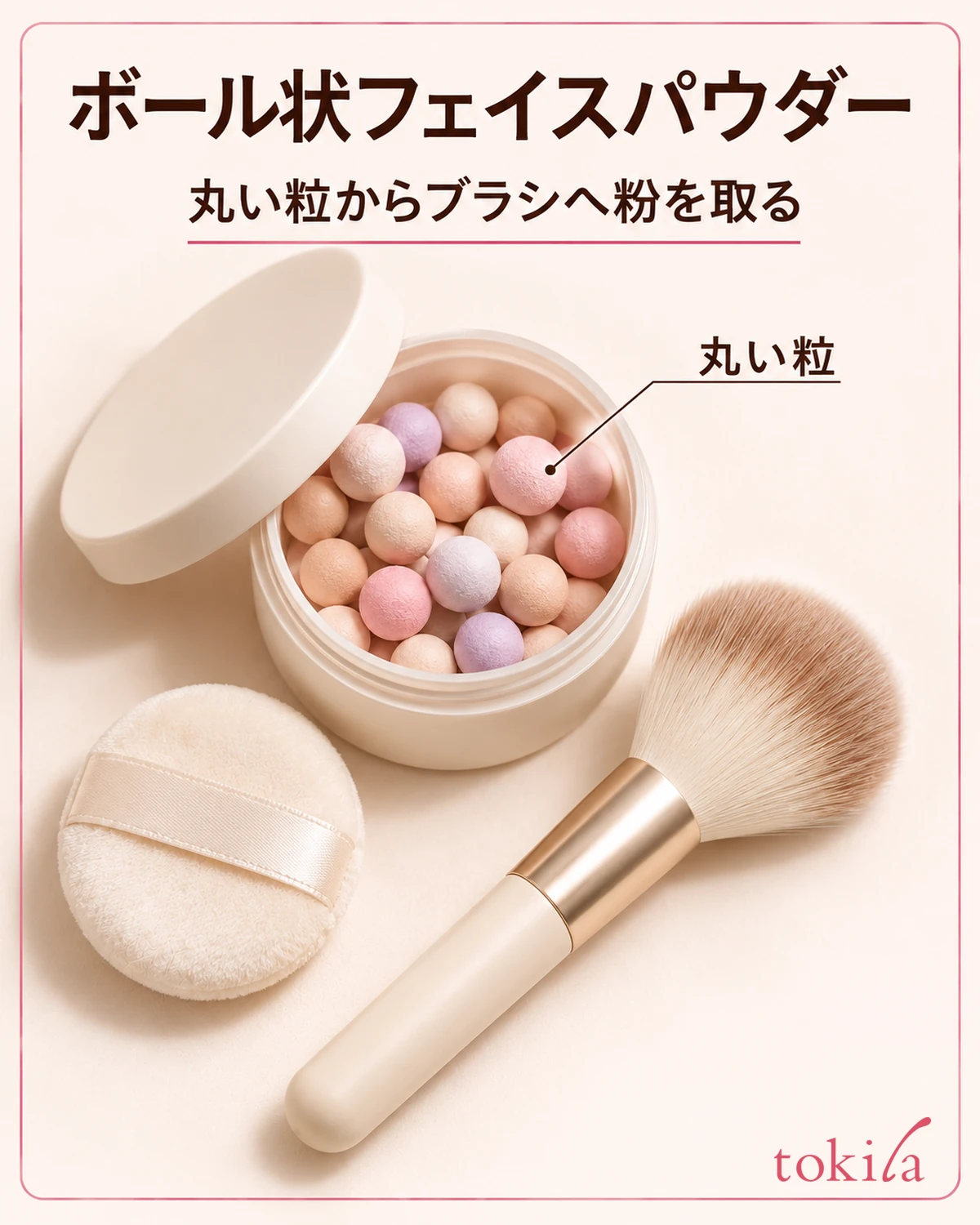
After opening the lid, first look at the shape of the contents. Each powder pearl is rounded, with visible gaps between neighboring pearls. They move a little when you pick up surface powder with a brush, so avoid pressing down with the same force as for a flat pressed powder. Keep the container level on a flat, dry surface.
If a puff or cushion sits on top of the pearls, check its purpose before immediately using it on your cheeks. Appearance alone cannot tell you whether it is an applicator or protection for the contents. If the instructions specify a brush, prepare a suitable one and place the accessory somewhere clean before starting.
On your first use, decide where to put the removed lid and accessories. Narrow pens or tubes rolling near the container can get in the way of your hand as you move the brush. Keep the container away from the counter edge or directly beneath the mirror, in a position you can support with one hand. If you have just carried it around, set it down level before opening and handle it calmly.
When choosing a shade before buying, distinguish the attractive appearance of the pearls in photos from how a light layer looks on skin. Decide whether you want an overall finishing powder or a touch of light in selected areas, and compare the directions for use and finish. Even if shades are offered for different skin tones, do not determine your match from photos alone; if you can try it, see it with your usual base makeup.
Visible multiple colors do not necessarily mean you should select and remove individual colors. Products intended for blending colors should be used with the colors together. Do not remove only your preferred colors or replenish a depleted color with a different product; first check how to use the contents as supplied. Treat flat multicolor products separately, as explained in how to use multicolor face powder.
2. Support the container and gently brush the surface of the pearls
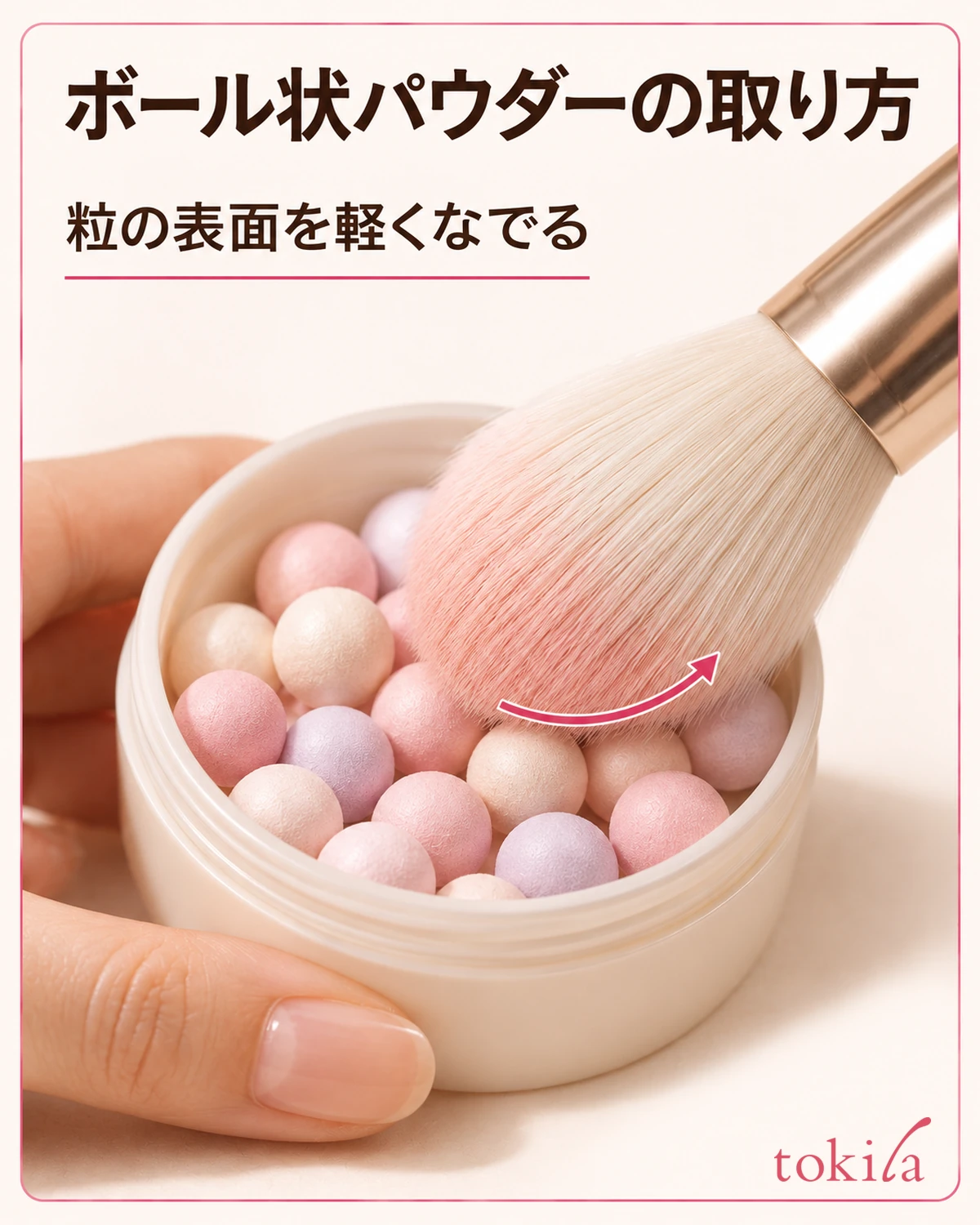
Prepare a clean, dry brush and support the container with one hand along its side and underneath. Angle the brush in your other hand so that the broad area of its bristle tips touches the tops of the pearls. Rather than digging deeply between them, gently sweep the visible upper surface to collect powder on the bristles. Follow any directions for movements such as swirling.
If a wide circular movement makes the bristles hit the container rim, reduce the movement to fit inside. Do not force an oversized brush whose tips extend beyond the container; also check the recommended size. If the container turns with the brush, lower the position of your supporting hand before continuing. Keeping it on the counter with your hands visible makes the pearls' movement easier to follow than lifting and tilting it in one hand.
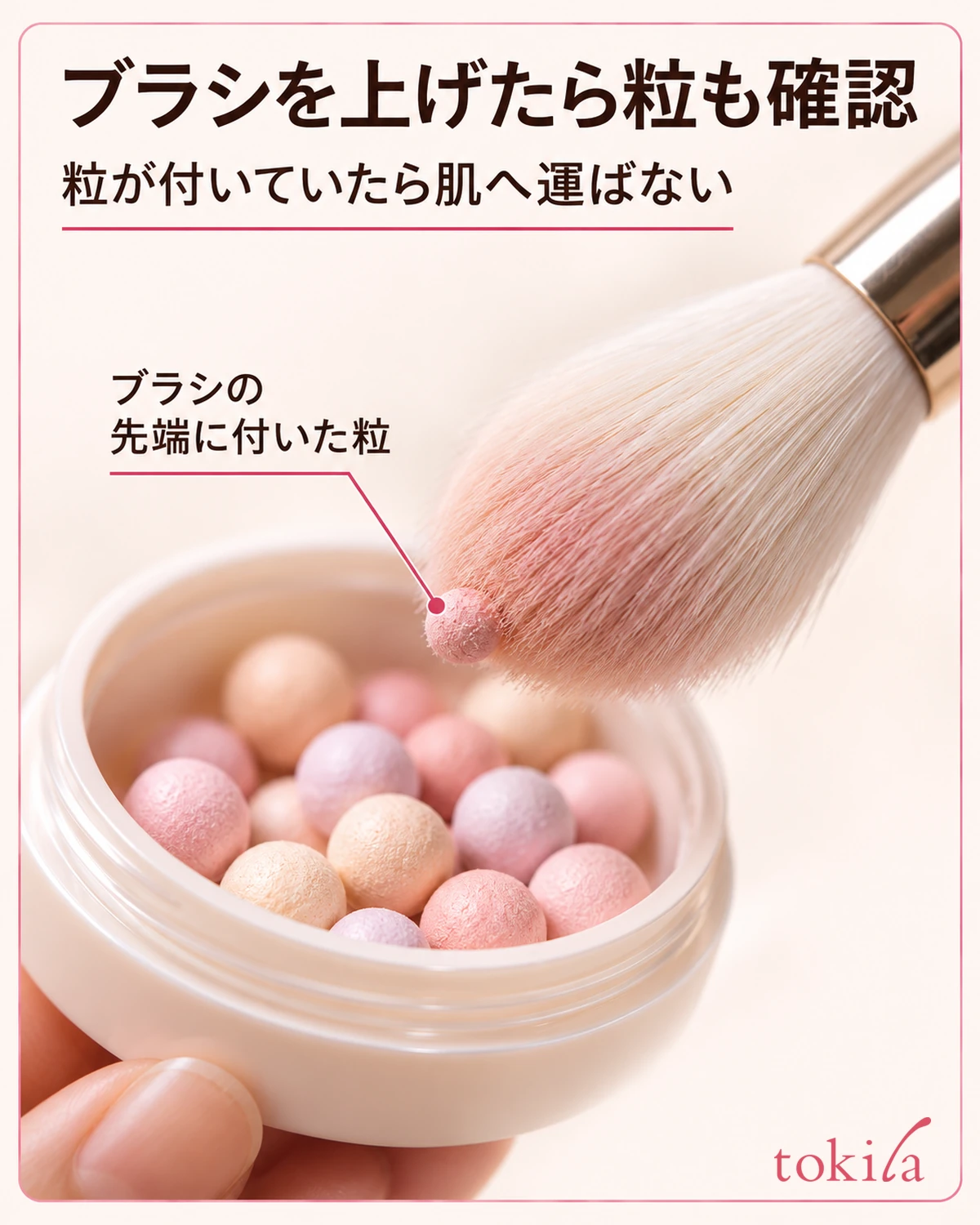
After picking up powder and lifting the brush, look at the tips and outer edge of the bristles. If a pearl is caught, stop over the container rather than bringing it to your face. Instead of shaking the brush hard and sending the pearl flying, arrange a clean workspace where you can remove it, then check the amount of powder. Do not return a dropped pearl while it is dirty. Next time, review how deeply you insert the tips and whether you are pressing them against the rim.
Movement of the pearls as you collect powder does not by itself mean something is wrong. Distinguish between sweeping their surface and pressing them against the container wall. If you tend to use too much force, avoid gripping the handle tightly; hold it lightly and make smaller movements. Adjust your handling so you can lift the brush away without moving the container.
Do not assume a fixed number of swirls produces the right amount for every product. The remaining pearls and density of the brush affect pickup even with the same movement. Develop a routine of picking up powder once, stopping, and checking the tips before proceeding. Even with a shade that is hard to see, judge a thin application on skin rather than increasing pressure to pick up more at once.
3. Check the powder on the brush and adjust it before applying
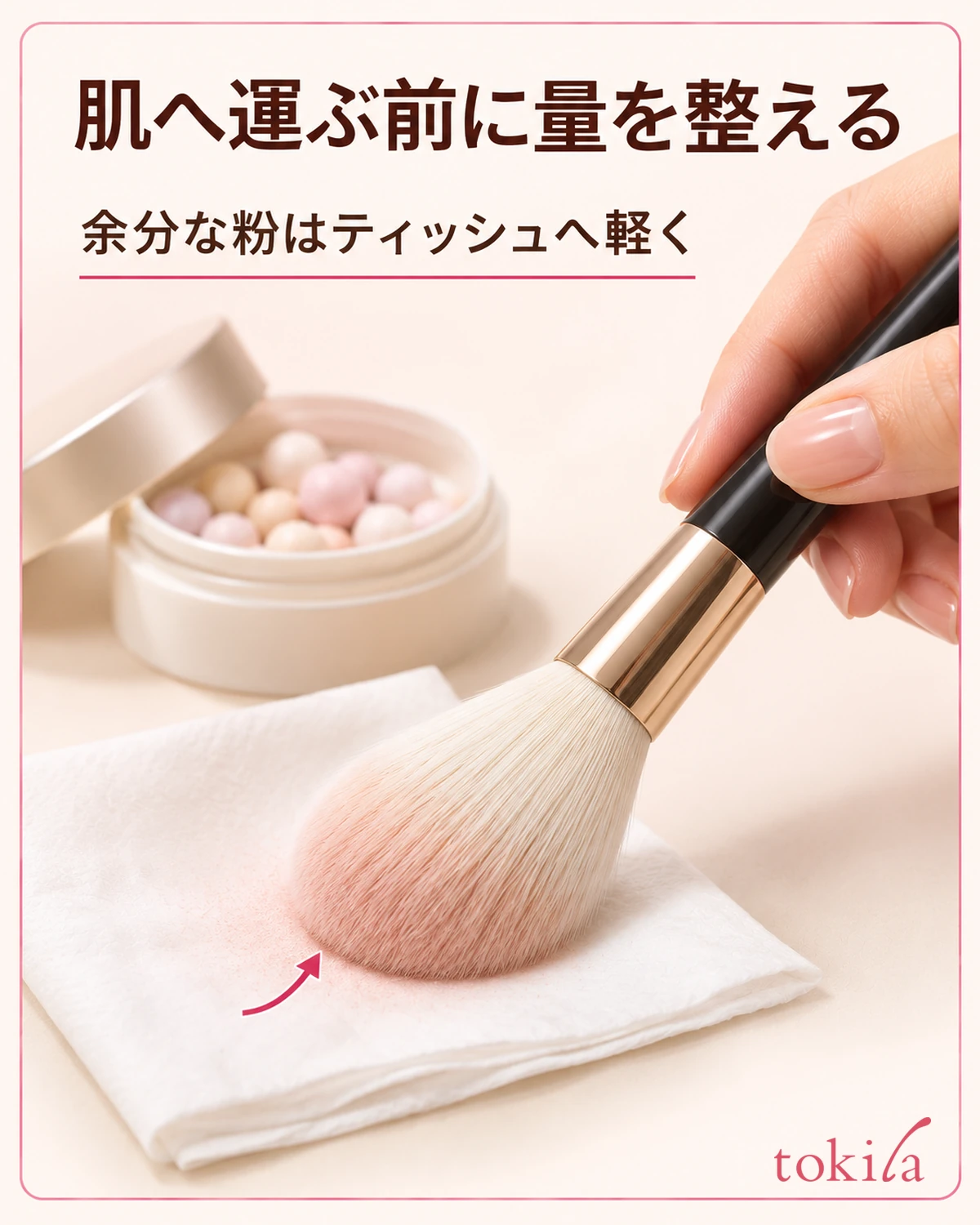
Check for a thick clump on the tips or powder concentrated on one side. If there is excess, adjust the amount in a way suitable for the product, such as lightly touching a clean tissue. Do not strike the handle hard against the rim or shake powder into the air. Keep your hands low and handle it quietly.
A white-looking spot on the tips may be the bristles' own color or reflected light. Turn the brush slightly to see whether a clump sits on the surface. Repeatedly pressing it into a tissue when no powder needs removing only creates more need to reload. Check the visible thickness and adjust only when needed.
Color transferred to a tissue does not directly show the finish on skin. Here you are checking whether a large amount falls off at once and whether pearls or clumps remain on the tips. Do not conclude that your skin will look white or that there will be no color payoff from the color on white paper alone; check after a light layer over your base makeup.
Blush already on the brush before pickup can appear mixed with the powder's color. Use a clean brush for finishing powder, and do not return bristles coated with liquid base makeup to the pearls. After washing a tool, check that it is dry. Do not add water or mist to make pickup easier unless the product specifically supports this.
4. Apply a thin layer over the indicated base and check from the front
Check the application order before using finishing powder. Some products direct use after foundation and blush, but they do not all require the same sequence. If adding it to your usual makeup, decide which step it follows so you can proceed without repeatedly layering powders and creams again midway.
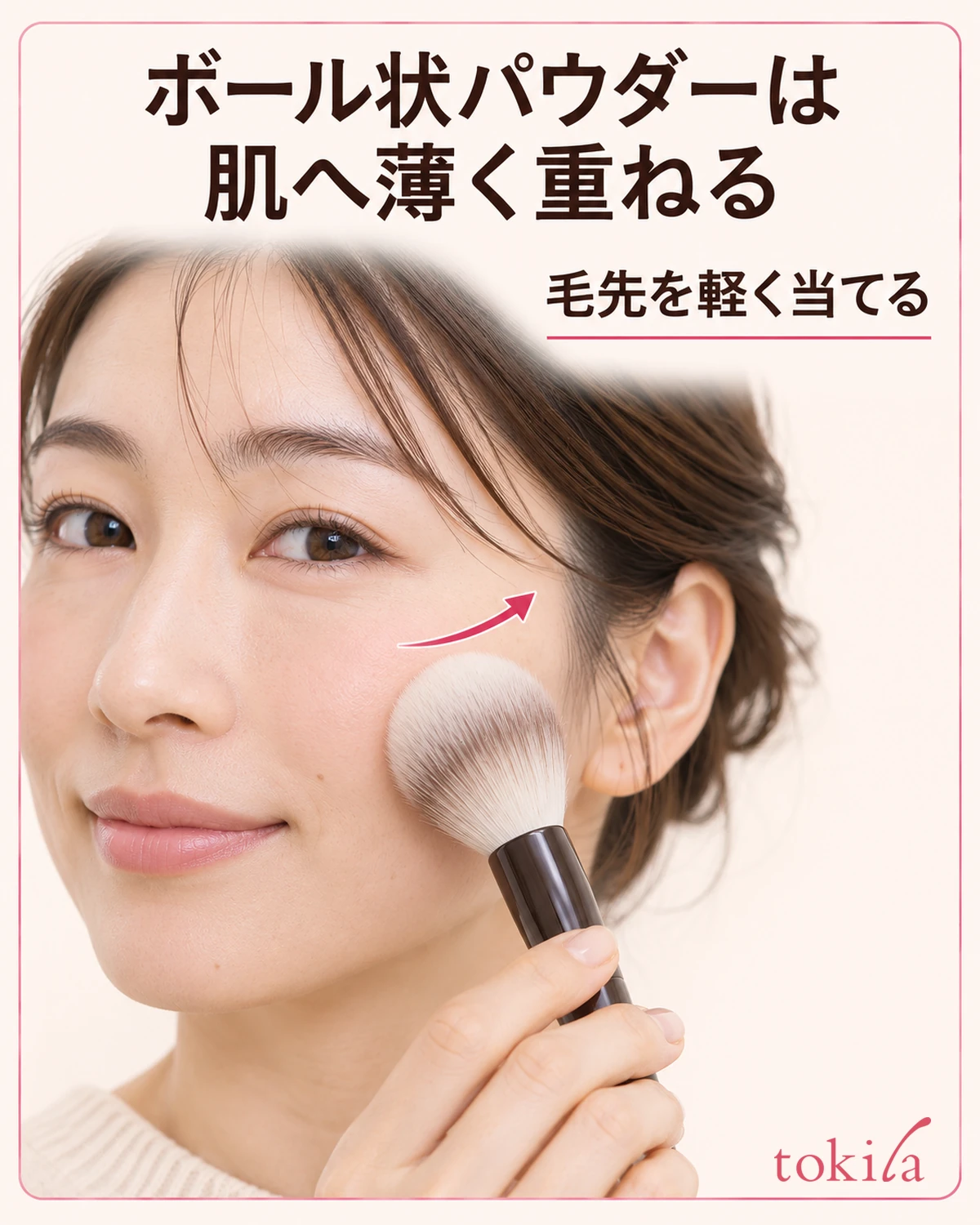
For cheeks, lightly touch the bristle tips to the skin and spread a thin layer. Rather than repeatedly polishing the same area firmly, check in the mirror after one movement. Even if suitable for the whole face, do not assume that includes eyelids and lips; check the labeled areas of use.
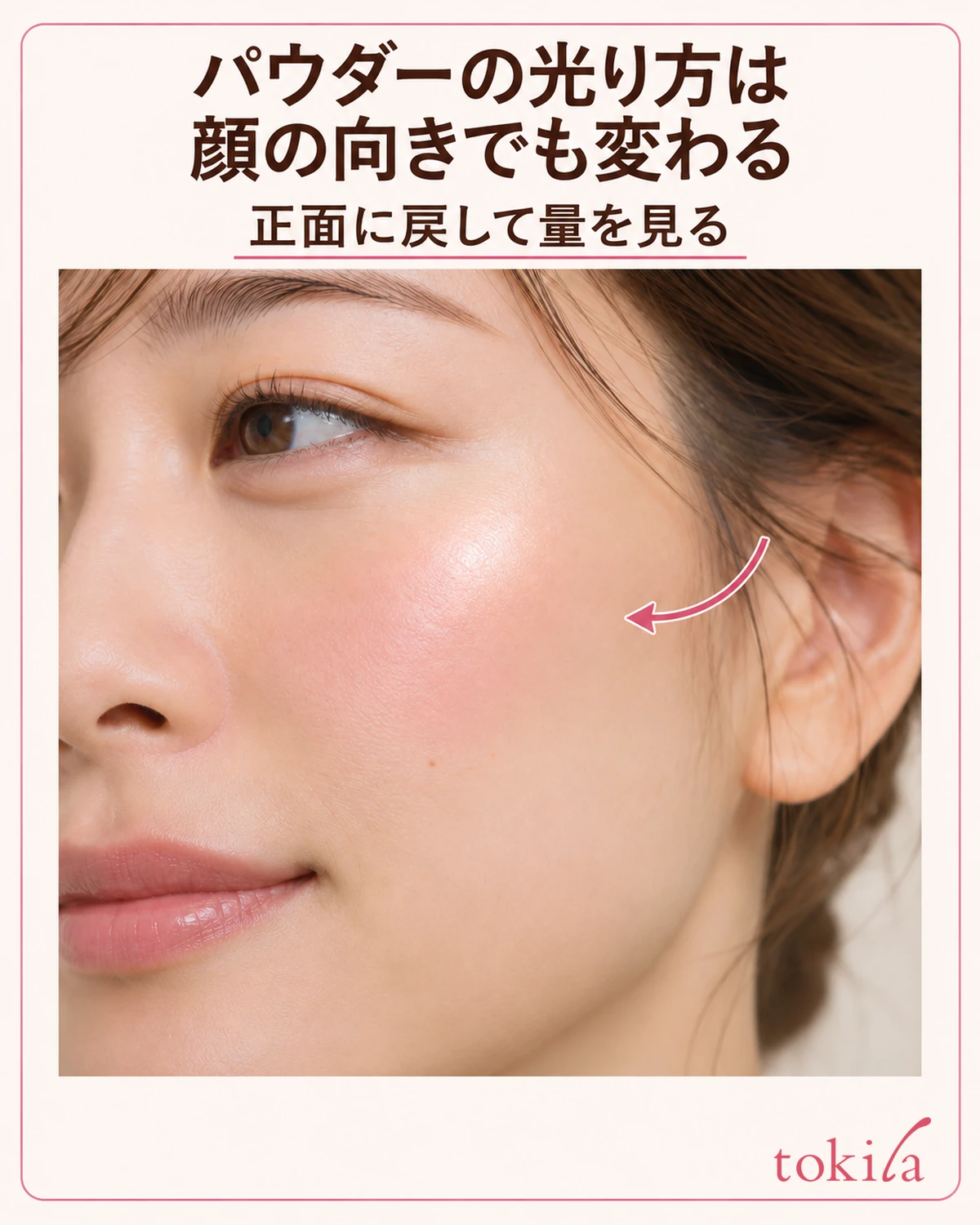
With pearlescent powder, the position that catches light changes with your face angle. Instead of moving very close to the mirror to search only for sparkle, return to face forward and assess the amount across your face. Compare both sides under the same light, without adding color while only one side faces a window. Separating close-up checks from an overall view makes it easier to decide whether to add more.
Pink or lavender pearls in the container do not appear as identical colored dots on your skin. Your skin tone, underlying base makeup, and amount affect the appearance. Do not assume corrective effects from the number of colors or layer repeatedly to conceal dark spots. Check whether the color and texture suit your taste as a finishing powder. Choose targeted coverage and finishing powder for their separate roles.
5. If pickup becomes difficult, check what remains before pressing harder
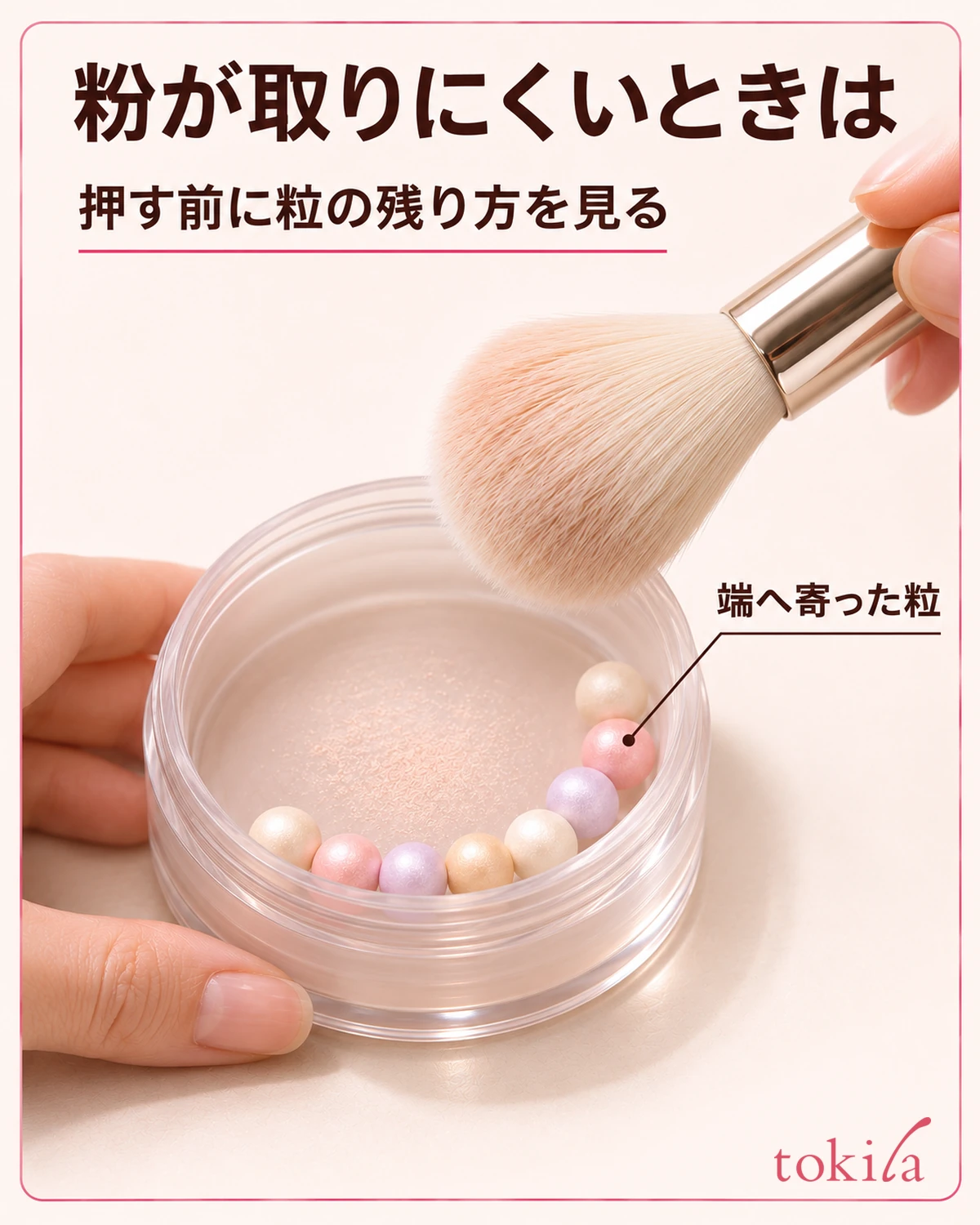
If pickup becomes difficult with continued use, look inside before pressing the brush harder. Are pearls clustered at the edge, is fine powder left on the bottom, or do the bristles fail to reach the pearls? Rather than settling on one cause, first set the container level again and check where the tips touch. Do not switch to vigorous shaking to crush the pearls.
If powder seems reluctant to cling to the tips, also check the brush for dirt or moisture. If previous base makeup has hardened on it, clean the tool according to its care instructions. Do not scrape the pearls with a blade or add water to remix the contents when these are not instructed methods. Follow any directions for using up or replacing the product when little remains.
If your cheeks look overpowdered after layering, stop before picking up more. Distinguish whether you need to address excess surface powder or the color of the base itself. How to avoid applying too much face powder also explains checks when a broad area looks white. If the shine is stronger than you like, consider reducing next time's amount and application area before covering the entire face with another powder.
For daytime touch-ups, do not assume you should add the same amount as in the morning; check your current base in the mirror first. If sweat, excess oil, or earlier powder remains, first prepare the surface with your usual touch-up routine. Add powder from the pearls afterward. If you experience discomfort or irritation, stop using it rather than continuing by covering the problem with powder.
When finished, check that no pearl or brush hair is caught at the lid's edge. If instructed to replace an accessory, return it to its proper position and close without forcing it. Next time, again set it level, pick up from the surface, and check the tips before touching your skin. This sequence helps you identify where to adjust even if the round pearls initially seem unfamiliar.