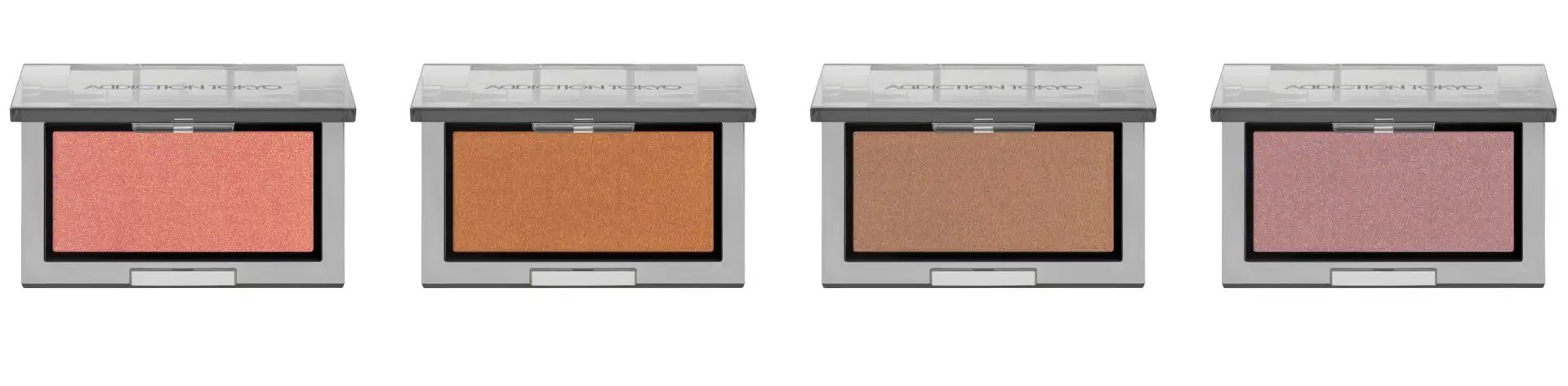
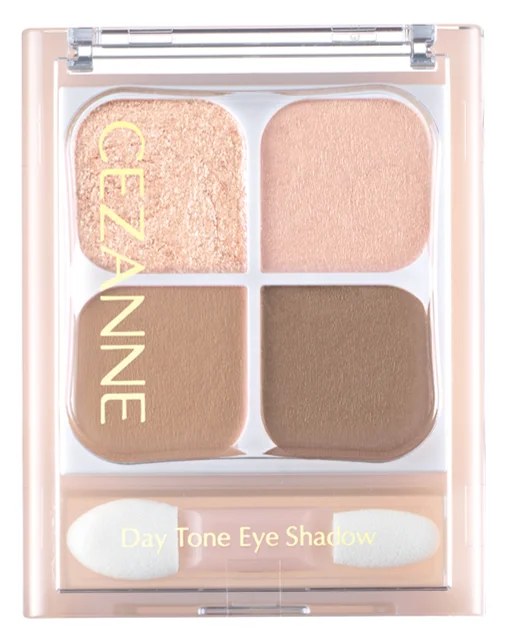
When you open a two-shade blush and see a lighter and a deeper color side by side, it can be hard to tell whether to pick up both on your brush or apply them separately. Start by checking how your palette says to pick up the colors. Some contain two powders that can be picked up together, others have a cream and a powder to use in sequence, and some let you wear either shade on its own.
Once you've chosen a method, start with a small amount and check where the color shows up. You can finish with one shade, combine the two on the brush, or layer them on your cheeks. Knowing where the two shades come together makes it easier to decide which one to pick up next if you want a little more color.
1. Check what each shade does and which one to pick up first
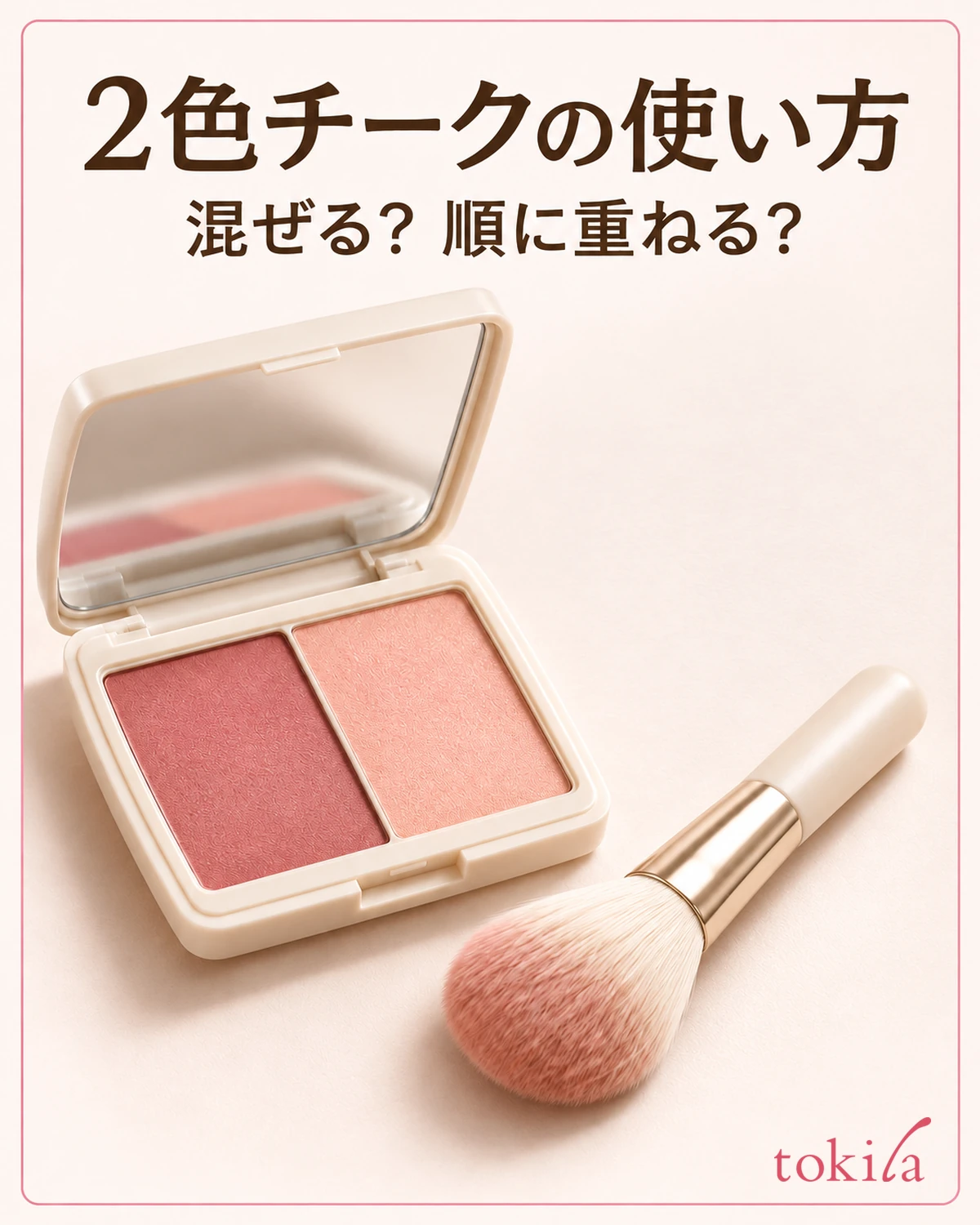
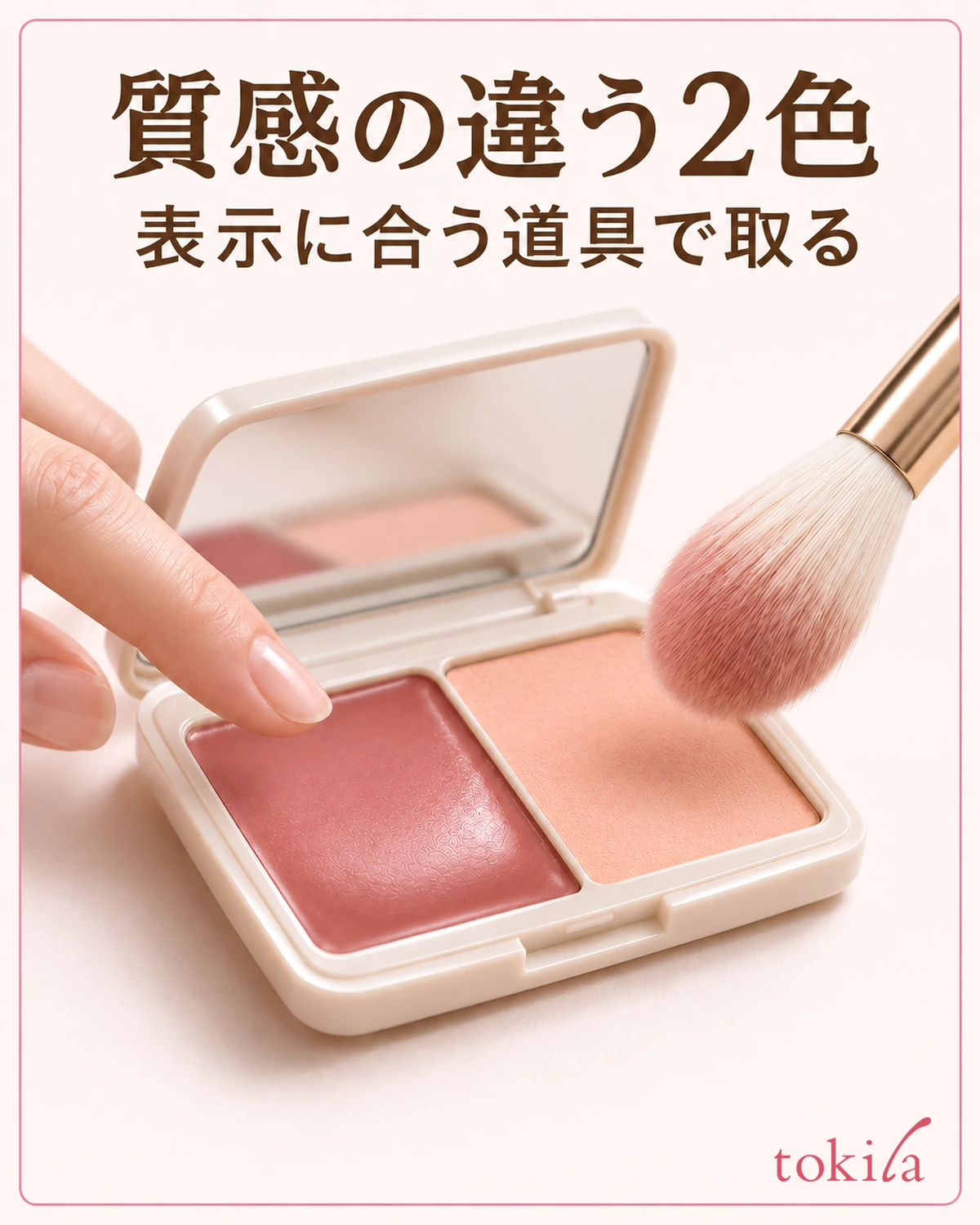
When you open the compact, read the box or directions for guidance such as “pick up both shades together,” “each shade can be worn alone,” or “apply one first, then layer the other.” If the directions specify where to apply the blush, which tools to use, or which way to move the brush, follow those directions. The arrangement of the shades can be misleading. You might expect to apply the lighter shade last, only to find the palette is designed for both shades to be picked up together.
Check the role of the shade that looks lighter. Adding a pale blush shade and adding a pearlescent shade for sheen change the look in different ways. If you want pinker cheeks but keep adding the sheen shade, you may notice the light catching your cheeks when you move before you notice any deeper color straight on. If the palette contains both a cream and a powder, check how the two textures differ.
If you're unsure which shade to use first, try describing today's finish in a few words. For understated color, start with one shade from a palette that allows individual use. For a blended cheek color, check whether the directions say to pick up both shades together. If you want color in one area and the second shade in another, look for a palette whose shades can be layered separately.
If you've already applied face powder, check the steps for your base as well as your blush. When trying a new combination, apply a little to a small area of the cheek. Looking at both the color and the base before spreading it further makes it easier to see where you might need to make a correction. If you'd like to decide where and how widely to apply blush first, see the basics of applying blush.
2. If the shades can be worn alone, try a little of one color
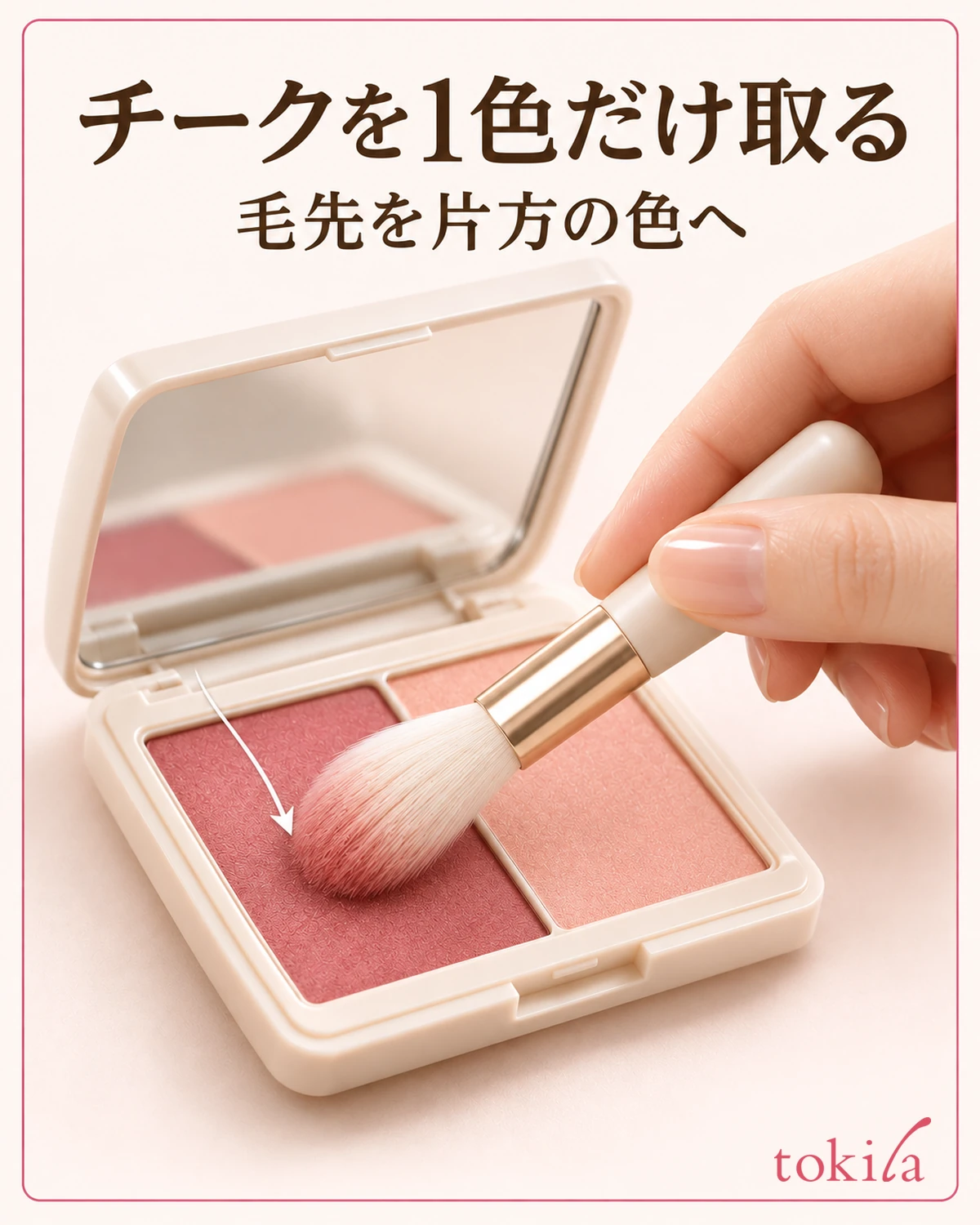
If the directions allow individual use and you want to start by choosing only the color on your cheeks, try the shade that adds color. If you want just a little sheen, choose the sheen shade if it can be used alone, and pick a small area for it. If you start with the lighter shade, what to look for in the mirror depends on whether it adds color or sheen.
To pick up just one powder shade, lightly touch the brush to the center of the pan. If the pan is small, try an angle that keeps the bristle tips within it instead of laying the brush flat across the whole surface. If the bristles reach the neighboring color, use a brush suitable for the product and narrow enough for the pan. The narrower the pan, the easier it is to keep the shades separate if you check both the size of the brush and how far its bristles spread on contact.
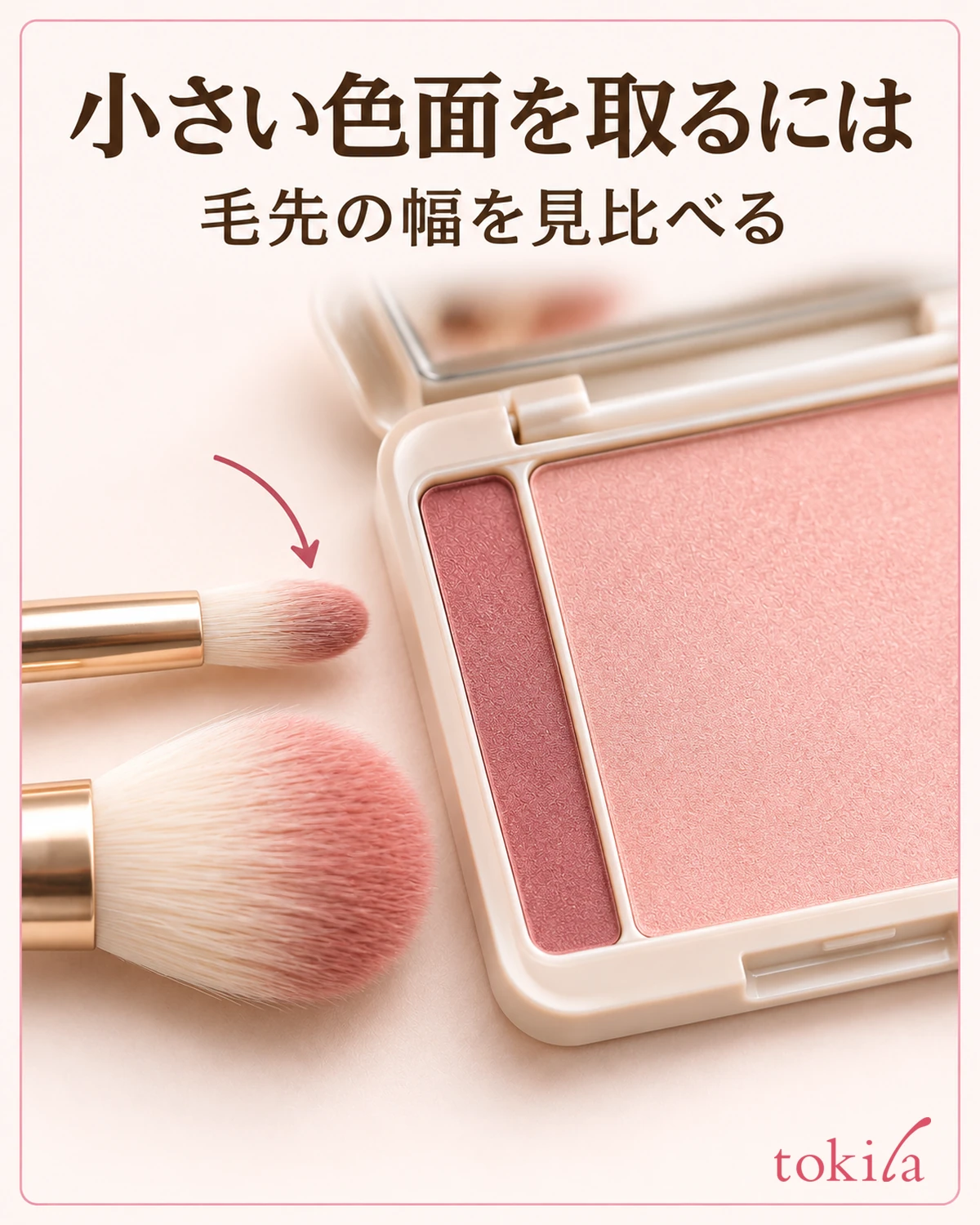
If powder is on only one side of the bristle tips, adjust the excess as directed and place a little on the part of the cheek where you want the color to show. If you use the back of your hand or a tissue to adjust the amount, use it to check how much powder is on the brush and how it transfers. Check the finished color on your cheek over your base. Even if it looks faint, lift the brush away and look straight ahead before mixing in another shade.
If one shade is a cream, use the tool specified for that product. If the directions say to use a finger, touch the surface lightly with a clean finger pad. Check how much you've picked up so you don't transfer an excess to your cheek all at once. If the shade you tried gives you the finish you want, you can save the other shade for another day.
To compare one shade with a blend, you can wear one option with your usual makeup and try the other the next time, without layering both finishes on the same cheek. Use the same base and viewing spot, and keep the blush placement roughly the same. This makes it easier to look back and decide which option felt easier to use.
3. For shades meant to be blended, decide how far to move the brush
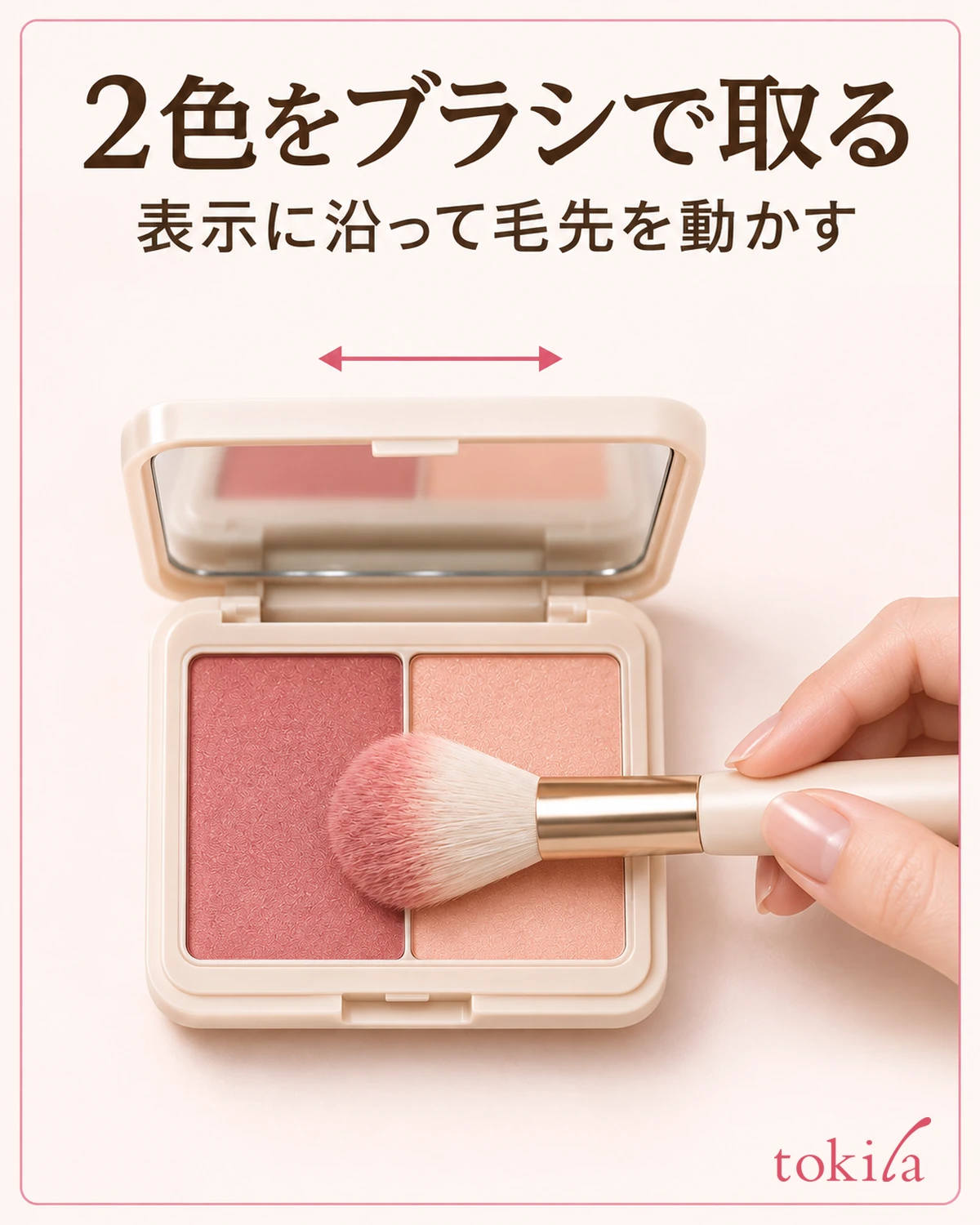
If your powder palette calls for picking up both shades together, check which way to move the brush. If the directions say to sweep sideways, place the tips on one shade and move across to the other in the indicated direction. Check that the brush isn't staying on only one pan. Pan shapes and dividers vary, so there's no need to press hard and scrape both shades.
If the palette lets you vary the ratio, remember where and how much of the bristle tips you touched to each shade. For example, if there is a color pan and a sheen pan and the sheen stands out too much, next time you pick up powder you can touch less of the brush to the sheen pan. If you like the color as it is but want a little more light, adjust only the area of contact with the sheen pan. If you make large changes to both the ratio and the amount applied to your cheeks at once, it becomes harder to tell what changed the finish.
If the color on your cheeks looks faint, first check how much is left on the brush. How you pick up more depends on whether you want a little more of the same blend or a different ratio. When adjusting the ratio, it is easier to compare if you start with a brush cleaned as directed or use an unused side, especially if a lot of the other shade is still on the bristle tips.
If the textures differ and the directions call for layering, there's no need to sweep the same brush back and forth across the palette. Before you start, check whether to pick up the powder and cream separately or combine them on the cheek as described in the next section.
4. For layered shades, remember where you applied the first one
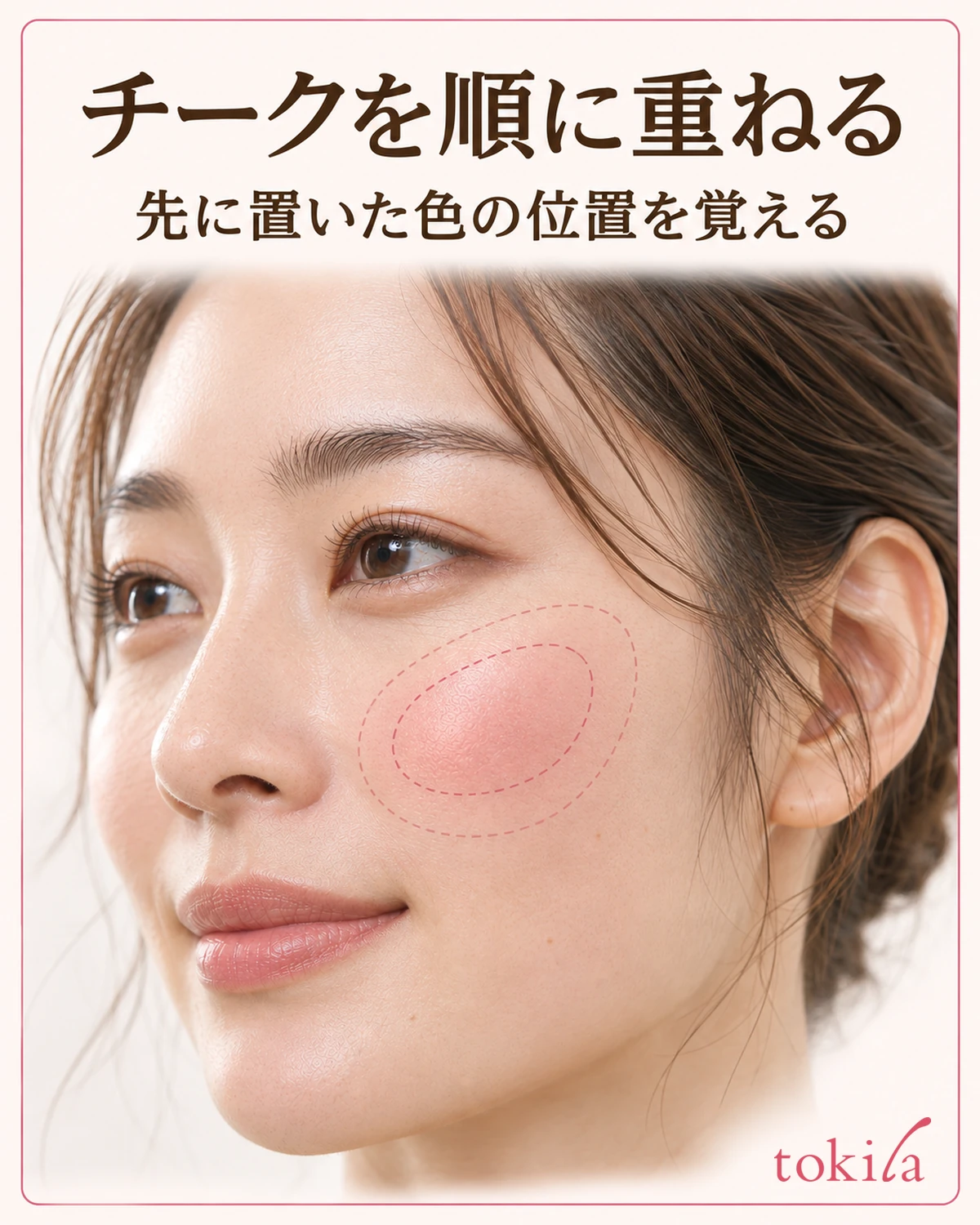
For a palette designed for layering, decide which shade goes on first and which is added later before bringing them to the cheek. For example, if the directions say to place cream with a finger where you want color and then layer powder with a brush over a slightly wider area, start by adding small amounts of cream where you want the color to stay. Decide how far to spread the second shade based on the directions and the finish you like.
Remember where the first shade ends so it's easier to see where to add the next one. If the sheen shade can be added separately, start with a small amount where you'd like to catch the light before covering the whole area with color on it. If you lose track of where you layered the lighter shade, pause and turn your face slowly in the mirror. Looking straight ahead shows how far the color extends, and turning slightly shows where the sheen catches the light.
If the product calls for different tools for different textures, set them out in application order to make the steps easy to follow. If the directions call for a finger for the cream and a brush for the powder, pick up the powder with the separate tool instead of running a cream-covered finger over it. Before picking up powder, pull your fingers or brush away and look at where the cream has transferred.
If the base color starts to fade in streaks as you layer, stop adding blush. The marks left by shifting foundation may still show even if you put more color over them. For how to tell uneven blush from lifted base and touch up only the areas that need it, see how to fix base makeup that lifts under cream blush.
Before layering the second shade, see whether the first alone is already close to the finish you want. If so, you can stop there for the day. If you do add the second, adjust the area little by little on one cheek before finding the matching spot on the other. Spreading it too far at first means more work to take color back, so hold the tool away from your cheek while deciding whether to add more.
5. Look straight ahead and choose one thing to change next time
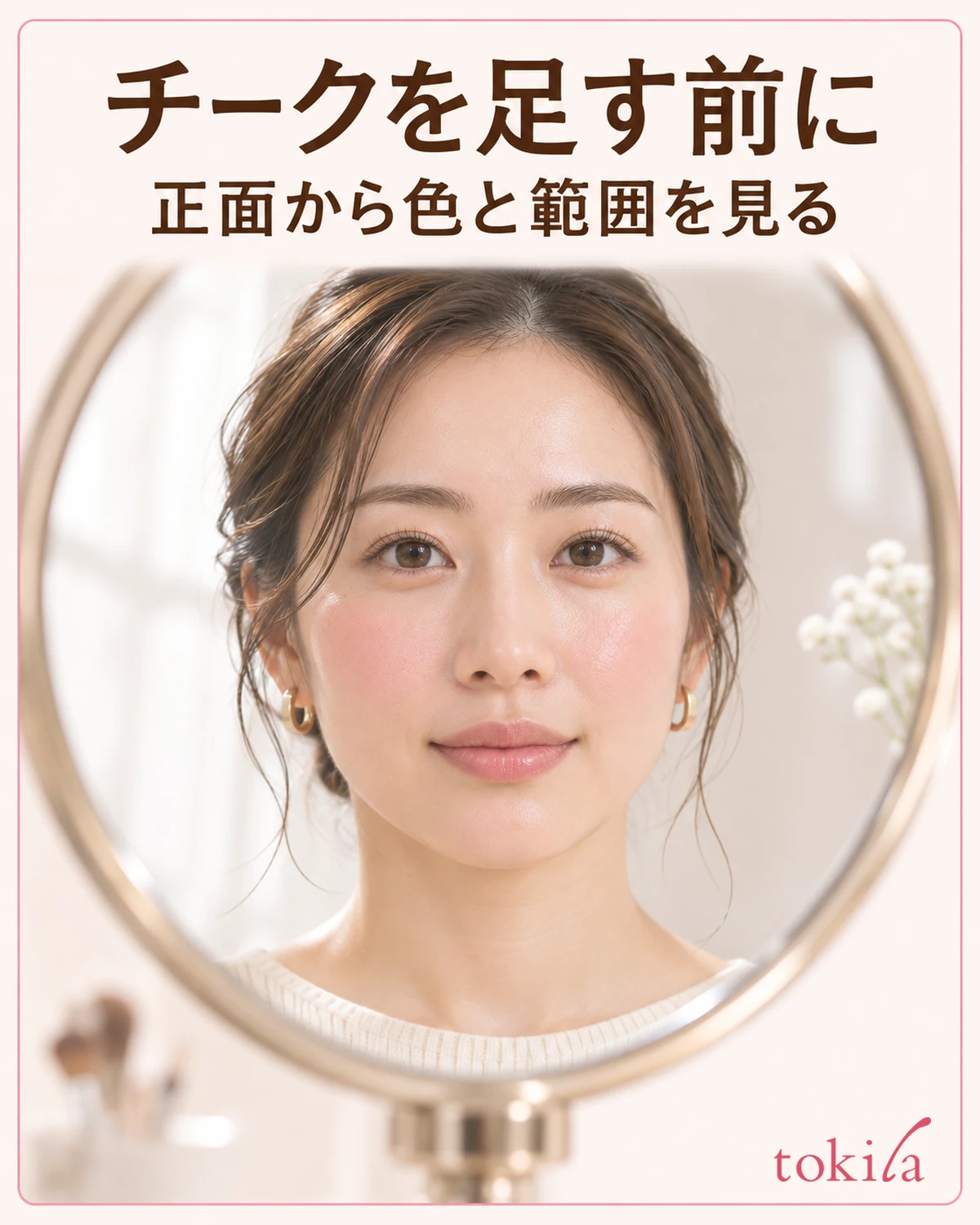
After applying color to both cheeks, put your tools down and look at your whole face where light falls evenly on both sides. A small mirror can show how deep the color is on one cheek, but may make it difficult to judge its intensity next to your lip and eye makeup. At your usual viewing distance, check where the color shows, how far it spreads on each side, and where the sheen appears as you move your face slightly.
If you like the color but it spread too far, keep the same ratio next time and make the initial area on the cheek smaller. If the color is strong enough but the sheen feels a little too bright, change either how much of the sheen pan you touch or where you apply it to your cheek. If one shade feels too subtle but layering both looks too strong, try applying the second shade to a smaller area using a method that allows both shades.
If the color is still hard to see after several applications, check whether the bristle tips have picked up the color powder and whether the light is the same on both sides before adding more. If you're reconsidering the amount of powder and the area you layer it over, see how to adjust powder blush that looks too faint. Separating the shade choice from the way you apply it helps narrow down what to try again with your palette.
You can keep a short note of the method that worked for you, such as “just the lighter shade,” “pick up both and apply to the high points of the cheeks,” or “cream first, then a little powder toward the outer edge.” With two shades in one palette, choose the color and method that suit your mood and your base that day.