You have applied sunscreen to your face, but only your usual moisturizing balm to your lips. Before adding a UV lip product to your routine before going out, check that it is intended for lips and labeled for sun protection, and decide how to layer it with lipstick. Some products work as a lipstick primer, while others can go on top, but one order does not apply to every product.
This guide covers lip balms and lip serums marketed for sun protection on the lips. It is separate from applying facial sunscreen to the lips or using an overnight lip mask. The photographs explain application areas and container structures; they do not measure any particular product's sun protection.
1. Choose sun protection labeled for use on lips
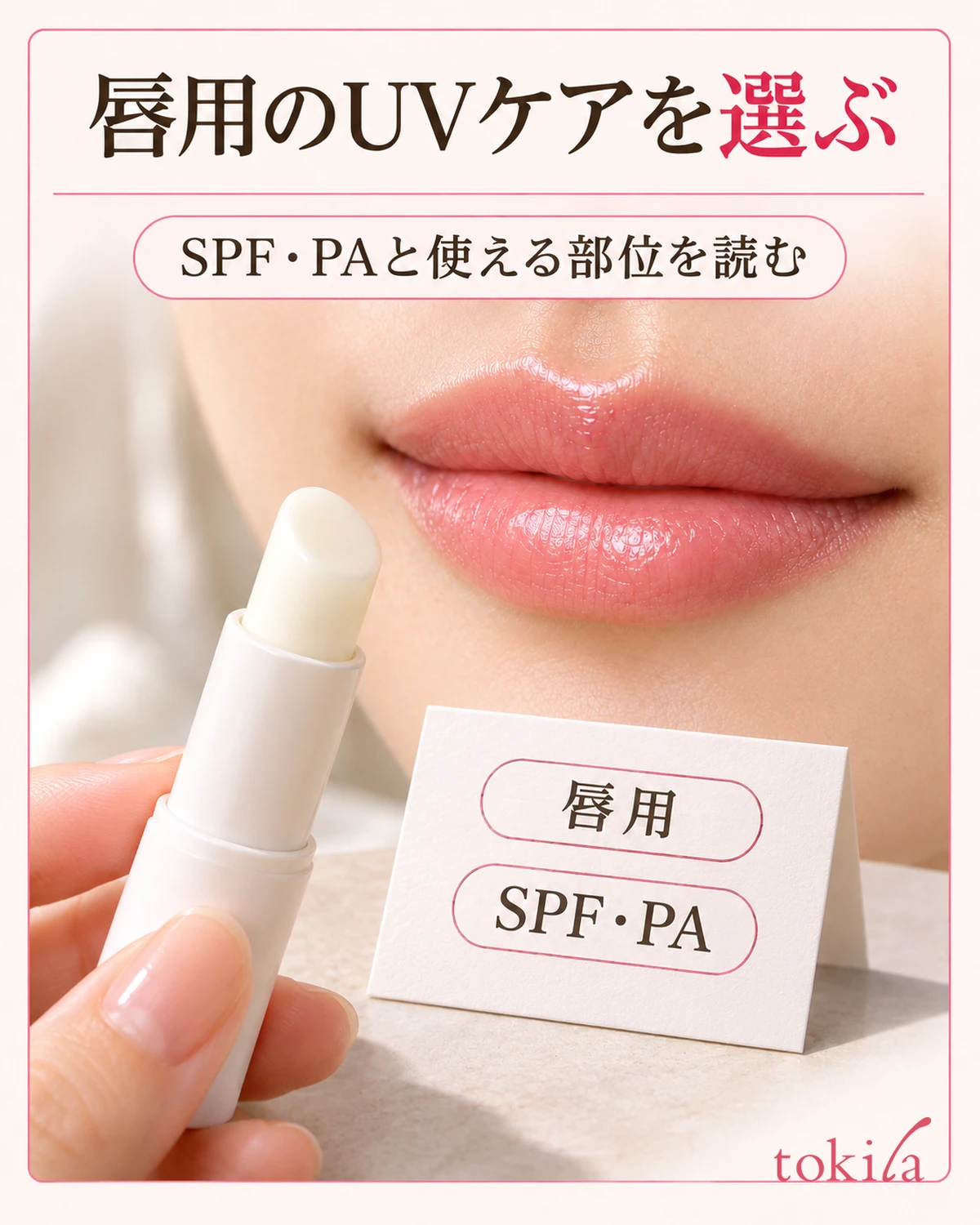
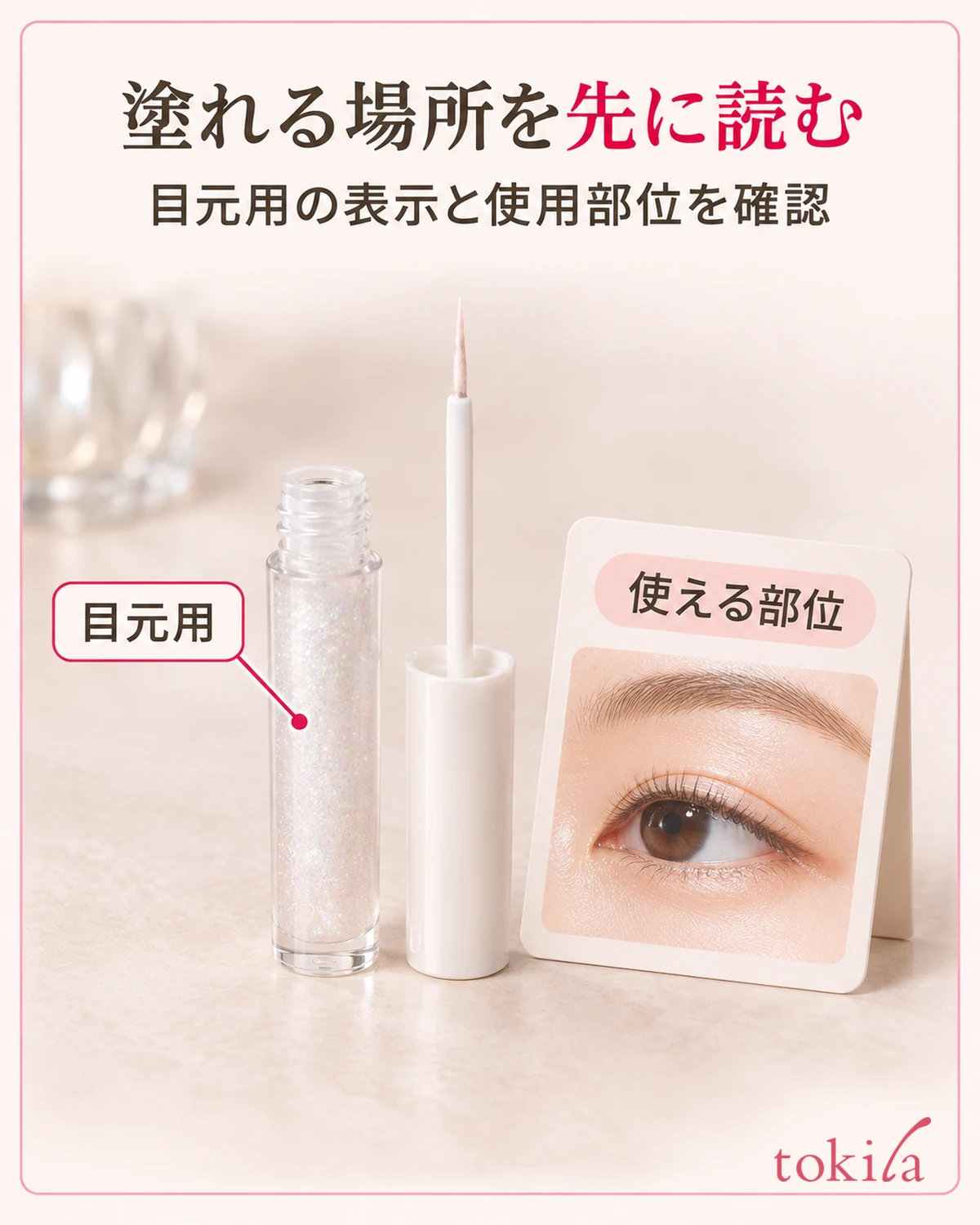
First, read the tube or outer packaging to confirm that the product is intended for lips. Having sunscreen for your face or body does not mean you can extend it onto your lips. If you cannot identify the permitted application areas, check the label and directions before trying it around your mouth.
Next, look for sun protection labeling such as SPF and PA. A lingering moisturizing film, shine, or color alone does not establish whether the product offers UV protection. Specifications can differ even within one range, so read the label on the particular product you have chosen.
Do not assume from the numbers alone that one morning application completes your care for the day. Eating, drinking, and wiping your mouth all affect the lips. Reading the reapplication directions also makes it easier to decide what to carry and whether you will touch up your lipstick too.
Cosmetics and quasi-drugs also differ in how their labeled benefits and active ingredients are handled. Do not assume that the word "medicated" means UV protection is included. Check the respective labeling for moisturizing, preventing chapped lips, and sun protection. Avoid combining features from different products in your understanding of one product.
When choosing, also consider whether it is clear or tinted, a stick or a tube, and whether you plan to layer it with lipstick. What you check first depends on whether you want one tinted product to finish your lips or want to keep using your own lipstick. Decide on one approach for today before moving on.
2. Check the layering order for your own lipstick and lip product
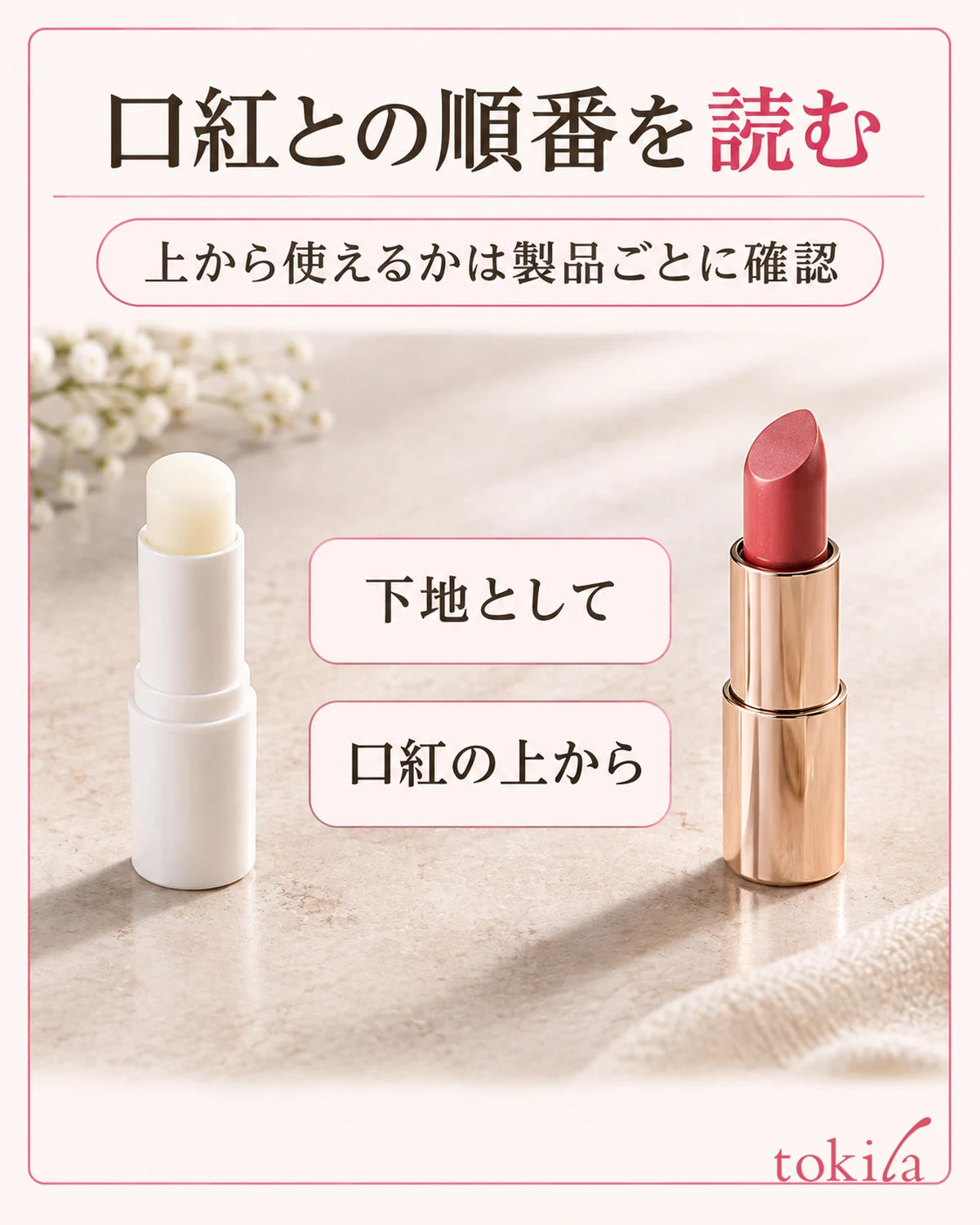
On days you wear lipstick, see whether your UV lip product's directions say it can serve as a lipstick primer or be applied over lipstick. These are different instructions. Directions for use as a primer alone do not establish that you can also reapply it over lipstick while out.
If it is specified as a primer, confirm the sequence of UV lip product first and lipstick afterward. Even if a thick layer makes lipstick slide, do not replace this with a blanket practice of blotting away the sun protection film with a tissue. First reread the amount and layering instructions for your product.
If application over lipstick is specified, spread it a little at a time according to those directions. Some products, however, are directed to go on first because they slide over lipstick and do not deposit sufficiently. The container shape or a clear appearance cannot tell you whether a product can be used on top.
When combining it with a tinted balm or tint, consider maintaining color and reapplying UV lip care separately. Visible color does not establish that sufficient sun protection remains. Similarly, do not substitute facial sunscreen on your lips just because the color has worn off.
If the order is unclear, consider together the UV lip product you use in the morning, the lipstick you want to layer, and your plans for touching up while out. Use combinations with confirmed directions, and keep the option of finishing with one product rather than searching for an answer after layering several.
3. Spread the specified amount evenly over the lip surface
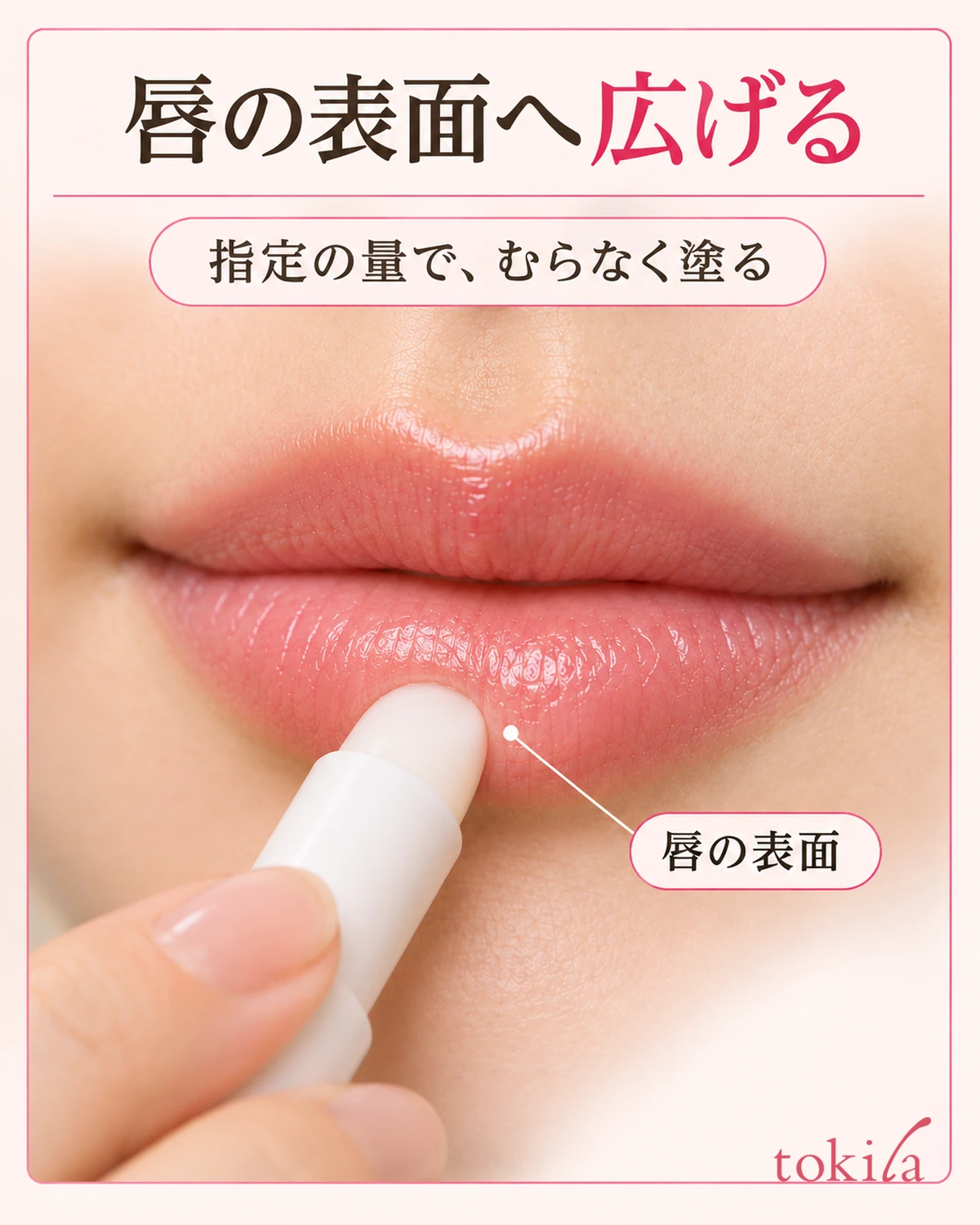
In front of a mirror, make sure food, drink, and excess residue are cleared from around your mouth. Wash your hands first if the product is handled with your fingers. Avoid use on lips with wounds, eczema, or other abnormalities, and stop if redness, itching, or irritation occurs during use.
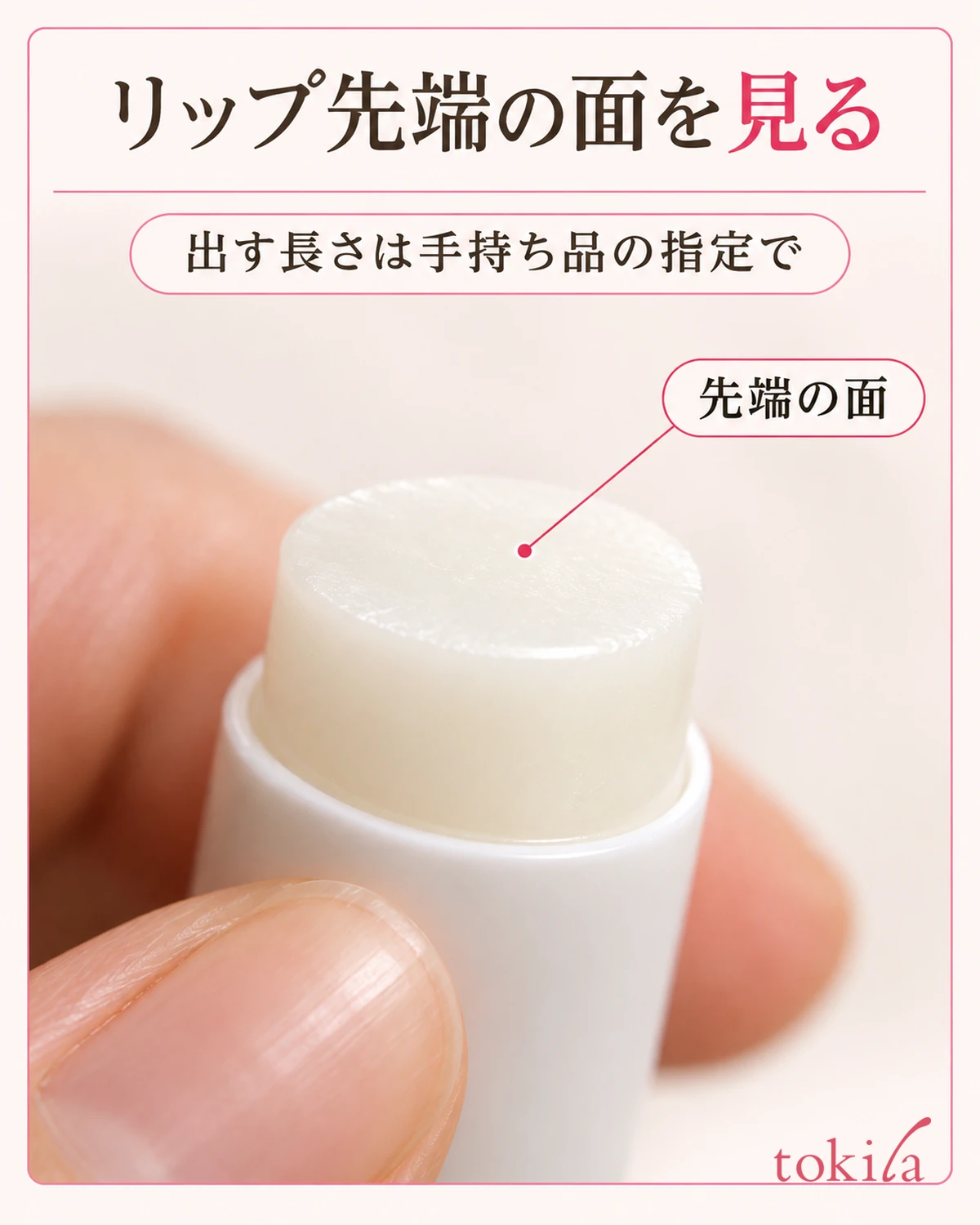
Extend a stick only as far as that product's label specifies. Do not extend a long section of soft balm and press hard to spread it. Follow the product's directions on whether a tube should be applied directly or dispensed onto a fingertip, rather than transferring stick instructions to another format.
Look at the contact surface and the side of the extended tip. Use a mirror to check where the flat face touches your lips, and avoid holding it so the container rim presses against them. Do not use the photograph as a ruler for extension length; follow the length stated on your product.
Touch it lightly to the lip surface and spread it without missed areas using the number of passes or amount in the directions. Rather than opening your mouth wide and pushing it inside, watch the lip outline and the point of contact with the container. Change the hand mirror's angle for areas that are hard to see instead of adding pressure.
One light, thin pass does not establish by appearance alone that the labeled protection will be obtained. Some products state that too little will not provide sufficient sunscreen protection. Use the amount specified for that product rather than judging by shine or the film thickness in a photograph.
After application, move the mirror slightly away and look at the upper and lower lips and both corners. If layering lipstick, follow the order you decided on. If it catches or feels uncomfortable, stop and check the condition rather than repeatedly passing it back and forth.
4. Check what remains after eating or drinking, and reapply
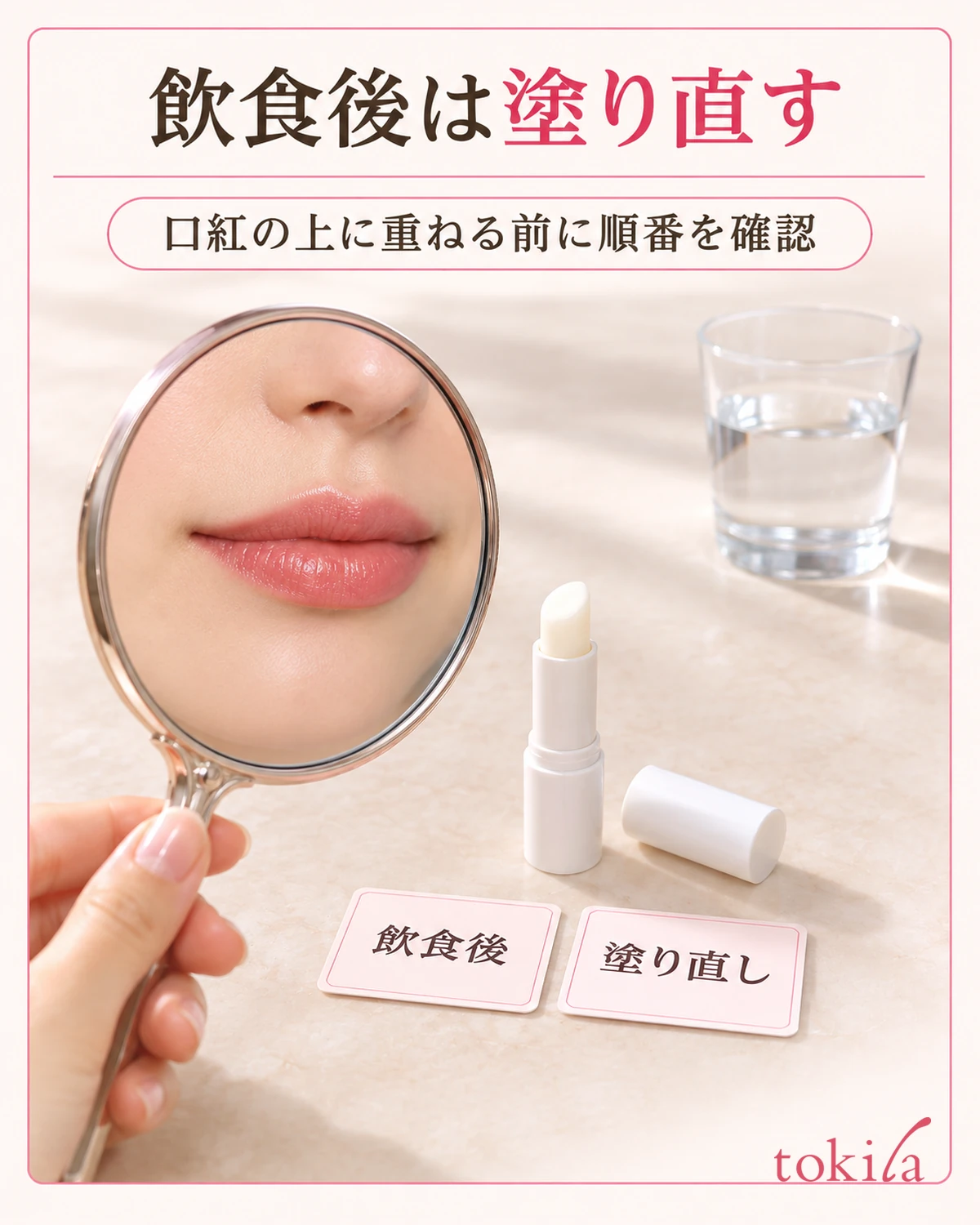
Use your product's directions as the basis for reapplication, and take eating, drinking, or wiping your mouth as opportunities to check. Even if the morning color or shine still appears present, the level of sun protection cannot be measured by sight alone. Do not decide whether to reapply solely by whether your lips feel dry.
First look in a mirror for food, drink, or clumps of lipstick remaining on your lips. Gently tidy the necessary areas before using clean hands and tools, rather than spreading residue as you add more lip product. Even if skin is lifting, do not pull or peel it off as part of a touch-up.
If the product can be used over lipstick, reapply according to that specification. If it is a primer, do not assume you can apply it over remaining lipstick; check the layering method before touching up. When lipstick also needs attention, choose a place and time where you can follow the sequence instead of hastily adding only UV lip care.
For tinted UV lip products, distinguish layering to deepen the color from reapplying the specified amount. If excessive color concerns you, reconsider whether to combine a clear product with lipstick or finish with one product next time. Do not independently reduce the amount for color preference and assume the same UV protection is maintained.
Before going out, put the lip product somewhere easy to reach in your pouch and consider when you can use a mirror after eating or drinking. Carrying one chosen product makes it easier to avoid confusing its directions each time. If you also use face or body sunscreen, follow the labeling for each area rather than using one product everywhere.
5. Check removal and storage, including the products layered together
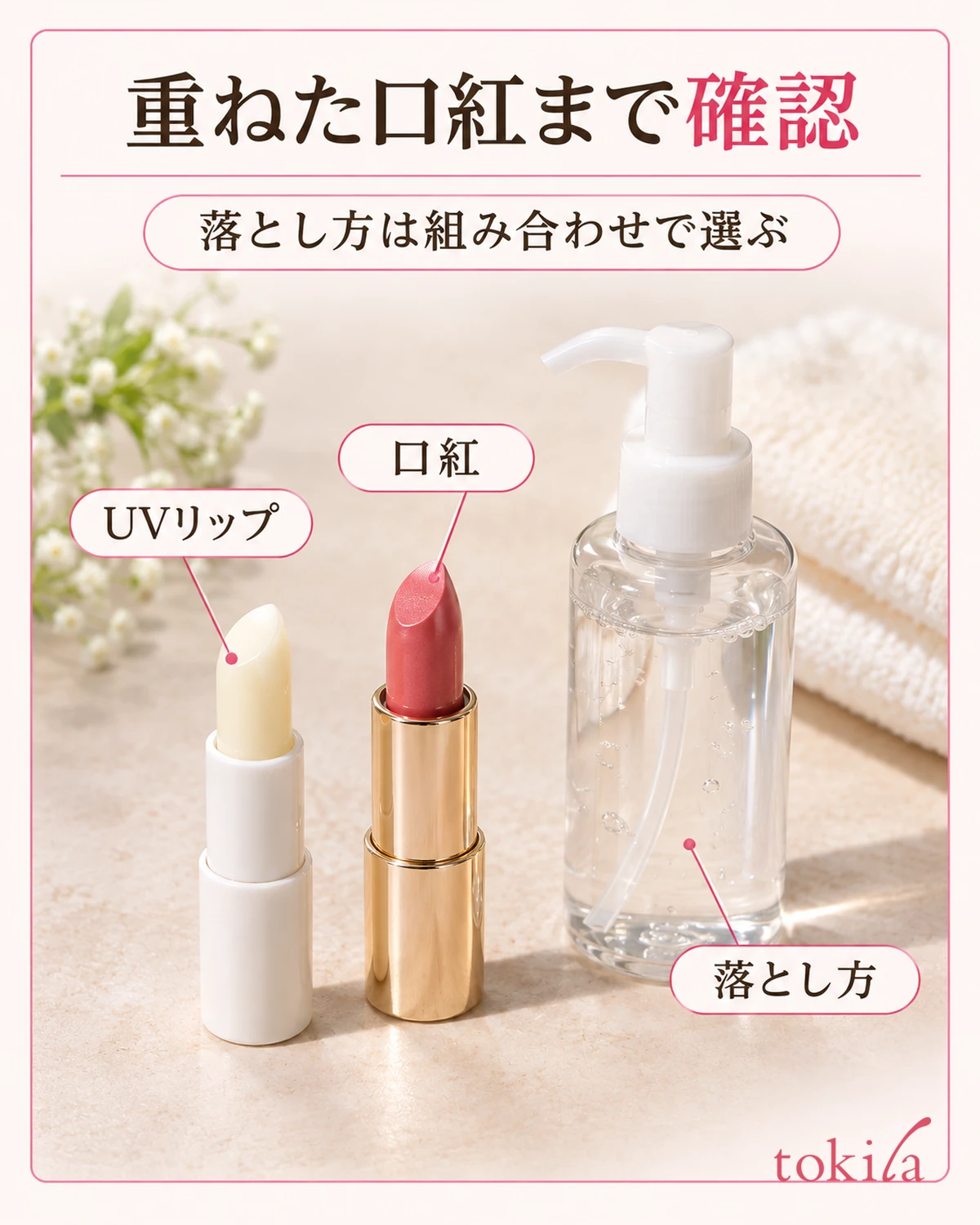
At night, check both how to remove the UV lip product itself and how to remove the lipstick layered with it. Knowing how to remove the UV product alone does not mean the same method will remove the tint or long-wearing lipstick on top. Recall what you used before choosing an appropriate removal method.
Use a makeup remover intended for lips and follow its directions. Do not repeatedly rub with dry paper to remove the color quickly. If using a targeted remover, also compare the instructions in How to Use Point Makeup Remover with the labeling on your own product.
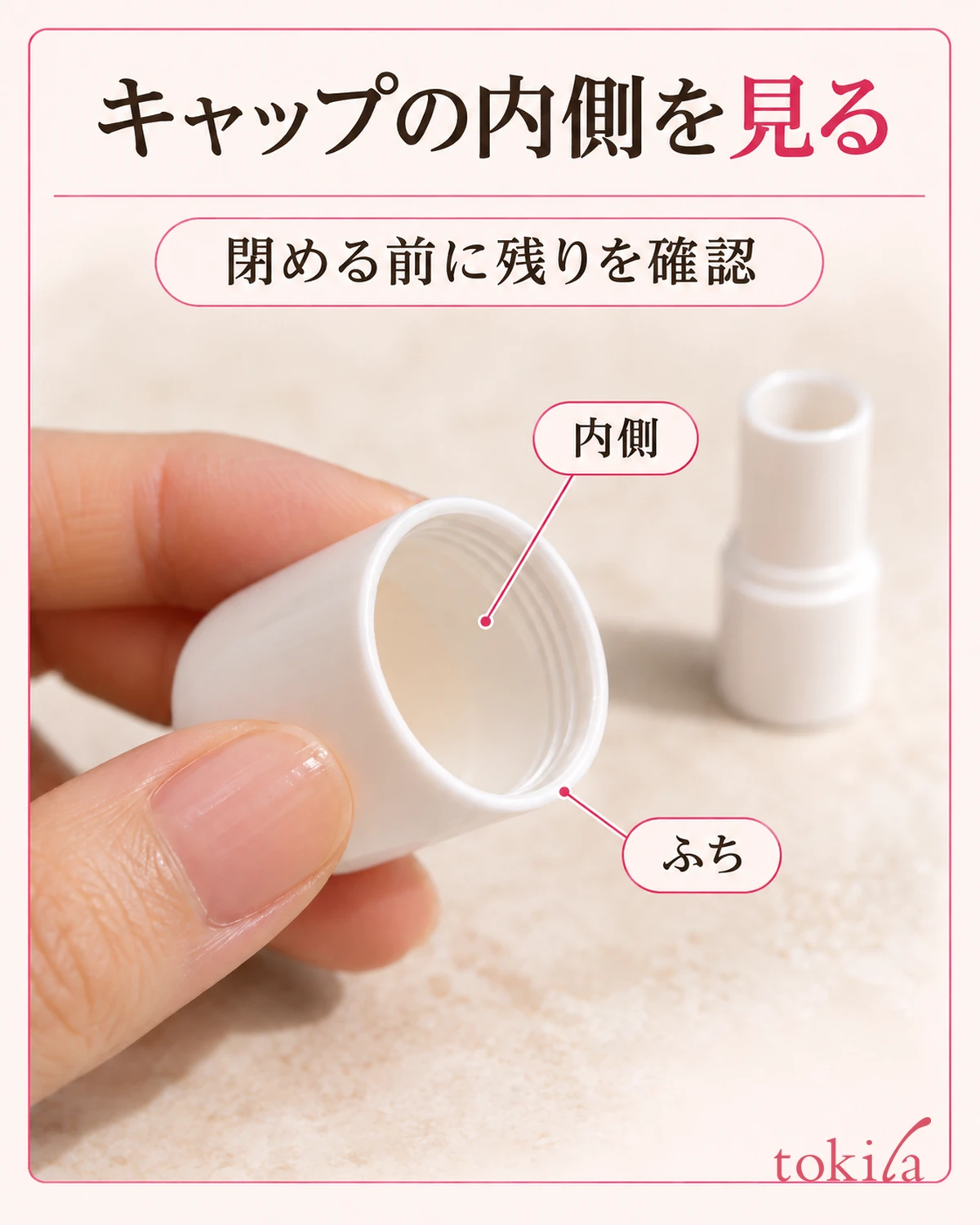
After using a stick, retract the contents as directed before closing it. Product on the inside or rim of the cap can spread onto your hands or container the next time you open it. Inspect the inside and rim, perform care appropriate to the product, and then store it.
Follow the storage label rather than leaving it in a hot car or a place exposed to strong sunlight. Do not try to reshape softened contents by reheating them yourself or mixing in something else. If the smell or condition differs from usual, set it aside instead of forcing yourself to use it up.
For tomorrow, briefly note only which product you used, its order with lipstick, and any difficulty during reapplication. Notes such as "This goes before lipstick" or "I want a mirror available after eating" help guide your next action. Lip-use labeling, layering order, specified amount, reapplication, and removal: adapt these five points to your own products to build your daytime routine.