You are interested in an exfoliating toner but wonder whether it replaces your usual toner or goes before cleansing. Hearing that it is wiped on with cotton may make you want to go back and forth until the dirt is gone. Before you begin, check what that particular product does and where it belongs in your routine.
This article covers the order, amount, movement, and moisturizing afterward for toners and lotions applied by saturating a cotton pad and wiping. Makeup-removing sheets and exfoliating products applied by hand have different methods. Start with each product's instructions, without diagnosing the cause of rough-feeling skin yourself or trying to remove it by force.
1. Check how it differs from a moisturizing toner and when to use it
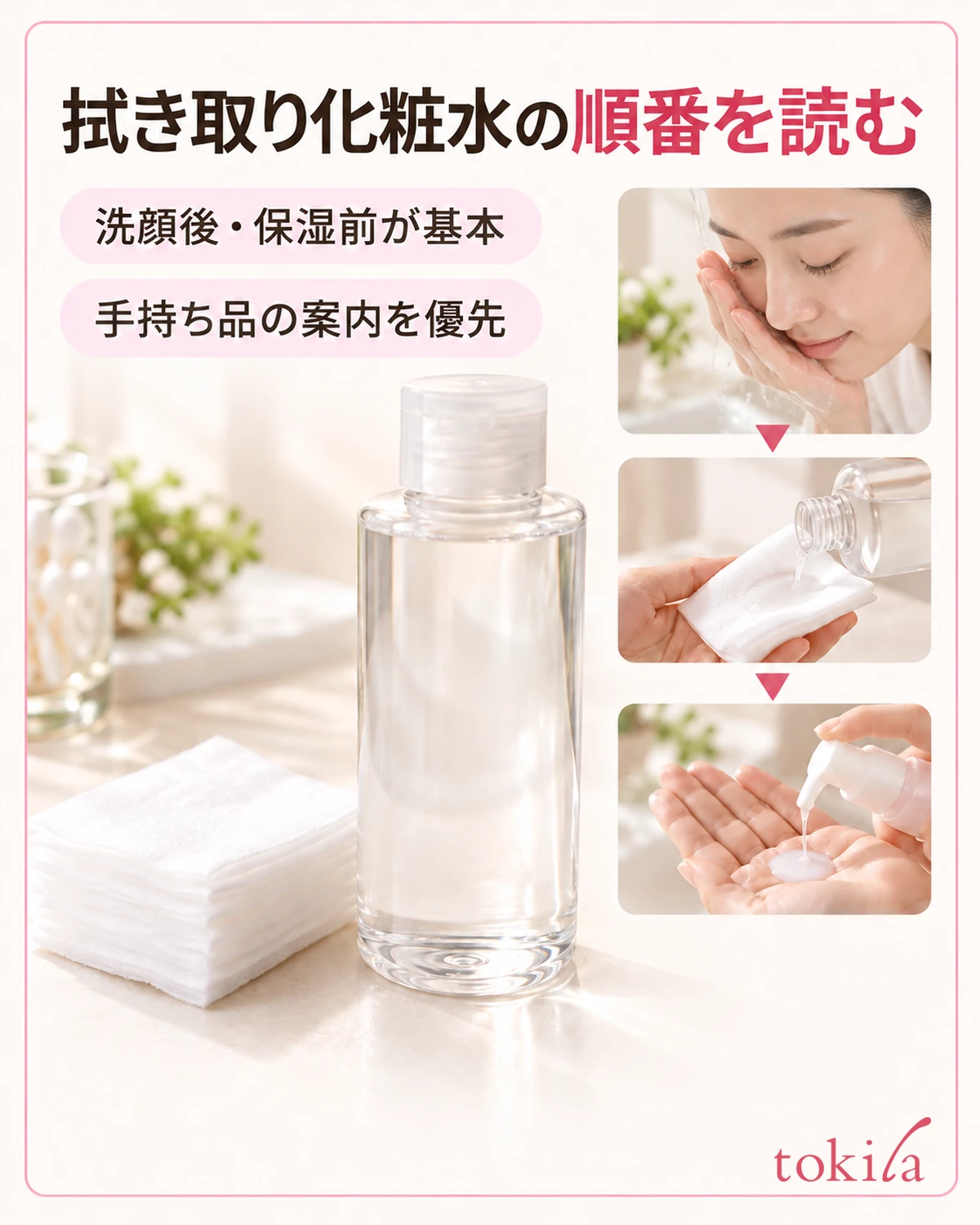
An exfoliating toner is a product for removing surface impurities such as old skin cells and excess sebum through wiping with cotton or a similar material. Its main role differs from a moisturizing toner that supplies moisture. Do not assume that the word toner means you should press the same amount into your skin with your hands; read the directions too.
It generally goes after cleansing and before moisturizing, but follow the order for your own product. Do not substitute a product labeled for use after cleansing for washing your face simply to save time. If a product is also intended as an alternative to cleansing, check those conditions separately.
On evenings when you have worn makeup or sunscreen, check how to remove each first. Having an exfoliating toner does not necessarily allow you to skip makeup removal. Read your cleanser and toner instructions together to see whether removal must be completed before using the toner.
Next, check whether a moisturizing toner is needed afterward. A product that also moisturizes and one followed by another toner require different preparations. Rather than always adding another product with the same role or considering all moisturizing finished once you have wiped, follow each product's guidance.
Even names such as lotion or skin lotion do not tell you alone whether a product is for wiping. On your shelf, position containers so their intended uses can be read, helping you avoid mixing them up with your moisturizing product.
When choosing one for the first time, compare the permitted areas, cotton-pad requirements, morning or evening use, and frequency, as well as the changes you hope for. Consider how it fits into your current routine, including your preferences for a cooling sensation or fragrance. Alcohol content or thickness alone cannot establish whether a product suits everyone's skin.
If tightness concerns you immediately after cleansing, before increasing wiping you can also review cleansing conditions and the transition to moisturizing. Avoid adding more friction in an attempt to clean skin that shows an abnormal reaction.
2. Saturate with your product's indicated amount and prepare the cotton surface
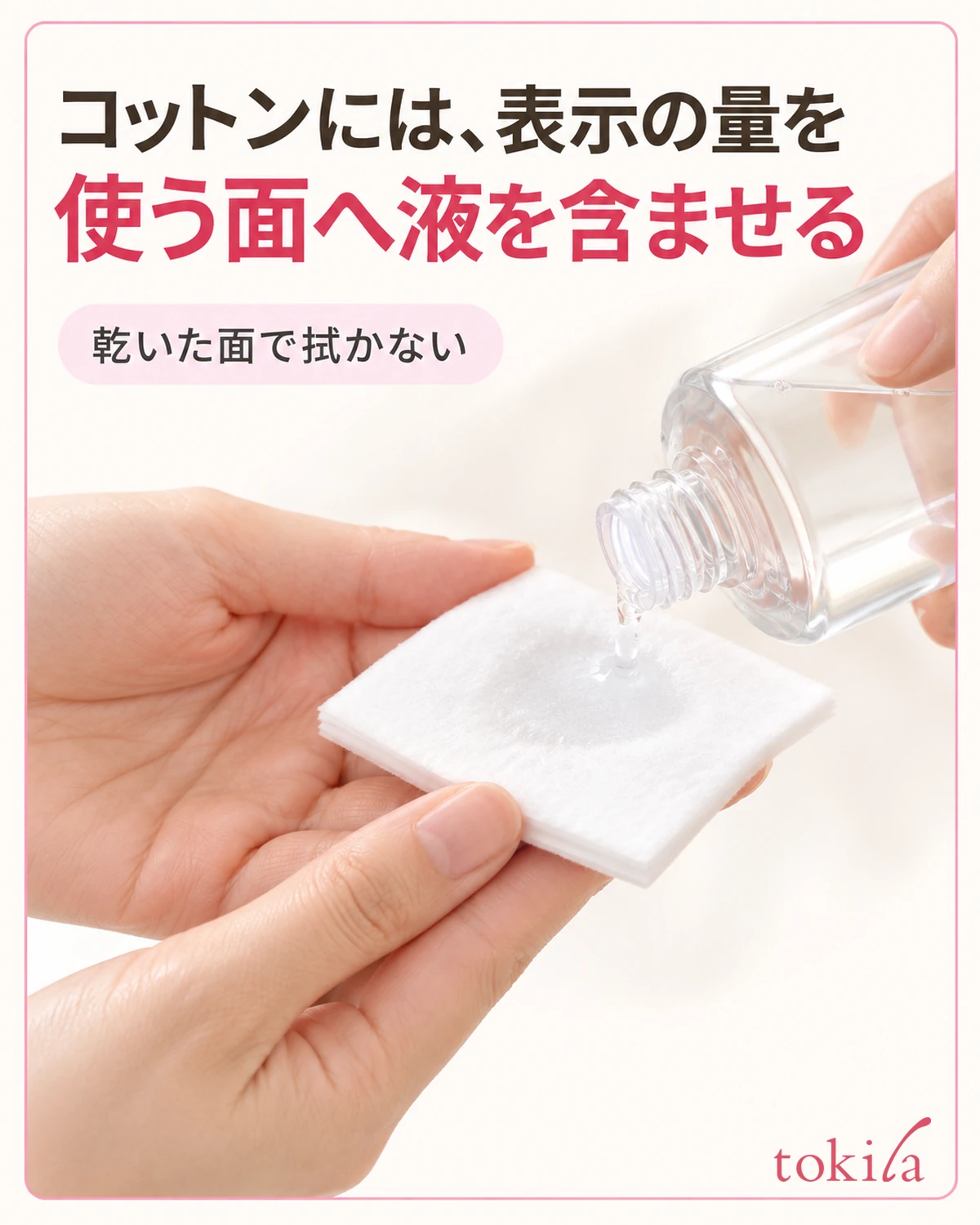
Clean your hands and prepare a new cotton pad before use. If the product recommends a size or type, use that combination as your starting point. Do not decide from appearance that thicker is better or a harder surface removes more; check the package to confirm suitability for wiping.
Read the amount indicated for the lotion you are using now. It may be described as a coin-sized amount, a number of pump presses, or an appropriate amount. Check before dispensing rather than reusing an amount learned for another product or the pump count from the previous bottle. If you switch to a larger cotton pad, reassess how the liquid spreads.
Support the cotton with your fingers or palm and saturate it with the indicated amount. Do not press a dry surface against your skin just to use less. Conversely, adding liquid until it drips is not a universal goal; follow the guidance for the amount and cotton-pad size.
If the two sides of a cotton pad have different uses, check which is intended for wiping. A patterned or mesh surface alone does not determine the correct side. Match the surface receiving the liquid and the surface facing your skin to the instructions for the corresponding product.
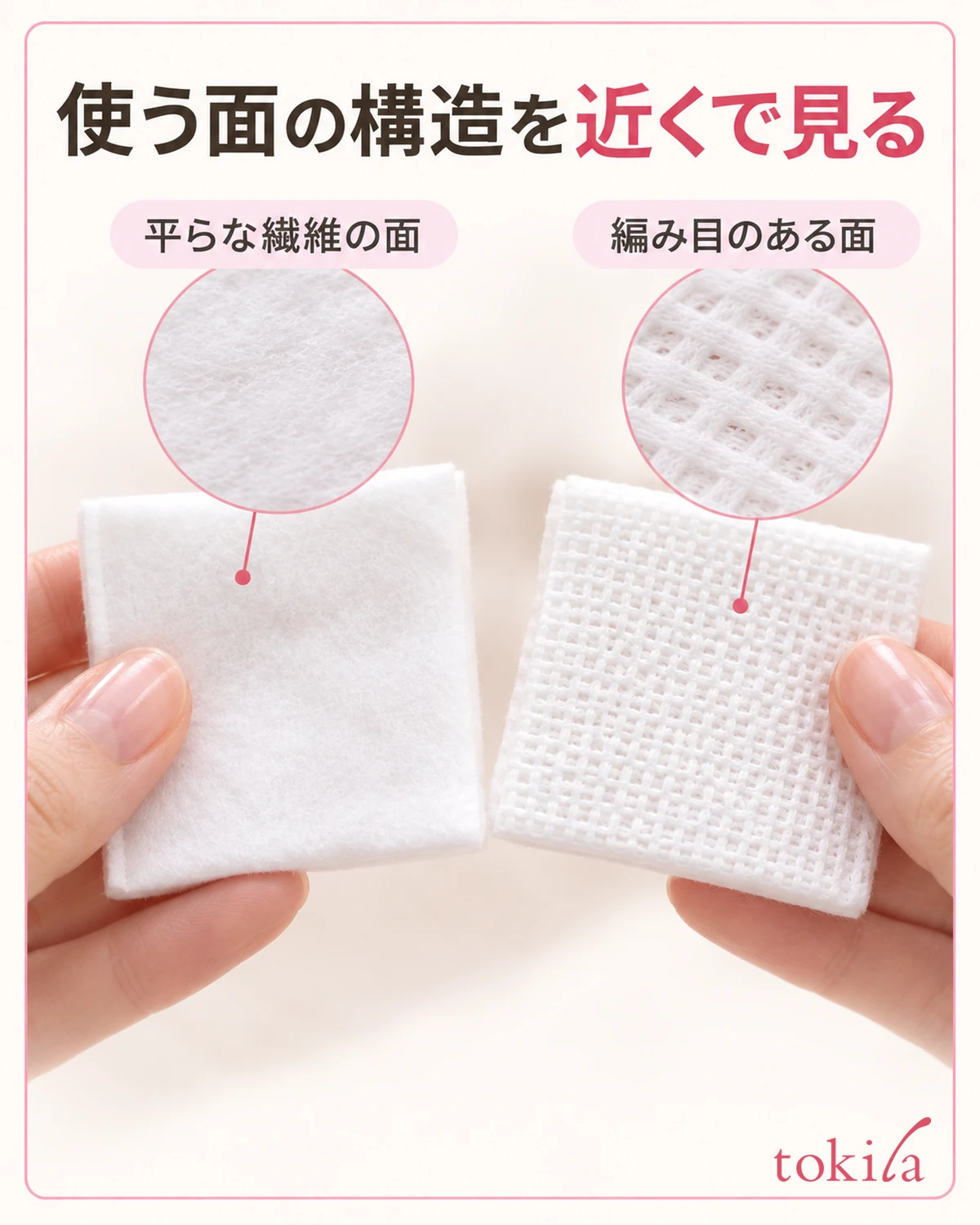
Support the cotton with your finger pads behind the working surface, keeping your nails from protruding toward your skin. Focus on maintaining the surface that touches the skin rather than pulling hard on the edges and rolling it into a small ball. If a grip is specified, adapt it to the cotton's structure and your hand.
If you see a dry edge or greatly loosened fibers, pause with the pad in your hand rather than pressing it onto your skin to fix it. If fraying while using moisturizing toner is your concern, see checking cotton-pad saturation and support. Do not transfer the amounts or movements for an exfoliating toner to that method as universal rules.
3. Glide gently over permitted areas without continuous rubbing
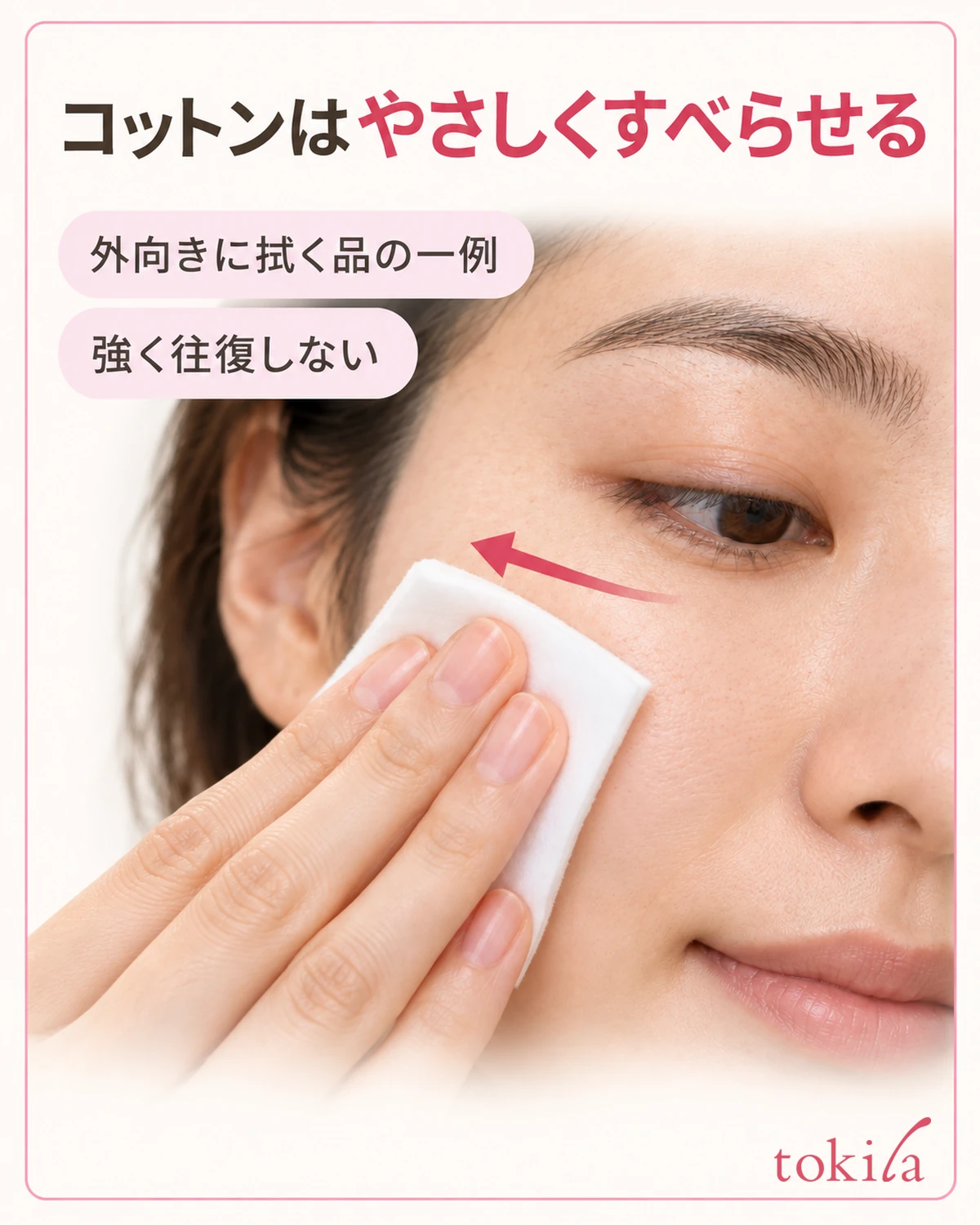
Before touching your face, check which areas to avoid. Read product-specific restrictions around the eyes and mouth and precautions for areas with wounds, swelling, or other abnormalities. Do not extend facial use to the eyelid margins or lips, and keep liquid out of your eyes and mouth.
Lay the cotton lightly against your skin and glide gently in the indicated direction. Some products move from the center outward, while others use a spiraling movement after application. Neither is correct for every product; choose the movement shown for yours.
There is no target level of force to achieve. Lift the cotton away if it pulls your cheek, presses only along an edge, or catches with a dry feeling. Do not try to overcome poor glide by moving faster or making many short back-and-forth strokes over the same spot.
In narrow areas such as beside the nostrils or on the chin, avoid pushing with your nails or a tightly rolled corner. If use is permitted there, change the angle of the surface supported by your fingers and work only where it reaches comfortably. Do not turn lingering roughness into a reason to scrape away each visible dot.
Do not use whether the cotton changes color as the condition for finishing. Color alone does not measure the amount of dead skin or how clean the skin is, and a pad remaining white does not mean failure. Rather than using more pads to increase visible residue, stop when you have completed the indicated steps.
If you take a photograph immediately afterward, treat it separately from notes about the routine order and products used. Two photographs with different lighting or angles do not establish how much dirt was removed or how the skin changed.
If redness, itching, pain, stinging, or another reaction occurs during use, stop rather than assuming it is merely a wiping issue. There is no need to recreate the reaction while changing your grip. Follow the precautions and consult a dermatologist if symptoms persist.
4. Finish wiping and move on to moisturizing
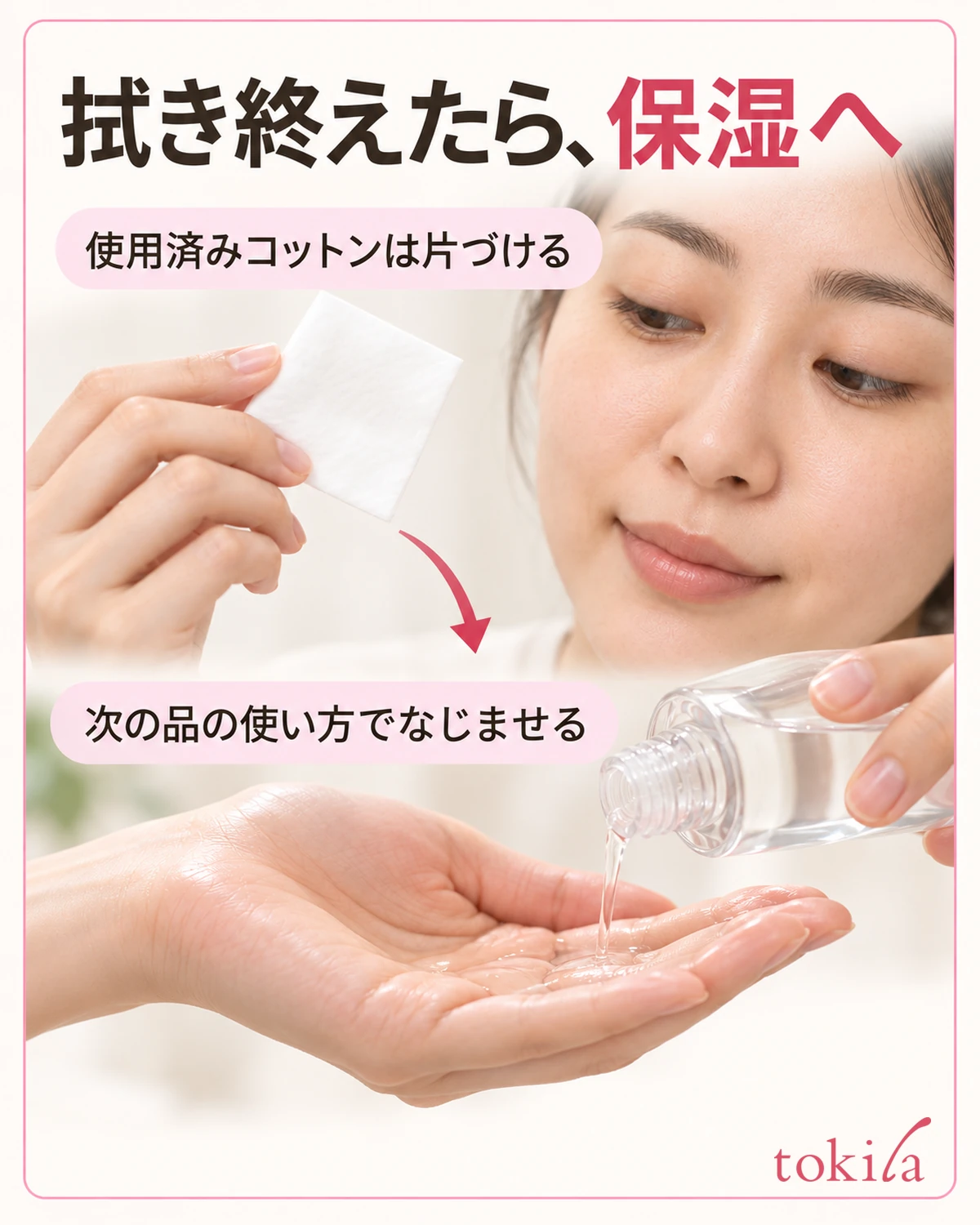
When you finish wiping, remove the cotton from your skin and put it away. Do not repeatedly apply the same surface until it dries or leave it on your forehead like a mask. Wiping and a cotton-pad mask are different methods; extending contact time is not the objective.
Then proceed to the moisturizing care indicated for your product. If using toner, emulsion, cream, or similar products, read each one's order and amount. Do not build a routine around adding a large quantity of the next product because wiping is finished; connect it to your usual necessary steps.
Even if a lotion is described as moisturizing too, separately check whether emulsion, cream, or other care is needed afterward. A moisturizing-ingredient claim is not an instruction that one product completes the entire routine. In the morning, prepare calmly, including the order of sunscreen and makeup afterward.
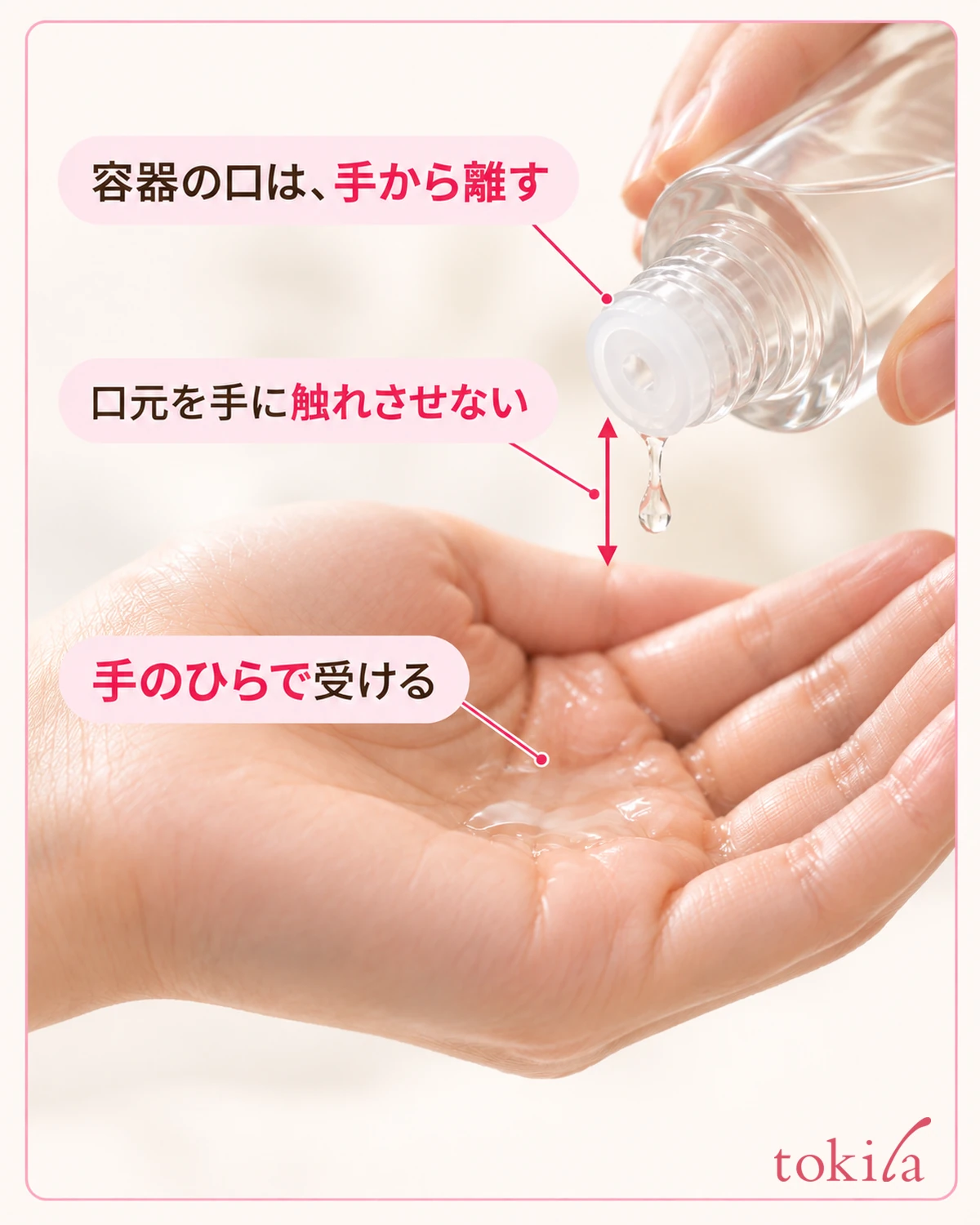
When moving to another toner, switch to its directions rather than adding a different liquid to the used cotton and continuing. Use clean hands for a product applied by hand, or prepare fresh cotton if required. Keep liquid and used surfaces from being returned to the container.
If you are using several serums next, where to use them and how to organize morning and evening caremay also help. Exfoliation is not a reason to layer anything indiscriminately; proceed only as far as you understand the roles and combination precautions of your current products.
5. Review frequency and combinations to fit it into your routine comfortably

Decide frequency using the product instructions and your skin's condition together. Some products allow daily use, while others specify intervals. Do not set a universal schedule such as morning and night for everyone or once weekly for everyone out of concern; begin with the actual product's directions.
Owning several exfoliating toners does not mean you need to use all of them in sequence on the same day. Rather than increasing to two because many areas concern you, start by understanding the permitted areas and frequency for the one you are using.
If unsure whether to use it morning or evening, read its position after cleansing and consider a sequence you can follow calmly. On busy days, you do not need to switch to less liquid and faster, harder wiping. Consider whether you can sustain it as additional care when needed.
If you also use scrubs, rinse-off masks, or other exfoliating care, read combination precautions before adding them on the same day. Do not judge compatibility from product names alone; if uncertain, gather the products you use and seek advice about the combination. More added care is not necessarily better.
When replacing a product, set aside the previous amount and wiping method. Even among wiping products, liquid texture, suitable cotton, and areas to avoid may differ. For the first use, keep the container and box available and prepare not to confuse the old and new instructions.
If recording your routine, briefly note the steps you actually followed, such as used after cleansing, dispensed the indicated amount, and moisturized after wiping. You do not need to rub your skin each time to test differences. Read the order and amount, use gently, and stop when finished. Begin with this sequence when introducing your own exfoliating toner.