When you put on a skirt, a thin layer of fabric peeks out from below the hem. It disappears when you push it in by hand, but comes out again when you walk. When that happens, before you cut the lining short, check which fabric is showing and from where. What you do next differs depending on whether the outer fabric has ridden up or the inner fabric is still long even after you take the skirt off.
Here we sort out how the layers of a lined skirt overlap, and whether you can re-wear it comfortably or need advice about the length or the stitching. Construction and materials vary, so these are not steps for adjusting every skirt to the same length. Let's check, before you go out, within the range that won't damage the clothes you own.
1. Check whether it's a lining or a separate layer
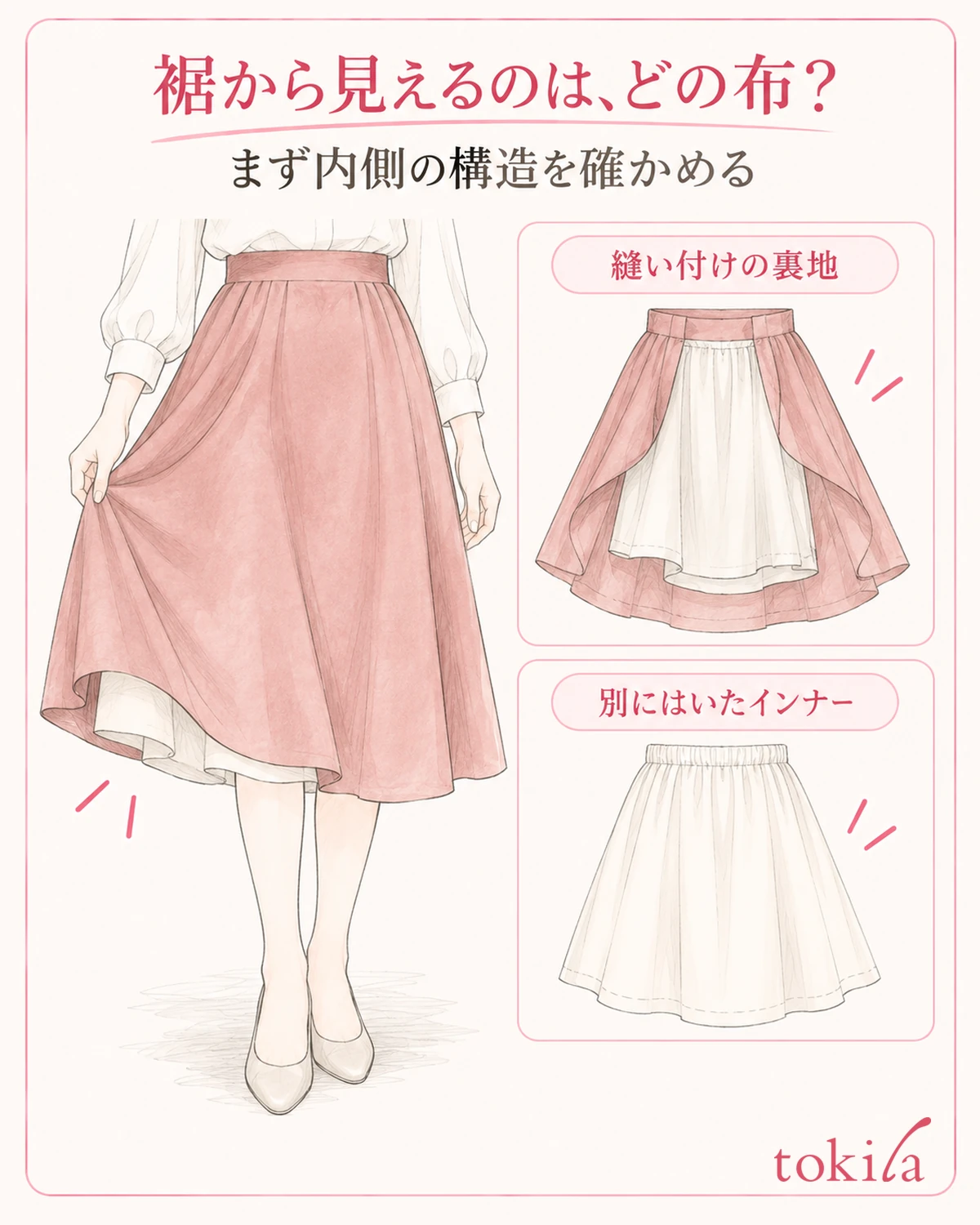
First, stand in front of a full-length mirror and adjust the waist to its usual position. Don't judge while bent deep at the hips to look at the hem; stand upright and look from the front, the side and the back. Check which color of fabric is showing and from where. For the back, don't twist around forcibly; check as far as you can see by changing the direction or placement of the mirror.
The inner fabric is not necessarily a lining sewn into the skirt. It could be a detachable underskirt, a petticoat worn separately, or the hem of a long top that overlaps. Use the explanation that came with the garment or product to see which is part of the piece and which is a separate garment. If you can't tell where it's sewn in, don't test by tugging on the fabric; take the skirt off for now and look at the inside.
Some designs show the inner fabric at the hem on purpose, and some clothes play with the difference in length between a sheer outer fabric and the inside. Don't decide it's a defect just because it's visible. Compare with the photos from when you bought it and the explanation you have, and separate what is the original shape from what is different from usual. When the inside shows through a slit, note it separately from the case where it hangs below the hem.
Putting what you find into words, such as "only the front shows a little," "one side comes out after I walk," or "it's long all the way around even when I take it off," makes it easier not to get lost in the next check. Rather than making up a common standard of how many centimeters is acceptable, prioritize comparing the original structure with how it looks now.
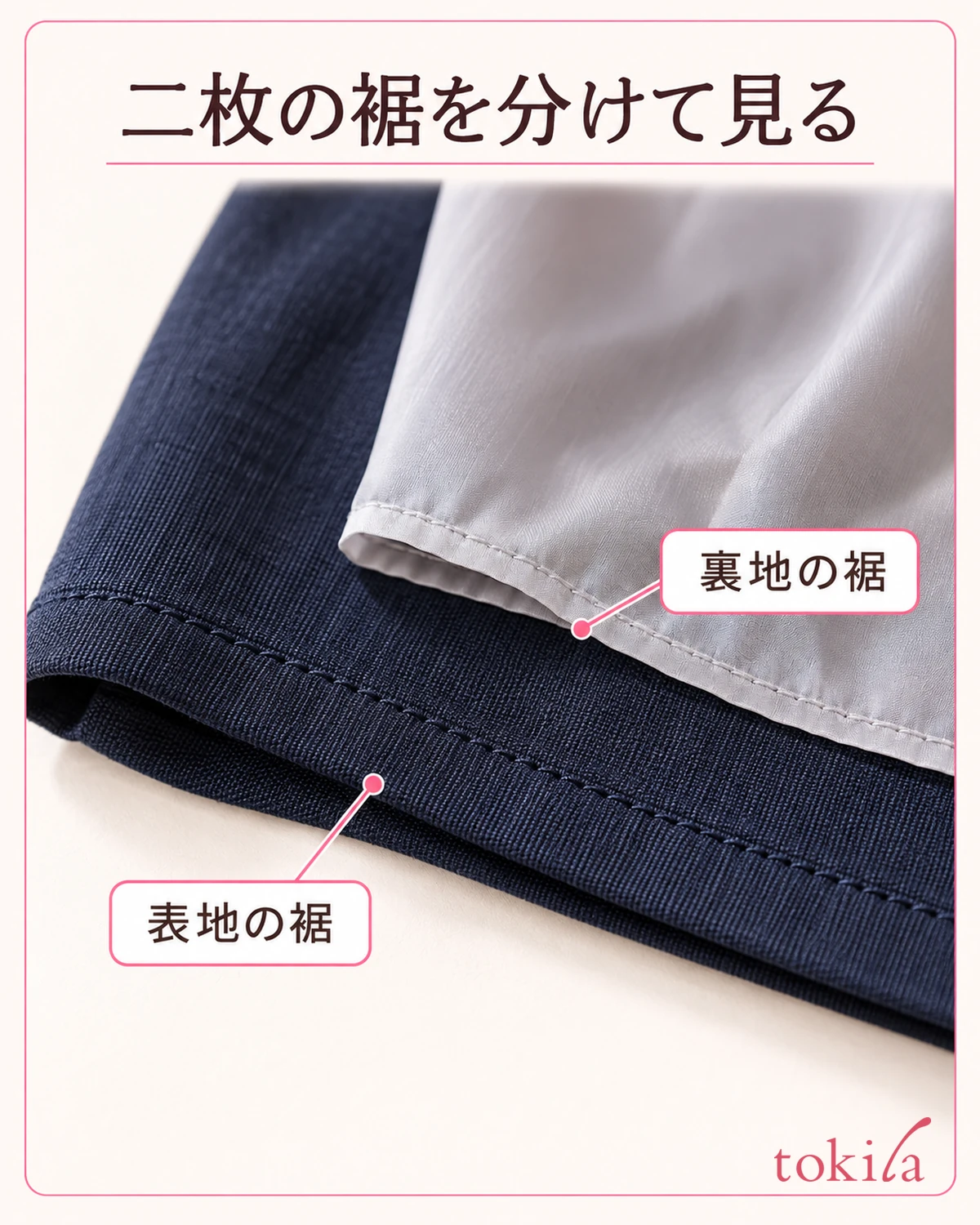
If the color of the visible part is similar and hard to tell apart, trace the fabric from the top edge of the removed garment toward the hem rather than touching it over and over while wearing it. Don't decide just by looking at it and thinking the lining is the thin fabric on the inside; see which fabric it connects to at the waist and the sides. If it's a separate slip, being able to handle each piece independently when you take off the skirt is also a clue.
2. Take it off and check where the outer fabric and lining are catching
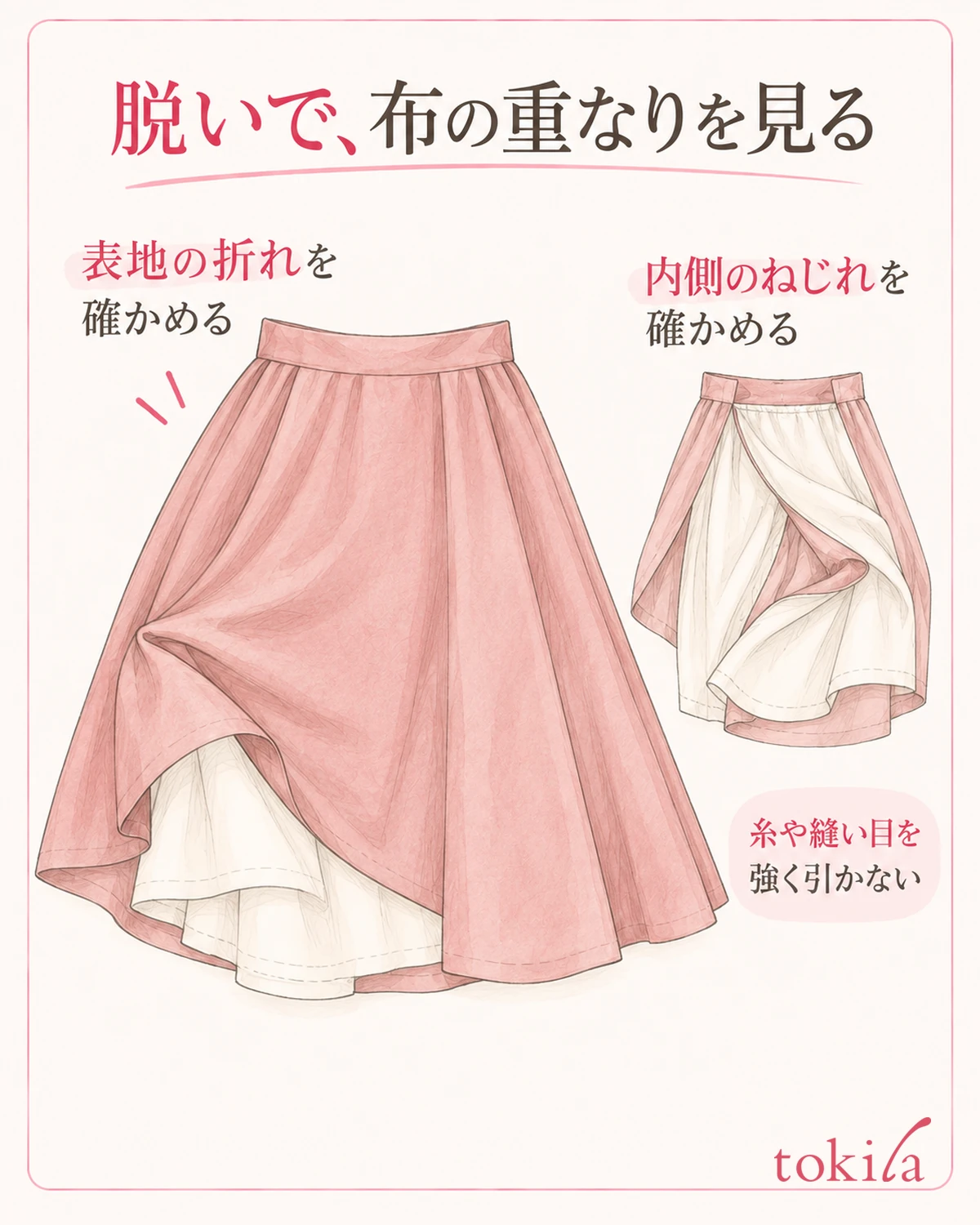
Move somewhere you can undress and open the buttons or zipper the usual way. Rather than pulling the outer hem down while pushing the lining up, looking at the overlap with the skirt off makes it easier to see where the fabric is bunching. There is no need to reach deep inside while wearing it to look for seams or to pull hard on the hem.
Lay it on a clean, flat surface and straighten the waist and side seams into their natural direction. Look for whether the outer fabric on one side is folded inward, whether the lining is twisted and bunched, and whether another garment worn separately has been caught up. Undo only the folds and overlaps that come back with a light touch, and stop where the fabric pulls taut.
Some garments have thin threads or fabric links between the lining and the outer fabric. Don't decide from looks alone whether it's a part that keeps the shape or a temporary tack that can be removed, and don't cut it with scissors. If a thread is taut, a seam is open or the fabric is starting to tear, don't continue the re-wearing comparison; leave it as it is so the state can be checked, and move on to getting advice.
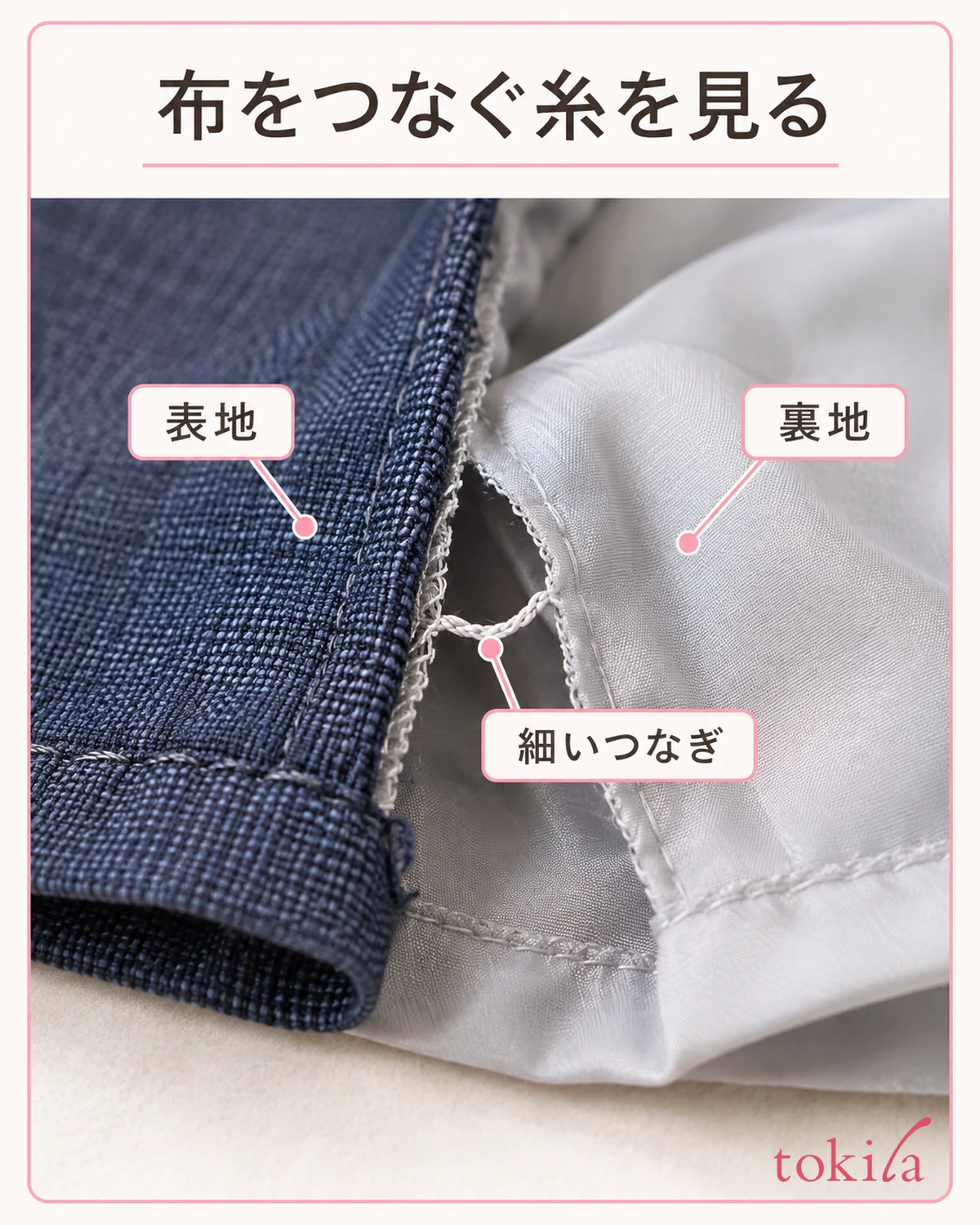
What you are looking at here is whether there is an overlap you can fix by hand. Even if the fabrics are clinging together, don't settle on static electricity as the only cause, and don't immediately spray water or a spray product. Handling differs by material, finish and the garment worn underneath. If the fabric doesn't return to moving freely, don't add force; move on to the next decision.
If a tag or a decoration has gotten between the layers, just check whether it can be lightly lifted away from the fabric surface. If it is tangled on hardware or the edge finish is coming undone, anything that looks likely to be damaged by pulling, don't try to untangle it on the spot. When checking it laid flat, it is also important not to spread the hip area out too far and stretch the lining seams.
3. Straighten the waist and the inner fabric, then put it on again
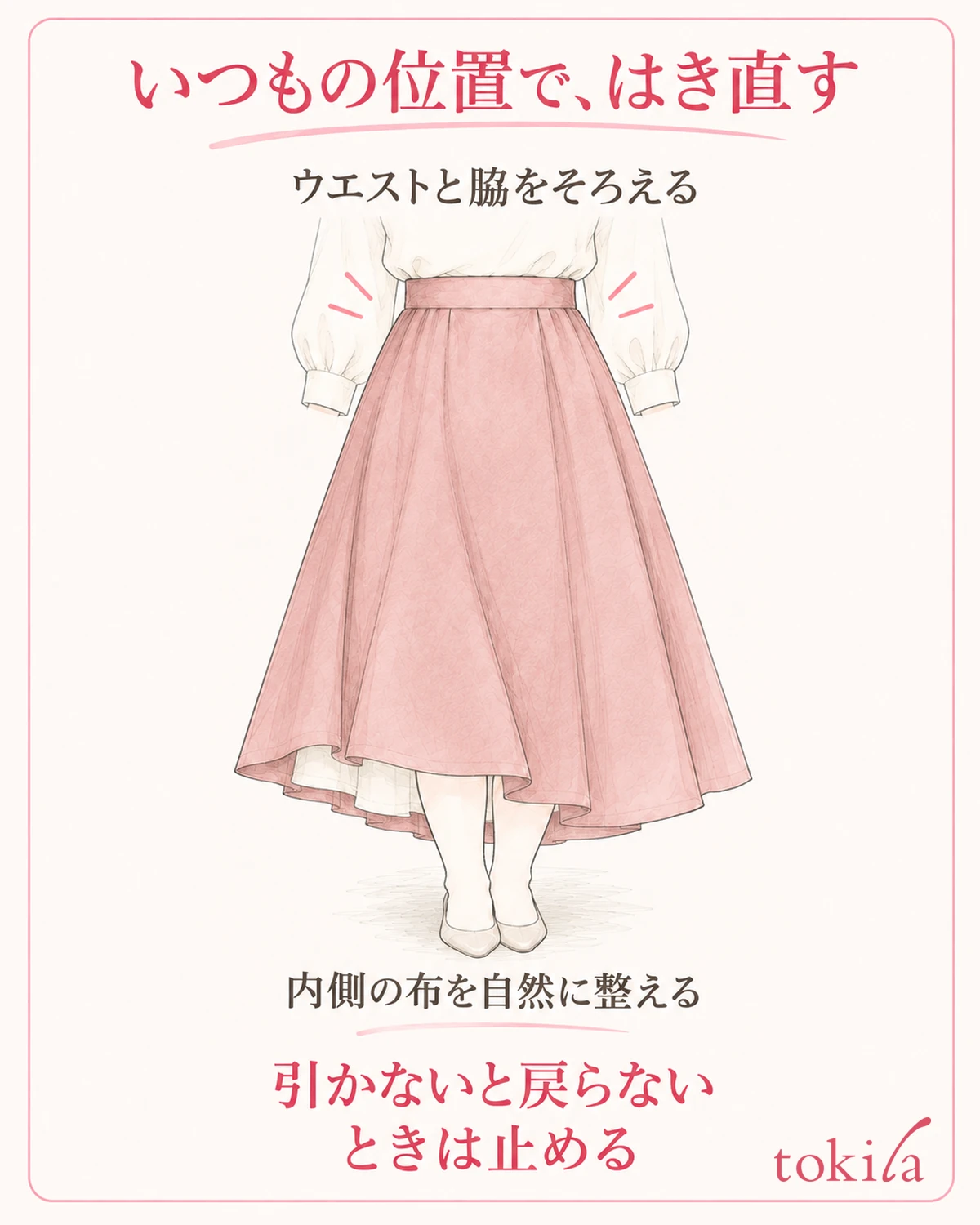
If there is no obvious damage or pulling and you have undone the overlap, put it on again in the usual position. For things like a petticoat worn separately, straighten the twists first and check the waist position separately from the skirt. Keep this distinct from methods such as pulling a sewn-in lining out of the garment or folding the top edge to shorten the length.
Line up the front, back and side positions of the skirt and close the fastenings without strain. If the lining has gathered at the hips or thighs, let the fabric settle down naturally a little at a time. Don't grab a thin lining at a single point at the hem; smooth the area you can reach with a wide surface. If it won't come down unless you pull, or the fastening is hard to close, don't keep wearing it to try to make the shape fit.
If a separate petticoat was what showed, check that garment's length and where it sits. Don't put up with restricted movement or tightness from adjustments like hiking an undergarment up extremely high or shifting the whole skirt off your waist. If your current combination can't be made to work, switching to another slip or another skirt of the right length is also an option.
When you tuck in a top, don't bunch the fabric in one spot; also look at the overlap around the hips. If you want to check how to tuck the hem itself, how to tidy a shirt hem that sticks out on one side only can also help. For this check, compare whether the position where the inner fabric shows has changed between before and after you put it on again.
4. Compare the length after moving a little and in the removed state
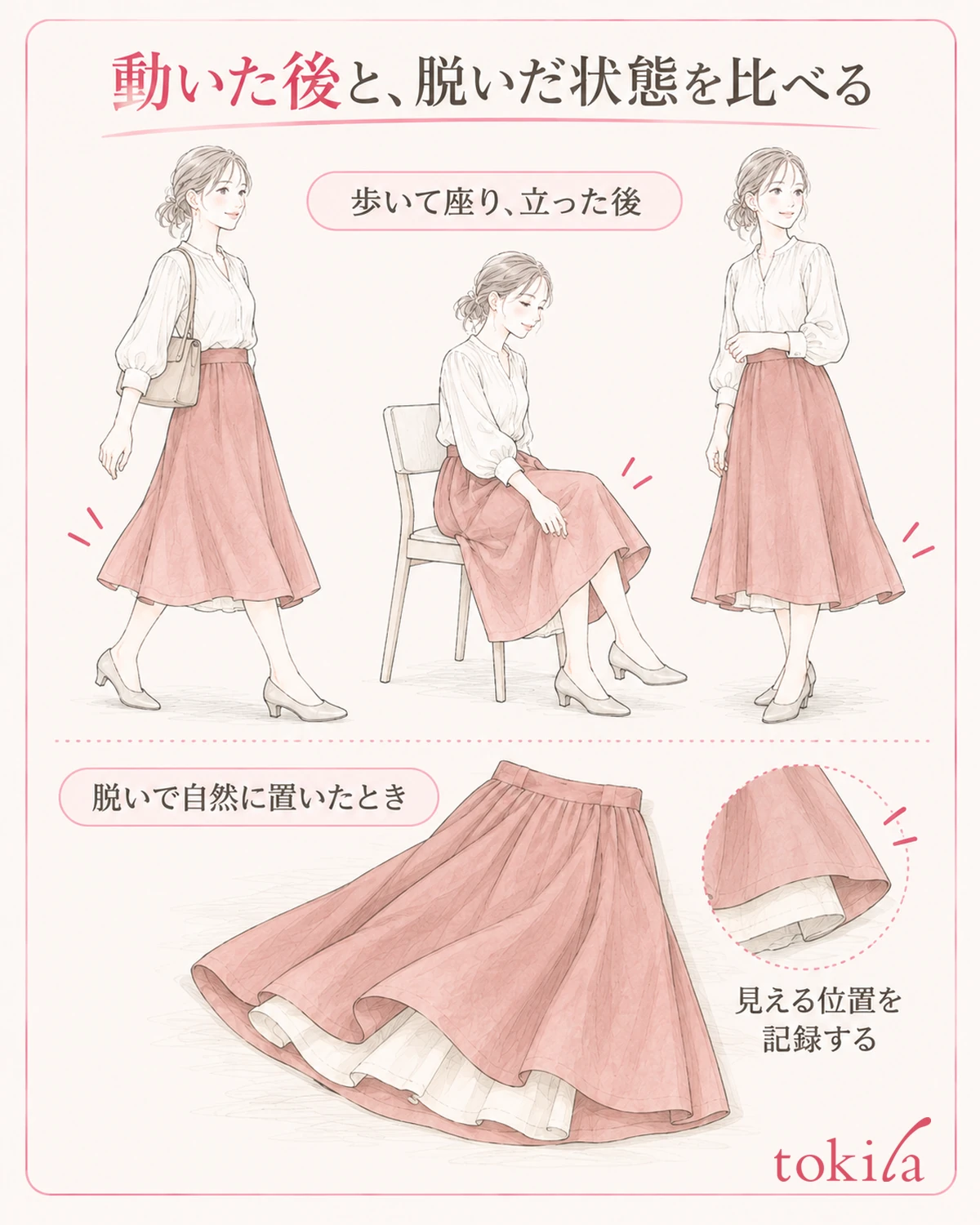
After checking how you look standing in the mirror, walk a few steps indoors, sit on a chair and then stand up. Instead of keeping your hand on the hem, check how it looks after ordinary small movements. You don't need to take extremely long strides. If the hem catches on your legs or the inside pulls and gets in the way of moving, stop comparing and change clothes.
If part of it shows only after you move, look at which movement it followed and which area rode up. Take it off again to check whether only the outer fabric has shifted up or the separate slip has slipped down. If it goes back to the same place every time you put it on, it is easier to judge by setting that combination aside for a while than by going out after pushing it in over and over.
Lay the removed skirt out naturally without stretching the waist or seams, and compare the positions of the outer fabric hem and the inner hem. The shape and slits of the lining are not always the same as the outer fabric, so don't aim for the same difference all the way around. If you can compare with earlier photos, separate whether the overall shape has changed or just part of the stitching is bothering you.
If it started showing after washing or dry cleaning, you can't conclude that the lining stretched. The inside can also show because of dimensional change in the outer fabric. Note how it was cared for before and after, how it was dried and when you noticed, and don't wet it again or apply heat to try to fix the length. It is fine to record as it is that the cause can't be known from how it looks alone.
If you keep a record, use before-and-after photos taken standing at the same waist position. Don't compare with a photo where only one side of the hem is lifted, and match the stance of your feet and the camera height as much as you can. Don't guess at the inside structure that photos can't show; separate how the surface looks from the state you confirmed with the skirt off, and use both as material for getting advice.
5. If a length difference or damage remains, get advice before altering it
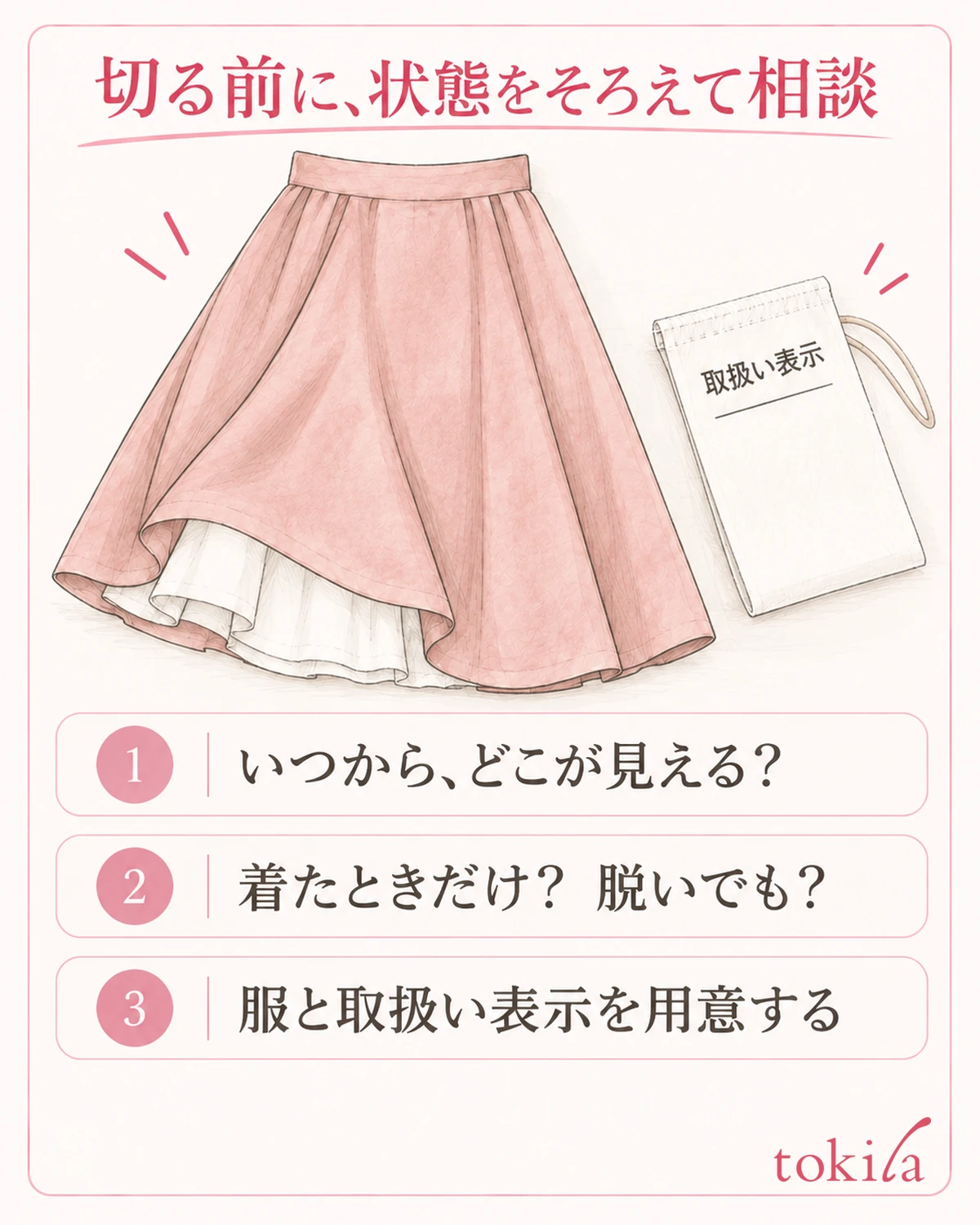
The inner fabric is still long even after you take it off and put the overlap back, the stitching has come loose, or a lining seam is open. In such cases, before you cut, glue or pin it with a safety pin, consult a place that can check the condition of the garment. Thin linings in particular put strain on the seams when pulled back with strong force. Prioritize handling that doesn't widen a small tear.
When you seek advice, gather the skirt itself, any attached underskirt, and the material and care labels. Telling them "since when," "only while wearing it or even when taken off," "which of front, back, left or right," and "what care was done just before" makes clear what you want looked at. If you keep photos, take both the whole garment and the hem that bothers you, and don't use a state where it was pulled forcibly as the reference.
Shortening only the lining does not necessarily solve it. Check where and how it can be fixed, including the shape of the outer fabric, the hem finish, the slits and the places where the lining is fastened. What you want is not only "how many centimeters to cut," but "a state where, worn in the usual position, the inside doesn't come out carelessly even after you sit and stand." Also tell them which parts of the original design you want to keep.
The next time you care for it, choose a method that suits that skirt's label and material. Don't try to put it back by adding heat or water on your own to hide the fabric that showed. If you are choosing new clothes, the points to check before buying clothes online can also help; checking not only whether there is a lining but also the inner structure and return conditions will help you decide once it arrives.
How the hem looks can be sorted out by looking in order at how the fabric overlaps, where you wear it and the shape of the garment itself. Separate what can be lightly adjusted back from what you should get advice about before altering, and decide which piece to wear that day for both looks and ease of movement.