You want to buy a cleansing cream, but rows of similar white containers make the differences hard to see. Before thinking about your preferred feel, organize which makeup you want to remove and the steps through finishing removal. Even when products share a cream form, the makeup they work with and the conditions for rinsing or wiping are not necessarily the same.
This article explains the order for comparing options before buying. Separate from working a product you already own over your face, it focuses on what you need to confirm to choose one and how to leave untested points unresolved. Rather than choosing only from an imagined after-cleansing feel, consider your usual makeup and evening routine.
First, match the intended use to the makeup you want to remove
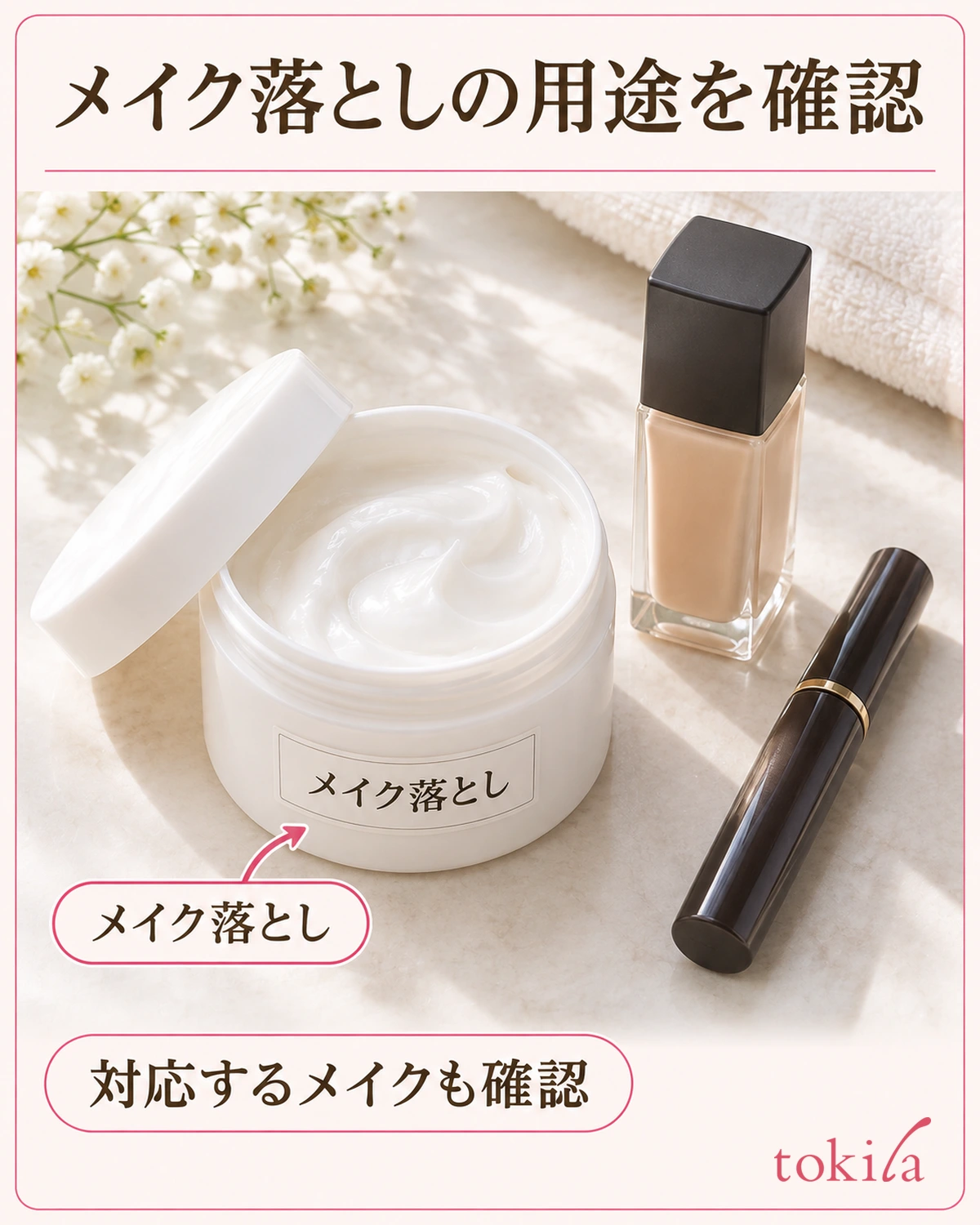
First, confirm that the cream is intended to remove makeup. Facial moisturizers also come in similar containers, but serve a different purpose. Do not choose just because the name says "cream"; look for wording such as "makeup remover" or "cleansing." Even if massage is mentioned, that function alone does not establish that it removes makeup.
Next, think about your usual foundation, sunscreen, mascara, and lipstick. Read their removal instructions together with the cleansing cream's stated compatibility. In particular, check whether stubborn eye or lip makeup needs a separate remover. Do not assume all makeup comes off equally well simply because a cleanser is a cream.
For example, if a product works with your base makeup but its compatibility with your usual mascara is unclear, keep that as a question. How you evaluate it depends on whether you want one product for everything or are willing to use a separate targeted remover. Do not decide together whether it suits the whole face and whether it can be used in the same way close to the eyes and lips.
At a store, instead of only asking for something that removes makeup well, explain the makeup you use and its removal instructions to narrow down your questions. Keeping the names or label details helps you avoid relying on memory. If detailed information is unavailable, allow yourself to postpone buying rather than expecting strong cleansing power without knowing.
A cream's color or firmness is not a test of compatibility with makeup. A rich appearance in a photo does not mean it necessarily removes stubborn makeup. Narrow options by purpose and compatibility first, then look for a feel you like; this helps keep your buying purpose aligned with visual impressions.
Compare the full process, from rinsing or wiping through finishing removal
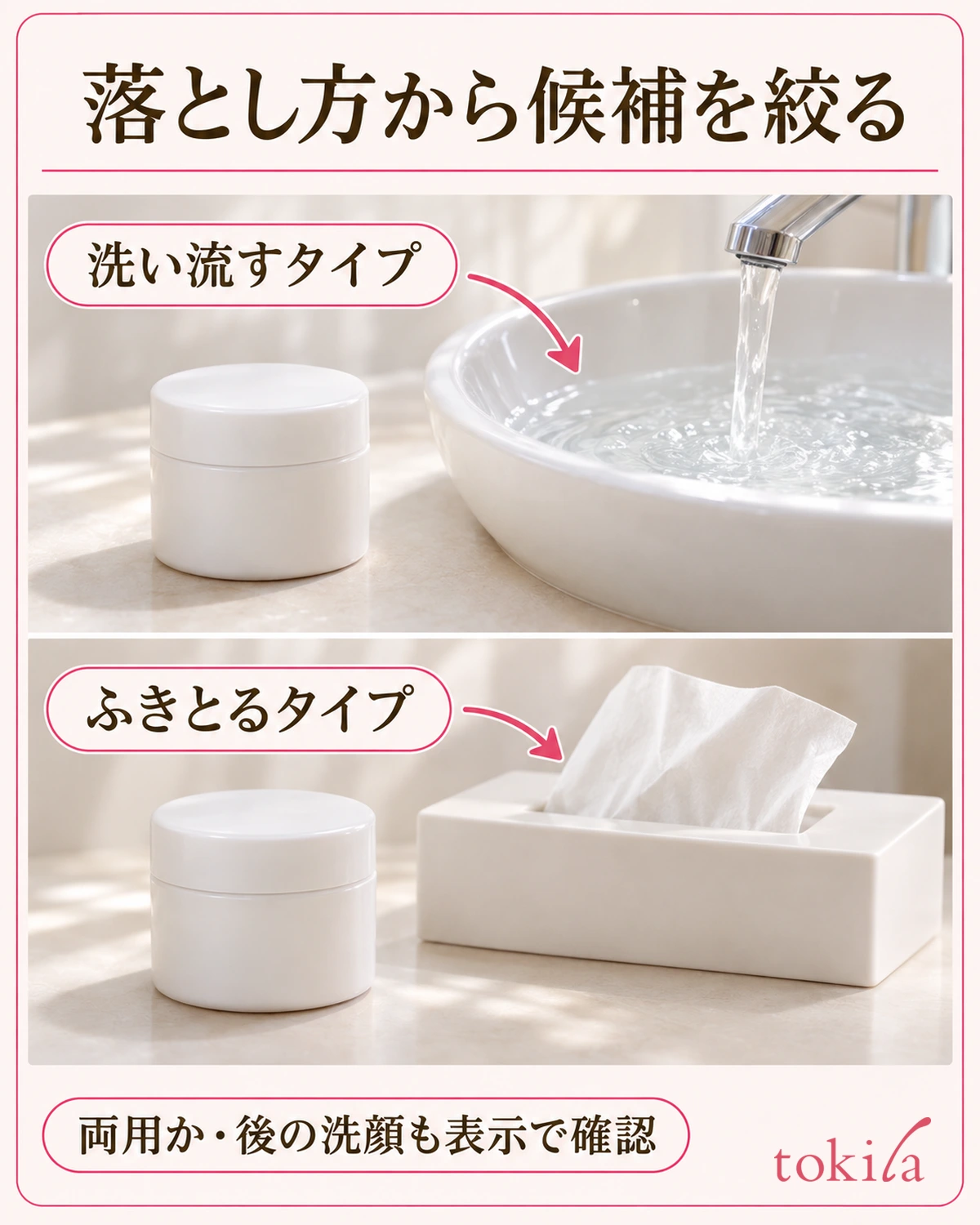
Next, check what happens after working the cream into your makeup. Some products rinse off with water or lukewarm water, some are wiped off with specified materials, and some offer both options. Read each product's method and consider whether you can comfortably complete it at home. The word "rinse-off" alone does not mean washing afterward is unnecessary.
If you want to remove makeup at the sink, check whether a face wash is needed after rinsing. If you prefer wiping while seated, read through to see whether tissues alone finish the process or a cleansing toner or something else is also used. Comparing both the required steps and supplies reveals differences that container prices alone cannot show.
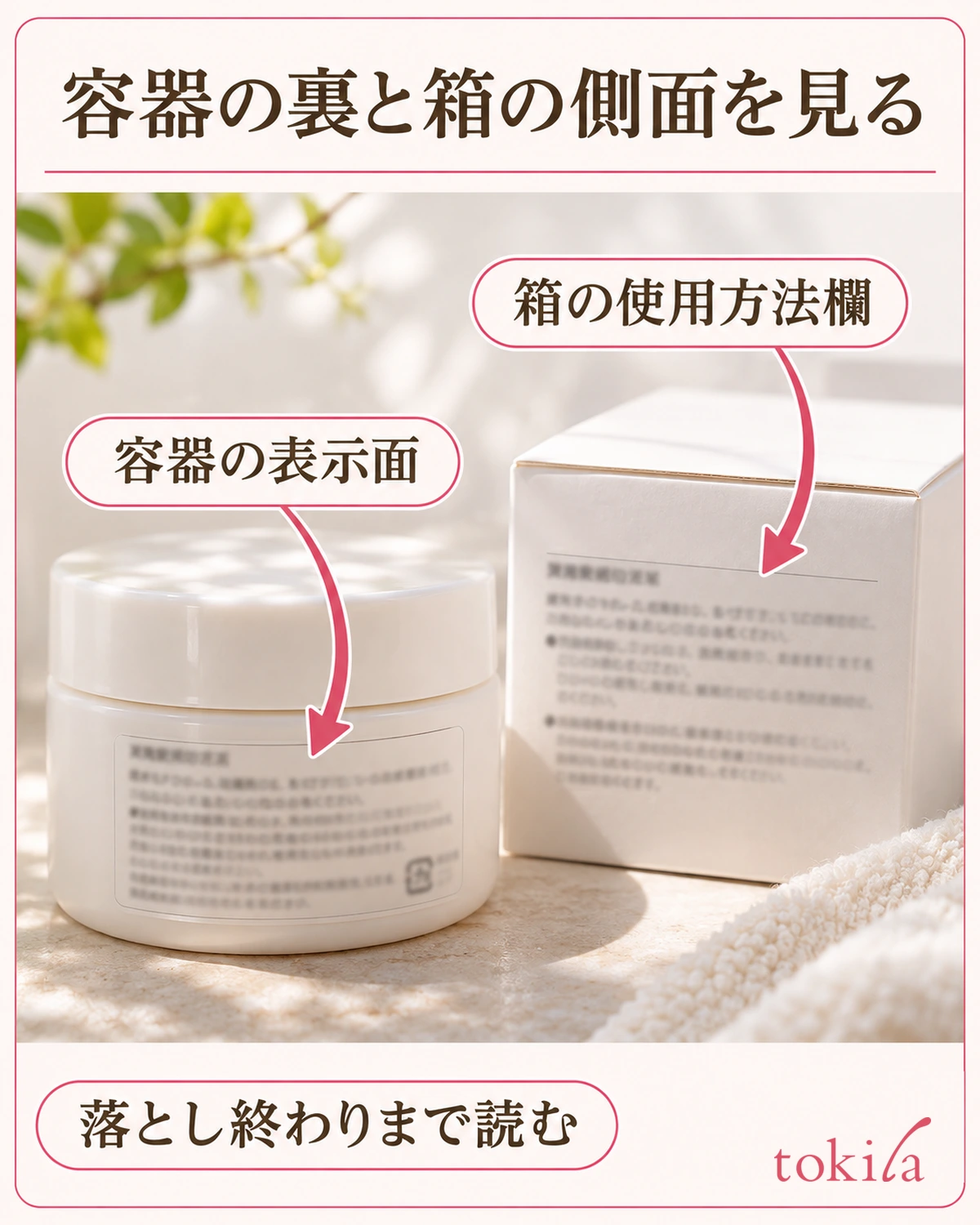
If the prominent features on the front are not enough to decide, move to the directions on the back or side of the box. The supplemental photo shows where those label surfaces are. Actual wording and placement vary by product, but these areas help you identify what follows working the cream in and where one complete cleansing session ends.
If you want to use it in the bathroom, separately check whether wet hands or a wet face are permitted. Even rinse-off products may require dry hands and a dry face at the start. Separate where you will keep it from the moisture conditions for use, and apply these to your home routine, including whether you can dry your hands before beginning.
Even when two methods are offered, read each set of directions so that you do not omit steps simply according to your mood. Choosing which method you mainly want also helps estimate the supplies. Rather than ranking rinsing and wiping by effort, use the method you can regularly follow as your basis to clarify why it suits you.
Record feel and fragrance separately, within the limits of what you tried
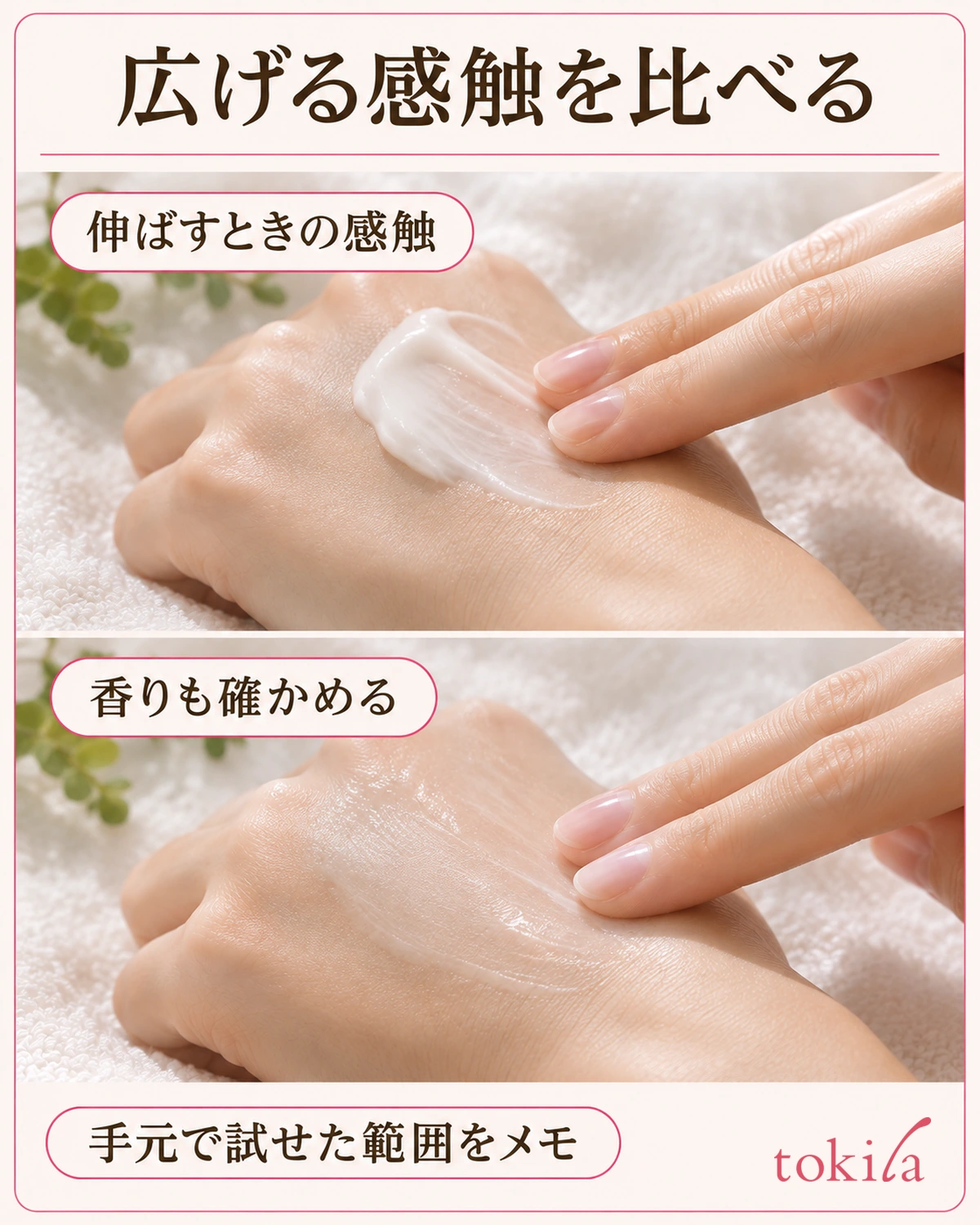
Among options whose purpose and steps fit, compare the initial spreading feel. If testing is allowed under the store's guidance, separately note the initial firmness, how it spreads when you move a finger, and whether it feels heavy. Describing the specific feel you liked makes later comparison easier than simply concluding that it seems good because it feels moisturizing.
Some are designed to become oily as you work them in, but you need not expect the same change from every cream. Check whether the directions describe a change or an endpoint. Do not decide that makeup is removed solely from transparency in a photo or judge a product inferior because it does not change in that way.
What you tried on the back of your hand is the feel on your hand at that moment. You have not necessarily checked makeup removal on your face, the state after rinsing, or suitability with continued use. When trying two products, notice whether the amounts or areas differ greatly, and do not substitute differences in conditions for differences between products.
Fragrance also affects the experience each time you use a product. If the setting allows you to check it, note its strength and whether you like it. Do not treat a fragrance-free label as a guarantee against irritation. When shopping online without trying feel or fragrance, leave both unconfirmed instead of filling the gaps from the container's appearance.
Looking for a feel you like is different from tolerating skin abnormalities. If testing causes redness, itching, irritation, or other abnormalities, stop using it and follow the precautions. Do not declare skin compatibility based only on feel or generalize that a product is easy for everyone to use from moisturizing ingredient names or a rich appearance.
Check the per-use amount and container to put costs on the same basis
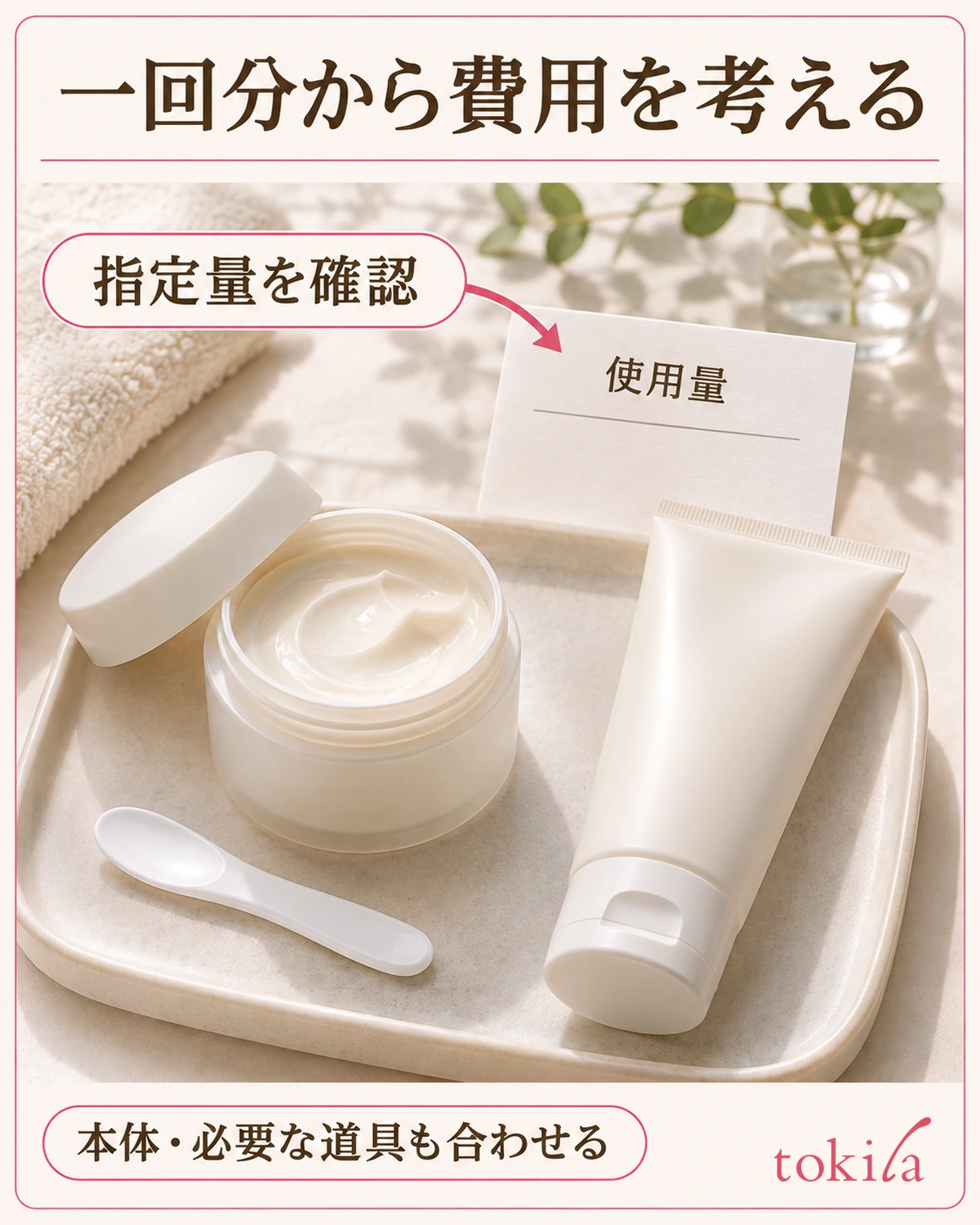
Before comparing capacity and price, read each option's usage amount. Even if a portion is described by a particle or object size, it does not necessarily weigh the same as another product's portion. Without a stated weight or number of uses, do not calculate how many days it lasts from container capacity alone. Start by considering whether you can use the specified amount each time.
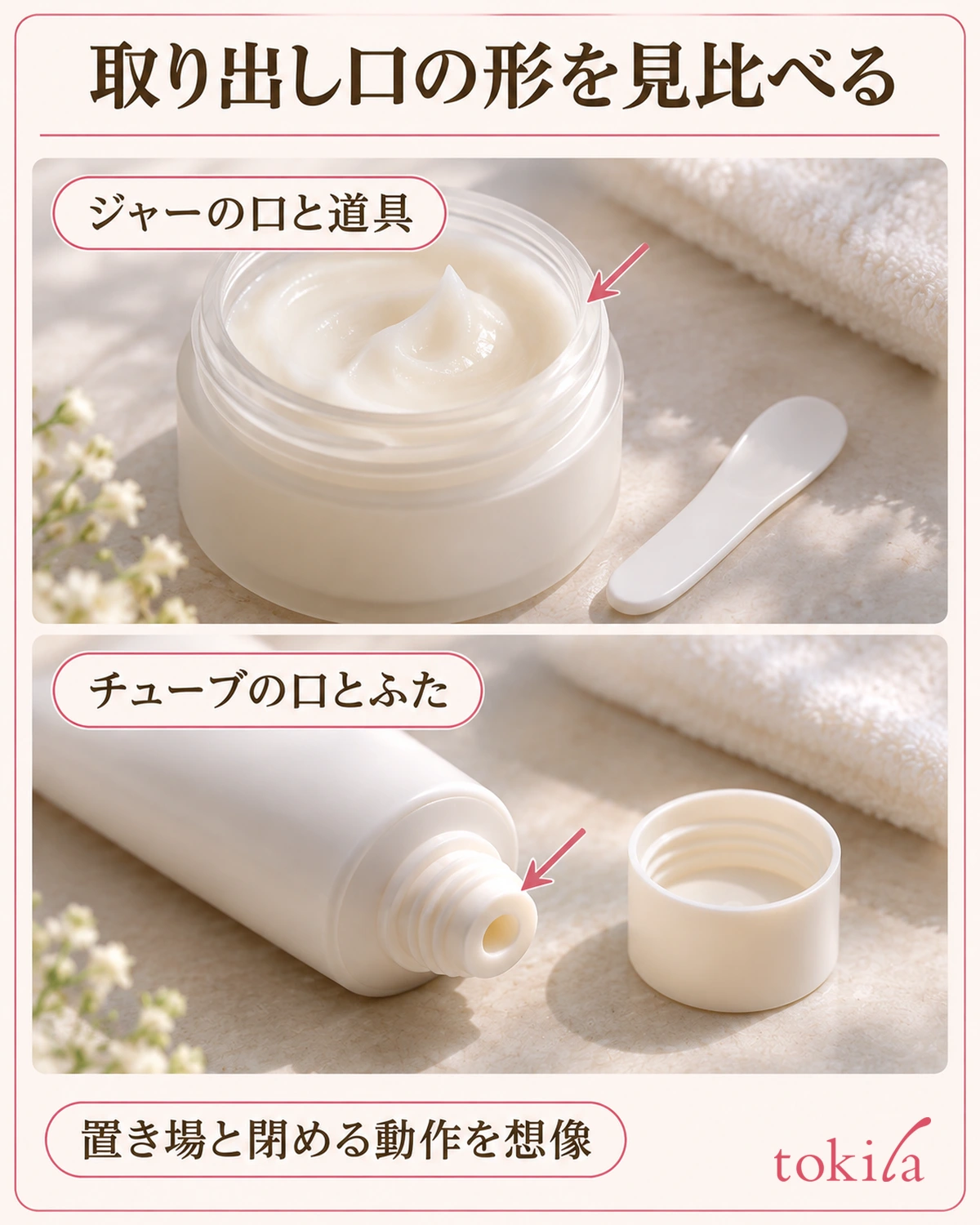
For jars, check tool requirements and whether tools are included; for tubes, look at opening, closing, and the outlet shape. Imagine where clean tools will rest and how you will handle it where your hands tend to get wet. Do not rank hygiene by container type alone; judge by the actual dispensing and care instructions.
The supplemental photo shows close-ups of a jar's wide opening and separately placed tool, and a tube's outlet and cap. It helps you inspect openings and closures that are harder to see in an overall comparison image. Opening width can help you consider dispensing movements, but the pictured shape does not determine the amount for one use.
If wiping supplies, a subsequent face wash, or tools are needed, include their costs in your buying decision. Even if the product alone looks inexpensive, add the cost of things you do not have at home. Conversely, check the product's requirements before deciding that something you already own can be used as is.
For refill options, also check whether a matching original container is required. Do not choose assuming you can transfer it into a similar empty container; follow the refill and container-handling instructions. For a first purchase, do not focus solely on large capacity; also consider frequency, storage space, and whether the steps suit the routine you want.
Put two options side by side and decide whether to buy or wait
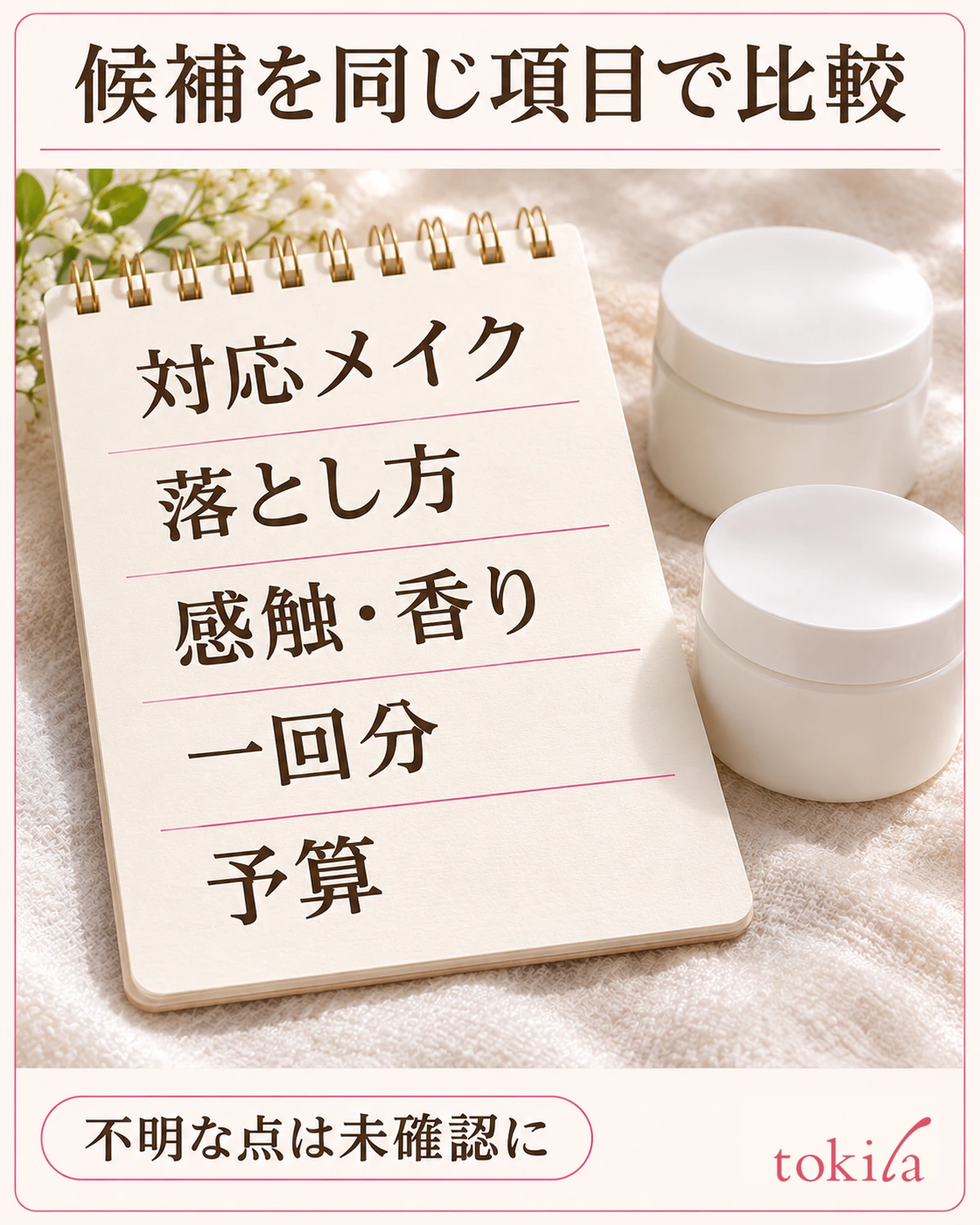
Finally, list "compatible makeup," "removal method," "feel and fragrance," "per-use amount," and "budget" in the same order. If you judged one only by price and the other only by fragrance, ask both the same questions. Leaving unknown conditions visible makes your next research or store questions more concrete.
For example, if you want to rinse at the sink in the evening, compare the steps after rinsing and necessary supplies among products compatible with your makeup. If you want time to remove makeup while seated, focus on whether the wiping supplies and later steps fit your routine. Rather than choosing the same product for everyone, consider whether it meets your own situation's needs.
If you already own a cream and are unsure about the amount or when to finish working it in, before replacing it, the guide to using cleansing cream can help organize the steps. Separating pre-purchase comparisons from using what you own helps you decide whether you need a new product or want to check your current method.
If you buy, keep one reason for your choice. Something like "it works with my current makeup and the steps after rinsing suit me" is enough. If an untested feel or fragrance is a major deciding factor, you can wait today. Prioritize what you need to confirm instead of filling unknowns with hopeful guesses.
When you start using it, reread the purchased product's directions and precautions. Do not mix in amounts or removal methods you saw for other options; follow that product's conditions. Let your preference for a cream be the starting point, then choose one that also fits the makeup you want to remove and your evening steps.