Cleansing water is a water-light liquid used by soaking a cotton pad. It can be an option when you want to remove makeup after coming home or start your routine before moving to the sink. Its clear appearance alone, however, does not tell you what makeup it removes or what care comes afterward.
Before buying, compare the makeup it works with, where it can be used, the steps needed after wiping, and preparations including cotton pads, in that order. This article organizes what to check when choosing a bottle for your makeup and lifestyle, rather than how to wipe with a product you already own.
Decide whether it is for makeup removal or instead of morning face washing
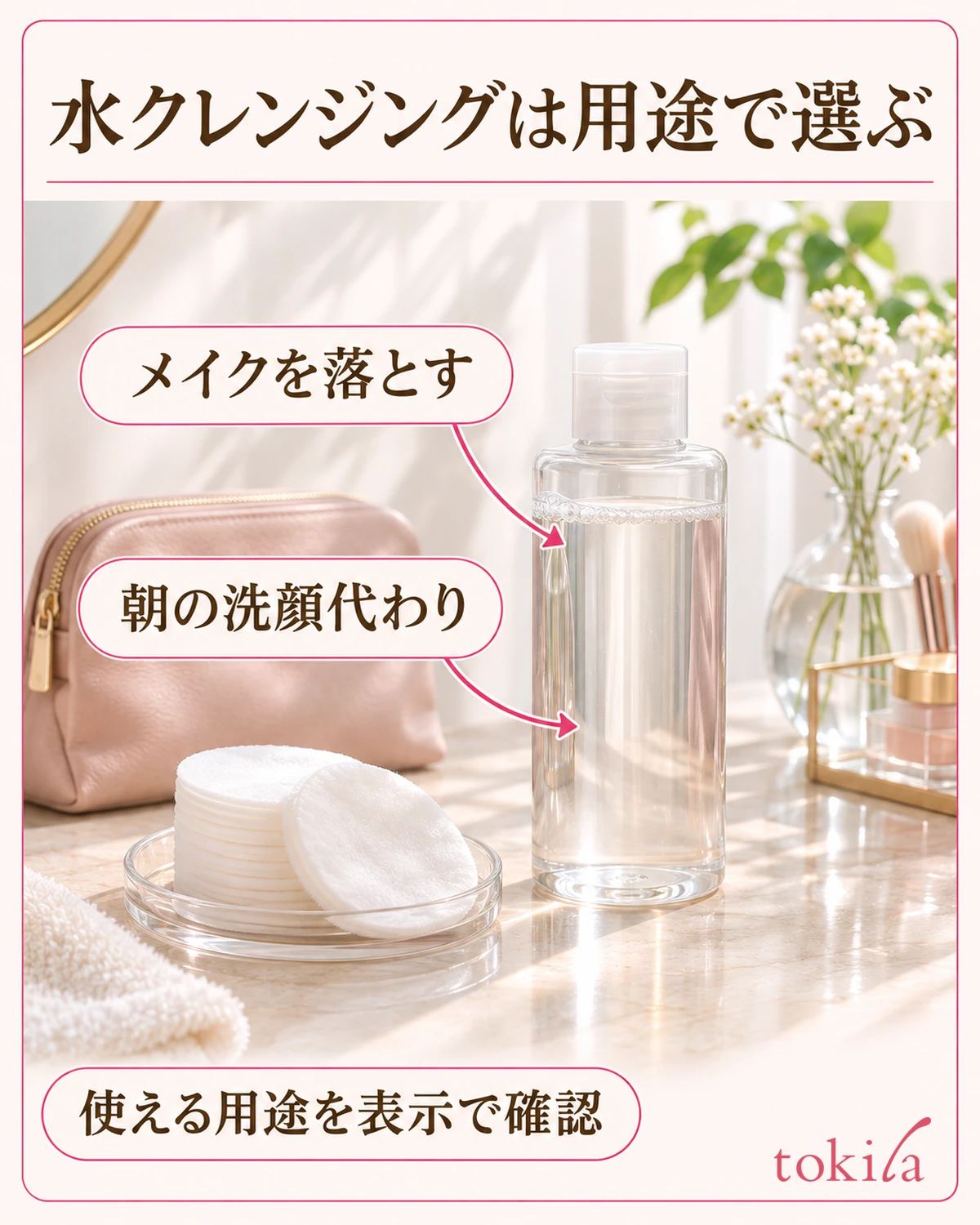
First, choose one intended occasion. Do you want to remove foundation at night, or use it instead of washing your face in the morning? Even among wipe-off products, different purposes mean different labeling to check. If you also intend morning use, look for instructions saying it can replace face washing.
Names such as "cleansing water" or "micellar water" do not mean every product does the same job. Even if the liquid looks like toner, makeup removers and products for wiping after face washing serve different purposes. Distinguishing which you want to buy first helps avoid confusion in the store.
For nighttime use, think through your usual makeup. List sunscreen, primer, foundation, eye makeup, and lip makeup, marking anything with specific removal instructions. Start comparisons from how your products should be removed, rather than your impression of how heavy the makeup is.
For travel or overnight stays, you need somewhere to put cotton pads and dispose of used ones as well as the liquid. Even a no-rinse option does not mean it can be used anywhere without preparation. Picture the actual desk or bathroom to understand the effort involved after purchase.
If you wonder how it differs from exfoliating wipe-off toner, review the purpose stated on the label rather than the bottle color or shelf location. If your goal is care after washing, choose a product for that role instead of assuming it also removes makeup.
Check compatible makeup and conditions for use around the eyes and lips
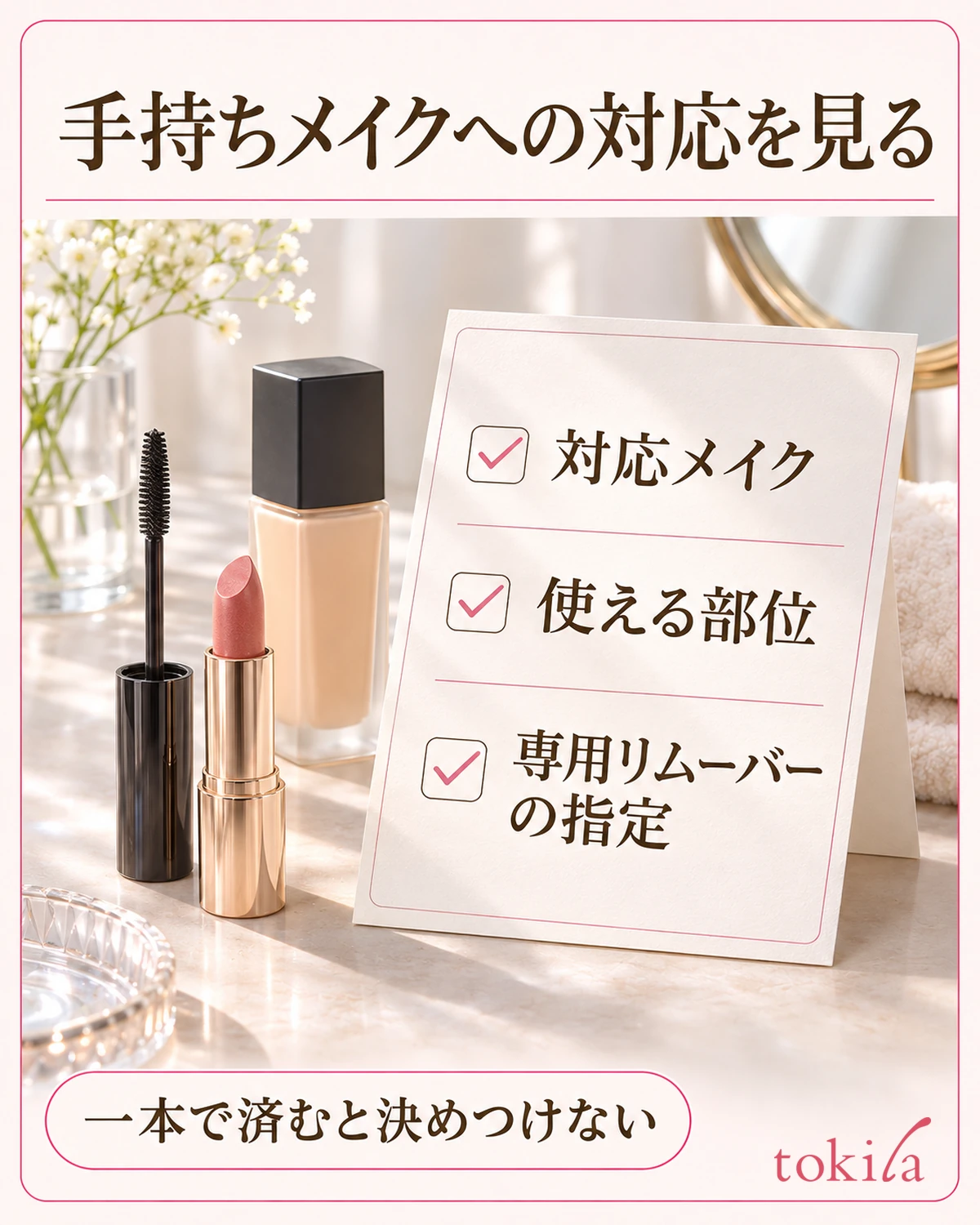
Once you find a candidate, check whether it works with your makeup. Even terms such as "heavy makeup" or "waterproof" come with individual limits and instructions. Being suitable for the whole face does not mean being suitable for every mascara.
In particular, if your mascara or lipstick specifies a dedicated remover, prioritize that instruction. Wanting one bottle to do everything is not a reason to substitute prolonged rubbing with cleansing water. If another remover must be combined with it, include that extra work in your comparison.
If you want to use it around your eyes or lips, check whether the candidate provides instructions for those areas. Permission to use around the eyes does not mean it may get into the eyeballs. If you have eyelash extensions or similar treatments, separately confirm compatibility with those conditions.
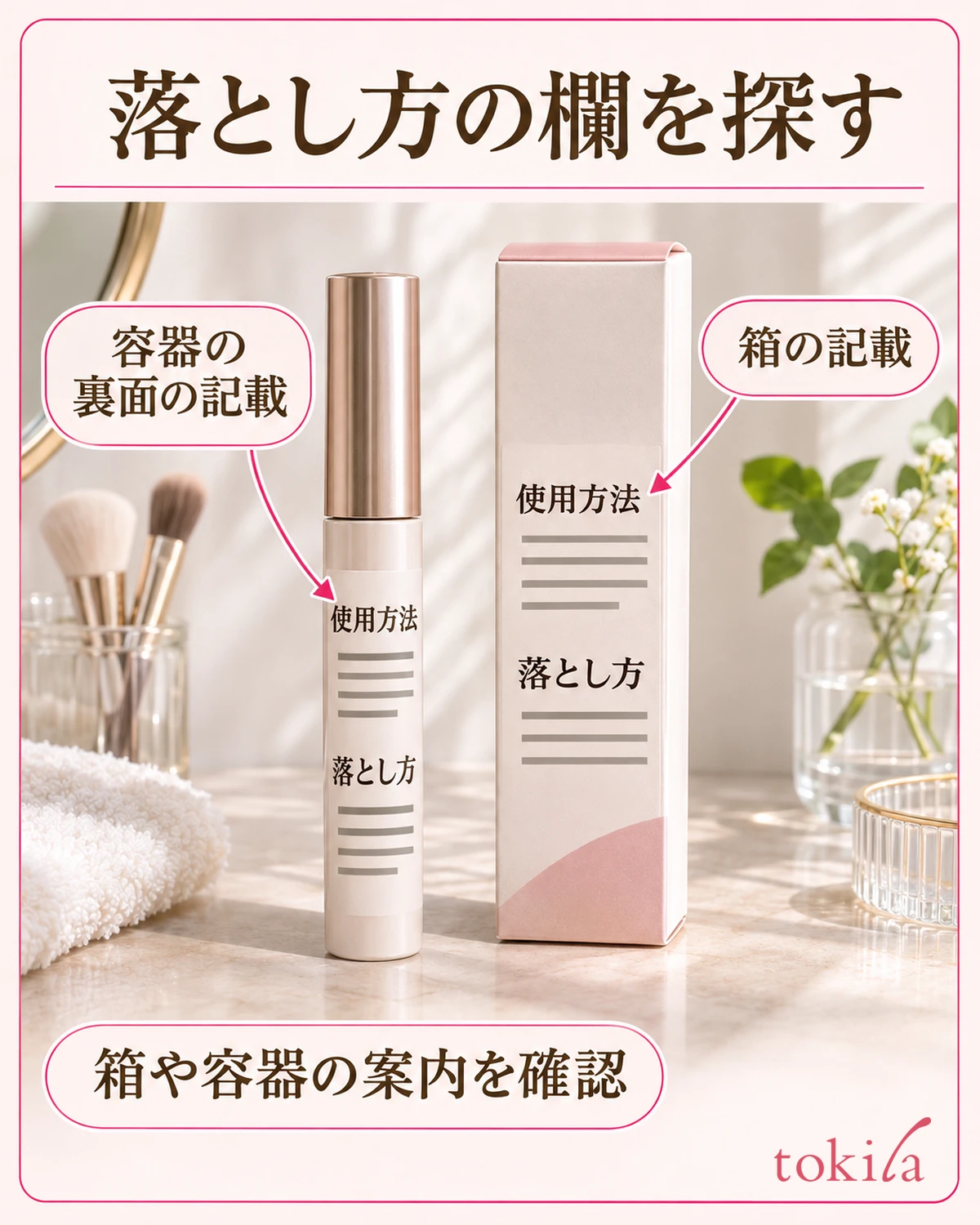
When lining up products you own, look not only at their names but also for removal instructions on the back or elsewhere. A slim mascara container and its box may carry instructions in different places. If you have discarded the box, leave compatibility unconfirmed and turn it into a question for the retailer.
Also avoid ranking products by appearance alone, assuming water-like liquids are weak or anything containing oil is always strong. Checking removal and checking how it feels on skin are separate matters. Instead of filling untested gaps with packaging impressions, make them specific questions such as whether it works with your mascara.
Compare rinsing, face washing, and subsequent care as one routine
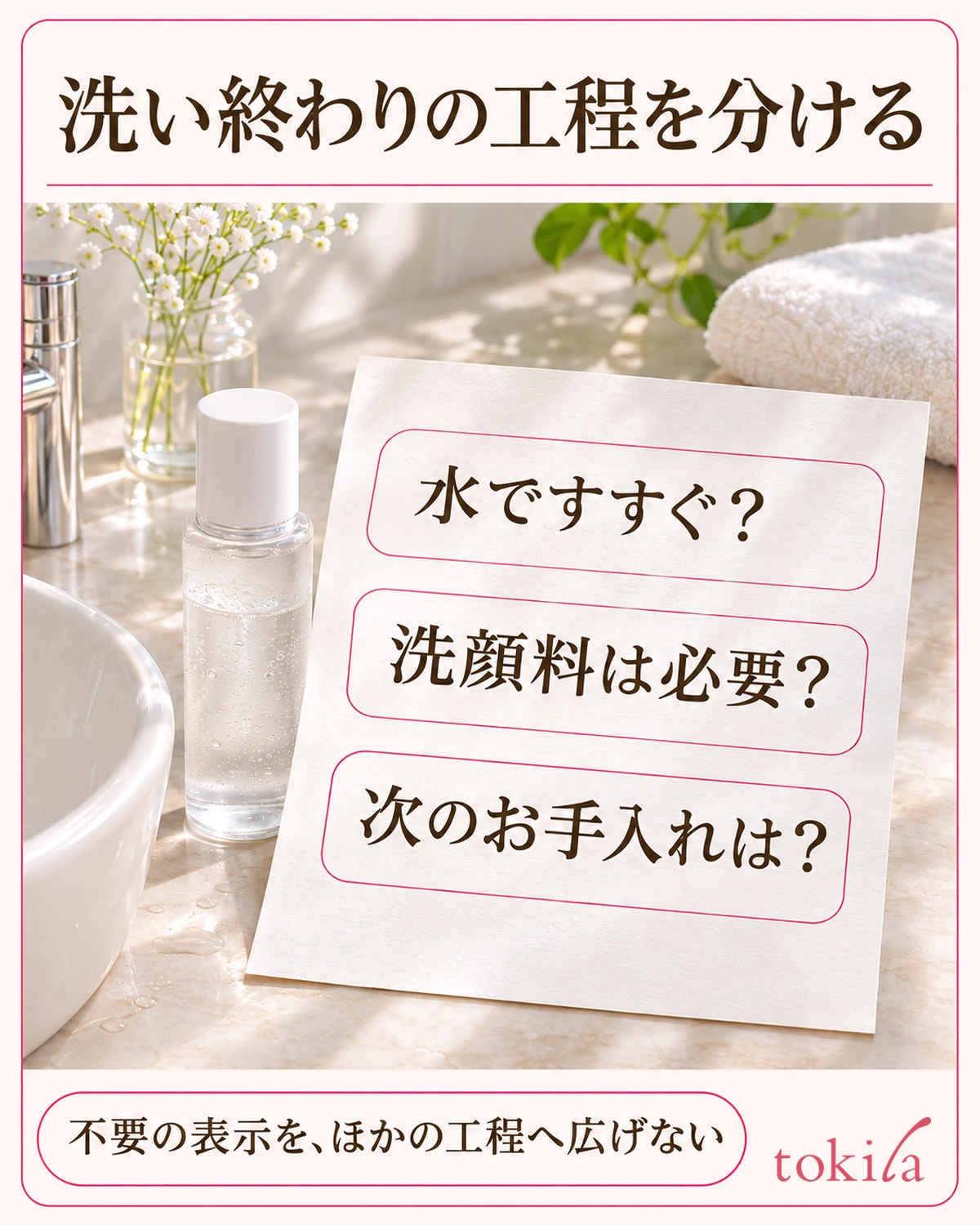
"No rinsing needed," "no double cleansing needed," and "also works as toner" each refer to different things. The first concerns rinsing with water, the second using a facial cleanser, and the third the role of care after wiping. Do not extend one claim to mean the other steps are unnecessary too.
Put the candidate's instructions in order: remove makeup, rinse, use a facial cleanser, and moisturize. Remove only the steps explicitly described as unnecessary, and mark anything unclear. Rather than deciding that fewer steps are better, consider whether the routine is easy for you to maintain.
Even if a product allows you to move straight to skincare without rinsing, that does not necessarily mean emulsion or cream is always unnecessary. Distinguish instructions saying it doubles as toner from those saying the entire routine is complete. Organizing the order with your current moisturizers also clarifies the role you are buying.
For rinsing when the feel after wiping bothers you, check that product's instructions. You do not need to automatically add rewashing before trying it, or to endure every uncomfortable sensation. If redness, itching, or other abnormalities occur during use, stop comparing and follow the precautions.
If you have two preferences—rinsing at home and using without rinsing overnight elsewhere—check whether both methods are described. If only one fits, prioritizing the situation you use most often is also an option.
Check cotton-pad preparation and how the container dispenses
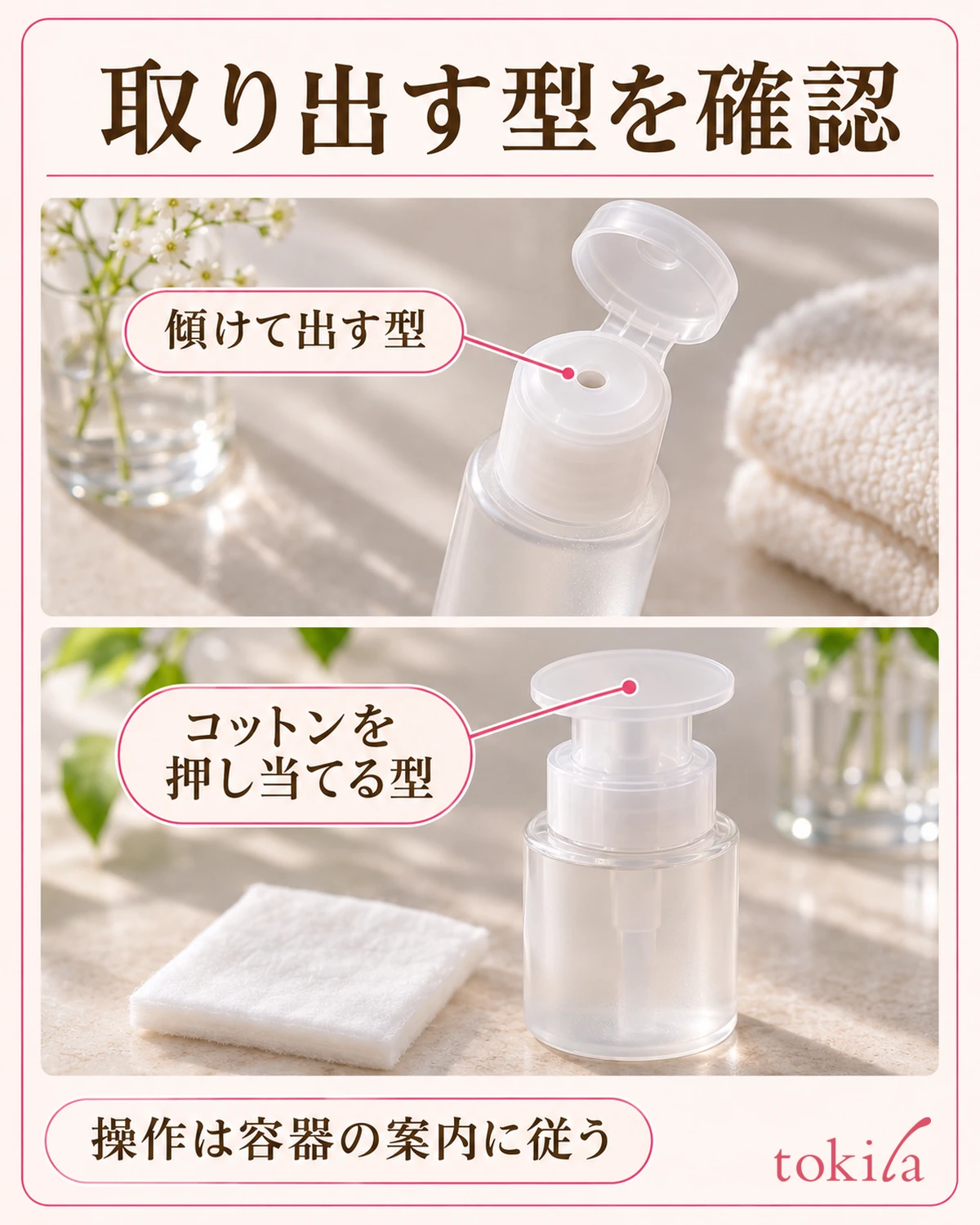
For wipe-off products, buying the liquid does not finish your preparation. Check both cotton pads appropriate for the specified method and the recommended amount. Rather than planning to save money by reducing each use, consider whether you can soak pads with the instructed amount. Also avoid fixing the number of pads without checking.
Bottles may dispense by tilting, pumping, or pressing a cotton pad onto a platform. Even with similar clear liquids, hand movements and the space needed to set the bottle down differ. Whether it can stand securely where you use it, and whether both hands are available, are selection criteria too.
In container photographs, distinguish the liquid outlet from the surface where fingers or cotton go. Do not assume all similar-looking pumps work identically. Understanding how to unlock and close them helps you picture preparation and cleanup after coming home.
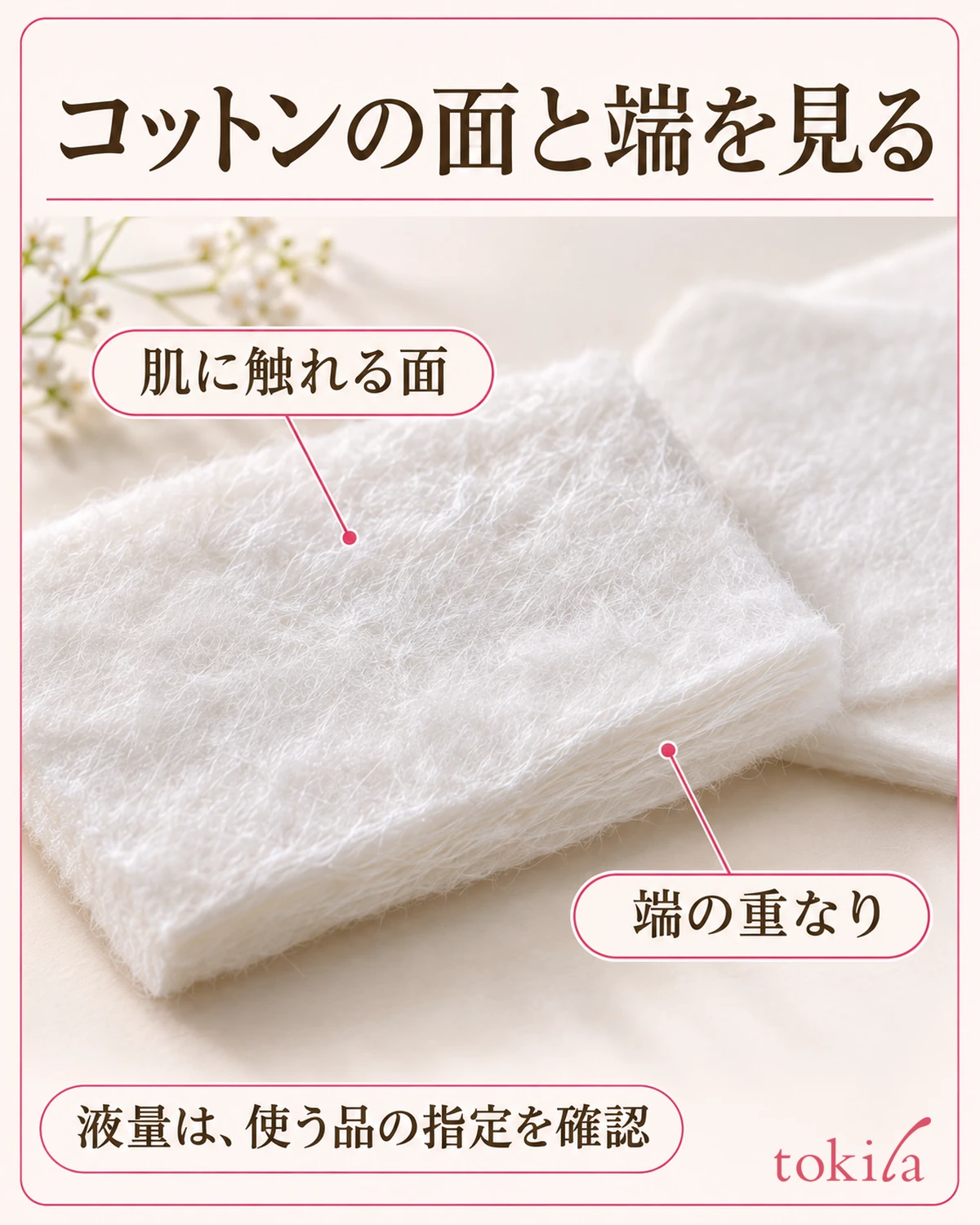
In the supplementary photograph, observe the fiber surface of a dry cotton pad and the edge that can overlap for holding. It does not demonstrate the correct soaking amount or actual makeup removal. Follow your product's directions when using it, and do not rub hard with a dry surface.
For carrying it with you, check the original container's size and how the cap closes. Do not assume that transferring a large bottle into another container allows identical storage. For refills, check the compatible bottle and follow its instructions for topping up and washing the container.
If you already own a bottle and want to know how to soak pads or finish the routine, you can also read how to use cleansing water. Treat pre-purchase comparison and the actions for using your existing product as separate matters.
Choose by matching the conditions for continued use, not just the bottle price
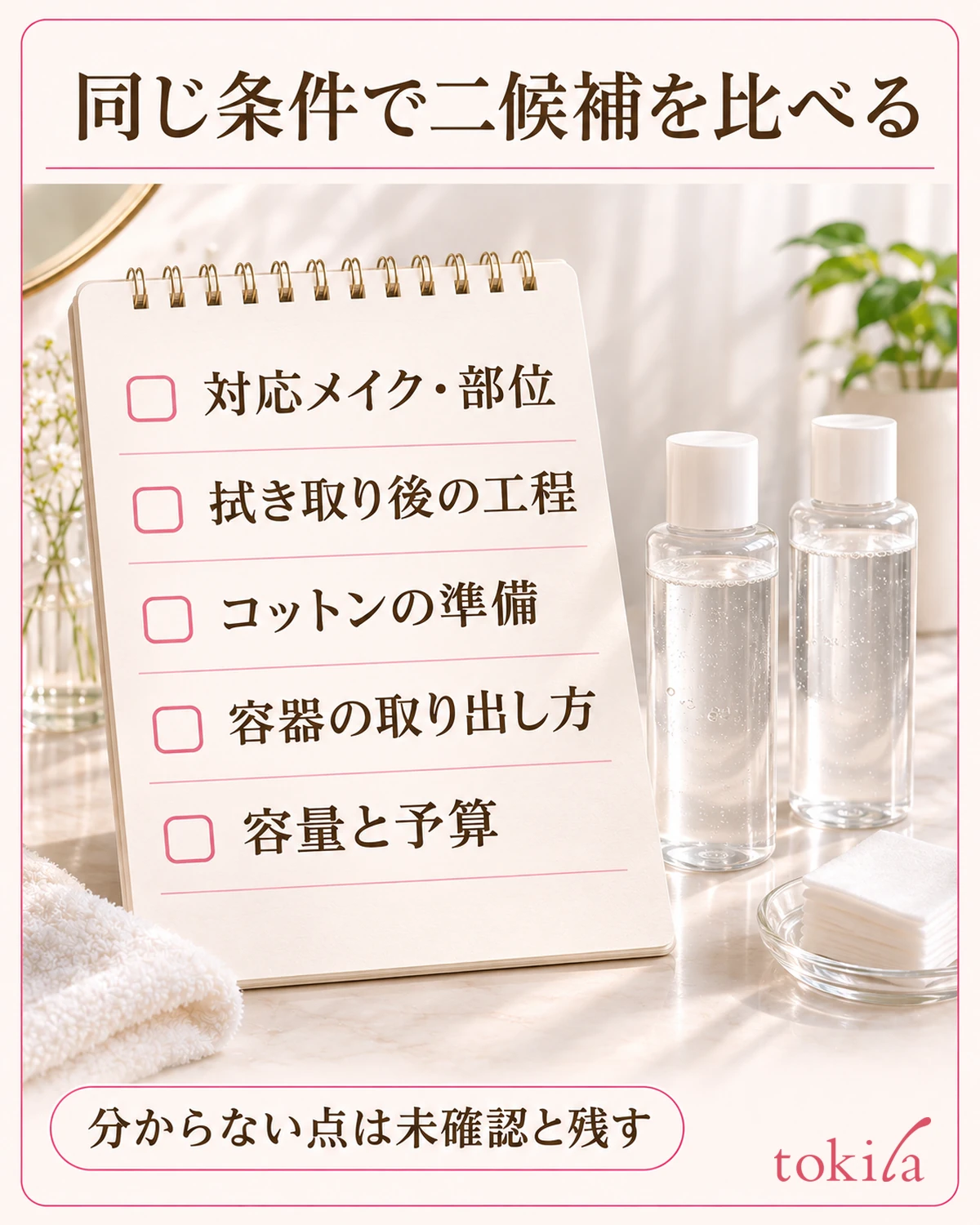
If two options leave you undecided, note compatible makeup, usable areas, steps after wiping, pads and container, and budget in the same order. Move from comparing one only for its large size and the other only for cute packaging to comparing them for the same purpose.
Consider price alongside volume, but if the amount per use and number of pads are unknown, you cannot establish how many days it lasts or the cost per use. Rather than calculating prolonged use with a hypothetical small amount, consider whether preparations for using it as directed fit your budget.
Even if you can check how it feels on skin, record the area and method used. A small trial on your hand cannot guarantee trouble-free daily use over your entire face. Labels such as "for sensitive skin" should not be interpreted as meaning no one will experience an abnormal reaction.
If desired conditions do not align, reconsider the occasion instead of trying to solve everything with cleansing water alone. Preparing a separate remover for heavy eye or lip makeup, or considering a makeup remover used at the sink, can help you judge whether the necessary steps fit comfortably into your routine.
Do not stop at "it looks as convenient as water." Base your choice on where you will remove your makeup and what you will prepare. Recording confirmed conditions separately from unknowns helps you return to your reason for buying when volume or price leaves you undecided.