Would you like to add shine to your usual lipstick with a clear gloss, or enjoy a tinted one on its own? When looking for lip gloss, start with how you want to use it rather than just the pretty color in the container. This makes the points to compare clearer.
Here we explain how to choose a liquid lip gloss before buying. Look separately at color transparency, the way light appears, the feel when worn, pairing with lipstick, and the applicator. This is separate from fixing gloss that has already spread outside the lip line or choosing a plumper known for its tingling sensation.
Decide whether to wear it alone or add shine over lipstick
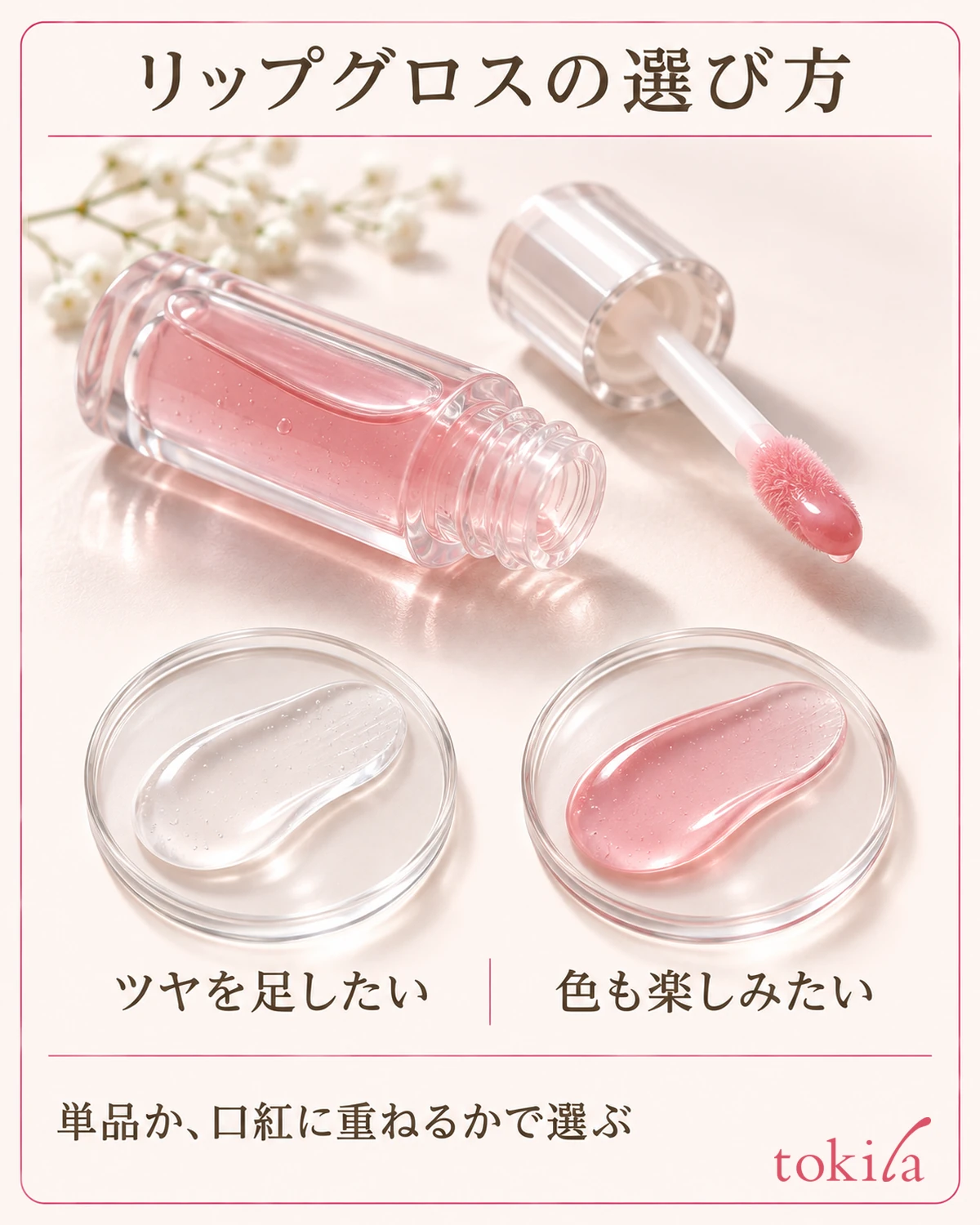
First, decide on one situation in which you want to use gloss: do you want color and shine in one product, or shine that lets your favorite lipstick color show through? Even with the same color name, a different purpose changes your reasons for choosing.
If you want to use it alone, check whether the candidate's instructions describe standalone use. Then consider whether you want your natural lip color to show through or want a more defined color. The liquid's appearance alone does not determine how much color it deposits.
If you want to layer it over lipstick, think of the color and texture of the lipstick you normally use. Separate whether you want to add light without changing the color or add a slightly different shade. Making a note of your lipstick alongside the candidates makes it easier to explain your purpose at the store.
Even clear gloss will not necessarily look exactly the same as before layering. Added reflections change the impression of color and texture. Even if you do not want to change the color, do not assume clear means no checking is needed; look for information that helps you picture it layered.
A gloss that adds shine and a coat intended to reduce lipstick transfer do not necessarily serve the same purpose. Do not substitute one for the other simply because both are clear or have similar packaging. Read whether your desired function is listed as an intended use.
If you want both standalone and layered use, check the conditions for each. If only one works, another approach is to prioritize your most frequent use. Rather than trying to meet every wish at once, first describe your reason for buying in one line.
Look separately at color transparency and the sparkle of particles
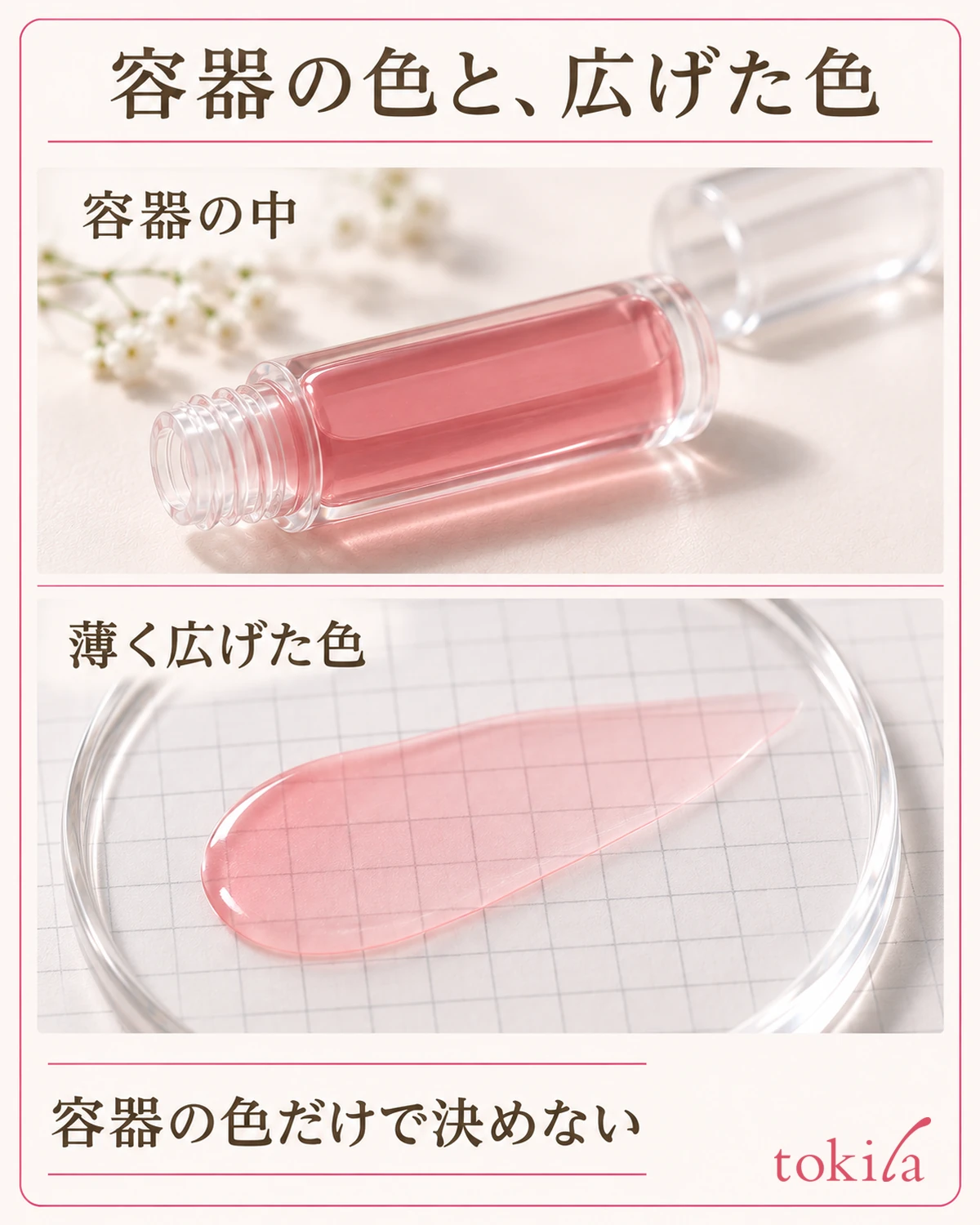
When comparing gloss colors, separate the liquid's color through the container from its appearance spread thinly. Some look dark in the bottle but allow the underlying color to show well when spread. Do not choose the container's color as though it were the finished color on your lips.
In the product description, check whether it gives translucent color or a more pronounced finish. Rather than comparing only color names such as pink or beige, make how much underlying color you want to preserve a criterion. The things to examine also differ between standalone use and use over lipstick.
Along with the liquid's color, look for light-reflecting particles such as pearl or glitter. Glossy reflections across the liquid and the pinpoint sparkle of particles are different. Knowing which you want to enjoy helps you explain your choice even between two similar colors.
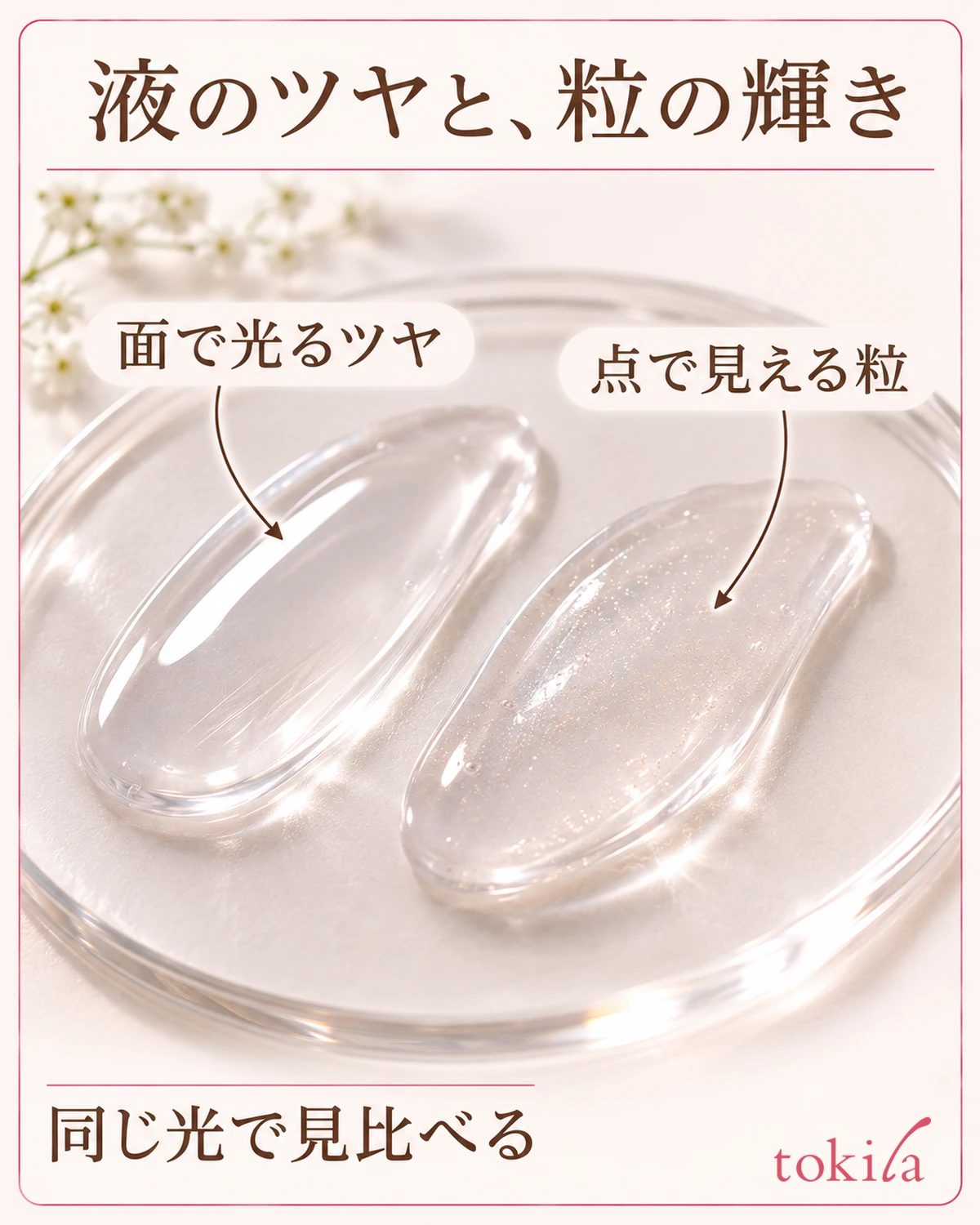
In photographs, observe separately those with visible particles and those without prominent particles, even when the liquids look similarly clear. This is a way to read texture, not proof of a specific product's color or longevity. Judge actual candidates by their own descriptions and what you were able to try.
If testers are available, follow store instructions and hygiene rules. Choose an allowed method rather than assuming direct lip use. A color seen on your hand does not reproduce your original lip color or the lipstick underneath.
Keep the comparison location as consistent as possible. If one is under bright lighting and another in a dark place, it is harder to separate particle reflections from color differences. Distinguish light that moves when you change the angle slightly from the liquid color that remains.
Separate the feel on your lips from your preferred finish
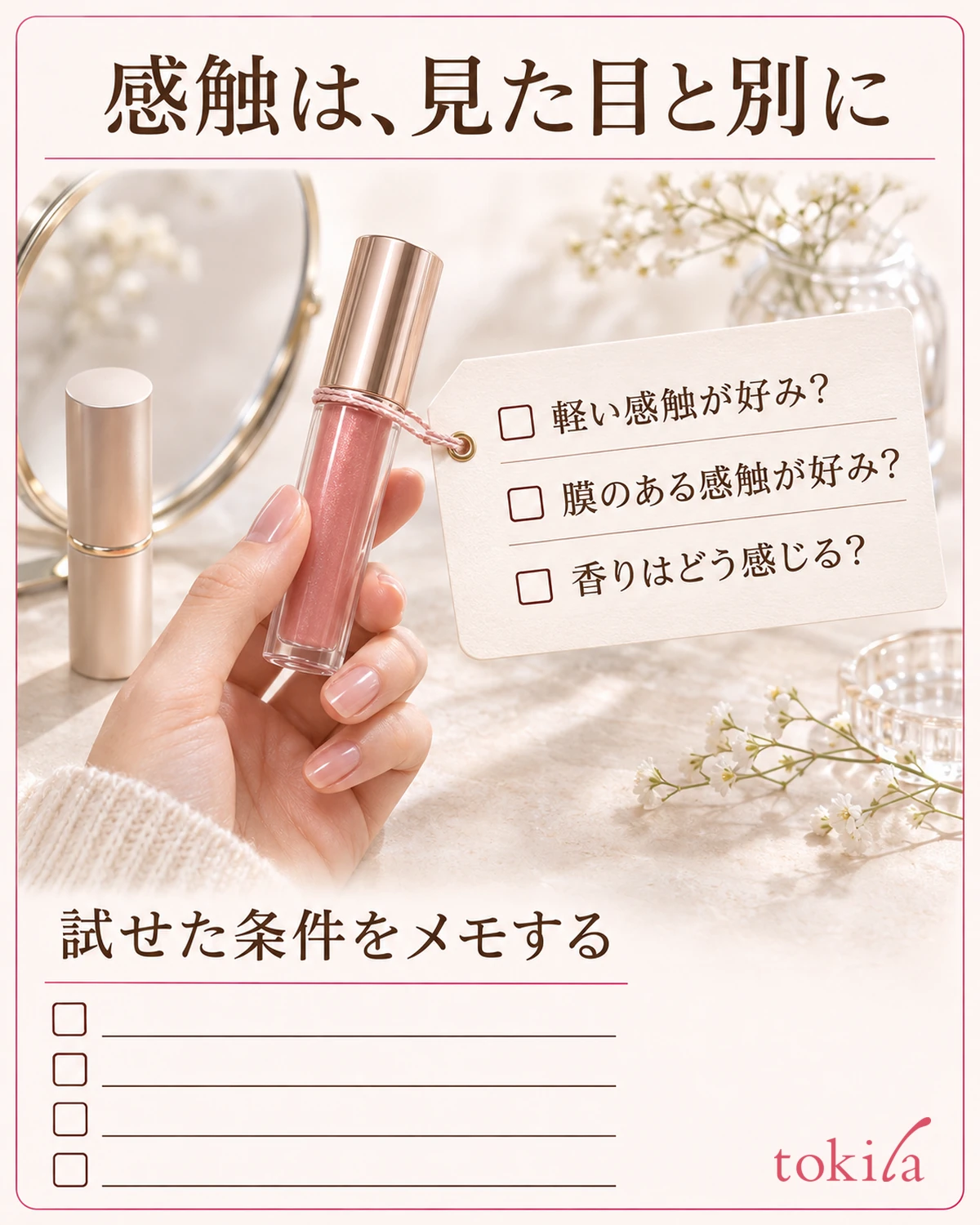
Even if you like the appearance, whether you want that feel every day is a separate check. Consider whether you prefer a light feel or a film-like sensation on the lips. Do not assume strong shine always means heaviness; judge by the description and what you can try.
If you can check the feel when moving your mouth, record how you tested it. Conditions differ depending on whether you tried it alone or had something underneath. Do not treat one look at a store as confirmation of all-day ease of use.
Whether you want fragrance or prefer not to add to the scents of your other makeup is another criterion. Fragrance-free does not necessarily mean you will detect no odor from the ingredients. Also consider fragrance preference separately from whether it causes any abnormalities on your lips.
For products described as having a distinctive sensation, such as cooling or warmth, read their individual conditions. Do not assume a stronger sting means a better finish. If you want to compare those sensations themselves, you can organize the points to check with How to Choose a Lip Plumper.
Even when moisturizing properties are described, do not choose gloss as a treatment for chapping or wounds. If you have redness, itching, or other abnormalities, stop comparing color and feel and follow the precautions. Consult a dermatologist or another appropriate professional as needed.
If transfer resistance or longevity matters, check the product's own descriptions and conditions. You cannot rank longevity merely from its apparent viscosity or movement in the container. Leave unconfirmed points as questions instead of predicting them.
Check lipstick compatibility and the applicator
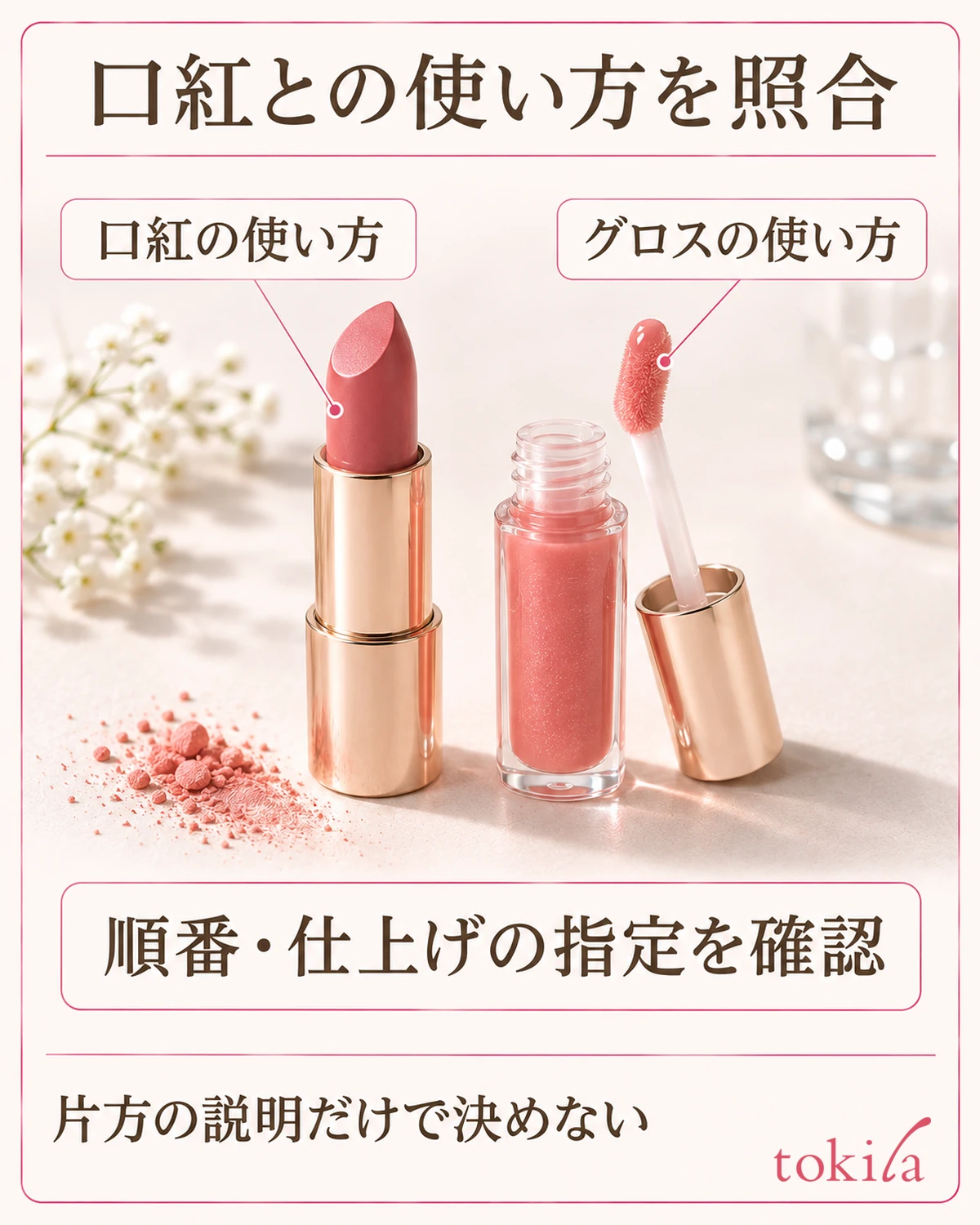
If you plan to layer, check the instructions for both gloss and lipstick. Even if the gloss describes layering, the lipstick may specify a drying step or another finishing condition. Do not assume it works the same way with every lipstick based on only one set of instructions.
If your lipstick has a matte finish, adding shine changes that texture. Consider first whether you want to enjoy that change with your mood or preserve the original texture. There is no need to layer without a reason on days when you want to keep the original finish.
Applicators include tips attached to the cap and tube nozzles. For a tip, check its size and thickness; for a tube, check the outlet and whether instructions call for direct use or dispensing onto a finger or something else. The container's shape alone cannot guarantee ease of applying around the mouth corners.
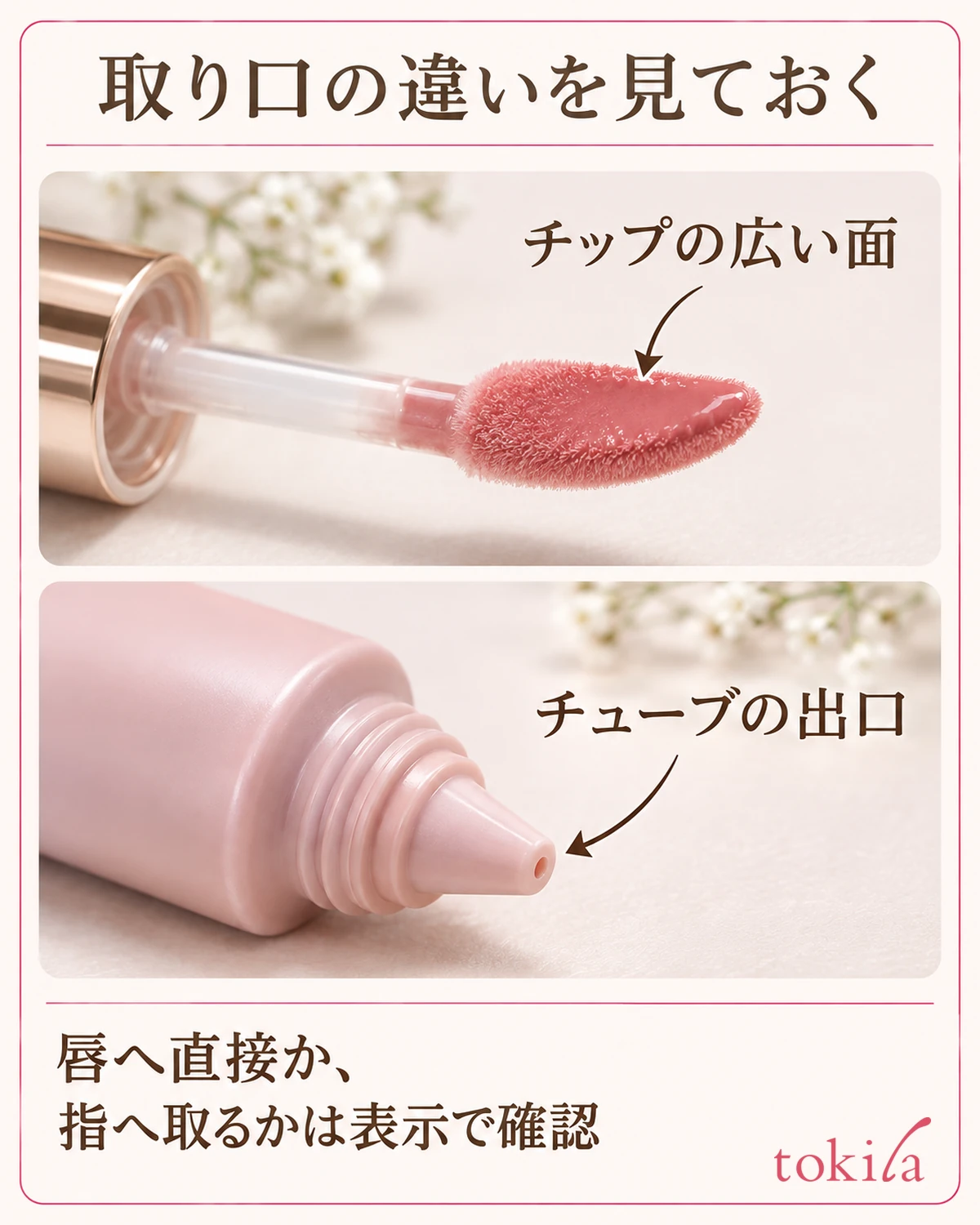
In close-ups, distinguish the tip's broad surface and point from the tube's outlet. This observation helps you consider where the product comes from and what touches the lips. Do not assume a small tube dispenses little or a large tip always deposits a lot.
Also check how to handle lipstick color transferred to the applicator. Knowing whether instructions call for wiping it before returning it and where to hold it helps you picture cleanup after layering. Do not make washing with water or removing internal container parts universal steps.
When you want to know how much to apply or how to touch up, return to your product's instructions separately from purchase comparisons. If liquid has already spread outside the lip line, Ways to Reconsider Lip Gloss Overflow can also help. Separate whether the issue is amount or placement rather than trying to solve everything by buying a replacement.
Choose by comparing two candidates under the same conditions
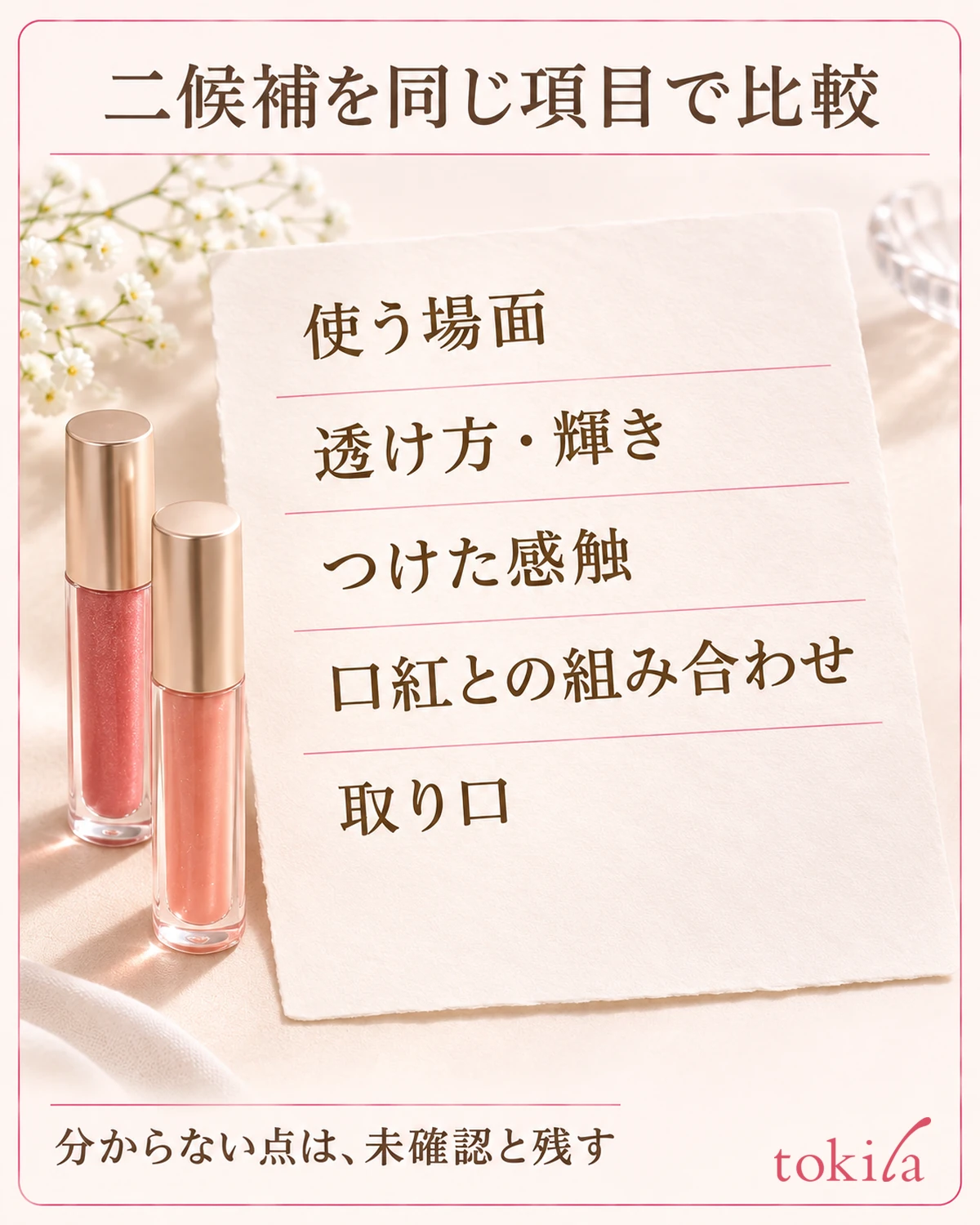
Finally, narrow the candidates to two and note use, transparency and sparkle, feel, lipstick compatibility, and applicator in the same order. Looking only at color for one and packaging appeal for the other makes it harder to compare them for your buying purpose.
For example, if you want to add light to your lipstick, put layering in the first field. Then separate whether you want added color and whether you also want particle sparkle. If both candidates meet the same wishes, move on to feel and applicator.
Mark anything you could not try as unconfirmed and decide on one question to ask at the store. If you did try it, include the conditions, such as seeing the color spread thinly on your hand. This helps separate impressions from sample images from what you checked yourself.
When comparing prices, consider volume and your own usage together. Even with the same volume, different amounts per application and frequencies mean the usable period may differ. Rather than estimating days to finish and ranking products, check whether the required conditions fit your budget.
If you cannot decide, return to what you want to change about the one you already own. Do you dislike the color, want to add particle sparkle, or find that the feel changes over lipstick? Choosing one concern makes the next item to examine clearer.
Lip gloss is not chosen only by whether it is clear or tinted. Decide what light and color you want to add over what, then check the usage and feel that suit those conditions. Keeping a record of what you confirmed makes it easier to choose the next one for a reason.