When you consider adding a mascara primer, descriptions of curl, length, and volume can make it hard to know how to choose. First separate one thing you like about your current mascara from one thing you want to change. Rather than making an extra primer the goal, look for options that suit the lashes you want and your usual makeup.
Here we organize what to compare before buying a lash mascara primer. To start using a primer you already own, see The Order and Layering of Mascara Primer. This article helps you choose by the stated finish, formula color, presence of fibers, applicator shape, and conditions for pairing it with your current mascara.
1. Choose one thing you want to add to your current mascara
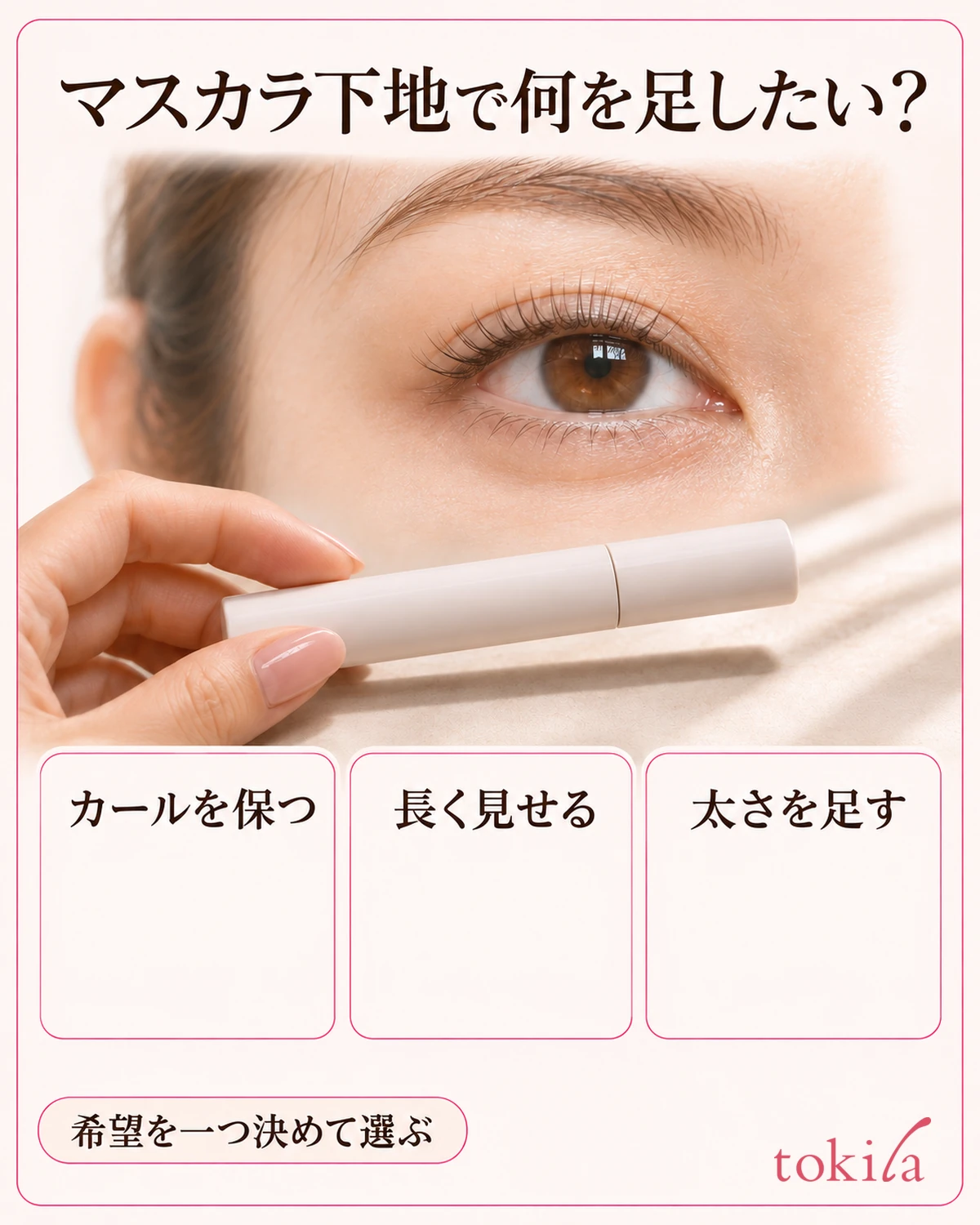
First describe briefly why you want a primer. Choose one desired finish, such as keeping an upward shape, creating a longer-looking lash makeup look, or adding an impression of thickness. Match the product description to your aim instead of assuming every primer meets every wish equally.
A claim about holding curl and one about making lashes look longer are different points. Even when a product claims both, decide which matters more to you. Also avoid ranking curl hold or length by impressions such as a long ingredient list, a seemingly firm formula, or a high price.
If you often like the finish of your mascara alone, adding primer is not essential. The lightness or appearance of color you enjoy may not remain the same when primer is layered underneath. Alongside what you want to change, write one thing you want to keep as it is.
For example, you may want to enjoy a lengthening makeup look while avoiding overly thick-looking lashes. Read each description separately rather than combining length and volume into one score. Also check which mascara was layered on top in the description, rather than looking only at photos of primer alone.
Sample photos do not guarantee the same result on your lashes. The starting condition, layered products, and photography conditions can change the appearance. Before trying a product yourself, distinguish confirmed product descriptions from finishes you have not yet verified when keeping options on your list.
2. Consider white, clear, and tinted formulas together with the color layered over them
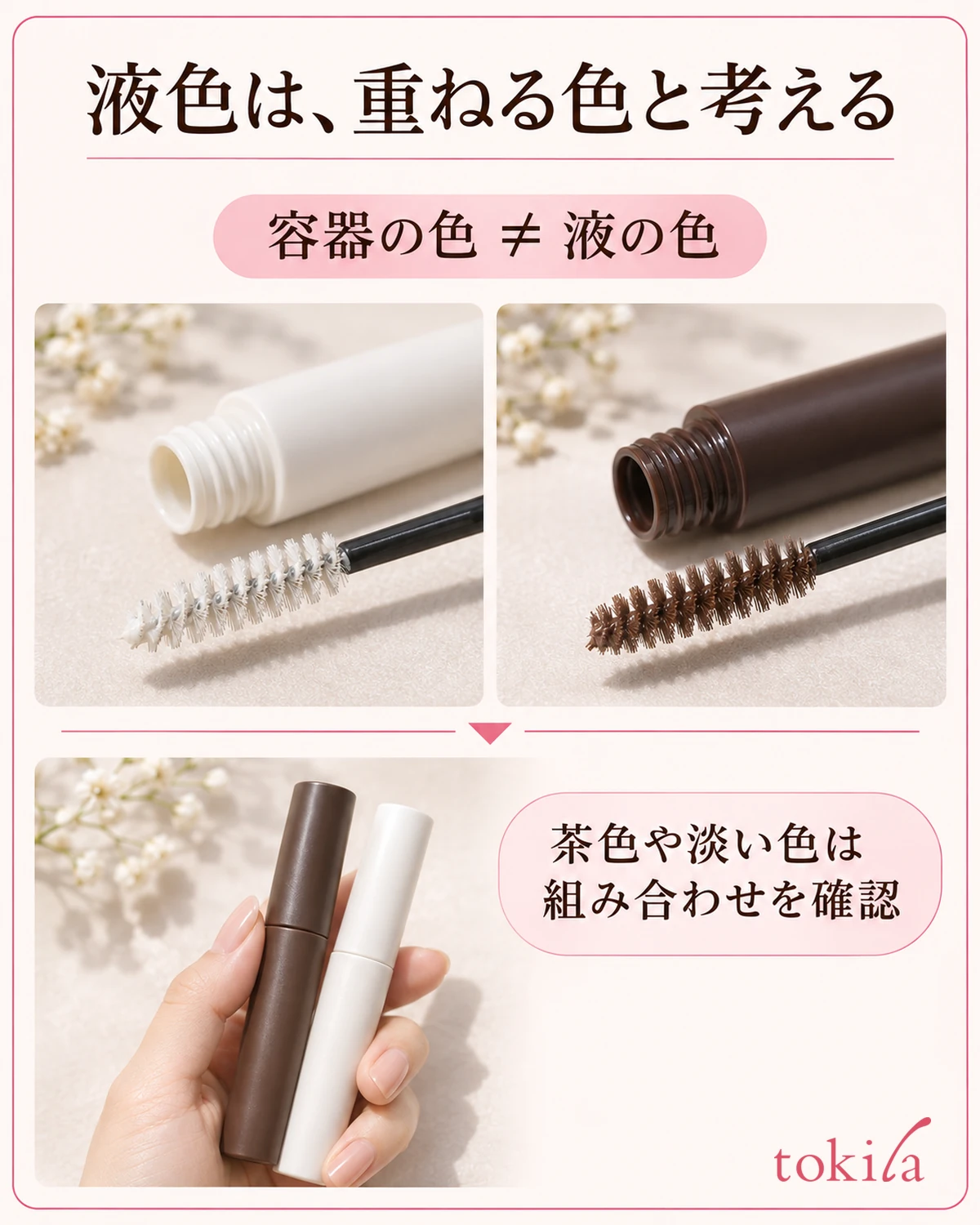
Primers may be whitish, nearly clear, or colored black or bluish shades. A white container does not necessarily contain white formula, and a black container does not necessarily give a black finish. Separate container color in product photos from formula color, and read shade numbers and descriptions.
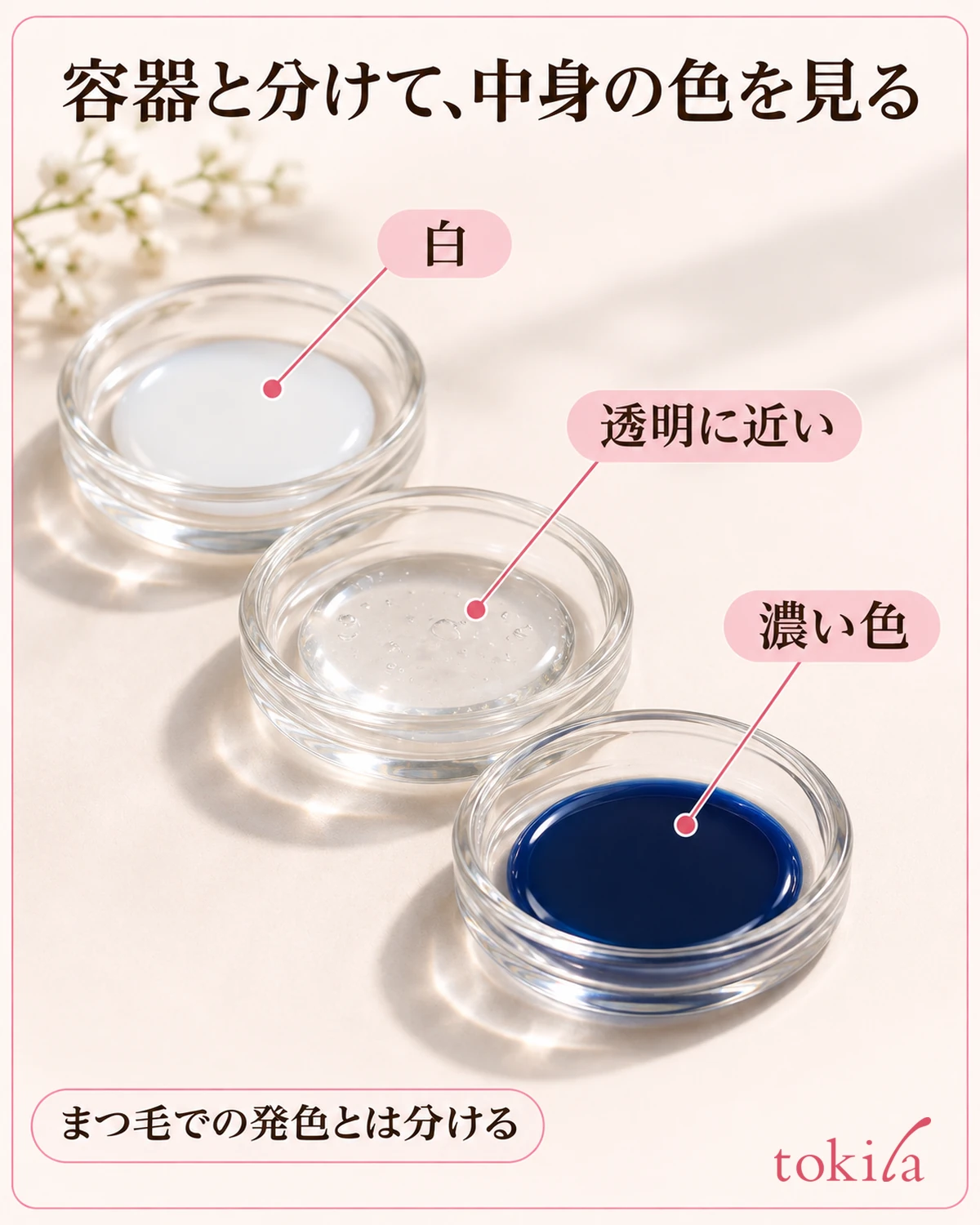
When choosing white primer, check instructions to finish with mascara on top and information about covering the primer completely. Avoid deciding that white means a better primer or clear means it will always be invisible. Even when described as clear, the color of the liquid itself and its appearance after application may not mean the same thing.
The supplementary photo shows white, nearly clear, and dark liquids in separate transparent dishes under the same light. The composition encourages checking the contents separately from the container color. It is not a comparison of three actual products or a photo demonstrating their color on lashes.
If your mascara is brown or a pale shade, consider whether you want a combination that preserves that color. A dark primer cannot be assumed to leave every color unaffected. If pairing guidance is absent, leave the intended color appearance unverified rather than confirming compatibility from container photos alone.
If you want to use it alone or also as a topcoat, consider products explicitly labeled for those uses. Do not assume a tinted product can be used alone or a clear one can be layered last. If your reason for buying is primer, compare the descriptions for its use as a primer first.
3. Connect fibers and applicator shape to your desired finish
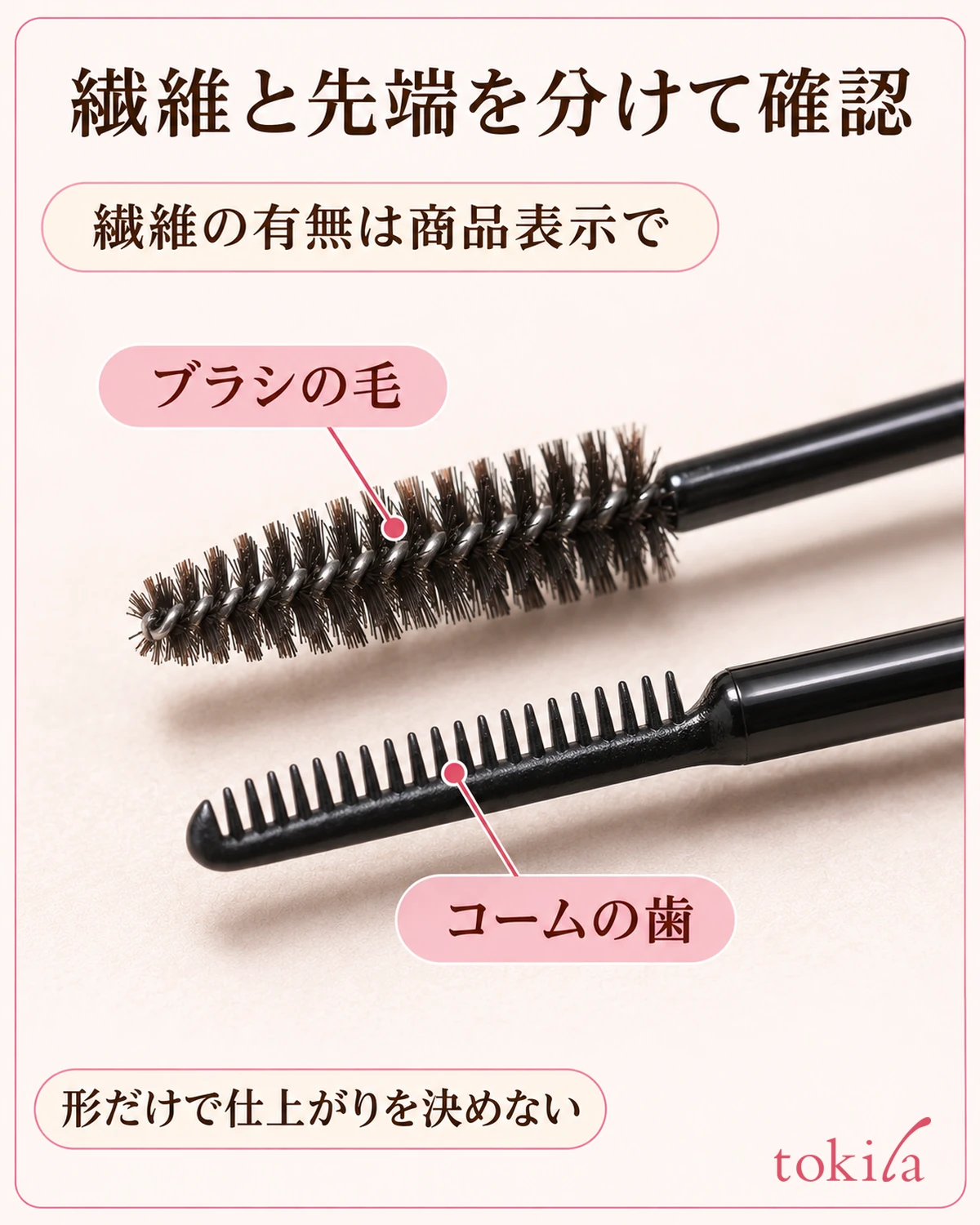
Read whether fibers are present alongside descriptions of length and volume. Do not assume all fiber formulas give the same finish or that fiber-free always looks natural. Fiber type, liquid, and layering conditions vary, so do not estimate unstated lengths or fiber counts from appearance.
Next examine the tip that carries the formula. Is it a brush with bristles, or a comb with teeth? If a full-container photo does not show this, look for product photos or store samples showing the applicator. Record any stated length or thickness separately from your impression of a magnified photo.
Do not guarantee results from shape alone, such as assuming a comb never clumps or a thick brush always adds volume. Look at the arrangement of bristles or teeth, tip slenderness, and distance from handle to tip. Imagine holding it in front of your usual mirror while looking at the tip.
If you also want to use it on lower lashes, check instructions for that area before considering maneuverability. Choosing a small brush and inserting it deeply near the eye are different matters. Do not substitute a product with unclear eye-area instructions just because its shape looks similar.
In stores, follow the counter's guidance and do not test a shared brush directly on your eyes. If you only checked its shape, distinguish "saw the applicator" from "did not try the finish." Keeping unexperienced ease of use out of confirmed purchasing facts also makes your comparison more precise.
4. Check the mascara layered over it and nighttime removal as one set
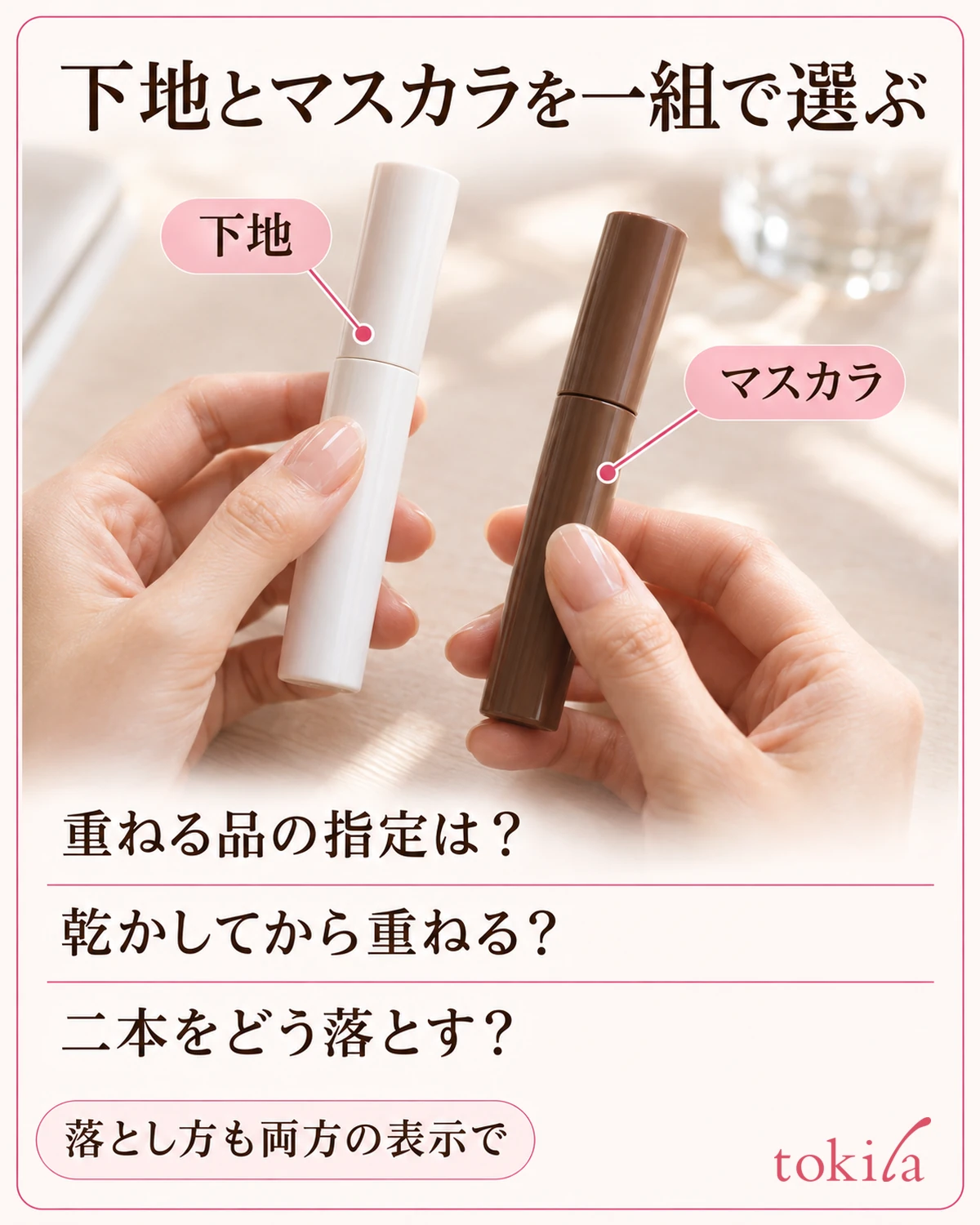
Once you have primer candidates, place their names alongside the exact name of your current mascara. Check for specified pairing products and drying conditions before layering. Even if you only intend to add it to your usual mascara, whether that combination is covered by instructions is a separate point.
Even if a primer comes off with warm water, removal conditions may change with the mascara layered over it. Do not decide both products come off with facial cleansing from the primer label alone; check suitable removers and steps for the layered product too. Resistance to removal need not become a score for product quality.
Noting the two product names and their removal methods side by side helps avoid deciding after reading just one. The supplementary photo places two closed tubes beside their respective check fields. The entries in the image are not fictional product ratings but examples of what to record before buying.

If you do not want more morning steps, consider whether you can follow the layering conditions. Likewise, decide whether you can add remover to your evening routine. Even if the finish sounds promising, putting a candidate on hold is reasonable when it complicates your usual preparation or cleanup.
If you have lash extensions or a lash perm, compare permitted conditions for use after treatment with your salon's guidance. Do not infer compatibility merely from descriptions such as beauty ingredients, clear formula, or a light feel. Keep any unconfirmed point as a question to resolve before purchase.
5. Compare two options using the same points and keep post-purchase checks

Divide your comparison notes into five points: desired finish, formula color and fibers, applicator shape, layering conditions, and removal. Apply the same questions to both rather than judging one only by curl and the other only by price. Mark unknown fields as unverified instead of filling them by guesswork.
When two options remain, return to your original question of what you want to add. Does the description match what you want to change, and can you confirm conditions with your current mascara? Prioritizing a clear role in your makeup over numerous extra functions makes your reason for choosing easier to explain.
When comparing prices, also check whether you are comparing a single product or a set and whether contents and sales units match. Without knowing the amount used each time, do not claim a calculated number of months of use or cost per day. For portability, check container length and closure as well as the small amount of contents.
After buying, follow the labeled amount and order and record concerns one at a time. Do not dilute it with water or mix other liquids into the container because the finish differs from your preference. For a closer look at application, return to the article on primer order and separate your purchasing wishes from actual use conditions.
If eye or skin abnormalities occur, stop using the product and follow its precautions instead of merely adjusting the finish. Choosing a product whose role in your usual makeup matches conditions you can follow is a starting point for comfortably incorporating it after purchase.