When shopping for cream blush, you will find some that look dewy and others that feel smooth and dry after application. Even if they look similar in their containers, their finish on the cheeks and their place in your existing base makeup routine may differ.
Before choosing by color alone, decide what kind of texture you want to add to your cheeks. This article organizes the points to compare before buying, focusing on cream blushes in compacts and pots. For fixing lifting after application, see what to review when cream blush lifts your base makeup.
1. Separate softness in the container from texture after application
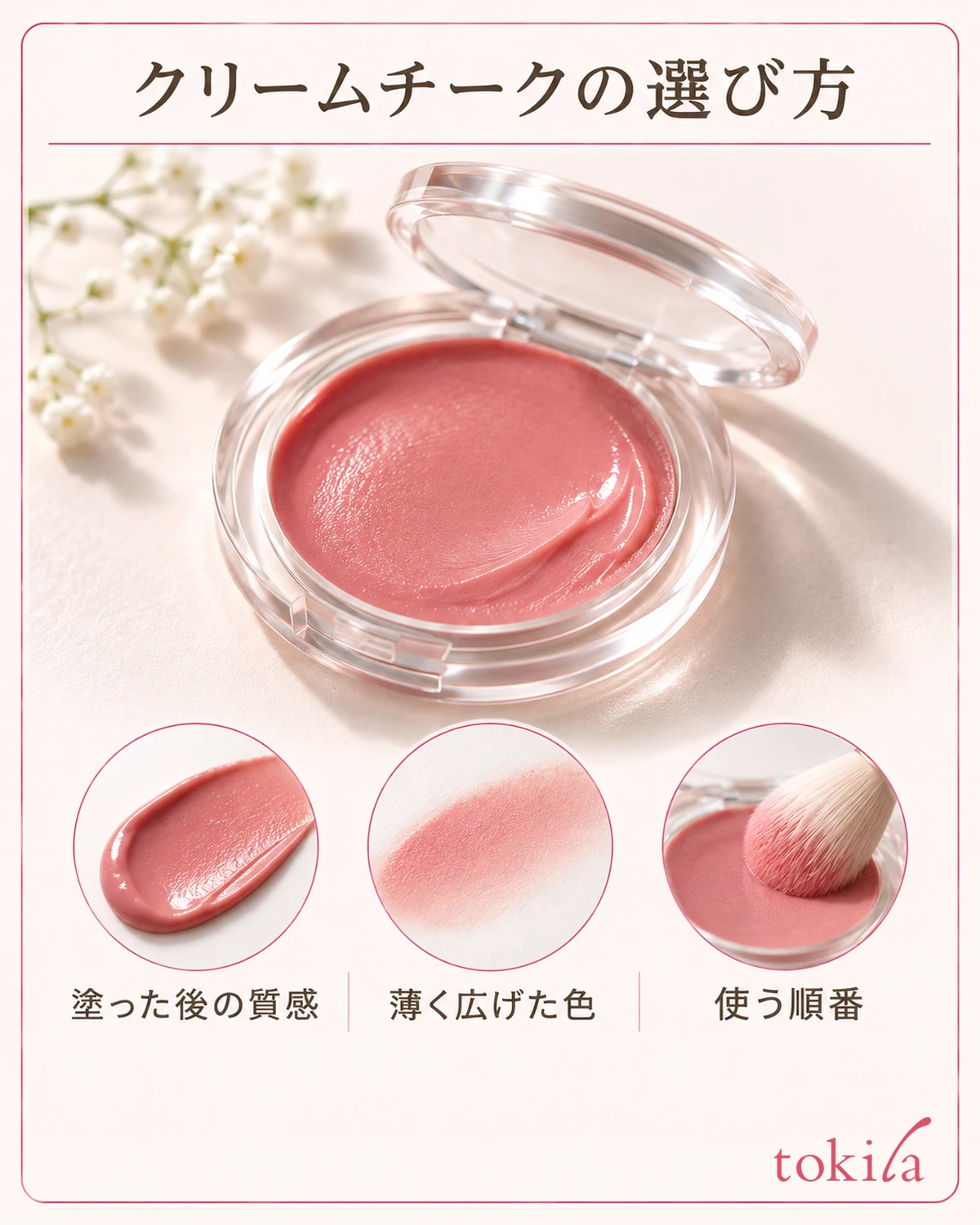
Start by reading the description of the finish rather than the product name. Do not assume that every cream formula leaves a wet-looking sheen. Some feel soft when picked up with a finger but are designed to become smooth and dry after application. Begin by separating how the product feels to the touch from how the finished cheeks look.
Consider whether you want to preserve the texture created by your foundation or add light just to your cheeks. If you enjoy a glow, keep products described as giving that finish on your shortlist. If you prefer less shine on your cheeks, do not rule a product out simply because it is called a cream; compare the descriptions of the finish after application.
The presence of pearl or glitter is a separate consideration from surface sheen. Check whether the finish has visible sparkling particles or a smooth reflection. Even within the same range, the formula and appearance can vary by shade, so return to the description of the color you want.
When looking at sample photos, do not judge by one brightly lit spot alone. If photos show the face from the front and at different angles, look separately at the overall cheek color and the reflective areas. Colors may also look different depending on your screen and the shooting conditions, so do not assume a product is exactly the same color as one you own from photos alone.
Notes such as "described as smooth and dry after application" or "a shade with pearl" make comparisons easier than "looks soft." There is no need to assume two products have the same finish because they share one ingredient, or to rank wear time or suitability for your skin based on an impression of oil content.
Even when descriptions use the same words, the products will not necessarily reflect light identically in every photo. Separate your comparison criteria into goals such as "I want to see the color from the front" and "I also want to enjoy the light as I move my face" so you look at the same points for each candidate. Do not add unverified effects, such as erasing uneven cheek texture, to a description of the finish.
2. Compare color when spread thinly, not just shade names
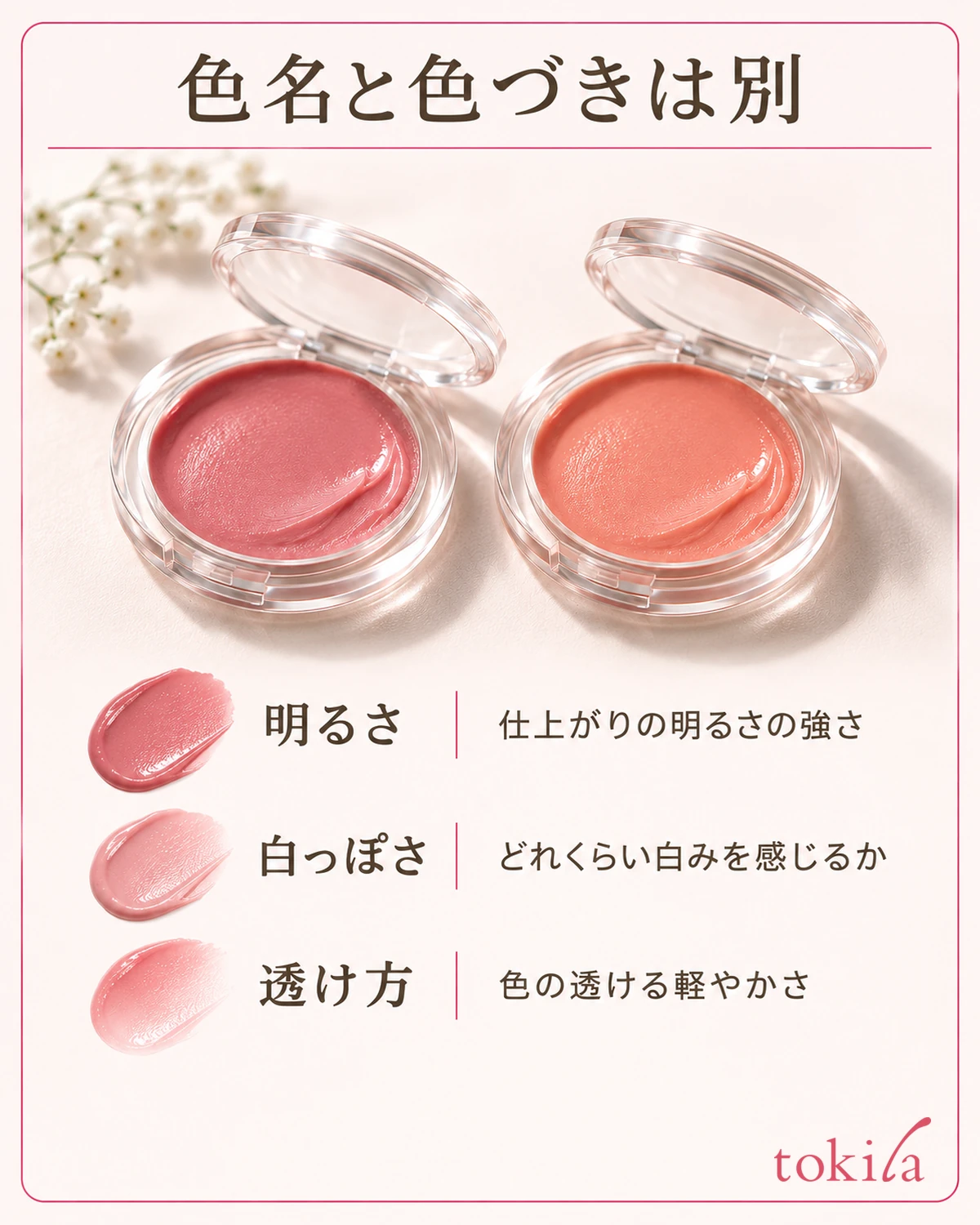
Names such as pink and coral are starting points for finding candidates. Within those groups, brightness, whiteness, vividness, and depth vary. If you are replacing your current blush, deciding on one thing you want to change can help you choose without buying too many products with the same shade name.
Check the color that looks concentrated in the container separately from the color spread thinly on the cheeks. Read whether the finish lets the skin tone show through or gives a clearly visible color. Some whitish or deep tones are difficult to choose on the assumption that every shade will blend in equally if applied thinly.
If you can try a product in store, follow the method and application area specified at the counter. Look not only at the initial application point but also at the thinly spread edges. The color of the test area differs from your face, so it does not guarantee the color on your cheeks. If you cannot try it, it is equally important not to judge compatibility with your skin from a screen alone.
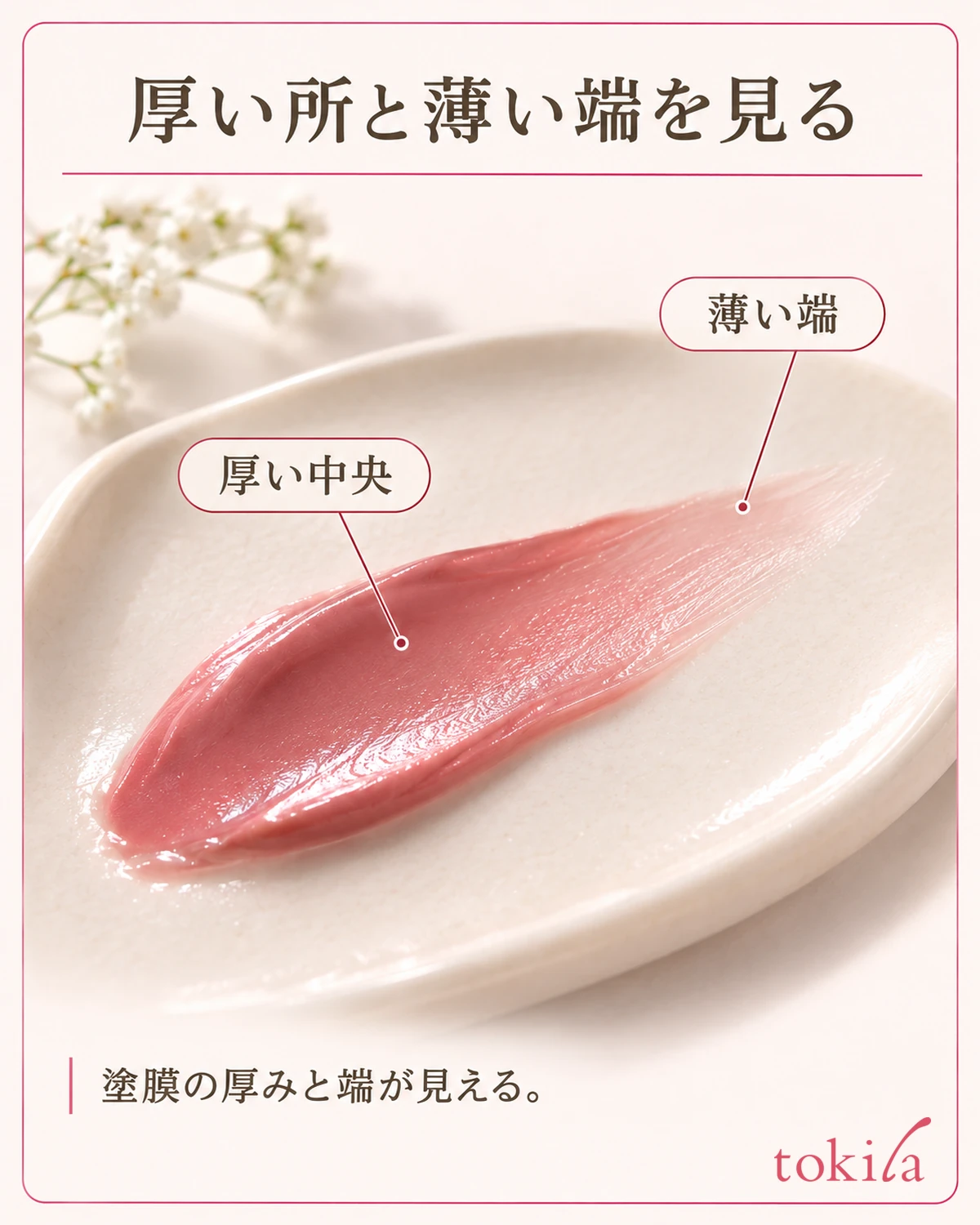
The supplementary photo shows a close-up of the thick center and thin edge of the same creamy color material. The composition helps you view the color in the container separately from a thin film; it is not a color demonstration of an actual product. Do not shortlist a candidate based only on the center color; consider the description of its color payoff and the conditions under which you can try it.
Think of one lipstick color you often wear as well. The intensity you want will depend on whether you want both cheeks and lips to stand out or prefer to soften one of them. Rather than limiting your options solely by skin tone categories, narrow the list to two products based on whether they work with your everyday combinations.
3. Find the appropriate place among your base and powder steps
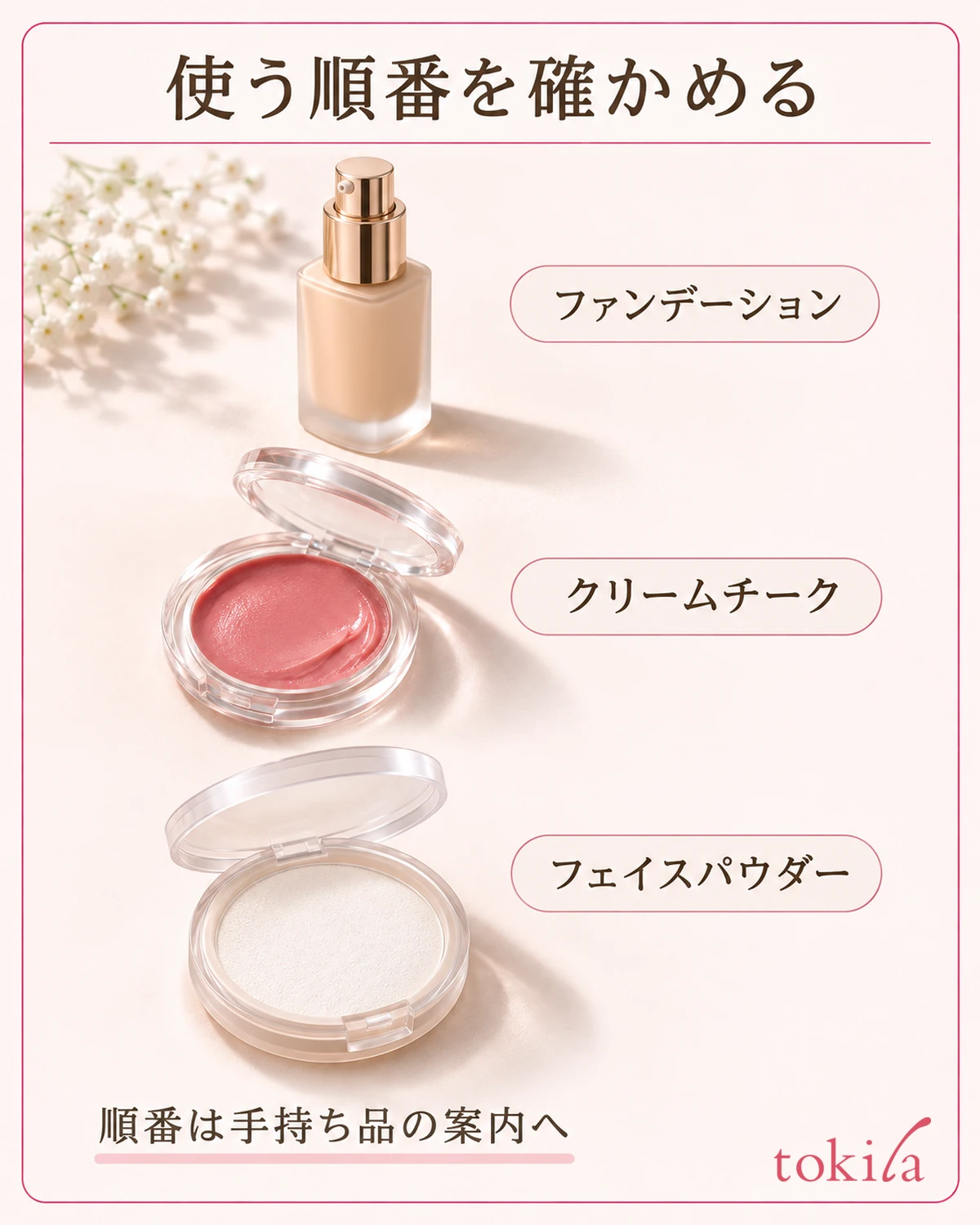
Once you have narrowed down color and texture, read each candidate's directions alongside your existing base makeup routine. Check where it is intended to be used relative to foundation, blush, and face powder. Do not make a universal rule that cream blush always goes before powder or always comes after every other finishing step.
A short note of your current morning steps makes it easier to see where a candidate would fit. If your routine differs between days when you use plenty of powder and days when you preserve cheek glow, use your more frequent routine as the comparison standard. Whether you can keep your current finishing method matters alongside which blush you want to try.
If a product suggests layering another blush over it, read that as directions for that particular product. It does not mean every cream blush needs added powder to finish. If you want to layer, consider whether the combined color and light of both products fit your goal.
If the application order is unclear, mark it as unconfirmed instead of filling in the gaps yourself. Choosing a product whose place in your routine you can explain before use makes it easier to decide when to incorporate it than repeatedly rubbing your cheeks after purchase to make it work with your base.
If you also want to use it for afternoon touch-ups, distinguish relatively bare morning skin from makeup that has been worn for some time. Suitability for morning application alone does not establish suitability for layering during touch-ups. If you cannot confirm directions for use on the go, you can keep it on your shortlist as a morning product first.
If you need to change your routine to accommodate a candidate, decide how much you are willing to change. If you want to keep using your usual powder and foundation, you can prioritize that combination. You do not need to assume from the outset that you must replace your entire base makeup collection for a blush.
4. Check intended uses and packaging, including fingers versus tools
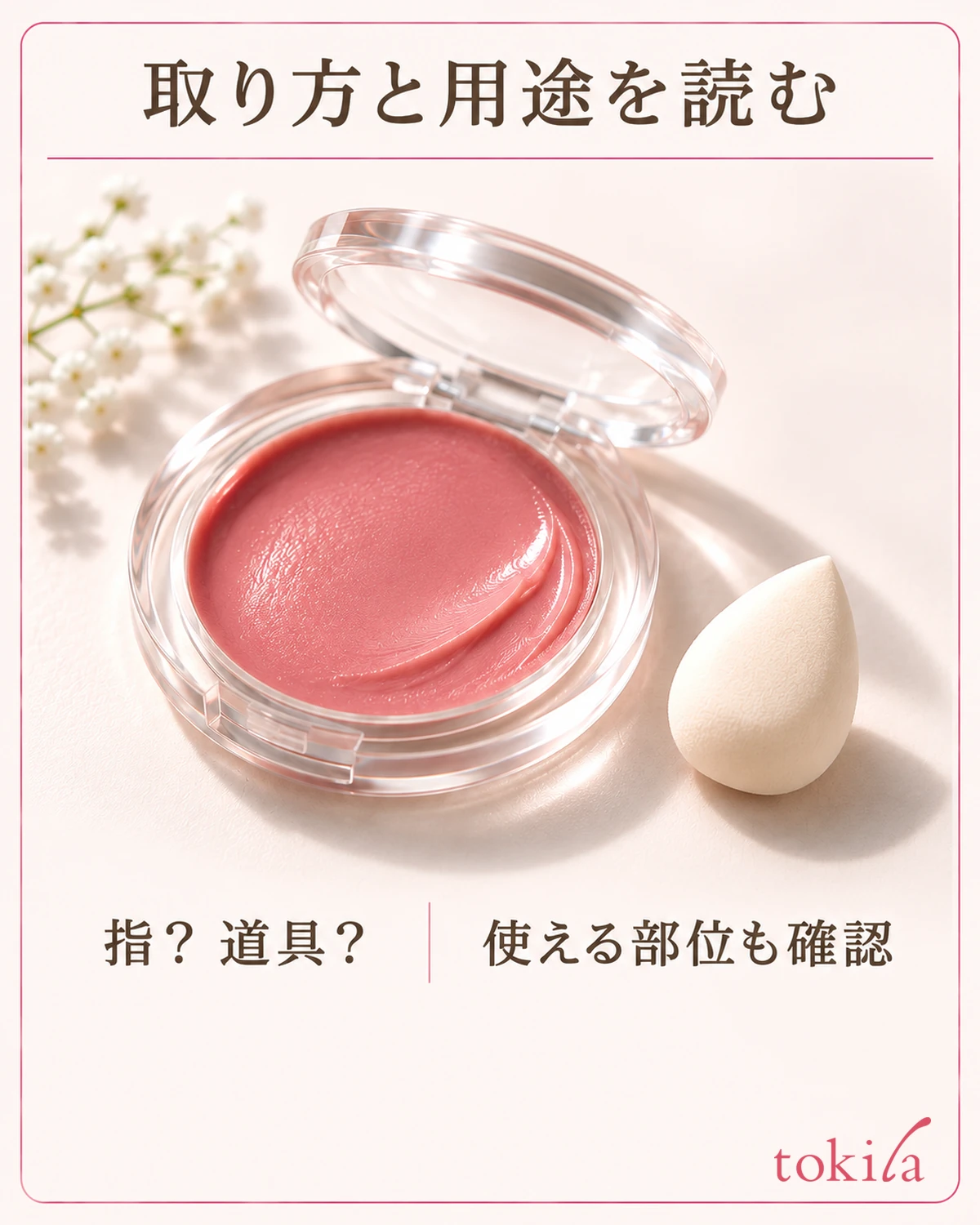
Next, check how to pick up the product. Read whether directions call for fingers or specify a tool such as a brush or sponge. Do not assume that a small container means finger application only, or that a soft surface can be used with any tool. Choose a candidate whose specified method is easy for you to follow each morning.
Imagine the handling: whether the contents are easy to see when a compact is open, or whether you can reach the intended area in a pot without touching its opening or rim. Rather than assuming you will press firmly into a soft formula, consider whether you can pick up the directed amount. Do not rank ease of use by container size alone.
Some products can be used on several areas, but not every blush can be applied to the lips or eye area. If you want a multipurpose product, check each intended area is explicitly listed for that candidate. Do not extend the uses listed for another shade in the same packaging to the shade you are holding.
The supplementary photo distinguishes the blush pan from the inside of the lid in an open compact. When considering carrying it with you, looking at the opening and closing parts and the areas that do not touch the contents, as well as the color surface, can help you picture using it. The photo does not demonstrate the durability or hygiene performance of a specific container.
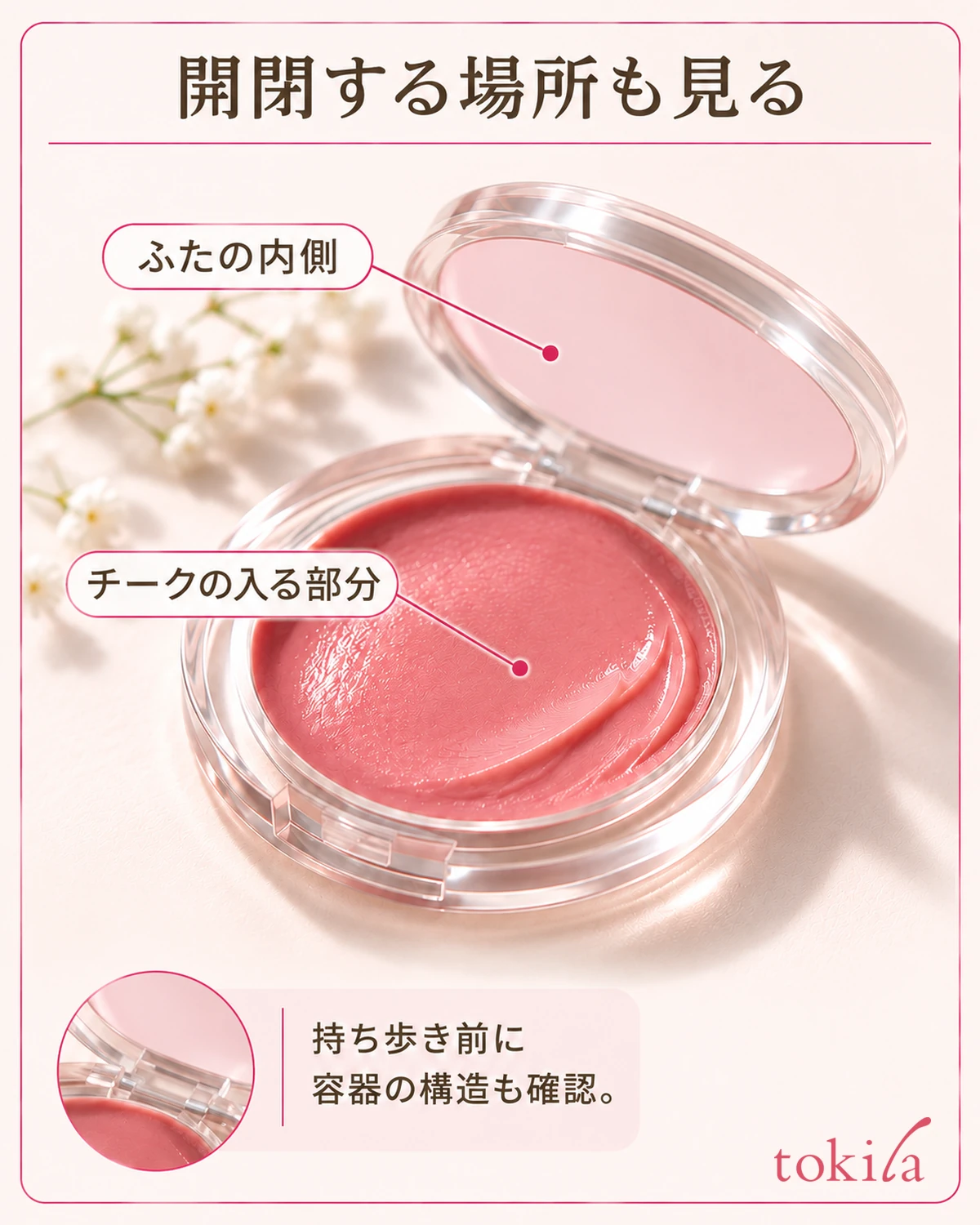
Include hand and tool care and how to close the product after use in your decision. Shortlist products you can use as purchased, without making modifications such as adding another liquid or transferring the contents to another container yourself. You can also choose separate products for morning use and carrying with you.
Compare candidates with and without included tools on the basis of having everything needed to use them. Choosing a product that requires a tool when you want to use your fingers, or choosing a travel product without considering time to wash its tools, can leave a mismatch with your intended use. Alongside an appealing appearance, imagine the process from opening to putting it away.
5. Compare two candidates under the same conditions and decide when to use them
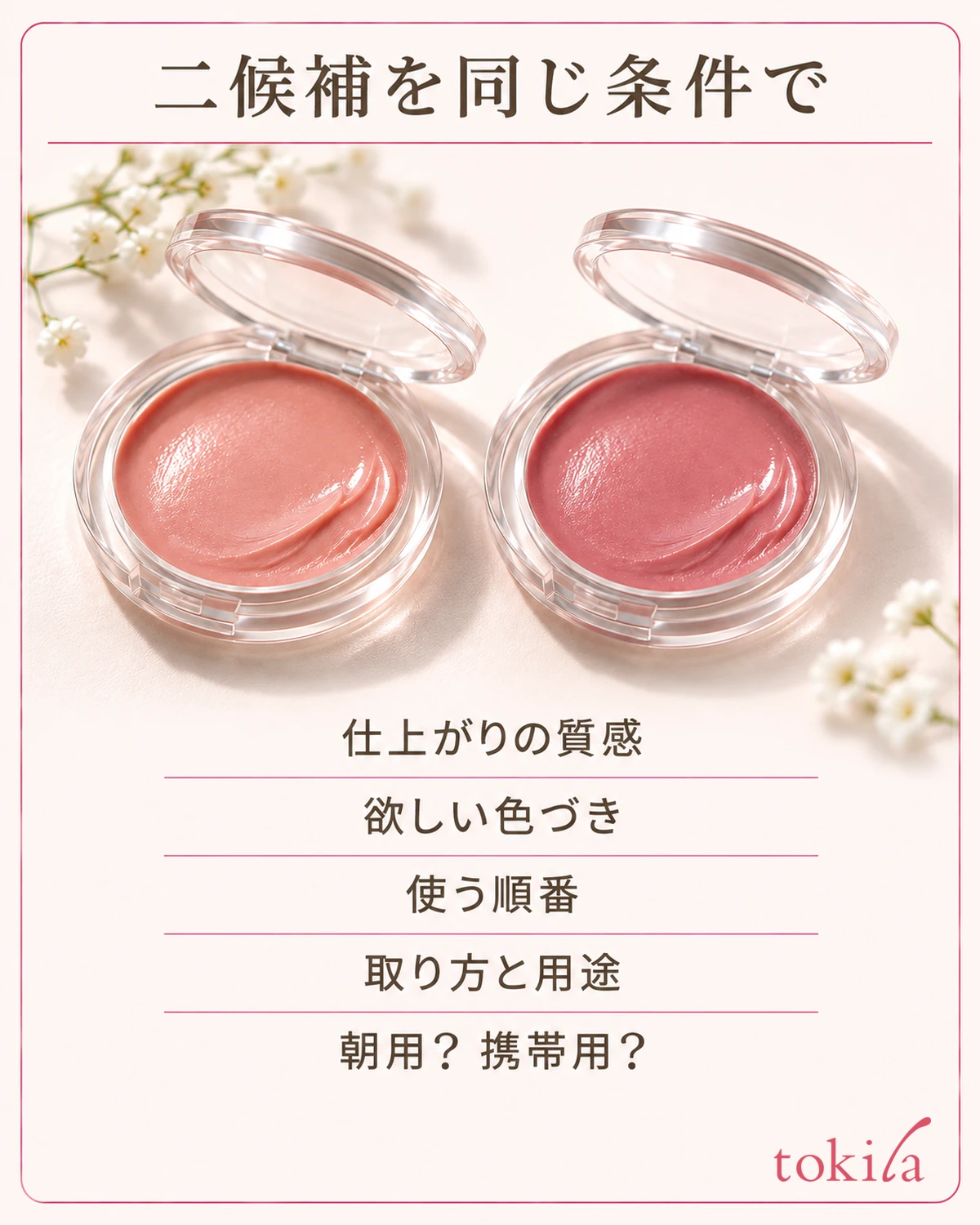
Finally, compare two candidates across five points: texture after application, desired color payoff, application order, pickup method and intended uses, and occasions for use. Apply the same questions to both instead of judging one only by color and the other only by packaging. Mark any unknown items as unconfirmed.
Read price and quantity on the same basis as well. Do not confuse single-shade and multishade cases, or complete products and refills, and account separately for any tools you need to obtain. If there is no guidance on the number of uses, do not calculate how many months a product will last from quantity alone.
If both meet your criteria, return to the cheek texture you first decided on. Keeping the option whose reason for selection you can state in one sentence, such as "I want to add glow to my morning makeup" or "I want a smooth, dry finish but prefer picking up color from a cream," helps you maintain a clear basis for choosing even when new shades appear.
If the color feels too strong, pause before continuing to layer it on your face. If the directions allow adjusting the amount, check the finish starting with a small amount; if your base moves, review your application method and order. Separating the comparison before purchase from adjustments after use helps you avoid deciding that color alone is the cause.
Containing moisturizing ingredients does not mean a product will never irritate anyone's skin. If your skin is already abnormal, or if redness or itching occurs during use, stop using it and follow the precautions. To enjoy your preferred color, keep the outer packaging's directions and precautions after purchase too.