If you choose a targeted makeup remover by its shape or capacity alone, you may wonder afterward, “Can I use it on my lips?” or “Do I need a separate cleanser for my whole face?” First check that it is compatible with your makeup, then compare where it can be used and which format fits your evening routine.
Here we organize what to check before narrowing your choices to two products. Liquid applied with cotton and a comb that delivers remover to lashes are treated separately, with their intended uses and preparations distinguished. This article does not judge ease of removal or gentleness by the container or liquid color alone.
1. Decide what you need based on the makeup you want to remove
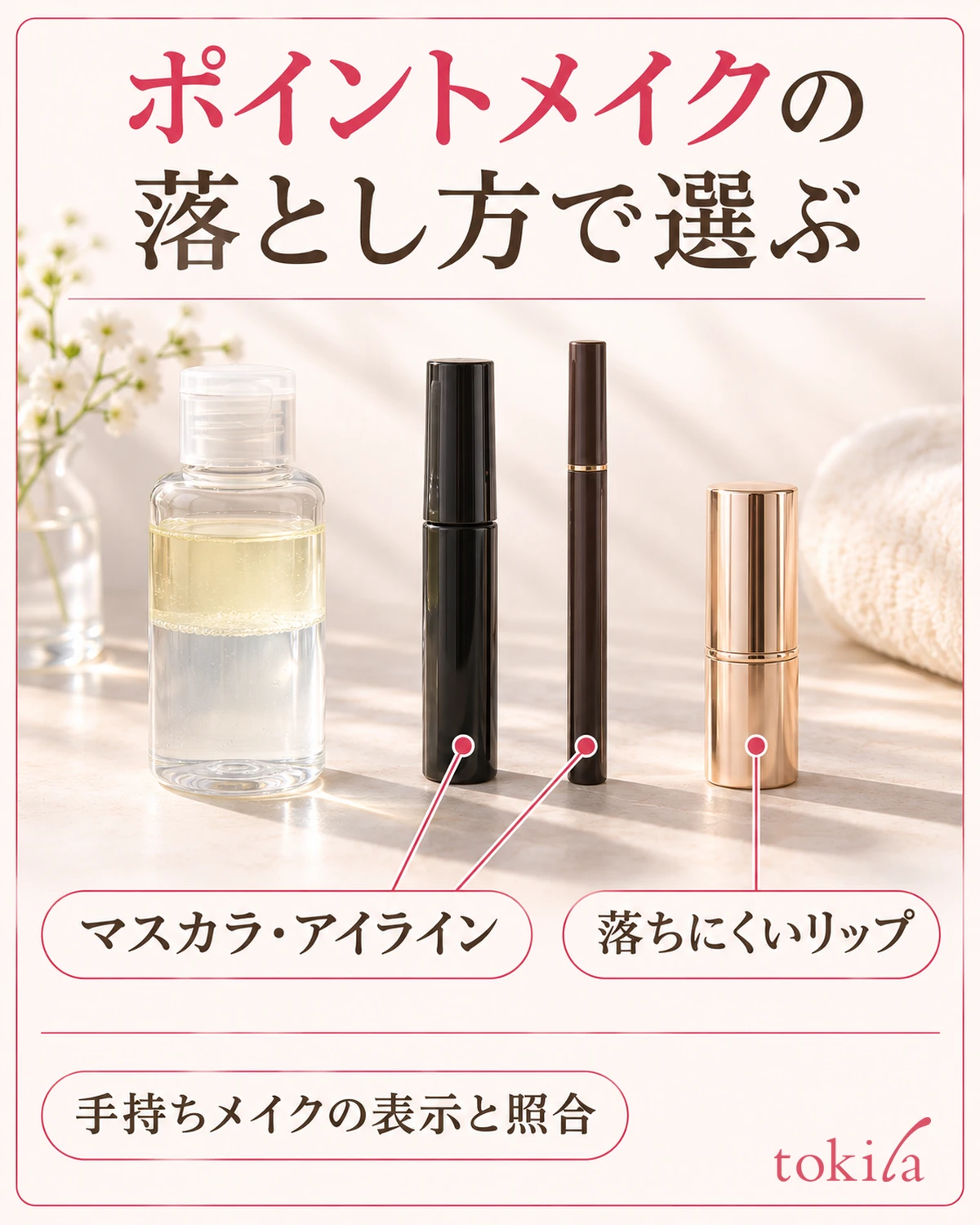
Before looking for a targeted remover, read the removal instructions for your usual mascara, eyeliner, and lipstick side by side. Resistance to sweat or water and what to use for removal at night are separate matters. Rather than relying on a water-resistance label, start with the method specified for your products, whether warm water, face wash, or a dedicated remover.
If you layer a primer or topcoat, include that product too. Even when mascara alone can be removed with warm water, the required steps may change depending on what you layer over or under it. A note of your usual combination makes it easier to identify which makeup a remover needs to handle when shopping.
Also decide whether you will use it daily or only on days you wear hard-to-remove lip makeup. If you want to remove both eye and lip makeup, look for options intended for both. For mascara alone, you can also compare products applied directly to lashes, but their role differs from a cleanser for your whole face.
If your current facial cleanser already meets your makeup's removal instructions, you may not necessarily need a dedicated product. If you are using force to remove makeup it does not support, however, consider a suitable product rather than rubbing harder. One clear reason for buying keeps the options manageable.
When comparing before purchase, remember that not all black mascaras have the same removal method. Even if the finish looks similar, the combination of products used differs. Rather than taking a friend's choice or a popular format as the answer, retain the conditions that fit your makeup.
2. Compare liquid and comb formats by their range of uses
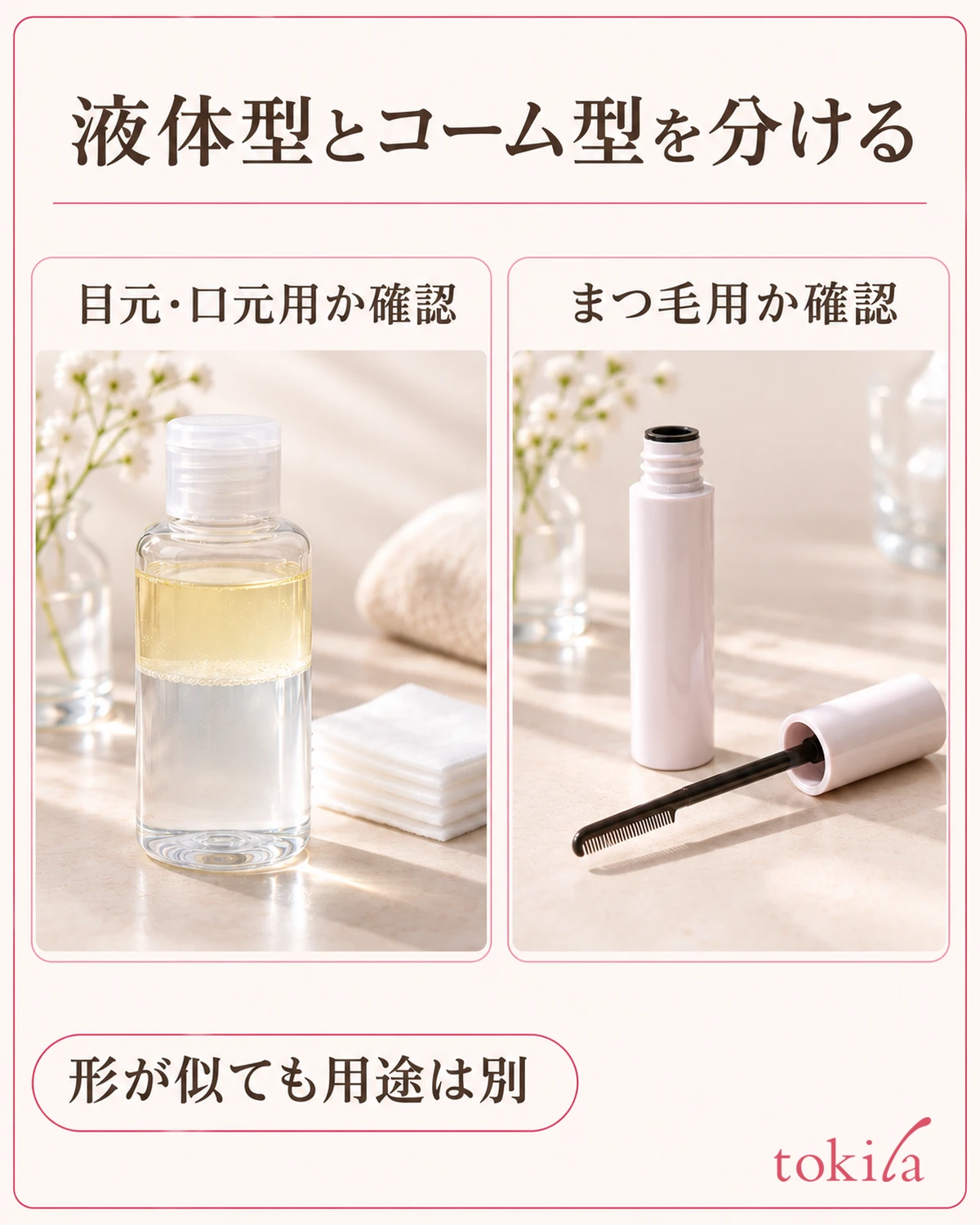
Liquids applied with cotton and comb formats applied directly to lashes require different supplies and target different areas. A liquid suitable for eyes and lips may handle multiple kinds of targeted makeup, but check each product's permitted areas. Being liquid does not mean it is for the whole face.
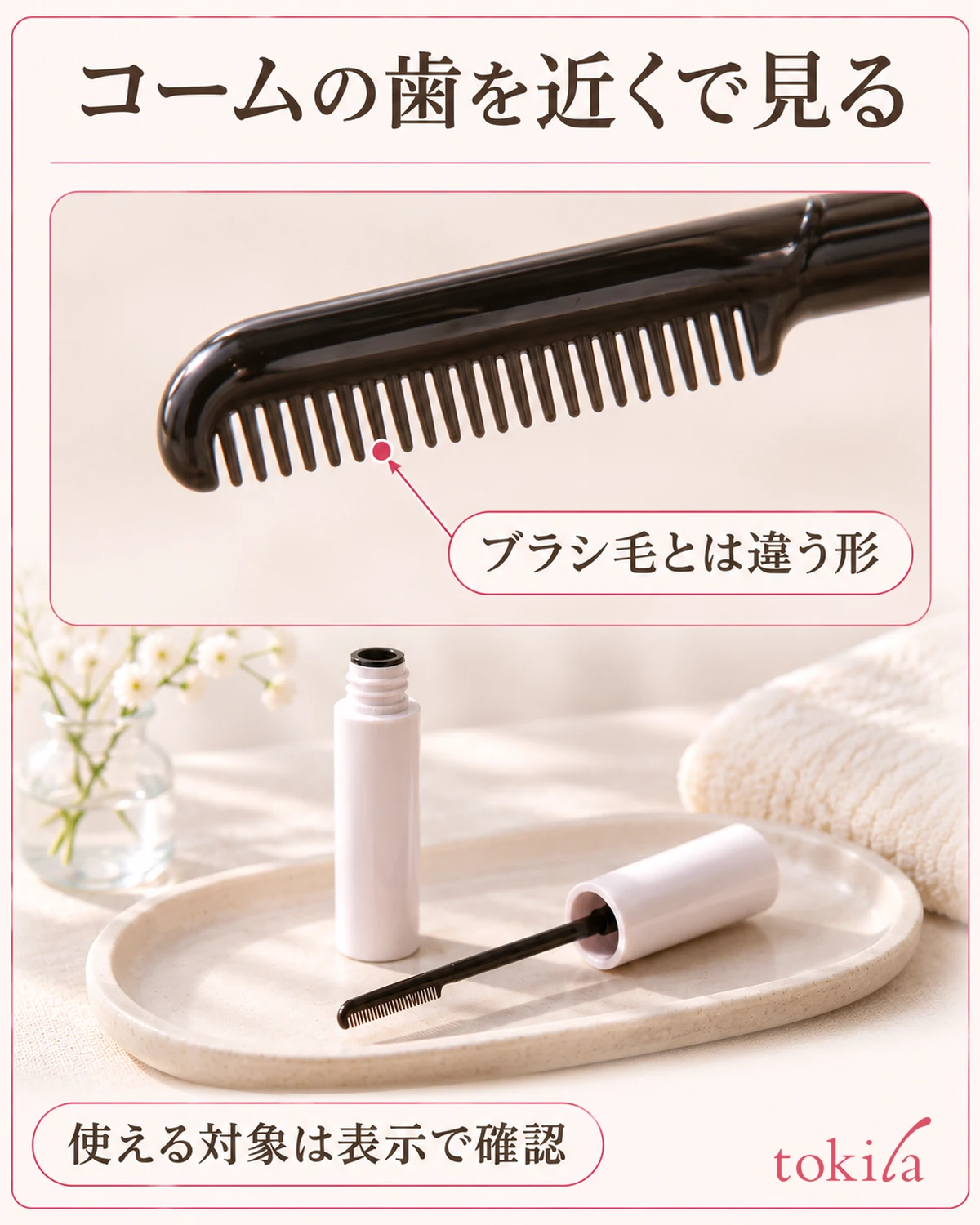
For a comb format, read whether it is intended to remove mascara from lashes or can also be used elsewhere. Although its container may resemble mascara, a remover differs from a product that adds color or curl. Consider how you will store it without confusing the two, and do not expand its use simply because the shape looks convenient.
The supplemental photo shows the comb's short teeth and handle up close. It helps distinguish this shape from a bristled brush. The number or fineness of the teeth is not evidence of easier removal; use the photo as a clue to which area the format is designed to deliver liquid to.
Some liquid products have two layers that must be shaken together. Before buying, check whether you can include shaking each time and handle the bottle with its cap closed. Appearance alone cannot rank performance or safety: separated layers do not necessarily remove more strongly, nor does a single clear layer mean no irritation.
Someone wanting to remove eye and lip makeup together immediately after getting home may prefer a different format from someone wanting to treat mascara first. Consider liquid format together with the situation. If a comb product still requires cotton or facial cleanser afterward, include those steps when comparing convenience.
3. Read the conditions for eyes, lips, and lash extensions separately
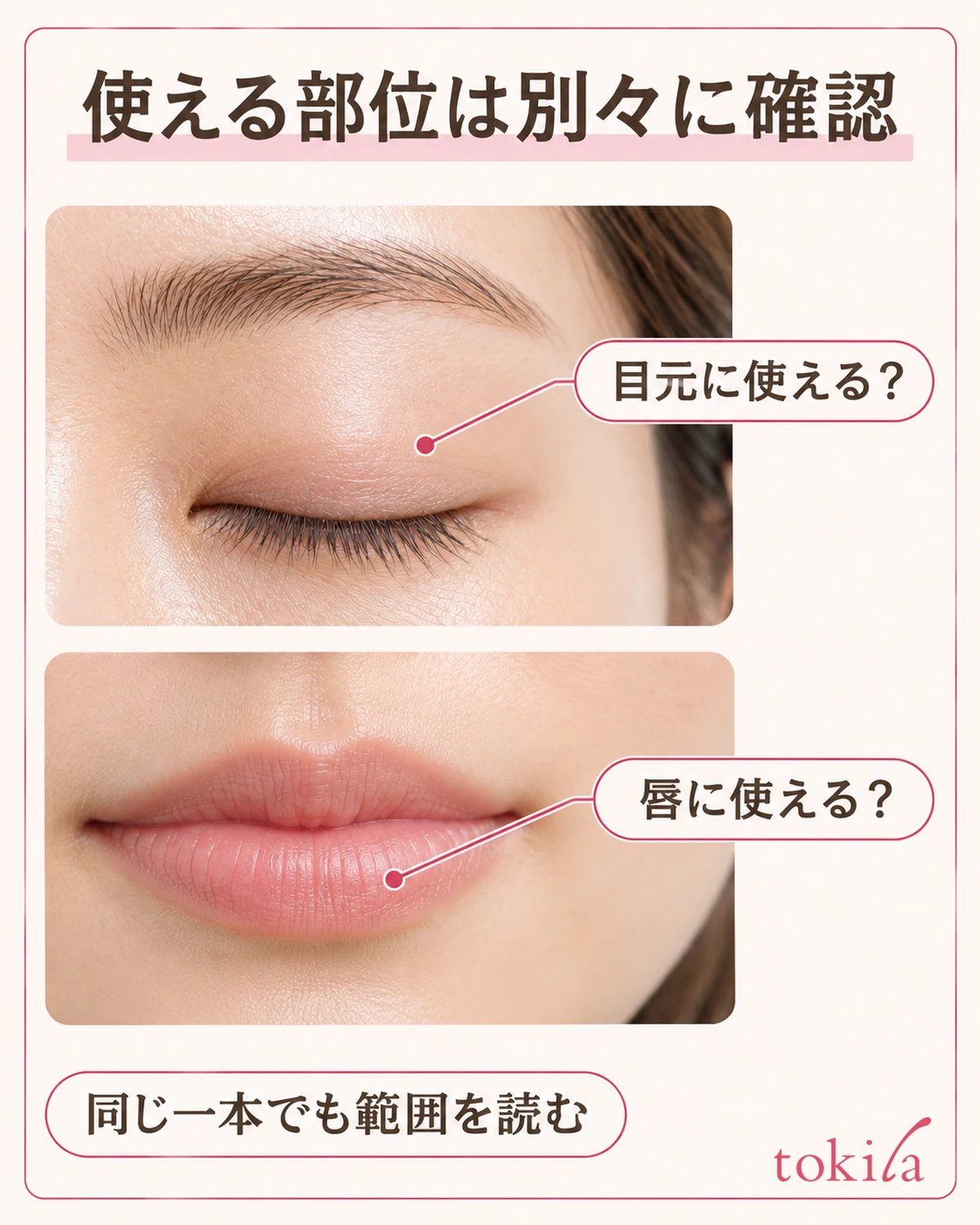
Read the intended application areas to confirm whether the product is for eyes, lips, or lashes. “For eyes” does not mean inside the eyes or underneath the eyelids. Check lip suitability separately as well; lipstick appearing in a photo does not establish that the product can be used on lips.
If you wear lash extensions or false lashes, check conditions involving the adhesive and application method too. “Oil-free” alone does not establish compatibility with every treatment or adhesive. If compatible adhesive types are specified, check whether the one actually used matches.
If you do not know the details of your lash treatment, organize what to ask the salon before buying. You need both the remover's conditions and the extensions' removal instructions. Choosing an option with confirmed compatibility makes a daily routine easier to plan than buying on the assumption that it should work.
If claims such as fragrance-free or no added alcohol matter to you, read what each option leaves out. The absence of a particular ingredient, however, does not mean nobody will experience irritation. Also check ingredients that have disagreed with you before and the precautions; do not treat one label as a guarantee of reassurance.
Do not try to resolve eye discomfort or skin abnormalities through product selection. Follow your products' precautions in deciding whether to use them, rather than devising ways to continue. Even where testers are available, follow hygiene rules and do not make improvised testing around your eyes a purchase requirement.
4. Compare how it fits your routine, including cleansing and face washing afterward
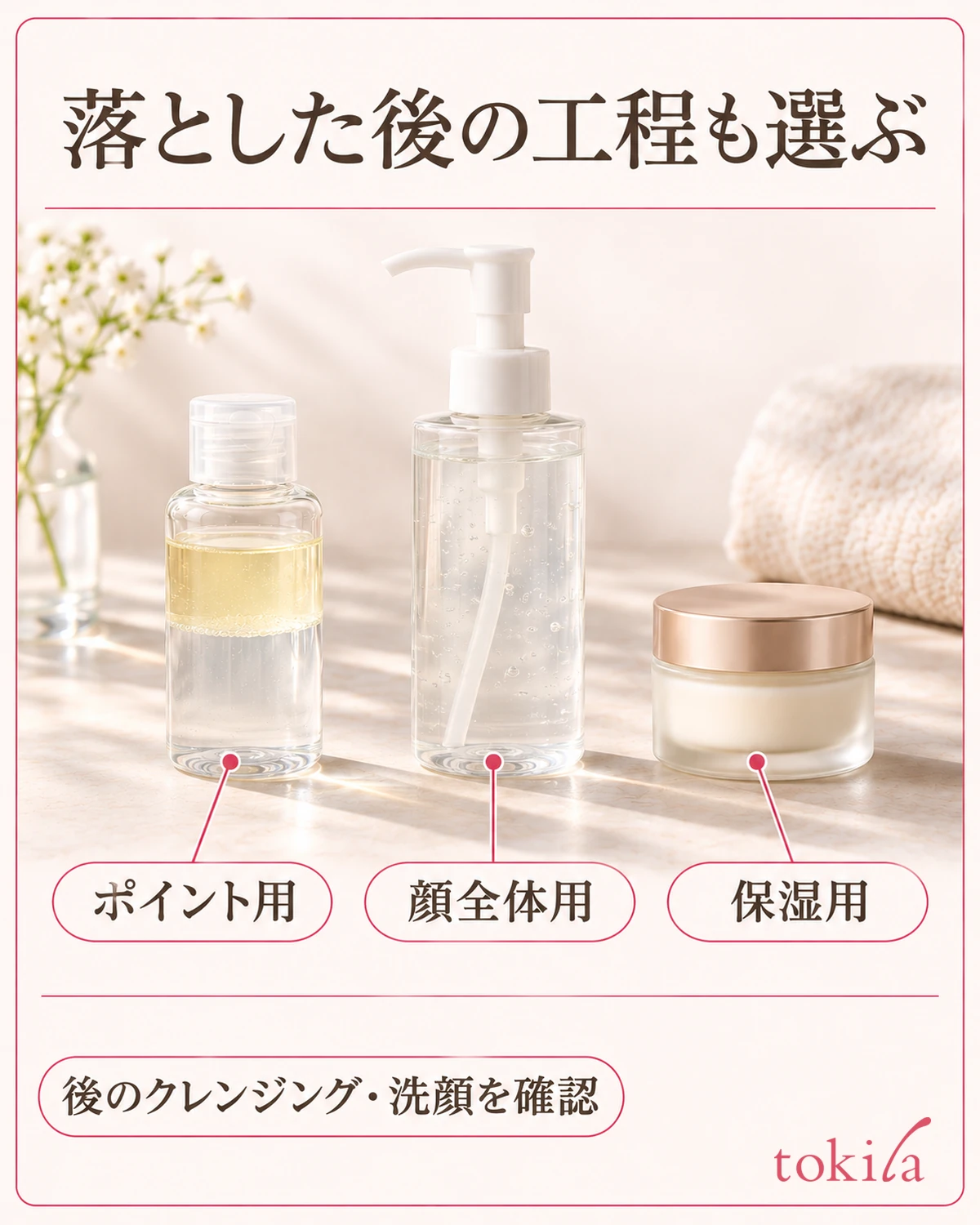
After removing some makeup with a targeted remover, check how you will handle the makeup on the rest of your face. Even if the targeted product requires no rinsing, that does not mean foundation or sunscreen has been removed. Read through the sequence with facial cleanser and whether face washing is needed afterward.
Check which step “no rinsing needed” and “no face washing needed” refer to. Distinguish handling the targeted remover's liquid from finishing your full-face cleansing routine. Do not apply one product's explanation to another; compare combinations that let you complete your evening care.
The supplemental photo shows a preparation example with spare clean cotton separate from one pad on a tray. For an option used with cotton, you need space for replacements as well as the bottle. The number pictured is not a specified amount per use. Plan the actual quantity according to the product instructions and the area to remove.
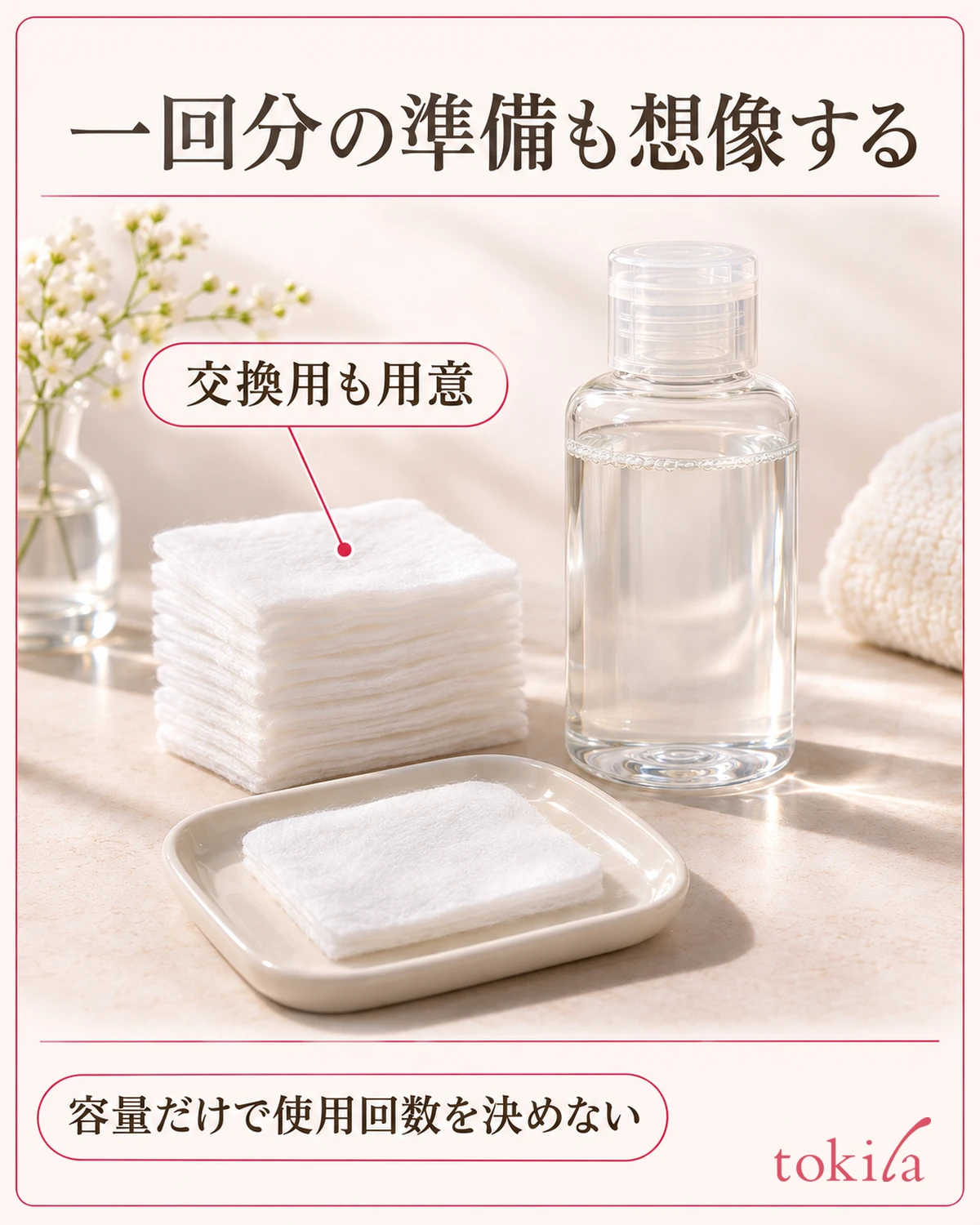
Whether you remove makeup at the sink or remove only targeted makeup in your room first is another selection condition. For room use, imagine where used cotton goes and how you will move to the sink afterward, without assuming later steps can be skipped. Also check whether you can follow the cap-closing and storage instructions in that location.
Reducing the amount used to shorten the routine is not a way to compare before buying. Instead, compare whether an option is practical with all the necessary preparation. After choosing, you can check the procedure in How to Use Targeted Makeup Remover while comparing it with your product's label.
5. Imagine one use for each option instead of deciding by capacity alone
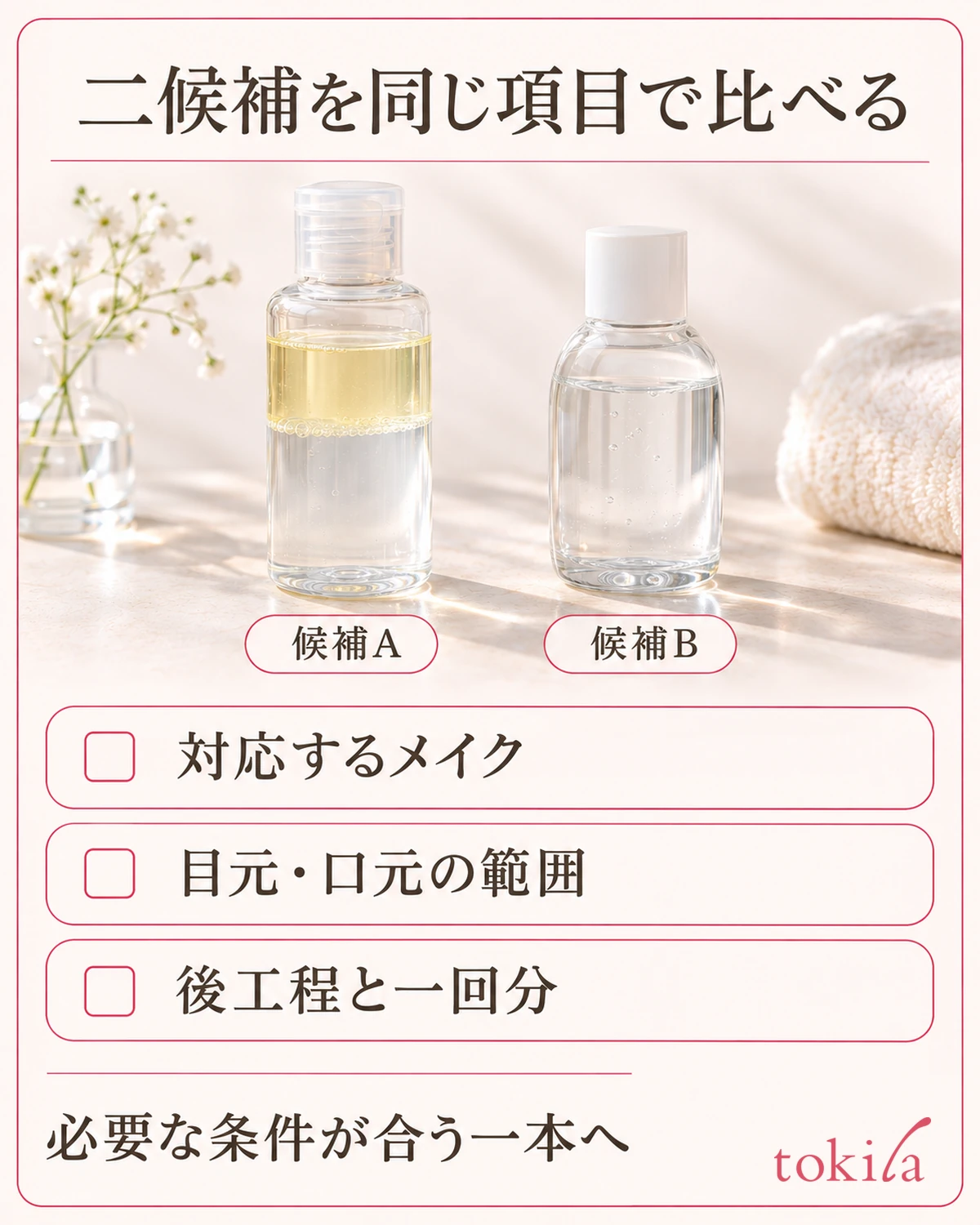
Finally, compare not only capacity and price but the same scope of use. A product for both eyes and lips has a different purpose from one for lashes alone. Do not conclude from capacity alone that a larger bottle costs less per use or a smaller one costs more.
Check whether guidance for one use is given as liquid volume or how to saturate cotton. If a specific number of uses is not published, you can leave it unknown. Do not calculate it from another product's pump count or the liquid level in a photo, or rank two options using unsupported figures.
For options used with cotton, include the effort of buying and replacing it. For comb formats, read whether after-use care such as wiping the tip is required. Compare more than the price of the contents: suitability for your usual makeup and frequency, and preparation you can follow, can be reasons to choose.
For both options, write “compatible makeup,” “permitted areas,” “format and preparation,” “later steps,” and “guidance per use” in the same order. Mark unknown conditions as unconfirmed rather than leaving blanks. Once an option meets the necessary conditions, add preferences such as fragrance and ease of handling the container.
If makeup is difficult to remove after purchase, do not make harder rubbing your next choice. Recheck compatibility with the makeup, the specified amount, and later steps. Recording why you chose the product lets you revisit the same conditions when changing makeup. Choose it in combination with your everyday products rather than seeking one that removes everything.