You want to buy loose powder, but similar colors and textures make it hard to choose. First deciding how much glow you want to keep in the finish and where you will use it can help narrow the options. Compare not only the powder's color in the container, but also its shimmer, tools, and the set you will buy under the same conditions.
Here is a way to organize two options before buying. Separate from correcting white cast or powderiness after application or refilling a container, this guide gathers the information you need to decide how a powder will fit into your daily makeup.
First, decide how much glow you want to keep
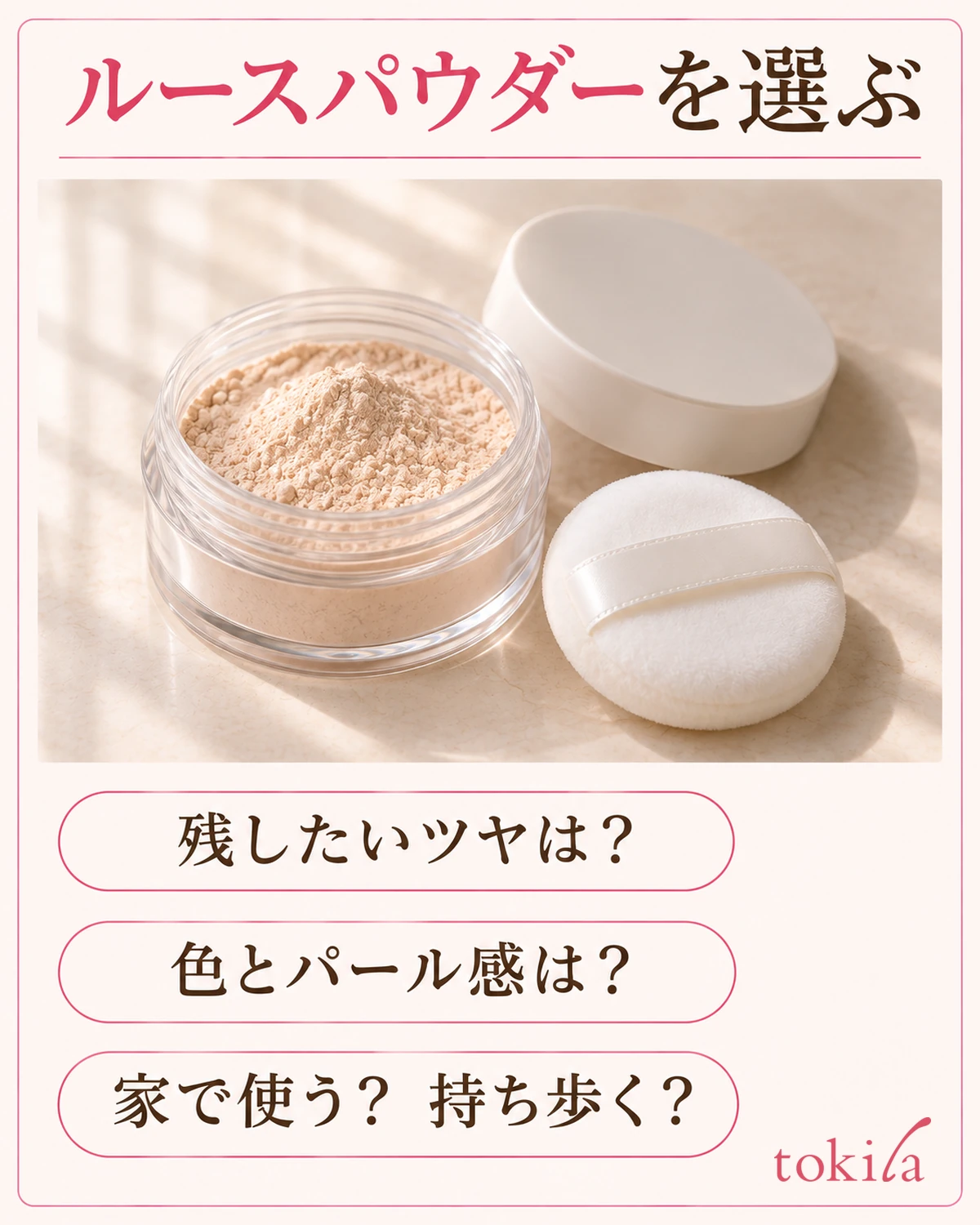
When choosing loose powder, first consider how you want your skin to look after applying it. Do you want to preserve your foundation's glow, or create a subdued finish with less reflection? Choosing one thing you want to change about your current base makes product descriptions easier to compare.
Loose powder is face powder sold as separate particles in a container. Look for it separately from pressed powder and powder foundation that adjusts skin tone. Do not buy products as though they have the same role or application simply because their names contain the word powder.
Look for words such as matte, glow, and pearl in product descriptions. However, the same wording does not mean that reflective particles or color payoff will look identical. Rather than assuming matte means no reflection at all, or glow means the same sheen over any base, check the finish of each option.
If you are unsure, look at your usual makeup in a mirror and distinguish whether you want to change the shine around your nose or the finish on your cheeks. You do not have to aim for one texture over your entire face. Knowing where you will apply it helps you consider options without assuming you must layer it everywhere.
If your skin has redness, irritation, or other abnormalities, follow the precautions rather than trying to cover it with powder and continue using it. This article concerns finish preferences, not products to treat sebum production or skin conditions. Organize your expectations around makeup appearance and everyday usability.
Compare the powder's color and reflective particles separately
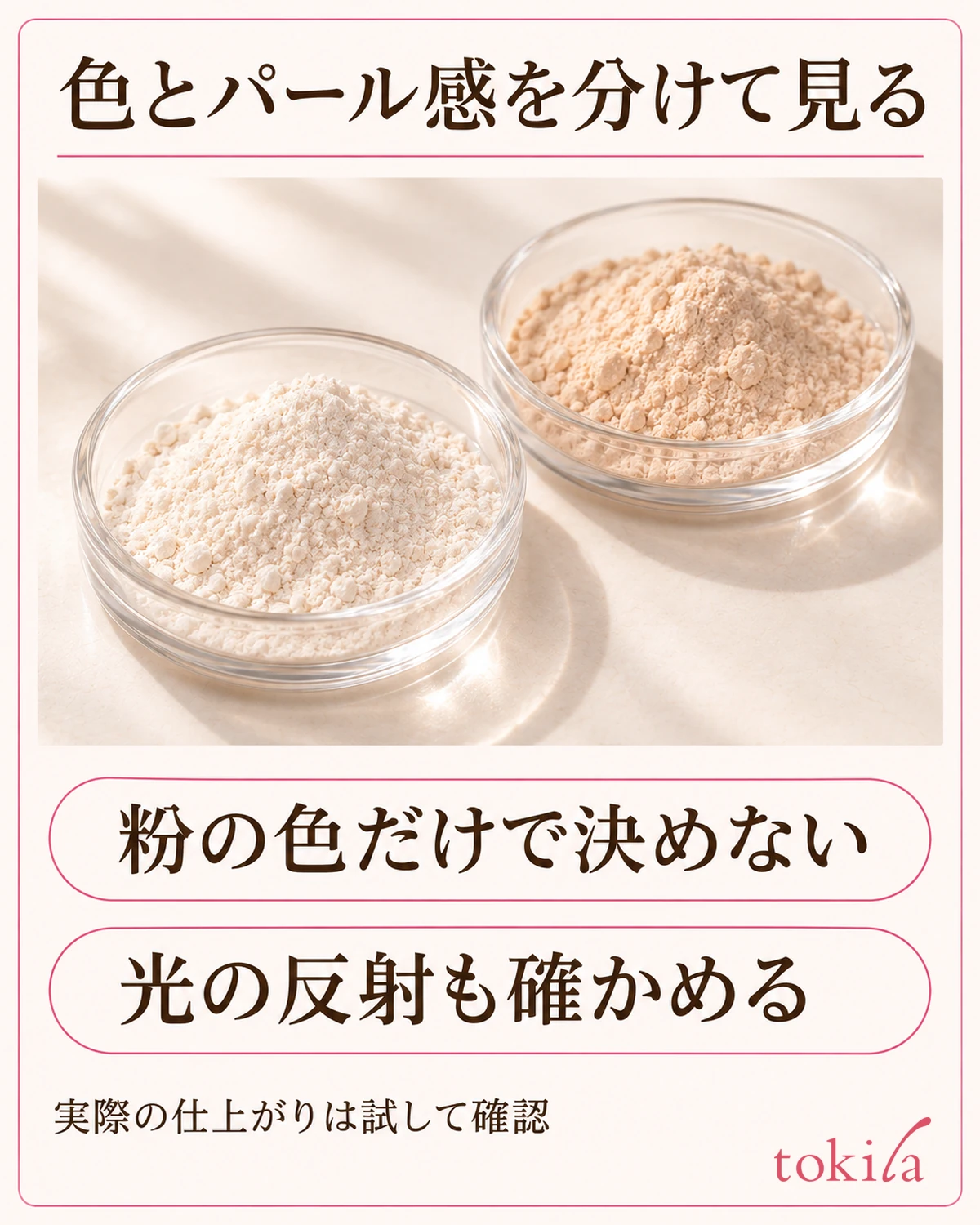
Next, consider color. Do not decide from names such as clear, beige, pink, or lavender alone; also read how much color the product is described as adding. Powder that looks white in its container will not necessarily look equally white on skin. Conversely, the name clear does not guarantee no white cast regardless of amount or base.
If you can try products in a store, follow its hygiene rules and directions for application areas, and compare them in the same lighting. Stronger light on only one option or a heavier application of one makes the reasons for differences unclear. Testing on your hand is distinct from checking the finish on your face or its condition a day later.
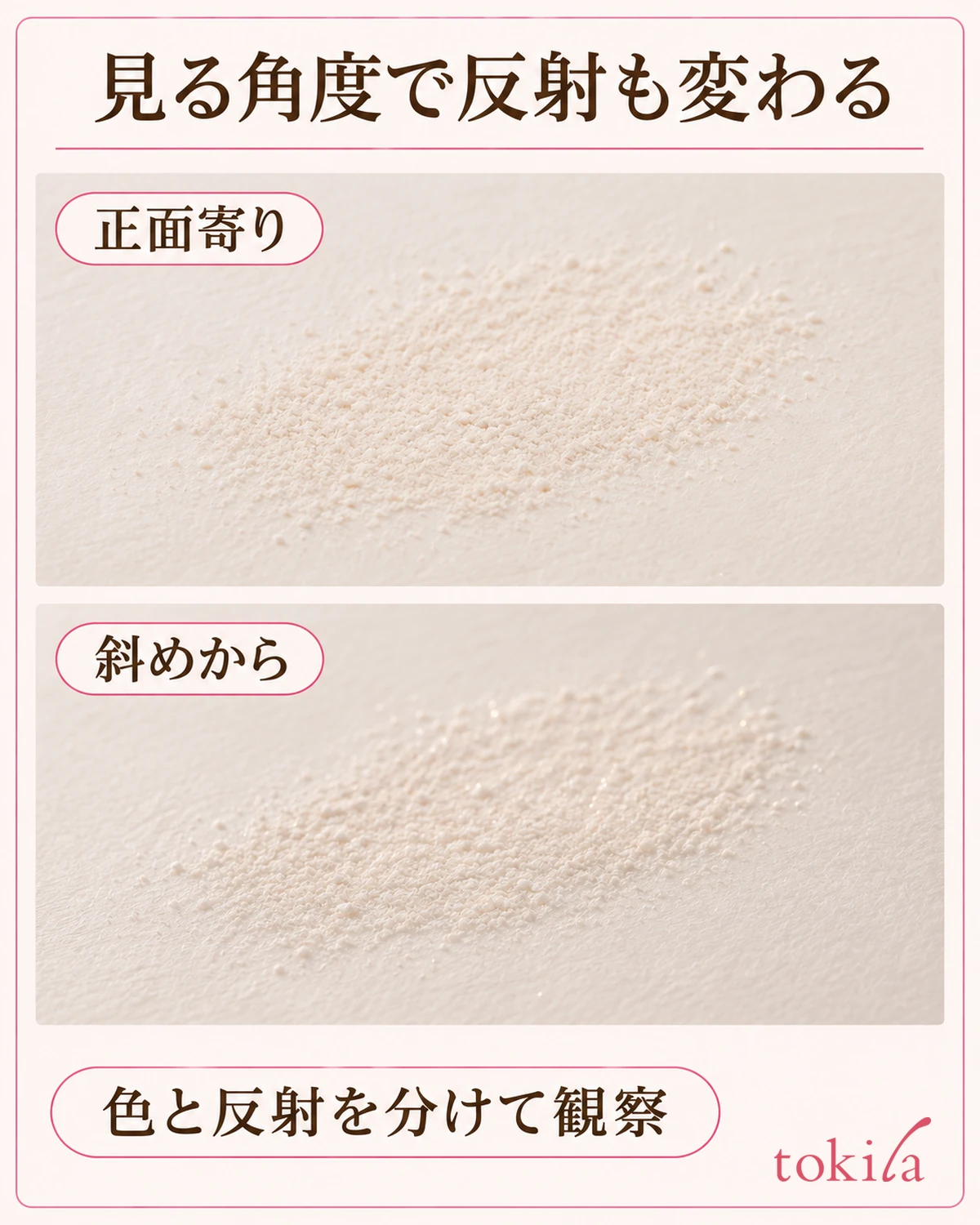
The supplementary photo shows the same surface of powder viewed from near the front and at an angle. It illustrates where to observe fine reflections becoming more or less noticeable as the viewing angle changes. The photo cannot tell you a particular product's shimmer strength or actual color payoff. Use it as a cue to distinguish color itself from reflected light when trying products.
For options that add color, consider checking how brightness and redness look when layered over your current foundation. Even if you like the color name, your choice differs depending on whether you want to substantially change your usual base or slightly adjust its finishing impression. No single shade is right for everyone based only on a skin classification.
Distinguish shimmer that appears as a fine sheen from shimmer with noticeable particles. If you dislike sparkle, reading whether pearl is included and then checking its appearance is a useful approach. Leave anything that cannot be determined from photographs or screen brightness unconfirmed; you do not have to force a ranking between two options.
Specify whether it is for morning finishing or carrying with you
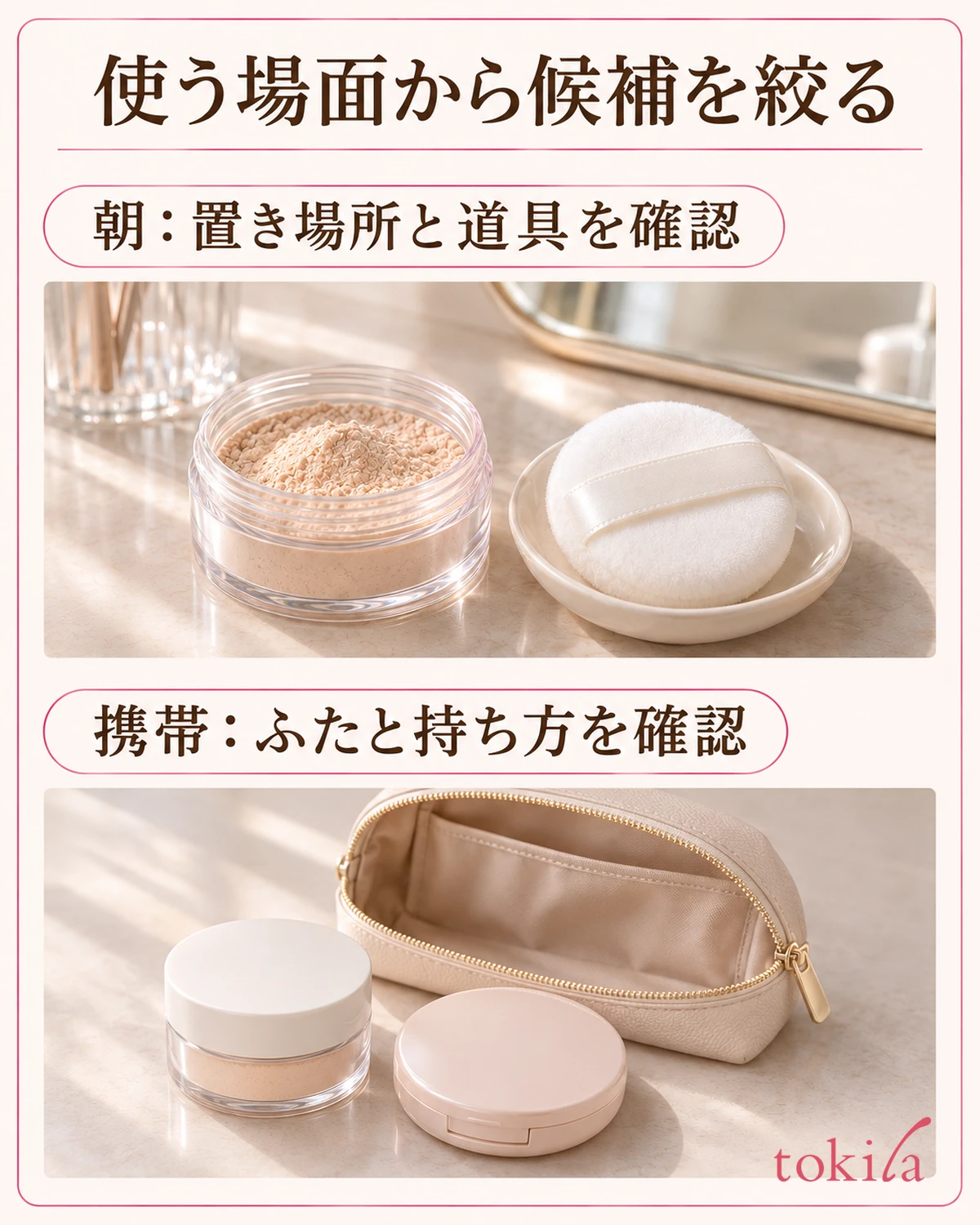
Decide whether you want to finish your morning makeup at home or use the powder away from home. Some loose-powder containers are designed for carrying, but loose particles and a structure suited to portability are separate matters. Do not assume small means suitable; check the lid, inner lid, and powder outlet.
For home use, picture where you can place the container level and return your tools. If a puff is stored inside, check whether a divider separates it from the powder outlet and which parts need replacing after use. Checking the visible structure before buying helps you picture its storage location.
If you plan to carry it, read the portability instructions. Include any conditions such as the order for closing the lid or leaving an included inner lid in place. Do not assume transferring powder into a small container you own preserves the same conditions; if transferring is not confirmed as permitted, do not buy on that assumption.
If you are looking for touch-ups, also read what preparation is needed before adding powder. The pleasant feel during morning application will not necessarily be the same over sebum or sweat. Separating portability from the actual finish makes the decision easier than combining them into one assessment.
If portability is your priority, you can also compare pressed powder again. Do not commit too early to buying loose powder; consider whether it suits your intended situation. The comparison is about fitting into your daily routine, rather than declaring one form always superior.
Check the puff, inner lid, and set you will buy
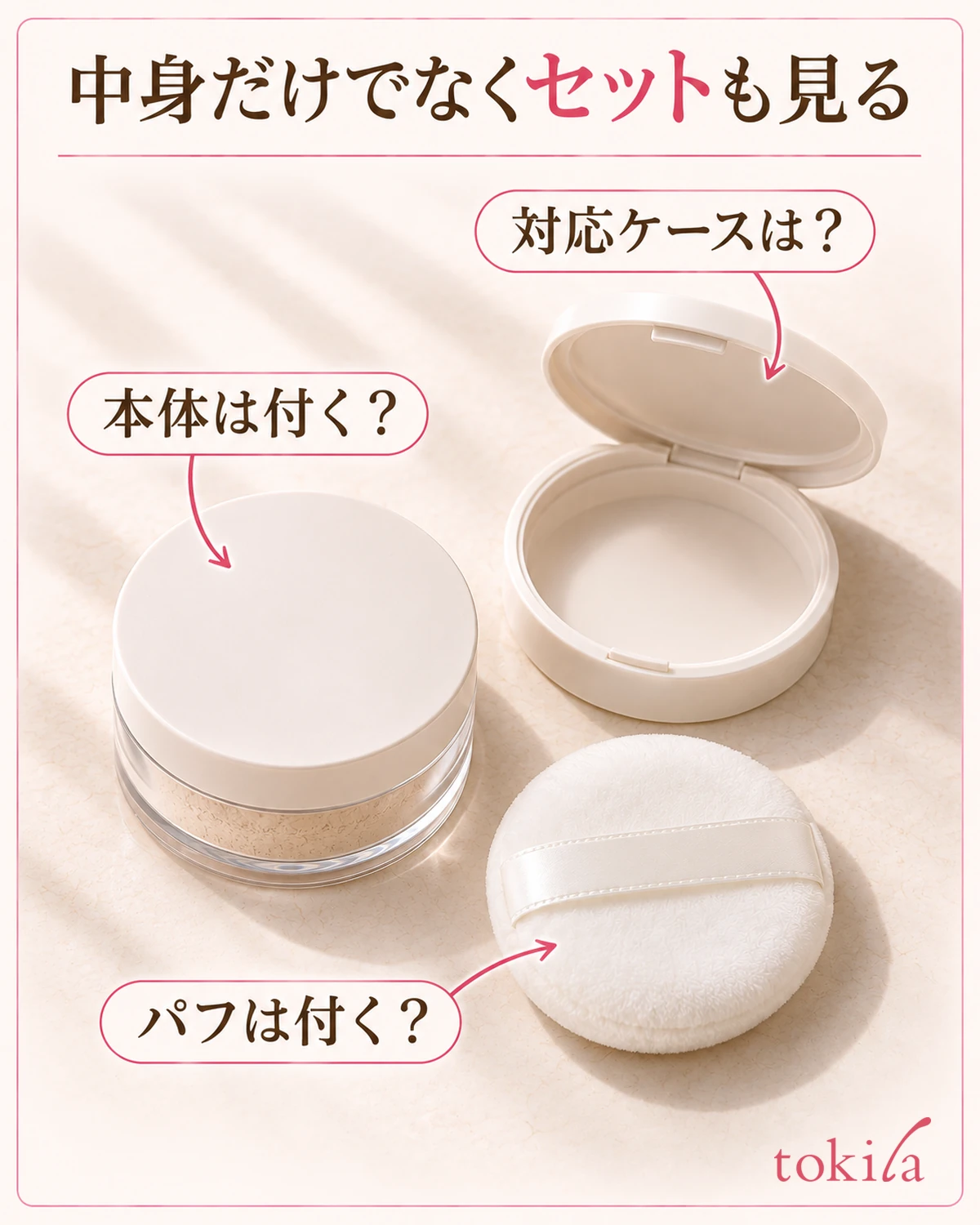
Once you narrow the options, check the set being sold as well as the powder. Whether a puff is included or sold separately, and whether the product comes with a case or is a refill, changes what you need to start using it. When comparing prices, avoid judging one cheaper while excluding its puff or case cost.
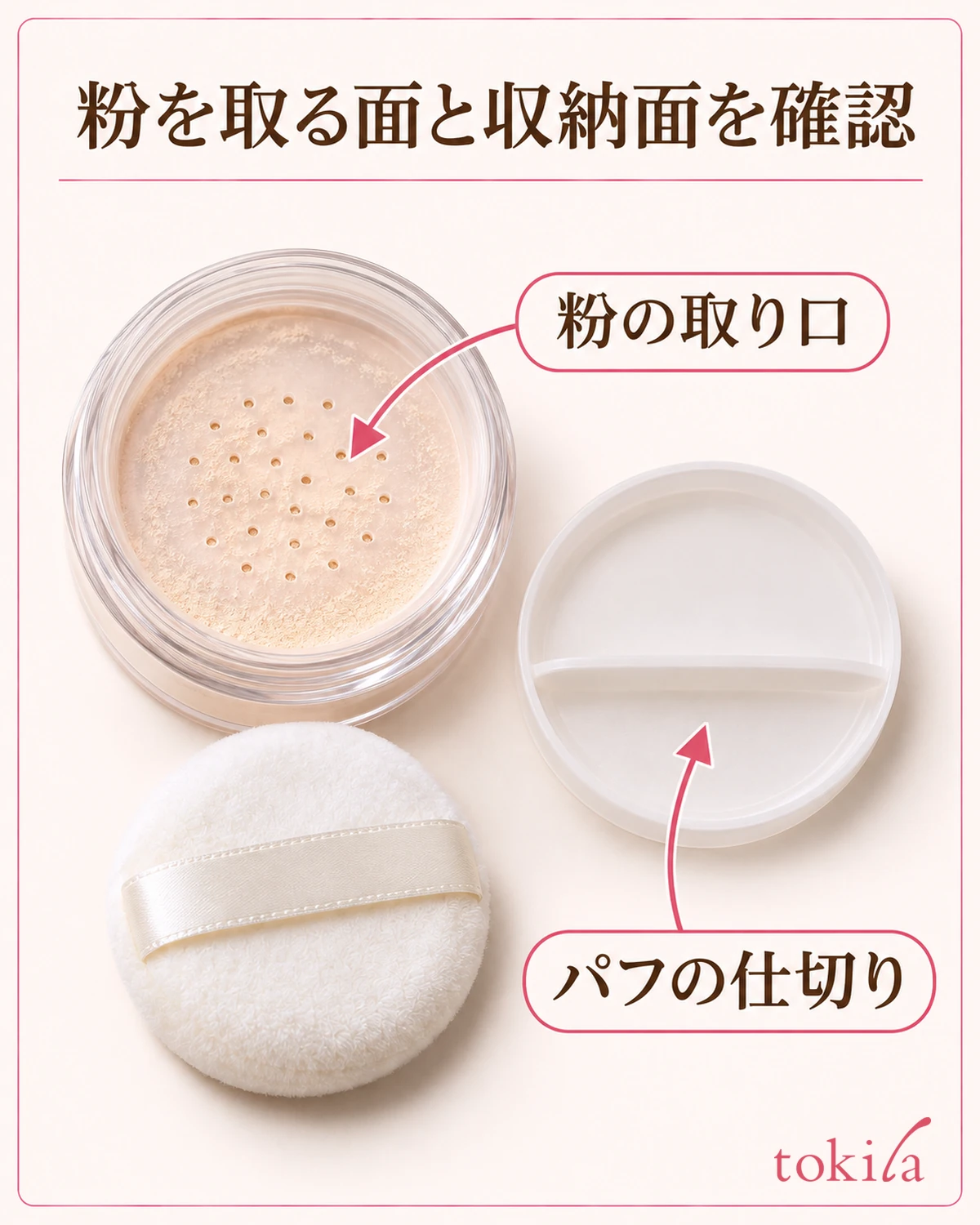
Powder outlets vary, including perforated inner lids and mesh. Read the specified tools and how to pick up powder with them. Avoid assuming from appearance alone that more holes give more even pickup or that mesh should be pressed into. Structural differences are a prompt to check handling instructions.
The supplementary photo separately shows the powder outlet and the divider where the puff rests. It helps identify the pickup surface and storage surface, rather than ranking two kinds of container. Use it to consider whether opening the lid adds parts to handle or whether you need a separate place for tools.
If you want to use a brush, check whether the option's instructions allow one. Rather than assuming your brush will work, include powder pickup and tool care in your decision. A tool's price or bristle type alone cannot guarantee the finish. Choose a combination you can handle comfortably.
For a refill, match the compatible container's name and specifications. Even within the same series, compatibility can differ with capacity or release timing. When you have an older container, take particular care to confirm the powder and case combination rather than choosing because they look similar.
Compare two options on the same terms and retain one reason to buy
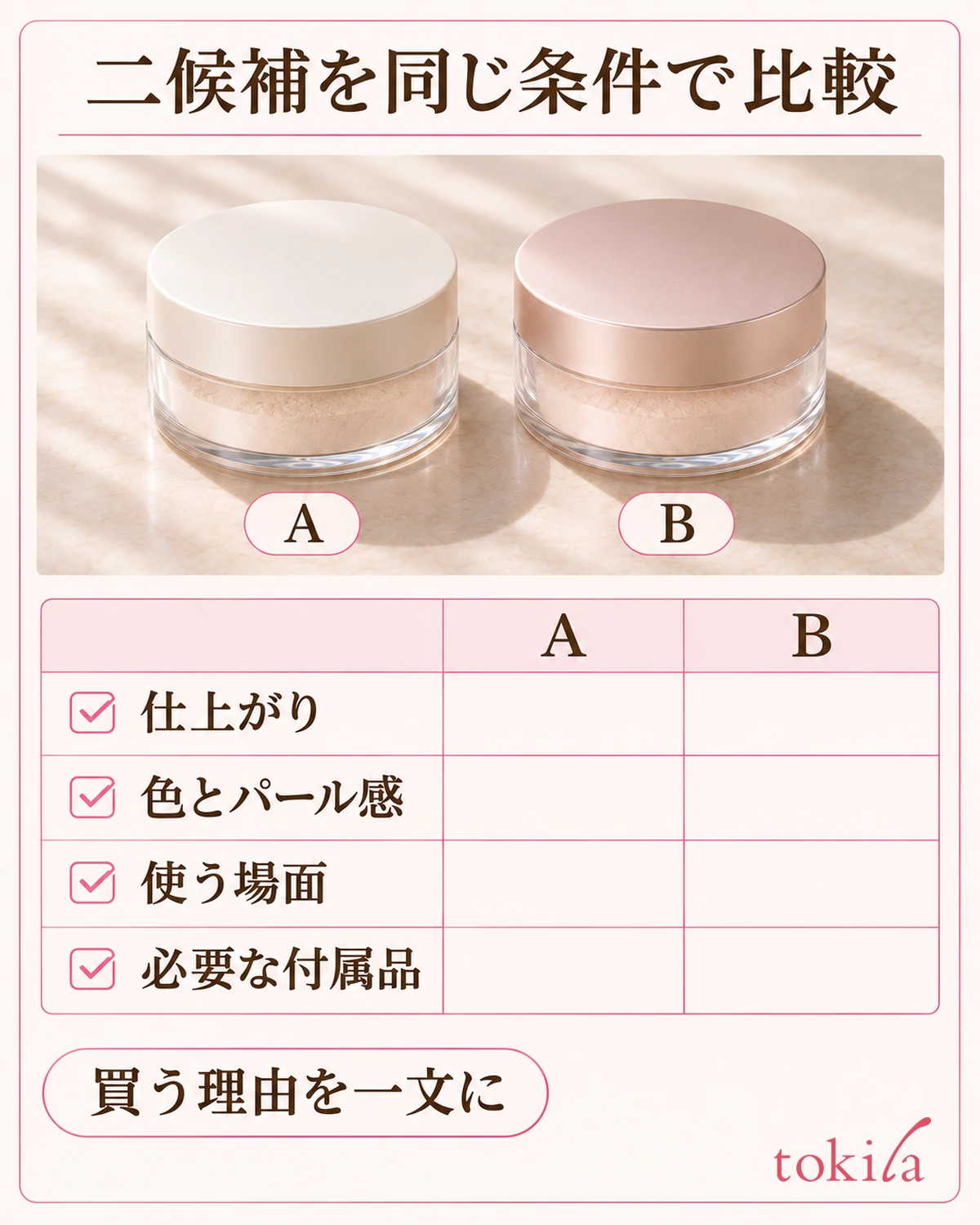
Finally, compare two options using four items: finish, color and shimmer, intended situation, and required accessories. Comparing only capacity for one and only color for the other leaves uncertainty. Reviewing the same items and narrowing toward your original purpose helps you imagine starting to use the product.
For example, if you want to preserve cheek glow in your morning finish, an option would be one described for that finish, with color payoff close to your preference and convenient dispensing at home. If you plan to use it away from home, add the closed-lid condition and portability requirements. Capacity alone does not determine ease of use for you.
Write down questions that remain because you could not try a product. Being specific, such as color layered on skin not checked or brush compatibility unknown, shows what you need to confirm before deciding. Do not fill gaps by applying strong benefit claims or someone else's skin results to yourself.
If powder you already own looks white or powdery, before replacing it you can also check How to Avoid Applying Too Much Face Powder. Considering a new purchase separately from adjusting amounts and tools makes it easier to reconsider a recurring problem.
State your reason to buy in one sentence, such as: it can add my preferred shimmer to my morning finish and works with the included puff. Start by following the product instructions, without changing tools, amounts, and layering all at once. Being able to revisit the conditions you chose makes your next purchase easier to identify too.