When choosing a cleansing gel, do you assume that clear, bouncy-looking products all contain the same thing? Even when the gel form looks similar, changes during massage, how moisture is handled, and the steps through the end of cleansing differ by product.
First, decide what makeup you want to remove and how you get ready at night, then compare about two options that meet those conditions. This article organizes what to look at before buying a makeup-removing gel. For steps to use a product you already own, see How to Use Cleansing Gel.
1. Read the purpose and texture description rather than judging clarity
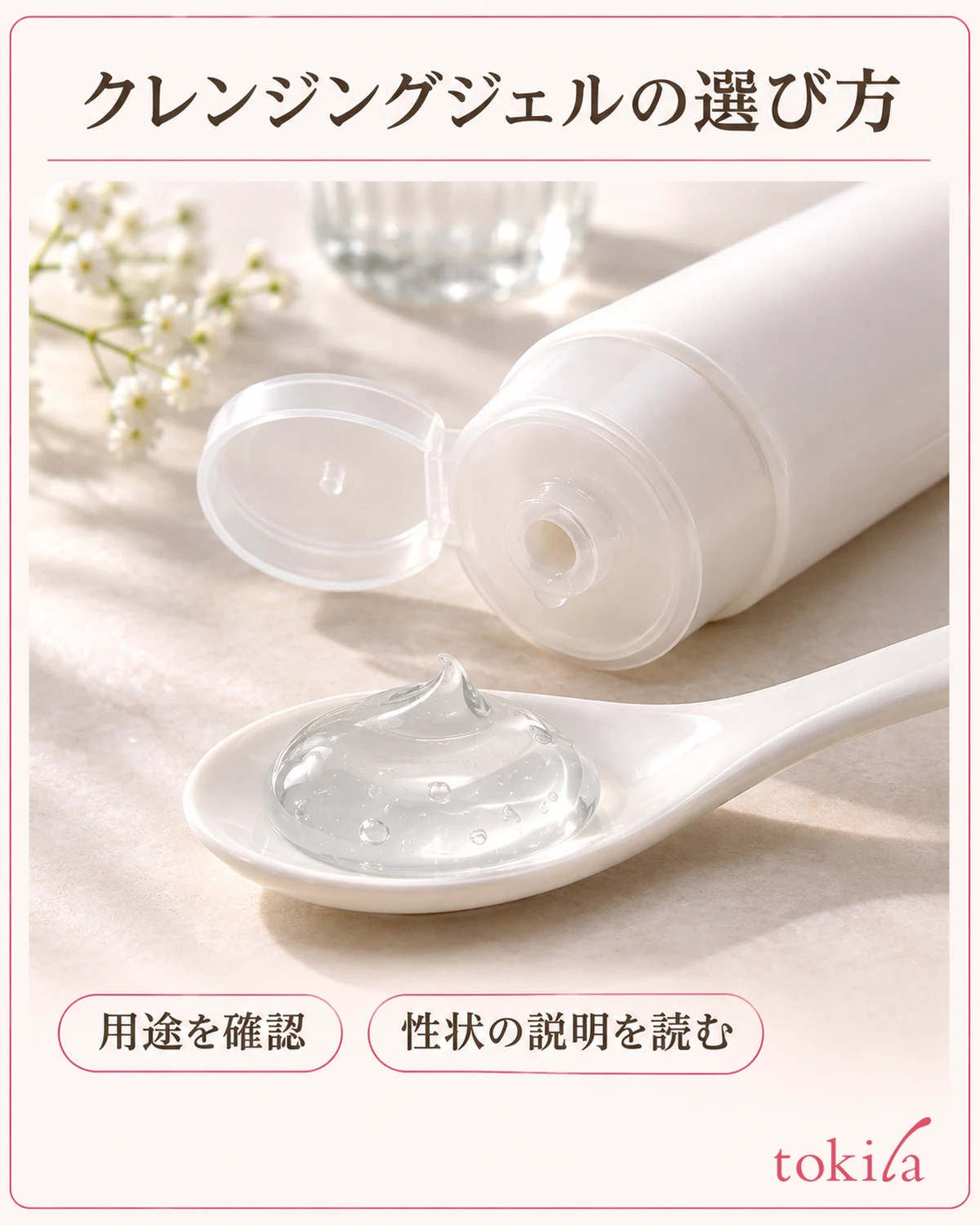
First, read the intended use, such as "makeup remover" or "cleansing product." Facial washes and moisturizers also come as gels, so do not choose by the container shape or part of the name alone. If you want a gel facial wash, reconsider the options separately from a product for removing makeup.
Once you confirm it is a makeup remover, read about its consistency before and after working it in. Some are described as changing from gel to oil, others into a smooth liquid; products with the same name do not all behave alike. Read the description of that change as information for choosing that particular product.
You cannot tell from appearance alone that a clear gel contains no oil or a milky one cleans more strongly. If you want to know about oil content, check formulation information separately. You do not need to classify formulas from part of an ingredient list and rank how easily they remove makeup yourself.
If you can try the texture in a store, follow the permitted method and testing area, and observe its springiness just after dispensing and how easily it moves when spread. How it feels on your hand is separate from whether it removes makeup from your face. Pleasant spreadability alone is not an assessment of cleansing power or strain on skin.
In your notes, write why you kept an option: not just "clear" or "white," but "described as changing when worked in" or "I like a watery feel." Once your texture preferences are clear, you can move on to compatibility requirements rather than continuing to add similar-looking products.
Even if an option says it "changes into an oil," that does not mean you should keep rubbing for a long time until it changes. Before buying, check whether it explains what change to look for and when to move on to rinsing. If the change is unclear, leave that item marked unconfirmed in your comparison.
2. Check your usual makeup together with what the gel can remove
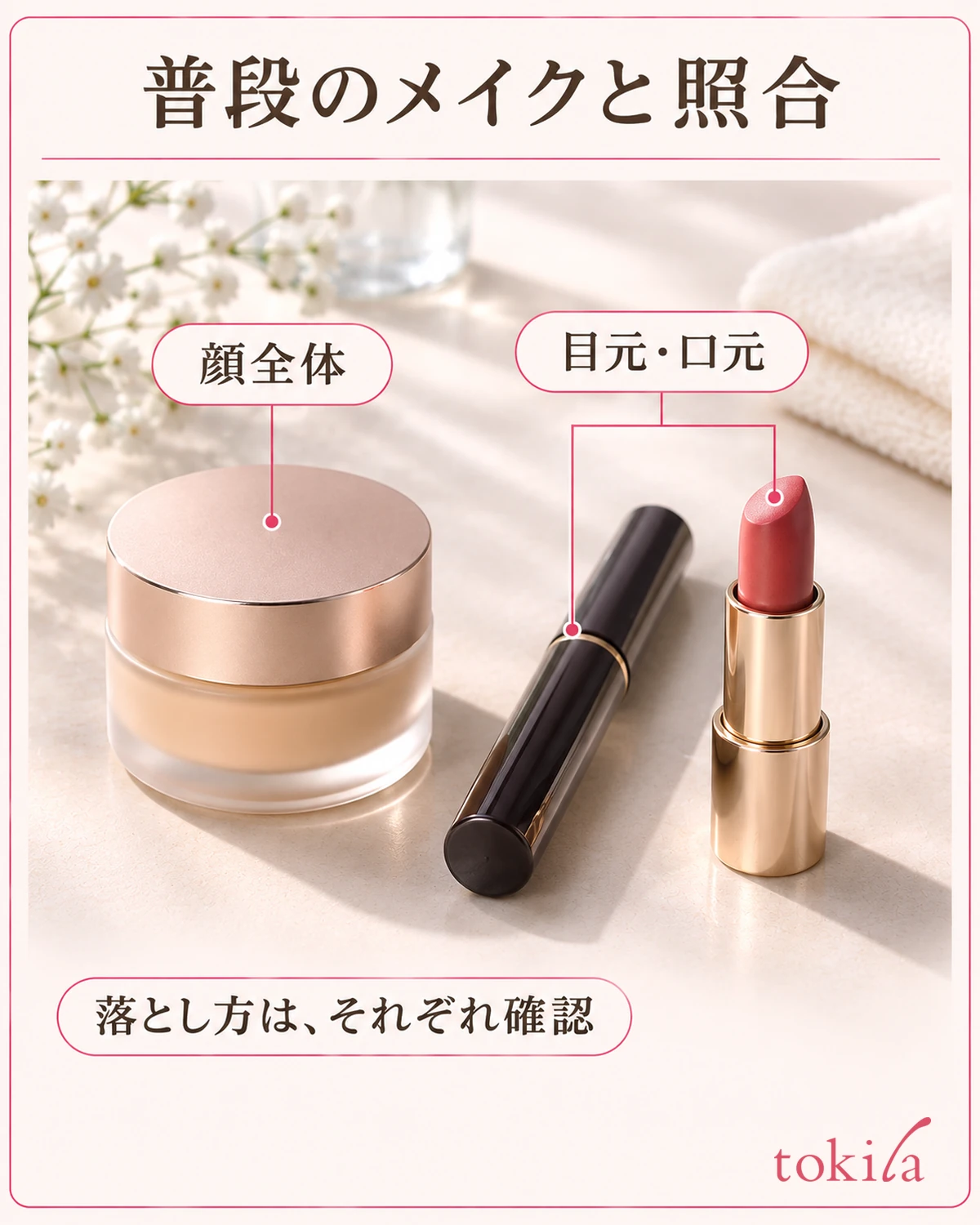
Next, list your frequently used sunscreen, foundation, eye makeup, and lip makeup. Choose one usual combination, then check whether the gel option can handle it. Using only occasional heavy makeup as your standard can make it harder to choose the feel and steps you want every night.
Do not decide from form alone that gels are only for light makeup or that anything turning oily can remove everything. Compare the instructions for the whole face with removal instructions for stubborn mascara and lip products, and separate areas requiring another method, such as a targeted remover.
Even if a product says it works on waterproof makeup, do not extend that to removing every cosmetic under the same conditions. Read what products and methods the statement covers, and compare the instructions for your own makeup too. If you have lash extensions, check compatibility conditions including the adhesive.
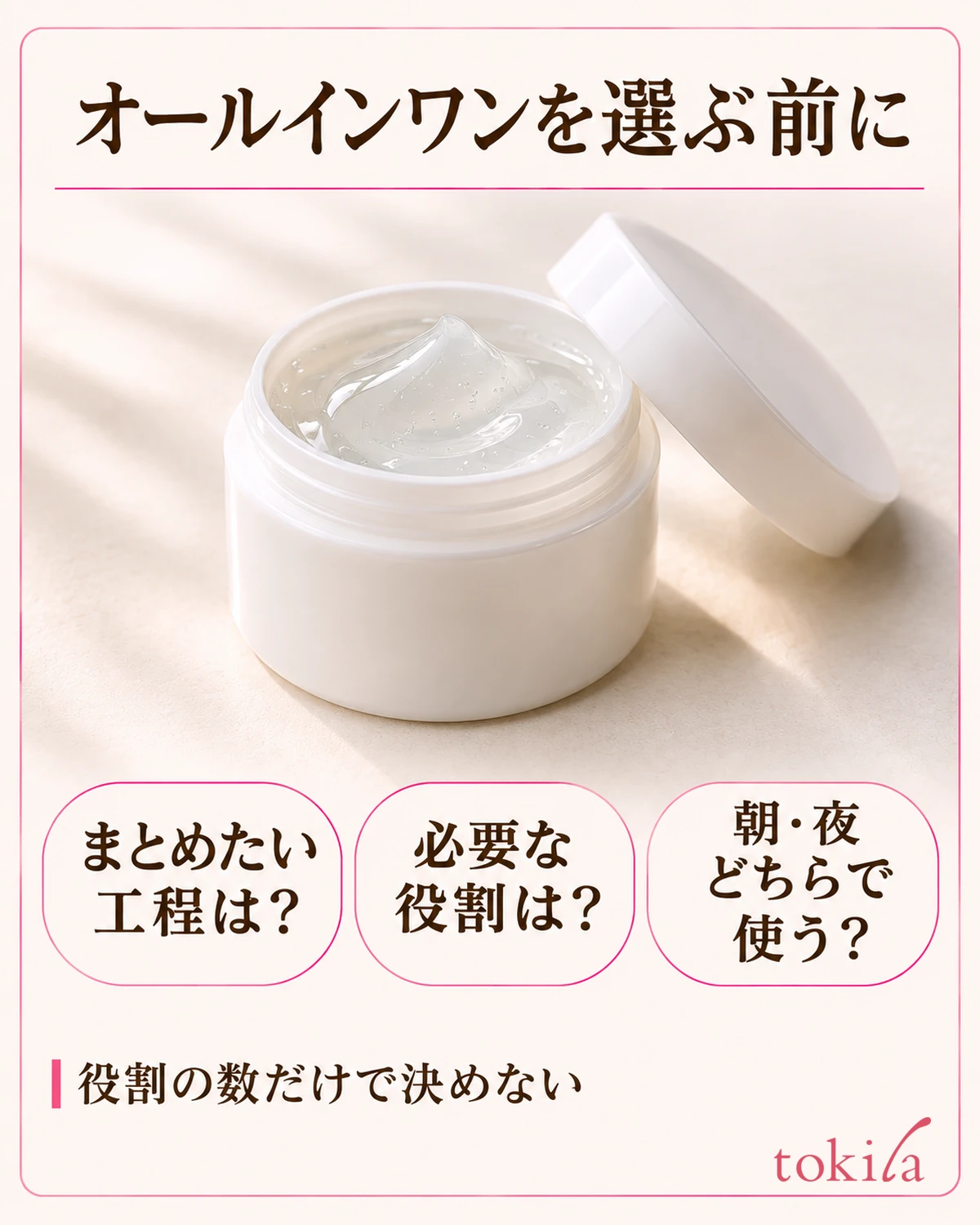
The supplemental photo shows a raised portion of gel dispensed from a tube and its thinly spread edge under the same light. It is a close-up for observing its shape, not a sample of a particular product's amount or cleansing performance. Separate how bouncy it looks from what makeup it can remove.
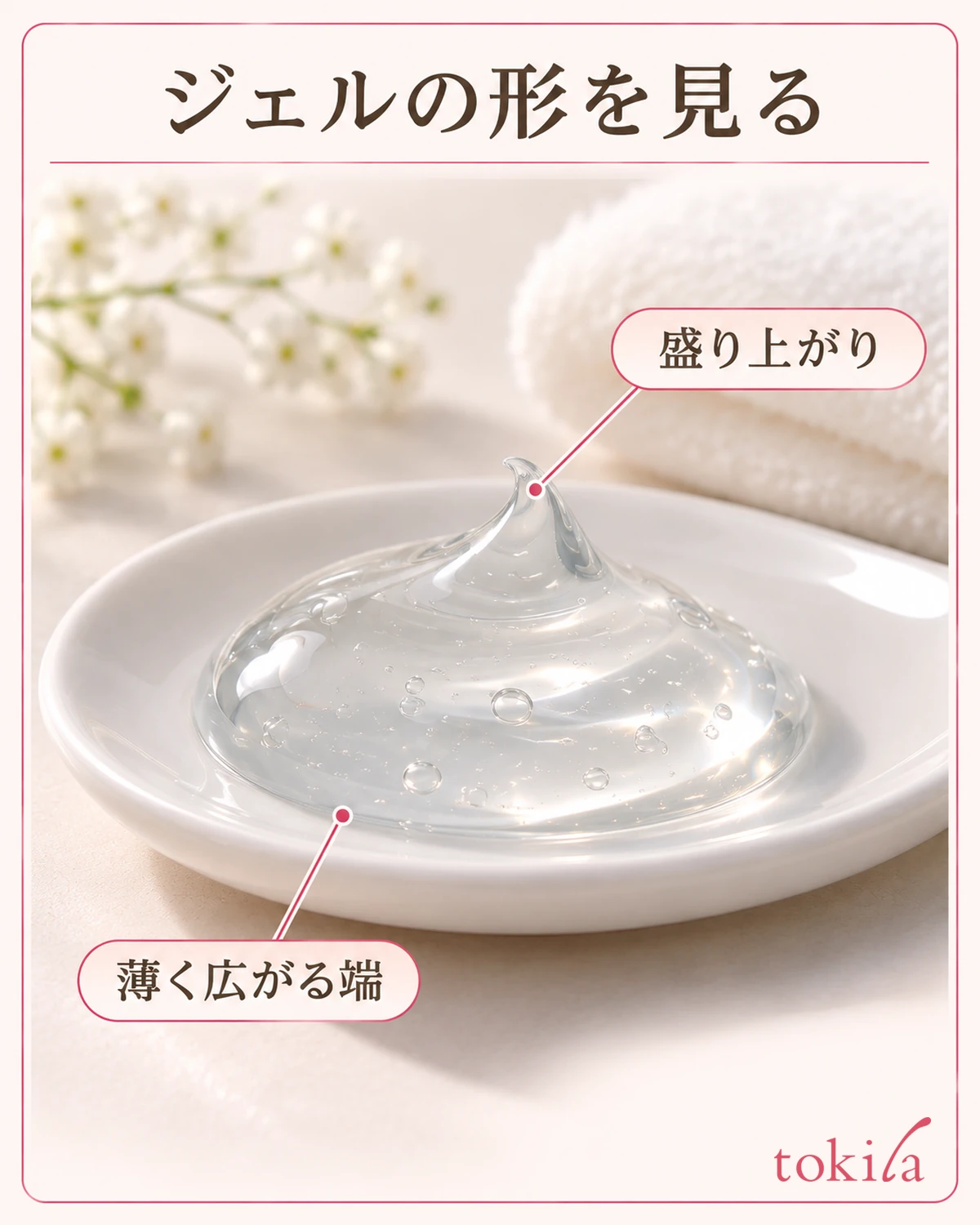
Do not fill in untested removal performance with imagination; leave unknown items unconfirmed. Rather than forcibly rubbing makeup off to suit the gel you chose, compare whether you can organize your nightly routine including any other products needed.
For example, if weekdays involve only sunscreen and base makeup while weekends include stubborn eye makeup, you can write out two separate routines. Instead of insisting on one product for every day, separating typical days from days needing extra products makes the gel's intended role clearer.
3. Compare whether dry hands are needed with where you will use it
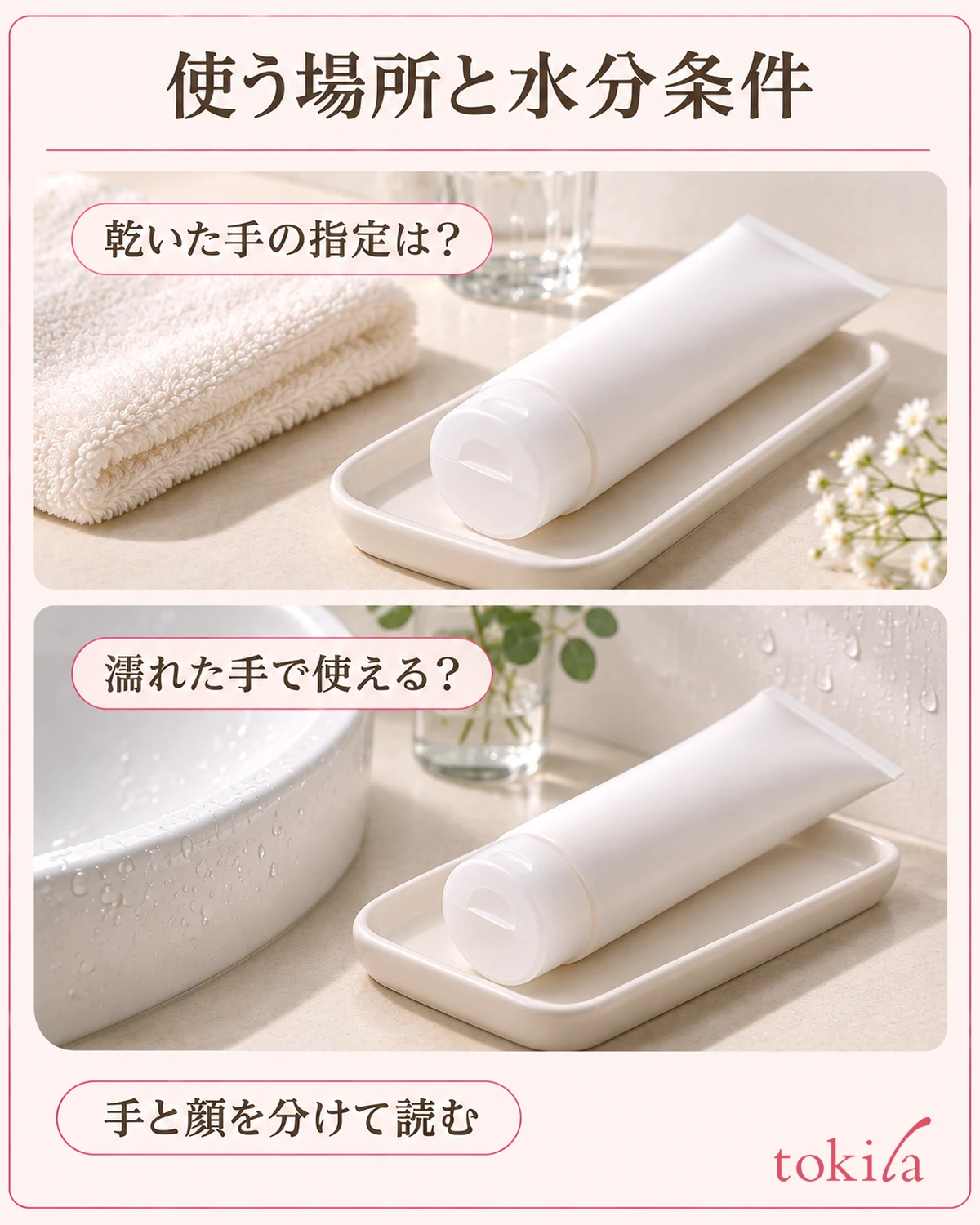
Picture whether you want to remove makeup at the sink after coming home or during a bath. Check whether the option requires dry hands or a dry face. Some products allow wet hands, but this is not a condition shared by all gels.
Read the requirements for moisture on hands and on the face separately. Instructions allowing wet hands do not alone mean you can apply it directly to your face after a shower. If there are additional conditions concerning the makeup's state, include them in your comparison.
For bathroom use, consider whether you can comfortably add a drying step and have somewhere to place the container. Where a product can be used and stored may differ, so consider taking it out and putting it away each time. Even a product requiring dry hands may fit easily if you remove makeup at the sink first.
Do not reinterpret "can be used with wet hands" as "you can add water to the container." Do not choose on the assumption of diluting it or mixing it with another cleanser; check whether you can use it as supplied under the stated conditions. Do not make improvised handling near the end of the container a purchase requirement either.
If comparison reveals that the instructions do not suit where you use it, you can reject that option for that reason. Choosing one whose moisture requirements you can follow reduces uncertainty after purchase more than skipping nightly preparation just because you like the texture.
4. Connect your evening steps through rinsing and any following facial wash
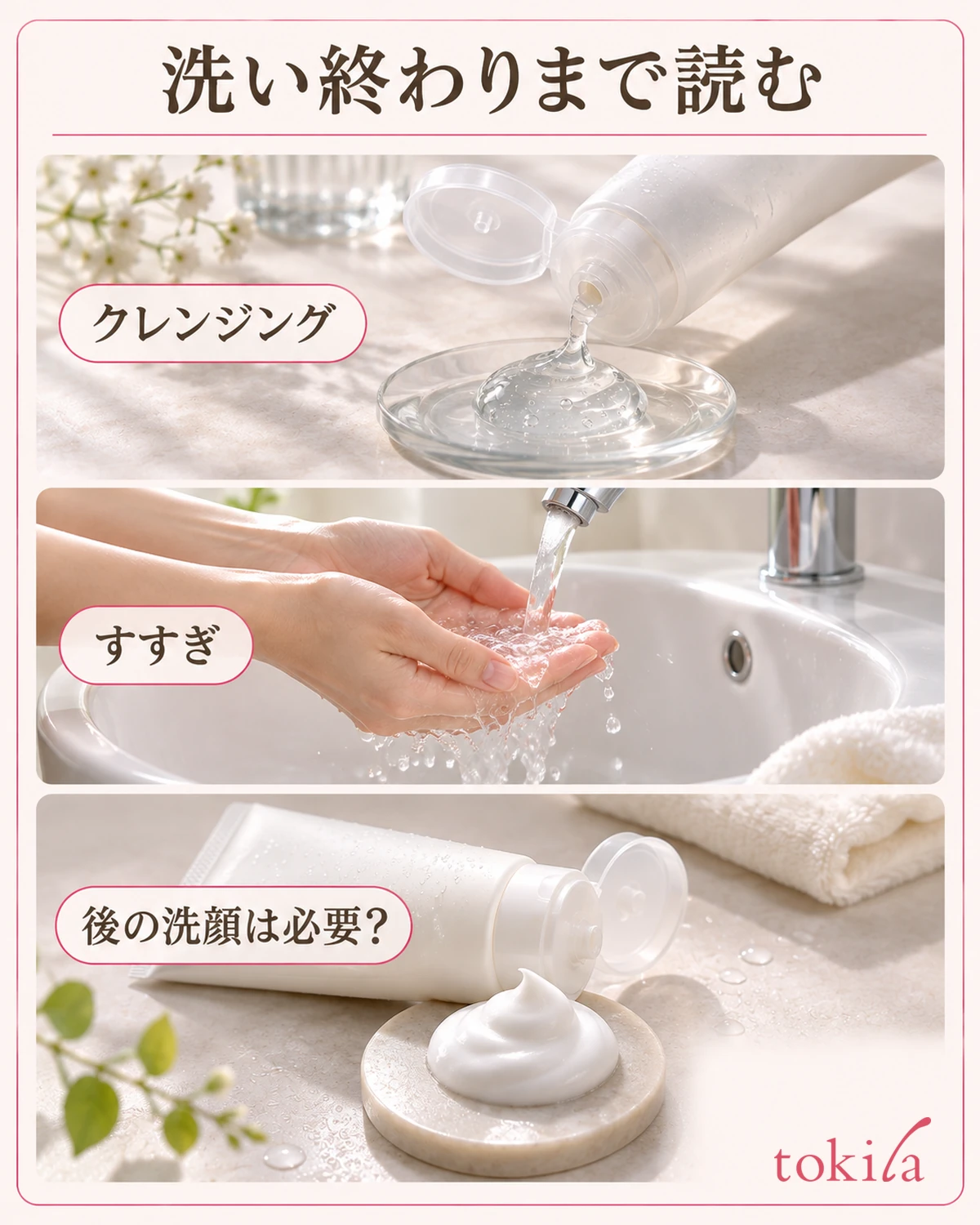
Read the instructions through the end to see what happens after working the gel in. Check the whole process through finishing, including rinsing with water or lukewarm water and whether a facial wash is needed afterward. Do not assume a gel requires no second cleansing step.
For options ending with the cleanser alone and those requiring a subsequent facial wash, lay out the products you would actually use. Considering one as a single product and the other together with facial wash reveals differences in purchases and nightly steps. Fewer steps alone do not guarantee a product will suit your skin.
Descriptions of the after-wash feel also help you choose, but do not assume a moist feel always means residue or that a fresher feel means better removal. Read your preferred feel, removable makeup, and product-specific need for facial washing separately.
The supplemental photo separates the placement of the gel tube and facial wash, leading toward the rinsing basin. It does not instruct you to mix them or always use both in succession; it distinguishes what to prepare when choosing a product requiring subsequent facial washing. Picture your evening movements, including where items will sit.
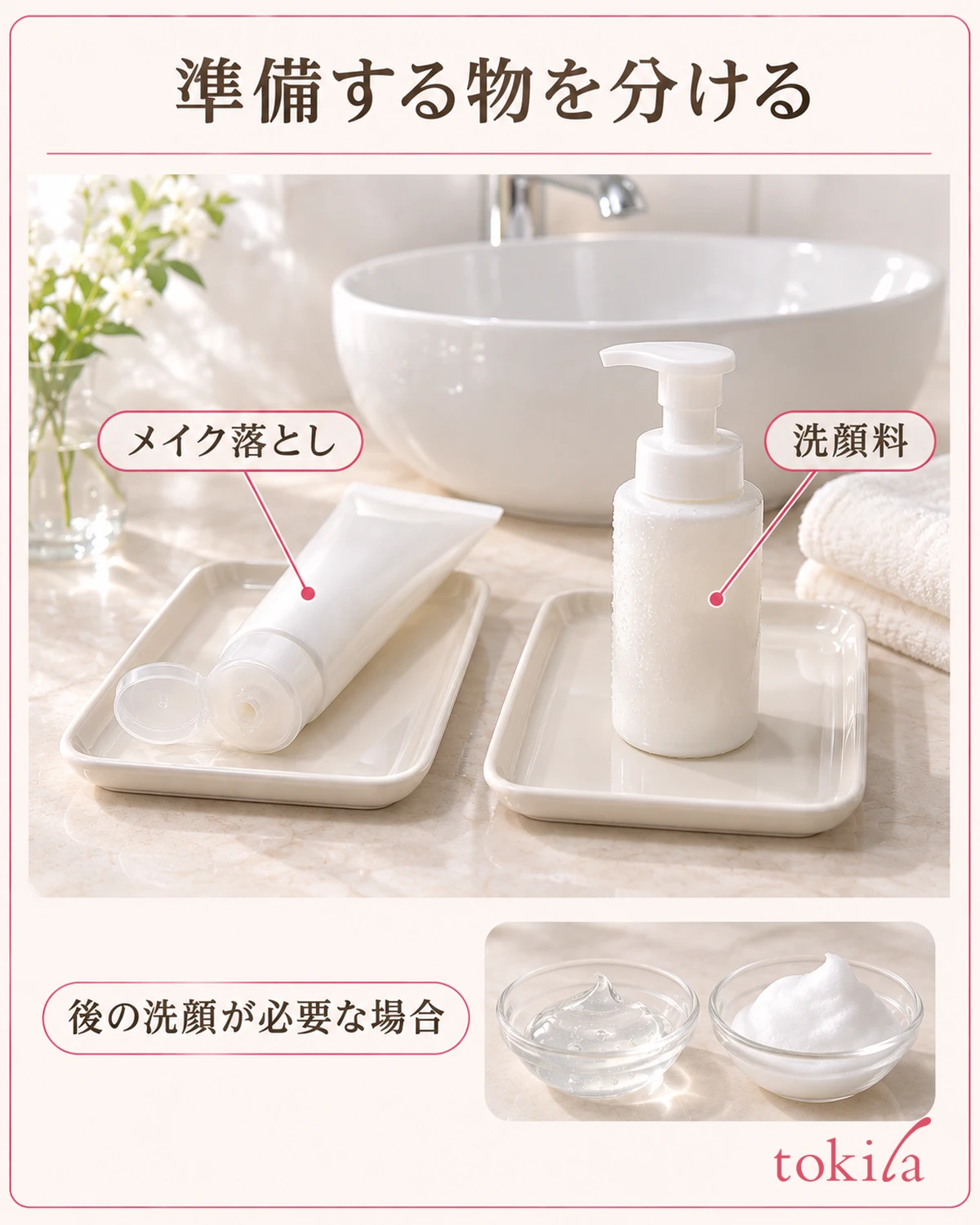
If you want to keep using your current facial wash, check whether it is needed after the new gel too. Hold off on choosing an option whose instructions you cannot find until you know. Rather than adjusting after starting by rubbing harder or washing repeatedly, keep products with clear required steps.
Points that may confuse you in the first few uses can also become pre-purchase checks. If you might forget moisture requirements, keep the outer box so you can reread the necessary amount and rinsing method. If you save a photo of instructions for yourself, organize it to avoid mixing in another product's amounts or conditions.
5. Narrow the final two options by amount, feel, and steps
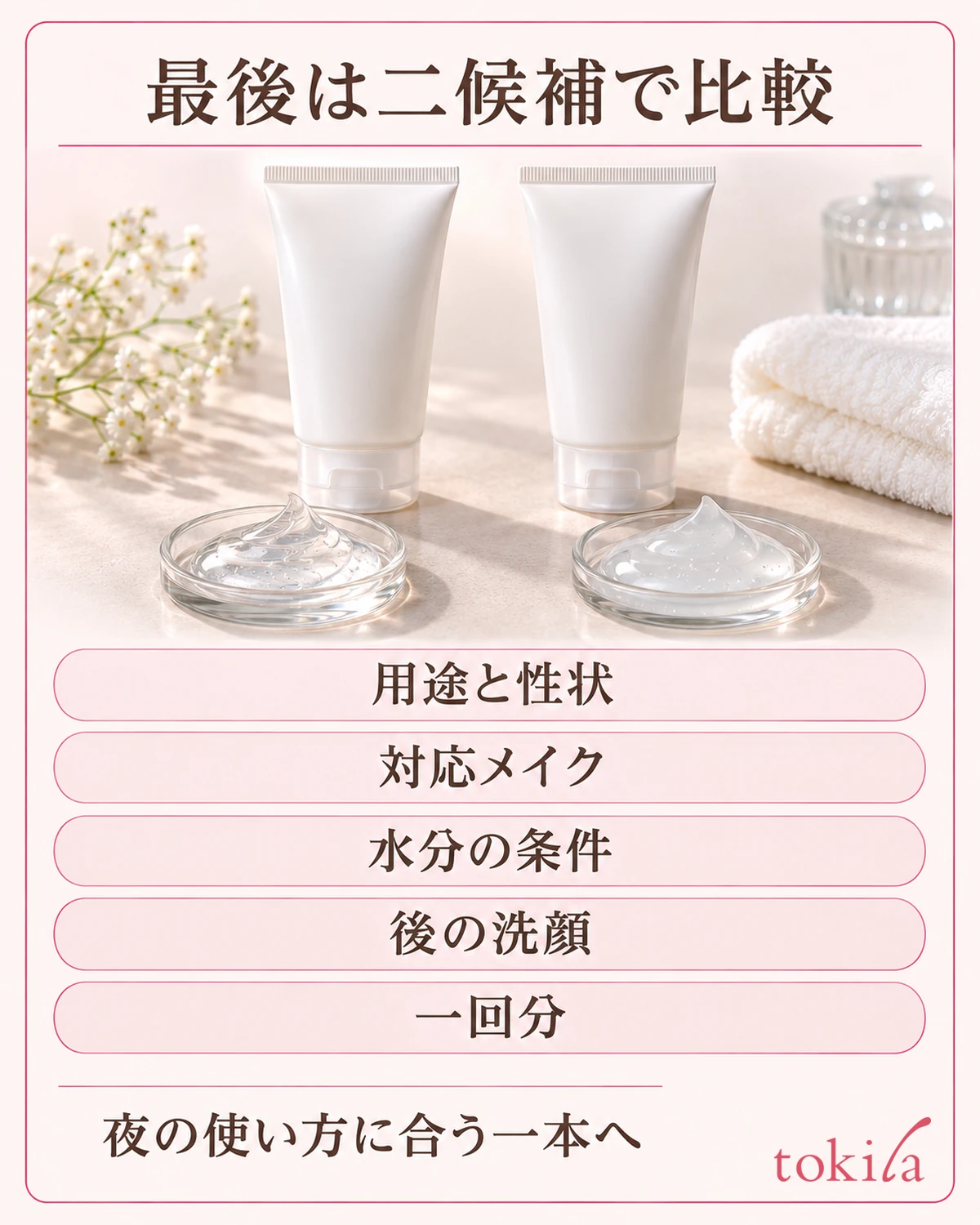
Finally, ask both options the same questions. Compare five items: purpose and texture, compatible makeup, moisture on hands and face, subsequent facial washing, and amount per use. Rather than comparing only one product's size and price and only the other's feel, check in order whether the necessary conditions are met.
Read that product's indicated size or number of pumps per use. Do not transfer an amount remembered from another product; compare on the assumption you will use the instructed amount. Tube openings differ too, so equal dispensed lengths do not ensure equal amounts. Do not make reducing the amount a condition of saving money.
When comparing prices, distinguish full products from refills and separate any needed targeted remover or facial wash. If the number of uses is not stated, do not calculate how many days it lasts from volume alone; limit the comparison to what can be established. A large container does not always fit your current frequency of use.
If both meet your conditions, return to what you wanted to change. Choose the option whose place in your evening you can express in one sentence, such as "remove makeup first with dry hands after coming home" or "shorten the steps after rinsing." Fragrance and feel can also be valuable reasons to keep using it.
Fragrance-free or no-particular-ingredient labels do not guarantee nobody will experience irritation. If your skin is abnormal or redness or itching occurs during use, stop using the product and follow its precautions. After purchase, reread the conditions on the box and connect them to actual use.