When buying brow mascara, consider not only shade names and hair color, but also the color payoff you want and where you want to move the brush. Understanding its role alongside your brow pencil makes it easier to narrow down what you need from a new tube.
Here, we organize what to look at before buying tinted mascara specifically for brows. We leave basic brow drawing and adjustments with a product you already own to related articles, focusing on matching the descriptions of your options to how you plan to use them.
1. Decide whether to change hair color or fill gaps first
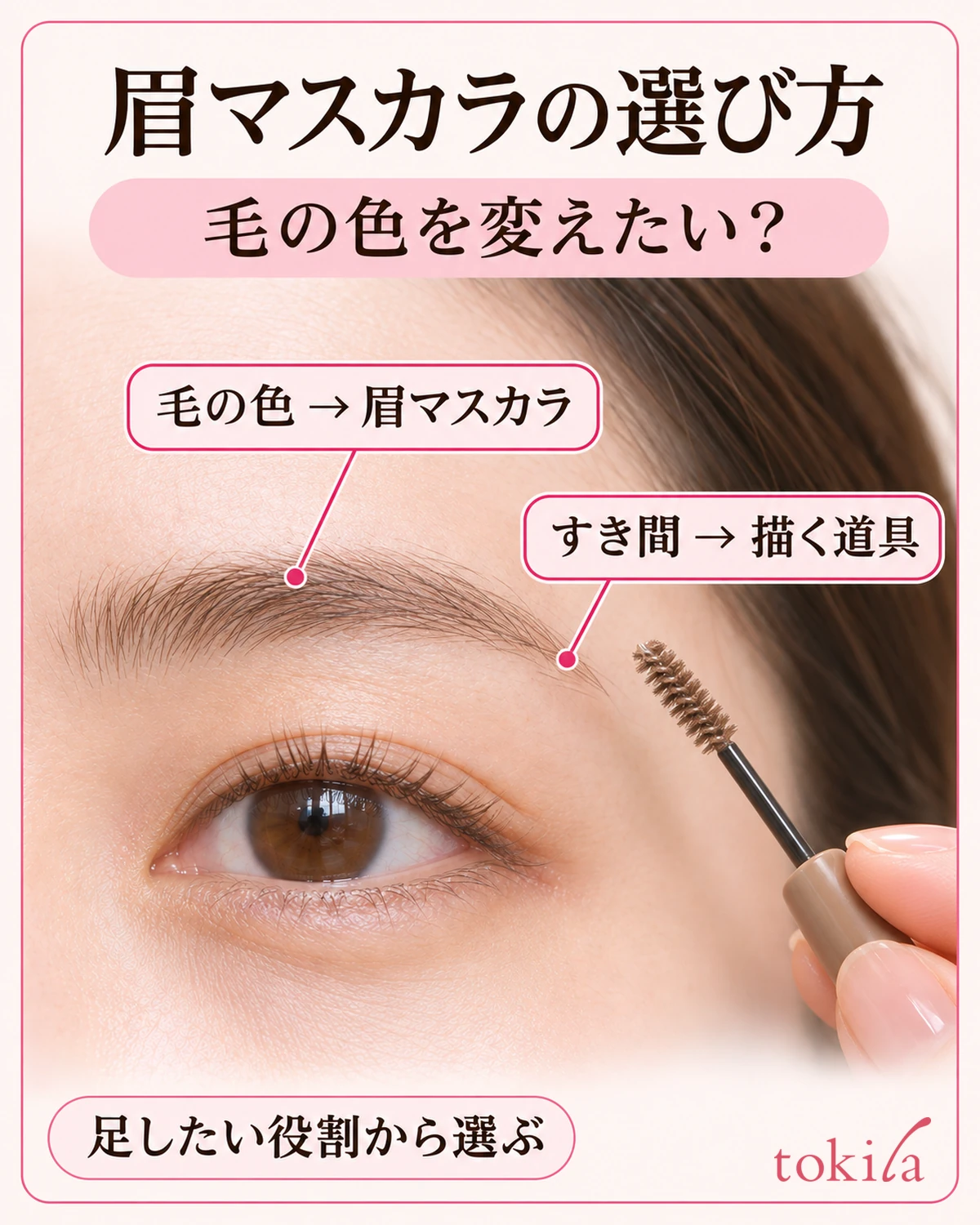
Brow mascara is an option for applying liquid to existing brow hairs to adjust their color and finish. Before buying, distinguish whether the hairs look dark or whether gaps without hair bother you. If you only want to draw short lines on the skin, considering a product with another role, such as a pencil, helps clarify your reason for buying.
Arrange the hairs in front of a mirror and choose one area to change: the front, middle, or tail. Instead of stopping at “I want lighter brows overall,” connect your words to the target, such as “I want to soften the darkness of the middle hairs a little” or “I want to add a reddish shade to my usual brows.” You do not need to redraw all your brows.
A clear liquid that arranges hair direction and a tinted brow mascara do not have the same role. Even when the tubes look similar, read whether the product changes color or adjusts the finish. Lash mascara can look similar too, but do not infer that it can be used on brows from the container shape.
Even shades that make hairs look lighter do not necessarily bleach the hairs themselves or change their color after washing. What you are choosing here is a brow makeup cosmetic. Do not select an option expecting a change like hair dye; check both how the color looks while worn and how to remove it at night.
If the tube you already own does not deposit color easily, separate pre-purchase comparison from reviewing application. Rather than using more liquid as your criterion for replacing it, consult what to check when brow mascara does not deposit color and reread the role of your current product first.
2. Read descriptions of brightness, undertone, and color payoff, not only shade names
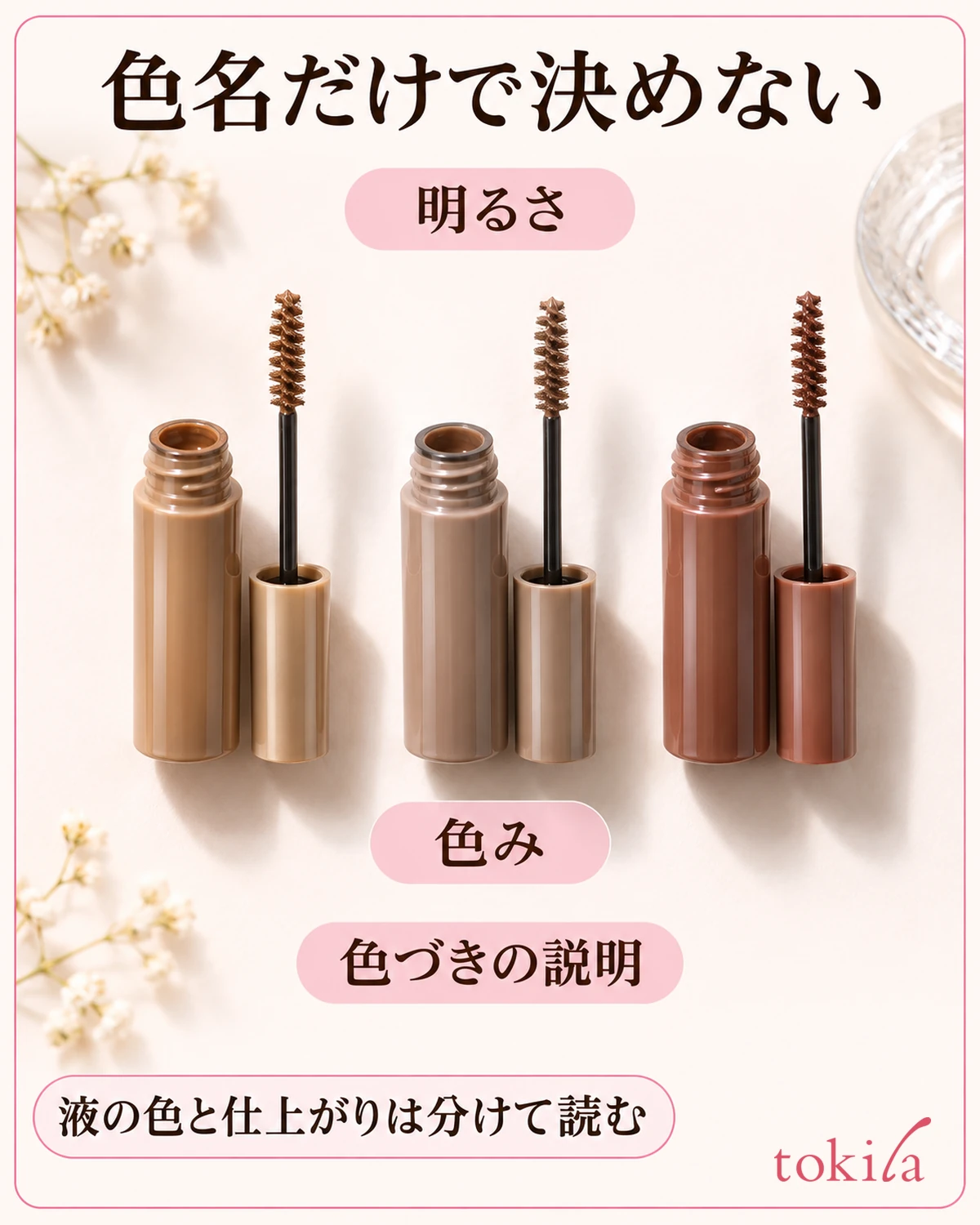
When comparing shades, first separate brightness from undertone. After checking whether a shade leans light beige or subdued brown, look for differences such as red, yellow, or gray tones. The same “brown” name does not ensure the same color across products. Read each option’s description rather than substituting by number alone.
Guidance by hair color can be a starting point, but do not fix a single rule such as always choosing a set number of shades lighter than your hair. Your choice depends on whether you want to retain your current hair color or enjoy a different impression. Return your bangs to their usual position and consider your brow pencil and eye makeup colors too.
Even with the same undertone, check how much coverage of dark brow hairs the described finish offers. A pale liquid alone does not establish that it will look pale after application. Distinguish package color, the liquid’s own color, and examples of the finish; knowing what you are looking at can reduce uncertainty.
The photo is an example for viewing tips coated with brownish liquid and the container surface up close. It distinguishes where to look because the outside and the liquid inside are not always the same color. The pictured liquid is not a real product swatch and should not be used to conclude that buying this color will produce the same brows.
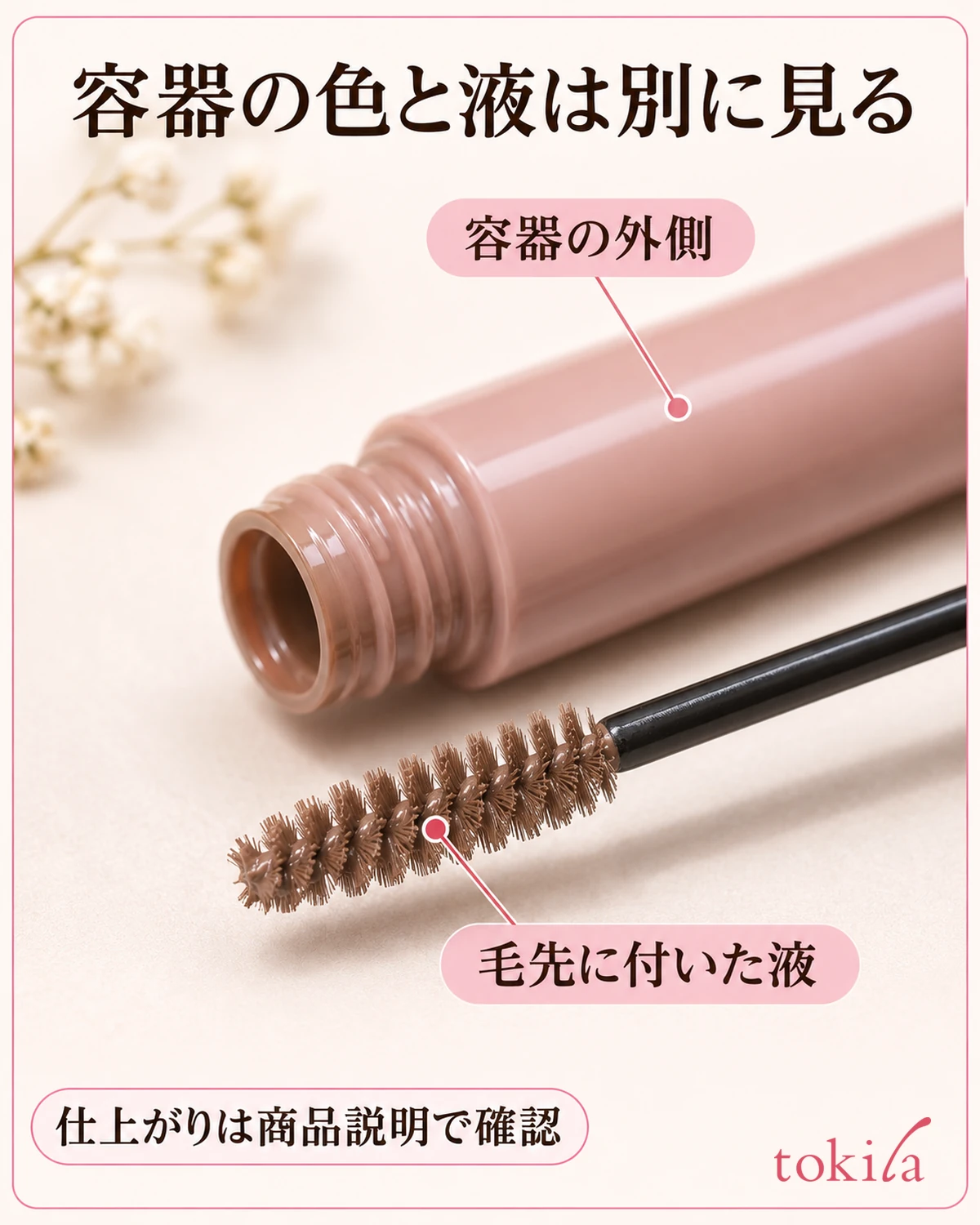
If you can try a shade in store, use the hygienic method permitted there. Do not apply a shared brush directly to your brows at your own discretion. Color seen on a hand does not directly reproduce the finish over dark brow hairs. Leave conditions you cannot test unconfirmed; there is no need to rush based only on a photo.
3. Match brush length, thickness, and handle to your brow area
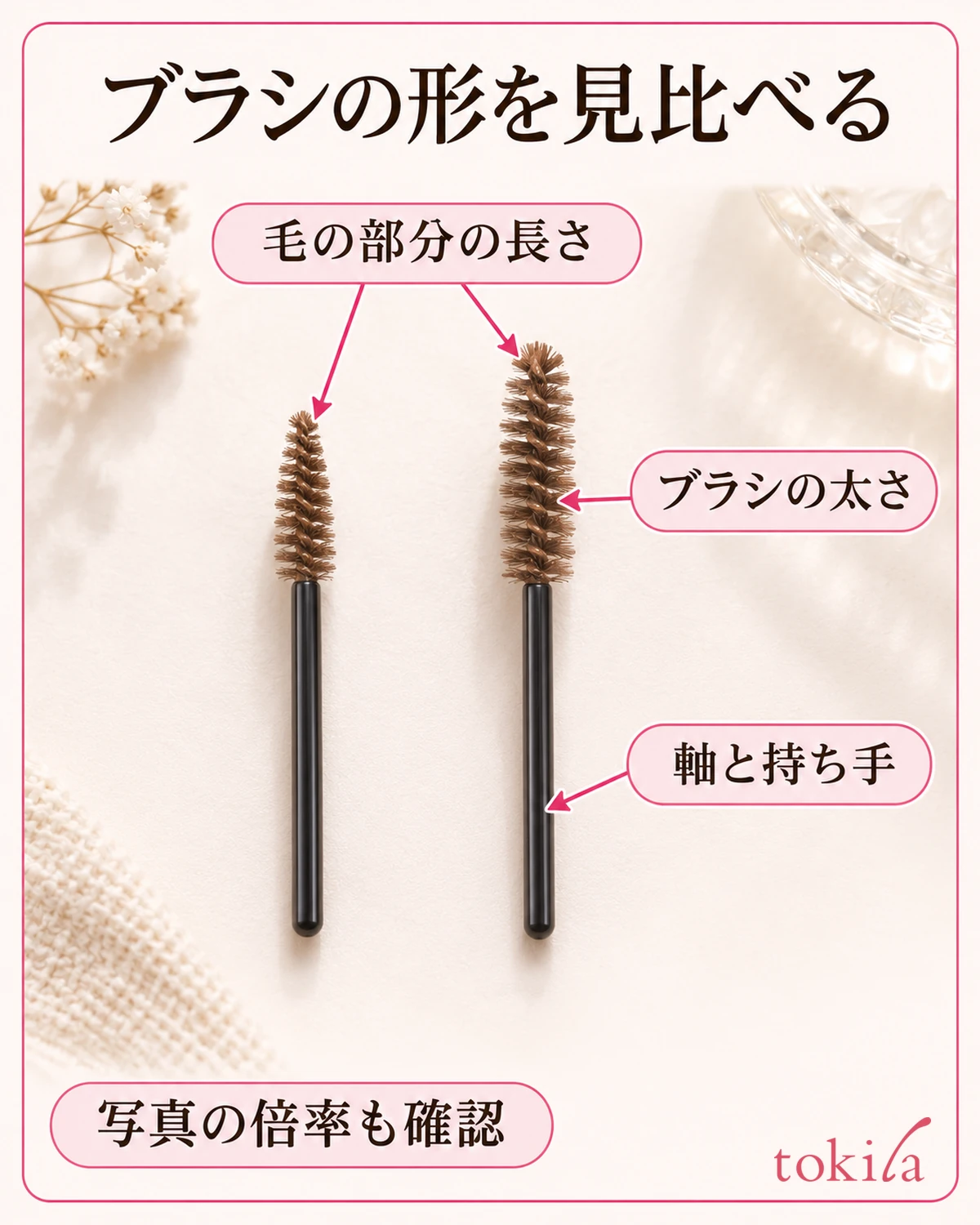
Look separately at the length and thickness of the bristled part and the tip shape. Even if the distance from cap to tip is long, the brush portion carrying liquid may be short. Do not look only at the overall length including the handle; identify the part you will bring to narrow areas of your brows.
A short brush may suit aligning its direction over a small section, but shorter does not mean everyone will avoid mistakes. Thickness, liquid loading, and holding angle also matter. Rather than choosing solely by “compact,” use descriptions or the actual item to see which surface handles the fine tail hairs and the middle hairs.
When viewing comparison photos, check whether both brushes are shown at the same magnification. If only one is a large close-up, you cannot compare the pictured lengths directly. Leave unknown dimensions unconfirmed and supplement them with size descriptions or store samples. Do not invent millimeter measurements from a photo.
Handle thickness and wand length also help you imagine bringing your hand in front of your brows. Consider whether the fingers holding the cap might obscure your brow in the mirror and whether you could see the tip at your usual distance. Look for something usable as made, rather than planning to bend the brush or shorten the wand.
Even a design described as less likely to touch skin does not mean it never will. Avoiding pressure against the skin and adjusting liquid quantity remain separate steps. Do not expect a new tube to handle accidents for you; compare whether its shape lets you follow its instructions.
4. Check the order with your pencil and removal at night
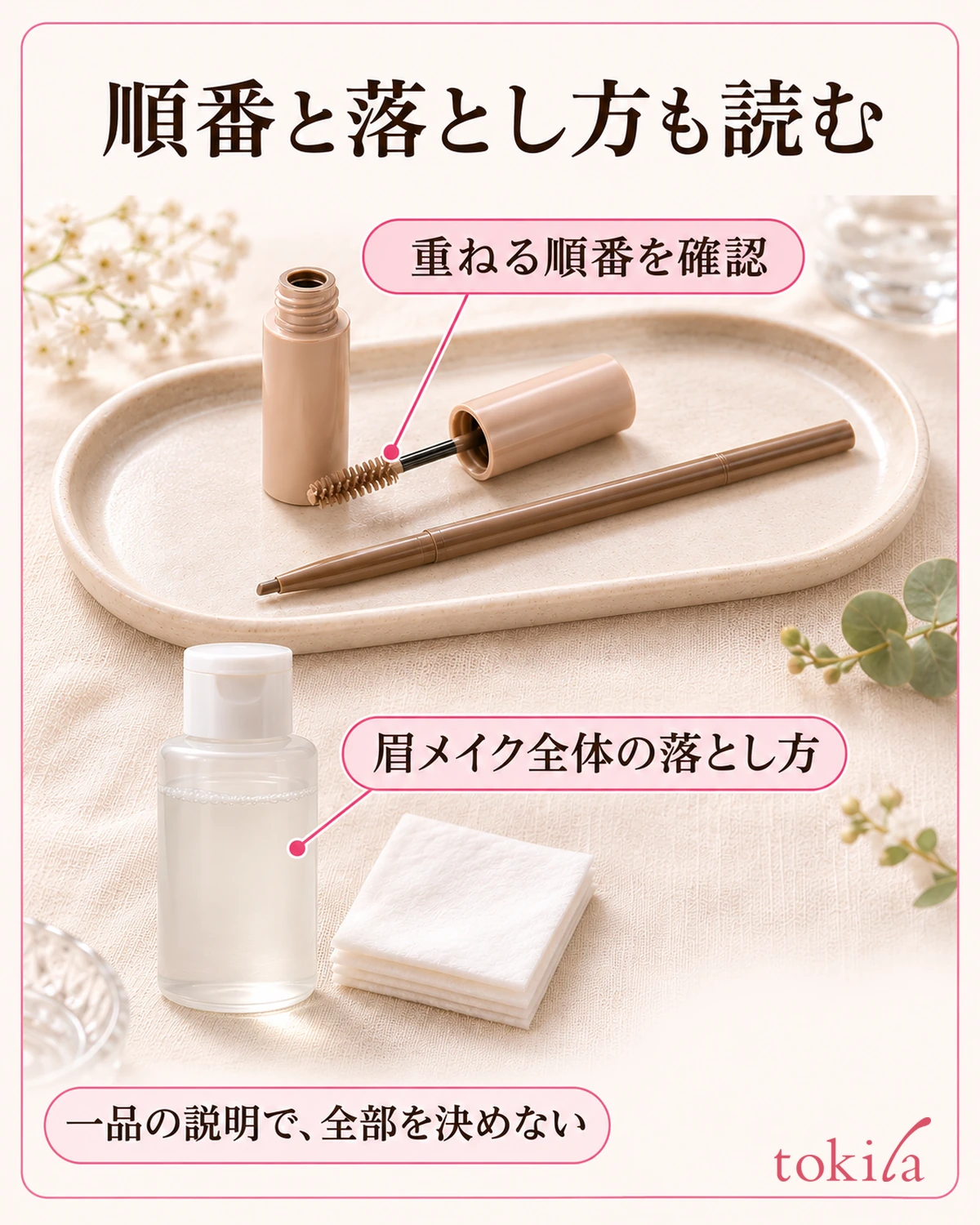
If adding it to your current brow makeup, check the order when using your pencil or powder together. Some products direct you to apply brow mascara last, but do not impose one order on all products. If you also use a primer or brow concealer, read each instruction together and retain options with clear layering conditions.
Whether to layer before drying or touch after drying is another item to read. Do not borrow a fixed number of seconds from another product; consider whether the process fits your morning routine. Do not plan to repeatedly comb hairs you are unsure you can handle yet just because you are in a hurry.
Check daytime wear claims such as water resistance separately from what removes it at night. Even with warm-water removal, the same method may not remove a layered pencil or finishing brow coat. Connect your entire brow makeup to facial cleansing and confirm the steps required.
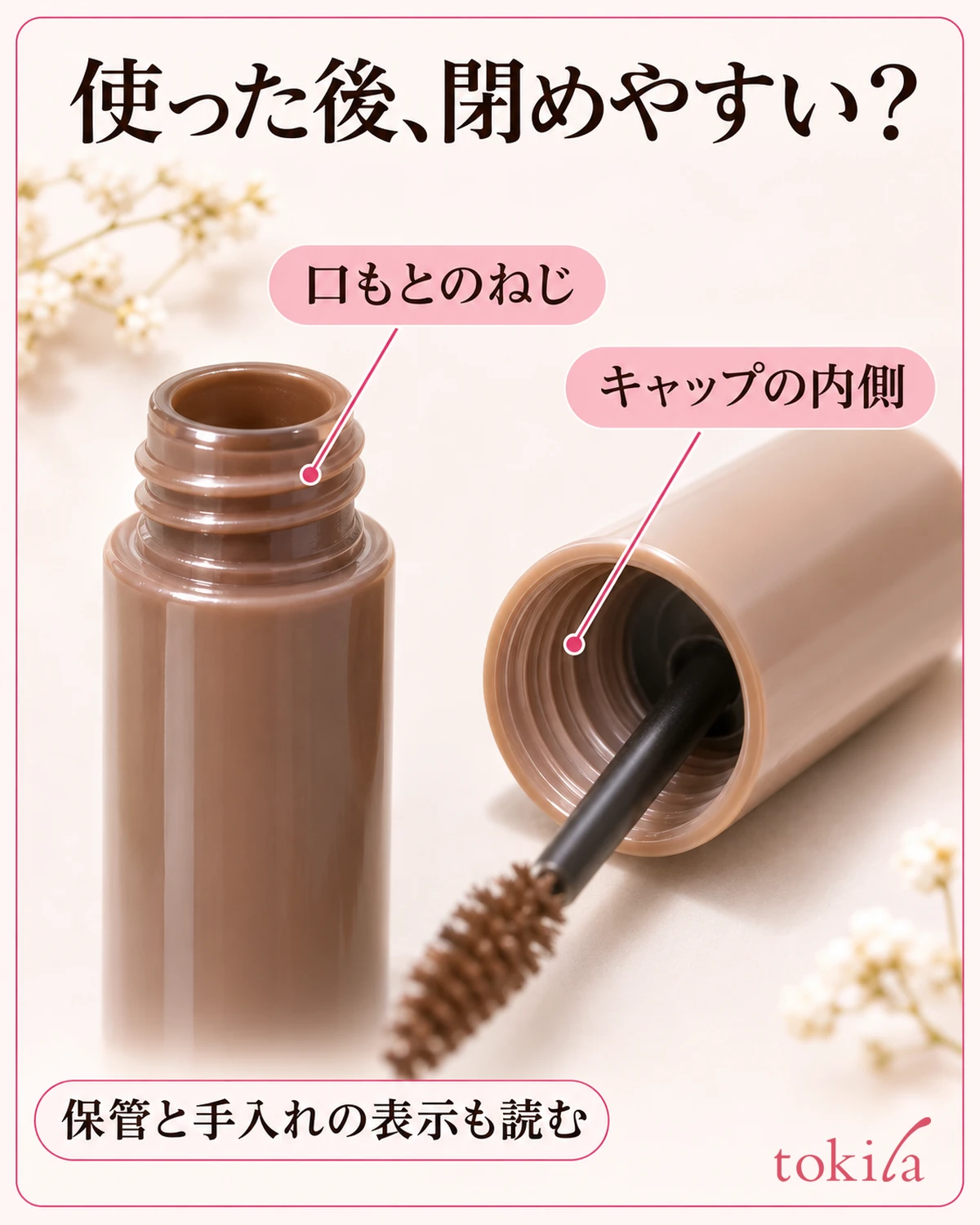
The supplementary photo shows the opening of the brow mascara and the inside of its cap up close. It helps you examine not only the brush, but whether the structure closes properly after use. Follow the product guidance for liquid around the opening; do not add water or wash inside the container on your own.
If you do not know whether your current cleanser is compatible, leave that in your pre-purchase checklist. Easy removal alone does not guarantee less burden on skin or freedom from irritation. Do not continue using it if you have eye-area discomfort or skin abnormalities; follow the product precautions.
5. Compare two options on the same five points and keep your reason
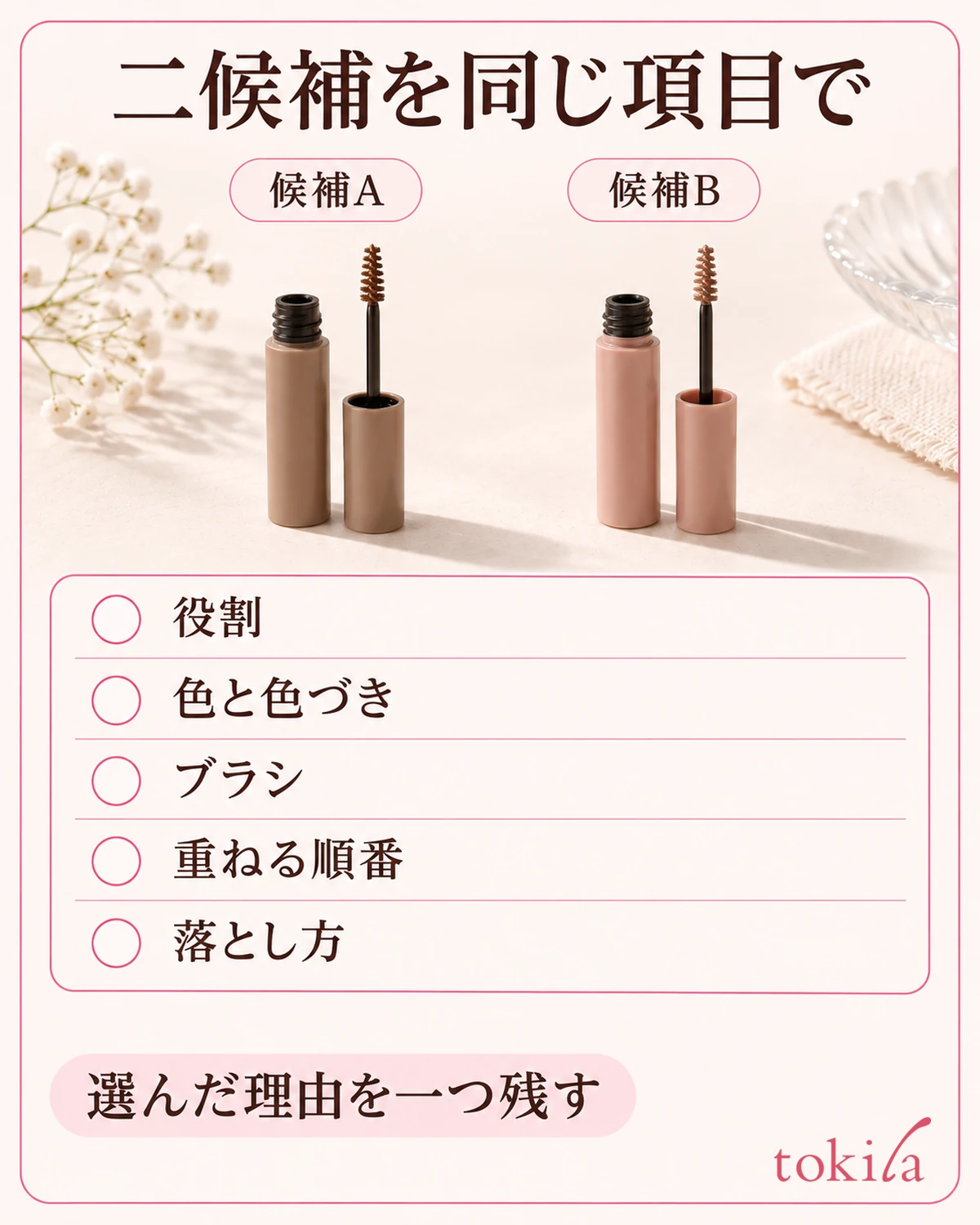
Finally, compare two options in the same order. Use five memo items: the role you want for your brows, shade and color-payoff descriptions, brush shape, application order with other products, and removal. Avoid comparing popularity or price for one and only color for the other; ask both the same questions.
For example, prioritize undertone when you want reddish brows, or brush shape if handling the fine tail concerns you. Decide what comes first based on your reason for buying. Narrowing to options that meet your needs is easier than searching endlessly for one tube that stands out in every category.
When comparing price or capacity, do not calculate days of use from weight alone. It varies with application area and liquid quantity, and some products do not state a use count. You can check price differences while leaving per-use cost unknown. There is no need to plan to apply more than directed just to finish it.
Even within your current series, avoid mixing different shades, brushes, and old and new versions. When shopping online, check the selected shade, product name, and the form that will arrive one last time. Keeping one unresolved item lets you explain specifically what you want to confirm in store, beyond asking the shade name.
After buying, record one reason you chose the shade and one point you actually noticed. If it seems unsuitable, return to the instructions, quantity, and combination of brow items rather than immediately correcting it with heavy layering. Keeping your selection conditions helps prevent the same uncertainty with your next tube.