When choosing an eye cream, you may be unsure when moisturizers and products claiming medicinal benefits sit on the same shelf. Small tubes and jars may look alike, but their purposes, application times, and place in your usual routine are not necessarily the same.
Start by writing down one thing you want, such as adding care to prevent dryness around your eyes or using it before morning makeup. This article organizes comparisons before purchase. For steps to apply a product you already own, see How to Use Eye Cream.
1. Decide whether to prioritize moisturizing or a stated benefit
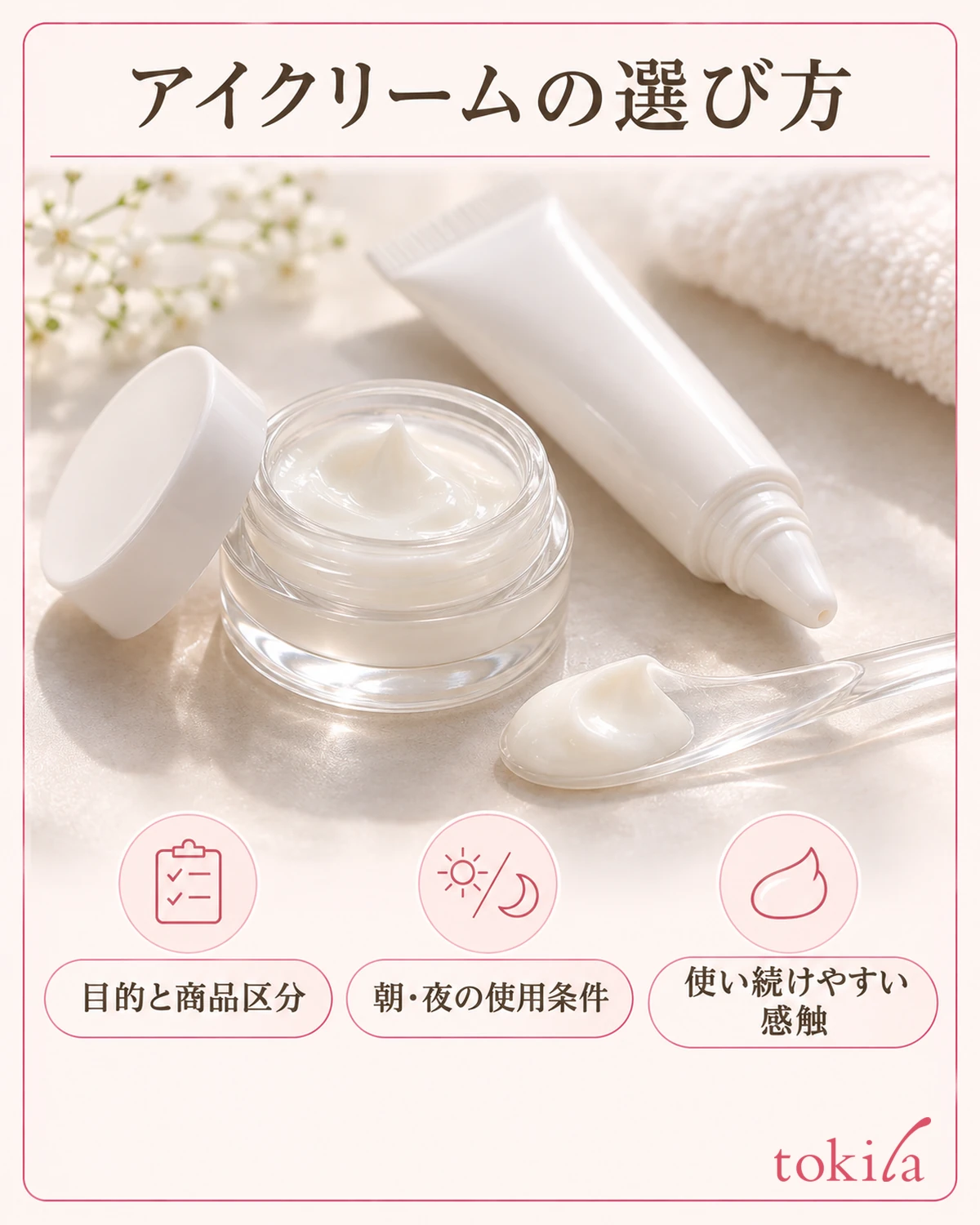
First, look for products described as suitable for the eye area and read what each cream is intended to do. The items to compare will depend on whether you want extra moisturizing care to prevent dryness or a product with a specific stated benefit. Do not assume products work the same simply because their names include “eye.”
Cosmetics and quasi-drugs are different product categories. For a candidate labeled medicinal, check its stated benefits as well as its active ingredients. Even if ingredient names match, do not assume all products have the same benefits or rank their strength solely by ingredient names.
“Making fine lines caused by dryness less noticeable” and “improving wrinkles” are not interchangeable claims. The former concerns fine lines caused by dryness and does not extend to every type of wrinkle. Read the latter as applying to the particular product authorized and labeled for that benefit, rather than treating it as a function shared by all eye creams.
Do not expect a cream to change every concern about appearance, such as under-eye color or hollows and eyelid shape. Do not judge that a product eliminates dark circles or sagging from comparison photos with different brightness or angles. First check whether your purpose matches the scope stated on the product.
Even if you have several purposes, choose one priority first. If you want to maintain moisturizing care, the number of additional benefits you do not seek need not decide your choice. Writing “moisturizing the eye area” or “considering a stated benefit” in the first field of your notes helps keep your focus before comparing prices and containers.
2. Consider whether to use it in the morning or as one nighttime step
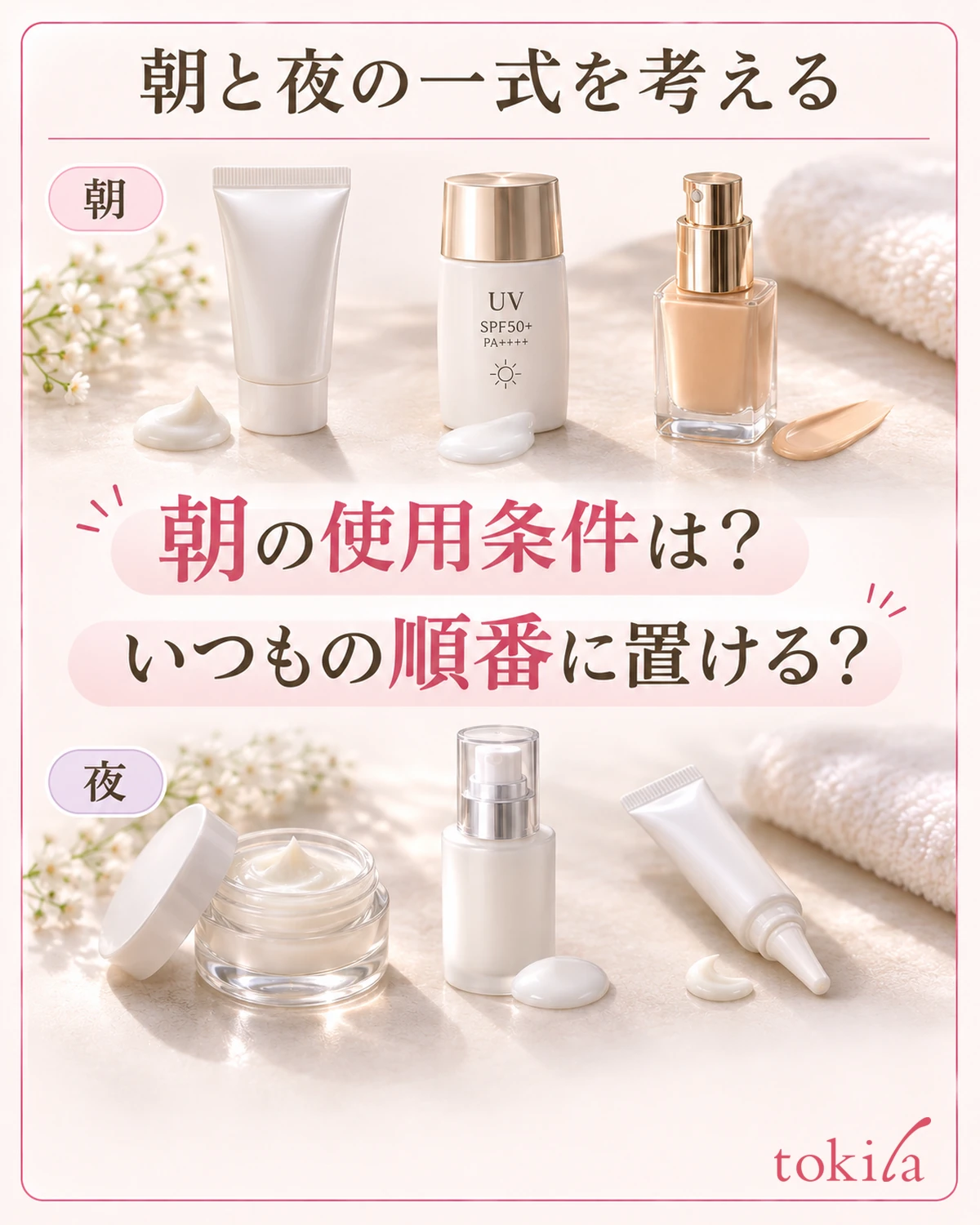
Next, consider when you will use it. Read each candidate's directions, whether it can be used morning and night or is intended mainly for nighttime use. Do not decide it cannot be used in the morning solely because promotional photos show nighttime use. Conversely, do not add morning use on your own when morning directions are unconfirmed.
If you want to use it in the morning, include the fact that sunscreen, primer, foundation, or other products will follow. Check where it belongs before makeup and whether there is guidance on adjusting the amount. Directions permitting morning use are different from a guarantee that every combination will leave your finish unchanged.
For nighttime use, check where it fits among your current toner, emulsion, and face cream. Do not place every eye cream last in a single universal order. Writing each candidate's directions in one line and comparing whether it fits your existing set can reduce uncertainty about order after purchase.
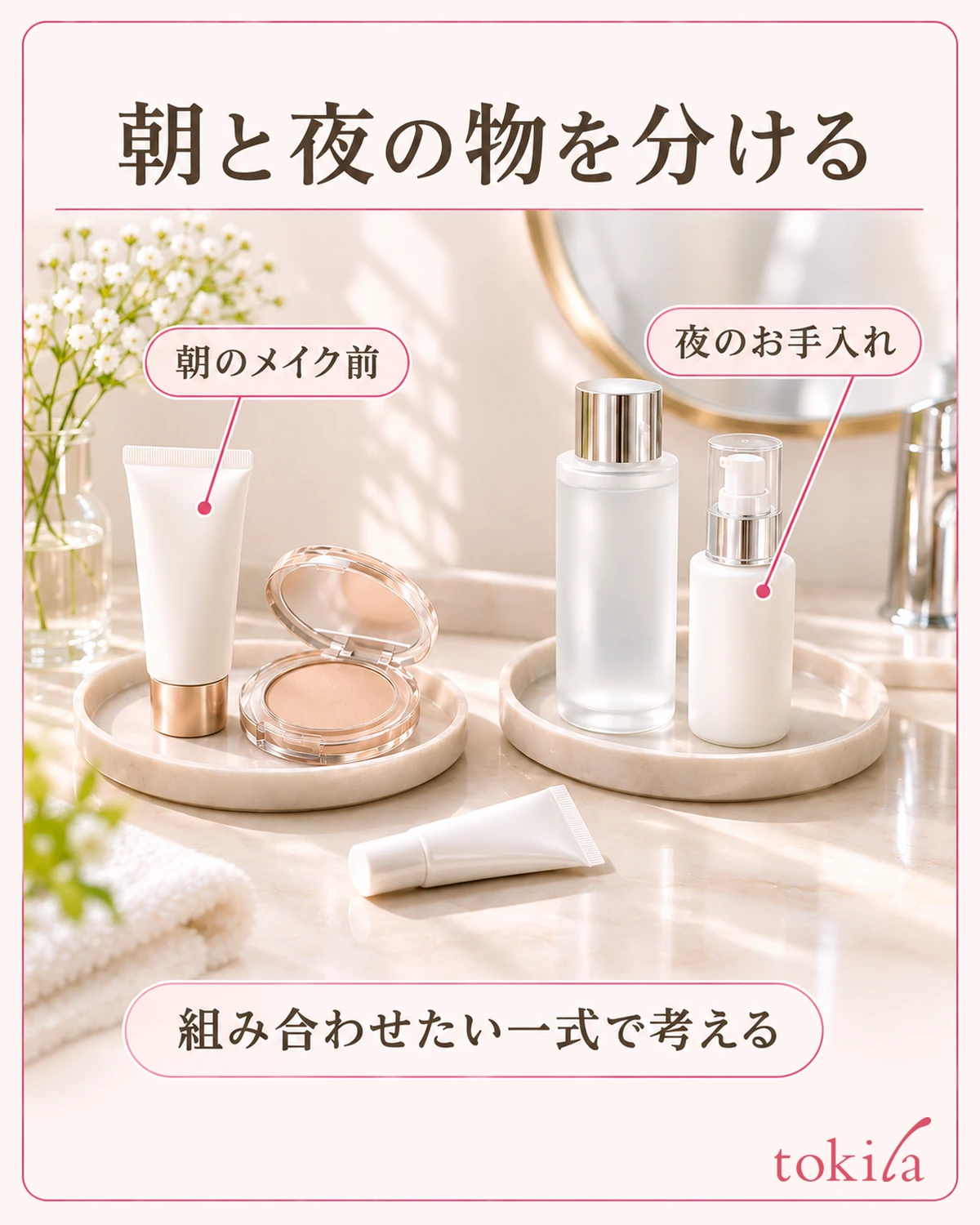
The supplementary photo places products used before morning makeup and products used for nighttime care on separate trays. It is not a guide to deciding morning or night from container appearance; it helps you consider each set you want to combine separately. If you want both, check the conditions of both routines before keeping a candidate.
If you also use an eye serum, do not assume similar roles mean the order is unrestricted. Mark compatibility or application order as unconfirmed if you cannot establish it. Rather than assuming you must layer both every day, you can narrow your choice to morning or nighttime use first.
3. Compare richness at pickup separately from the feel after spreading
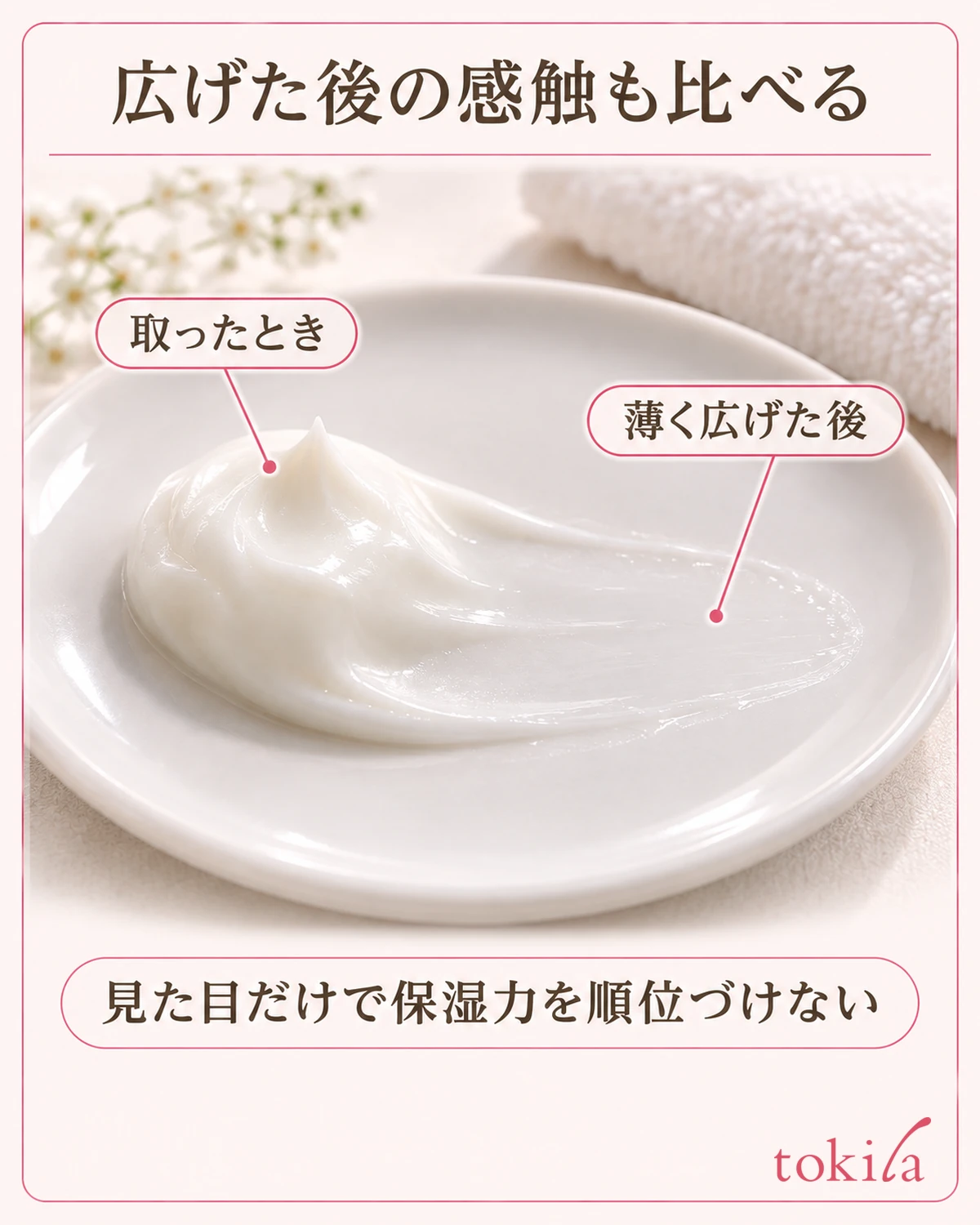
When reading about feel, distinguish taking the cream from its container from spreading it thinly. A white, rich appearance does not necessarily mean the same feel after application. Treat words such as “rich” and “fresh” as starting points, without using that one word to determine moisturizing duration or suitability for your skin.
For a morning candidate, the feel when moving on to eye makeup is another selection condition. For a nighttime candidate, consider the finish you prefer when layering it with your usual face cream. You need not rank products by appearance, assuming a light feel means weaker action or thickness always means greater moisturizing power.
When trying a product in a store, follow the specified method and application area. Even with an eye product, do not put a tester opening or supplied tool directly on your eyelid. If checking feel on your hand or another area, keep that impression separate from your actual eye area and limit observation to ease of spreading and the feel left behind.
If you cannot try it, compare descriptions of feel, fragrance or its absence, application amounts, and precautions. One shared ingredient does not mean it will feel like your current product. You may also keep whether you enjoy fragrance or prefer fragrance-free products as a preference separate from superiority in efficacy.
Distinguish heaviness after application from abnormalities such as redness or itching. The former may prompt you to check amount or combinations, but do not turn an abnormality into a reason to keep using it until you adjust. While suitability remains uncertain, do not choose solely because a larger size seems economical; include precautions in your buying conditions.
4. Match the amount and dispensing method to your daily movements
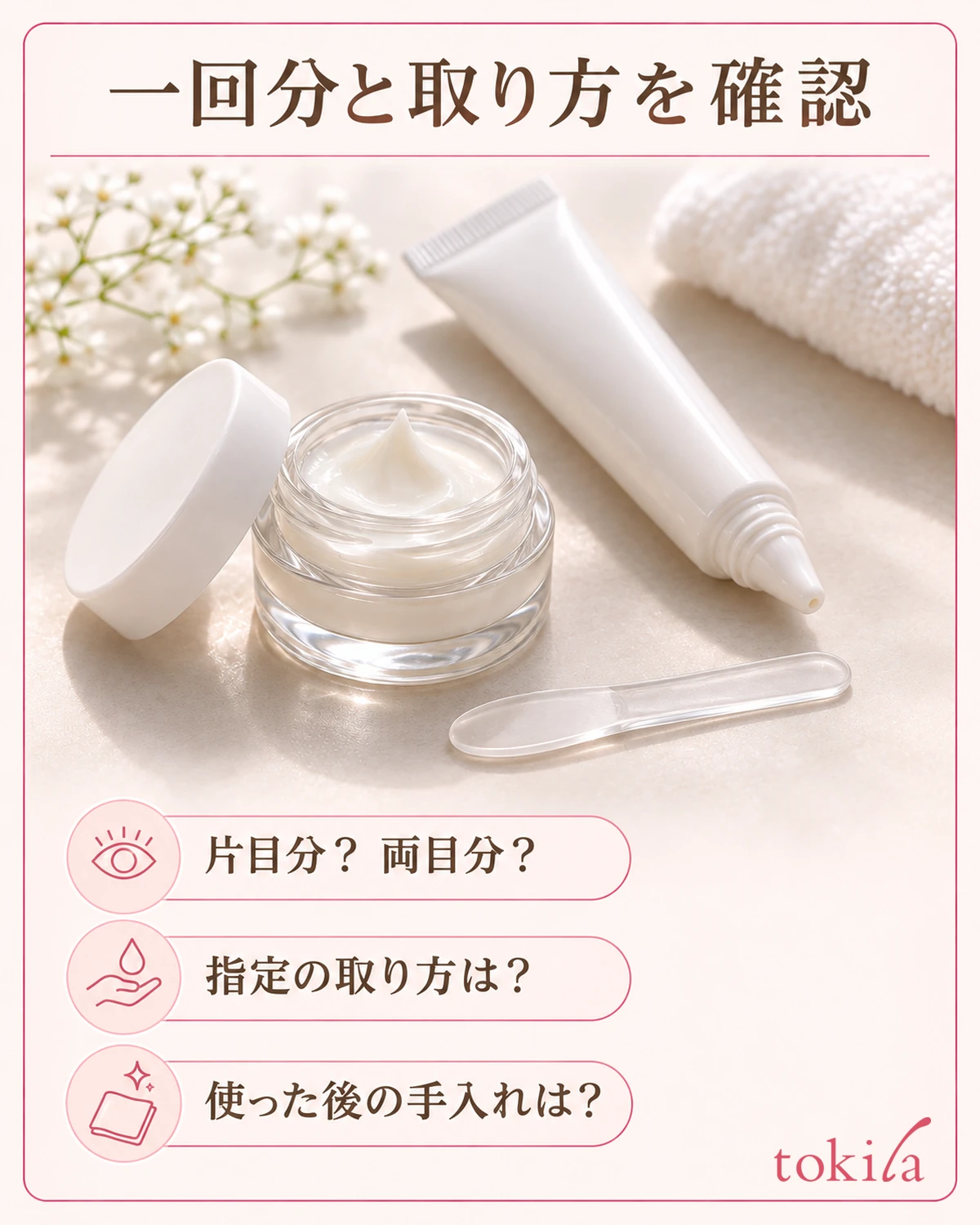
Look at container differences, including tubes, jars, and dedicated applicators. However, do not focus only on the container; consider whether you can dispense the directed amount and handle it easily through the end of use. Do not infer from a narrow tip that it can be applied directly to the eye area.
Read amount guidance including whether it refers to one eye or both eyes. Similar rice-grain or pearl-size descriptions do not necessarily mean the same single-use amount for every product. Do not calculate how many months it will last from volume alone. When an estimated number of uses is given, compare it together with its conditions.
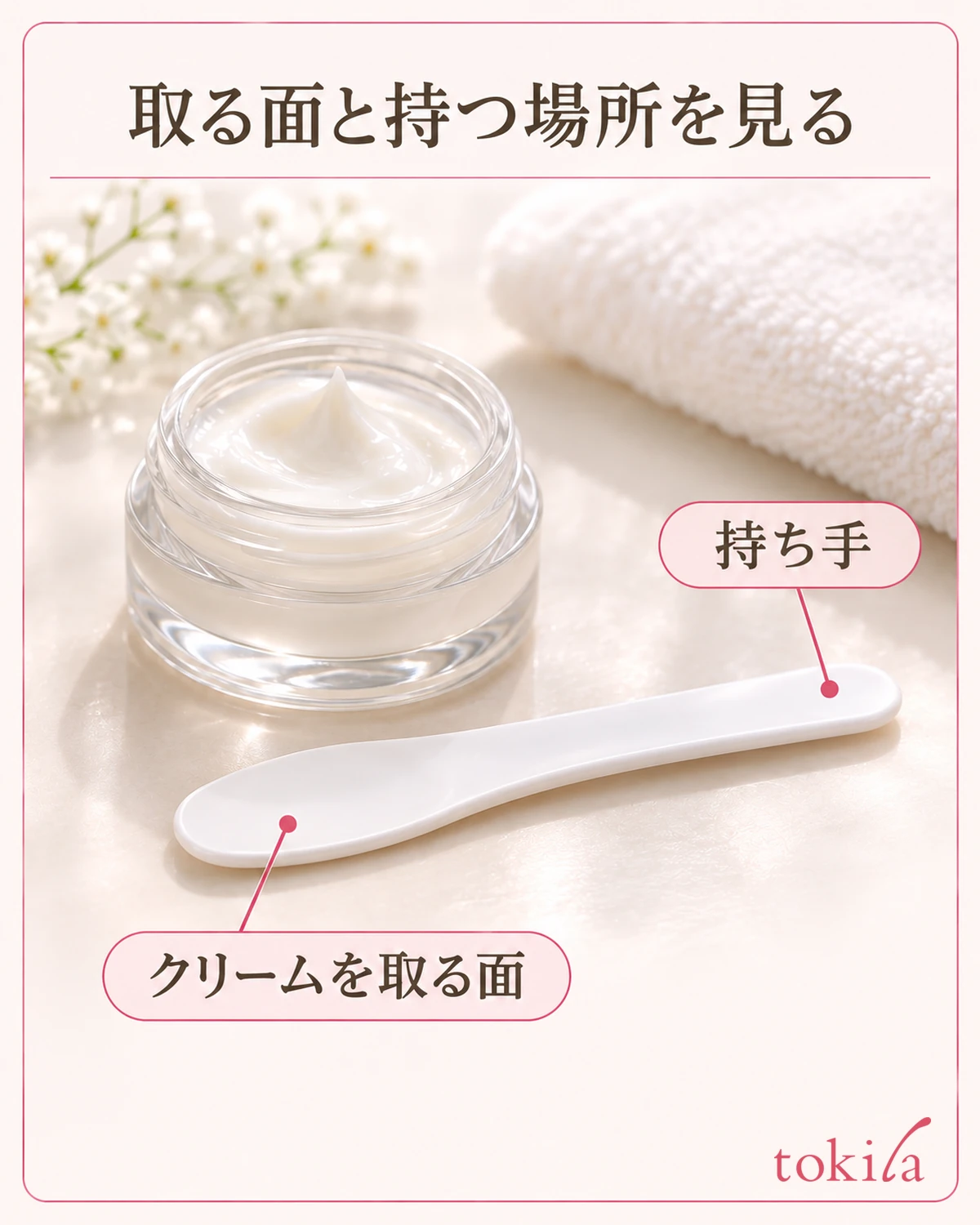
For jars, check whether tools are supplied and how to care for them afterward. For tubes, read whether the product should be dispensed onto a fingertip or used with a dedicated tip. Distinguish the opening, pickup surface, and grip, then keep candidates you can comfortably manage every morning or evening.
The supplementary photo shows a small jar opening and the flat tip of a spatula close up. It helps distinguish the cream pickup surface from the handle. The scoop shown is not a universal amount, nor does this shape guarantee hygienic performance.
Products with applicators do not all use the same movements. Do not invent pressure or gliding ranges; check permitted areas and care instructions. Prioritizing whether you can follow the specified method in daily life over the number of tools makes visual differences easier to evaluate.
5. Compare two candidates using the same fields and return to your original purpose
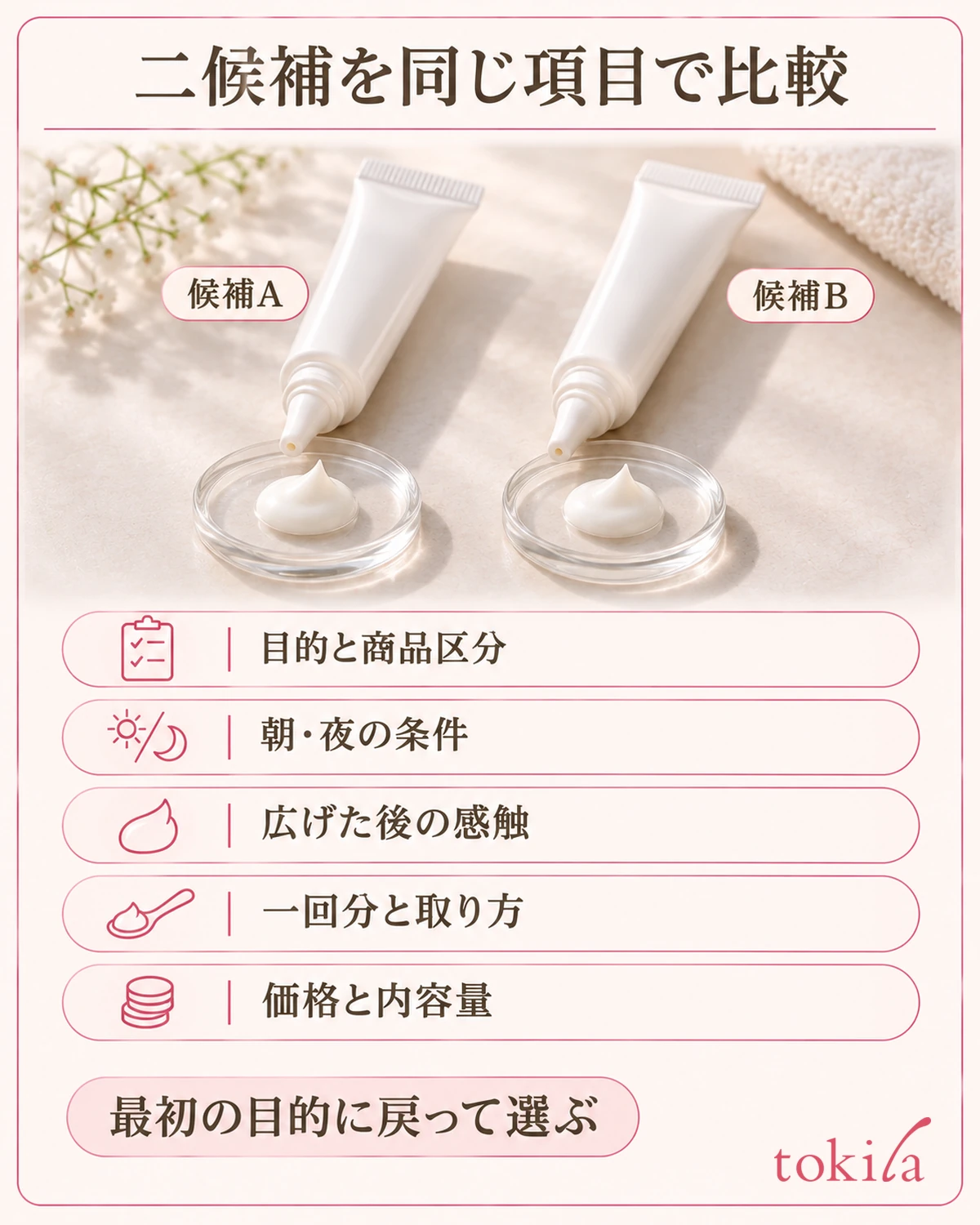
Finally, apply purpose and product category, morning or nighttime conditions, feel after spreading, single-use amount and pickup method, and price and volume to both candidates in the same order. Do not judge one only by ingredients and the other only by low price. Do not fill unconfirmed fields with assumptions.
For price, match sales units such as regular and small sizes or complete products and refills. You can consider the ongoing expense, but do not invent a daily cost when amounts and frequency are unknown. Note separately if you need to obtain a tool.
If both candidates fit your purpose, return to morning or nighttime use and your preferred feel. Keeping candidates whose selection reason fits one sentence, such as adding moisturizing before morning makeup or incorporating one nighttime step, helps preserve your comparison criteria as new products appear.
After purchase, prioritize directions on the actual box or container over your selection notes. Even with an eye product, confirm permitted areas for each product and avoid getting it in the eyes or on mucous membranes. If skin abnormalities occur, stop using it and follow its precautions to seek advice.
Do not choose an eye cream as a promise to resolve all eye-area appearance concerns at once. Begin by matching its stated purpose and conditions to your lifestyle and looking for one product you can use consistently. Separating pre-purchase comparisons from post-purchase application makes the information easier to organize.