When choosing hand cream, do you rely only on the impression that it looks moisturizing? A texture that does not bother you while relaxing at home may feel inconvenient at work. Conversely, choosing solely for a light feel may leave you with a different experience than you hoped for. Start by picturing what you will do after applying it.
This article organizes the points to compare before buying hand cream. For spreading it on your hands, see How to Apply Hand Cream. Here, we separate texture, fragrance, product category, and everyday dispensing to work out an order for narrowing down candidates.
1. Decide when you will use it: during the day or at night
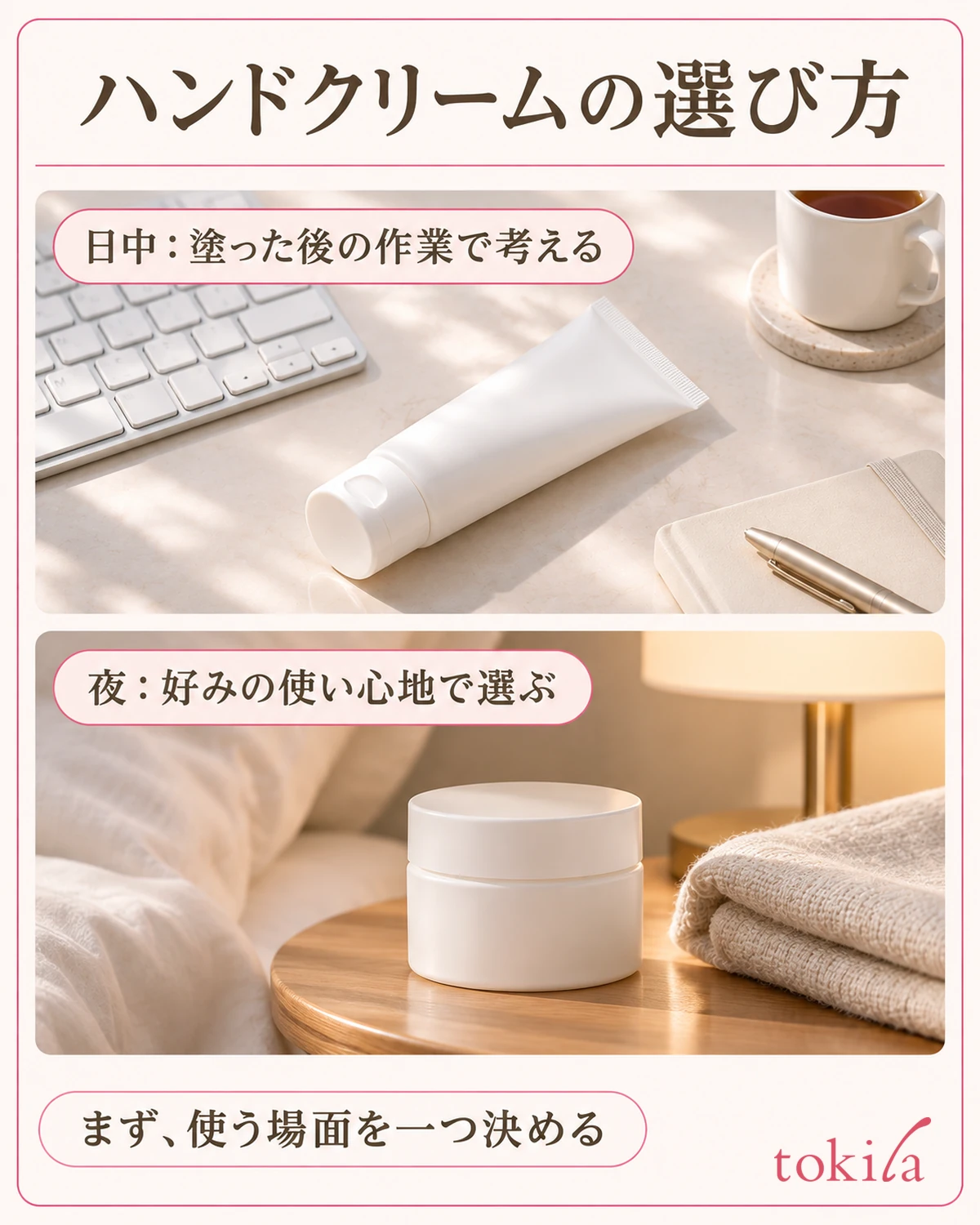
First, choose the main occasion when you want to use it, such as after washing your hands at work, during a break while out, or before bed. Knowing when you will use it makes the texture you need more specific: you might touch paper or tools immediately afterward, or have time to rest your hands.
For daytime use, consider whether you can comfortably make your usual movements after working it in. Even if a product says it is less sticky, your impression can change with the amount and your own perceptions. Check the smoothness on application separately from the feel remaining after you finish spreading it.
For nighttime use, you have more room to consider your preferred texture and fragrance at leisure. This does not mean that nighttime use permits large amounts or that covering your hands with gloves is always beneficial. If the product provides guidance on bedtime use or layering, include those conditions in your selection.
If you want one cream for both, first identify conditions that cause problems during the day. Write down one nonnegotiable condition in your life, such as work where lingering fragrance is inconvenient or tasks requiring gloves. If your workplace or tasks have usage rules, follow them first.
We recommend making an occasion note before searching for product names. A short description such as “take it out after washing, work it in, then return to my desk” helps you avoid adding candidates based solely on advertising impressions. Rather than seeking one perfect cream for everything from morning to night, first ask whether it suits the occasion you need.
2. Separate firmness when dispensed from the feel after spreading thinly
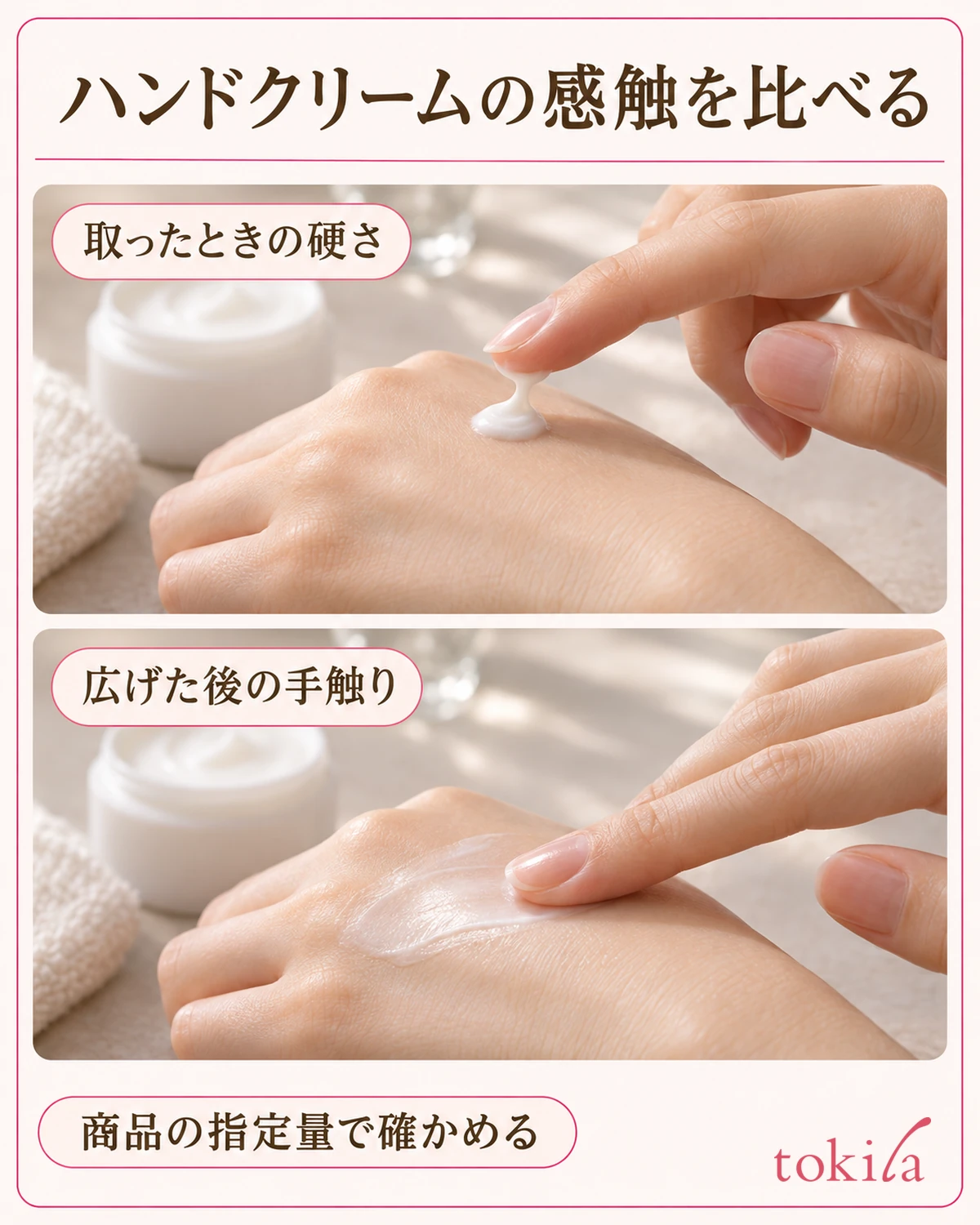
A mound of cream alone does not reveal how it will feel after spreading. Even a firm-looking cream can spread differently from product to product, and softness does not necessarily mean a light feel. Consider three stages: ease of taking it out, ease of spreading thinly, and the feel after working it in.
If you can try it in-store, follow store rules and product directions, and compare using consistent application areas and amounts. Using plenty of one and little of another makes it hard to attribute differences in feel to the products alone. If their instructed amounts differ, record each instruction rather than forcing equal amounts.
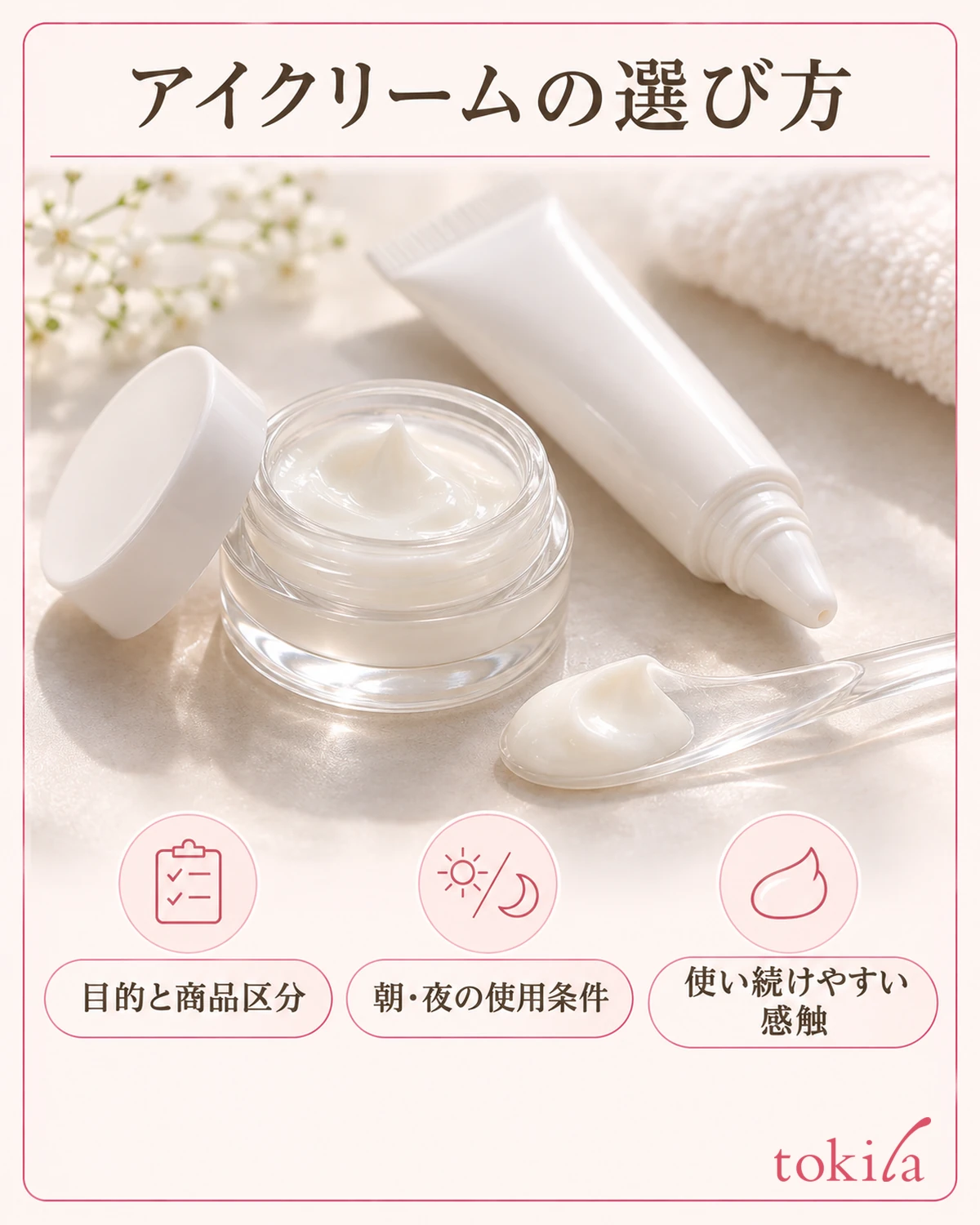
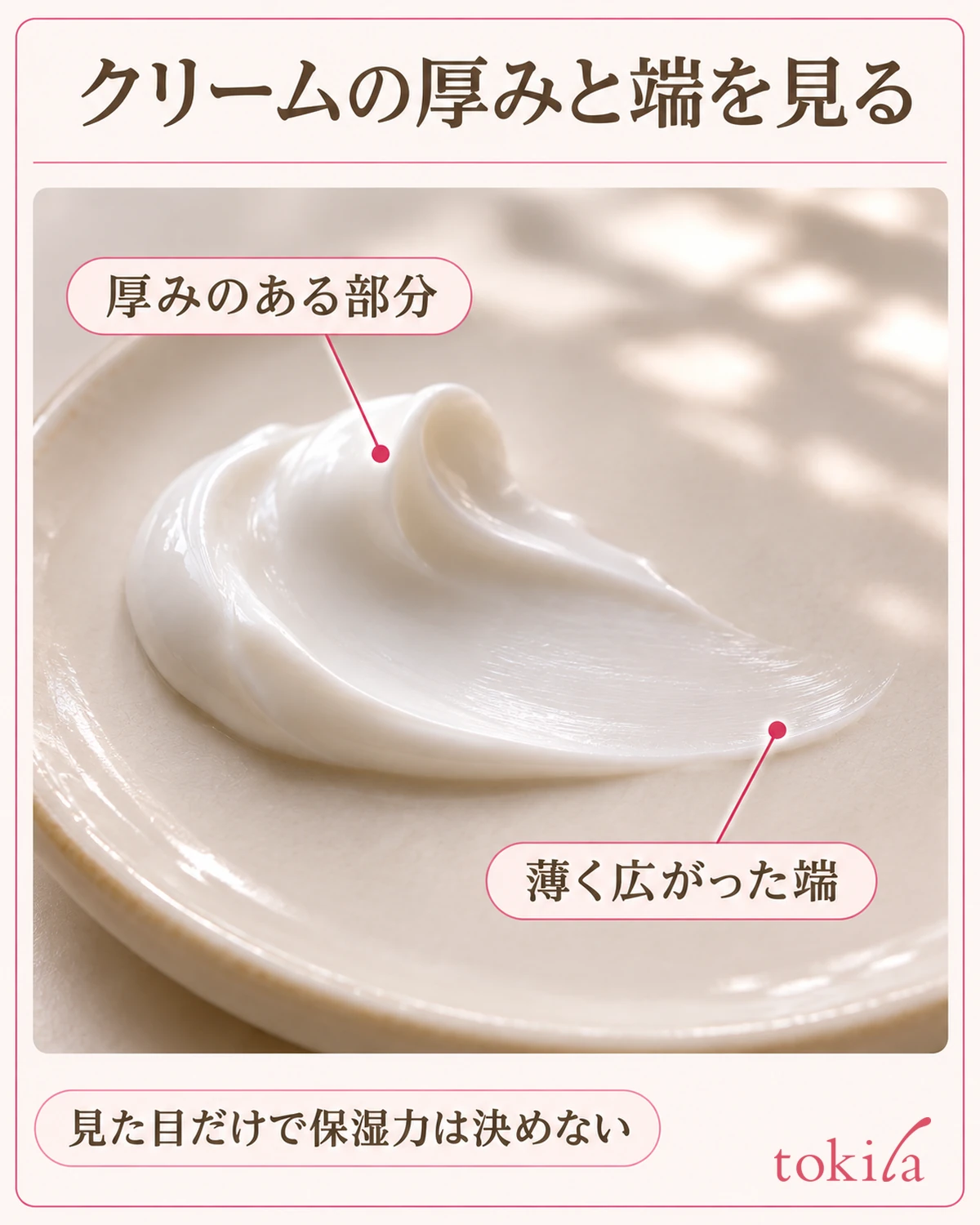
The supplementary photo shows a thick section and a thinly spread edge of the same white cream. Its composition helps you observe apparent firmness separately from the spread-out state. It is neither a comparison of two products’ moisturizing performance nor an actual test result, and the shine in the photo does not determine the strength of an effect.
After trying it, go beyond “light” or “heavy”: describe how it feels when you move your fingers and what sensation remains on your hands. There is no need to change the texture by rubbing hard repeatedly, or transfer it onto shared paper or devices to test it.
If you cannot try it, copy the product’s texture descriptions into your comparison notes, leaving unconfirmed sensations blank. Do not calculate stickiness on your own hands or duration from ingredient order or container photos. When choosing with some unknowns, also check whether a small size is available and what unit is sold.
When trying products, focusing on one thing you want to learn for your selection makes differences easier to remember. Write the checked item next to the candidate name, such as feel after spreading today and scent next time. A single in-store trial does not confirm dryness several hours later or how much remains after washing hands.
3. Separate fragrance preferences from occasions when you do not want scent to linger
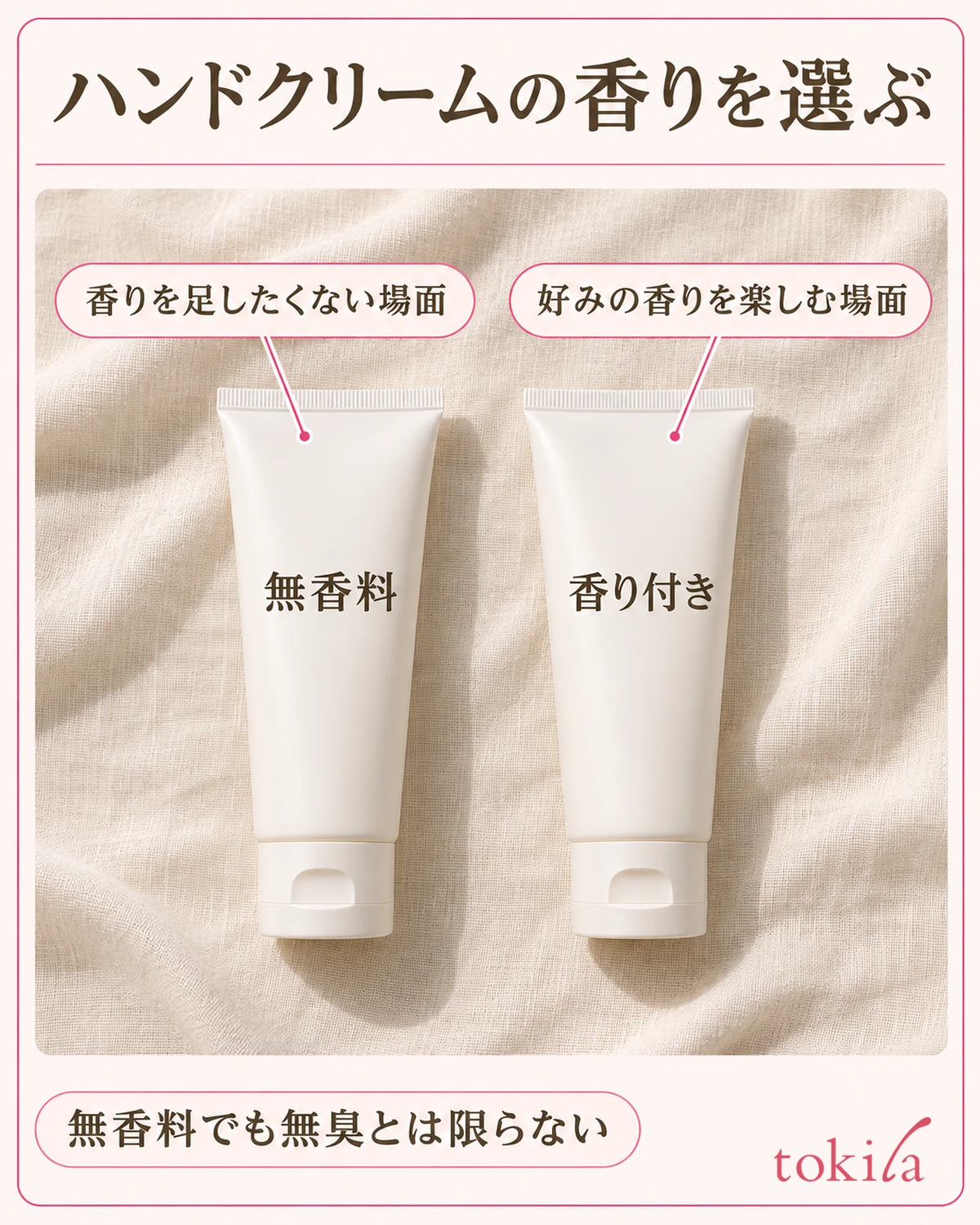
Consider fragrance alongside the occasion, rather than only your favorite scent family. Do you want to enjoy floral or citrus notes, or avoid adding a scented impression? Decide your preference first, then check whether candidates specify a fragrance type or a fragrance-free label.
Fragrance-free is a selection condition indicating no added fragrance, not a promise that something has no smell whatsoever. Odors from ingredients may still bother you. Also avoid judging safety solely by scent: a subtle scent does not guarantee no irritation, nor does added fragrance mean it will not suit your skin.
If you can sample the scent, follow the method explained by the store. The smell near the container may differ from the impression after use on your hands. Trying several layered scents at once can make them difficult to distinguish, so record candidate names and your impressions separately.
If you often have occasions when you do not want fragrance to linger, such as work or shortly before meals, fragrance-free products can be candidates. Equally, enjoying a favorite scent at home can be a reason to choose one. Compare fragrance choice separately from the purpose of preventing skin dryness.
If you plan to share it with family, check other users’ preferences and the precautions before buying a large container based on your taste alone. Not everyone likes the same scent. Even if you choose different scents for carrying around and home use, this does not mean that using two products strengthens moisturizing action.
4. Check product category, application amount, and opening and closing
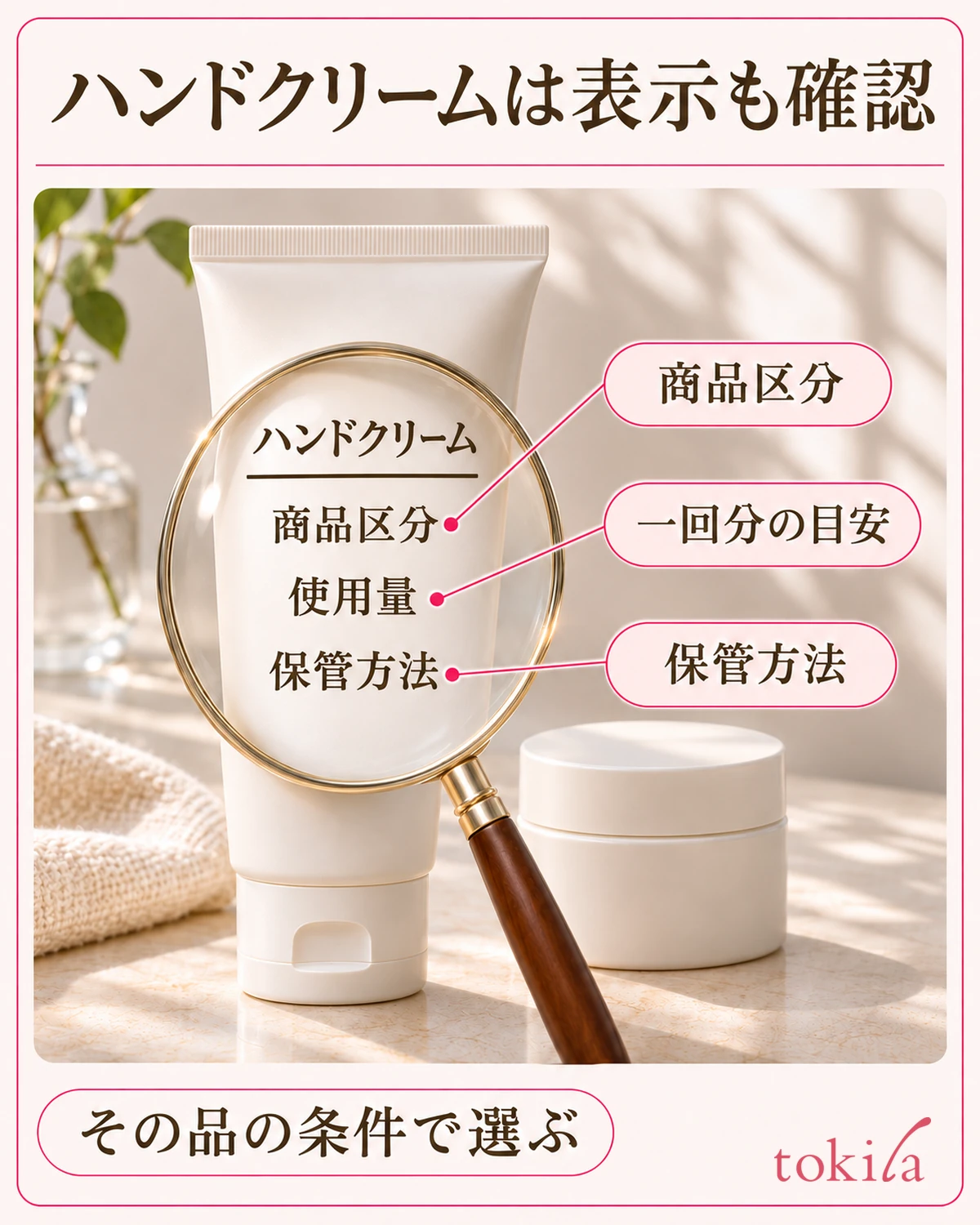
Even on the same shelf, check cosmetics, quasi-drugs, and medicines separately. Clarify whether you are choosing for everyday moisturizing or according to labeled effects and purposes; do not choose a medicine as casually as a general cosmetic. If unsure, consult a pharmacist or another appropriate professional at the store.
Do not assume products work identically just because they display “medicated” or a prominent ingredient name. For quasi-drugs, read that product’s labeled effects and precautions. This article does not rank products intended to treat rough or cracked hands, nor rank effects by ingredient concentration or number.
Next, check the recommended amount per use, permitted areas, and storage instructions. Tubes and jars require different dispensing actions. Imagine whether you can close the lid after dispensing onto one hand and whether it fits where you use it. Small size alone does not guarantee portability; cap shape and closure also matter.
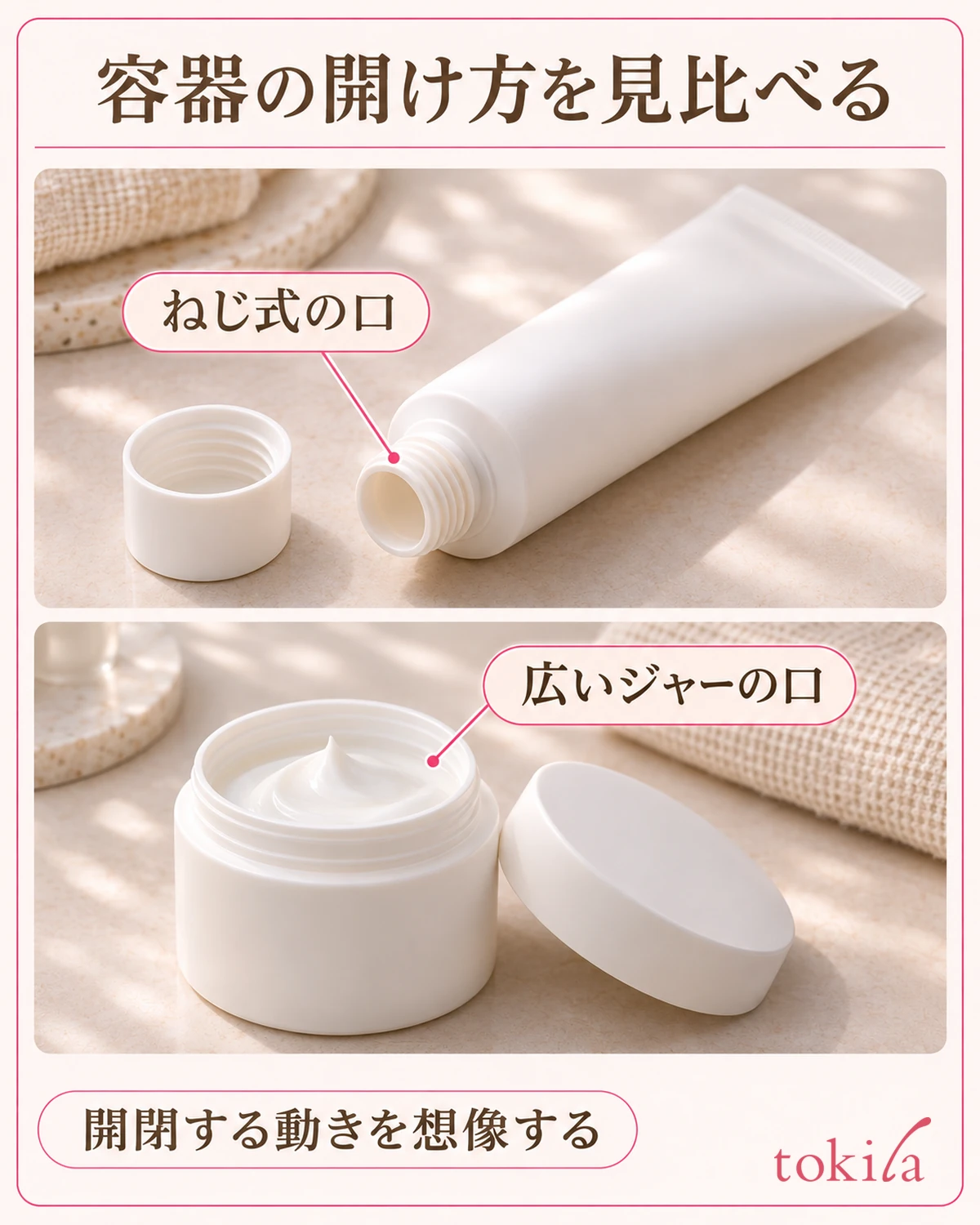
The supplementary photo shows close views of a screw-top tube opening and its removed cap, and a jar’s wide mouth. It illustrates where the container opens and how you take out the contents, rather than how well they work. Relate the structure to your habits: for instance, compare closure types if you tend to lose caps.
Compare quantity and price using consistent sales units, such as full size, small size, or refill. Even when refills exist, check compatible containers rather than choosing on the assumption that you will transfer it into an unspecified small pot. If you do not know the amount and frequency you will use, leave daily cost and months of use unconfirmed.
For carrying it around, also check whether its dimensions fit your usual pouch. Imagine closing and putting away the container, and compare whether you need somewhere for the lid or can set removed parts on a desk. Photos alone cannot show the force needed to open or close it, so leave that item unconfirmed if you cannot inspect the actual container.
5. Compare two candidates under the same headings and record what to review after buying
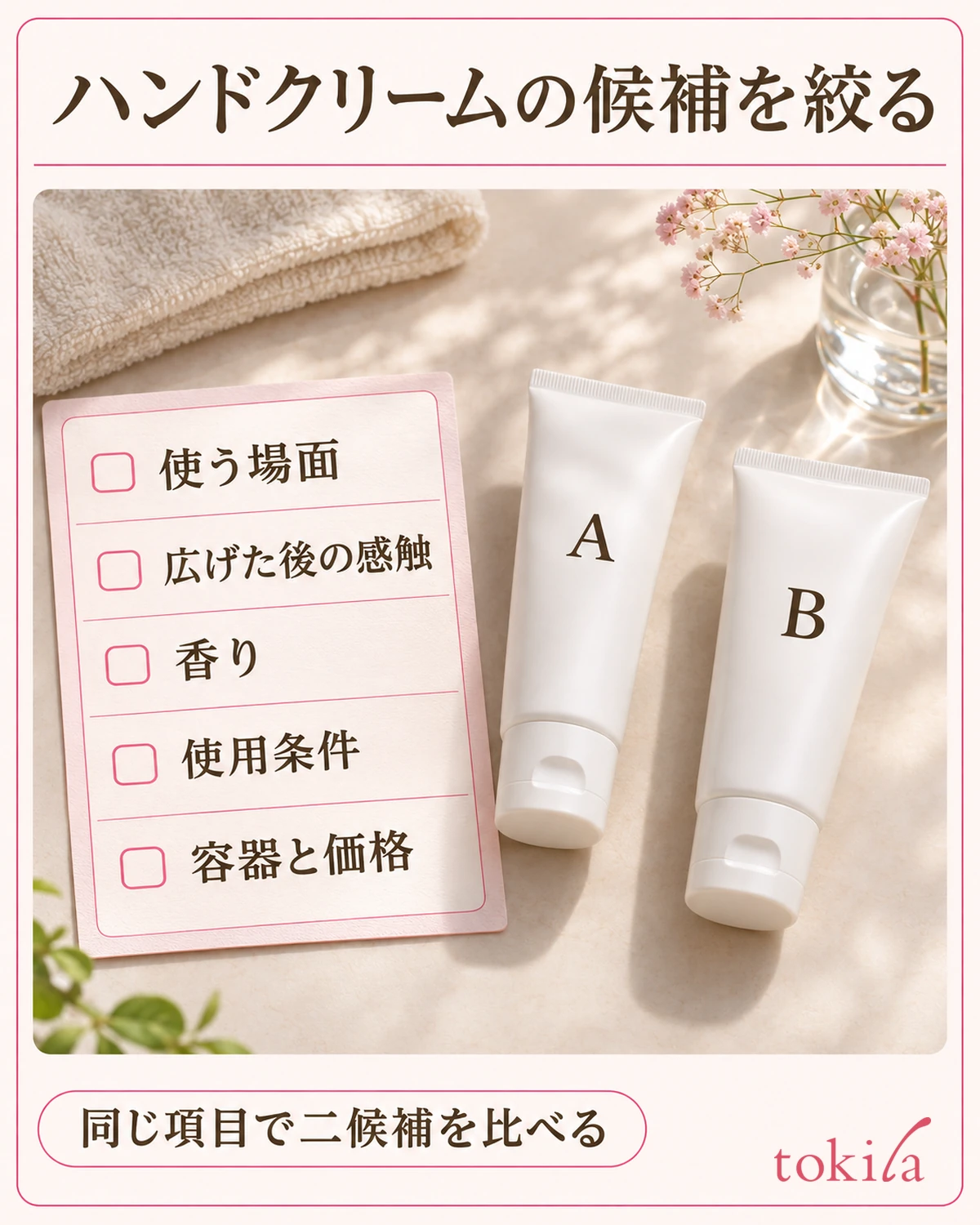
Finally, list occasion, feel after spreading, fragrance, product category and conditions, and container and sales unit in the same order. Ask both candidates the same questions rather than evaluating one only by scent and the other only by ingredients. Marking your top priority helps you see why you would choose one.
If two candidates remain, return to the occasion you first identified. If daytime convenience comes first, choose the one with fewer inconvenient conditions for that occasion. If you want to enjoy scent at home, choose your preference within the usage conditions. The same product will not rank first for everyone.
If the texture differs from what you expected after buying, review the instructed amount and conditions before drastically reducing the amount or mixing it with another product. Check surface moisture, the amount taken, and the task after application one at a time. Changing the product and application method together makes the cause harder to identify.
If redness, itching, irritation, or other abnormalities occur, do not continue as though it were merely a texture preference: stop use and follow the precautions. Do not try to manage painful or wounded hands solely with a favorite hand cream. Keep consulting a medical institution when needed separate from choosing everyday moisturizing products.
Recording one thing you liked also helps with your next purchase. Phrases tied to everyday occasions, such as “easy to take out during work breaks” or “lets me enjoy a favorite scent at night,” are useful. Choose hand cream as something you want to reach for comfortably every day, beyond impressions of ingredients or packaging alone.