Interested in clear mascara, but unsure how lash and brow products differ or whether it can be layered with your current mascara? Even on days when you want to tidy up your eye makeup without adding obvious color, transparency alone does not tell you its intended use. First separate where you want to use it from the finish you want.
This article organizes the labels and selection criteria to read before buying clear mascara. It is not a test comparing hair growth or long wear. Whether you want to add one product to your routine or use it alone, narrow your options by picturing how you will use it.
1. Start with the area: lashes or brows
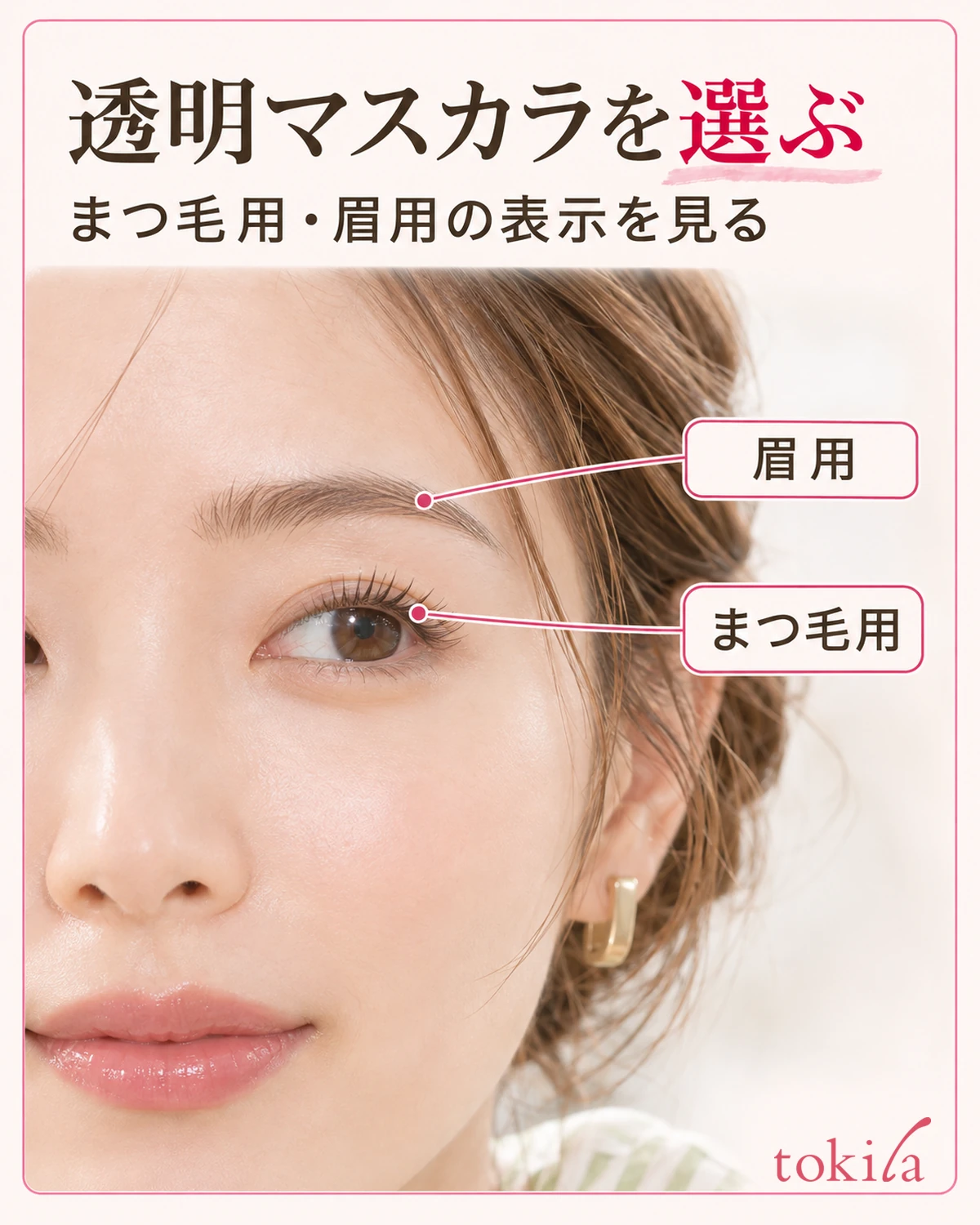
First decide whether you want to use it on lashes or arrange your brow hairs. Similar containers marked “clear” or “transparent” may be intended for different areas. Some explicitly serve both, but do not assume that any clear formula can be used on either.
For lashes, read the directions for use as mascara. Brow styling products and coats that protect drawn brows are not equivalent options, even if they look similar. Because the product goes close to your eyes, prioritize the match between intended use and directions over the impression its name gives.
If you want one product for both brows and lashes, shortlist those explicitly labeled for both. Then check application order and precautions for each area. Rather than transferring the brush motion learned for one area directly to the other, keep the separate directions available.
If your goal is to preserve drawn brow lines, that calls for different selection criteria from buying clear mascara. Put into words whether you want to arrange hairs or coat drawn areas; this makes similar shelves easier to navigate. Choose your main area and purpose first, then consider dual use.
When comparing containers, it helps to note the name of your current mascara too. Even within one series, shades and formulas can differ, so a note saying only “one clear product” makes compatibility harder to check. Keep candidates whose box directions and precautions you can review.
2. Separate subtle color from how hairs gather
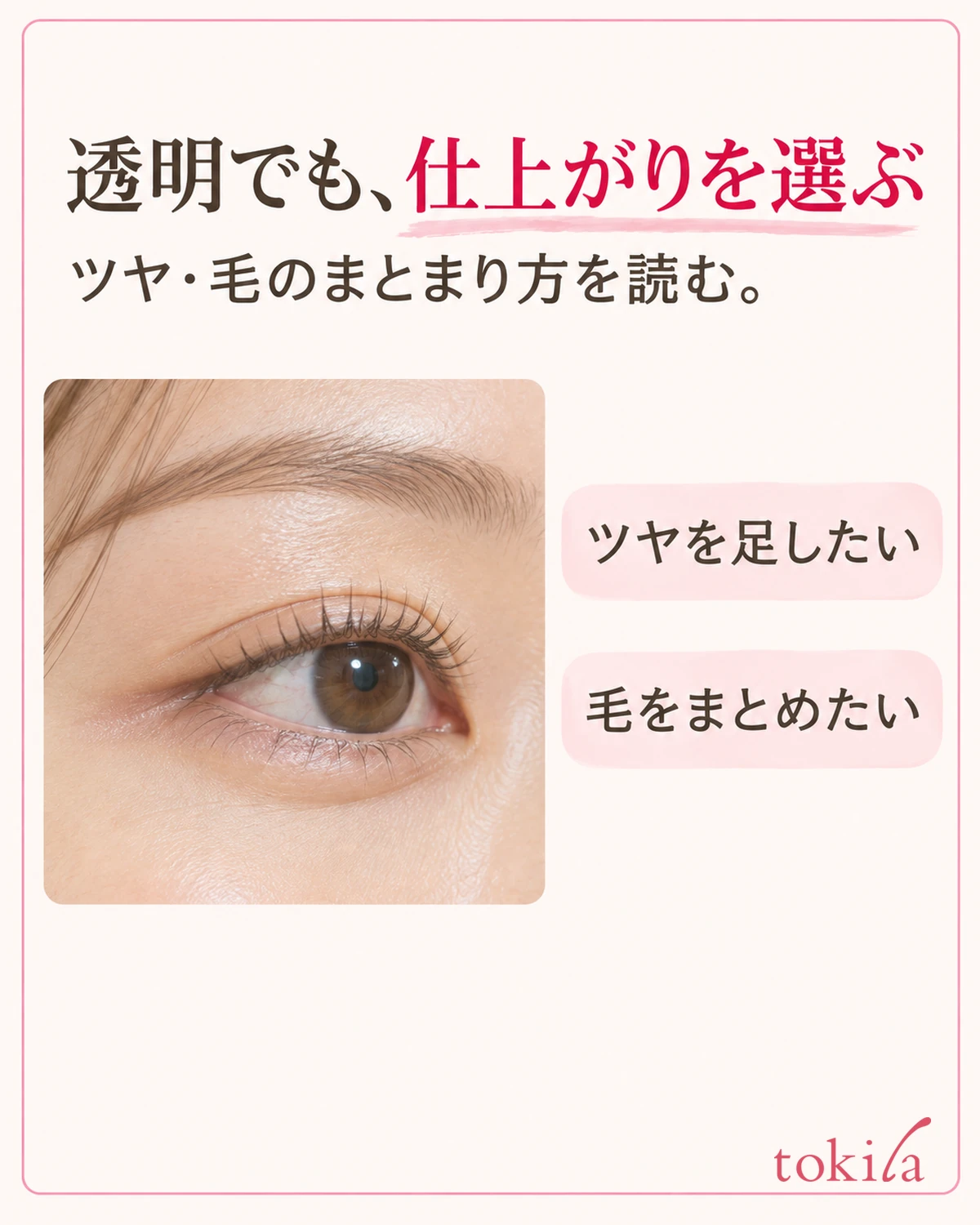
Next, specify what you want to change. Write down one wish, such as adding a restrained sheen, arranging lash direction, or creating defined clusters. If you aim for the same intensity as black or brown mascara, you may be tempted to keep layering after choosing a clear type.
Clear products do not all give one finish. Some are intended to gather hairs; others describe adding sheen. Subtle color, individually separated hairs, and clusters are distinct conditions, so read them separately rather than grouping them all under “natural.”
Alongside formula color, check for fibers, pearl particles, and similar additions. A formula that looks transparent in its container does not necessarily have the same particles or fibers as another. Someone wanting added fibers and someone wanting their existing hair outlines to show will shortlist different products. Look at both the formula and the finish description.
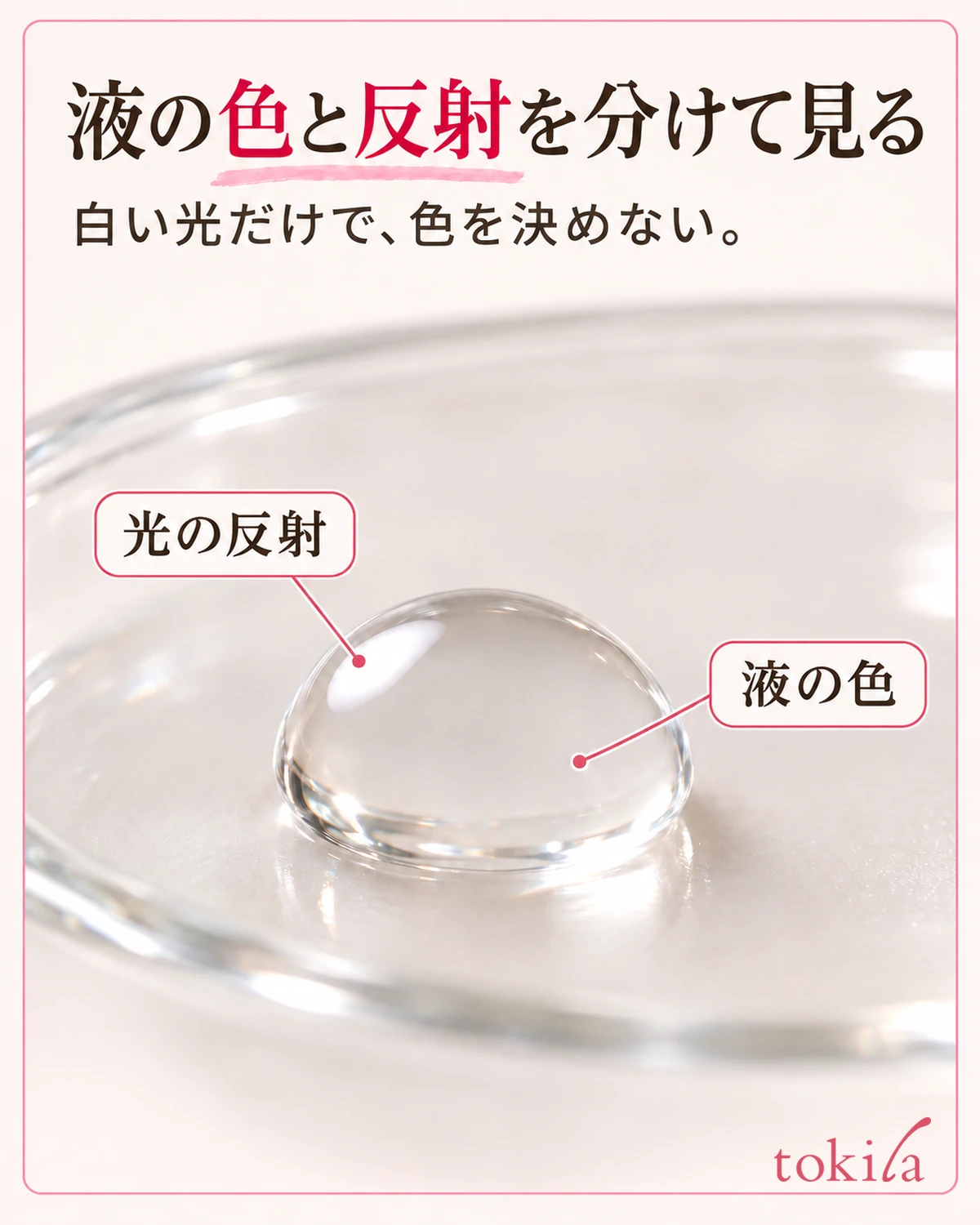
When viewing comparison photos, check angle, lighting, original lash condition, and whether colored mascara was also used. One wet-looking, shiny photo does not mean every clear mascara will give that sheen. If the conditions are unclear, limit what you infer from the photo.
If you want to try creating clusters, you can also read How to Use Cluster-Lash Mascara. Before buying, look beyond the finished atmosphere and check whether the product supports the finishing steps you want to perform.
For example, a day when you want sheen without more color and a day when you want gathered hairs to define the eye line call for different descriptions, even if clear products are candidates for both. If you have a photo of your usual makeup, add words describing what you want to change. Use the photo to organize preferences, rather than judge efficacy.
3. Decide whether it is for solo use, a base, or a finishing coat
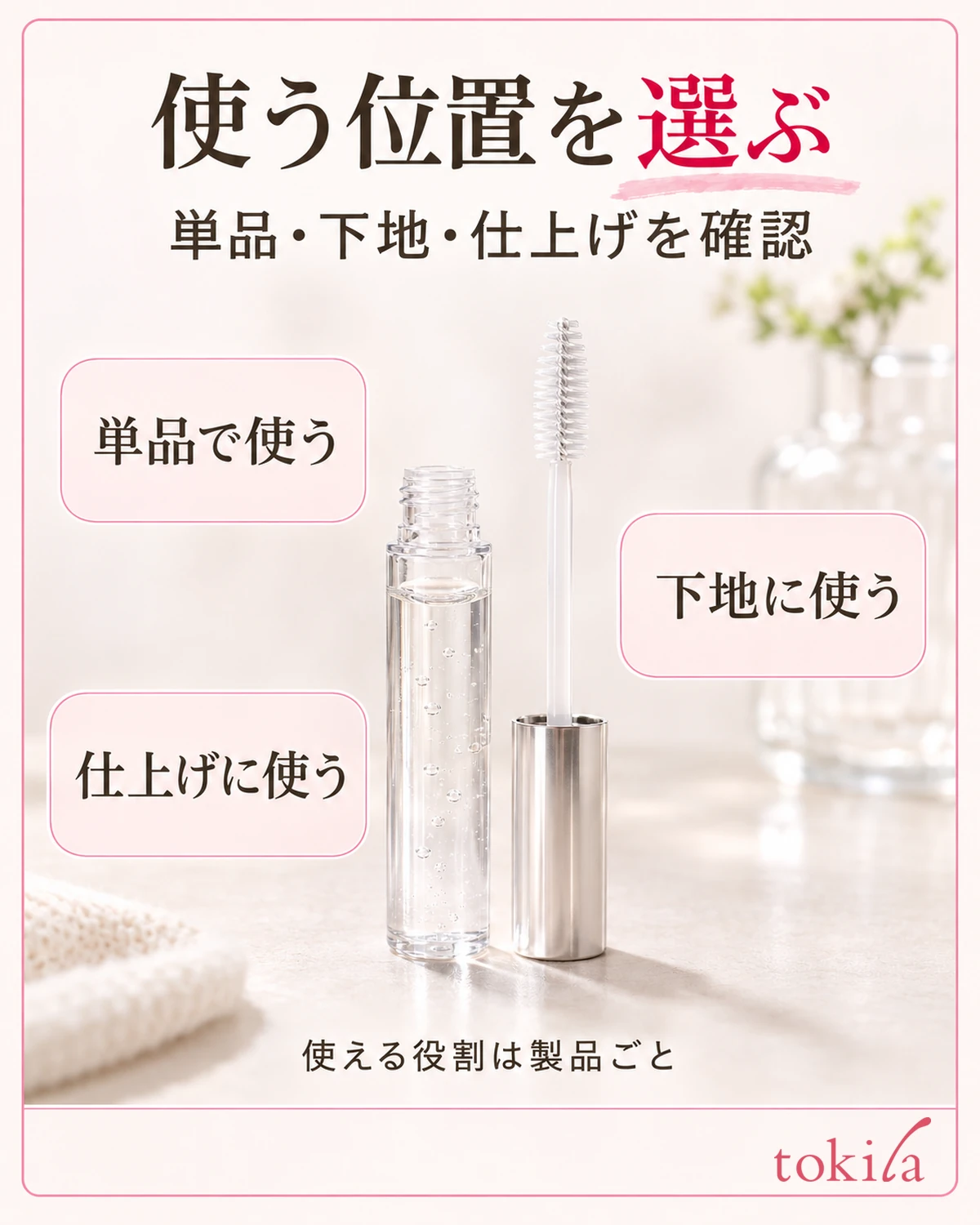
If adding clear mascara to your current makeup, decide its place first. Will you use it alone, before colored mascara as a base, or over it at the end? Some products serve multiple roles, but not every clear mascara supports all three.
For solo use, examine the finish without colored mascara layered over it. For a base, read the instructions together with those for the next product. For a topcoat, check the conditions for applying it over your current mascara. Even with clear formulas, your reason for buying determines which sections to read.
Follow each product’s instructions for drying and handling before layering. Do not invent universal waiting times or a rule to always layer before drying. For combinations with unclear compatibility, checking conditions before buying both at once helps you plan the steps.
If you already use a mascara base, check whether the new clear product duplicates its role. Rather than adding a second base for its own sake, decide which step you want the product to handle. Choose a priority instead of assuming one product will provide curl, sheen, and clusters alike.
If writing down your morning routine, place the candidate before or after colored mascara and note whether the directions support that position. If it cannot be used where planned, compare another option rather than forcing it into a different use. Choosing order is separate from increasing application amount.
4. Match brush thickness and tip to the area you want to coat
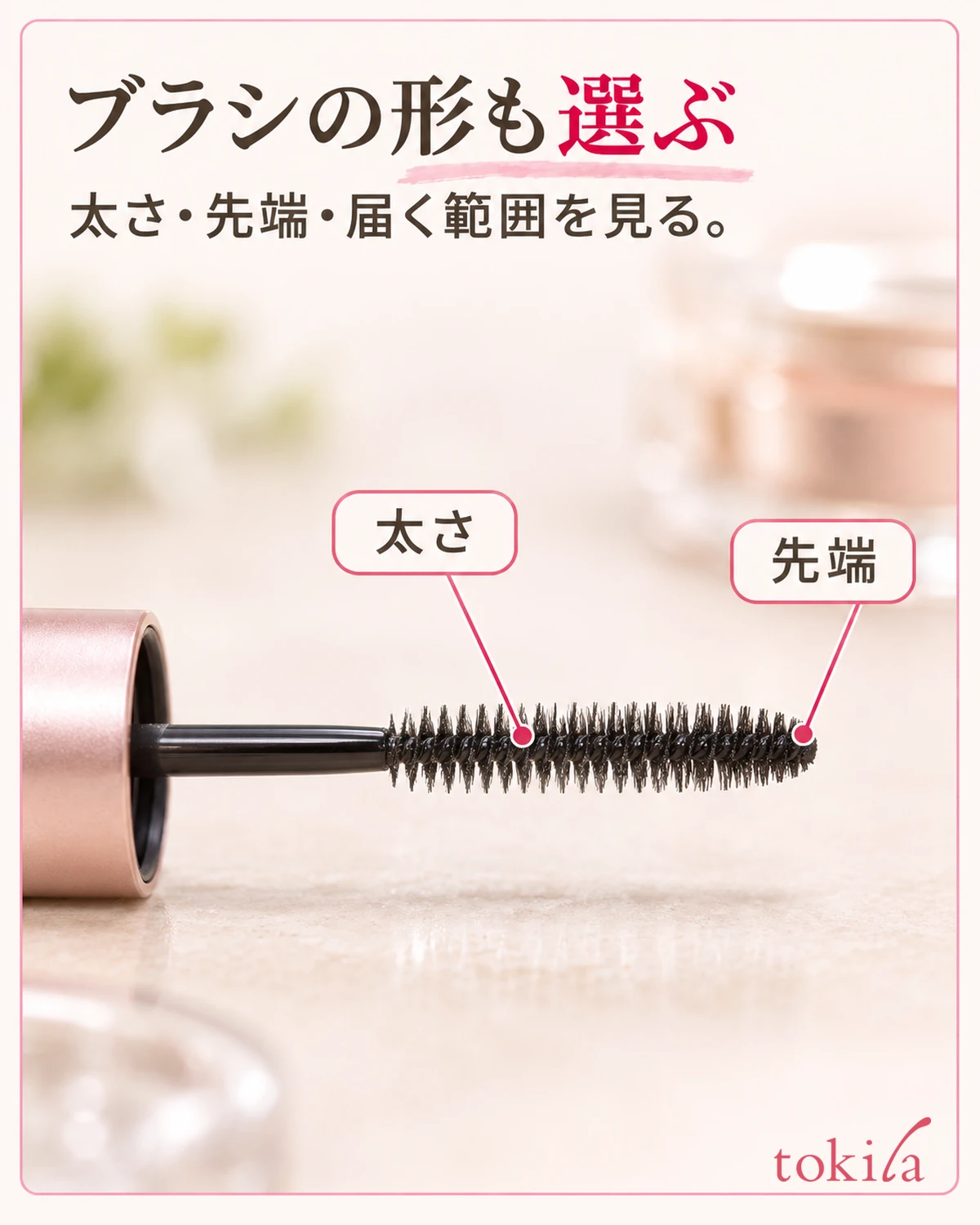
Once you have narrowed the choices, look at brush or comb shape. Consider whether you can see the tip relative to lash length and the target area, and whether a thick part would come too close to your eyelid. Clear formulas still require checking the contact point; less visible color does not automatically mean easier handling.
The parts that carry formula vary: spiral bristles, thin combs, or metal grooves, for example. Do not rank them by apparent slimness alone. Look separately at overall thickness, tip roundness, and the surface that holds formula. Include any material precautions alongside your shape preferences.
If you also want to use it on lower lashes or outer corners, first read whether those areas are supported, then picture the space needed to move the tip. If large brushes do not suit you, a fine tip or maneuverable shape can be an option. A slim shape does not mean it can be inserted deeper toward the eye rim.
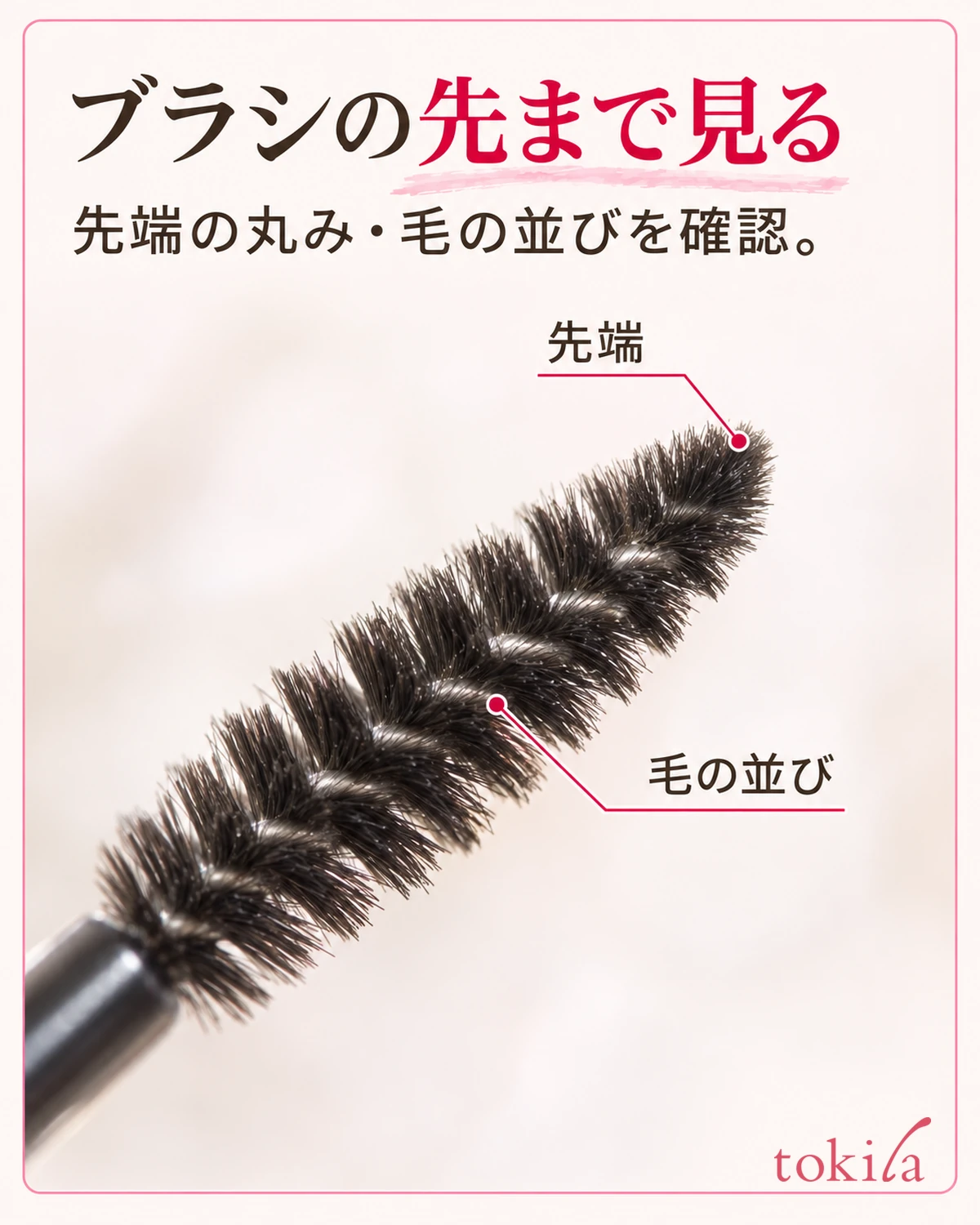
For brush-tip photos, look for visible bristle or groove arrangement. A photo of the container alone does not reveal the shape of the part that carries formula. Check whether the tip is rounded or changes thickness along its length, and consider whether you can see it in your usual holding position.
When checking a store tester, follow the store’s guidance and avoid applying a shared brush directly to your eyes. Even if you cannot inspect an applied result, shape and handle length can help narrow your options. Do not treat ease of use as established before actually using it.
Look at the handle too. Even if you prefer a slim handle, a different distance to the brush changes where you view its tip. Separating a preference for compact shapes from the ability to keep sight of the tip in your hand helps you move beyond appearance alone.
5. Include removal and the conditions of the day
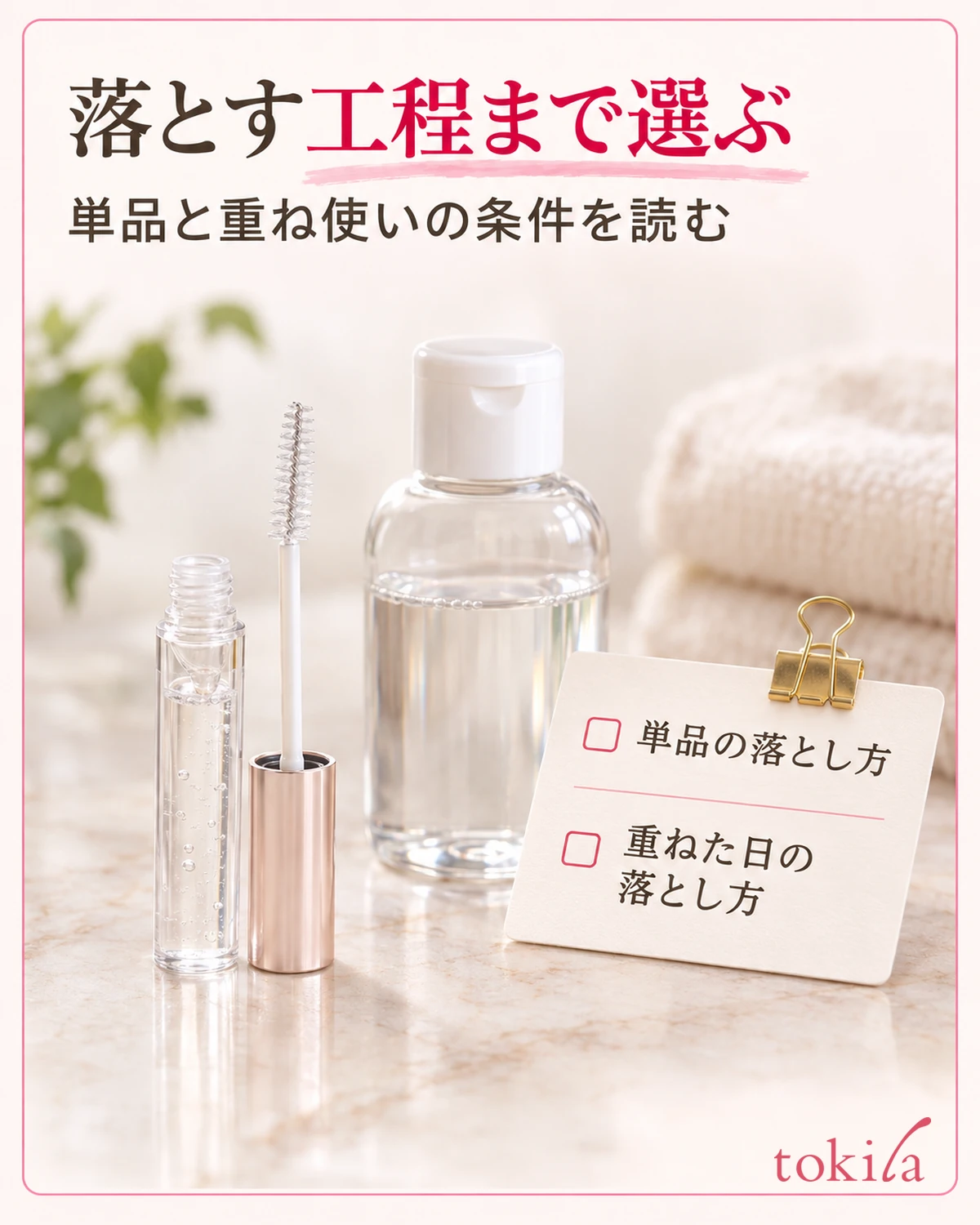
Finally, choose with removal in mind. Do not assume that clear means face wash alone is enough or that hot water removes every formula. Whether a product specifies warm-water removal or a remover, read its own directions and precautions and see how it fits your evening routine.
Separate removal when used alone from removal when layered over another mascara. The top clear product’s label does not establish that the makeup underneath comes off the same way. Align the conditions of the products you combine and confirm a removal method suitable for both before choosing.
If you have lash extensions or a lash perm, check the conditions for that state too. Transparency or a description of beauty ingredients alone does not establish suitability after a treatment. If support is unclear, hold off and compare the product conditions with your treatment provider’s guidance.
On first use, follow the labeled amount and directions and check the finish gradually. If redness, swelling, itching, irritation, or other abnormalities occur, stop using it and follow the product precautions. Difficulty seeing clear formula does not mean it places no burden on the skin or eyes.
When deciding, write one line each for “area,” “desired finish,” “layering position,” “brush shape,” and “removal.” If everything does not align, return to your main intended occasion and prioritize. Choosing a product with a clear role in your routine also makes getting started easier after purchase.