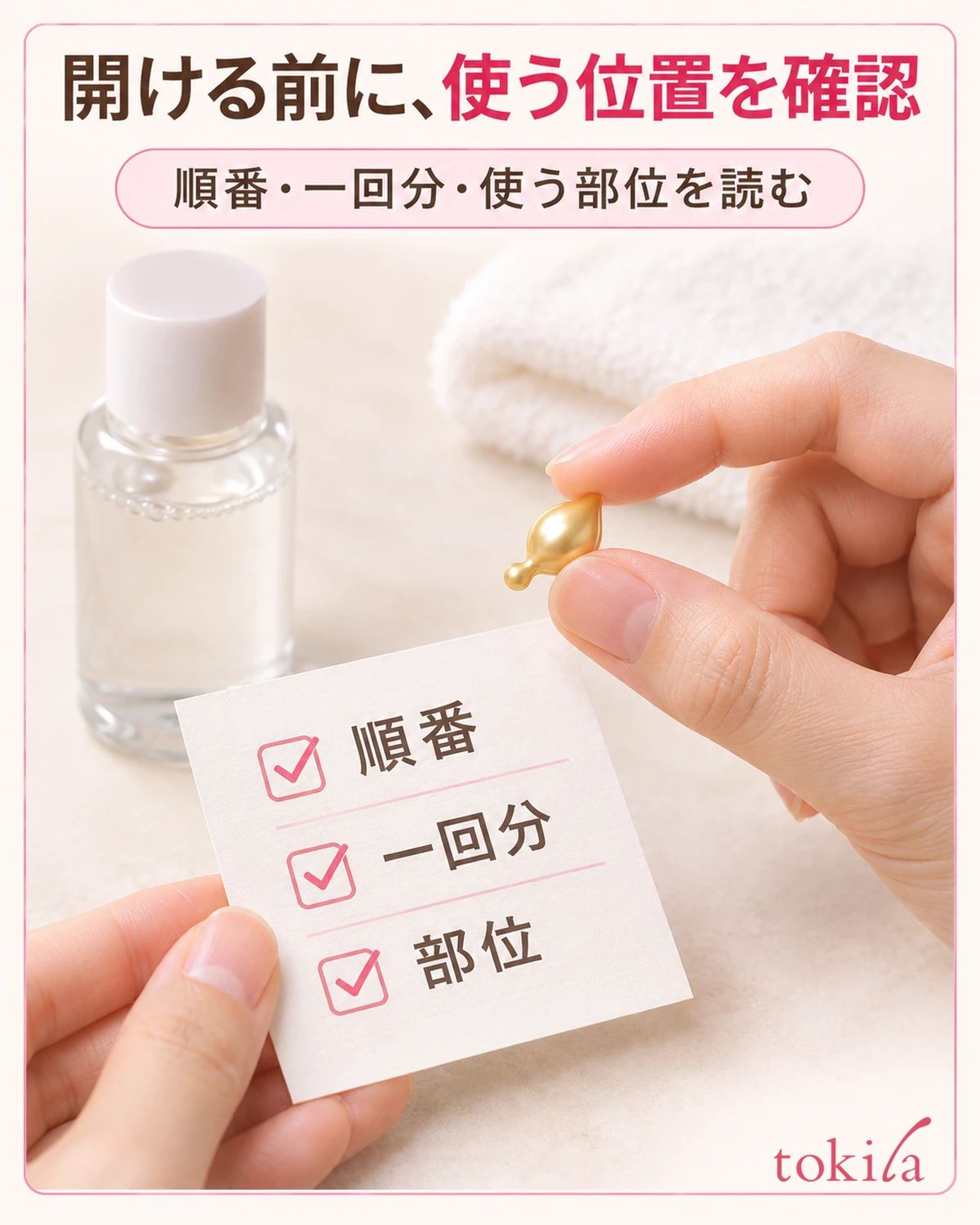
You want to choose a liquid highlighter, but they all seem to add glow and you cannot tell them apart. Before looking at shade names, decide when, where, and how you want to dispense and use it. Although they are all liquids, whether they can be mixed, layered as a finishing touch, or used around the eyes varies.
This guide organizes the conditions to consider before buying. Rather than explaining how to correct a white cast or excess application, it compares five factors: intended use, the appearance of the light, application order, the dispenser, and removal. Look for one that fits your makeup routine while making use of your existing foundation.
1. Decide whether to highlight specific areas or mix it into your base
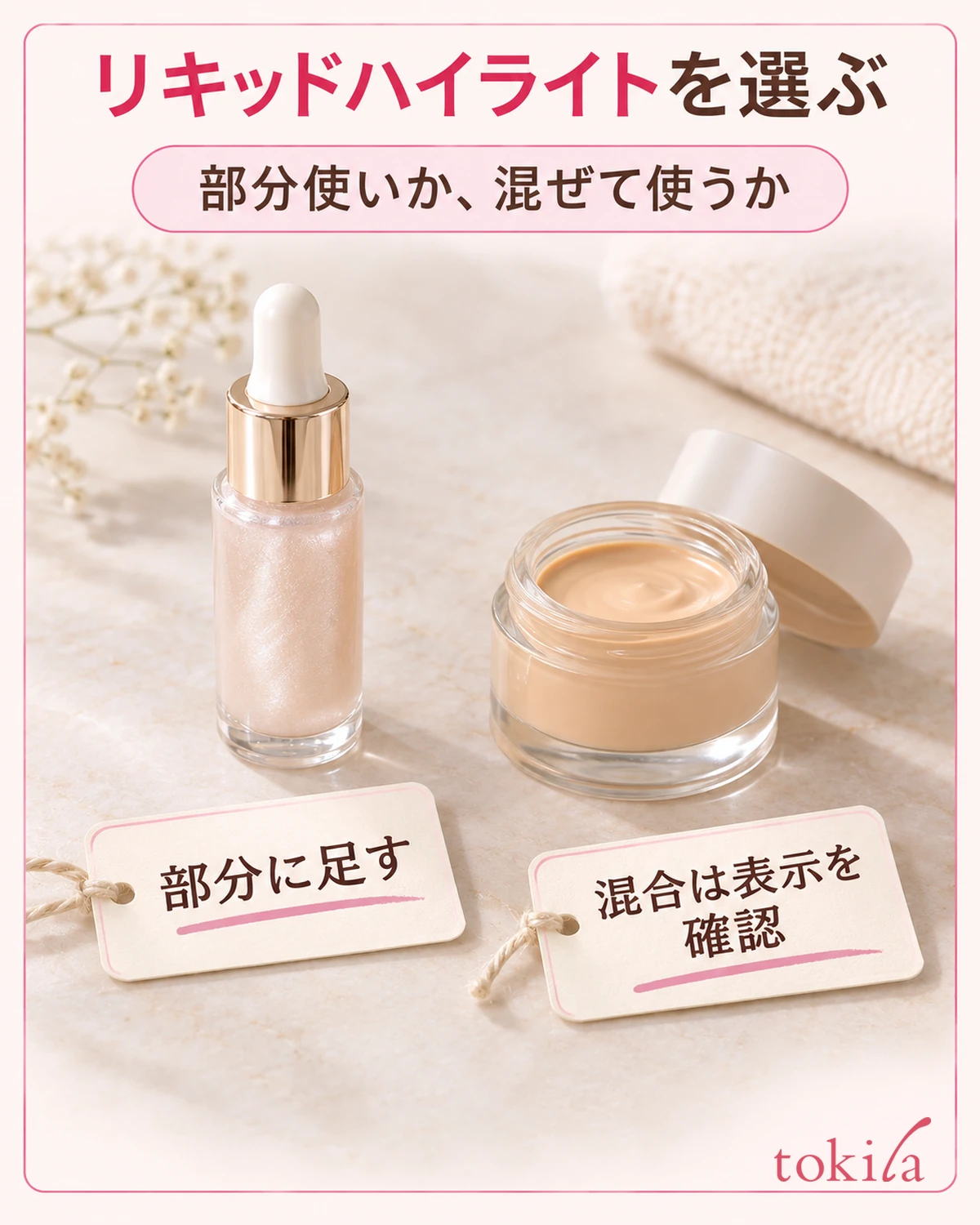
First distinguish between adding light to an area such as the cheeks and changing the texture of your base makeup overall. For the former, an important condition is whether you can dispense a small amount precisely. For the latter, you must also check whether mixing it with foundation is permitted. Being liquid does not mean it can be mixed with anything.
For example, if you want to add a little glow to your finished cheeks in the morning, check whether layering it as a finishing touch suits your purpose. If you are looking for a primer for your entire face but choose a product intended for small dots on specific areas, you may struggle to match the coverage area and amount. Read its intended use before judging its role by the container size.
Even when mixing is described, treat that as a condition for that particular product. It does not guarantee compatibility with your existing foundation. In particular, do not assume that reducing the amount of sunscreen or a UV-protective base, or adding another liquid yourself, will maintain the labeled UV protection.
When choosing, write down one preference, such as highlighting the cheeks or mixing it into your base, and keep candidates that explicitly allow that use. If the intended use is unclear, read the directions on the container or box instead of deciding by appearance. A product for specific areas does not need to serve as an all-over glow product too.
If you like your current base finish and only want to change the light on your cheeks, you can keep your initial goal that focused. Conversely, if you want to change the texture of your entire face, do not compensate by spreading out a product meant for small areas. That one sentence before choosing helps align the candidates and situations you compare later.
2. Separate the remaining color from the appearance of shimmer and glitter
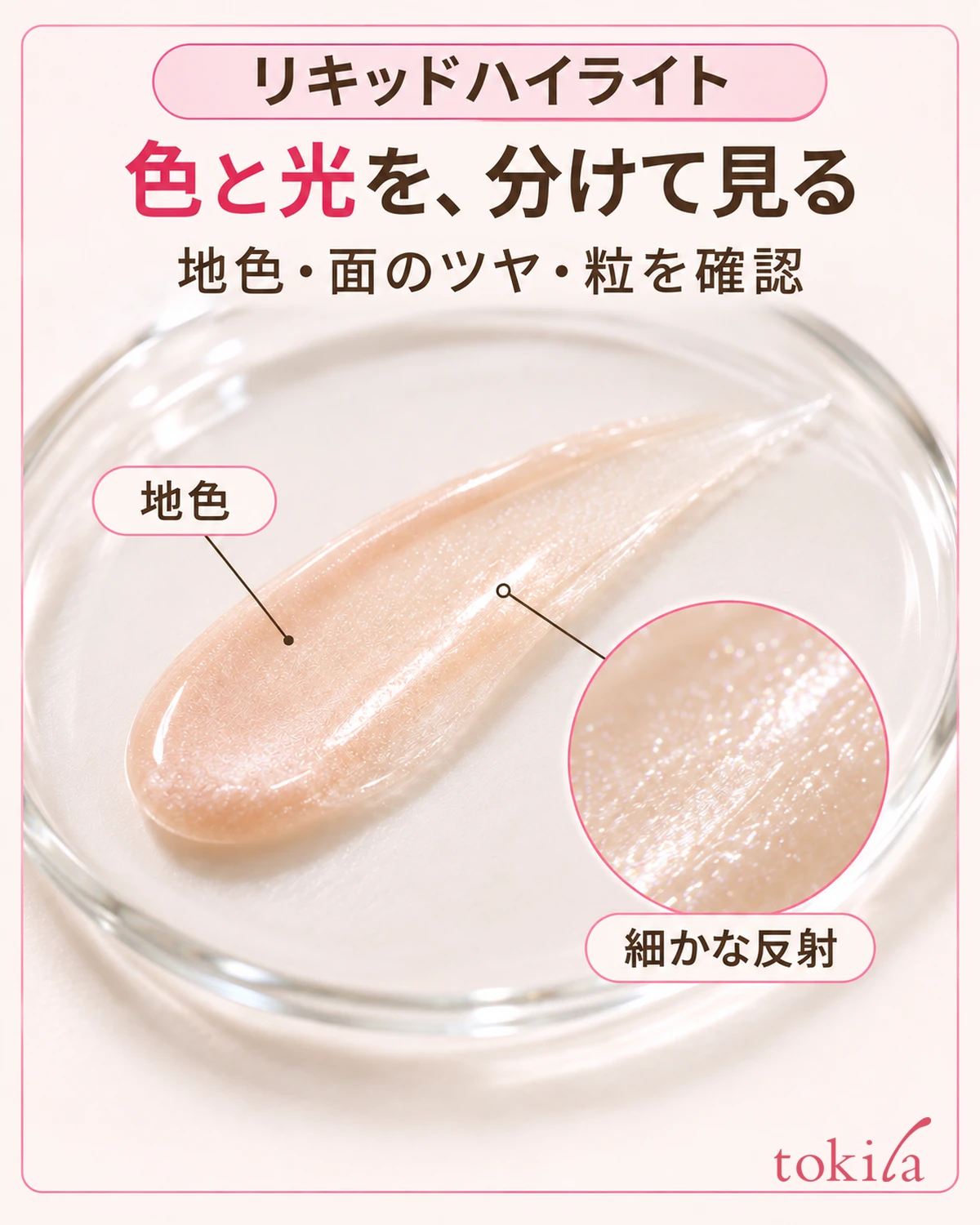
Next, look at color and light separately. Shade names such as white, pink, or beige do not tell you how much base color remains when spread thinly. Distinguish product images showing a concentrated amount from those showing a small amount blended out. It is also important not to expect it to play the same role as concealer that covers discoloration.
Light can appear as a continuous sheen or as sparkle with individually noticeable particles. One product may contain both. Rather than classifying it by name alone as liquid with only fine light or pearlescent with no visible particles, check the finish description and photographs of a thin application.
When comparing, keep the location, lighting, amount, and area as consistent as possible. If only one is turned toward a spotlight or applied thickly, product differences become mixed with differences in conditions. Screen colors also vary with display settings, so do not determine how it will look on your own cheeks from photographs alone.
If possible, discuss the color seen straight on and the light seen from a slightly different angle separately at a store. Put your preferred appearance into words, such as subtle color with light visible as you move, or enjoying noticeable sparkle. Neither is ranked as more natural for everyone.
The photographs here explain what to look at; they are not test results for a particular product's color or longevity. Distinguish whether you need a brighter base color, a fine sheen, or sparkling particles, then check how that corresponds to each candidate's description.
3. Compare application order with your existing foundation
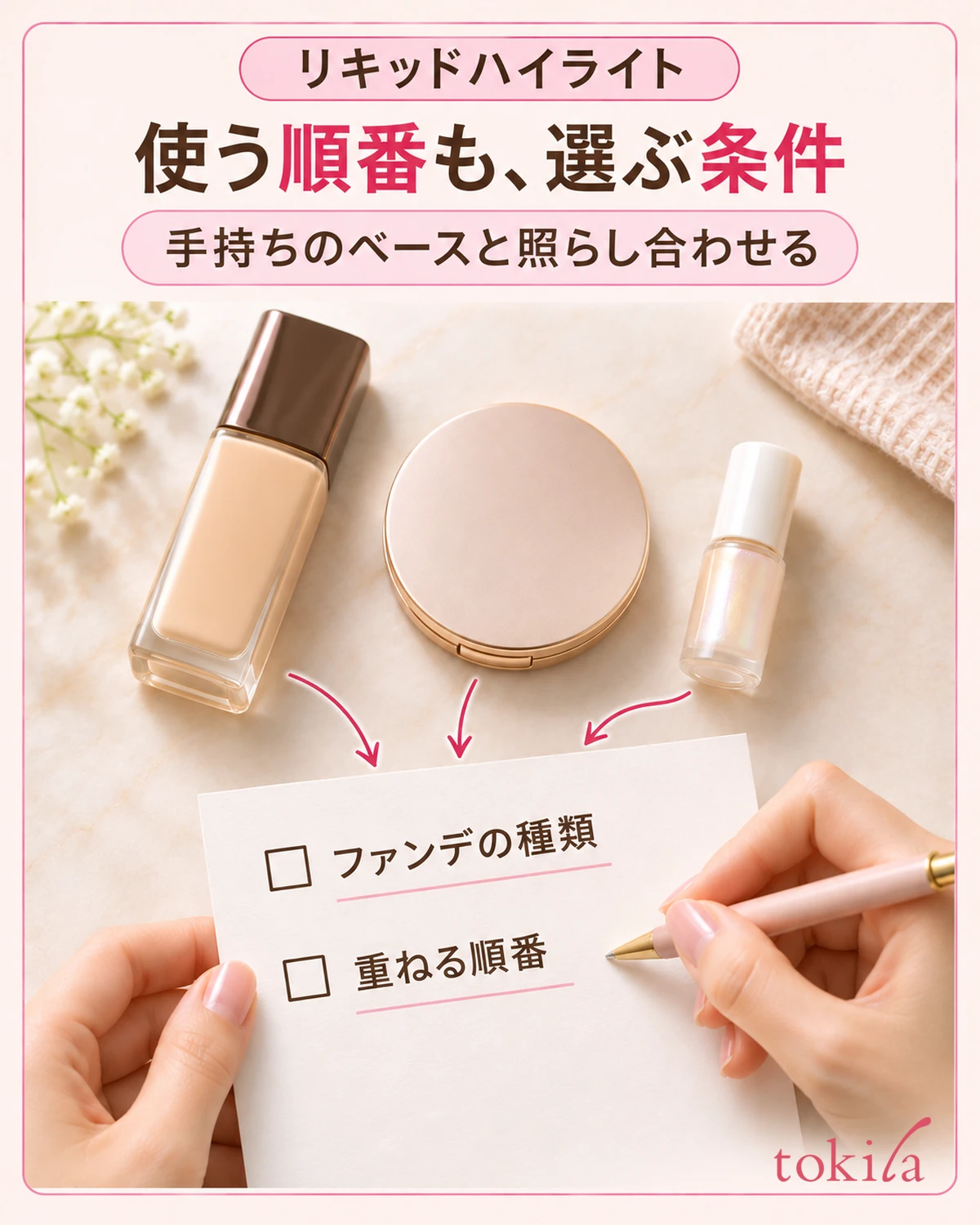
Do not assume all liquid highlighters go on at the very end of makeup. Some are specified as finishing products, while others may be used as a base for other makeup. Read the types and application order for both your chosen highlighter and your foundation to see whether they fit into your morning routine.
It helps to distinguish days when you use powder foundation from days when you apply face powder over liquid foundation. After foundation and after face powder do not necessarily refer to the same stage. If the meaning is unclear, do not fill the gap with another product's order.
In your pre-purchase notes, write down your current base type, the stage where you want to add highlighter, and the powder you will use afterward. Choosing among compatible candidates also helps you judge whether you would need to change your usual makeup routine. Even products with the same name may have revised directions, so use the labeling on the product you have.
If it creases or shifts when layered after purchase, order may not be the only cause. Separate the amount taken, how many times you rubbed, and whether the makeup underneath was settled. Instead of rubbing it in forcefully, check one area with a label-appropriate small amount and light movements. If the base keeps moving with that combination, you may need to stop layering it that day.
If strong shine or a white stripe is already visible, before adding more buying options, you can check how to fix too much highlighter. Keep choosing and correcting separate, and leave room for adjustments with what you already own.
4. Consider how to dispense it from an applicator or dropper
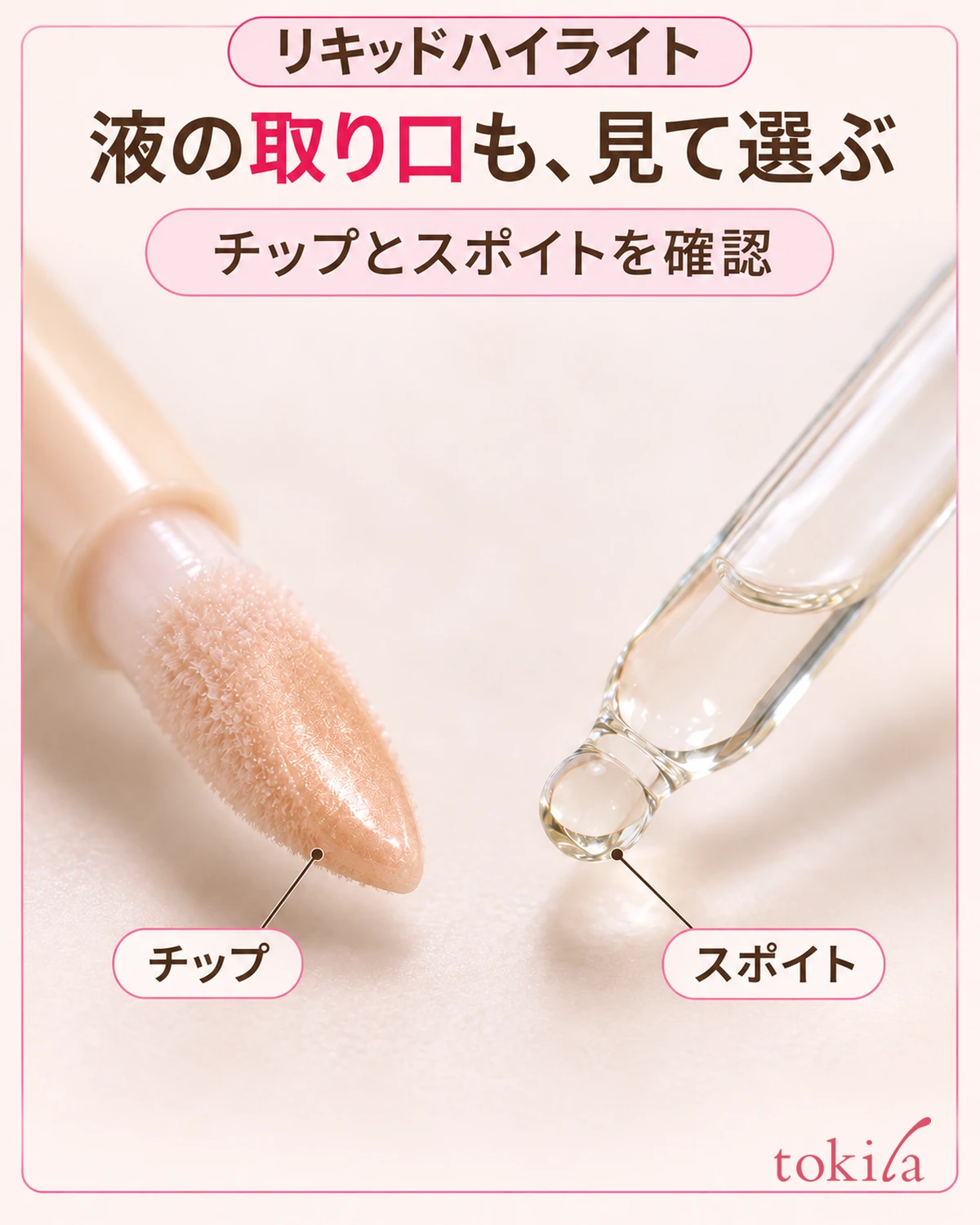
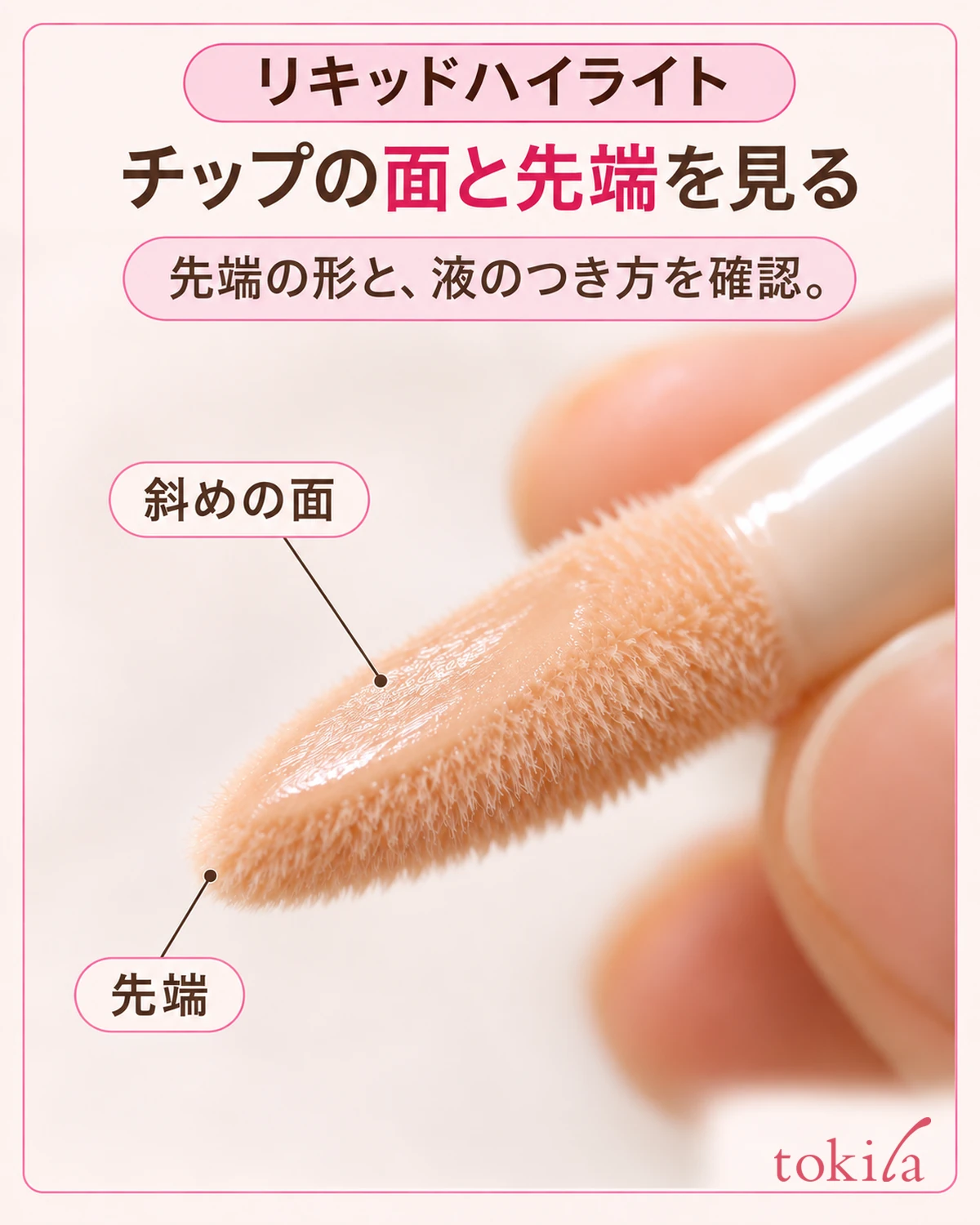
When examining the container, check whether it uses an applicator or a dropper to dispense the liquid. With an applicator, look at the width of its surface and the tip shape; with a dropper, look at the tip shape and dispensing action. However, a narrow tip does not always mean a small amount, and a single drop is not the same volume across all products.
Read whether the applicator is intended to touch the face directly or whether there is a method for dispensing onto the hand and blending with fingers or a puff. If you want to adjust a small area, being able to imagine the dispensing stage can help you choose. Resembling a lip applicator does not mean it is suitable for lips. Keep shape and intended use separate.
Enlarge the applicator photo and look at the slanted surface and tip. The point is to see its shape and where the liquid sits, not to press the tip firmly against the skin. Do not infer superiority in softness, hygiene, or comfort from fiber length or liquid coverage alone; use it to help examine the physical structure.
If choosing a dropper, consider whether you can support the container with one hand and dispense with the other in your usual space. Think about how it fits your preferences, such as a quick morning routine or portioning onto the back of your hand. Adding other cosmetics or returning dispensed liquid to the bottle is not recommended as a convenience trick.
Follow the container's guidance for handling the opening or applicator after use and closing the cap. Do not apply the same wiping or washing method to different structures; also check how to handle liquid remaining around the outlet. Compare candidates by the full sequence from starting to storing, not only by price and volume.
5. Summarize permitted areas and removal before buying
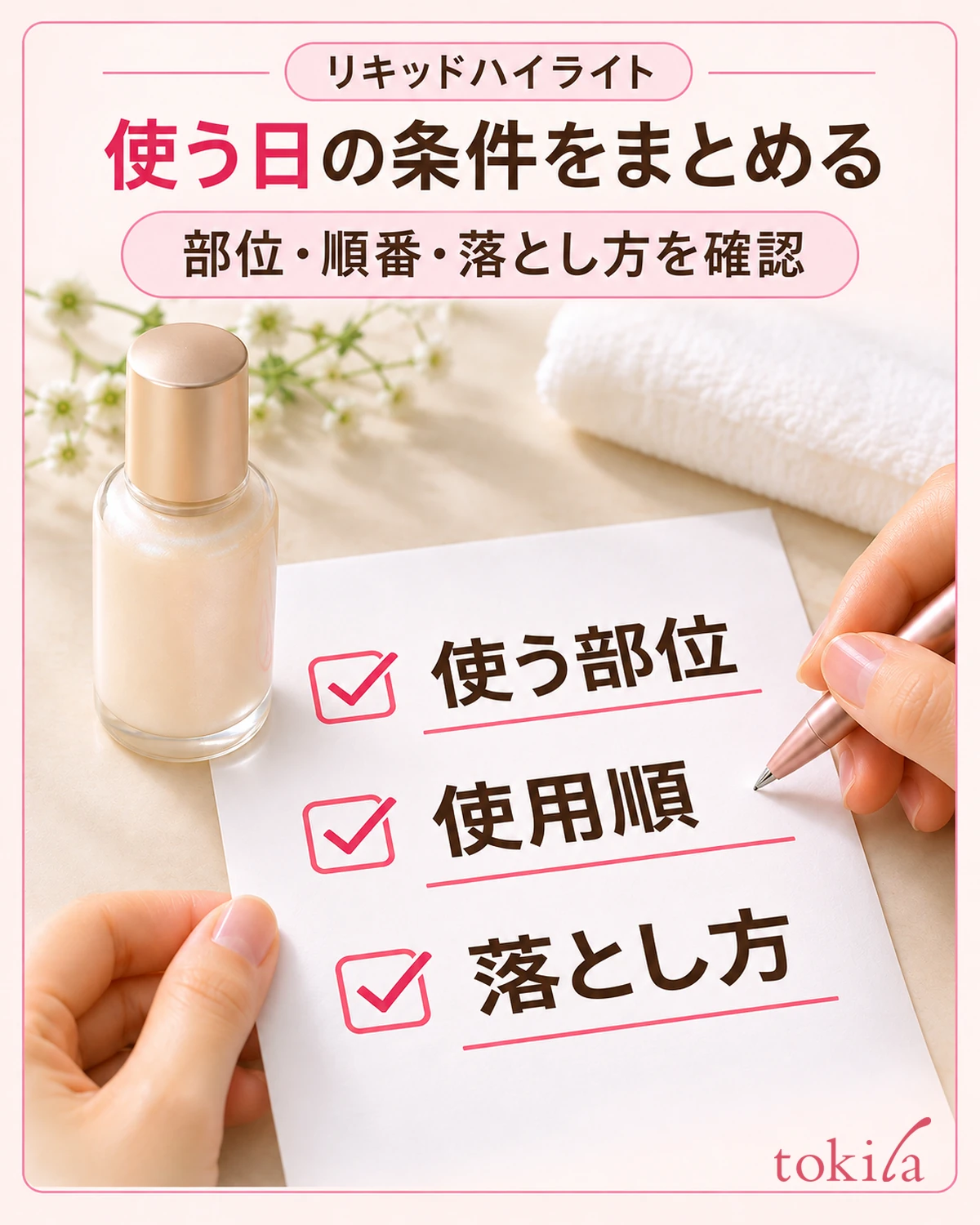
Finally, put your intended areas, base makeup order, dispensing method, and removal method on one note. Being suitable for cheeks is different from being suitable for eyelids or lips. If you also want to use it around the eyes, choose a product that explicitly permits that use rather than extending cheek directions to the lash line.
For removal, consider not only the highlighter's own instructions but also the primer, foundation, and other makeup layered that day. Even if a product is easy to remove alone, harder-to-remove makeup above or beneath it requires a method suited to the whole combination. Do not assume it washes off with facial cleanser simply because it is liquid.
If instructions describe dispensing onto the hand first, check the sequence of taking it onto your hand and then portioning small amounts onto your finger or other tool. You do not need to put all the liquid from your hand onto your face. Follow any specified amount, do not return leftovers to the bottle, and follow the instructions for handling it after use.
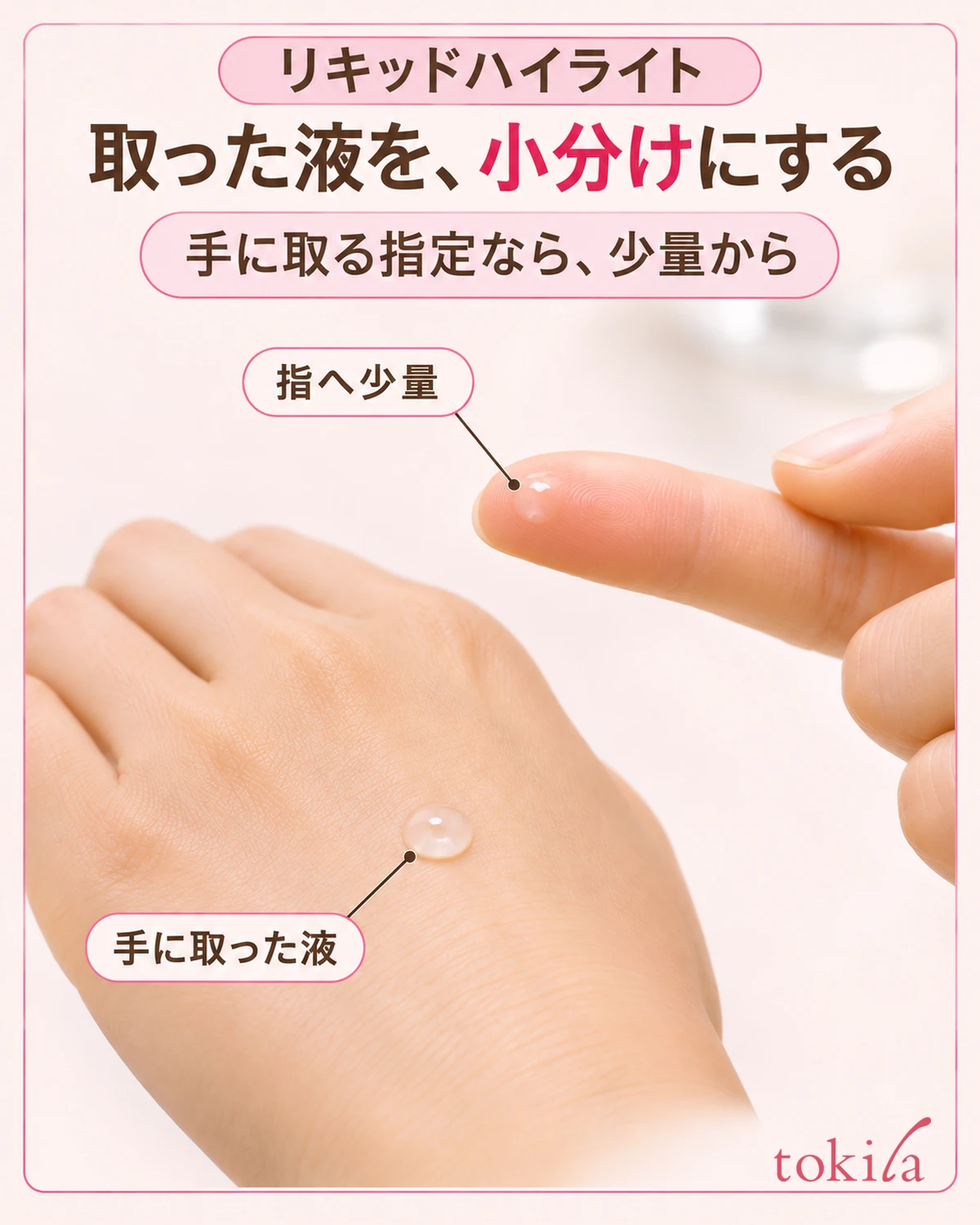
If several candidates remain, narrow them down using three criteria: the intended use fits, the order is clear, and the dispensing method is practical to maintain. Comparing color and sparkle preferences among candidates that meet those conditions makes choosing easier. Whether you enjoy noticeable light or a subtle touch, choose for the situation in which you will use it.
If redness, itching, irritation, or other abnormalities occur during use, stop and follow the precautions instead of continuing by adjusting the shine or amount. Keep choosing a suitable product separate from repeatedly layering to build an ideal glow. Saving your selection criteria gives you a basis for comparison when buying again.