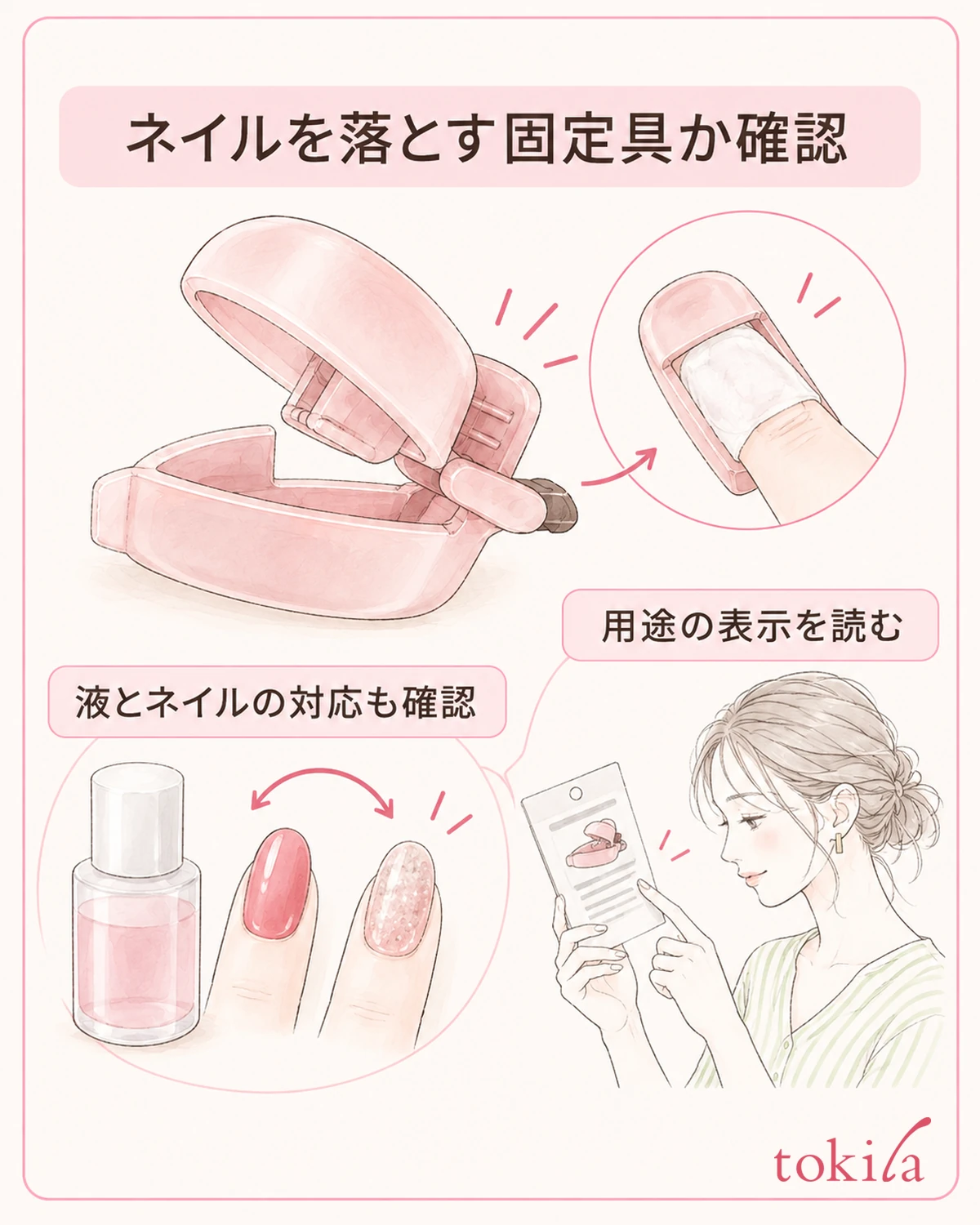
You pick up a cotton swab to fix your makeup, but the tip is bigger than expected, the two ends are shaped differently, or you cannot decide between a dry one and one soaked in liquid. In that case, before touching your skin, try matching "what you want to fix and over what area" with how the swab is made.
This article covers choosing cotton swabs for tidying makeup on the outer areas of the face. It sums up how to tell round, pointed, and flat tips apart, the difference between dry and wet, and preparation for taking them out and carrying them. It is not a procedure for cleaning ears, or for use inside the eyes or on mucous membranes.
1. Decide the area you want to fix, and look at the shape and size of the cotton tip
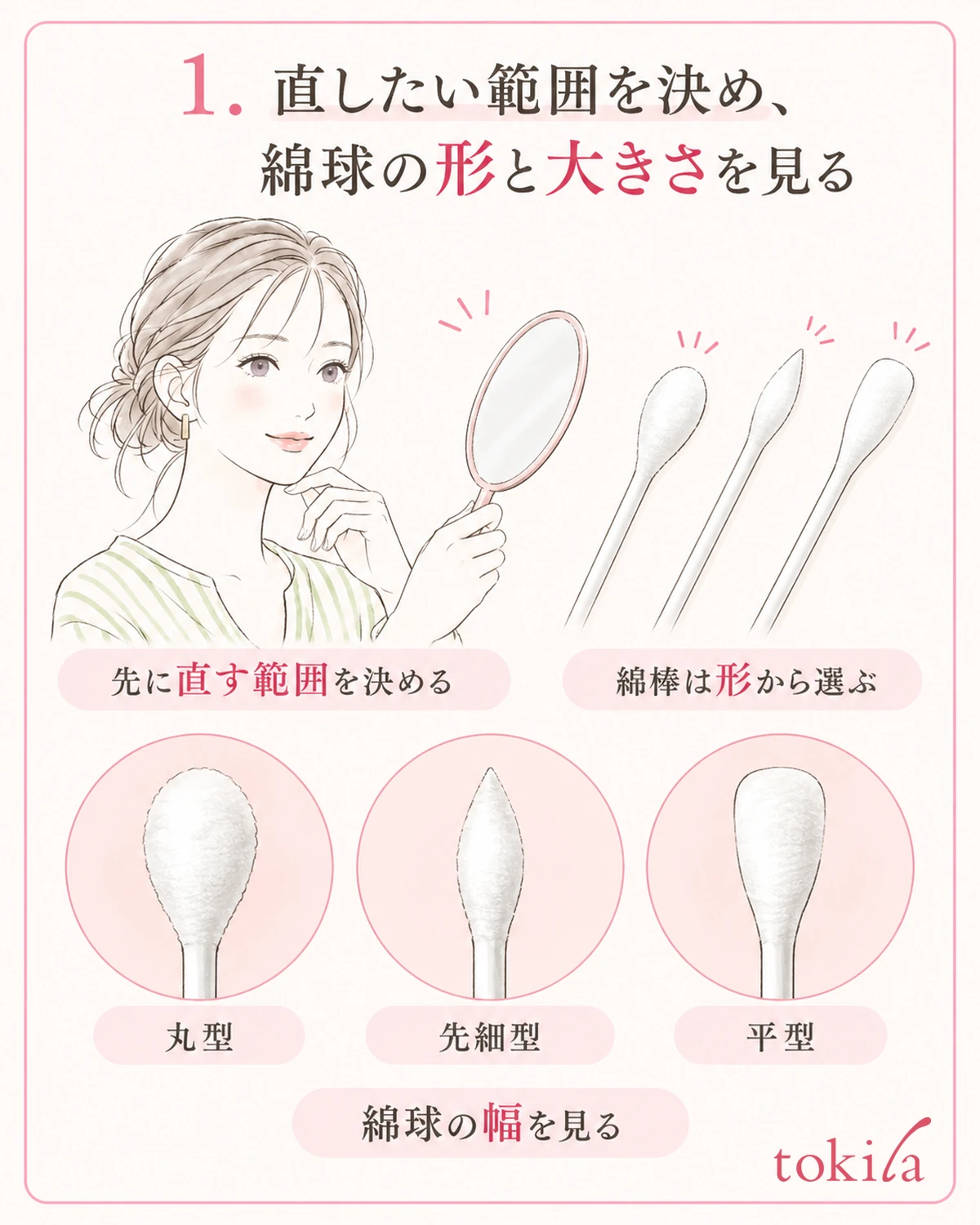
First, pick one spot that bothers you in the mirror. Is it color that has strayed slightly outside the lip line, powder that has fallen onto the cheek away from the eyes, or a border you want to blur? Removing color and blending the color you left in are different tasks, and the area you want to touch differs. Do not touch with the tool first and decide the purpose afterward.
Next, read the packaging to see whether it is meant for makeup, and look at the tip of the cotton from the side. Some are round and thick, some taper toward the tip, and some have a flattened wide surface. A thin shaft does not always mean a small tip. Check the thickness of the shaft separately from the size of the cotton that touches your skin.
If the two ends of a swab are shaped differently, deciding which one to use before taking it out makes choosing easier. Combinations are not uniform either, such as pointed with round or pointed with flat. Flip it over to look at the left and right tips and grasp which surface you want to use. The photos are enlarged to show the shapes, but check actual dimensions against the labeling on the product you have.
There is no need to run the swab back and forth many times to fix a large area in one go. If the base over a wide area is smudged, do not try to fix it just by changing the swab's shape; choose the touch-up process itself again. Refer also to the order for touching up makeup, and separate fixing a spot from redoing a wide area.
Before buying, compare the tip shape, dry or wet, and packaging in that order. Do not judge that something suits every detail just from the name "professional" or "for makeup." First check whether the one you have now fits the area where you have trouble, and once you know the shape you need, narrow down candidates so you do not accumulate too many similar tools.
For example, if you want to remove a dot of color outside your mouth but press the whole round cotton tip on, it may also cover the outline you want to keep. Conversely, if you want to rework a wide border but keep touching it with just the point of a pointed tip, you tend to lose track of how far you have moved it. Adapt the actual way of using it to what you have, but putting into words the width you want to touch first makes the purpose of choosing a shape clear.
2. Choose round, pointed, or flat to match the surface you want to touch
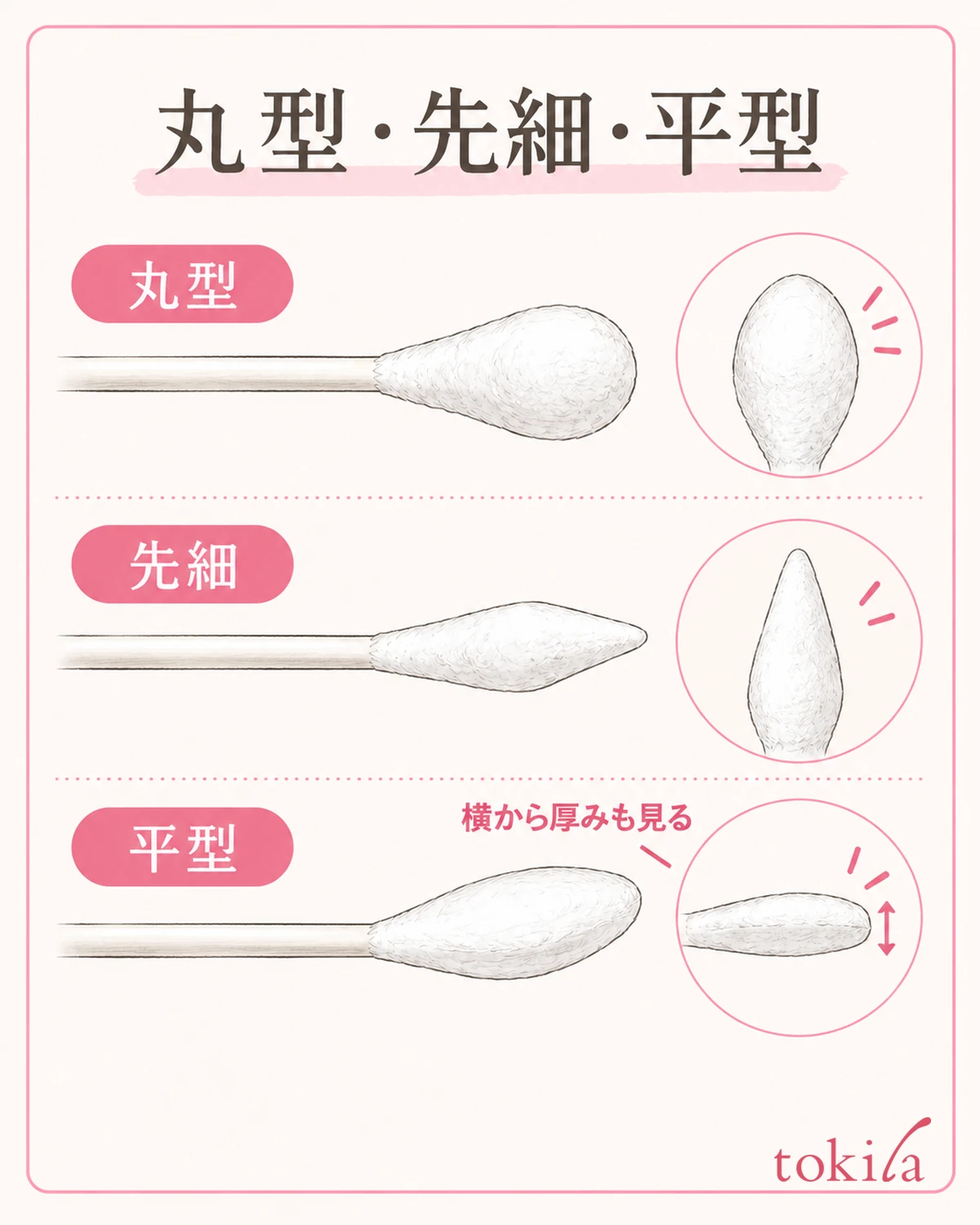
Tell them apart this way: round has a rounded cotton tip, pointed has a cotton tip that narrows toward the end, and flat has a cotton tip with a thin, spread-out surface. Even under the same name, size and how the cotton is packed differ, so the three names alone do not determine how it feels to use. Look at the shape first, then match it to the place you want to touch.
When you want to tidy the outside of a small dot or a thin outline, a pointed tip that is designated for makeup details is a candidate. However, a pointed shape is not meant for pressing hard. Do not jab the tip into your skin, and do not put it inside your eyes or under your eyelids. Keep it separate from tools used to probe hard-to-see places.
Compared with using it to trim an outline at a single point, a round tip tends to touch a wider width. If it looks likely to move the color you want to keep along with it, reconsider which surface to use before touching. Rather than squashing a round tip with your fingers to force it thinner, choosing another swab whose use and shape match lets you handle it while keeping its original shape.
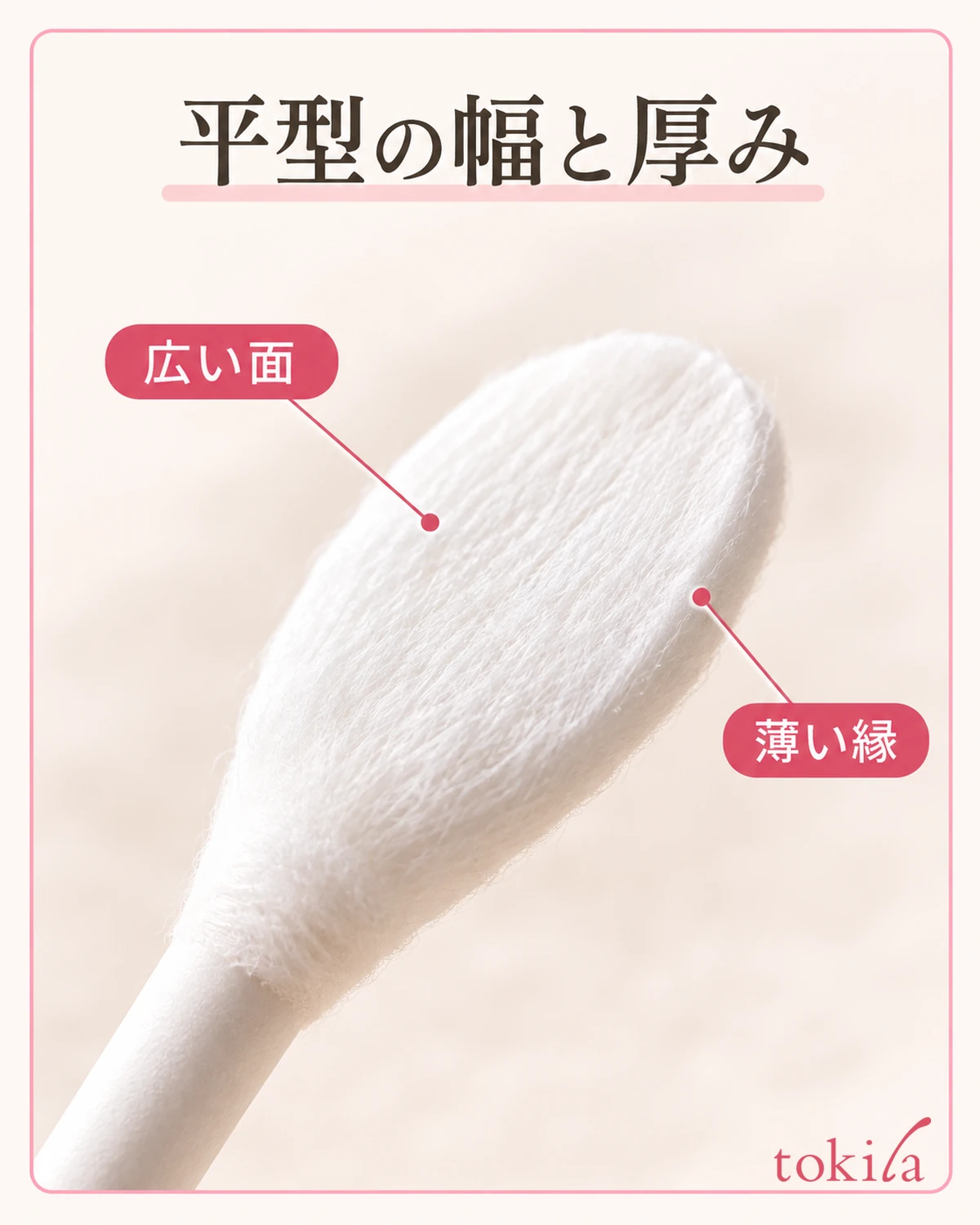
For a flat tip, telling the thin side from the wide surface is the clue for choosing. From the front alone it can look similar to a round one, so hold the shaft, change the direction, and check the thickness. Whether to use the wide surface or the edge follows the product's instructions. Being flat is not a guarantee that it will always blur cleanly.
When comparing shapes, there is no need to press the cotton with a fingernail to test its firmness or pull the cotton to make it thinner. If an unused one has lost its shape, the tip looks about to come off, or the shaft is bent, hold off on using it rather than testing it on your skin. Do not modify it yourself; choose one in a condition that suits the purpose.
3. Treat dry swabs and swabs soaked in liquid as separate tools
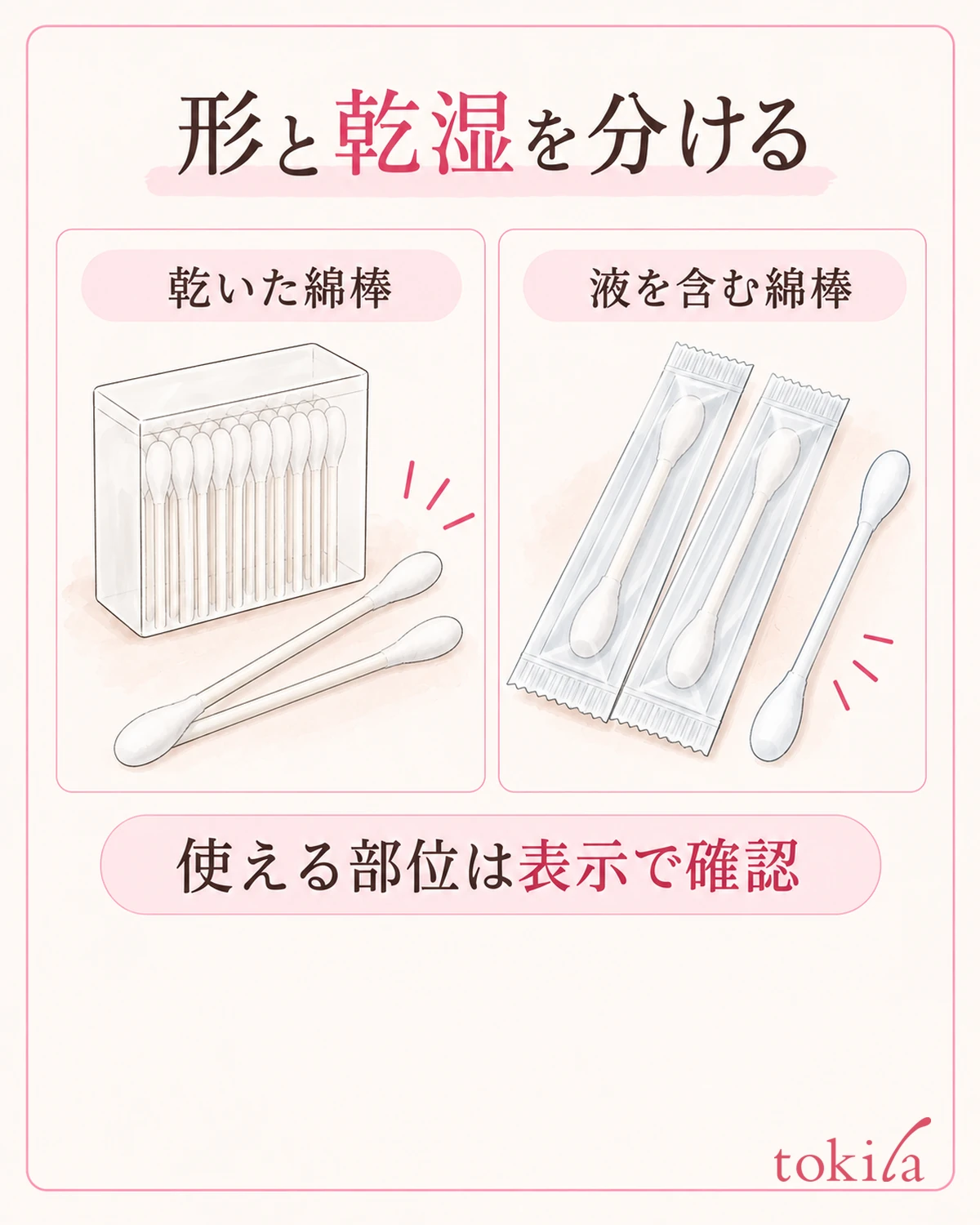
Even with the same tip shape, a dry swab and one that comes pre-soaked with something like cleansing liquid are handled differently. Read not only the product name on the package but also the contents and the parts of the body it can be used on. If it is hard to tell by looking, do not open it and test it on your skin; check the labeling before choosing.
Choosing a dry swab is a different matter from being able to remove any cosmetic dry. Do not rub over and over to remove color that does not come off easily; follow the way that makeup is meant to be removed. If you add liquid, check whether the instructions for both the swab and the cosmetic allow it, and do not mix different liquids on your own judgment.
For soaked types, read the way to open it, the parts of the body it can be used on, and how to handle it after use as one set. Check individual instructions for whether it can be used around the eyes or mouth, and do not assume that because it is for cleansing it can be used anywhere on the face. Nor do we rank them uniformly, such as liquid being stronger or dry being gentler on skin.
When you remove part of your makeup, the base underneath can come off with it. Do not rush to layer on top of just the spot where you removed color; look at the liquid left on the surface of the skin and the difference from the surrounding area, and tidy up following the steps for the products you have. If it is an area that needs sun protection during the day, also consider reapplying to the area you removed.
When color has transferred to the cotton and you can no longer tell which surface is clean, switch to a new one. Whether you can use both ends of one swab is a separate question from whether you can wash a soiled tip and use it repeatedly. Do not return used ones to the container of unused ones, and dispose of them following your product's instructions and local sorting rules.
4. Hold the shaft when taking one out, and keep spares separate from used ones
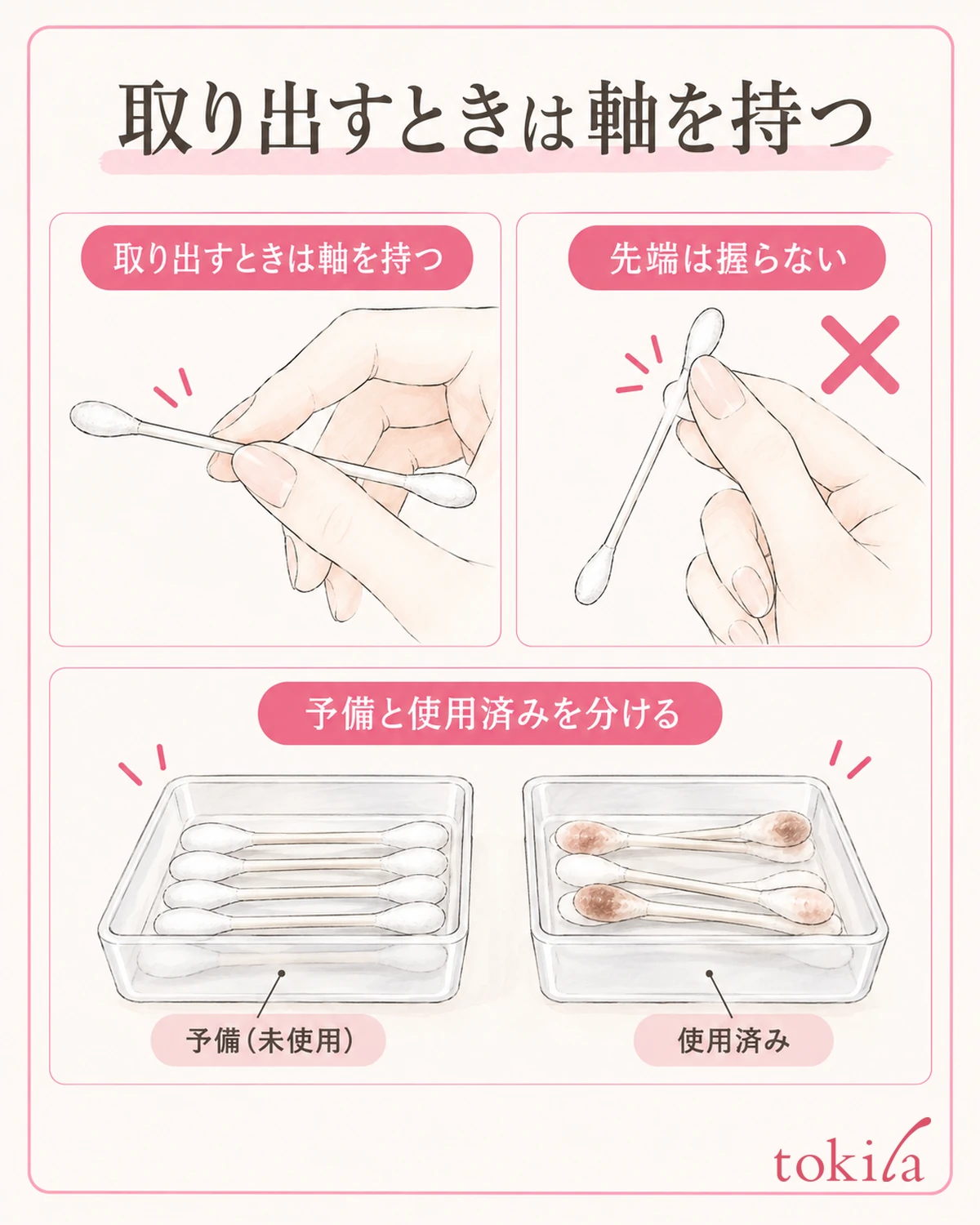
Before taking out a swab, get your hands and the place you put things in order. If you handle foundation or powder over an open case, it can get onto the unused tips. Place it somewhere that scattered cosmetics are unlikely to reach, such as the edge of where you do your makeup, and put the lid back once you have taken out what you need.
What you pinch is the shaft, not the cotton. Following how the container opens and its outlet, take it without gripping the tip you will use. Rather than grabbing several at once and putting the extras back, take out only what you will use on the spot. Do not put back one that has fallen on the floor or elsewhere, judging it clean by appearance alone.
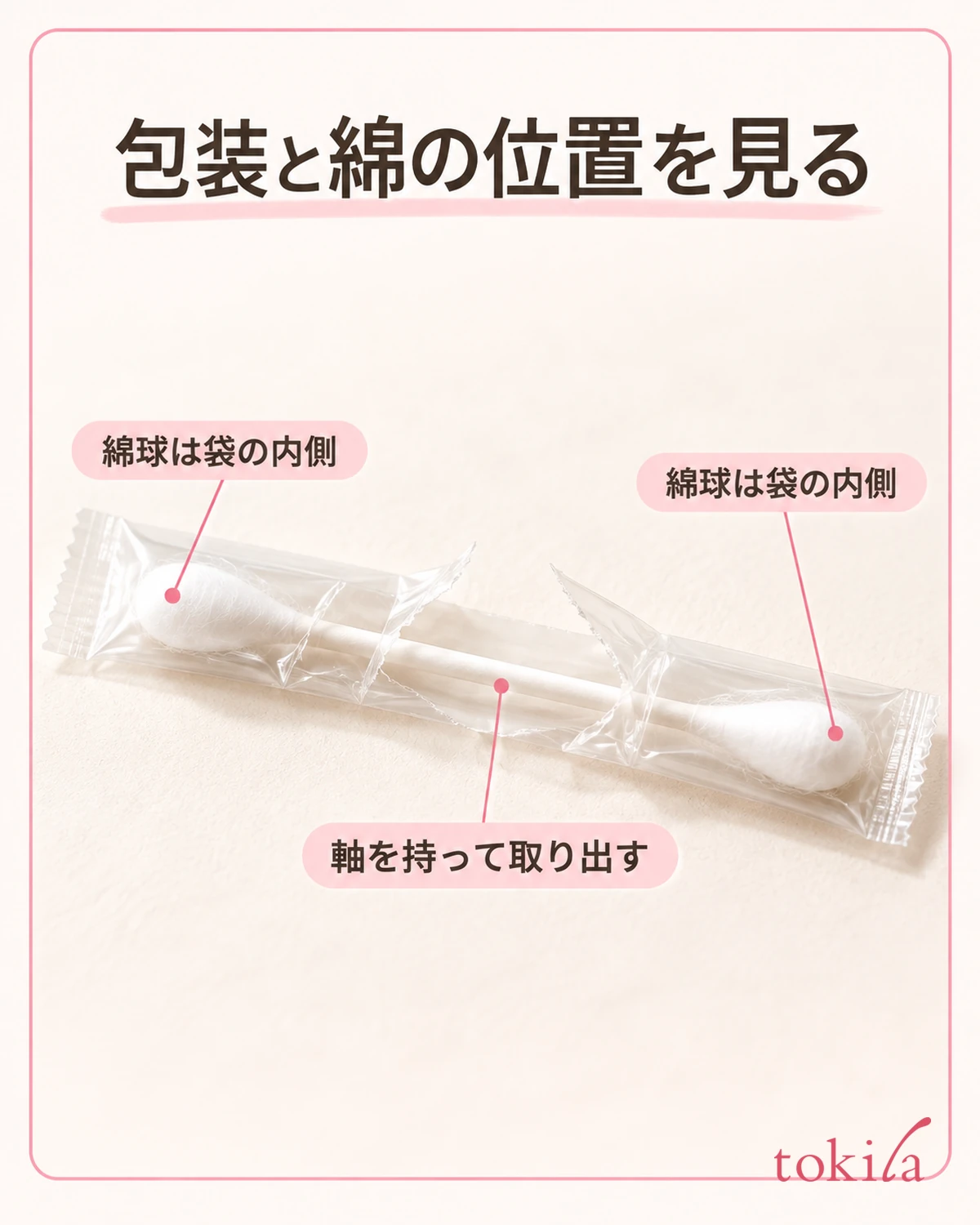
With individually wrapped swabs, look from the outside at the position of the cotton and the opening of the bag. Because there is cotton at both ends, tearing the end roughly can touch the tip or bend the shaft. Follow the instructions for the cut and how to open it, and open the wrapper so that you can hold the shaft part when taking it out. Whether you need scissors also depends on the packaging.
When you need to set it down while working, prepare a clean surface and do not mix unused spares and used ones in the same place. Do not put a used liquid-soaked swab directly on top of the bag of spares. Even just dividing the place into two small areas makes it harder to mix up the one you will use next.
If a swab is caught at the outlet, look at the opening before shaking the whole container hard. Be careful not to push in the cotton or pull it out forcibly and lose its shape. If you cannot take it out without damaging the tip, reconsider the combination of container and contents, and whether it is packed too full.
5. Think about packaging and when you will take them out before how many to carry
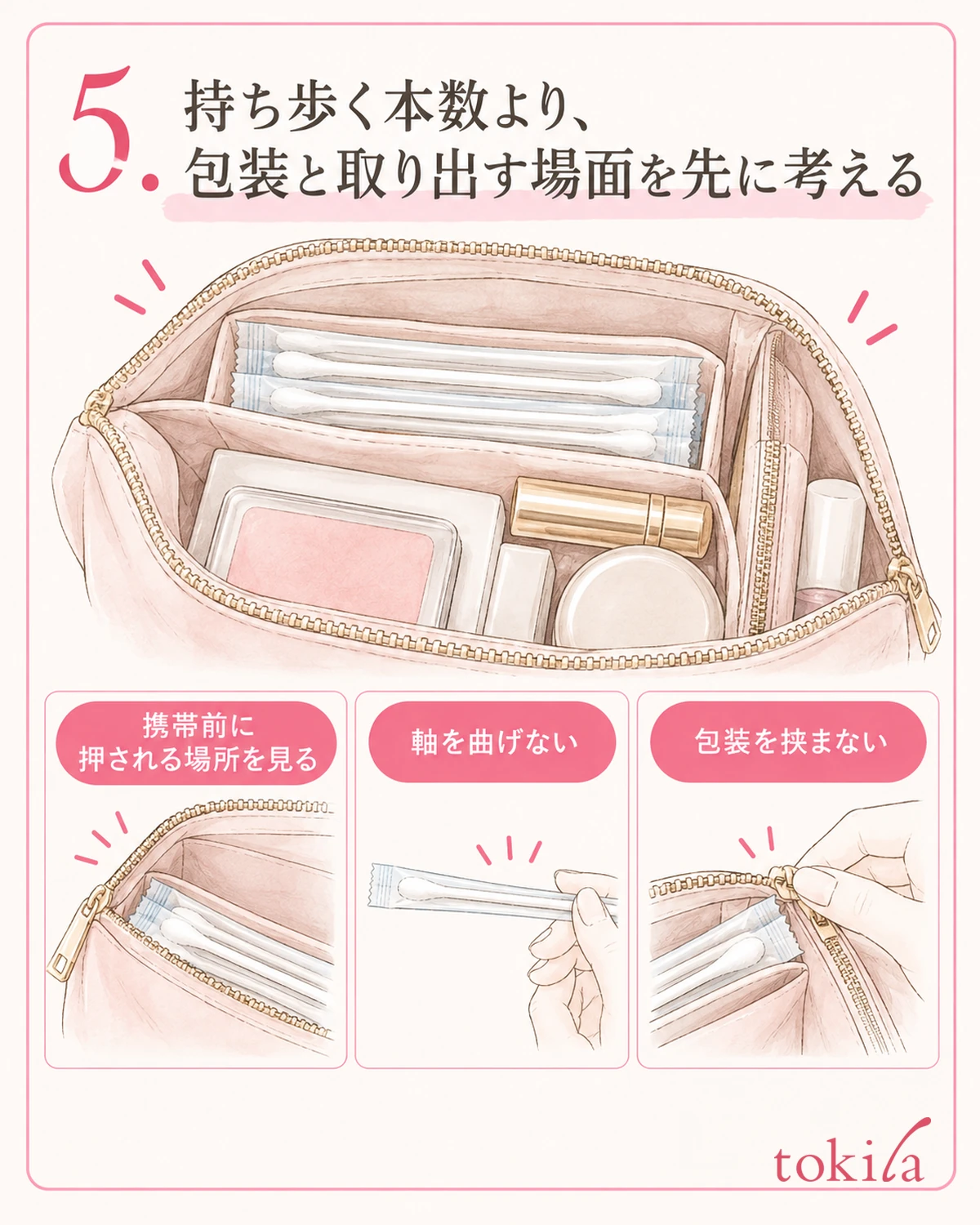
For a carry-along set, do not choose just by how many it holds; imagine where you will use them. Will you touch up a spot where there is a mirror, or keep them as spares not used until you get home? Individually wrapped swabs that can be used for makeup are candidates when you want to carry the unused tips separately from other tools.
Even with packaging, avoid packing them so that the shaft bends under a heavy compact. Before closing the pouch, check that the ends of the bag are not caught in the zipper and that the cotton is not in a position to be crushed. Packing in a way that protects the tips and filling the whole pouch tightly may not go together.
If you transfer them to another case, first check whether that case can be used for storing cotton swabs and how to care for its inside. Do not assume that matching the length is enough; also check whether there is room between the inside of the lid and the cotton tips. Do not immediately repack dry swabs into a case that still has moisture left after washing.
Put unused spares back after checking the packaging for tears, dirt, or dampness. For opened ones or liquid-soaked ones, give priority to the storage instructions. Do not set a common number of days up to which they can surely be used; judge how to handle them from the labeling and their actual condition.
When choosing next time, leaving one thing that troubled you, such as "the round tip was too wide," "I lost track of which way the flat surface faced," or "the bag bent in the pouch," lets you narrow down candidates. Look at tip shape, dry or wet, and packaging in that order, and choose the roles you need for your usual makeup. For occasions to tidy a thin outline, you can check the steps after choosing tools, together with a review for when your eyeliner turns jagged.
Before putting them in your everyday pouch, try laying out together the mirror, the cosmetics needed for the fix, and a bag for separating used ones. Adding only swabs does not necessarily mean you can restore the surrounding makeup on the spot. Decide what you will do while out, and think about the one set you need so that you do not have to carry unused liquids and tools along.