When choosing cushion foundation, consider your desired finish and usual makeup routine rather than deciding only by a cute case or the word "glow." The requirements to check also differ depending on whether you want it for your morning base makeup or to carry for targeted touch-ups.
First read about the contents and finish, try a shade, and check the primer and puff instructions and purchase set. This order can help reduce discoveries after buying, such as "the case was sold separately" or "I can't use it the way I usually do." Here is how to compare options before buying your first one.
1. Check the contents and use occasion before the compact's shape
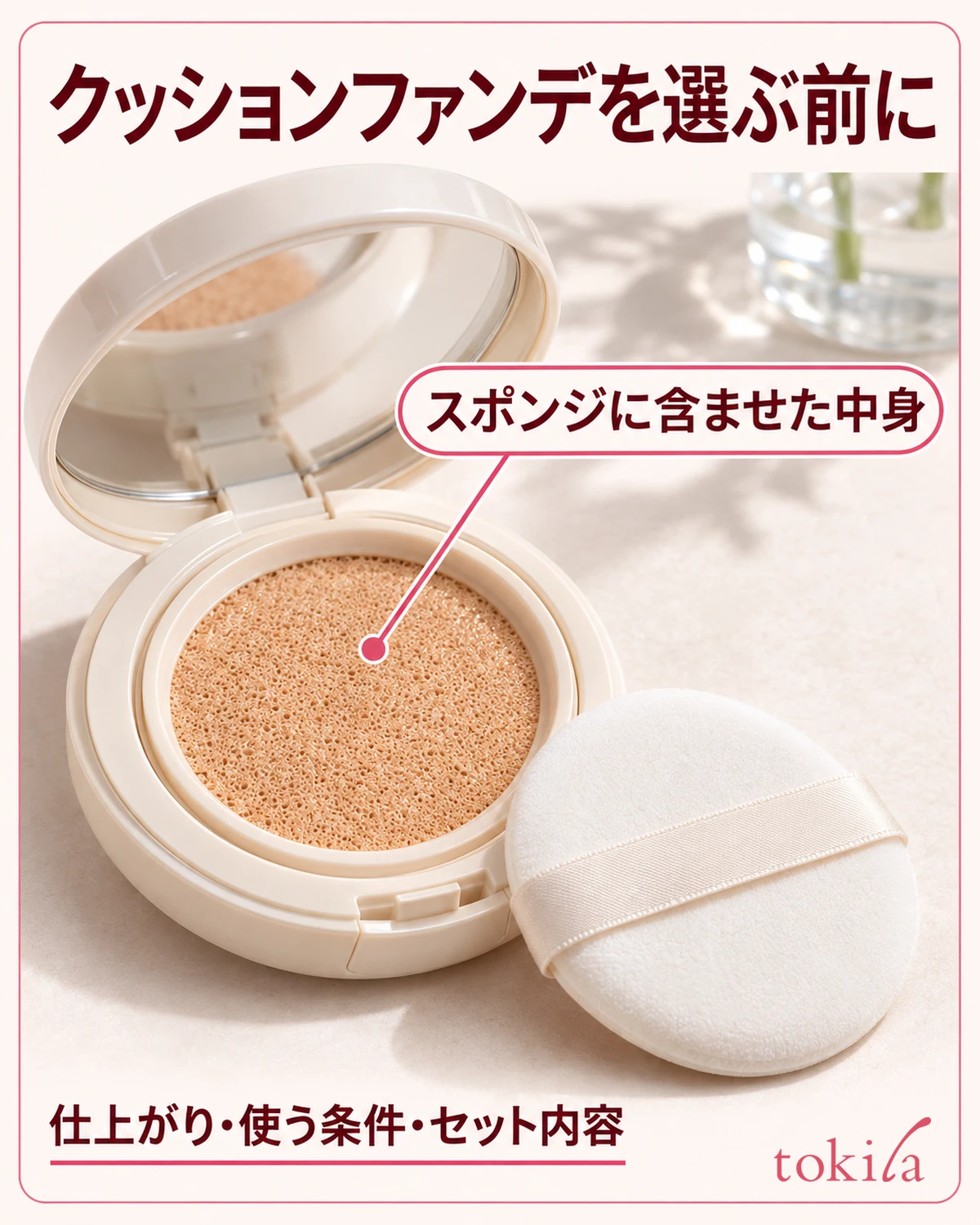
A typical cushion foundation has a sponge reservoir soaked with liquid foundation, which you pick up with a puff or similar applicator. However, not all cosmetics in round cases have the same contents. They may contain cream, powder, or sunscreen, so first read what the product you are buying is intended for.
Even products called cushions do not all have the same glow or coverage of uneven skin tone after application. Put one preference into words before looking at options—whether you want a sheer, blended look or makeup to even out the color of an area that concerns you. This helps you choose without being led by the container's shape.
For a product to finish your makeup at home in the morning, check whether it fits after your usual skincare and primer. If you also want it for touch-ups away from home, imagine where you can use a mirror, where the puff goes back, and how to close it for carrying. A portable format does not mean it can be layered over skin in any condition.
If you already use liquid or powder foundation, clarify why you want to change. Is it the dispensing process or the finish? Rather than simply adding another product with the same role, make the part of your current makeup you want to change your selection criterion. The format alone does not mean it must be easy for beginners or that this one product is enough.
2. Compare glow and coverage of uneven skin tone separately
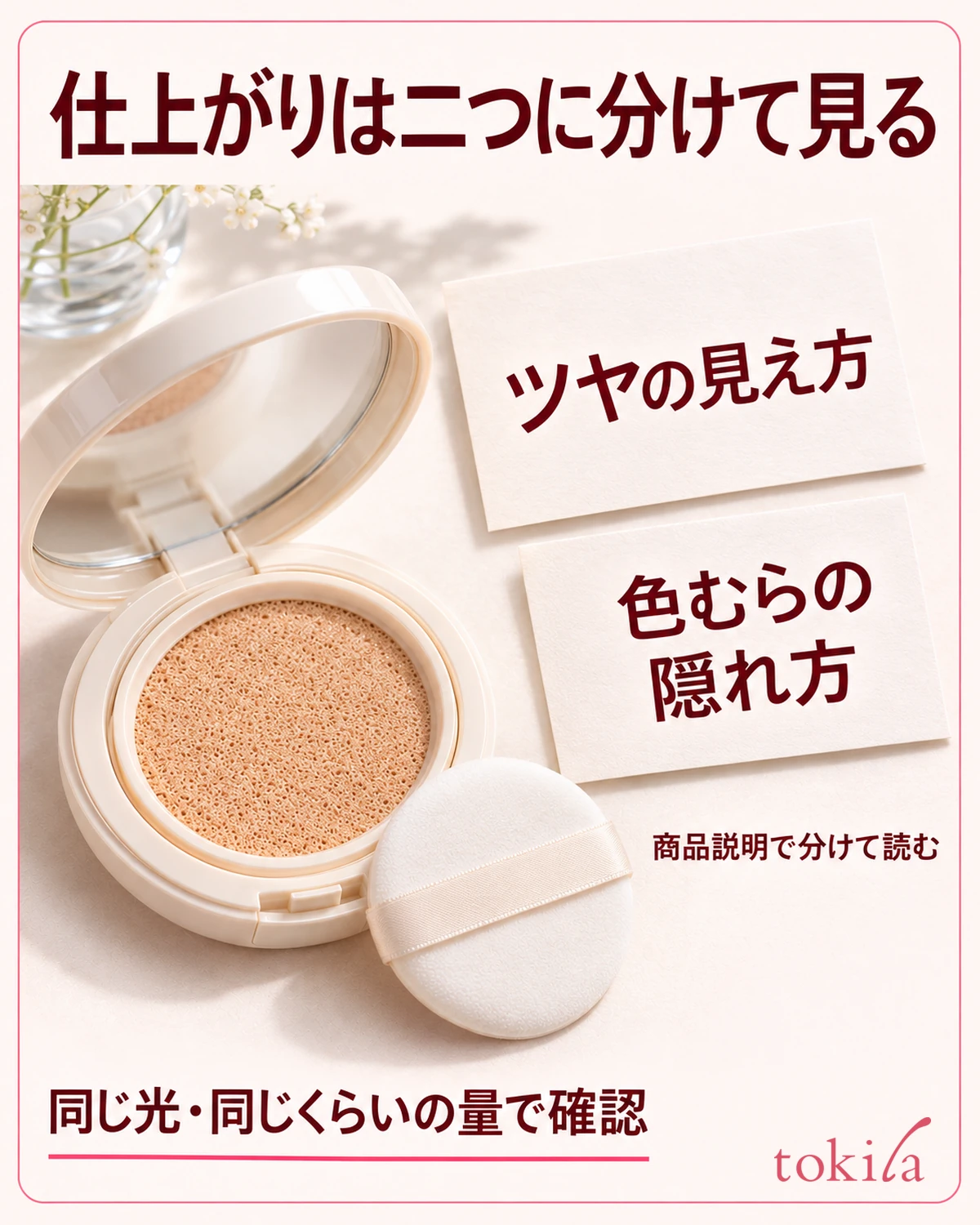
When reading about the finish, consider the glow in the light separately from how much uneven skin tone shows through. Glow does not necessarily mean sheer coverage, and matte does not always mean heavier coverage. Read about both and decide which matters more to you to narrow down the options.
If testing is available, follow the store's hygiene rules and use the clean tools provided as instructed. The back of your hand may give clues about spreadability, but it cannot show exactly how the finish will look on your face. Ask where and how you may try it on your face, and begin with a layer as thin as you would normally use, so you do not judge only by a thick patch.
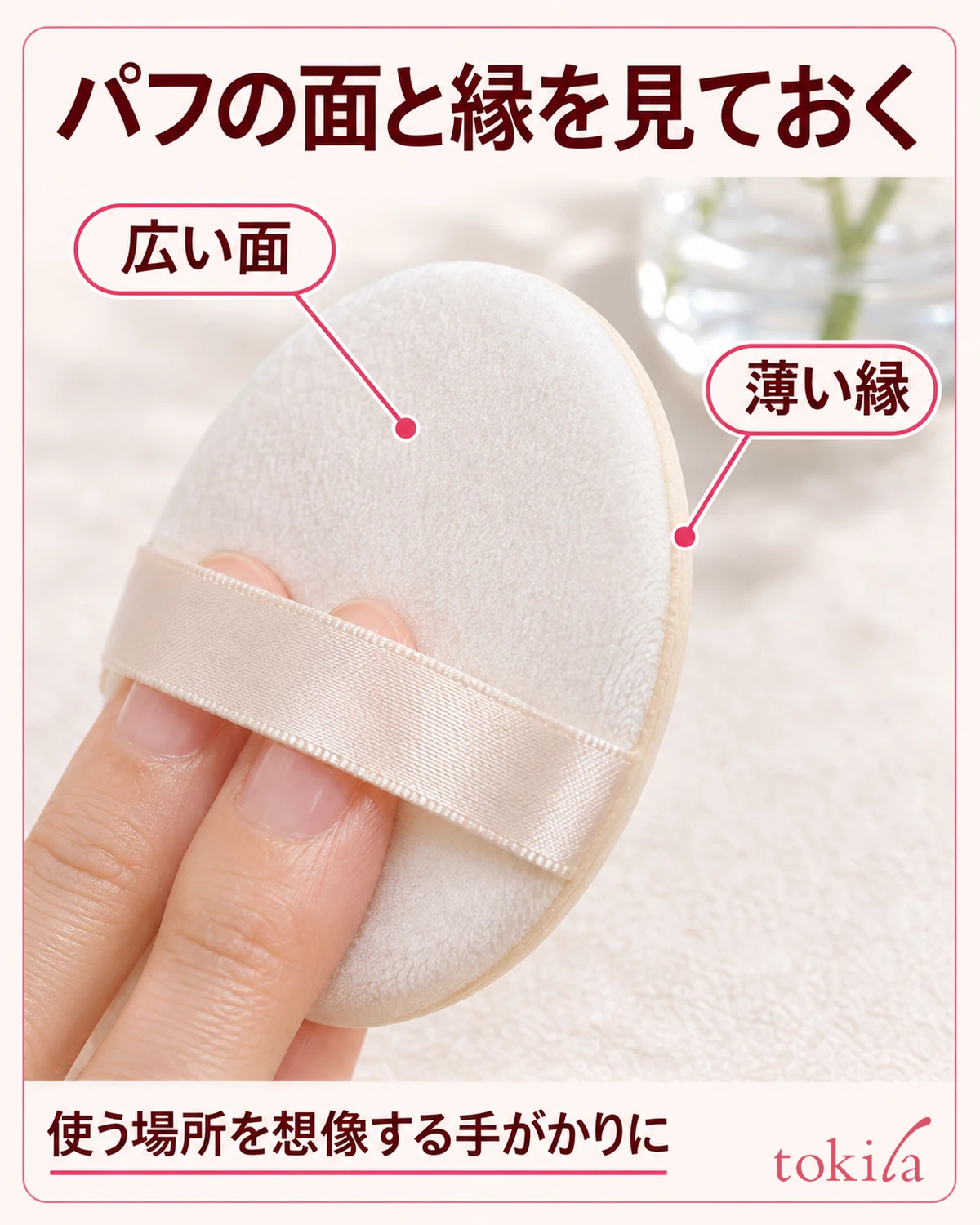
Looking at the included puff also helps you imagine using the product. If it has a broad surface and a thin edge, read where each is meant to touch. It is important not to judge the foundation's coverage or suitability for your skin from the puff's size or thickness alone.
When comparing options, keep the lighting, face angle, and amount applied as consistent as possible. Applying more of one or turning only one side toward bright light can make different conditions seem like a difference in finish. Do not treat the shine in diagrams or photos as evidence of the product's actual color payoff or wear.
Even descriptions such as "moisture" or "serum ingredients" do not justify ranking products by the number of ingredients alone. Check whether it gives the appearance you want from foundation and whether you like the feel when applied. Do not consider it a substitute for treatment of skin conditions such as dryness. Stop use if an abnormality occurs and follow the product's precautions.
To assess glow, check not only when light hits the high points of your cheeks but also as you move your face slightly. To assess uneven skin tone, look at the area of concern together with the surrounding skin. Check each product to see whether it meets both preferences, rather than inferring everything from a single advertising phrase.
3. Choose a shade number anew within that range
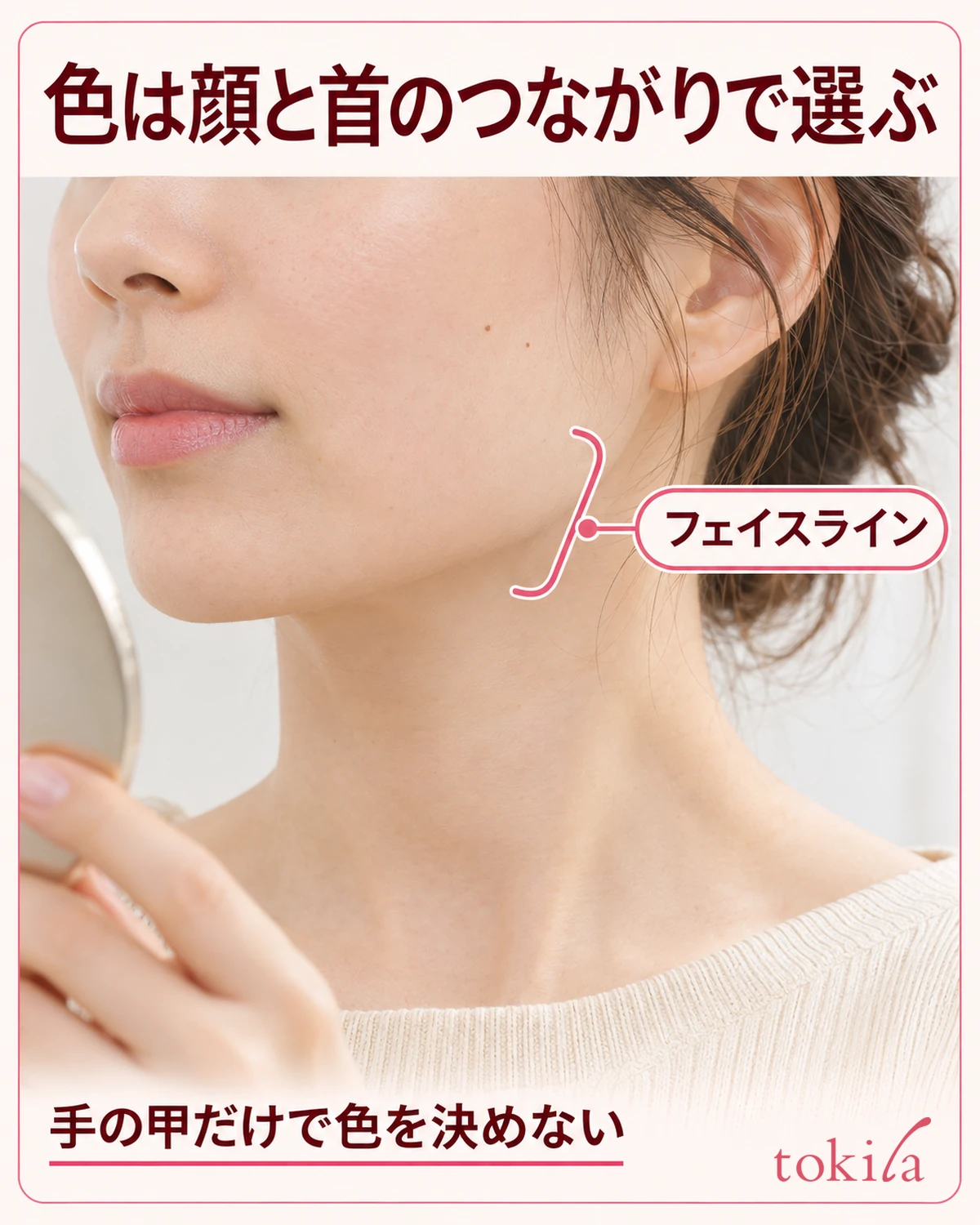
The shade number of another foundation can help when asking for advice, but it does not determine which shade to buy unchanged. Even within one brand, shade arrangements and appearance can differ between ranges. Note the current product's full name and shade number and compare them with the brightness and undertone descriptions in the new range.
If you can try it, ask about a location where you can see the transition between face and neck, then blend a thin layer of the candidate shade. Do not decide from one red area on your cheek or only the back of your hand; check for an unnatural band of color at the jawline. After looking at the area up close, move the mirror a little farther away to check your whole face.
If you are torn between two shades, distinguish whether the issue is brightness, such as looking too white, or undertone, such as yellowness or redness. Explaining what bothers you and choosing again is more useful for how you will use the purchase than layering thickly to approach an in-between shade.
When shopping online, do not assume screen colors are exactly the same as the real product. Read the range's shade swatches and shade-selection guidance. Even where comparisons with products you own are provided, do not automatically substitute another product's number. Ways to try shades and available consultation services can also inform your decision before buying.
For more detailed testing guidance, see how to choose a foundation shade. Separate differences in color from differences in thickness, and do not assume that using less will make any shade match.
4. Read the product's conditions for primer, puff, and removal
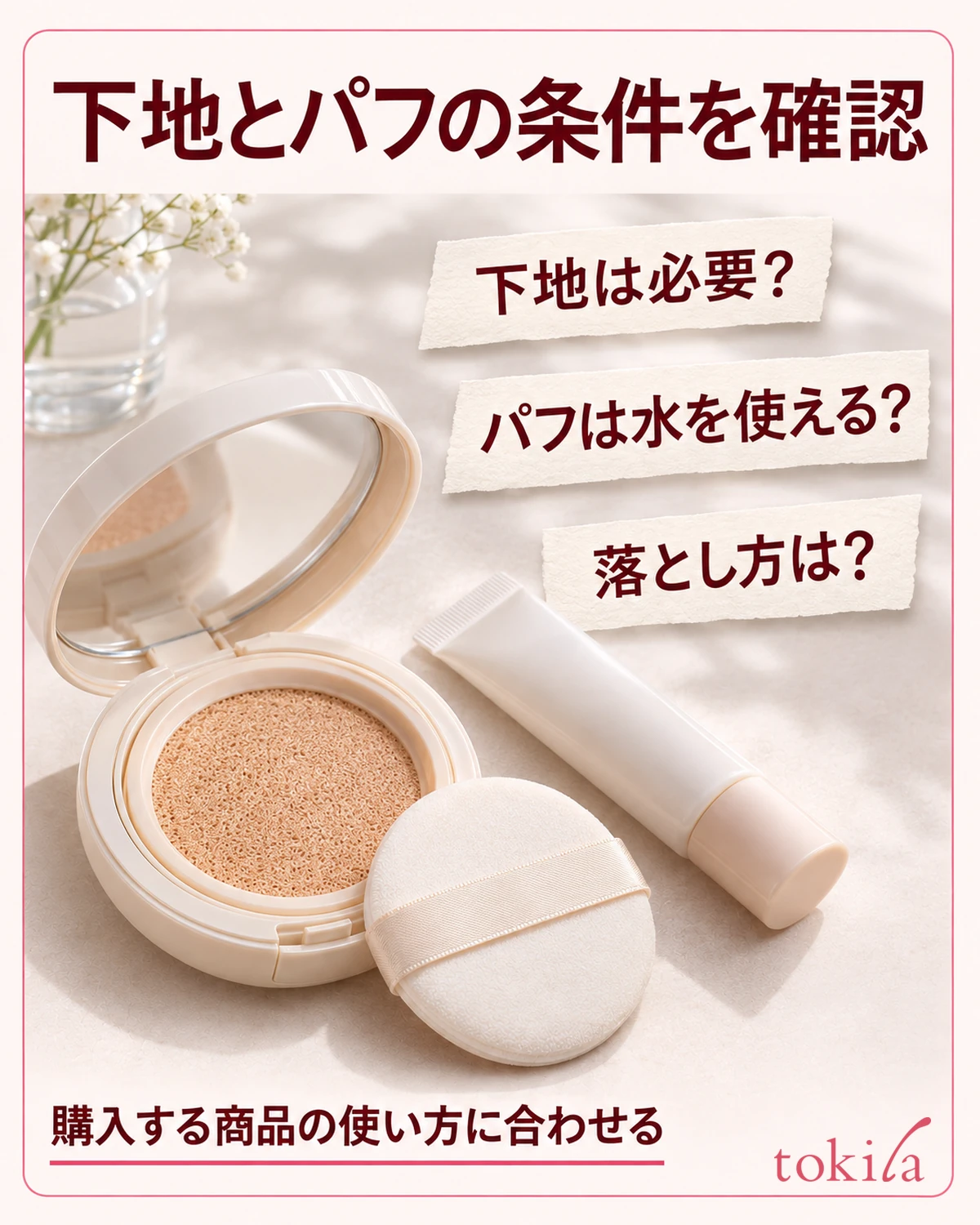
Check the application order in the instructions for the product you are buying. Some products are used without primer, but the cushion format alone does not mean primer is unnecessary. Check the order with your usual sunscreen and primer and how to use finishing powder. Avoid starting with multiple layers of combinations that are not explained.
Even if SPF or PA is shown, do not assume that applying a thin layer of foundation meets the conditions needed for UV protection. Combine with sunscreen and reapply according to each product's instructions and the occasion. Do not assume that mixing different products follows their original labeled methods of use.
For the puff, first check the pickup method and amount intended for the included applicator. Do not dampen it when dry use is specified or add water to the contents. Sharing the name sponge or puff does not mean the same water-use conditions apply. Washing, drying, and the availability of replacements are also worth checking for continued use.
For products with an inner lid, check which lid to close after use and where to put the puff. Do not decide by appearance alone whether to store the puff pressed directly into the contents. The photo shows one example of a structure in which a closed lid separates the contents from the puff.
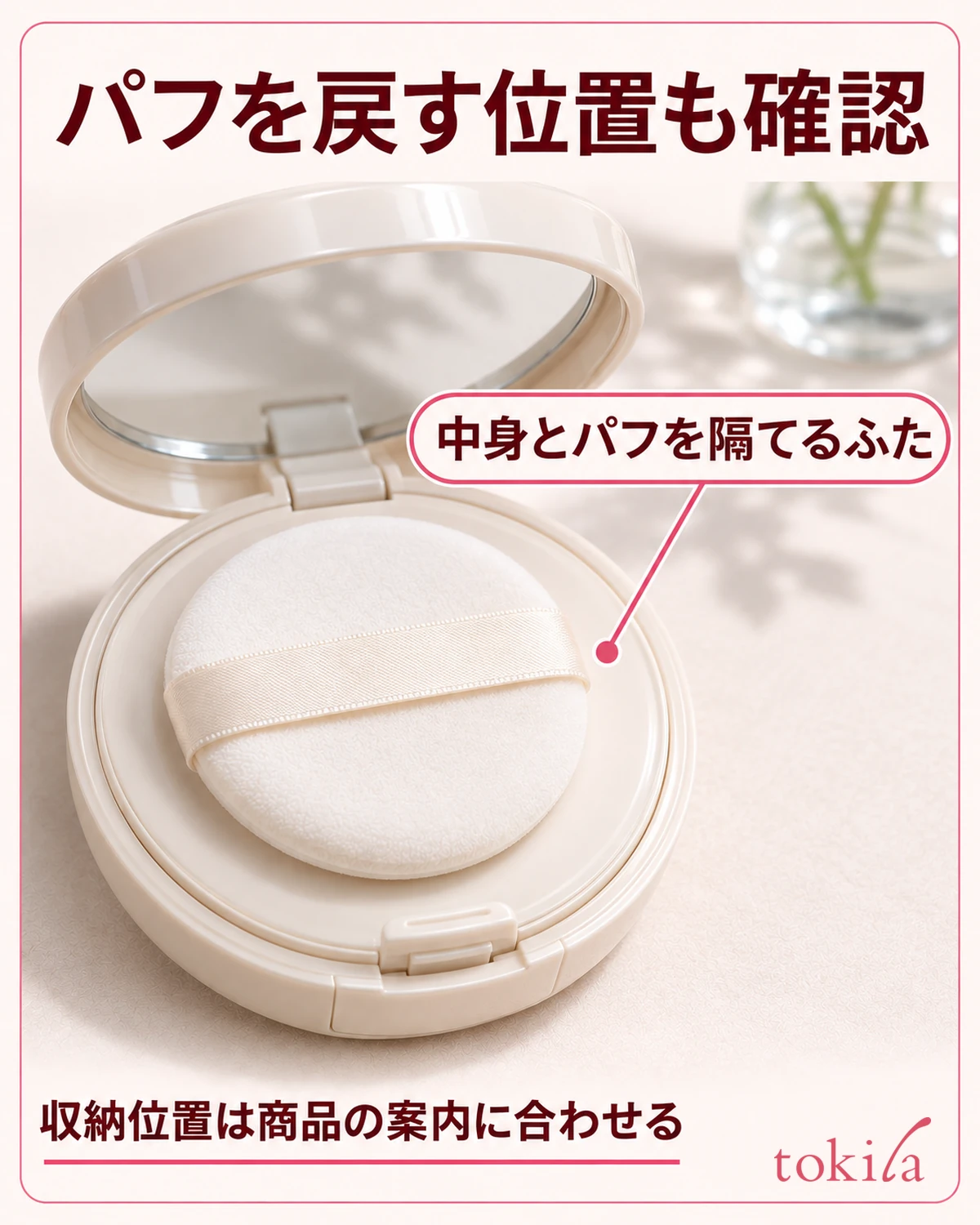
Read the removal method before buying, too. Decide whether your usual face wash is enough or a makeup remover is needed based on that product and the cosmetics used with it. Do not conclude that sheer coverage washes off with face wash alone, or that a sunscreen label means the same removal method applies.
If you also care about the condition some time after application, ask how you can check it within the available testing options. Even if you like it immediately, testing with a different primer or finishing product does not mean your usual makeup will give the same result. Noting the test conditions helps clarify what to check next.
5. Check what the case, refill, and puff set includes
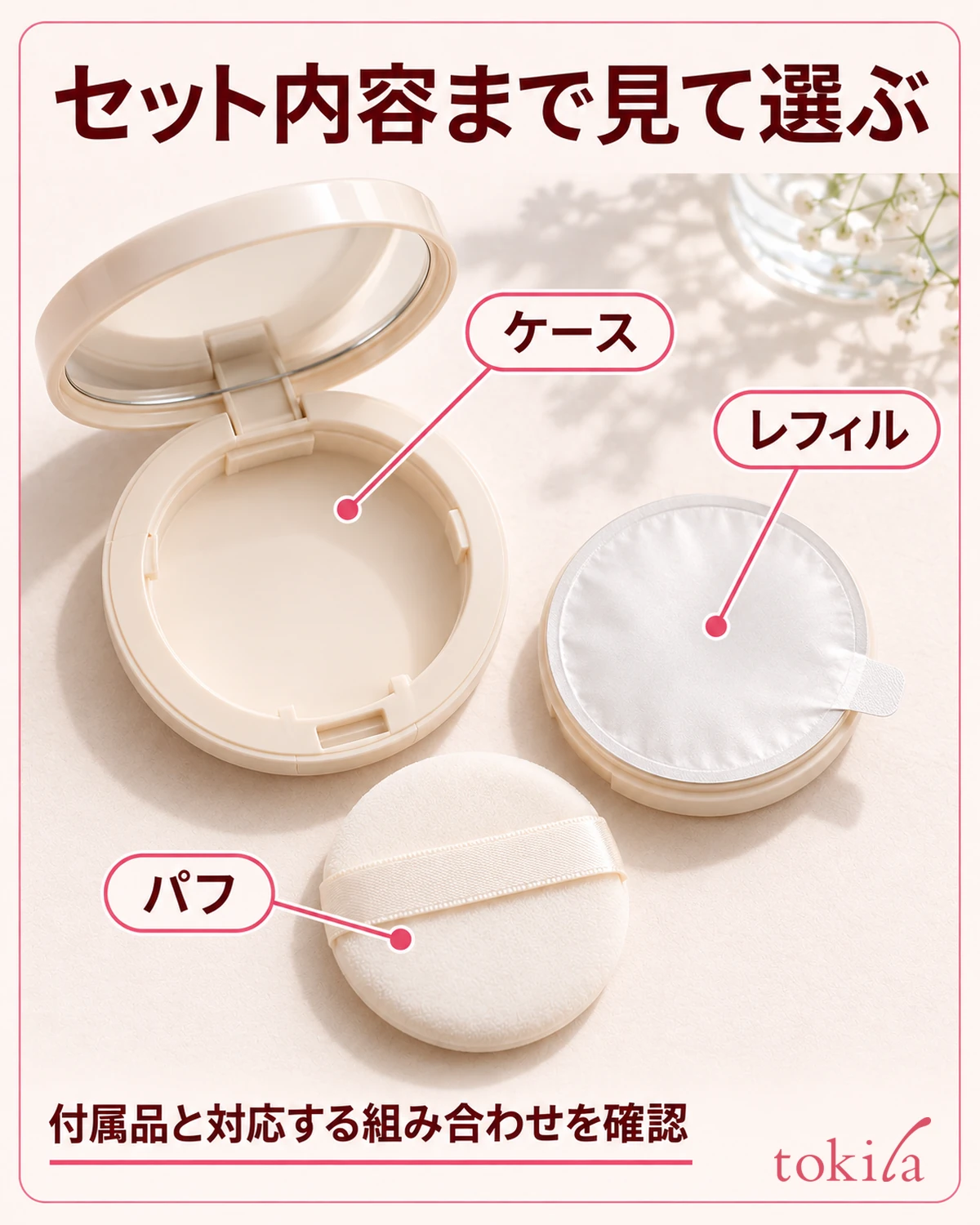
On the purchase page, check whether the case is included or it is a refill only. A case in the photo does not necessarily mean it is included in the sales unit you selected. Also check whether the puff is included or sold separately, and choose a combination with everything needed on your first day of use.
When buying another refill, match it to the full name of the compatible case. Not all round cases from the same brand are interchangeable. Do not force one in because the dimensions seem close; use a confirmed compatible combination. Before looking up replacement instructions, first check that the product fits that case.
If portability matters, compare the case size with the pouch you want to use. Do not choose on thinness alone; checking whether the mirror is easy to see when open and whether you can close the lid while holding it helps you imagine using it. Follow the product's closure instructions to avoid drying and its storage-temperature precautions, rather than choosing on the assumption that it can be left in a car.
Finally, note your desired finish, the shade tested, and the items needed for use together. Compare volume and price while distinguishing different included items such as cases. The set needed for the first purchase differs from the next refill purchase, so the price figure alone should not determine ease of use.
If application looks thick after buying, review the instructed pickup method and amount before immediately changing shades. For the specific steps, see how to apply cushion foundation thinly. Conversely, if a color difference from your neck still bothers you with a thin layer, consider amount and shade selection as separate issues.
The starting point for finding a suitable option is how you want to look when you leave in the morning, more than a fashionable product name. Decide on one preference, then check the contents, shade, use conditions, and set contents in order to choose a product for your daily makeup.