When you wear two-tone shoes, only the toes seem to stand apart from your clothes. You like the shoes themselves, but no matter how many outfits you change into, nothing feels settled. In that case, before thinking of the shoes by a single color name, try checking which parts of them show which colors, and how much.
In this article, you fix one pair of your own two-tone shoes and look in turn at the toe, the instep and the sides, and at the hem just above. You do not need to bring both colors into your clothes. It is a way to decide one place you want to stand out, and compare an idea that makes the footwear the focal point with an idea that connects it to the clothes.
1. Look at the shoes' two colors by toe, instep and sides
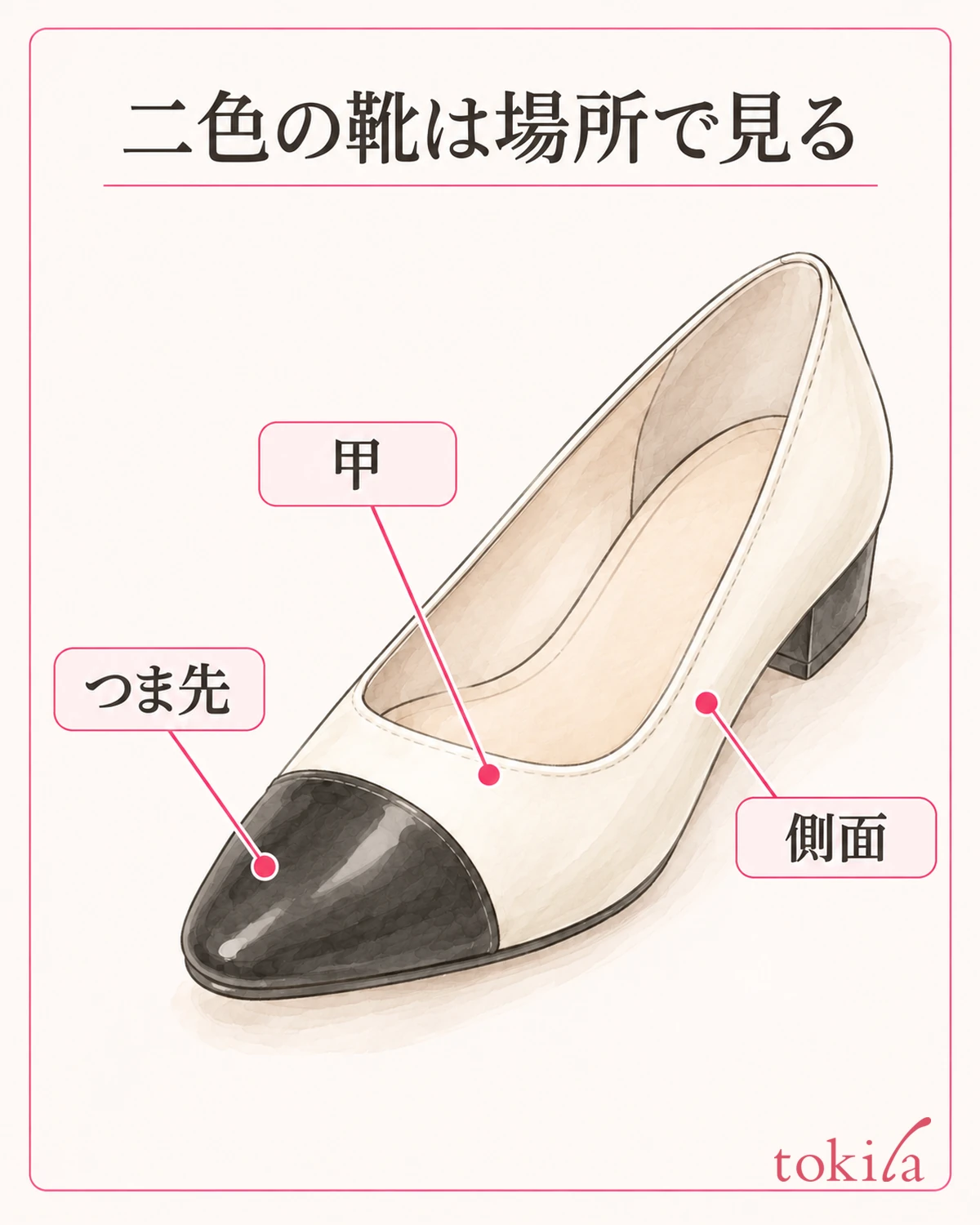
First, set the shoes down and see where the color changes. The arrangement varies even with the same two colors: only the toe is black, the instep is pale and the sides are dark, or only the heel has a different color. Do not sum them up by name alone as "black and white shoes"; put the location of each color into words.
Next, put on the clothes you plan to wear today, and wear the shoes on both feet. Check first that they feel comfortable and fit, and indoors choose a place where you will not dirty the floor. To compare colors, there is no need to turn your feet to awkward angles or to put the shoes on with the heels stepped down.
The shoes seen from above while standing and the front view in the mirror show different areas. The instep may look wide from above, but in a full-length mirror the toe may catch your eye first. After looking at the front, turn slightly to the side and check the colors of the sides and the heel too. Go back and forth between a close look at the shoes alone and the whole outfit.
For shoes where the line between colors has stitching or a thin edge, observe the two color areas and the boundary separately. Depending on whether the line itself bothers you or the darkness of the toe bothers you, the conditions you want to compare will change. You do not need to count decorations or metal fittings as part of the same single color.
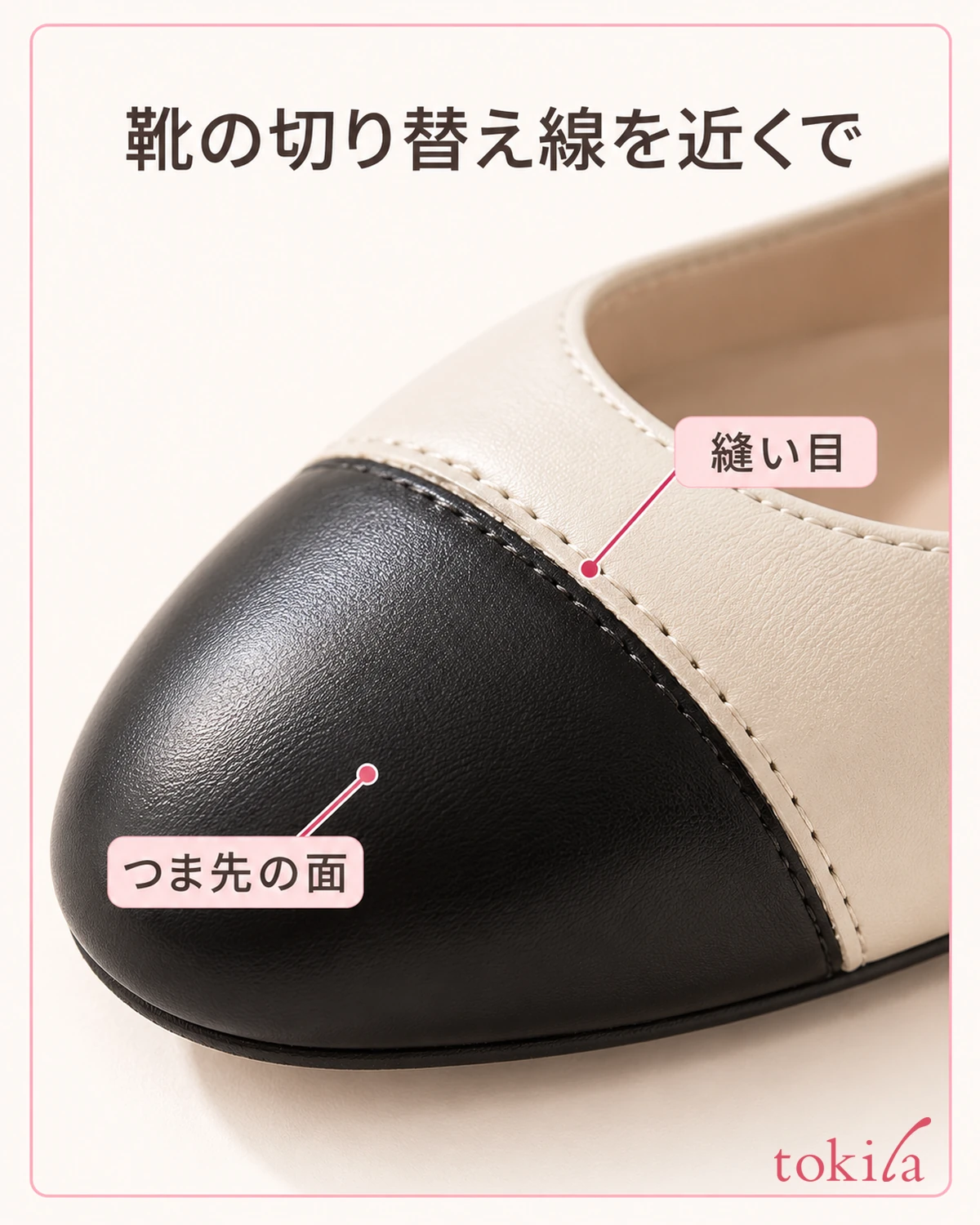
Choose one spot that bothers you, such as "the black on the toe is strong" or "the white on the instep is brighter than my clothes." Do not treat having two colors as a failure in itself; think about whether you want that spot to show or to be quiet. You can choose the color of clothes to buy after finishing this check.
Here we are observing color, not recommending dyeing or surface treatment of shoes. Do not polish them or apply chemicals to erase the difference; first compare the combination of the clothes and the look when worn. If care is needed, separately check a method that suits the shoes' material and labels.
2. Look at the toe and hem together, and choose where to connect the color
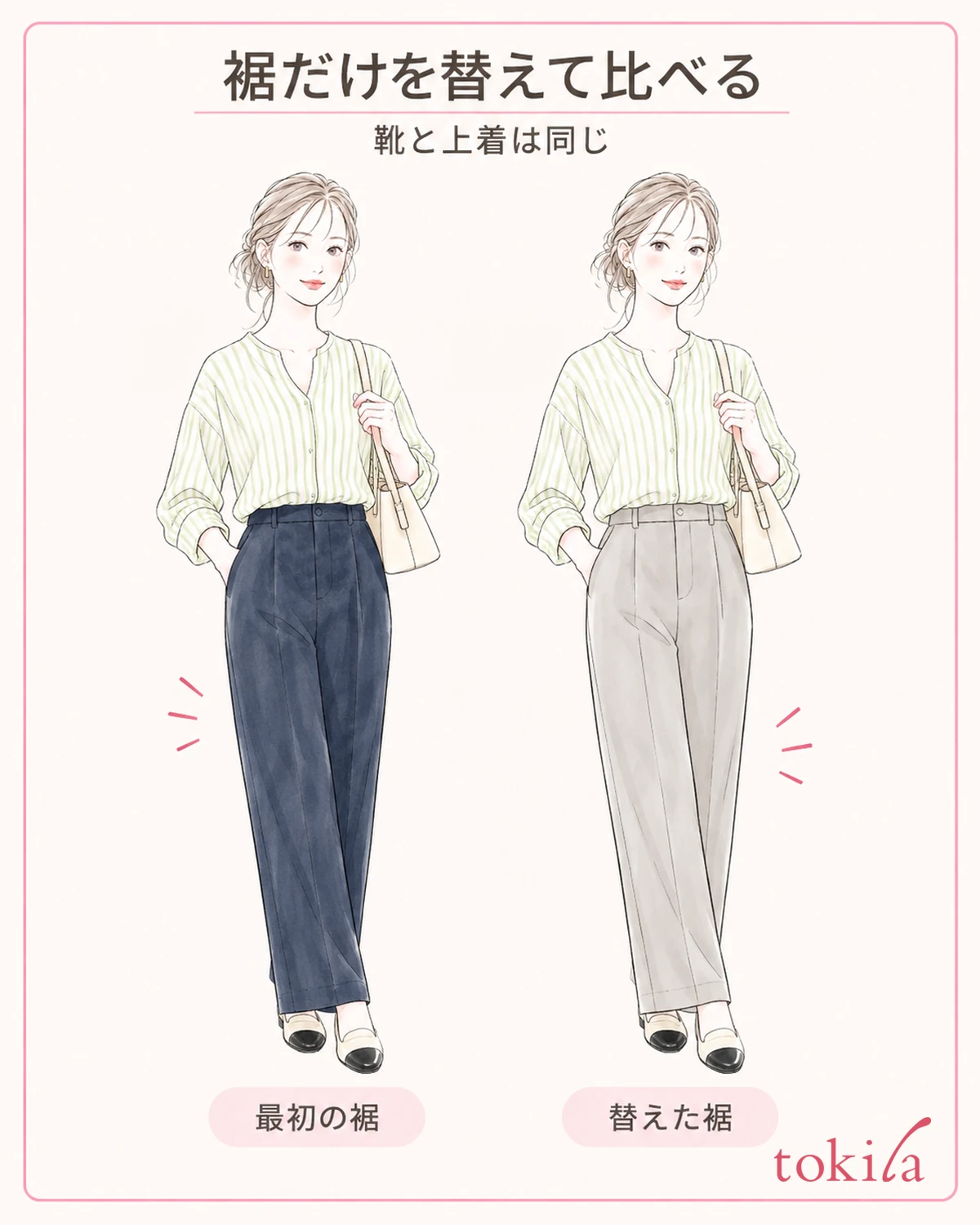
Look at the hem of the pants or skirt right above the shoes. Even if your jacket has the same color as the shoes, a hem of a different color may sit between them at your feet. Rather than thinking of the jacket alone beside the shoes, check in order the hem that is actually adjacent, then the socks or skin, then the toe of the shoes.
For example, suppose you match shoes with an ecru instep and black toe to navy pants. You can choose either an idea that keeps the dark toe and makes the footwear distinct, or an idea that creates a link to the instep with a lighter hem. Look in the mirror without deciding that navy and black do not go together, or that adding white will always make it lighter.
On days you want to connect to your clothes, use just one of the shoes' two colors as a cue. If you try bottoms close to the pale color of the instep, keep the jacket and shoes as they are. If you choose a darkness close to the toe, again change only the bottoms. Do not turn this into a step of adding both colors to your clothes.
Limiting the candidates to two sets, the first outfit and the changed one, makes comparison easier. Even without exactly the same color, you can try clothes of similar brightness. However, if a candidate also changes in shape or length, you cannot say you checked the effect of color alone. Judge your preference as a difference in the whole outfit.
On days you do not want to pick up either color in your clothes, you can make the shoes' two colors the focal point as they are. Keep the clothes as they are now, and look at the outfit before adding things such as a bag. Creating a link and repeating a color are not the only purposes of color coordination.
Even with only one candidate set, you do not need to keep searching for clothes to swap in. If you decide to show the toe today and compare with a different hem next time, you can carry the conditions you observed over to the next time. Put comfort and dress codes first, and do not choose clothes that are hard to use only for the sake of color.
3. Check how much of the two colors shows, with the hem and the way you look when worn
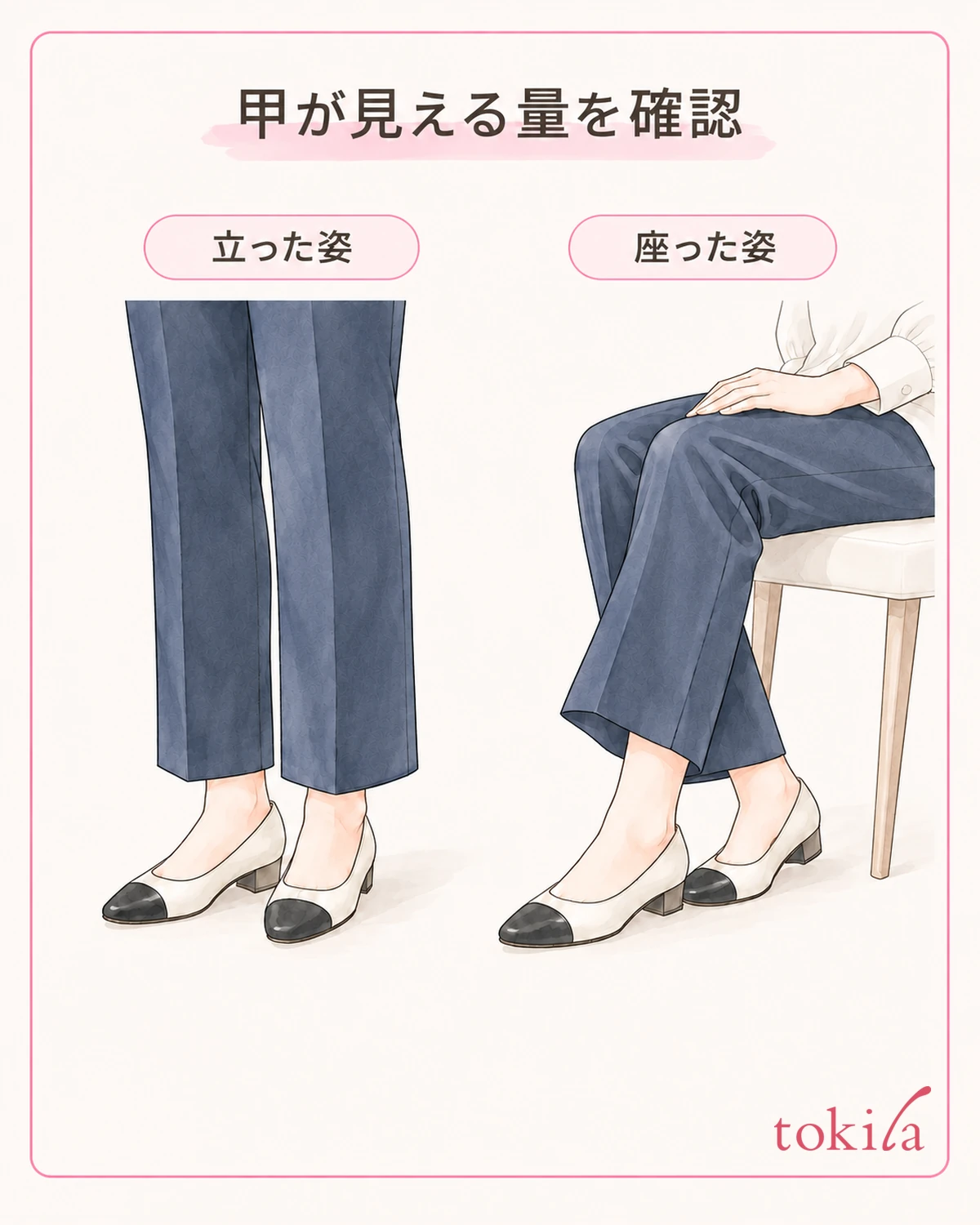
Even with the same shoes, how much of the two colors shows changes depending on how much the hem overlaps the instep. With long pants only the toe remains, while with shorter hems the instep may be visible. Without changing the colors within the shoes, check what is visible at the length you usually wear.
In the mirror, place both feet naturally and check that neither hem is caught. Do not compare a state where only one hem is lifted as a finished outfit. If you want to adjust the length, keep to a way of wearing that the clothes can hold without strain, and do not leave a state where the hem drags on the floor when you walk.
When the instep of the shoes is bright, look together at the area of socks and skin showing above it. If you compare by changing socks, keep the clothes and shoes fixed. Socks that differ in both color and length make a comparison in which two conditions change. You do not need to set a detailed area ratio and fit it to a correct answer.
When the boundary between the two colors is hidden by the hem or shows, do not stop at the standing front view; check the seated view too. Do not make it a comparison that crosses your legs to show the soles; in the way you normally sit, check the instep and socks that show when the hem rises.
Even if you want to reduce how much shows, do not roll up and stuff in your socks, or forcibly cover the opening of the shoes with your clothes. Judge after returning the shoes and clothes to a state where they can be used properly. Even if some color that bothers you remains a little, look at the whole outfit and see whether you can enjoy that difference.
If you are unsure about the color that sits between at your feet, you can also check the steps for comparing sock color and visible width. Fixing the two-tone shoes to one pair first means you do not have to add socks and shoes at the same time.
4. Look at the color boundary and the way the material shines separately
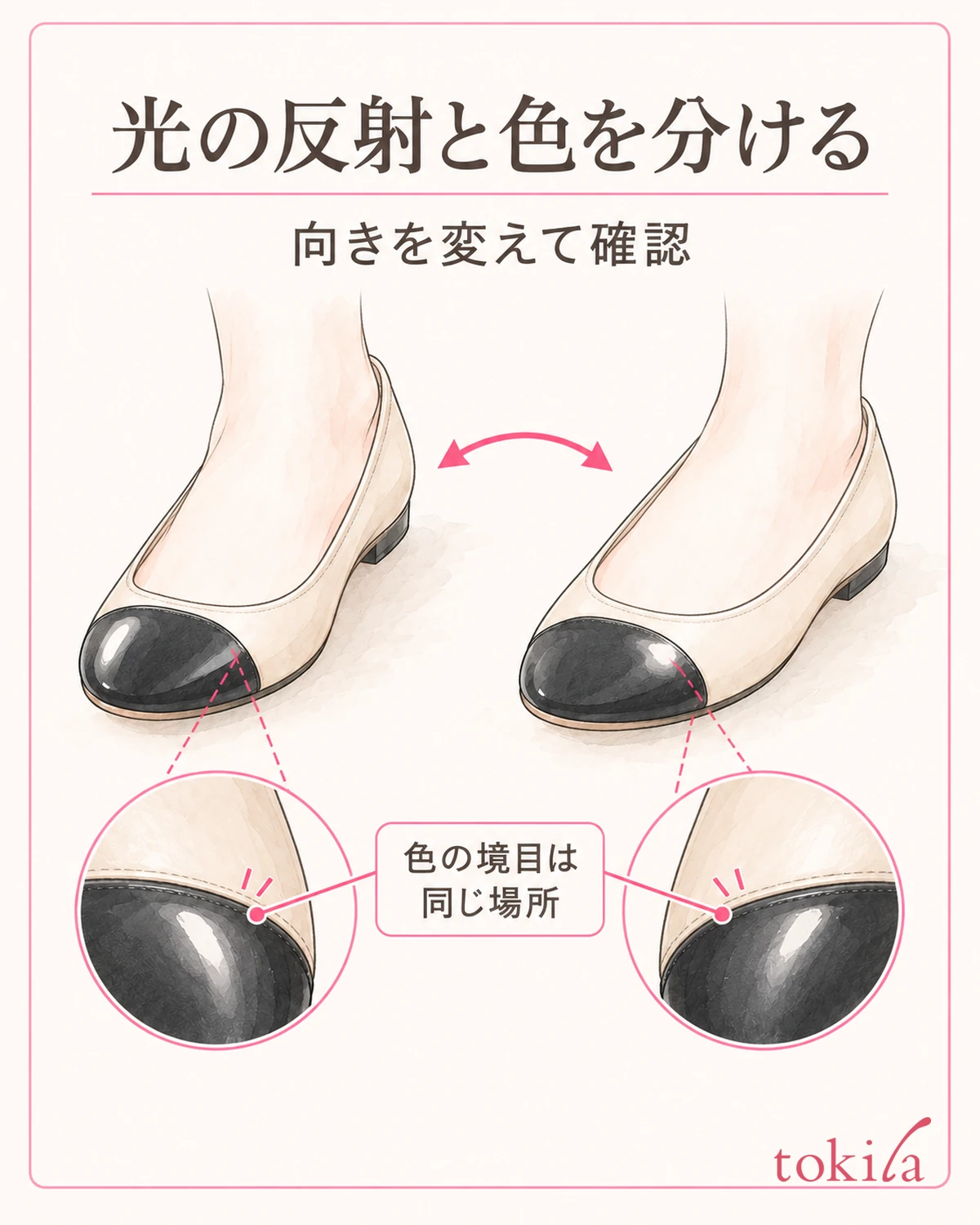
When thinking about why the difference between the two colors looks strong, also check how the material shines. If the instep takes light softly and only the toe is glossy, then both color and gloss differ. Even if the color names are close, the reflecting part may catch your eye first.
Under the same light, turn your body slightly. See whether the white reflection on the toe moves, and whether the color line stays in the same place. Do not treat just the reflecting part as the color of the whole toe. Do not judge a fine color match from a single point of dazzling light.
Around the color line, you may see stitching, a folded edge, or a different surface texture. After looking closely at that structure, return to the full-length mirror. Even if a thin line up close bothers you, at your usual distance you may mainly see two color areas.
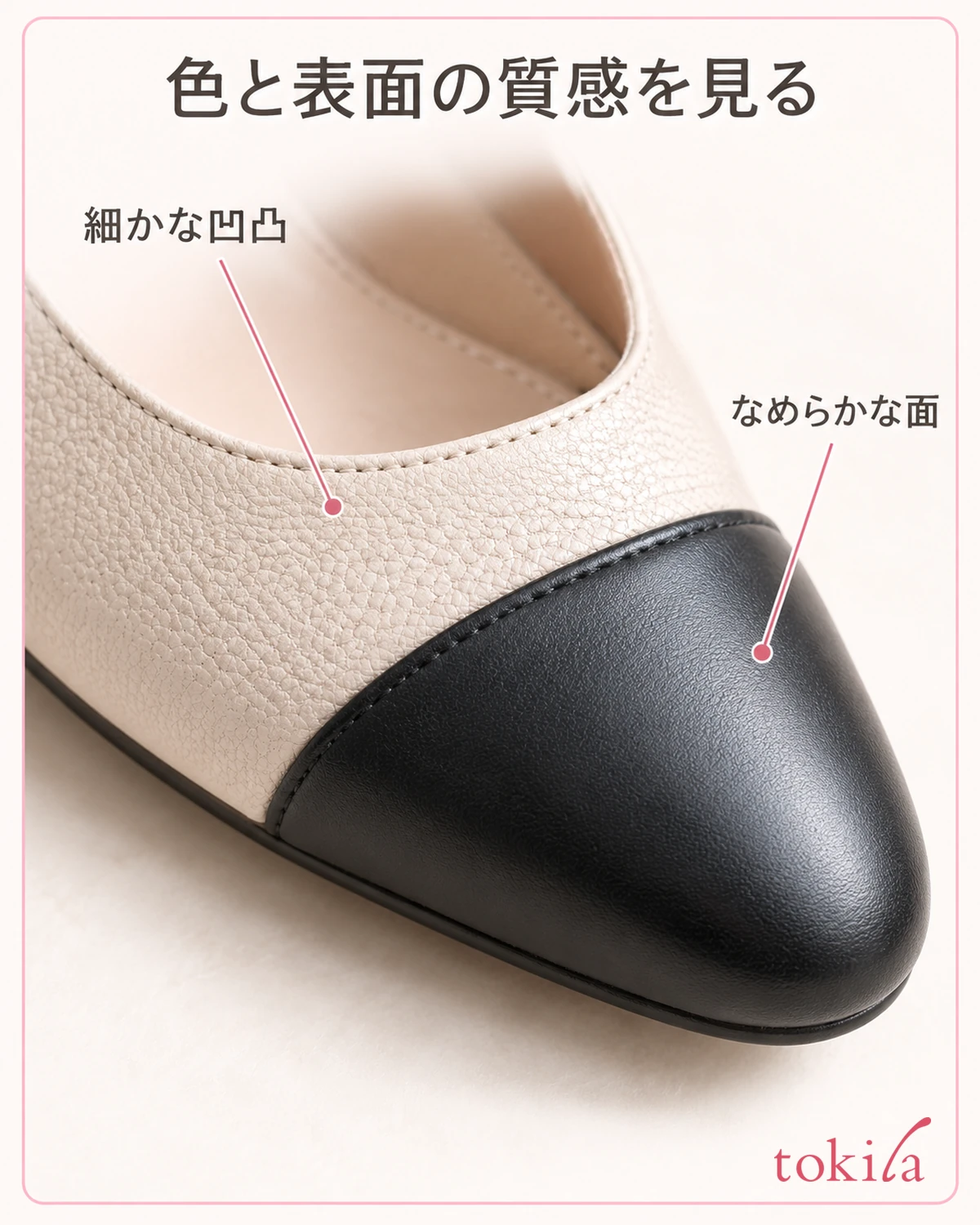
If your clothes are also glossy, choose which you want to show, the shoes or the clothes. If you make the footwear the focal point, one approach, if you have them, is to try clothes with a calm surface. Matching the gloss is not required; a combination that keeps different textures is also a candidate.
If you change the lighting to check, move together with the clothes rather than moving only the shoes. Do not compare your memory of the clothes seen in the earlier light with the shoes in the present light. If you know the time of day and place you will go out, checking what you can is enough.
Photos on a screen can be used as an aid to recall a combination, but how things look changes with automatic correction and screen brightness. Do not settle fine matches of the real item from photos alone. If you photograph the reflection on the toe and the change of material, you can keep a close-up shot separate from the full-length photo.
5. Go back by one thing only, and decide which color to keep in the whole outfit
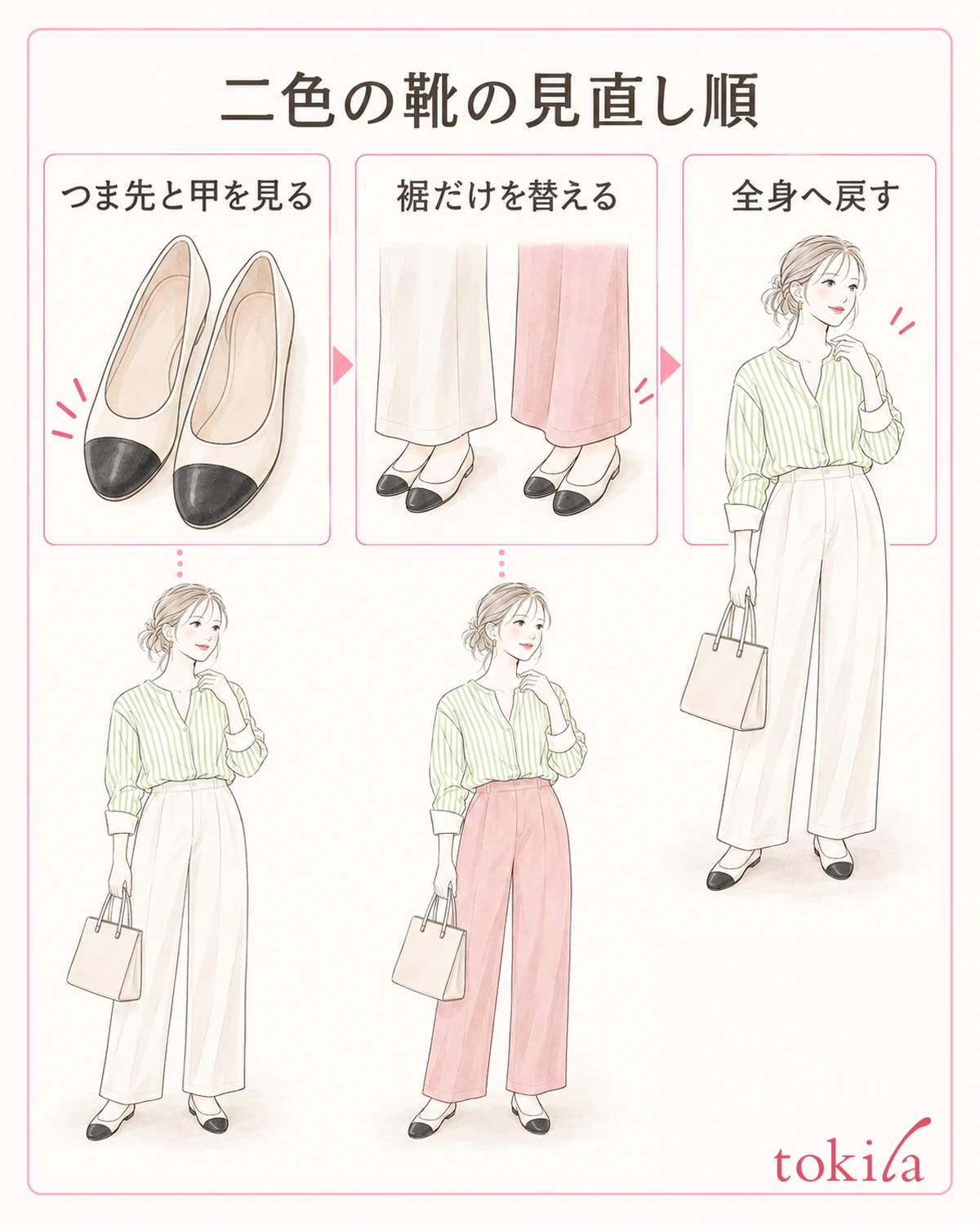
If you have changed clothes or socks many times and feel lost, go back to the first combination. Then put the spot that bothered you into words again. Is the toe conspicuous, does the bright instep stand apart from the clothes, or is it hidden by the hem so the two colors are hard to see? Narrow it down to one reason and compare again.
If you do not want the toe to stand out, go back to the idea of changing the brightness of the hem by one step first. If you want to show the boundary between the two colors, you can choose, among clothes you can wear comfortably with the current shoes, a candidate where the instep shows. If you like neither, it is fine to return to clothes you are used to.
In the whole outfit, do not try to match your jacket and bag to the same color at the same time. It is enough to feel a link between one of the shoes' two colors and one part of the clothes. Conversely, if you like it even though only the shoes are a different color, you can choose in a way that keeps that difference.
Finally, in a safe place where you can walk a few steps, check that the hems do not catch and that you are wearing the shoes properly. When walking, the colors of the sides and heel of the shoes also appear. If an idea requires you to keep holding your clothes in place for a moment of the standing front view, go back to your usual way of looking and reconsider.
A short sentence is enough for a record, such as "ecru instep and black toe, keep the toe with a navy hem." Keep not only the color of the shoes but also the hem you matched and the look you liked. If you add a photo, take it so it is easy to compare next time with the same mirror and distance.
Before buying new clothes or accessories, check the conditions you want to keep with the pair you have now. You can put the occasion of use and your preference ahead of rules such as picking up both colors or reducing the number of colors to a set number. Look in order at the toe, the hem, how much shows and the material, and choose the footwear you enjoy.