You put on an ear cuff, but it disappears behind your hair or looks out of place with your clothes. Before deciding between gold and silver, look at what overlaps around your ear. Even the same cuff can show a different amount of metal with your hair down or up, or with a white shirt or a dark knit.
To coordinate an ear cuff you own with your clothes, this guide looks separately at the metal's color, surface shine, and how your hair and neckline appear. It does not assign one flattering metal based on skin color. Follow your item's instructions for placement and adjustment, and find combinations you like among items you can wear comfortably.
1. Look separately at the metal's color and the size of its reflective surface
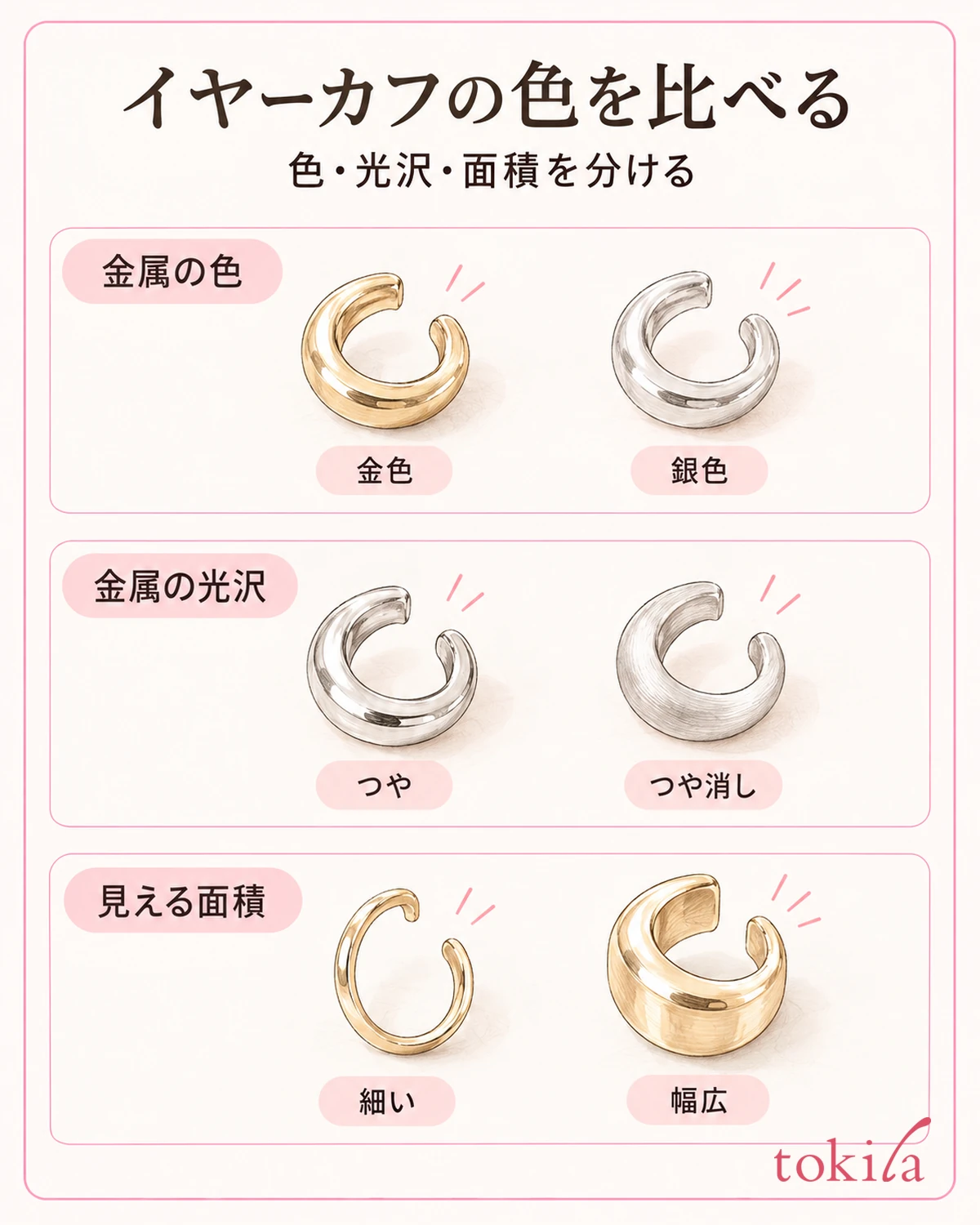
First, remove the ear cuff and look at it on a plain cloth or tray. Identify the color you actually see: yellowish gold, whitish silver, a reddish tone, or something close to black. Do not infer the material or care method from the color name alone; consider these separately from the material label.
Next, see whether the surface reflects brightly like a mirror or looks subdued because of fine texture. Even similar colors can draw attention to different parts of the ear when their shine differs. To compare two cuffs, place each in the same spot in turn, keeping the lighting and viewing direction as consistent as possible.
Width is another factor. A thin hoop and a wide band expose different areas of metal from the front. If you want to compare color but only look at items that also differ in thickness or ornament size, it can be hard to tell what caught your attention. When shapes differ, judge the combination with those differences included.
To examine reflections in your hand, slowly change the angle. Avoid mistaking one bright white reflection for the metal's actual color. Looking at both the colored surface and the bright area reflecting the light helps you consider how it will look in motion.
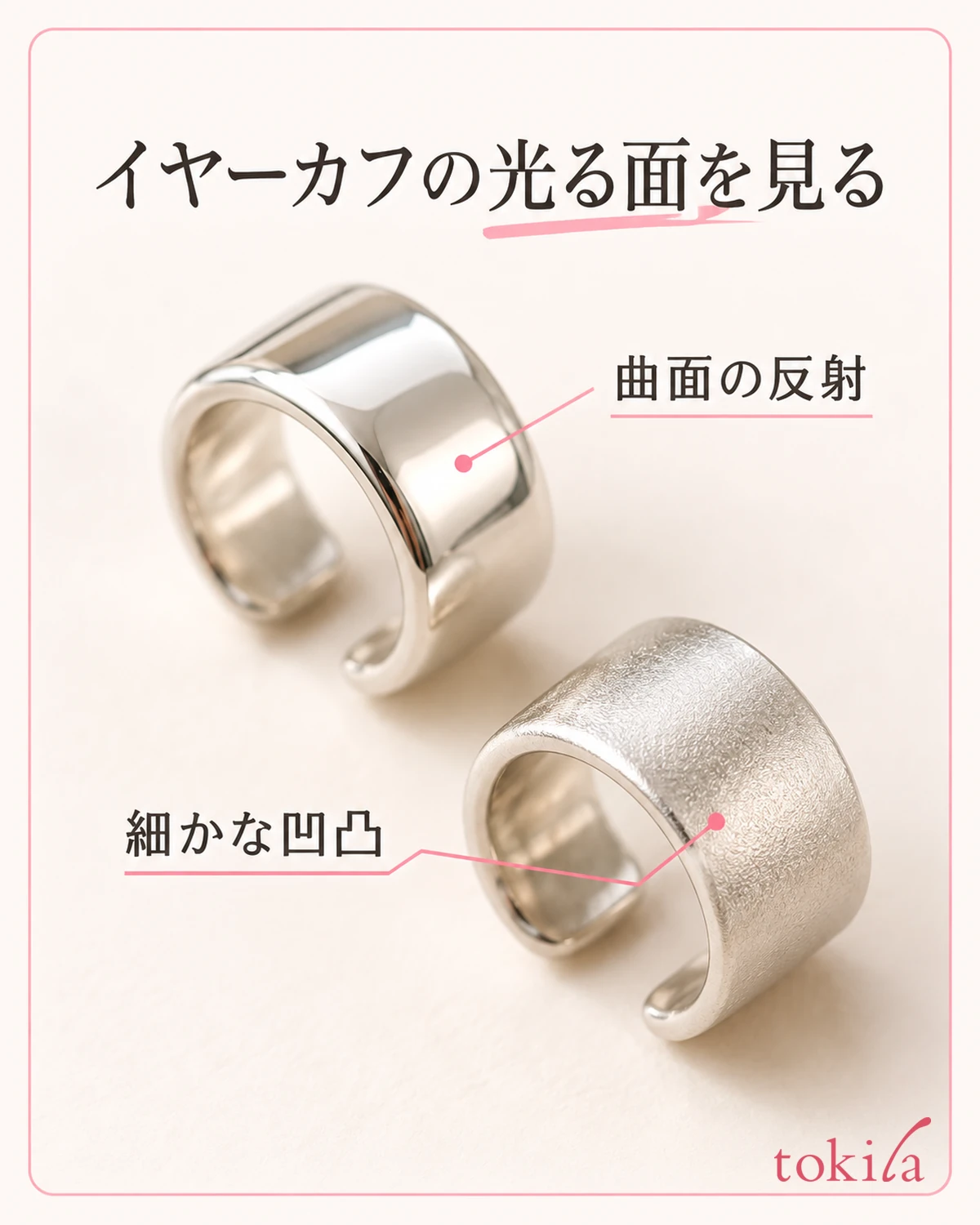
Pieces with fine patterns or surface treatments combine shiny and subdued areas. Rather than forcing everything into just two categories, shiny or matte, look at which areas attract your attention. Do not try to alter the texture to your liking by scraping the surface or dulling it with chemicals.
At this stage, choose the feature you want to show today rather than deciding which is better. Pairing color with area, such as understated thin silver or a wider gold accent in one place, makes comparisons more specific when you change clothes. Even with just one cuff, you can next change how it overlaps with your hair.
2. Check what shows around your ear with your usual hairstyle
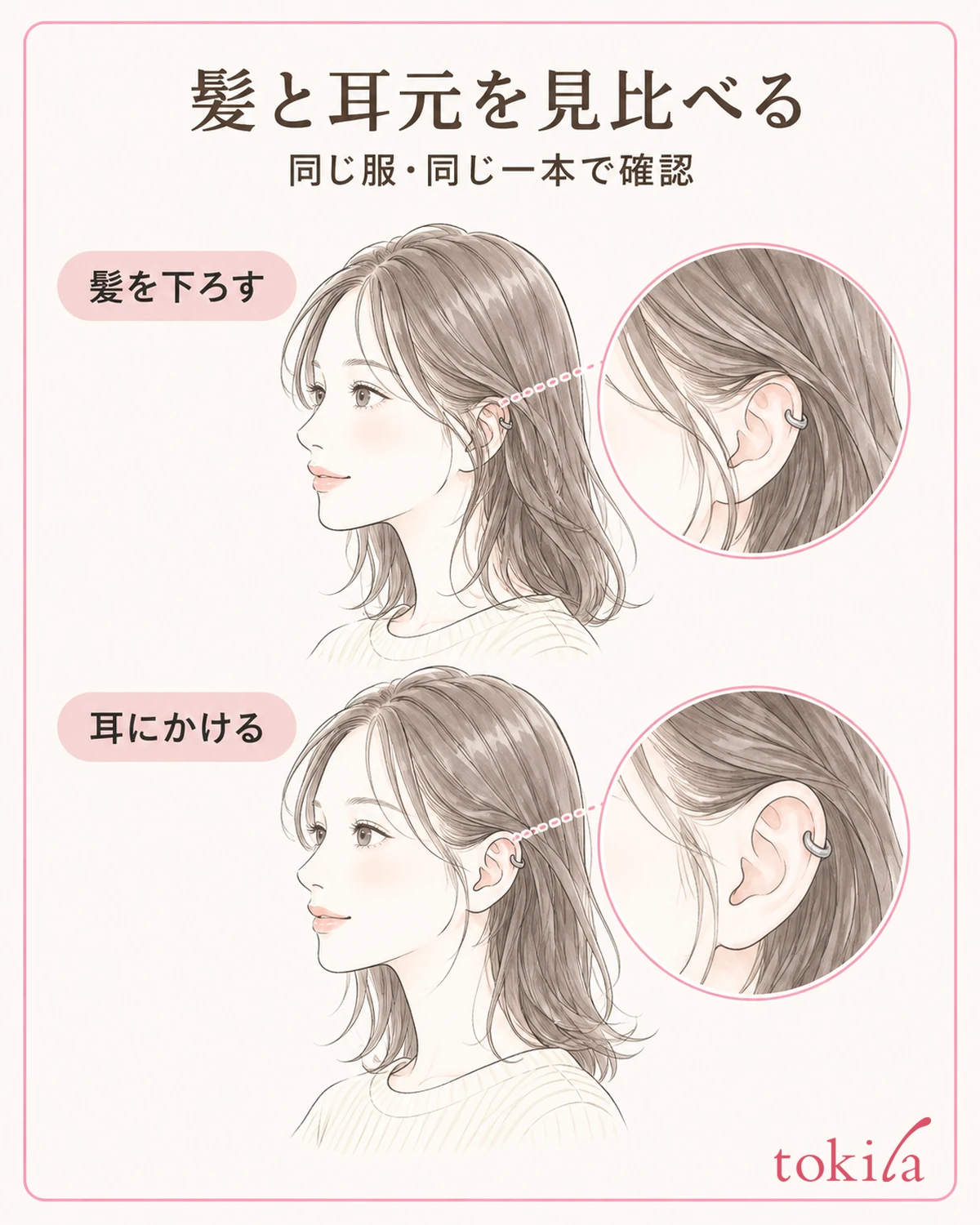
Before putting it on, roughly arrange your hair as you plan to wear it that day. You do not need to pull your hair tightly or push it behind your ear just to display the cuff. Put it on according to its instructions, then look in the mirror from the front and side in your usual posture. Remove it if it hurts or feels unstable.
If you wear your hair down, see which parts are covered: above the ear, beside it, or toward the earlobe. The same color has a different presence depending on whether only a thin hoop near your face shows or a wider surface is visible too. Do not force the cuff into a different position because it is hidden; work within the positions your item supports.
If you tuck your hair behind your ear, you can also check it with just one side tucked. Compare the hidden and visible states with the same clothes and brightness. If you prefer the look when your ear is visible, you can choose that hairstyle for the day. If keeping your hair tucked is uncomfortable, you do not have to focus on how much metal shows.
Check the appearance in person: a bright reflection may stand out beside dark hair, or a metal outline may blend in beside light hair. Hair color alone need not determine your choice of metal. Hair volume, surface light, and the space around the ear also vary, so avoid reaching a conclusion from color names alone.
With an updo, include the area from your side profile to your neck in the mirror. A piece you liked in a close-up of the ear may feel more prominent when you see your whole face. In that case, adjust the visible area by wearing fewer cuffs or choosing a thinner shape, rather than tightening the fit.
Also check how it overlaps with everyday items such as glasses or mask straps. Even if the colors work together, you do not have to keep a combination that touches and feels awkward. If hair catches when you move it, stop before pulling it free by force and remove the cuff according to its instructions.
3. Change neckline colors one garment at a time, including your face in the mirror
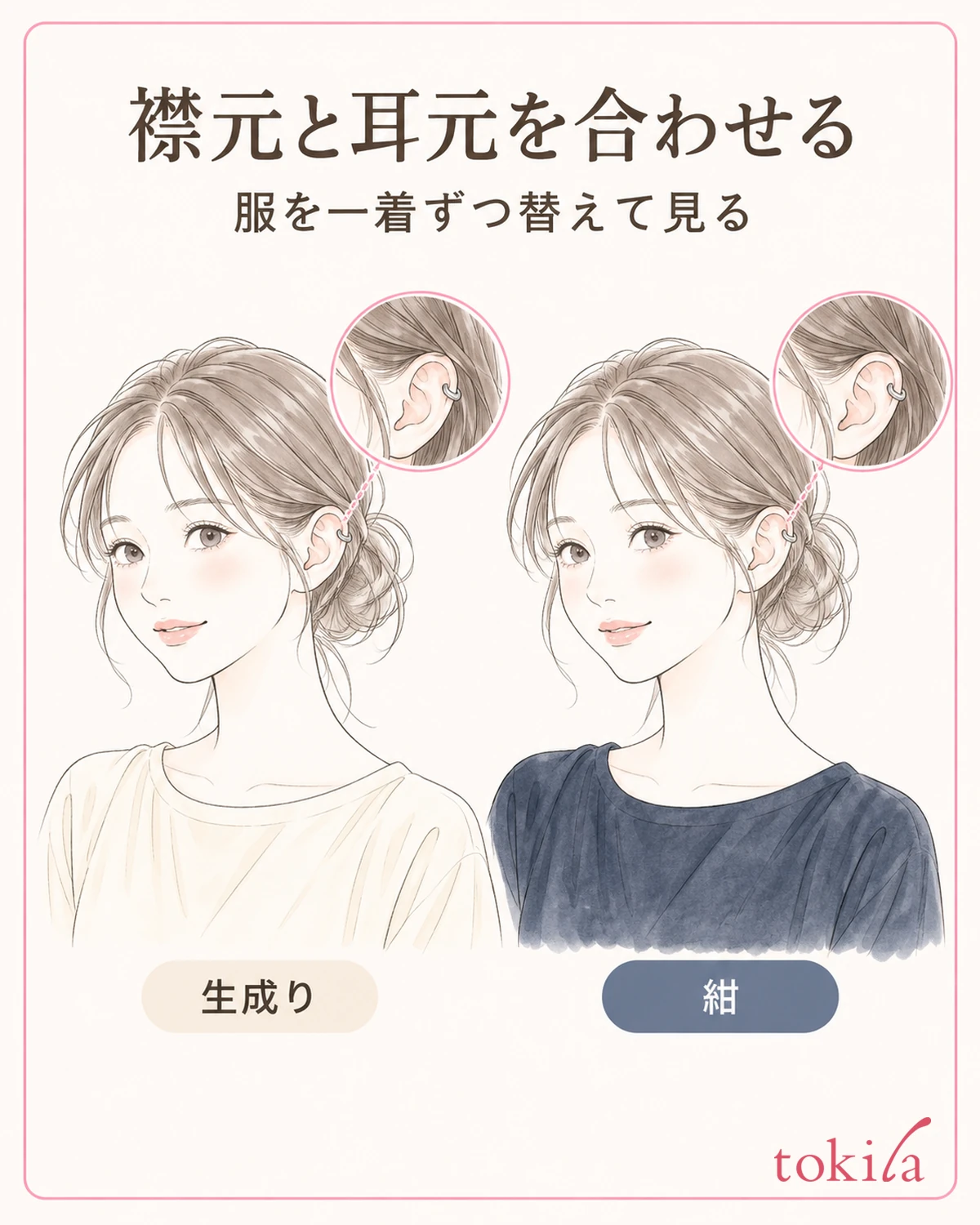
Once you have chosen one ear cuff, compare clothes one garment at a time. You might begin with two contrasting pieces you own, such as a white or natural-colored top and a navy or black top. Instead of searching for the right answer for both at once, notice what concerns you with the first before changing.
Include your face, neck, and neckline in the mirror, not just your ear. Besides whether the metal and clothing colors are similar or contrasting, check whether the collar comes close to your ear or leaves space around your neck. When collar heights differ, your comparison also changes factors other than color.
For example, you might pair gold with a softly colored natural-colored garment to enjoy continuity between the colors. Or pair silver with deep navy to create one bright accent. Neither is a rule; both are starting points for checking your preferences in the mirror.
With patterned clothing, first look at the background color and the colors of large patterns. The cuff's small reflections do not have to match every color in the pattern. Choose one factor to compare: a quieter pattern at the neckline if you want the cuff to stand out, or a smaller metal area if you want the pattern to take the lead.
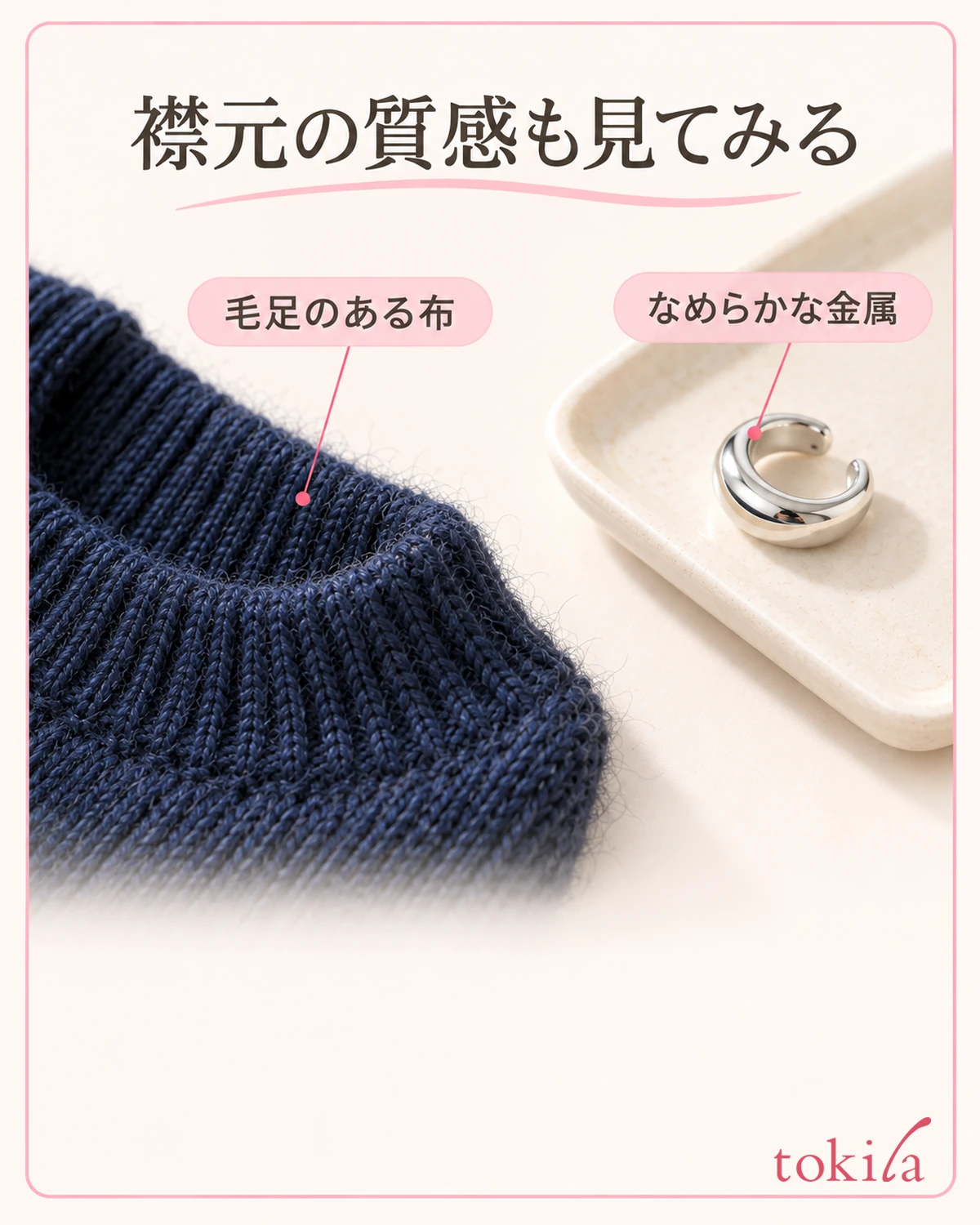
With a high-neck knit, the fabric's thickness and nap also form the background around your ear. Before comparing the look, check whether the metal or decoration touches the fabric. Avoid combinations that catch, and do not rely on pulling the collar to keep it in place.
If you are torn between two garments, step slightly back from the mirror and describe where your eye goes first. Your own observations, such as seeing the ear cuff or noticing the collar pattern first, are enough. Do not treat effects such as a smaller-looking face or brighter-looking skin as guaranteed results of the combination.
4. Coordinate other metal details, starting with those closest to your face
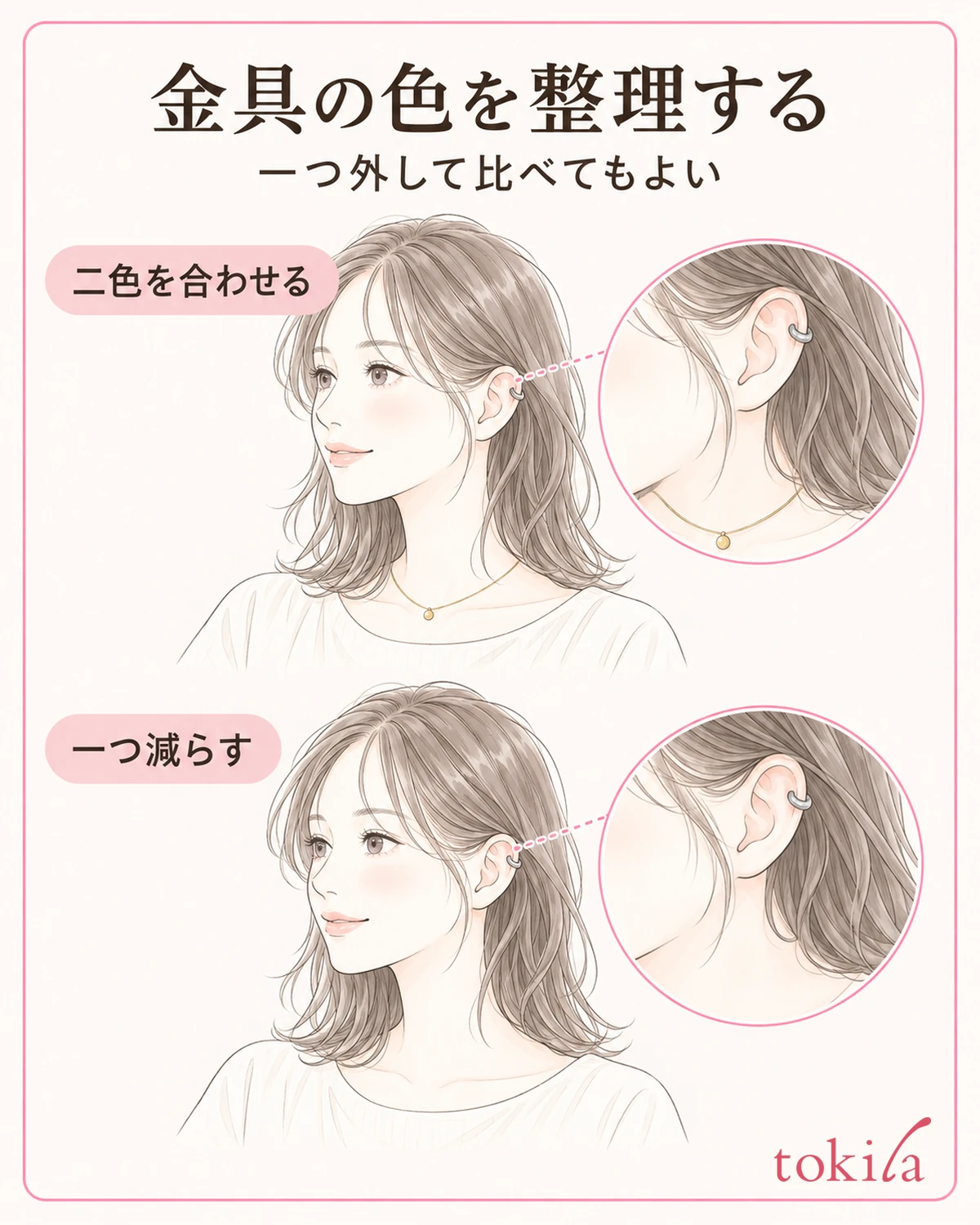
Check metal near your face, such as a necklace, glasses hardware, or clothing buttons. You do not have to change everything to the same color, down to a small bag clasp. Start with items you can see together in the mirror from the front, so distant accessories do not dictate your choice around the ear.
On days when you want a coordinated feel, one option is to repeat a color close to your cuff in one other place. Try combinations you own, such as a silver cuff and silver necklace. Even with the same color, shine and thickness differ, so look at the whole outfit rather than considering it finished because the color names match.
Mixing gold and silver is also an option. In that case, organize the prominent surface areas: let one cuff lead and keep the neckline delicate, or use an item you own that contains both colors between them. You do not need equal amounts of both colors or to add more of everything to connect them.
If the mix feels unsettled, first remove one item and look again. Before buying another color, compare what you already own by removing a necklace or reducing stacked cuffs to one. If the details you like remain after removing something, that simpler combination is also a possible finished look.
For pieces decorated with stones or resin, look separately at the metal and decoration colors. The color you connect to your clothes changes depending on whether you want to enjoy a red decoration or show a gold hoop. Rather than mechanically counting colors, decide which part you want to show, then choose the accessories to keep.
When combining the cuff with other ear jewelry, first check whether their construction allows them to be worn together. Do not copy a stack in a photograph directly onto different shapes; stay within a comfortable range of contact and weight. Do not push pieces into your ear or bend metal to arrange the colors.
5. Check from the front and side, and record the conditions you like
Finally, look from the front and side in a place with your usual level of brightness. Do not decide only with your face close to the light; step back from the mirror and include your clothes. Judge the strong reflection as you turn separately from the color visible in your normal posture.
If you are still unsure, do not change your hair, clothes, and other accessories all at once. Change one thing at a time and compare it with the previous state, such as removing one cuff today or changing only the neckline to a plain one. Trying changes in an order you can reverse helps you identify what brought the look closer to your preferences.
If you take photographs, using the same place and direction makes comparison easier. However, screen brightness and camera processing can change the metal's color, so do not determine its actual color or material from a photograph alone. Use photos alongside your impression in the mirror as clues for choosing clothes next time.
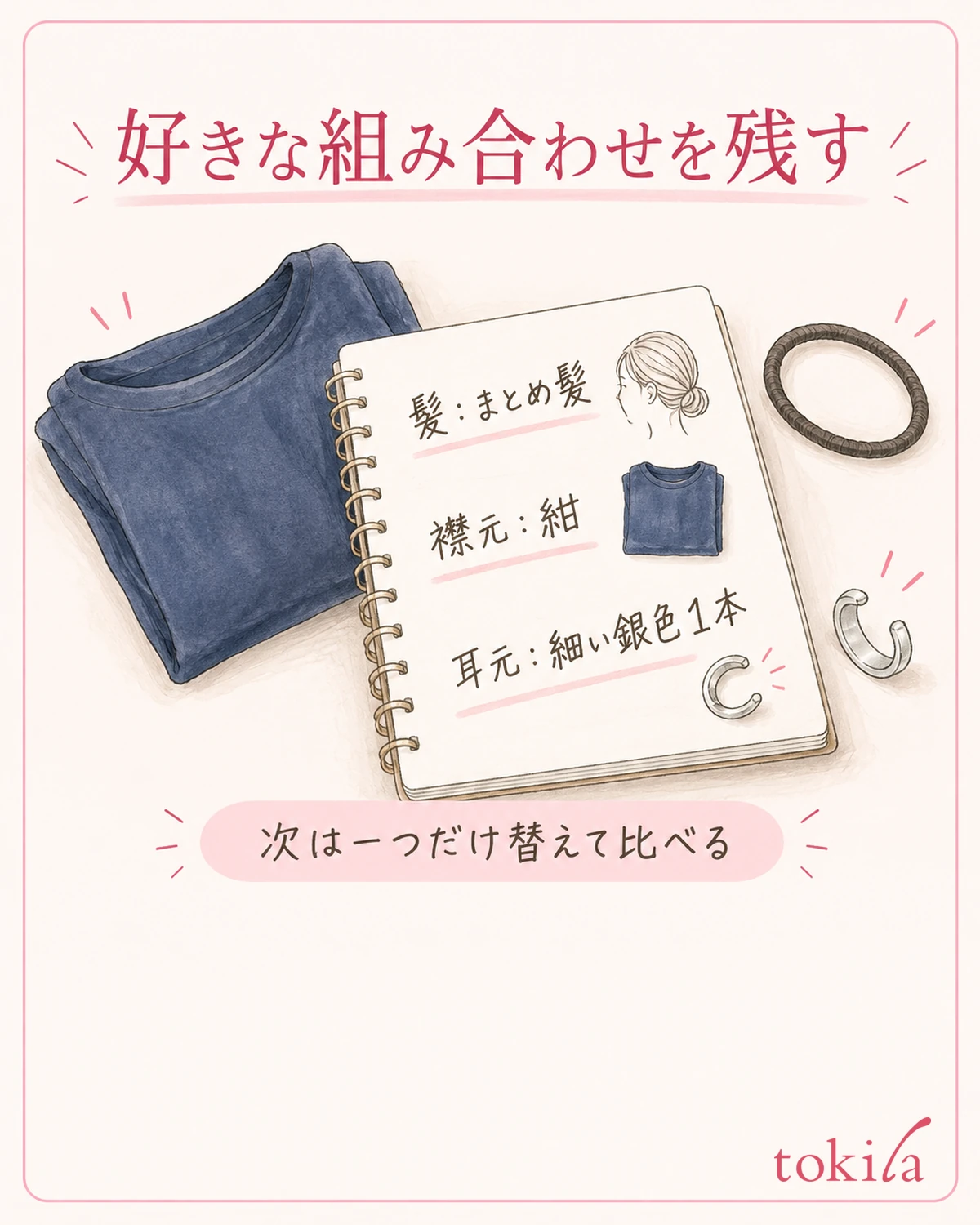
If you keep notes, briefly record your hairstyle, neckline, and metal area, such as an updo, navy collar, and one thin silver cuff. This makes it easier to recreate the conditions you liked that day than deciding that silver suits you as a fixed rule. When seasons or clothes change, you can reconsider the same cuff against a new background.
When removing it, follow your item's instructions and avoid catching it on your hair or collar. Distinguish reflections from dirt or changes to the surface when an area looks different in color, and follow the material's care instructions. Do not start polishing or modifying it yourself just to change the color combination.
Coordinating an ear cuff means choosing the surface you want to show against the background of your hair and neckline. Look at color, shine, and area separately, then change one factor at a time to compare. Enjoy the day's outfit as you connect the conditions you like with clothes you own.Other color-coordination guidescan also offer a starting point for considering combinations.