Gold earrings and a silver ring. You like both, yet together they seem somehow mismatched. On days like that, before you replace everything with one color, try rethinking which piece stands out and how you repeat colors. Mixing gold and silver is one of the options for putting an outfit together.
This article uses accessories you already own and goes in this order: decide on one star piece, add one piece in a different color, and check the placement in a mirror. It does not set rules like "always use this ratio" or "this metal color for this skin tone." How a metal color looks and checking materials and comfort are treated separately.
1. Look at gold and silver color separately from shape and shine
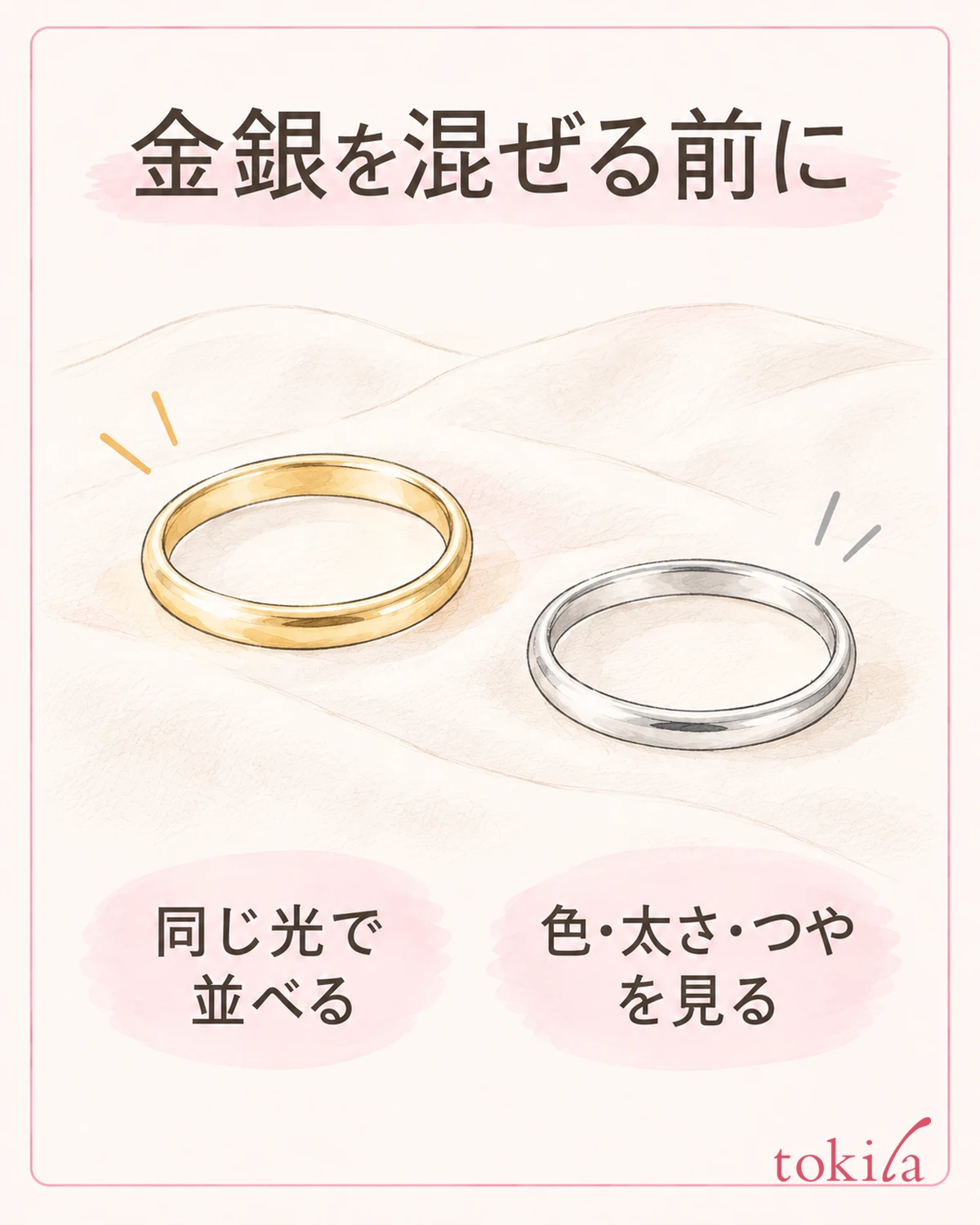
First, line up your candidates near the clothes you plan to wear today. Sort them roughly into goldish and silverish, then see whether there are differences within the same color: a yellower tone, a whiter tone, or a different surface shine. Gold and silver here are names for the colors you see. Do not judge the type of metal or its content by appearance, as in "it's gold-colored, so it's gold" or "it's silver-colored, so it's silver."
Next, check the size of the rings, the thickness of the chains, and whether there are stones or ornaments. When you compare a thick silver ring with a thin gold one, the reason one bothers you is not always color. Even in the same color, a mirror-like polished piece looks different from one that returns light softly.
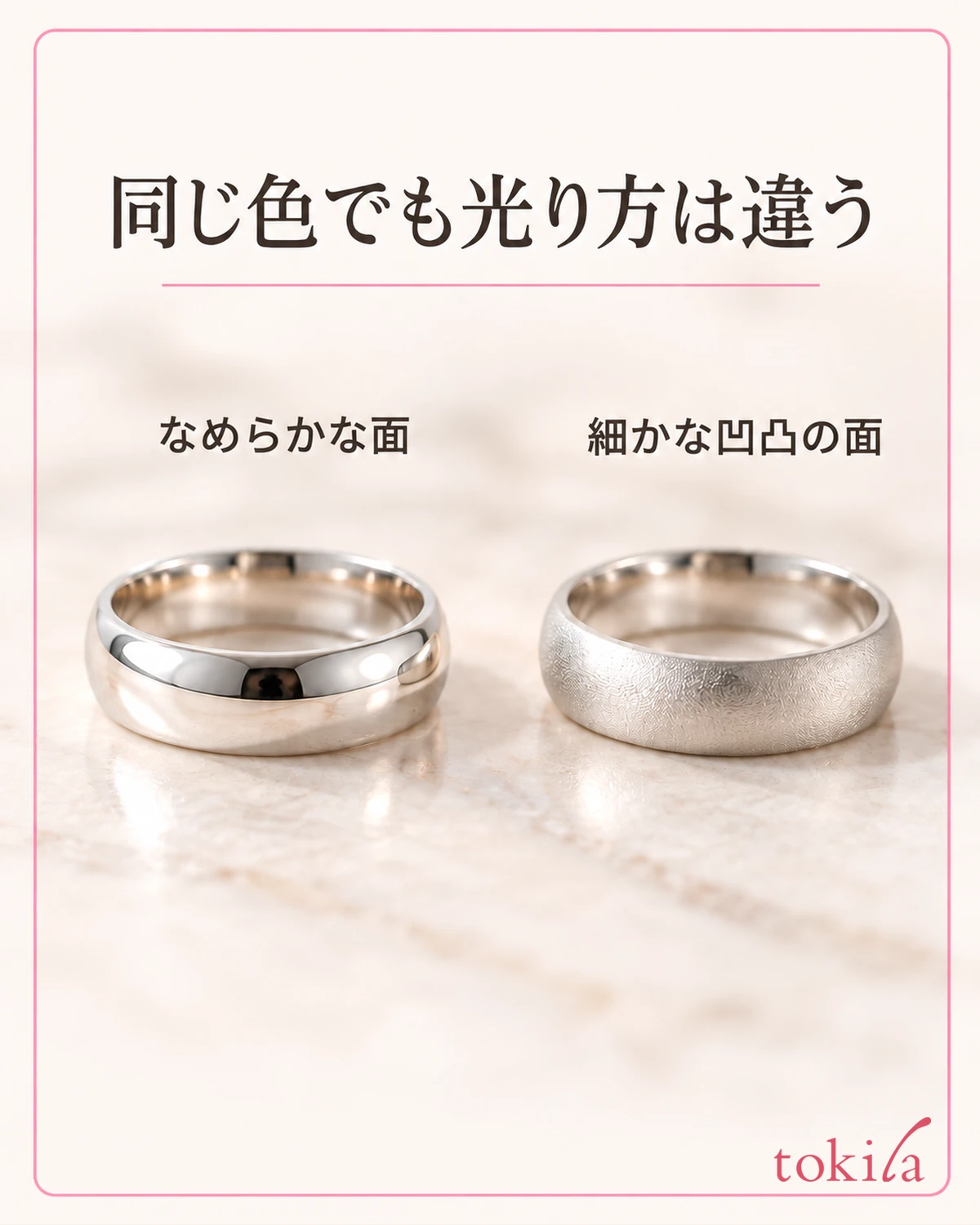
While you compare, keep the outfit and lighting the same. If you compare one piece remembered from beside a window with another remembered from in front of a dark drawer, it becomes hard to sort out the differences. First place the two side by side in the same spot, then turn them slightly to check how they catch the light. If you are unsure how to compare colors, the steps for comparing clothes of the same color may also help.
When you have many candidates, first narrow down the ones you want to use today to two or three. Leave space on the desk and set them so they do not touch. At the stage of choosing colors, there is no need to rub them together or force them onto the same finger.
If you always wear a wedding ring or a watch, count those as part of your candidates too. You are not obliged to match everything to the color of what you never take off, but knowing the colors already in view makes it easier to decide what to add. Look at the color of a watch face or stones separately from the metal color.
If you keep candidates as a photo, put the two in the same single shot. Photos taken separately may change in brightness and color automatically, so do not decide how well they go with the real pieces by the color on the screen alone. If the impression differs from what you saw in the mirror, put the real pieces back in the same place and check again.
2. Decide on one star piece and add one piece in another color
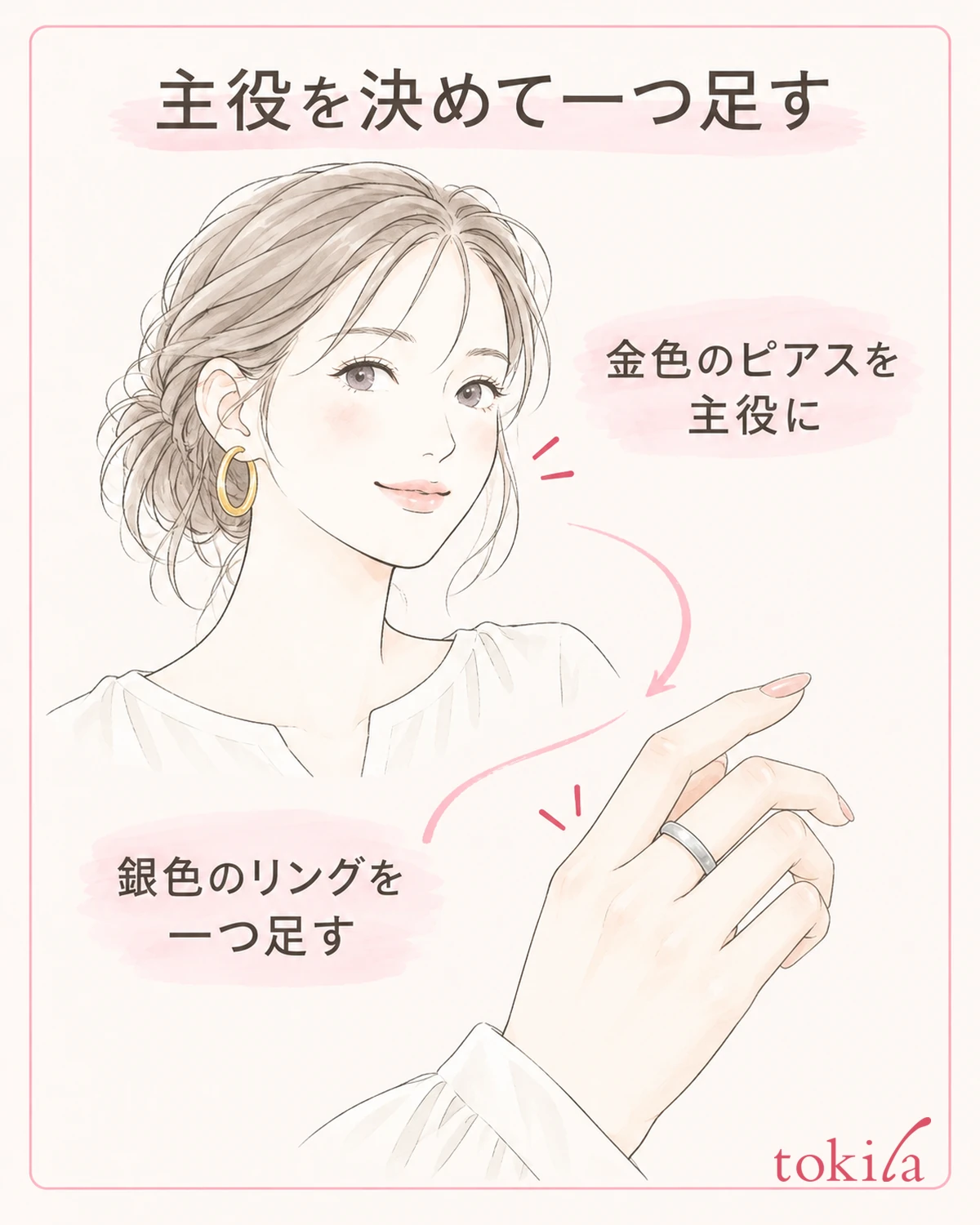
In front of the mirror, put on the one accessory you most want to show today. For example, if you make gold hoop earrings the star, first look at how they go with your clothes. If you decide whether you want to show off your ears or enjoy your hands before adding anything, you do not have to change everything at once.
Next, add one piece in a different color. For example, try a thin silver ring with gold earrings, or small gold earrings with a silver necklace. Do not pile several pieces onto both arms, your neck and your fingers from the start; stop once after adding one.
After adding it, do not look only at the color up close; check also in a mirror that shows your upper body. If your eye goes more strongly to the ring than to the earrings you meant as the star, look at whether size and shine are having an effect, not just the difference in color. If you have one, you could swap it for a thinner ring in the same silver.
If you like the mixed look, you can finish with just those two. Do not make number matching, such as "gold and silver must be equal in number" or "make it seven to three," a condition for being done. Even with few pieces, the one with the larger area may look strong.
If you are unsure, keep the star piece and take off only what you added later to compare. If you prefer it before adding, you can also enjoy a single color with that day's clothes. You do not have to break up a combination you liked just for the sake of mixing gold and silver.
When choosing the star piece, look not only at the area of color but also at the collar of your clothes. On days when a high collar hides your neck, it may be better to enjoy just your ears rather than adding necklaces. Conversely, with a neckline that is open at the chest, you can try making the neck the star and keeping the ears subdued. Before changing the clothes themselves, decide on one place you want to show.
3. Repeat a color that looks isolated in one more place
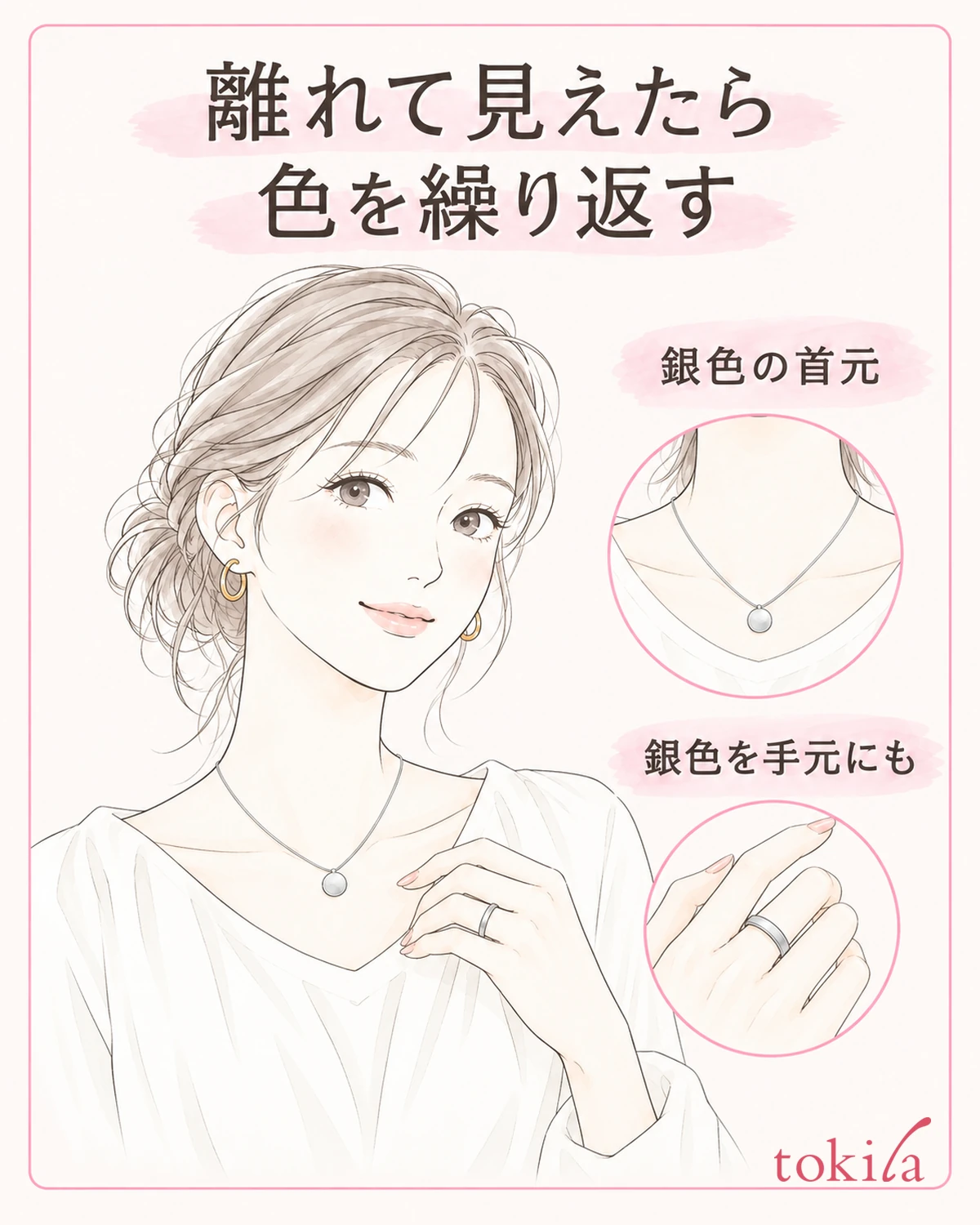
If one piece in a different color seems to stand apart, try repeating the same color a little in another place. If you are wearing gold earrings and a silver necklace, for example, you could add a silver ring you already own. This is one way to look for cohesion, not a requirement that means you must buy more.
When you repeat a color, add the pieces one at a time. Compare in the mirror the state where silver shows at both your neck and your hands with the state where there is only the necklace. Check not that "repeating always suits you," but whether it gave you a flow for the eye that you like. If adding more feels too busy, go back.
If you own a piece that has both gold and silver in one accessory, you could use it as a bridge. However, you cannot mix colors only if you own such a combination piece. You can also enjoy the two colors you already have by placing them in separate spots.
Fasteners on clothes and bags are also part of the metal color if they are actually visible. On a day you wear a silver watch, silver may already repeat at your neck and hands without adding a ring. Rather than counting hardware hidden by hair or sleeves, check the range visible in your usual posture.
On days you wear patterned clothes, the colors of stones and beads are added too. If you feel there are too many colors other than gold and silver, one idea is to switch to pieces without stones first and observe the two colors. If you want to decide on colors for patterns and small items, it is easier to sort out if you think of it separately from the steps for choosing one color from a pattern.
On days you make gold the star, there is no need to hide silver so that it does not stand out. You could add silver in a thin, small amount, or make one large silver piece an accent. If you first put into words which one you want to show before looking in the mirror, you will not decide it failed just because the colors are different.
4. Before layering, try spaced-apart placement and comfort
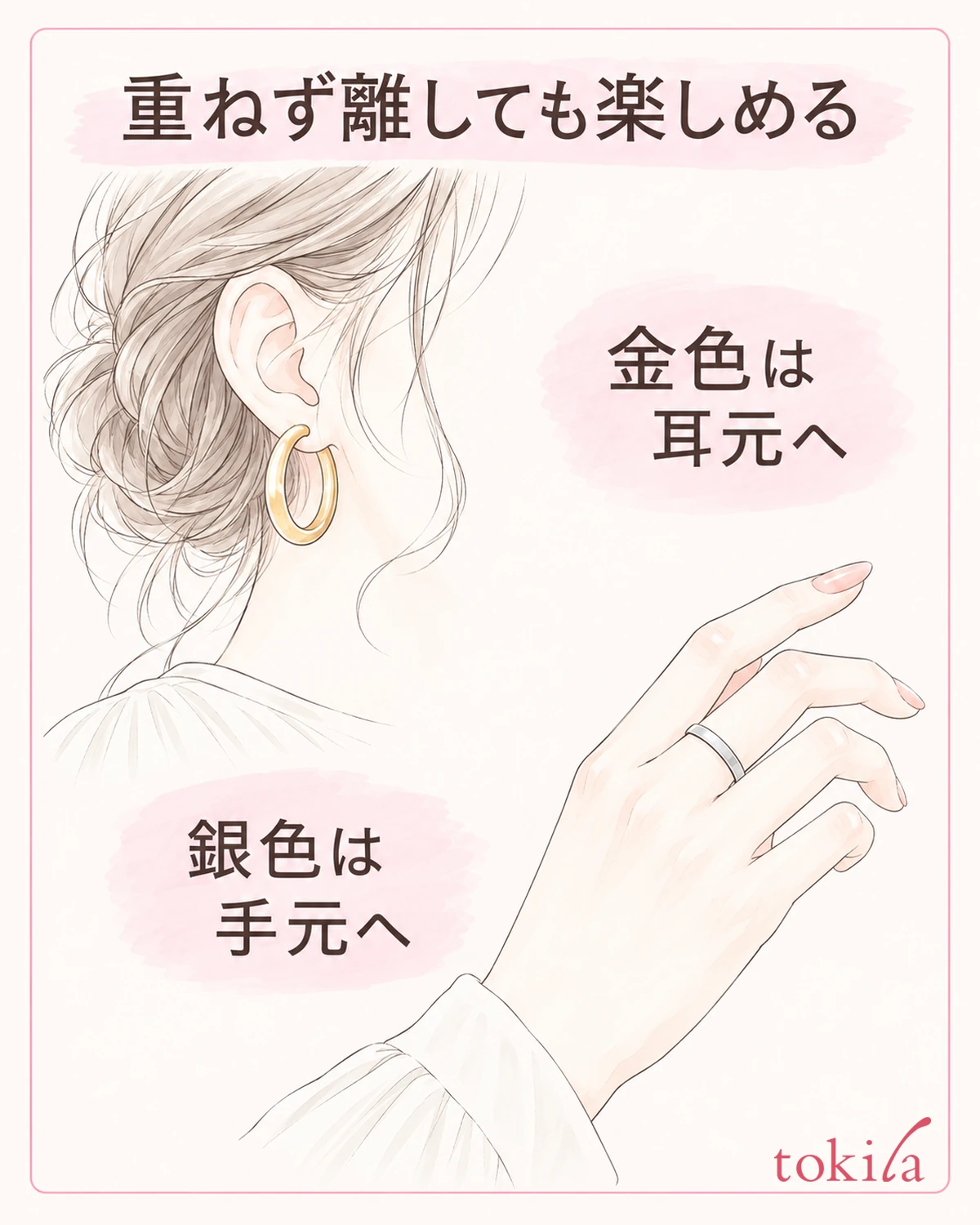
To mix gold and silver, you do not need to layer rings or bracelets directly. The two colors are visible even in separated positions, such as ears and hands or neck and fingers. If you are not used to layering, checking how the colors look in a spaced-apart placement first lets you try without increasing combinations that touch.
For rings, first check that the size fits the finger you want to wear it on. When moving one to a different finger, do not force on one that is tight. If you wear several, open and close your hand lightly and check how it feels when your fingers bend and straighten and when they touch the next finger. Even if you like how it looks, if it is hard to move, reduce the number or change the places.
If the ornaments of neighboring rings or a watch and a bracelet knock against each other, space them apart or take one off. Having different colors and having hard parts touch each other are separate issues. Handling differs by material, how stones are set and surface finish, so check the precautions for the pieces you own, and do not assume they will not get scratched when layered.
At the neck, also check movements such as the chain tangling, hair catching on the clasp, and ornaments touching your clothes. Even if the length is adjustable, stay within the adjustable range. Do not force the fit by bending metal parts or tying the chain to shorten it.
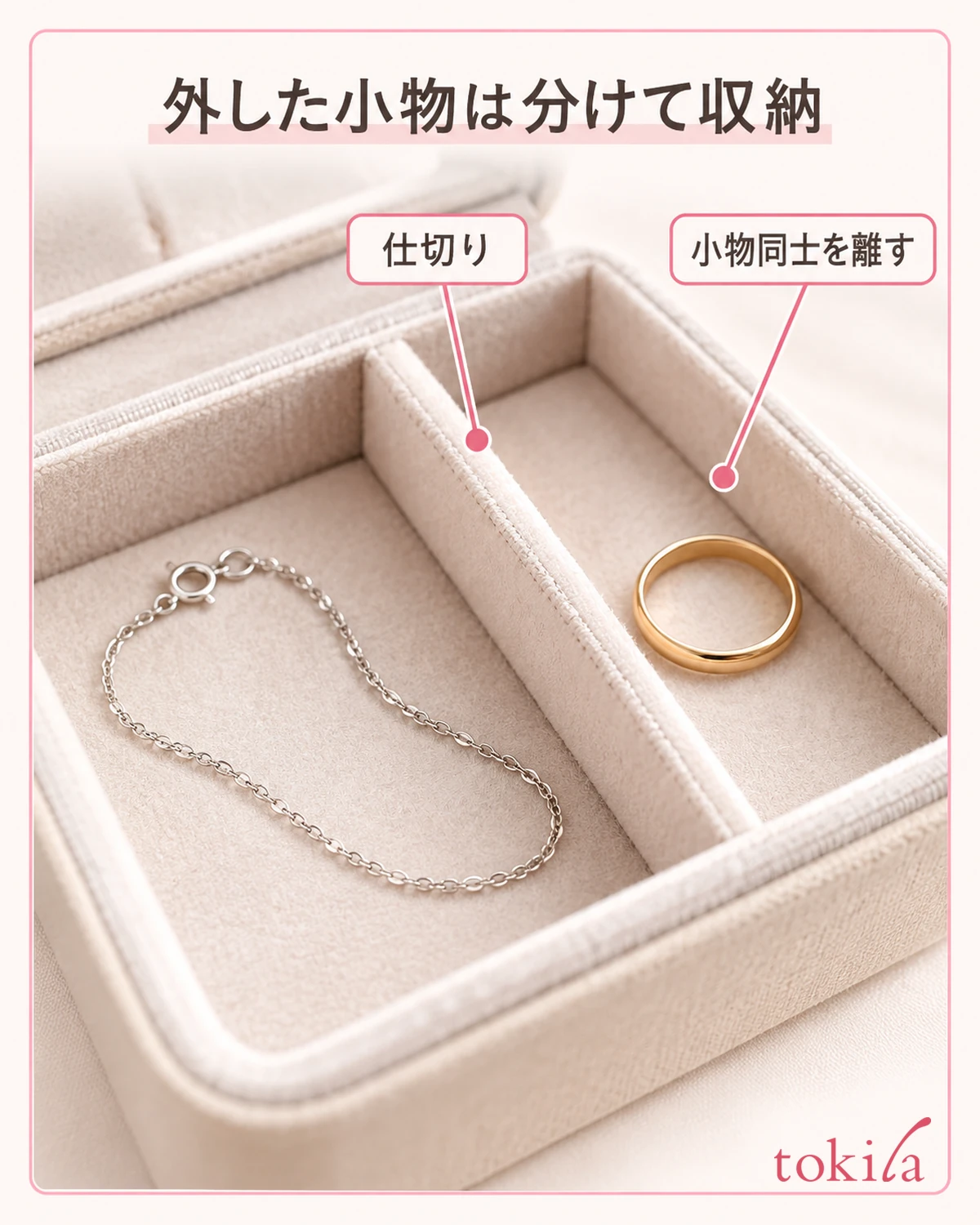
After taking them off, you do not need to group them by color. Use cases or dividers that suit the pieces you own so they do not rub or tangle. Do not polish the metal or soak it in chemicals in the middle of choosing colors; do the care separately, in a way suited to the material and finish.
5. If it doesn't come together, go back one thing at a time: color, size, place
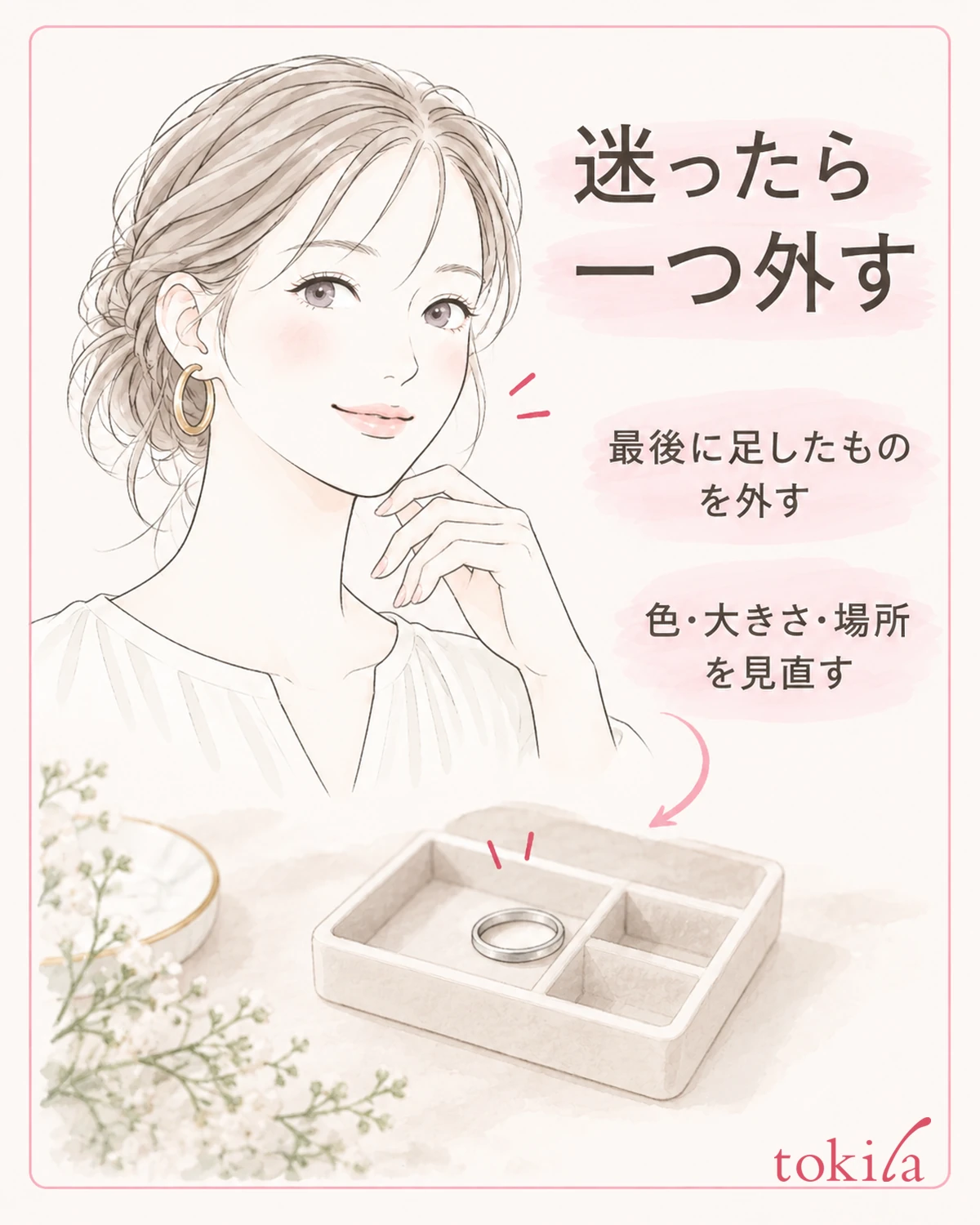
If the whole look feels unsettled, take off the last piece you added and get closer to the stage of just the star piece and your clothes. Do not pile on changes, such as swapping the earrings at the same time as you take off the neck piece. Make it possible to see which single change altered the impression.
Next, choose whether you want to change the color of the piece that bothers you, tone down its size, or move where you wear it farther apart. For example, if a large silver ring stands out, first try taking it off. Then, if you have one, try a thin silver ring. Do not change both color and thickness at once and decide that gold and silver themselves do not go together.
When you like it from the front, turn slightly to the side and look at your usual posture with your arms down too. How much shows changes when you tuck your hair behind your ear or move your sleeve. Rather than a combination that works only if you keep a hand raised beside your face, choose a state you like even in your usual posture.
If it suddenly bothers you while you are out, it is fine to just take one piece off and put it in its case. Do not buy a new color on the spot or bend what you have by force. To avoid leaving things behind, do not drop what you took off loose into your bag; return it to its designated storage place.
On days you like the result, jot down the colors and places together, such as "gold earrings + thin silver ring" or "silver at the neck, keep the watch." It will be easier to recreate next time. Rather than memorizing a correct ratio, use the look you liked with today's outfit as a clue and try other days one piece at a time.
On days with no time to rethink, going back to a combination you usually like and use is enough. On a day when you have more room, fix your outfit and try one piece in a different color. If you have no candidates to compare, do not force yourself to prepare a substitute; just check whether you like the two you have now.