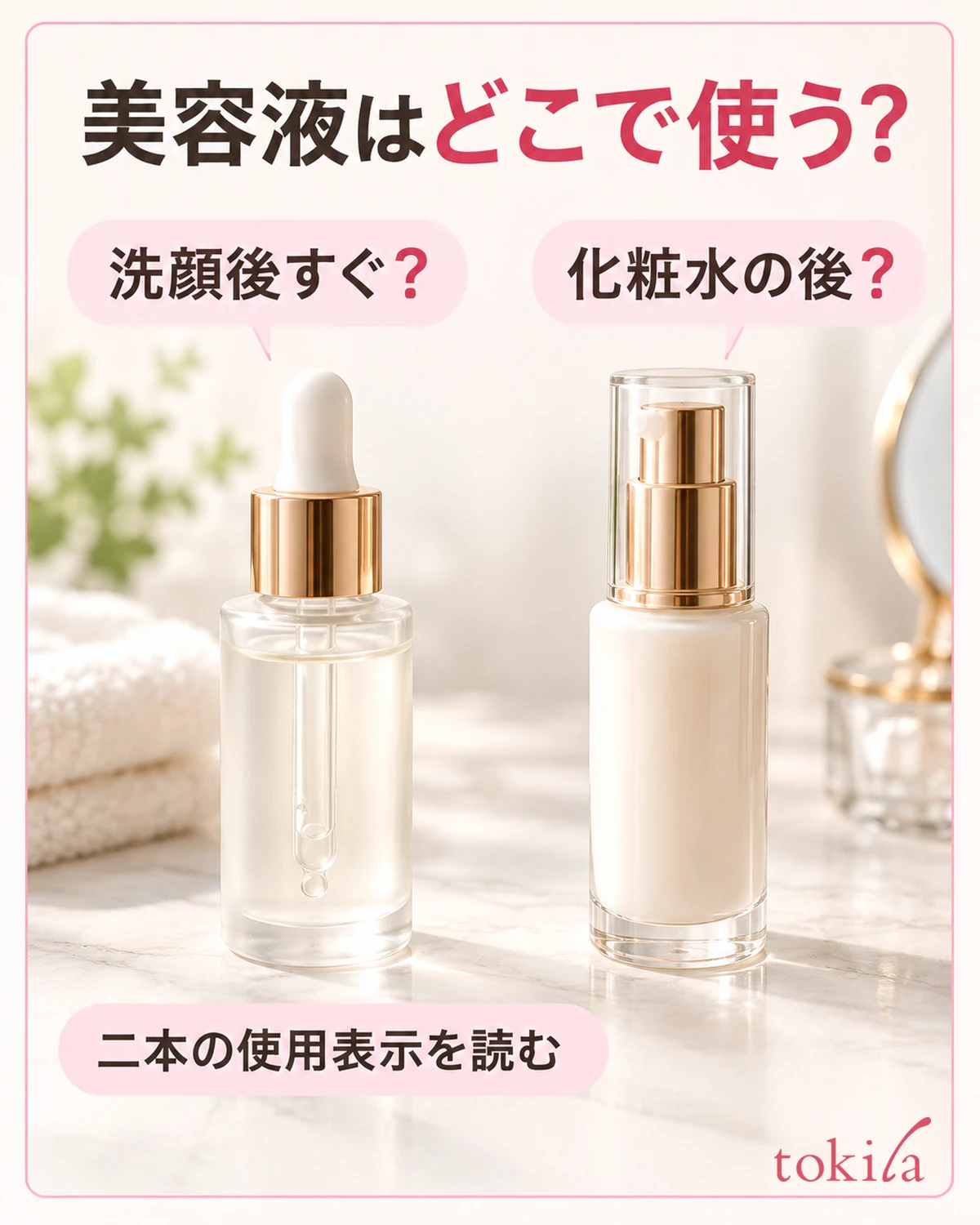
You would like to add another serum but are unsure where it fits into your usual routine. Even products called serums may be used immediately after cleansing, after toner, or only on certain areas, so the conditions to check differ. Start by placing the instructions for both products side by side and organizing when and where each is used.
This article explains what to check before using multiple facial serums and how to plan for layering them or separating them between morning and evening. It does not suggest that more products produce greater benefits or that compatibility can be judged by ingredient names alone. Avoid trying new combinations on skin that already shows abnormalities.
1. First clarify why you want two serums and review your current routine

Begin by briefly writing your usual routine from cleansing to moisturizing on paper. List the names and order of the toner, serum, emulsion, and other products you actually use, keeping unused purchases separate. This makes it easier to see which step you want to add to than comparing the serums in isolation.
Next, put into words one thing you want to add with the second product. Be specific about the situation, such as including it in moisturizing care for your cheeks or using a product intended only for nighttime. If its description overlaps with your current serum, consider whether both need to be layered on the same day, including the option of choosing just one.
There is no universal rule that using two serums is better than using one. Read the stated benefits and purposes on the containers, as well as whether each is a cosmetic or a quasi-drug. Do not add together features stated for separate products and interpret them as a new benefit from layering.
Rather than starting two unfamiliar products simultaneously, keeping your existing routine and limiting new additions to one makes it easier to review how you used it and any changes. This is not a test that guarantees safety. Follow any specified frequency or precautions for starting a product.
If your current routine is causing redness, itching, pain, or other symptoms, treat this separately from adjusting product numbers or order. Stop using the cosmetics involved and consult a dermatologist as needed. Do not assume that buying another serum can resolve the cause of a skin abnormality.
Even if you keep both serums, retain the options of using them together, separating them between morning and evening, or using only one. If their conditions do not align, you do not need to force both into the same session. First connect your reasons for using them with your current routine, then prepare to read the directions.
2. Read each serum’s designated step and place it among the surrounding products
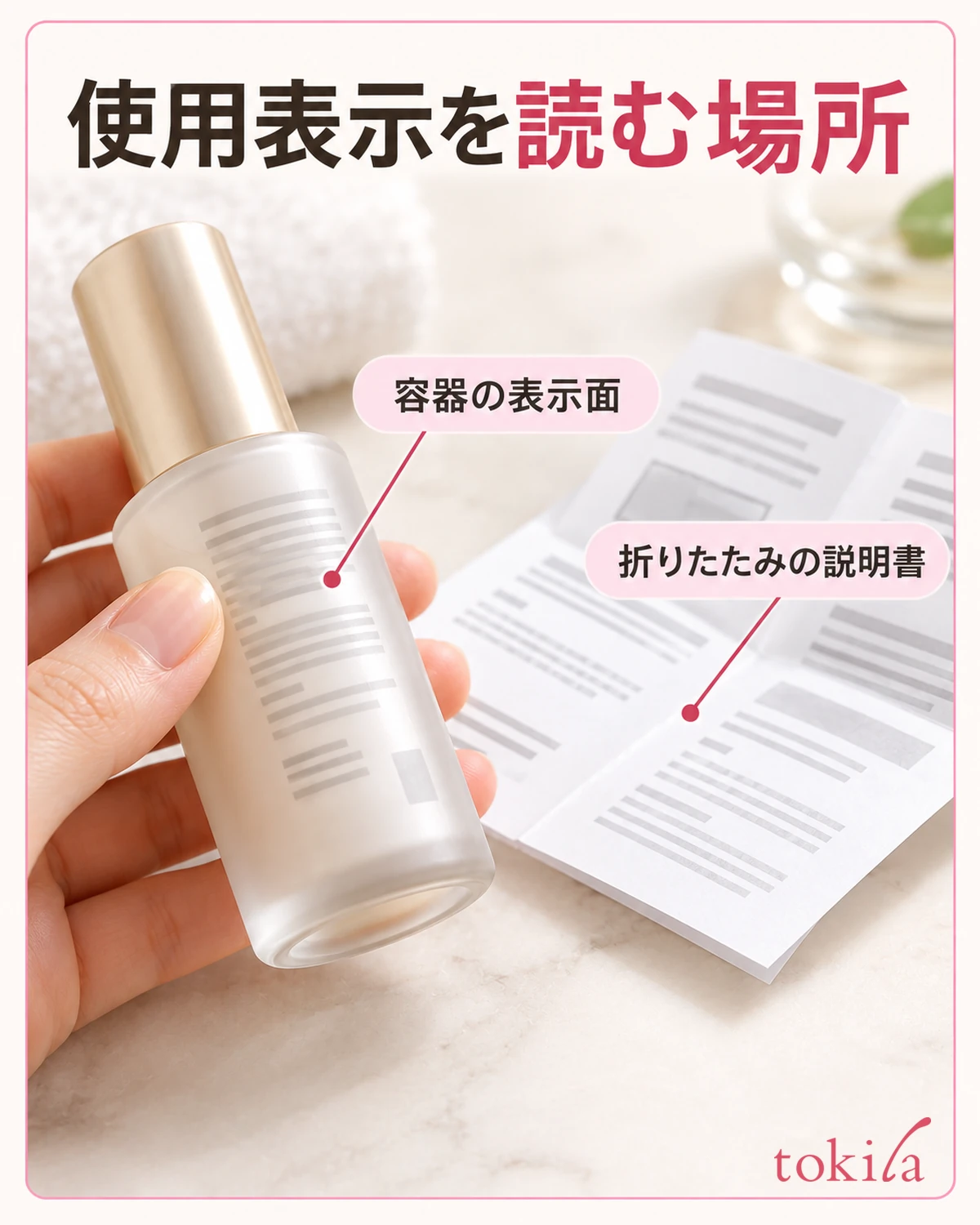
Place both containers, outer boxes, and available instructions together and look for when each should be used. Note each product’s specified place, such as immediately after cleansing, after toner, after emulsion, or at the end of the routine. Assuming all serums go after toner may cause you to miss an exception.
For example, if one says immediately after cleansing and the other says after toner, check a sequence that places toner between them. Using two products together does not necessarily mean applying them consecutively. This example illustrates how to distinguish directions; it does not prescribe the same order for every pre-toner product and serum.
Some routines have a different basic order, such as applying emulsion first. Rather than forcing your products into a general diagram, read the directions for the surrounding toner and emulsion as well. A targeted product may have a different step and application area from an all-over facial serum, so write it on a separate line.
If both belong at the same step, check for guidance on using them together. Starting with the lighter texture is one approach, but it does not override specific directions. Do not base the order on impressions such as a liquid looking light, a small container, or a high price.
If you cannot find directions for combining the two, such as products from different brands, gather their names and your usual order and ask for advice. Do not decide on your own that they can be combined because they share an ingredient name, or cannot because their ingredients differ. Until you can confirm, put using both together on hold.
After reading the labels, arrange only the products whose positions have been established. In your notes, do not abbreviate after cleansing or after toner so much that the preceding step becomes unclear. If you use a biphasic serum,handling a biphasic oil serumcan also be checked against your actual product’s directions.
3. Match the time, frequency, and application area, separating products where appropriate
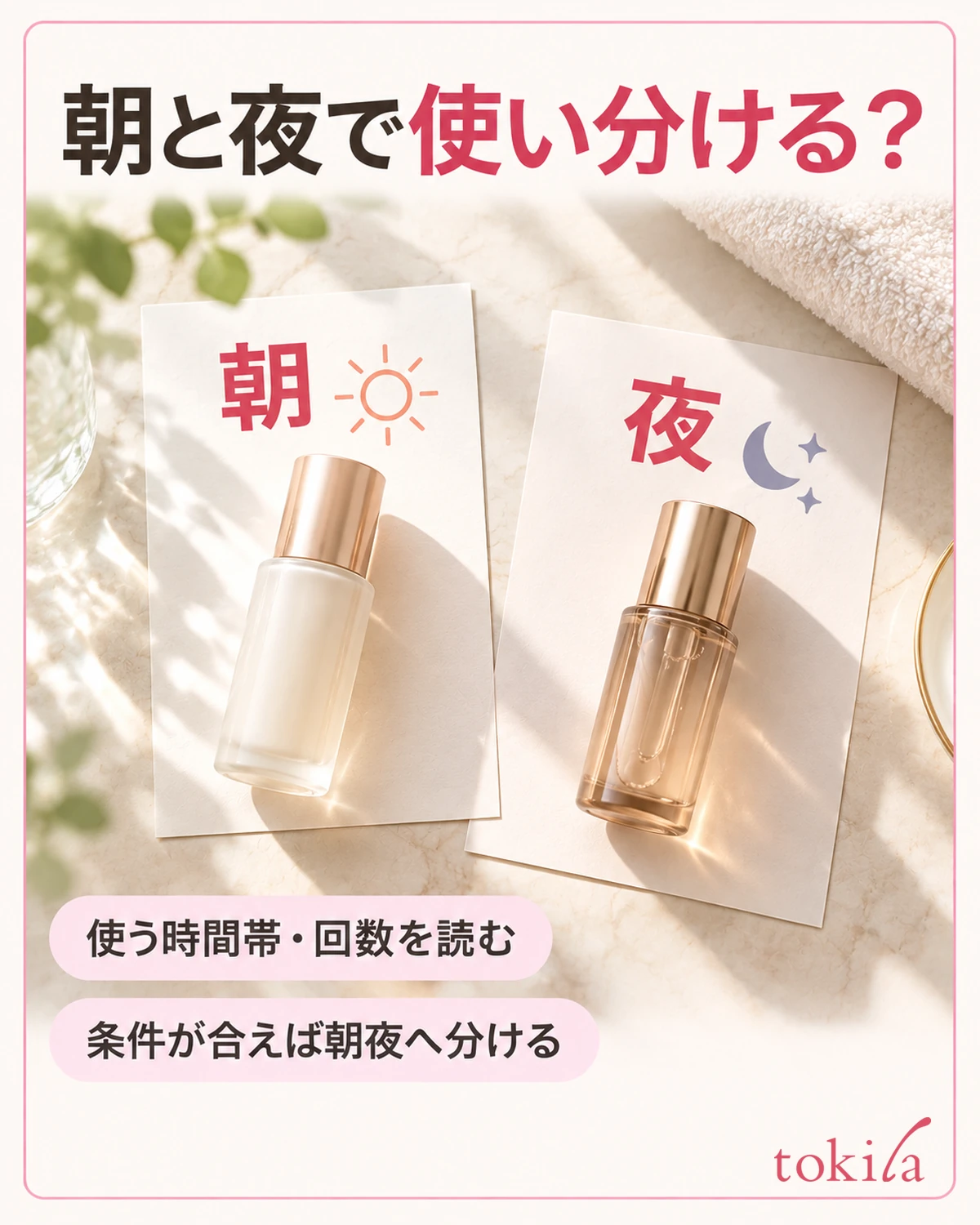
After the application step, read whether each product is for morning, evening, or both, and how often it should be used each day. Do not force a morning-compatible serum and an evening-only serum into the same morning routine. An instruction to use a product at night does not mean it can also be used before makeup.
Even if both can be used morning and evening, using one in the morning and the other at night is an option if a single routine becomes lengthy. However, this does not mean you can change a product specified for twice-daily use to once daily for convenience. Decide after checking that the approach suits its frequency and purpose.
Think of morning preparation as a continuous routine from cleansing to sunscreen and makeup. Avoid reducing necessary moisturizing steps or sunscreen quantities to make room for two serums. If time is short, first reconsider whether both need to be layered in the morning; this can reduce the need to rush application.
Distinguish products for the whole face from those for areas such as the eyes or cheeks. Do not concentrate a full-face amount in one small spot or spread a targeted product over the entire face. Record conditions such as avoiding the eye or mouth area alongside the designated step.
Some products have special instructions, such as spacing out initial applications. Do not transfer their frequency or number of days to another product with a similar ingredient name. If there are precautions for starting or combining products, do not assume that separating them between morning and evening satisfies those conditions.
When separating morning and evening products, keep their names and original directions visible. Write the day’s products on morning and evening notes, and position them without covering the container text. Being able to reread the name just before use is more reassuring than relying on container color.
4. On days you layer them, apply each separately using its stated amount and method

Once you have confirmed that layering and the order are appropriate, clean your hands and start with the first serum. Check its own specified amount, such as pumps or drops. Do not add a universal rule such as halving each amount because you are using two, or doubling it because a product looks concentrated.
Do not mix the two in your palm and apply them together unless that combination is specifically directed to be mixed. Dispense and apply each separately according to its instructions. Do not transfer liquids from separate containers into one container and prepare mixtures for later use.
For a product applied by hand, gently follow the specified area with your fingers or palms. Do not rub hard or pat repeatedly to hurry the next application. If a product uses a cotton pad, follow that method rather than arbitrarily switching to hand application.
After the first product, check its instructed application technique and guidance for the next step. Avoid trying to press in the second serum while liquid remains spread over the surface. At the same time, do not invent a waiting time for everyone; unless complete drying is specified, you do not need to leave it until dry.
Read the recommended amount for the second serum too, and apply it only where allowed. Do not return leftover liquid from your hand to the original container or press a dropper tip against the skin. If dispensing is difficult,checking your serum droppercan help you compare the instructions with your own container’s shape.
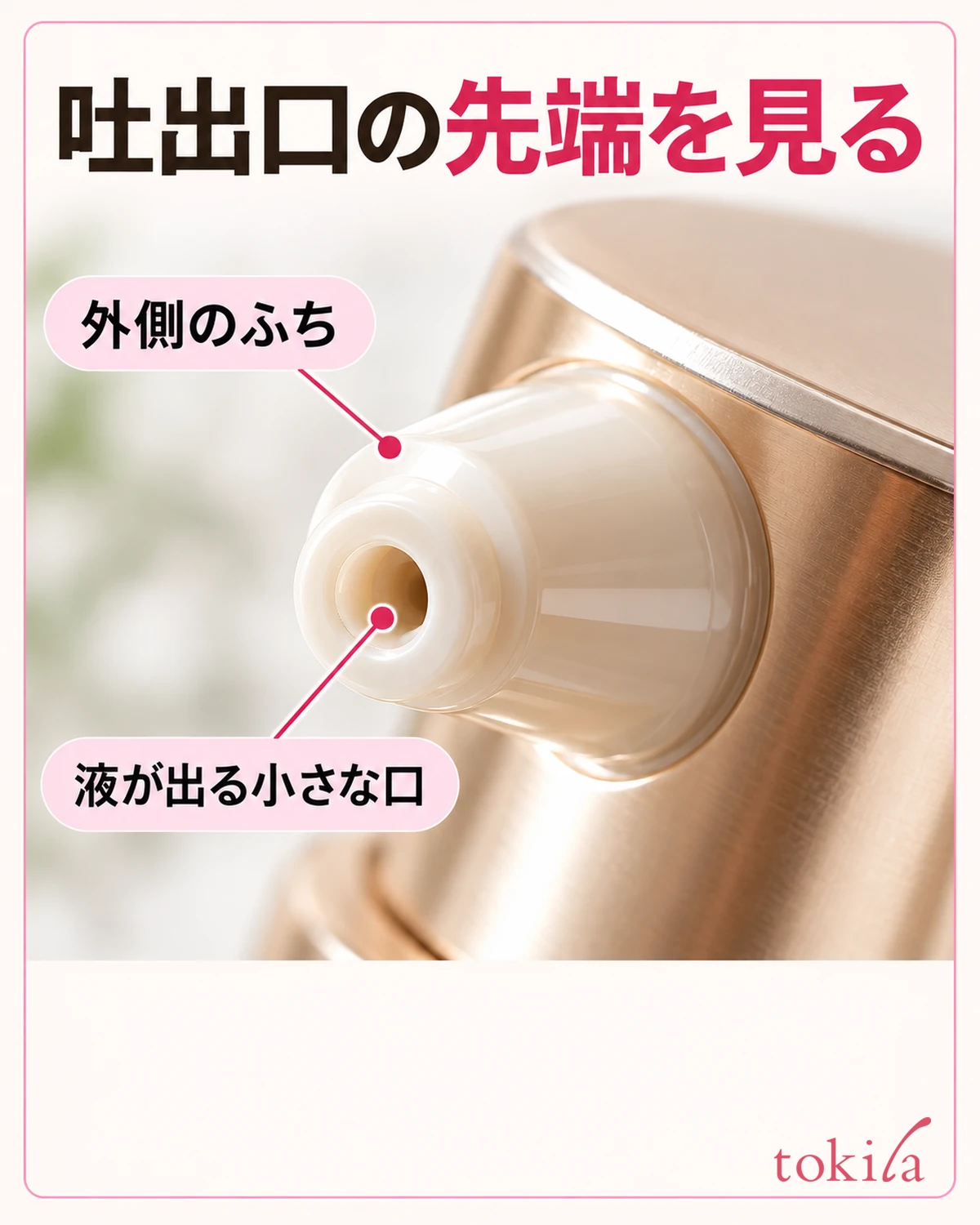
Finally, follow the confirmed order with any necessary emulsion, cream, or other steps. Do not assume that using two serums fulfills the roles of other care products. If you use sunscreen in the morning, separately check its quantity and application method and apply it evenly.
5. If layering feels heavy or causes pilling, review before adding more
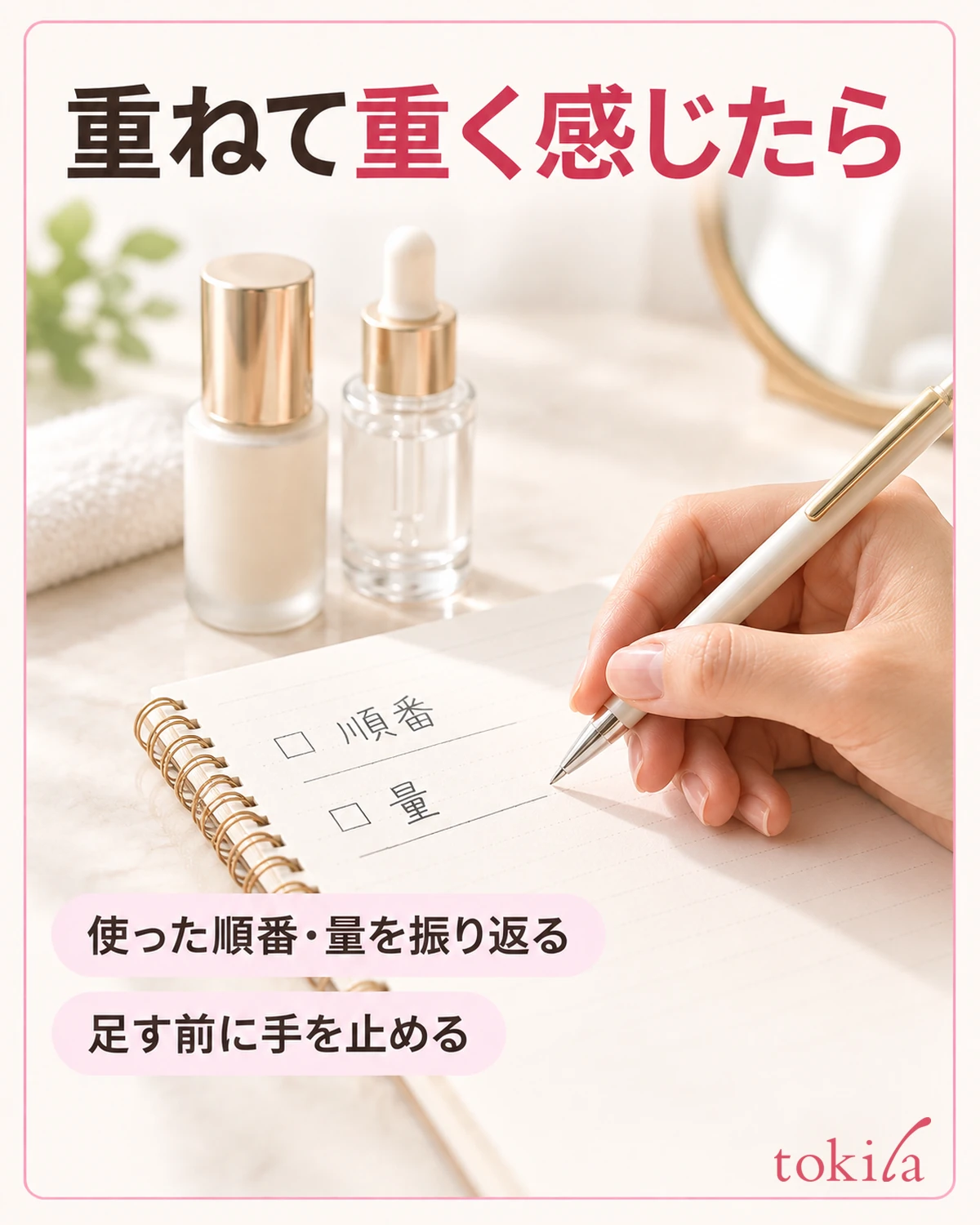
If layering feels heavy, review the amounts and areas used before immediately adding powder or another serum. Check one condition at a time: whether you dispensed more than directed, spread a targeted product too widely, or repeatedly moved over the same spot.
Do not handle a heavy feel and abnormalities such as redness or stinging with the same adjustments. If abnormalities occur, stop using the product and follow its precautions instead of continuing to experiment with quantities or order. Do not assume that separating morning and evening use will prevent irritation.
If crumb-like pilling appears, do not keep rubbing the skin to remove every bit; check which step it began at. Consider the moisturizer underneath, sunscreen, and makeup primer as well.How to review pillingexplains further; avoid remedies that reduce the necessary amount of UV protection.
For the next routine, first change one condition that did not follow the directions. If heaviness remains despite appropriate placement, amounts, and application movements, reconsider whether both need to be used together or can be separated between morning and evening within their conditions. Do not declare a combination unsuitable based on ingredient names alone.
Briefly note the names of the two products, whether it was morning or evening, what came before and after, and what troubled you. This is a record for explaining conditions when seeking advice, not a test result showing that a particular order always works. Do not assume that shine in a photograph measures absorption or moisturizing benefits.
Begin layering serums by checking whether they fit comfortably into your current routine, rather than aiming to increase the number of products. Compare the two products’ steps, times, and quantities, then decide whether to use them together, separately, or choose one. Put unresolved conditions on hold and proceed with a sequence whose use you have confirmed.