Your cheeks feel as though they are being pulled when you move your mouth after washing your face. You thought you had washed thoroughly, yet your skin already feels tight before moisturizing. On such days, rather than washing again to check, review your cleanser, washing technique, and the care that follows rinsing, in that order. There is no need to aim for tightness as proof that dirt has been removed well.
This article outlines how to review the cosmetics and movements you use when your skin feels tight after everyday face washing. It does not diagnose dry skin or a condition from sensation alone, or offer a washing method guaranteed to resolve it. If you have redness, pain, or strong stinging, prioritize stopping use and seeking advice instead of continuing to experiment with adjustments.
1. Separate when tightness appeared from the steps before and after washing
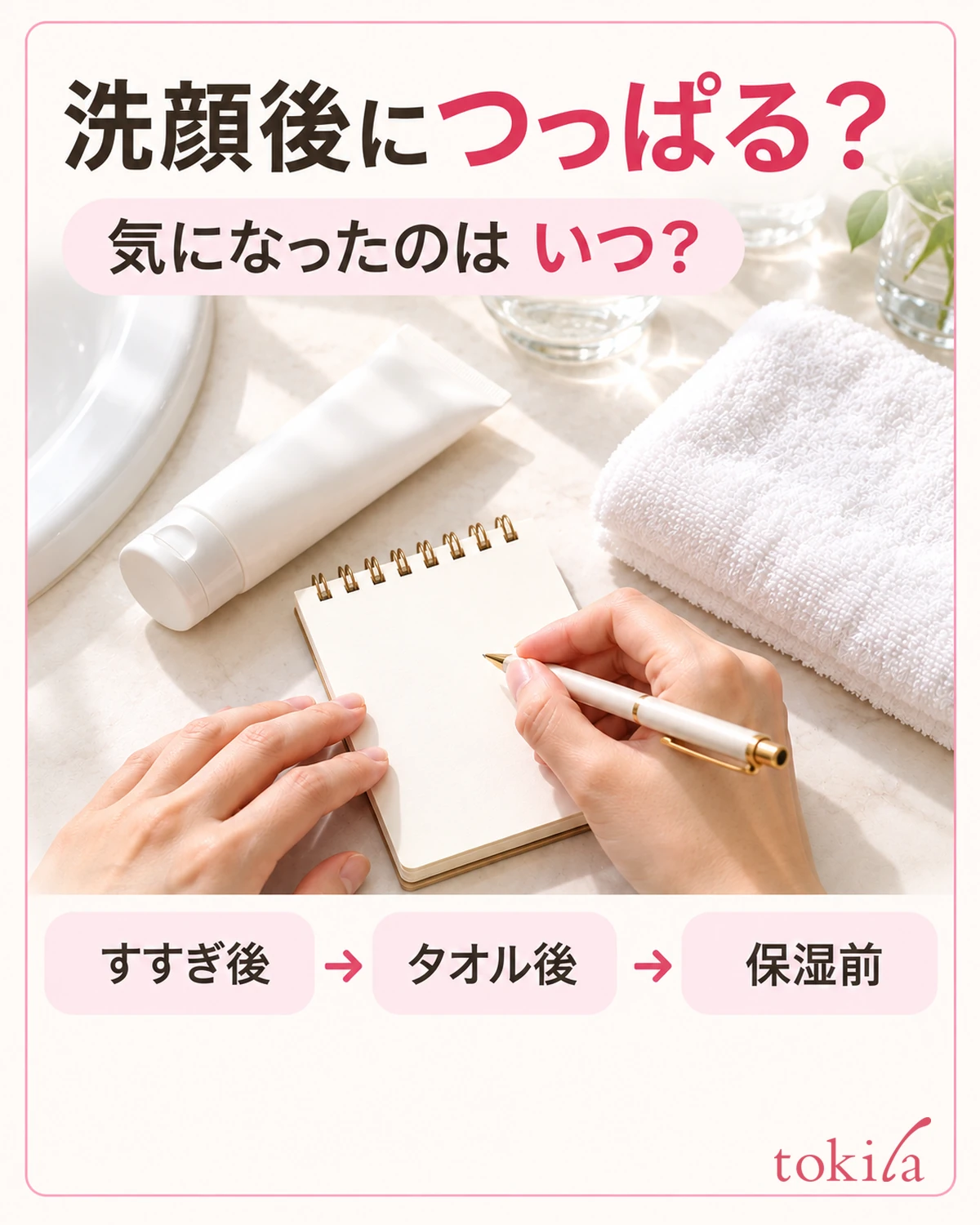
First, recall whether the tightness became noticeable immediately after rinsing, after applying a towel, or some time after leaving the sink. Rather than grouping everything as “after washing,” separating the point at which it began can help narrow down what to review. You do not need to wash your face repeatedly to check.
Next, note the area as you experienced it: only the cheeks, around the mouth, or the whole face. Record what you felt under normal conditions without pulling your skin with your fingers or repeatedly opening your mouth wide. Treat visible redness and the tightness you feel as separate observations, and avoid judging your skin's condition from photographs alone.
List your makeup remover, cleanser, rinsing water, and subsequent moisturizing care in order. If you use different products morning and night, do not compare them as two occasions with identical conditions. Noting whether you were bathing or washing only your face at the sink can also help you recall whether you used hot water on your face.
Also check whether you had just switched to a new cleanser, or had increased washing time or frequency with your usual product. Season, physical condition, and other factors may be involved, so do not identify an ingredient or product as the cause based on one experience. It is important not to jump to “I just need to remove this ingredient” by reading the back of the container alone.
If you usually have no concerns but experience pronounced discomfort that day, treat it differently from a day for practicing washing technique. Stop using the product with which you noticed discomfort and follow its precautions. Avoid reducing the response to a single answer such as adding several more moisturizing layers because your skin feels tight.
Three points are enough to begin your review: the products used, the washing steps, and when discomfort appeared. You do not need to delay moisturizing and keep observing just to create detailed records. After comfortably finishing today's care, briefly record what you remember.
2. Match the roles and amounts of your cleanser and makeup remover
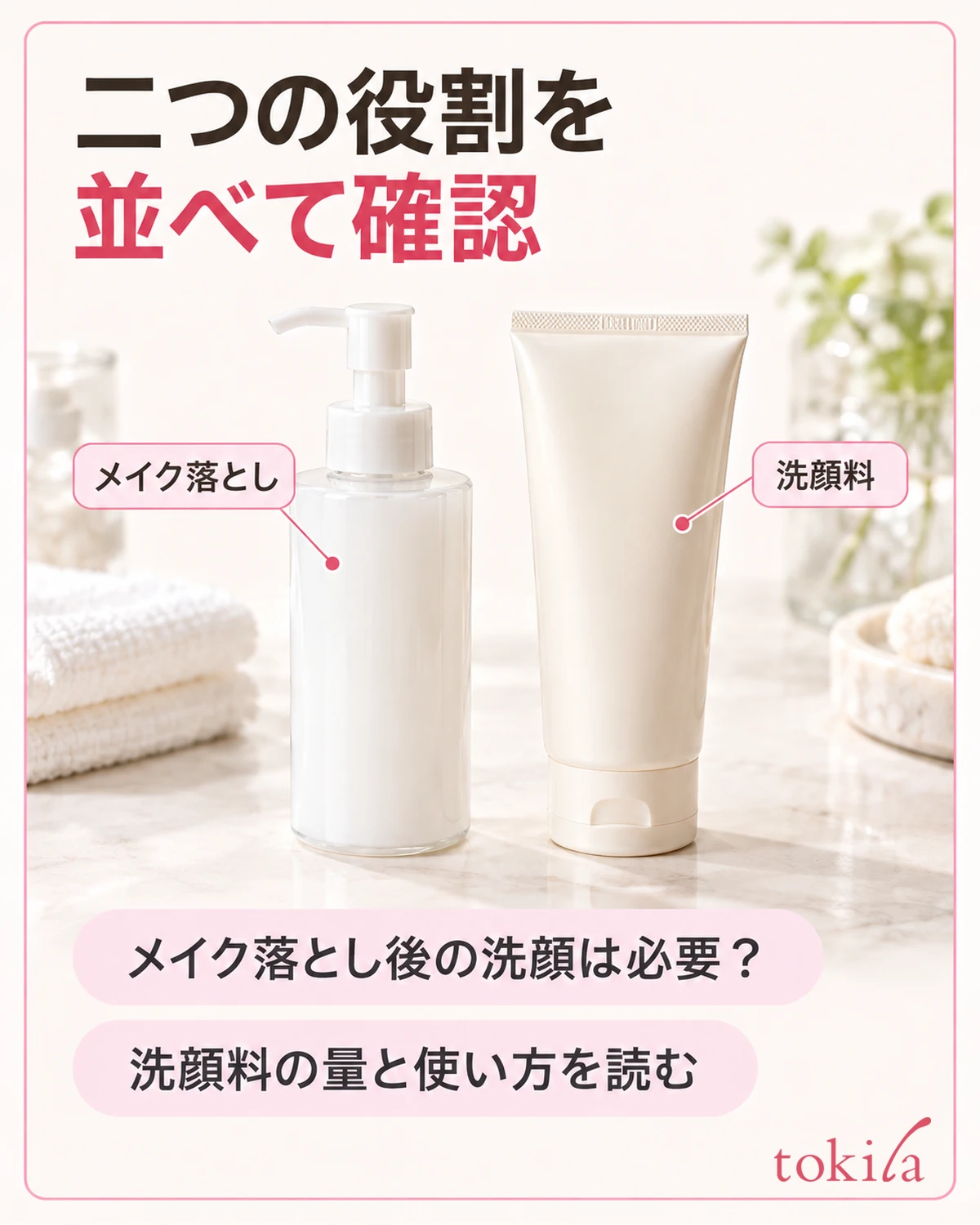
On days when you use both cleanser and makeup remover, read the directions on both containers side by side. A product requiring face washing after makeup removal involves different steps from one that completes cleansing on its own. Do not skip necessary cleansing simply because dryness concerns you, or add unnecessary washing out of habit.
Even on sunscreen-only days, check the removal directions for that sunscreen. Whether soap is sufficient or makeup remover is required depends on the product. Rather than assuming water alone is enough because you are not wearing makeup, read the instructions for what you applied and what you use to remove it together.
Check whether your cleanser needs lathering, dispenses as foam, or does not lather, and prepare the amount specified for one use. Less does not necessarily mean gentler washing. If reducing the amount makes your hands more likely to contact your skin directly, review the method as well as the amount.
Prepare a cleanser that requires lathering in your hands before use rather than working it on your face for a long time. Do not add another cleanser or tools to a gel that does not need lathering in an attempt to create a mound of foam. Instead of judging suitability for your skin by the foam's appearance,checking why cleanser foam disappears quicklyis one way to address difficulties with preparation separately.
When choosing a different product for a moisturized after-wash feel, do not rank products solely by their foam, gel, or solid form. Check their intended facial use, the described after-wash feel, and how they work with your makeup remover. Even if you like the fragrance or container, consider whether the usage fits a routine you can maintain.
When replacing a product, do not carry over amounts or frequencies memorized from the old one. Similar containers may have different directions. Avoid introducing several new products at once, and keep the instructions for your current products readable so you can explain difficulties more easily.
3. Review hot water, rubbing, and repeated washing
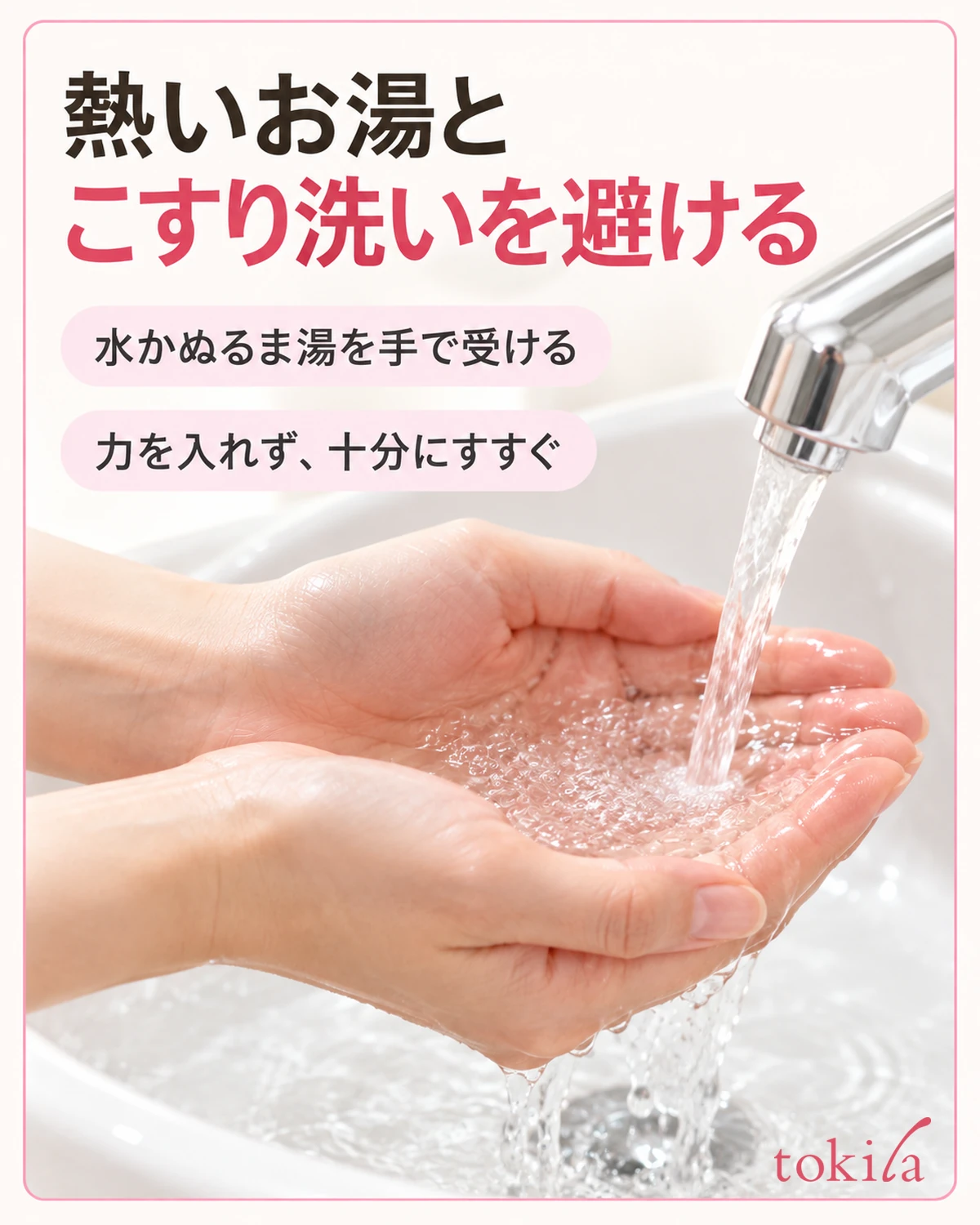
Check whether you used hot water when washing or rinsing. While bathing, it is easy to use water at a comfortable body temperature on your face as well. Catch it in your hands to check that it is not hot, and follow the product's directions for water or lukewarm water. There is no need to add alternating applications of hot and cold water.
After spreading cleanser over your face, review whether you are rubbing hard enough to move the skin. With a lathering product, keep foam between your hands and skin and wash without force. Foam does not make any amount of pressure acceptable. Avoid moving your fingertips repeatedly over the same spot or using your nails, and proceed to rinsing according to your product's instructions.
If you have been adding washing steps because “I am worried about dirt, so one more round” or “I do not feel refreshed, so once again,” stop adding them and return to the directions. Rinsing away remaining cleanser differs from dispensing fresh cleanser for a second wash. Do not create one washing duration for everyone; follow specified conditions when provided.
When rinsing, bring water to the areas where you applied cleanser and check for residue at the hairline and beneath the chin. Do not finish with foam remaining to avoid tightness. Some types leave no visible white foam, so do not rely on foam alone: keep the application area in mind and rinse thoroughly.
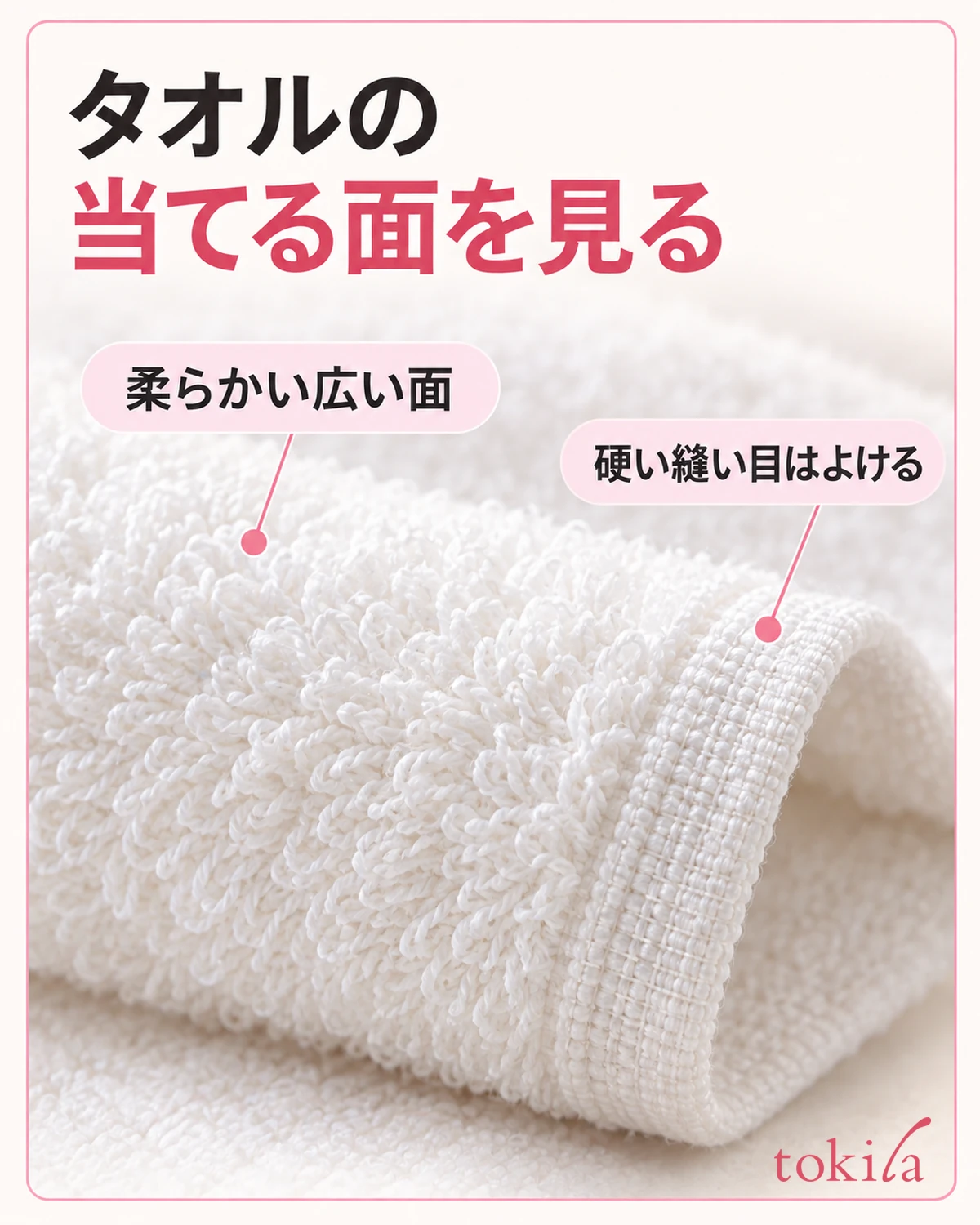
Rather than keeping a shower directed at your face while washing, catching water in your hands makes it easier to check its temperature and where it goes. Do not substitute forceful water pressure for rubbing-free washing. After rinsing, lightly press a clean, soft towel against your skin to remove water.
Press and lift the towel instead of sliding it sideways while it touches your skin. Avoid wiping repeatedly to check for dryness; once obvious droplets are removed, move on to your next care step. For applying a towel to small areas,how to use a towel after washing your facemay also help.
4. After removing water, move on to moisturizing with your own products
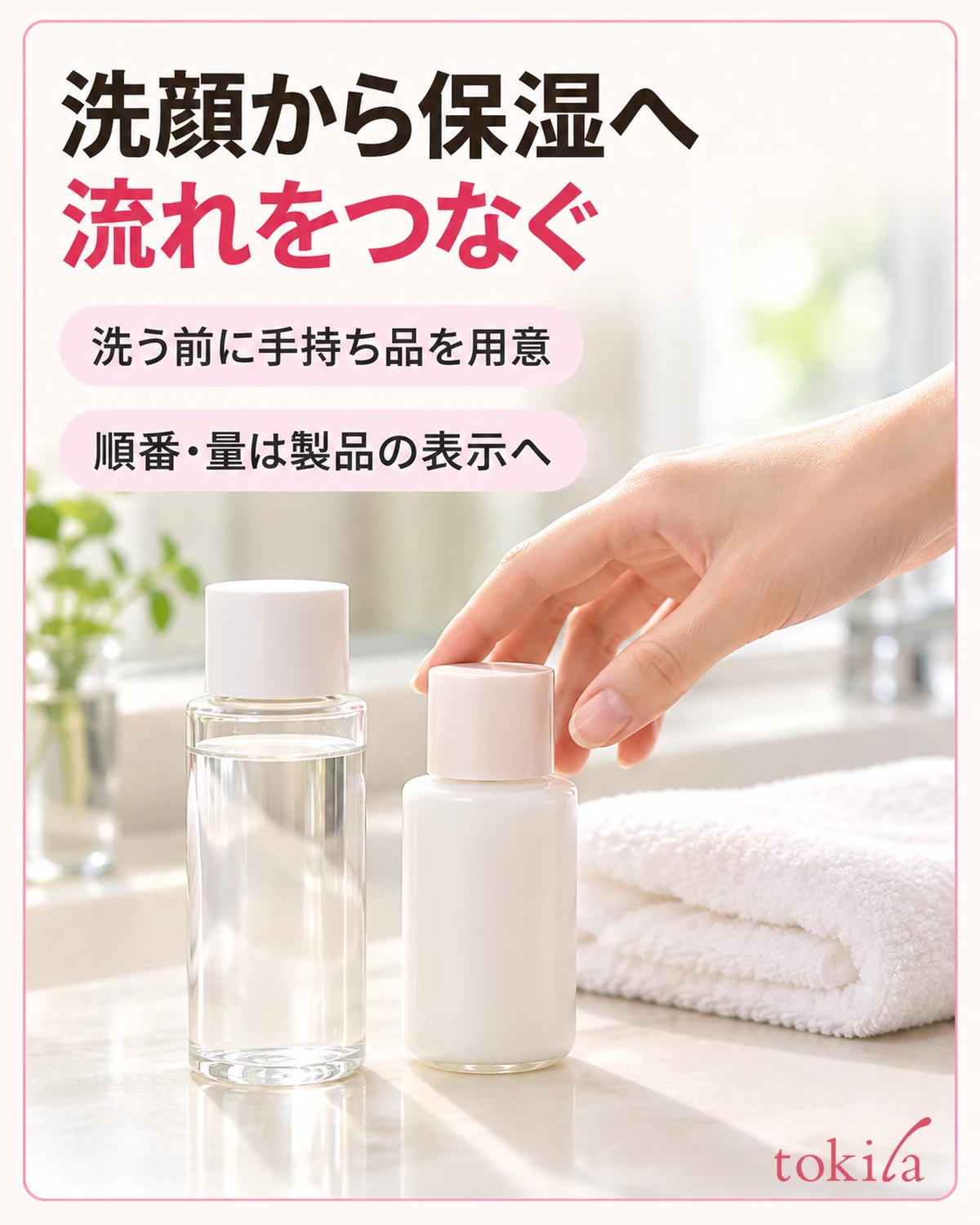
After removing water, do not leave your face untreated for a long time; move on to familiar moisturizing care. Putting cosmetics within easy reach before washing can reduce time spent looking for them afterward. The aim is not to make you panic that it is “too late after a certain number of seconds,” but to prepare washing and moisturizing as one connected routine.
When using multiple products such as toner, emulsion, and cream, follow their sequence and amounts. You do not necessarily need to add another product with the same role to one that completes your care on its own. Start with the instructions for the products you have, including whether your skin may be wet and whether to use hands or cotton pads.
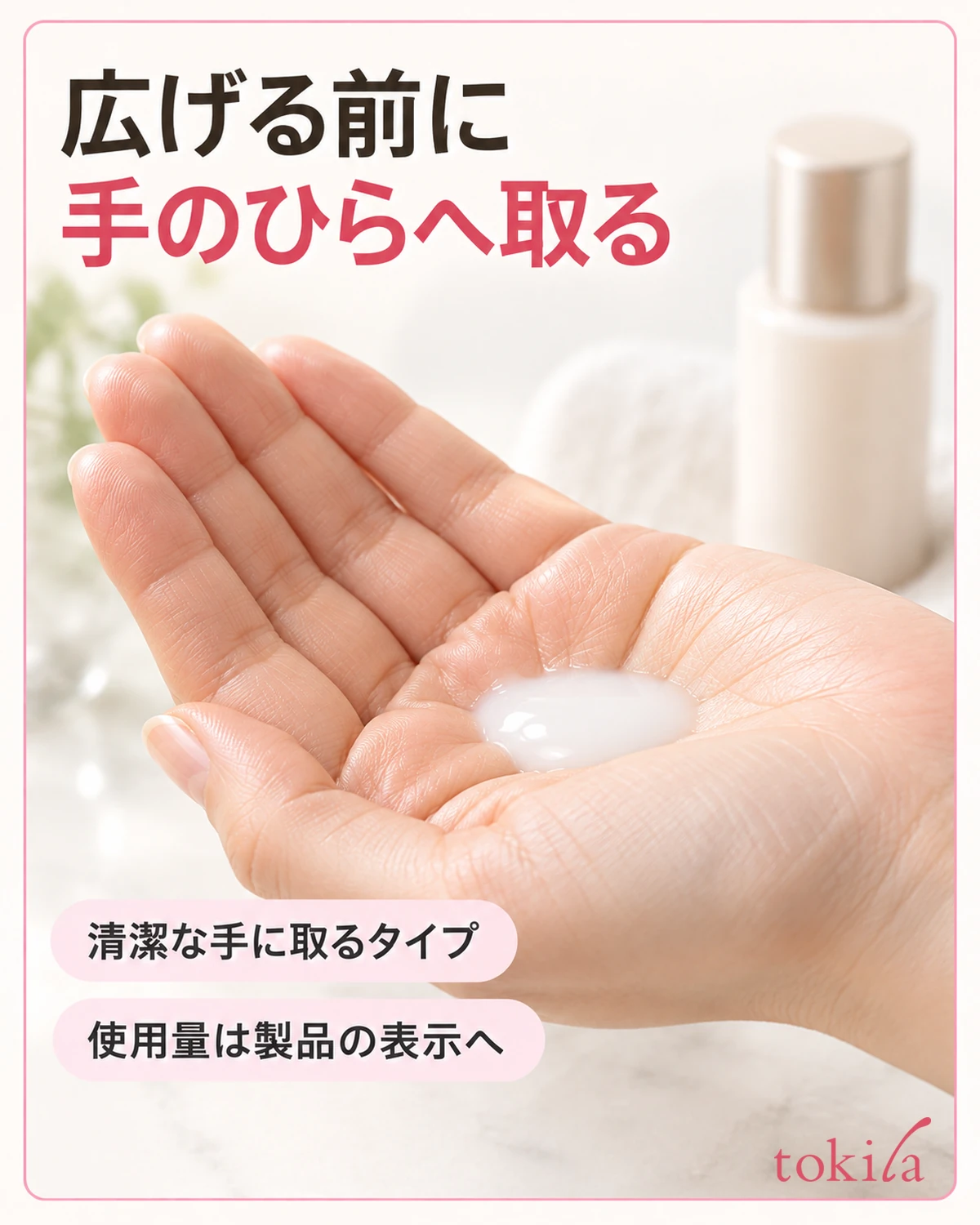
For products applied by hand, dispense onto clean hands and gently spread along your facial contours. Do not pull your cheeks sideways, slap strongly, or rub until the skin feels hot. Thickness or a feeling that something dries quickly does not mean pressing harder will deliver it further.
After applying over the whole face as directed, if additional application to dry-prone areas is recommended, add a little within those conditions. Rather than creating a thick layer on your cheeks from the outset, distinguish missed spots from areas needing extra application. Do not make emptying the container your goal, and continue watching for any skin abnormalities as you apply.
Adding unfamiliar exfoliating products, scrubs, and serums all at once because your skin feels tight after washing makes it harder to know what changed. Moisturizing is necessary care, but it does not mean enduring irritation while layering products. If application causes pain or redness, stop adding products and follow the precautions.
You do not need to wash your face again solely to test the finish of your moisturizing care. Do not return cosmetics remaining on your hands to the container; close the lid and put it away. One small improvement at the sink could be deciding where your moisturizer will go before washing.
5. Record what you changed and seek advice for persistent discomfort
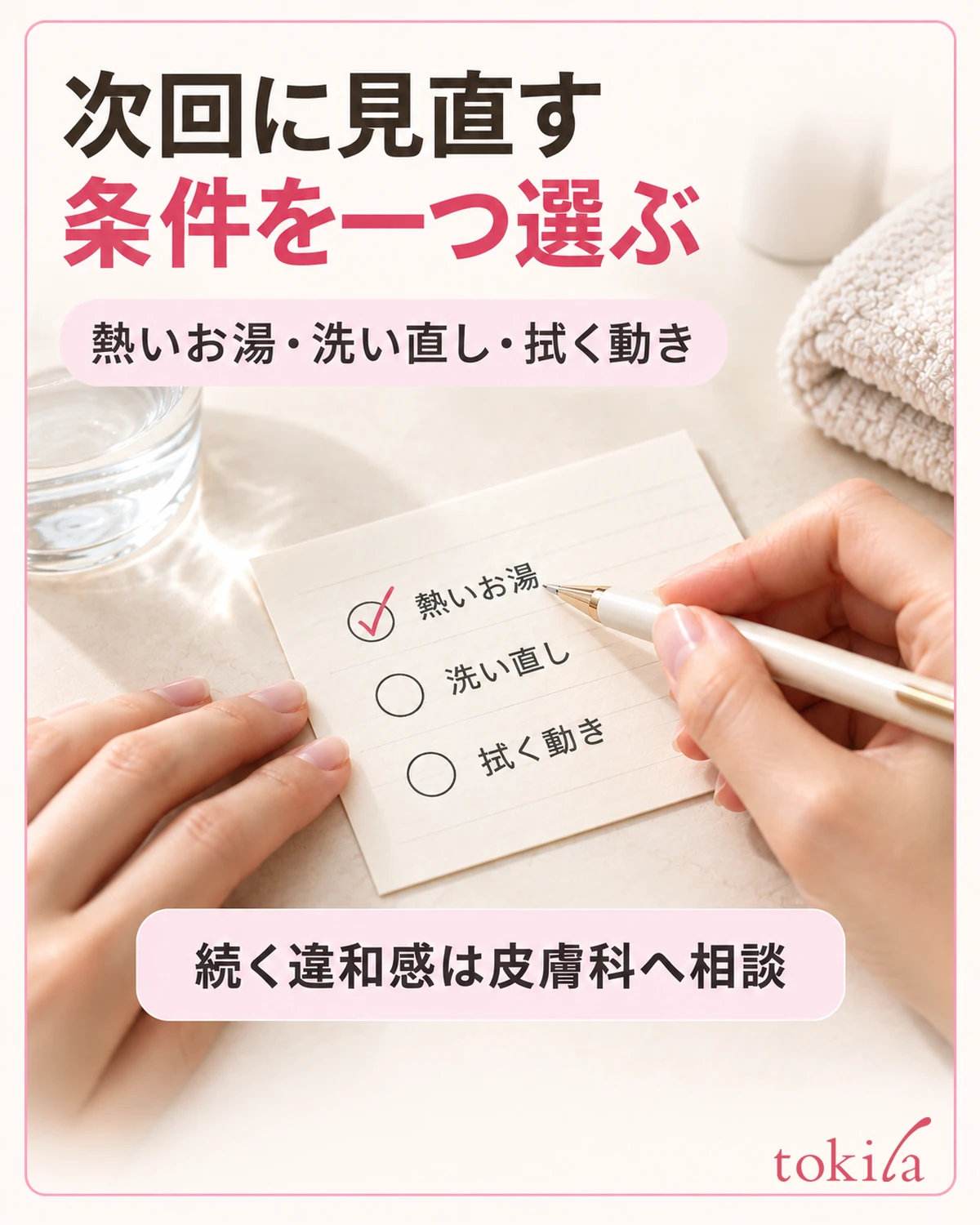
For next time, choose one condition that actually differed from the directions to review. For example, water temperature if you used hot water, the steps if you added a second wash, or the wiping movement if you moved the towel back and forth. This does not mean continuing to use the same product despite abnormalities in order to compare results.
A short record for comparing before and after a change is enough, such as “night, after makeup removal, cheeks, noticeable after toweling.” Including product names and the movement you changed can make it easier to explain the situation to a product support contact or during a medical visit. Do not assume that scores or photographs alone measure your skin's water content.
Even if tightness was not noticeable on one occasion, do not conclude that the washing method resolved its cause. If it persists, do not blame insufficient effort and increase frequency or pressure. Reviewing daily care and investigating the cause of symptoms serve different purposes.
If you experience redness, itching, pain, or stinging, if symptoms persist, or if your skin is clearly different from usual, stop using your cosmetics and consult a dermatologist. Choosing different cosmetics alone may not always address it. There is no need to reproduce irritation or try a new product in preparation for a consultation.
Reviewing post-wash care means moving away from washing until your skin feels squeaky and connecting necessary cleansing with moisturizing. If you adjust one thing today, it could be reading the amount, avoiding hot water, or setting out your moisturizer first. Start with the step you were unsure about and build a manageable routine.