When you try to put your sunglasses away, the lid of the case lifts slightly. Even if it looks like it would close if you pressed it, review the inside before closing it as is. The overlap of the temples, the cloth inside, or a case depth that does not match may be pressing against something. The starting point is to separate whether it looks like it fits from whether it fits without strain.
Here we organize what to check before putting ordinary folding sunglasses into a case. For special folding structures or dedicated cases, follow the explanation for your own item first; bending the frame back or adjusting screws is not covered. As a storage task, we proceed in this order: look inside, fold, place, close, carry.
1. Match the inside of the case to the shape of the sunglasses
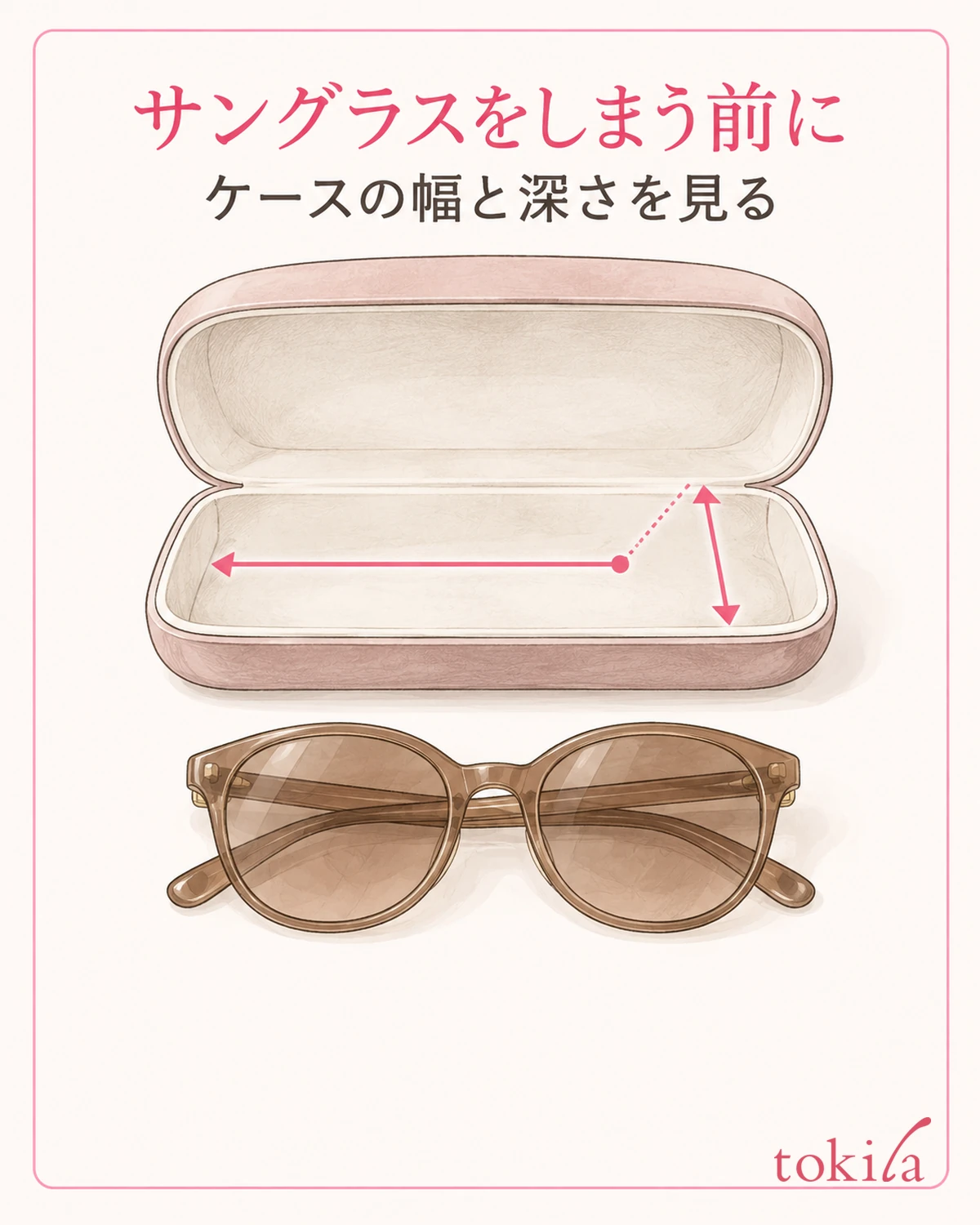
First, set the sunglasses and the case separately in a bright place. Do not choose a case by its outside length alone; look at the inner width, depth and the bulge of the lid. Frames with large lenses or strong curves may fit across the width but hit the top. Even a case that came with the purchase should be checked again when you put in different sunglasses.
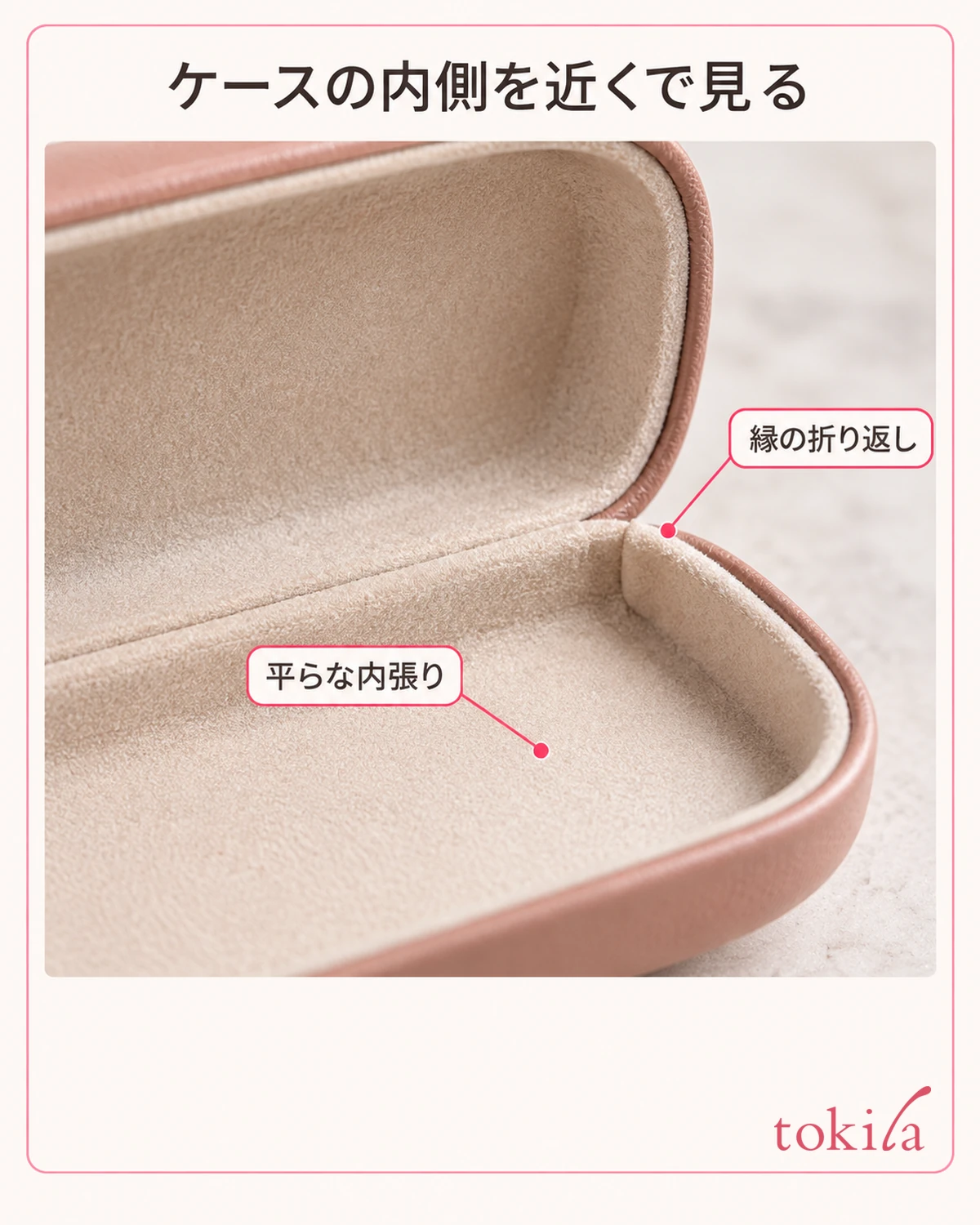
Check that no grains of sand, hair, scraps of paper or small items remain inside the case. If the edge of the lining is curling up or long threads stick out from the seams, also look at the places where the lenses and temples touch. Do not slide the sunglasses in and push them to the back with visible foreign matter left. Repairs such as peeling off the lining are not done.
Take out the lens cloth that goes in the case once as well. The thickness of the folded cloth can reduce the room in a shallow case. If the instructions specify using a cloth, match its size and placement. Do not use methods such as stuffing the leftover cloth in layers over the lenses, or thinking that adding more cloth will protect them.
Judge care of the inside by the material and labels of the case. A metal exterior does not mean the lining can be washed with water. If dirt or dampness bothers you, choose another suitable case until you confirm a cleaning method that can be used. Even if the outside looks sturdy, it is important not to treat it as a container for holding the sunglasses down.
When unsure whether it fits, try placing it with the lid open and see where it comes close to the edge. Checking separately whether the edge of the lens, the part that rests on the nose, and the tips of the folded temples each fit lets you narrow down the problem spot better than simply feeling it is "small." Do not narrow the frame by hand to fit it into a case that does not match in size.
2. Fold the temples naturally, in the direction suited to your item
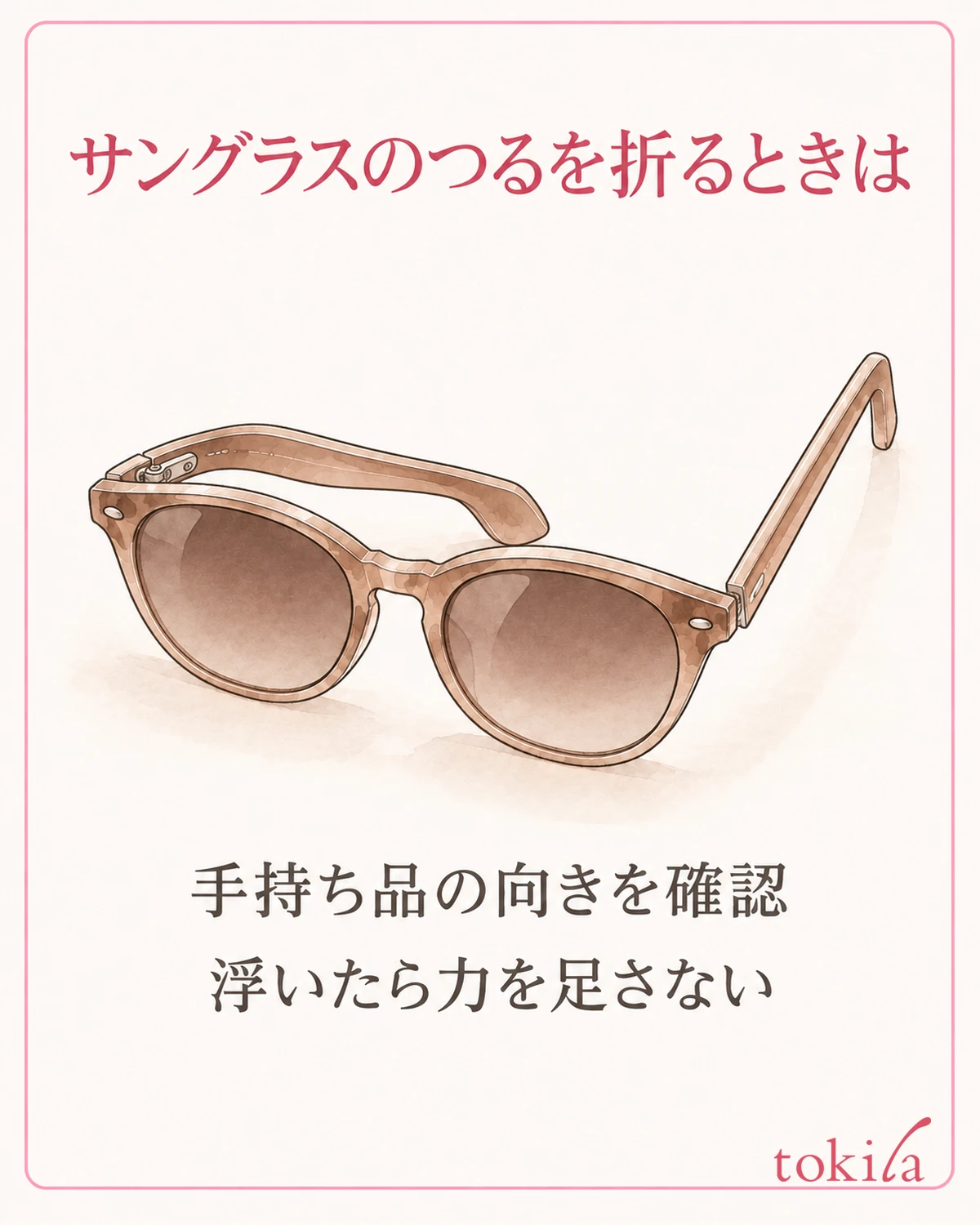
When taking off sunglasses, hold the left and right temples with both hands and gently release them to the front. Do not pull on only one side and twist; support them with both hands and prepare to fold. The temples are the rod-like parts on the left and right that rest on your ears, and the hinge is the joint with the front frame. Do not use decorative protrusions or the lens surface as handles for folding.
Match the folding order to the instructions for your item and how it actually fits. For ordinary glasses, some guidance says to fold from the wearer's left side, but depending on the adjustment or structure, this may not apply. Do not fix the same direction for all sunglasses; close one side at a time in the specified order, within the range where they move naturally.
If a folded temple lifts a lot, the left and right collide, or it stops hard partway, stop moving it before adding force. Check whether cloth or hair is caught in the hinge, and whether the opposite side is hitting first. Do not use methods such as gripping both sides together to fold them fully, or finishing by pressing with the lid.
If they do not fit even in the usual order, sort out what is different from before. Is it after a drop, does only one side lift, or does it catch only partway through opening and closing? Record what you see, and check whether adjustment is needed, without tightening screws or bending the temples yourself. Even if you see scratches or cracks in the lenses, do not decide to keep using them by finding a way to store them.
Separate the folding step from the step of placing them in the case. Looking at the folded shape before putting them in makes it easier to find where a temple lifts, compared with putting them in all at once when you cannot see them fully in your hand. When referring to left and right, do not mix the left and right as seen from the front with the wearer's own left and right; check the standard used in the instructions.
3. Place them so the lenses and temples do not ride on the edge
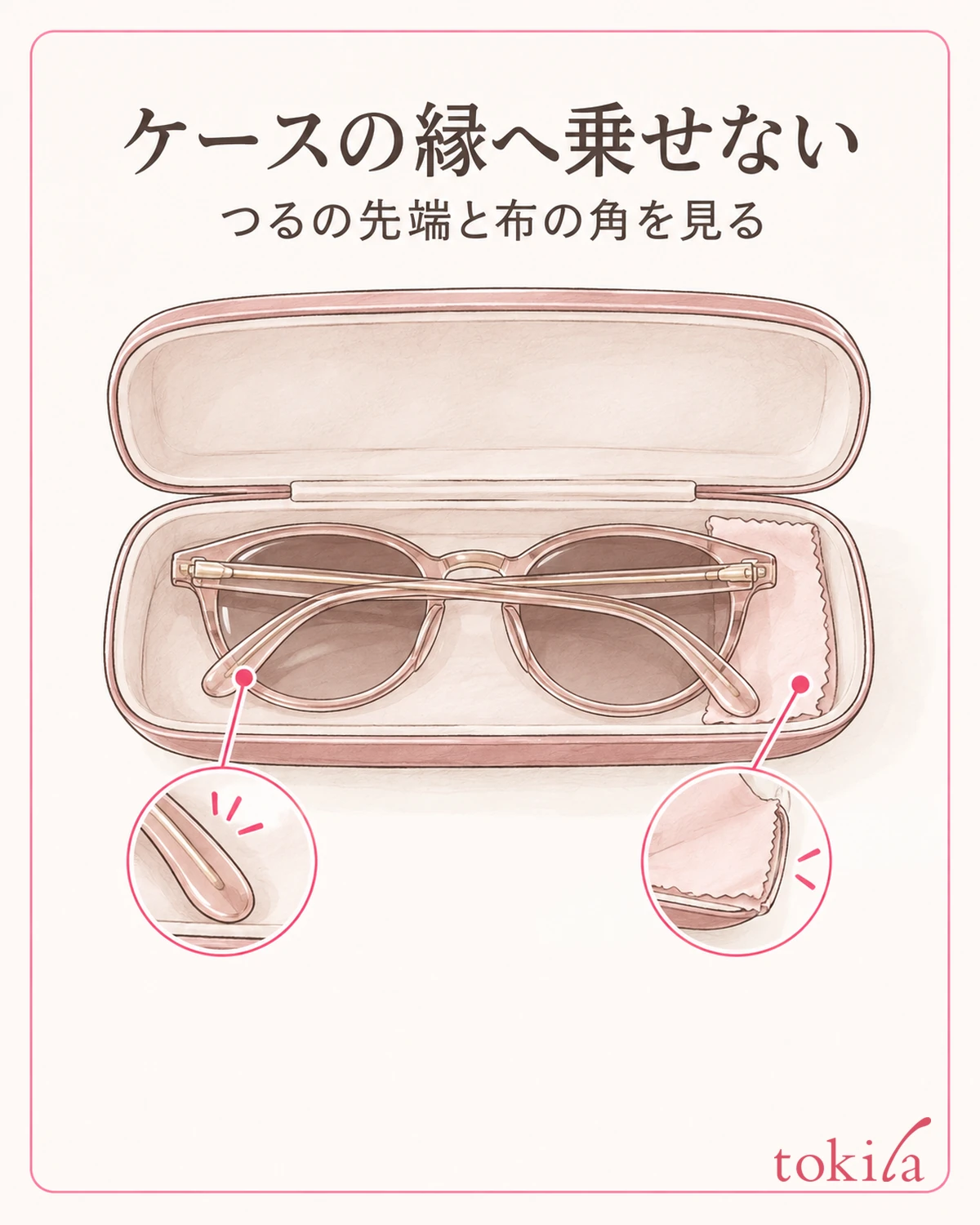
Open the case on a stable surface and place the sunglasses in the direction specified for your item. Because cases differ in shape and in the structure that supports the nose portion, we do not uniformly decide that lenses must face up or must face down. If wrapping in cloth is specified, follow that, and also first confirm that no sand or the like remains on the lenses or inside the case.
Once placed, check whether the tips of the left and right temples ride on the edge. Even if only the outer part of the lens is in, the curved tips that go over the ears may stick out toward the lid side. Match the overall view from above with the height seen from the side, and check that nothing is pressed by the case. Also check that you have not pushed them too far to one side so that only one side touches the edge.
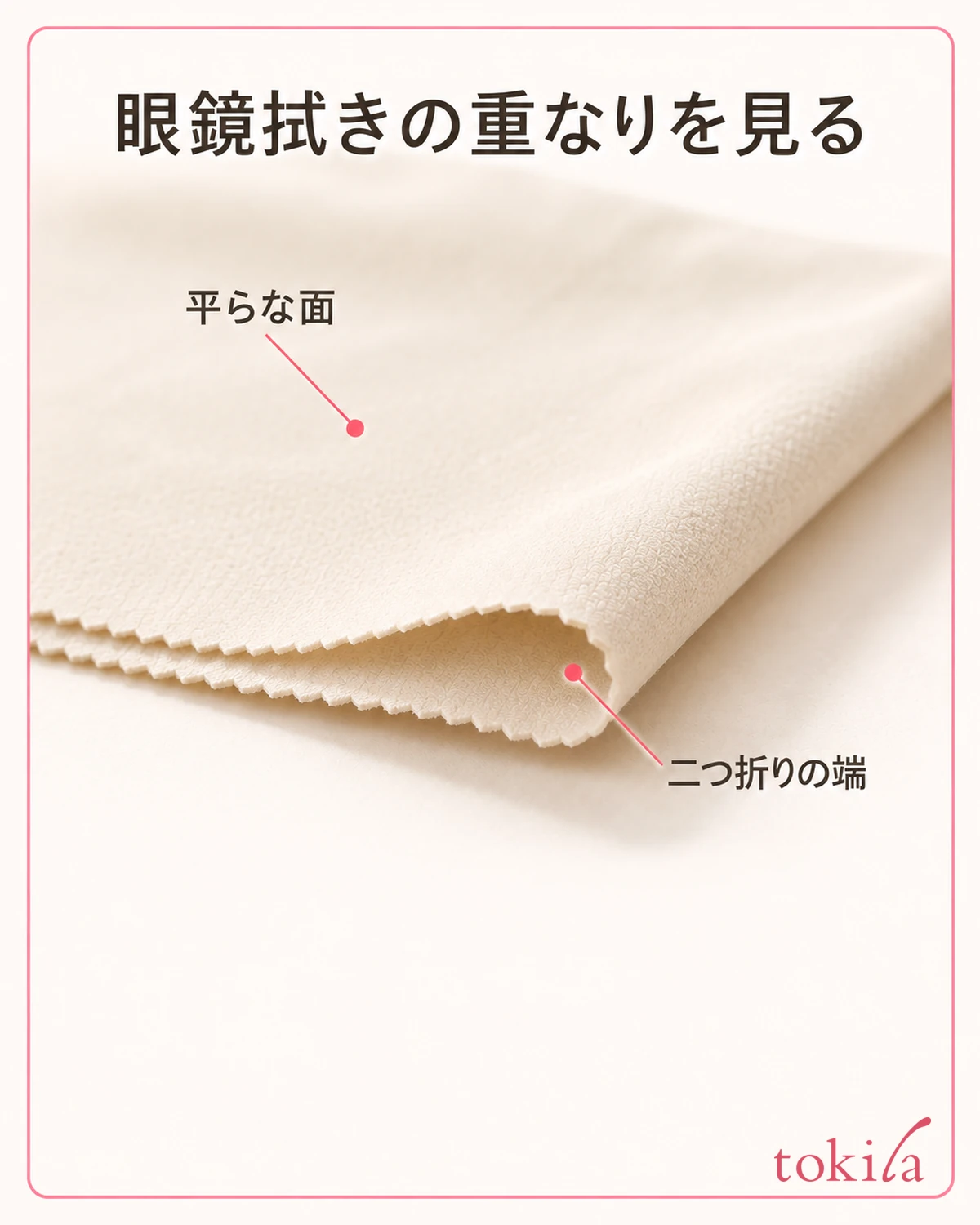
If you put the lens cloth in too, arrange it so that the corners of the cloth do not span the edge or the opening and closing part. Do not pack a thick fold of cloth under a lifted temple to change the height. Taking the sunglasses out, changing only how the cloth is folded, and then placing them again makes it easier to see what was reducing the room.
Do not put small items such as keys, hairpins or earphones into the leftover space of the case. If hard small items move around in a place without dividers, they may hit the sunglasses. Do not use the inside of the case as a small-item pocket in your bag; limit accessories to those that you know fit with your item.
If the height still does not match after re-placing, or the frame only goes in at an angle, review the combination with the case. Pressing the lens with your finger to sink it to the back does not solve it. Check whether you have a dedicated case and the size it supports, and do not forcibly make it the one you carry until you have a suitable one.
4. If the lid hits, stop and remove whatever is caught
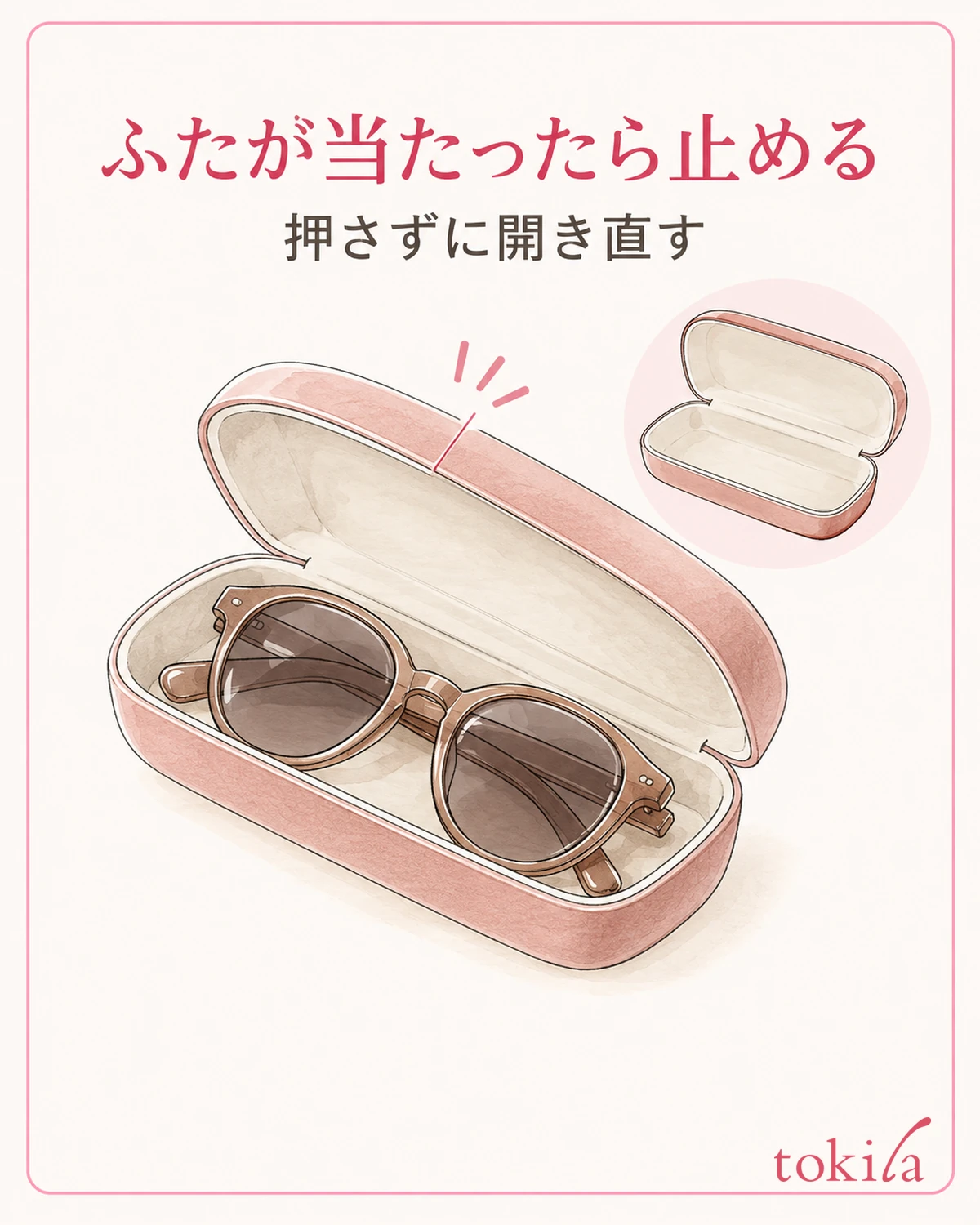
Bring the lid down slowly after seeing that the sunglasses inside are in place. If it hits at an earlier stage than the usual opening and closing, only one side lifts, or cloth sticks out, stop on the spot and open it again. Avoid pressing down from above with "just a little more" and forcing it closed with the strength of the clasp or zipper.
After opening it again, look in order at the tips of the temples, the nose portion and the corners of the cloth. If anything has moved to a different position from before closing, also check whether you tilted the case when lifting it. Rather than adding more hands to press, putting it back on a stable surface, taking the sunglasses out once and placing them again makes it easier to find where it hits.
When you cannot tell whether the opening and closing part is faulty or the contents are touching, check normal opening and closing with the empty case with the sunglasses removed. If it does not close even when empty, do not fix it by force; treat it as an inspection of the case itself. If it hits only when the sunglasses are inside, check again the direction, size and amount of cloth.
Even for zipper-type cases or cases with a clasp, first check that no cloth or temples stick out at the edge. Do not assume that a hard case protects whatever is caught in it, or that a soft pouch will take it if you push. There is also no need to shake it after closing to listen for sounds, or squeeze it hard from outside to test the room.
When investigating where it hits, do not change the direction and the amount of cloth at the same time; first put back just one and look. Whether it closes once the cloth is removed, or hits even without the cloth, changes what you look at next. Do not treat increasing the number of times you close it as checking; find the places likely to touch while it is open, then return to normal opening and closing.
5. Check moisture and where you keep it, and carry it together with the case
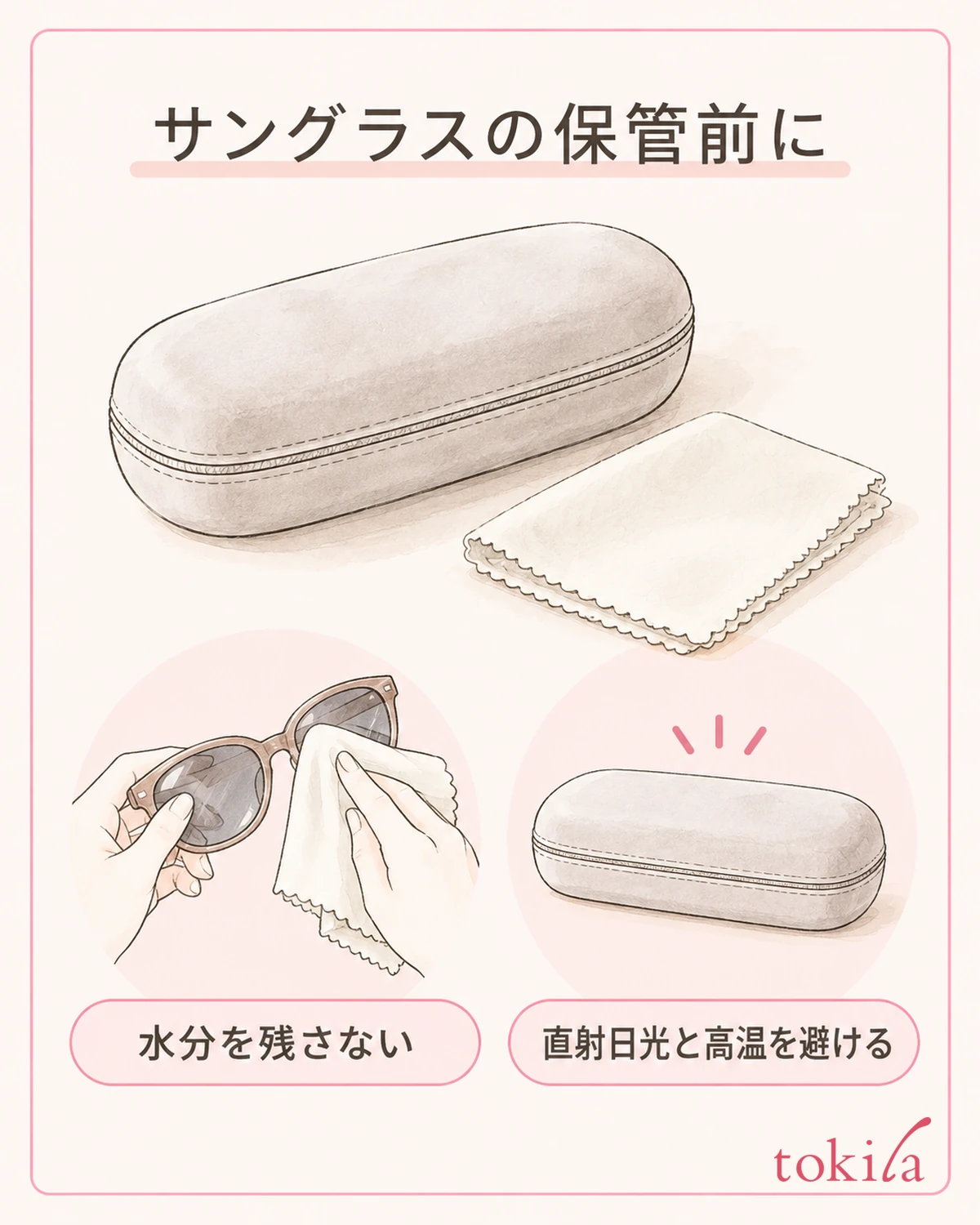
Sunglasses with sweat, rain or cosmetics on them should be cared for in a way permitted for your item before being put away. Do not rub hard with cloth while fine dust is still on them; check whether they can be washed and which cleaning agents can be used. Because there are special lenses and materials, do not apply general guidance on washing with water to all items as it is.
When removing moisture, also use a soft cloth or the like specified, and look for any that remains in the corners of the lenses or at the joints. Do not shut wet sunglasses in together with a damp cloth, and use the inside of the case in a dry state. Do not use a hair dryer or a hot place to dry them; if you do not know how far you can care for them, check that point first.
Do not leave the case in direct sunlight or a place that becomes hot. Do not choose the inside of a car or the dashboard as a resting place during carrying either. In a bag, do not push it under heavy items; think about a position where the case will not be strongly crushed when you take things in and out. It is important not to treat having been able to store it as a guarantee that it can withstand heat or strong pressure.
The next time you use it, open the case, take out the sunglasses, and check whether there is any lifting of the temples or catching in opening and closing like last time. If it hits the same place every time, treat it as a sign to review the combination of item and case rather than adjusting how much force you use. Look inside, fold naturally, do not let them ride on the edge, and stop if something hits. Keep up this check to suit the shape of your item.
When moving things to another bag while carrying, do not move only the sunglasses to an outer pocket; swap the matching case along with them. Storing them by hooking just one temple on the mouth of a pouch is different from the case storage described here. When organizing the contents of a bag, you can also check separately the steps for fixing a twisted bag shoulder strap.