You tied your hair into a bun, but thin ends poke out from the side. The more you push them in to hide them, the more the shape falls apart. When that happens, before tucking away every strand that sticks out, try sorting out whether it is an end you want to leave out, a section you want to tuck in, or the base of the bun itself that is moving.
This article is about reviewing the finish of a bun whose base you have made with an elastic or similar. How much you can tuck in changes with length and layering. Leaving the ends out is kept as an option too, and without pulling them in by force, we adjust from a small area you can check in a mirror.
1. Tell apart ends that merely stick out from a loose base
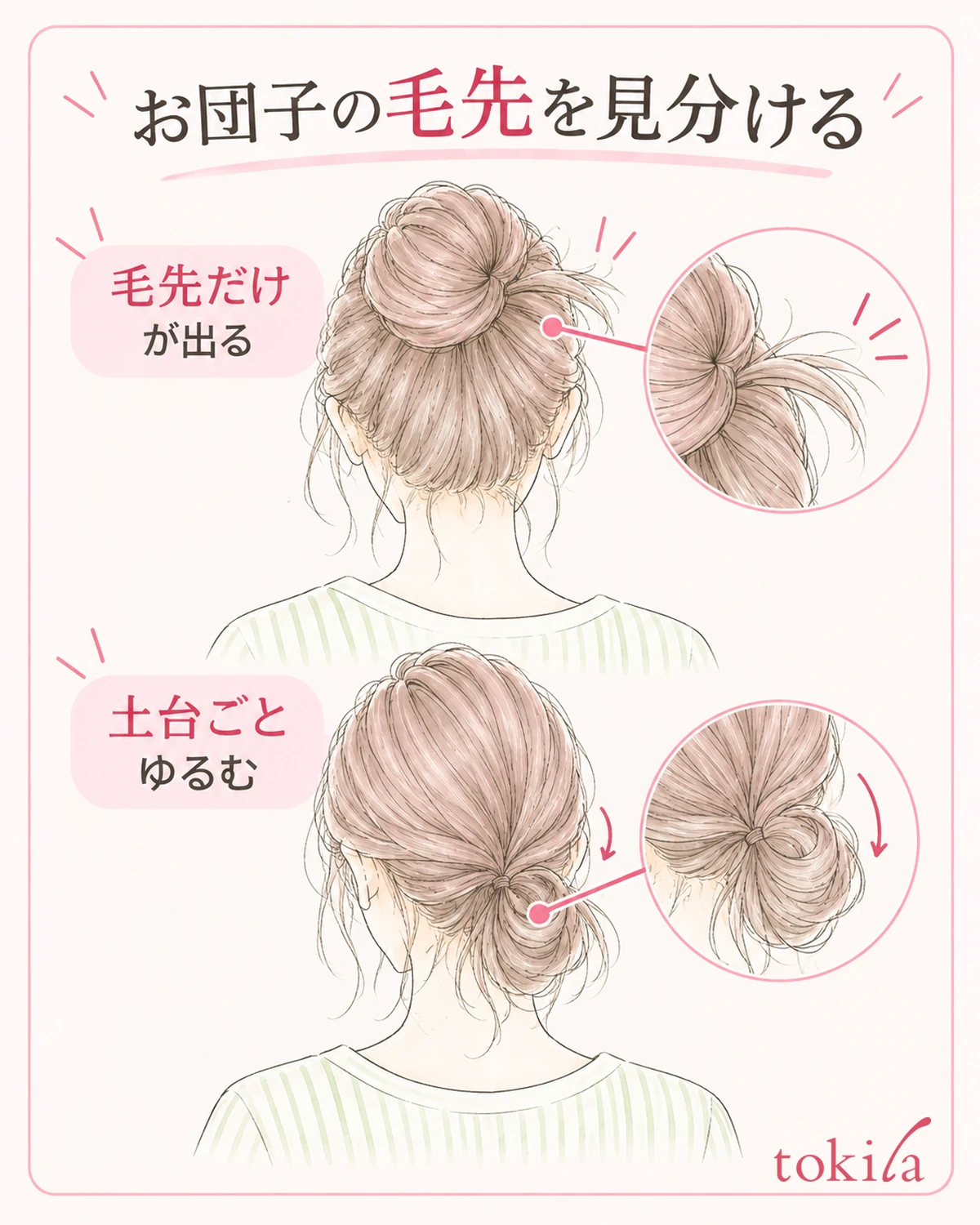
First, let go and look at the shape from the front, the side and the back. Check the back with a hand mirror, and before you add pins by feel in places you cannot see, find where the hair is coming out. Short strands that stick out one by one and the ends of a gathered section differ in how far you can handle them.
If you only mind thin sections around the outer edge of the bun, it is the stage of choosing whether to tuck them in or leave them. On the other hand, if the whole bun is sagging, the knot is moving or the loop is coming undone, hiding only the ends does not change the state of the base. Support it with one hand and first decide whether to remake it from the knot.
You do not have to consider every end that sticks out a failure. If you like a loose, rounded bun with the ends left slightly visible, you can use that as it is. Even when one long section sticks out a lot on one side and bothers you, think first about tidying the outer edge you can see now, rather than pulling out the same amount from the other side.
Up close, look at where the ends separate from the section. In a mirror a little farther away, check the whole thing from the back of your head to the neckline. Do not look at only an enlarged part and pull back even hair you meant to leave. Do not make the removal of every fine hair your finishing condition.
If the shape changes only after being pressed by a hat or collar, also check what touches it when you go out. Rather than deciding by the shape right after you make it, looking at it while wearing your usual clothes makes it more concrete which sections you want to tuck in. You do not have to choose a finish that requires pulling your hair hard.
Where the ends stick out can look different depending on the direction you view it in the mirror. Before fixing only the right side, turn your neck back to the front and check both sides. Do not treat the bun as finished while you are holding it lifted by pinching; comparing with your support released makes it easier to notice looseness in the base too.
2. Decide which hair to leave and which to tuck in, and do not force short sections together
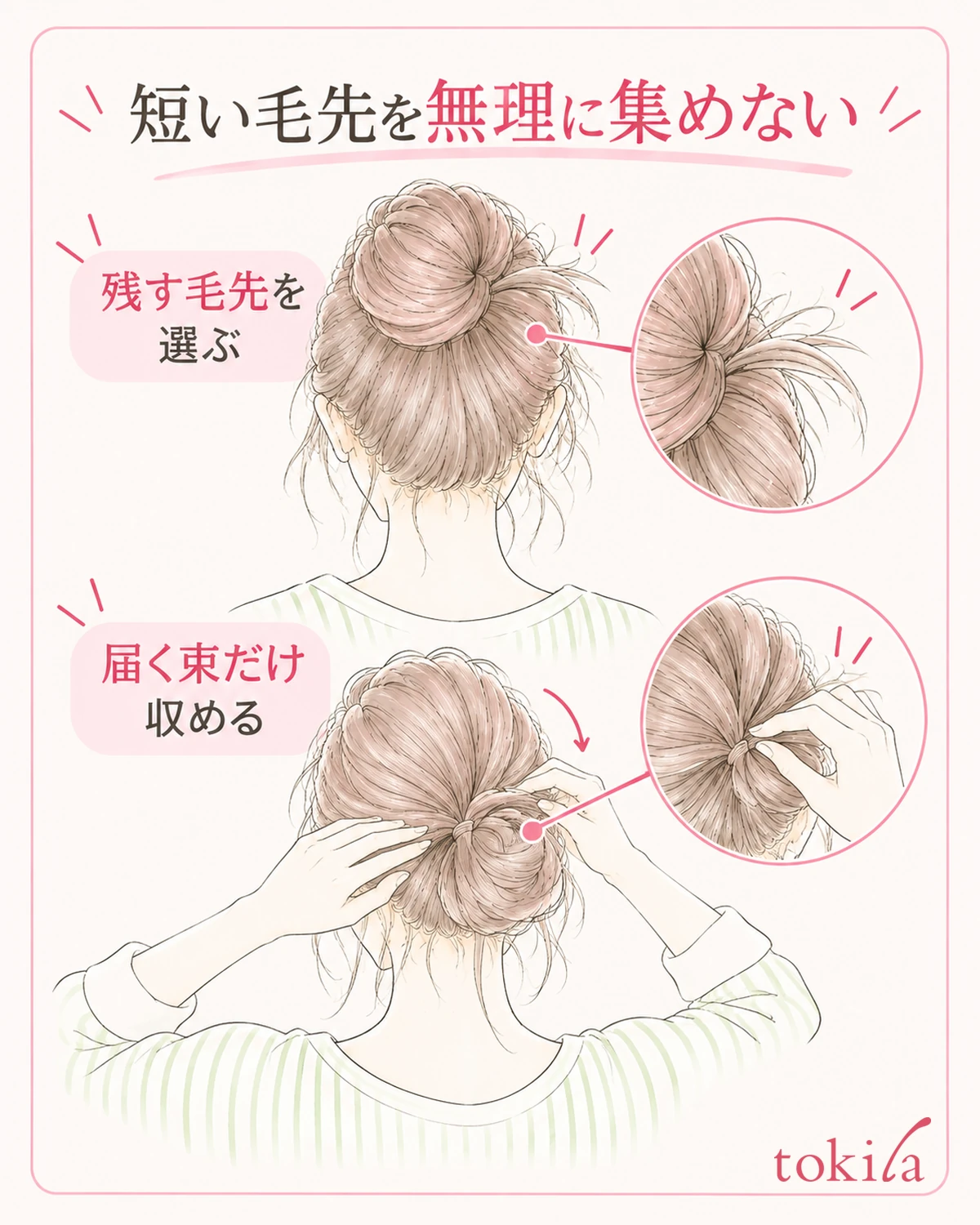
Gently separate the section that bothers you with your fingertips, and without pulling it out from the roots, look only at the part that is already out. If you pull without knowing where the hair continues from, even the surface of the bun will move. Follow the visible end and stop where you can see how the section connects.
If you leave it, check its length and direction from the front and the side. You do not have to decide that you must always curl the ends or even out the left and right lengths. Wispy strands around your face and ends coming out of the bun are in different positions, so judge each by how it looks rather than pulling them together as one section.
If you tuck it in, look at whether you can lay the section along the base of the bun without strain and whether it reaches the spot where you will pin it. Avoid pulling short hair that does not reach hard and mixing it into a longer section. If your hairline gets pulled the moment you support it with your fingers, check whether you are trying to gather even the parts that are too short.
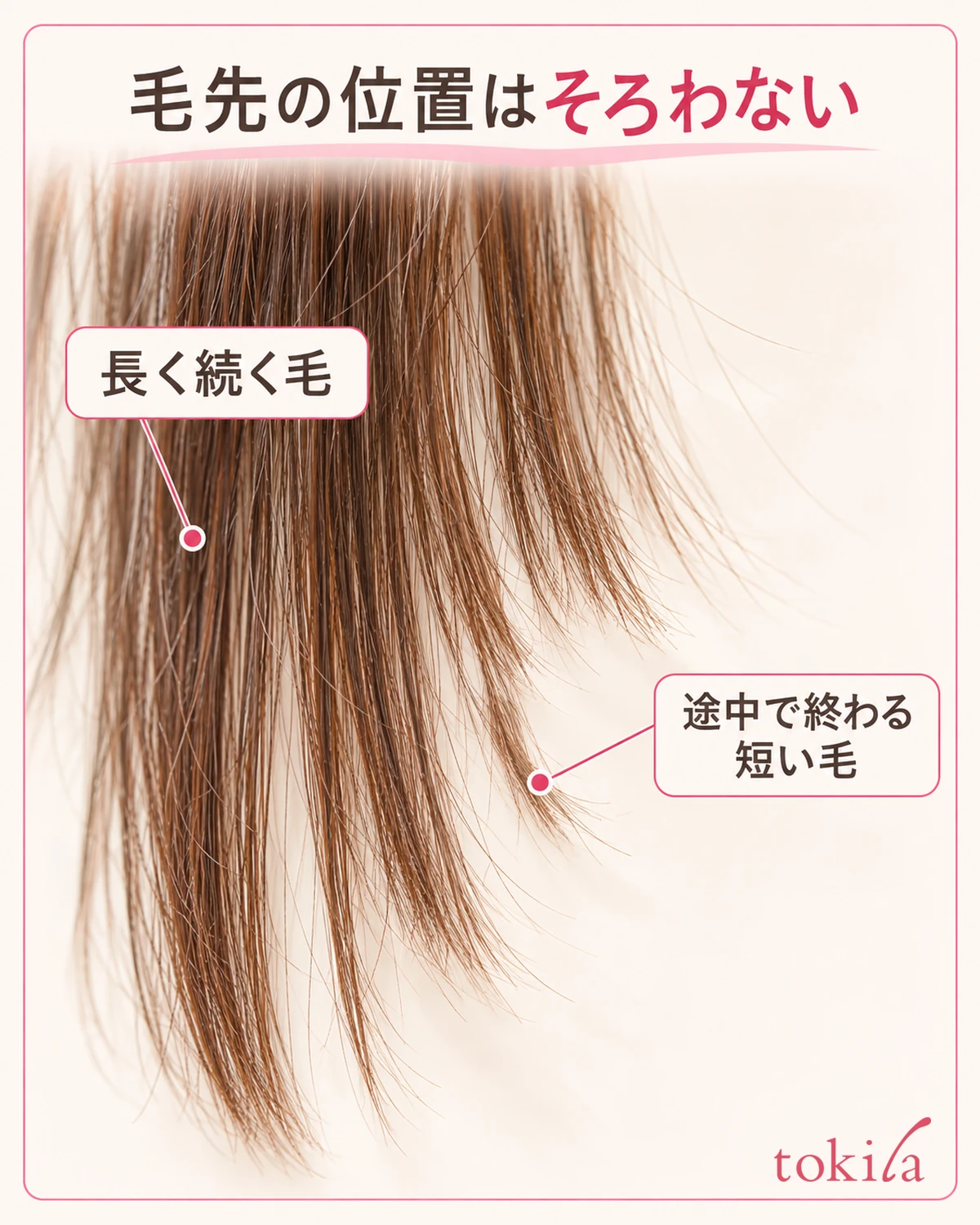
In layered hair, the tips do not line up even within a single section. Even if you push in all the long parts, short hairs may remain. Rather than hiding every tip in the same position, you can choose options such as tucking in only the long sections, leaving the fine ends, or remaking the bun at a different height.
You do not have to cut the hair you have just tied on the spot to match a sample hairstyle. If you want to change the length or the layering, remembering the height at which you make the bun and the places that bother you will give you something to go on when you next talk about a hairstyle. Here, we keep the choice of finish separate from the decision to cut.
When deciding the shape of the ends you leave, let go after touching them and check. If it only stays tucked while you press it with your fingers, do not consider it fixed. If you keep re-taking thin sections and the whole thing seems about to come undone, go back to choosing just one range and proceed without touching the other hair.
3. Support the base, lay the ends along the roots, then pin
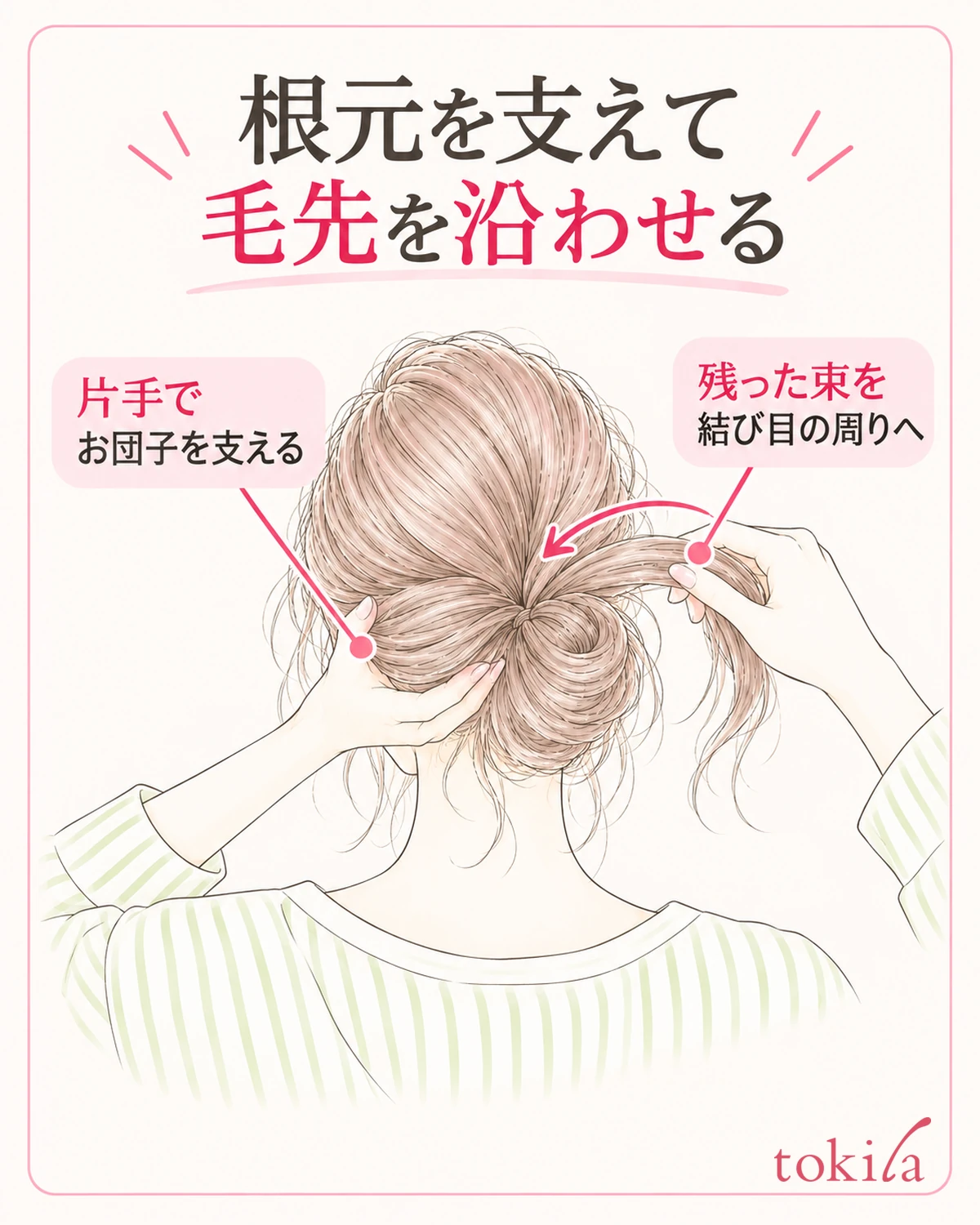
Once you have decided which section to tuck in, support the base of the bun with one hand. With the fingers of the other hand, lightly lay that section around the knot and look for a position where it does not stick out much from the outer edge. The starting point is to shape it in a direction that connects naturally from partway along the section, rather than shoving only the ends deep in.
If the section is long enough to wrap around the elastic, there is a way of laying the ends along the elastic and pinning them. Do not try to wrap a section that is too short the same number of times; think only up to where it reaches. Keep the method of undoing the whole bun and wrapping again separate from the method of tucking in only the remaining ends.
Choose pins after checking their shape and how to use them. Do not apply the same way of inserting to bobby pins, U-shaped pins and snap-type decorative pins. Remove from consideration any whose tips or legs touching your hair are damaged, and do not open them with your mouth or bend them back by force; keep ones that work on hand.
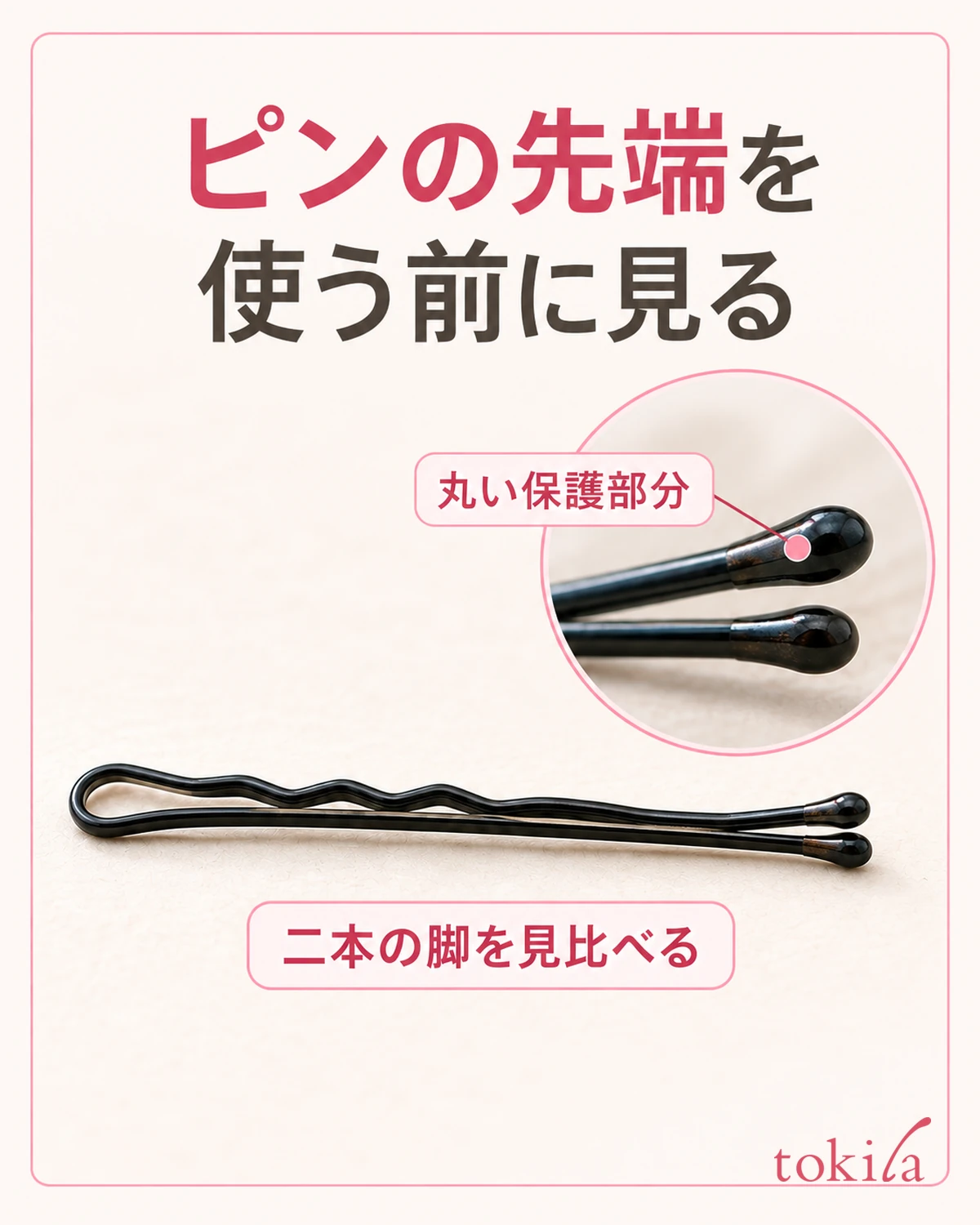
When pinning a small section with a bobby pin, check whether you can also catch the hair underneath that will support it, not only the section of ends. It is not meant to be fixed by pressing the tip against your scalp. You can organize the finer points of catching in how to review hairpins that slip.
After pinning, release the fingers that were supporting little by little. If the ends spring back, before stacking on another pin right away, look at where on the section you pinned and whether the base is moving together with it. If it hurts, catches or the tip presses against you, do not keep pushing in that direction; take it out while supporting the section and choose the position again.
The hand supporting the base is not placed to press the bun hard against your head. It is an aid to keep the base from turning along when you move the section you are wrapping. Even while you change the direction of the mirror, you can stop the section you are moving once and then check, without strengthening the force of your fingers.
4. Do not push in sections that will not fit; switch how you finish
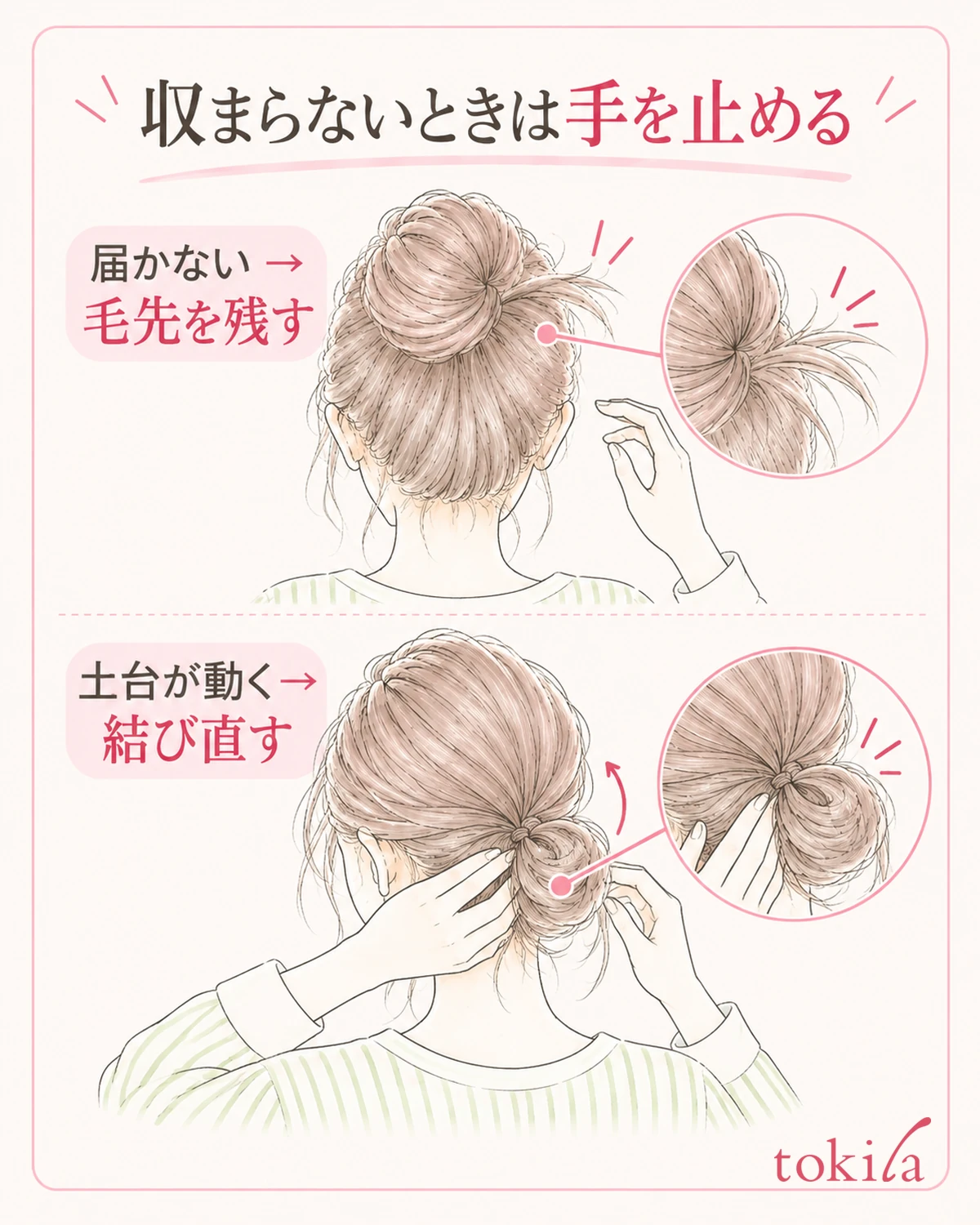
If the same section keeps coming out, stop and separate the possible causes. Is it too short to reach the place you pin, is the section too thick to catch, or is the base loose? Before adding pins in places you cannot see, taking one out once and checking how the section connects lets you choose what to change next.
If the length falls short, there are options such as going back to a design that leaves the ends out, reducing the sections you tuck in, or changing the position of the bun and tying it again. A low position does not work for everyone. Look at how your layers fall and where your hair gathers, and try a height you can reach without strain.
If the section is thick, do not leave everything to a single pin; redo the range you want to pin in a smaller amount. However, rather than trying to support the weight of the whole bun with extra pins, first see whether the knot is stable. If the base is coming undone, stop the work of hiding the ends and give priority to deciding to remake it.
If you use a styling product, check the purpose of the product you have, the condition of the hair you use it on, and the amount and order. Rather than layering several kinds of products because the ends stick out, check how it looks with fewer steps. If it feels heavy, stiff or hard to handle after applying it, also check how to wash that product out before adding more.
On a day when you are in a hurry, you can choose a finish that leaves the sections that do not reach, or another way of gathering your hair that you can manage with the fasteners you have. You do not need to put up with pain just to tidy the look. If your arms get tired, lower them once, gather the pins you took out onto a dish, and resume in a state where you know where everything is.
Also consider whether you need to undo even the parts that are already neat. If only one long section comes back, work on that part; if the whole loop falls, review the knot. Distinguishing partial fixes from remaking tells you how far you have undone it, and also lets you avoid pulling the elastic with the pins still in.
5. Put on clothes, check the whole look, and leave one change for next time
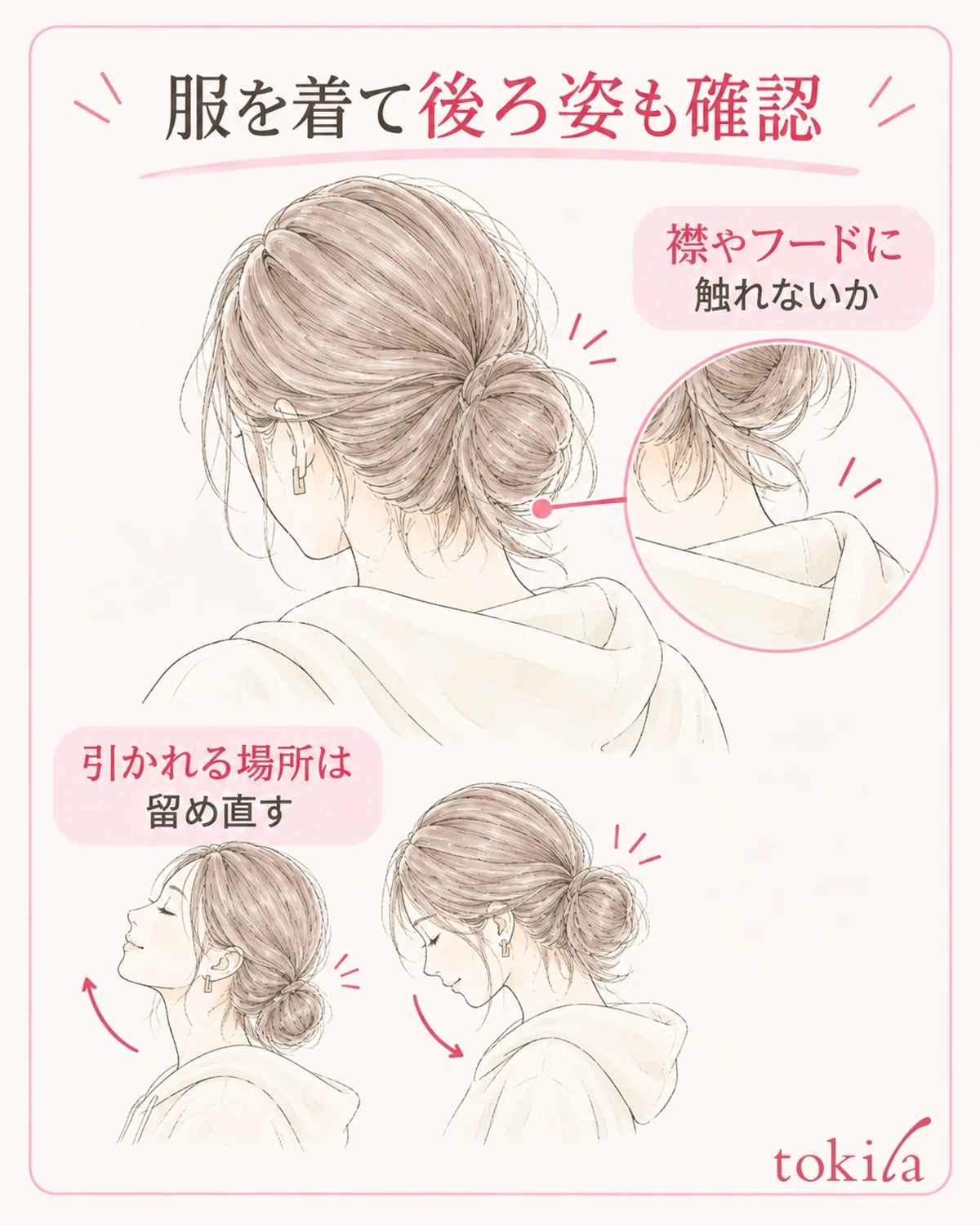
When you have finished, let go and look at the front, side and back under the same brightness. Up close, check how the ends are held; in a mirror farther away, check the shape of the bun and how it connects to the neckline. Even if a few fine hairs remain on the surface, you may stop there as long as it is a shape you like and nothing feels pulled.
Slowly turn left and right, and lightly lower your head and come back. See whether only the ends move a little or the whole bun shifts, and if needed, review only that part. Do not test the hold by shaking your head hard; check whether anything catches in your usual movements.
If it touches a collar, hood or bag strap, put them on and take them off as you normally do. If a long section at the neckline gets caught, review where you leave the ends and how it overlaps with your clothes rather than pushing the pin deeper. When you fix it after going out, look at the position in a mirror first rather than pulling it in without seeing.
For next time, remember one specific thing, such as "lay only the long ends along the base," "look at where the short sections are before tying," or "put on the hood and then look at the back." If you do not change the tools, the height of the tie and the styling product all at once, it is easier to look back on the conditions you found easy to handle.
When you take it down, check the positions of the pins you used and remove them one by one while supporting the section. Do not pull out caught hair by force; separate the pin from the section before taking off the elastic. Choosing first which hair to leave and which to tuck in, and handling it while supporting the base, is the check that keeps you from chasing only the ends and ruining the shape.
Return the pins you took off to a dish at hand in order. If you no longer know how many you used in places you cannot see, do not pull your hair to look for them; check the roots in a mirror and then handle them one at a time. If you can compare with the number you had set out before finishing, it is also easier to check when you put things away.