If the line suddenly gets thick when you use a liquid eyeliner with a brush you pull out of a bottle, look at the tip before bringing it to your eye. If liquid has pooled into a bead at the tip, check whether your product is designed to be adjusted at the opening. Lightly touch the side of the brush to the inside of the opening to remove the excess. Begin with short strokes along the upper lash line. Looking straight ahead and joining only the remaining gaps helps you avoid repeatedly tracing sections you have already drawn.
This guide covers the kind with a bottle of liquid and a brush attached to the removable cap. A brush pen that feeds liquid from the barrel and a separate brush used to pick up gel have different containers and ways of loading the applicator.
1. Check whether the brush comes out with the cap
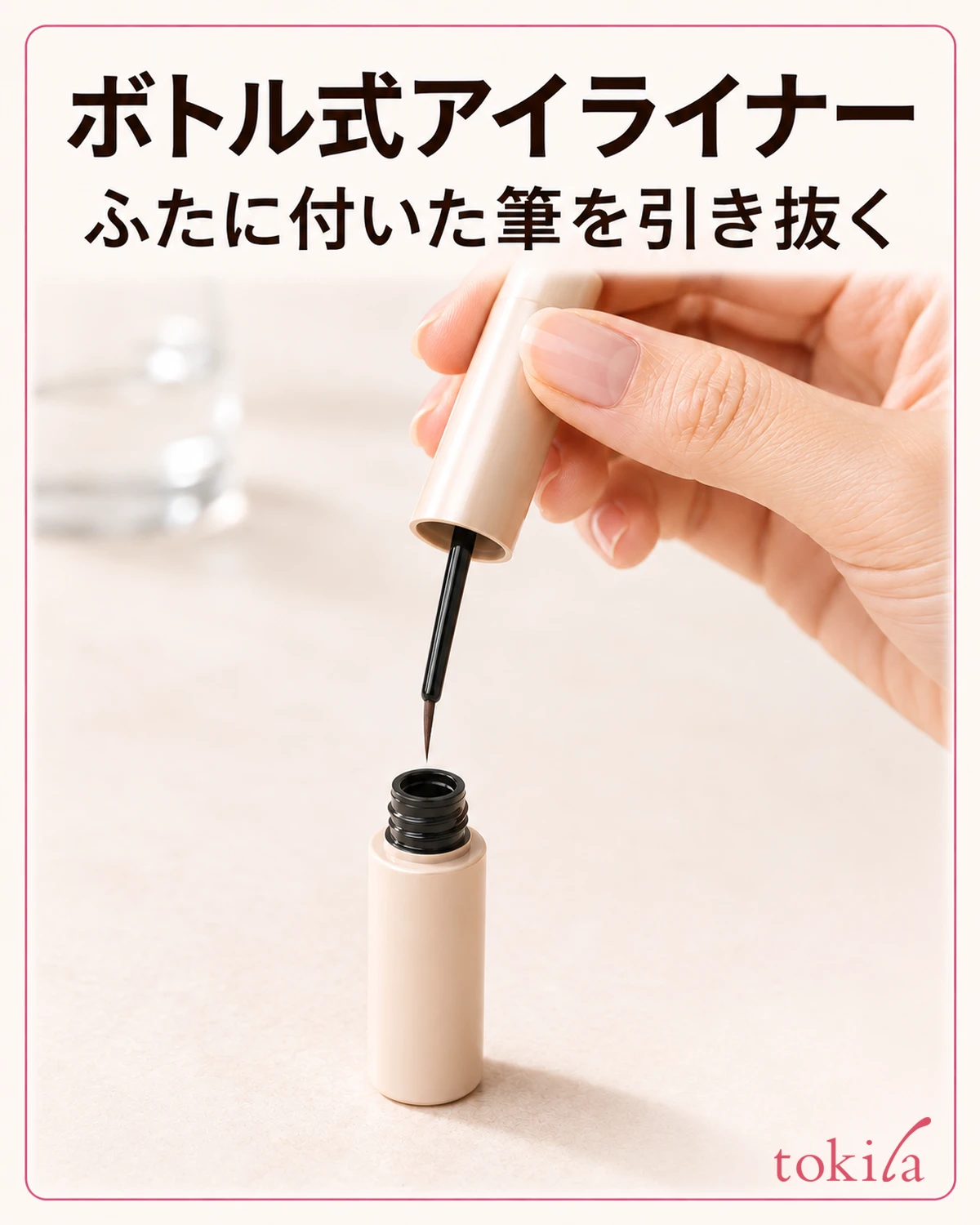
First place the container on a flat surface so it cannot tip over, and then open it. If there is a slender stem and brush tip attached to the cap and the liquid sits in a separate bottle, the brush is the kind you pull out of the bottle. If the brush stays on the pen body when you remove the cap, the liquid eyeliner is not designed for adjusting the amount at the bottle opening.
Check the label to see whether to shake the product before opening and whether to adjust the brush at the opening after taking it out. If instructed to shake, follow the directions with the cap closed. Handle any excess on the brush after taking it out, separately from how you shake the bottle. If your brush-pen liner skips, see the steps for fixing gaps in brush-pen eyeliner.
On your table, choose a spot where you will not knock the bottle over when reaching for the mirror. Decide where the bottle will sit and where you will steady your drawing hand before opening it so you do not have to clear the area with a loaded brush in hand.
2. Use the bottle opening to adjust the amount and check for pooled liquid
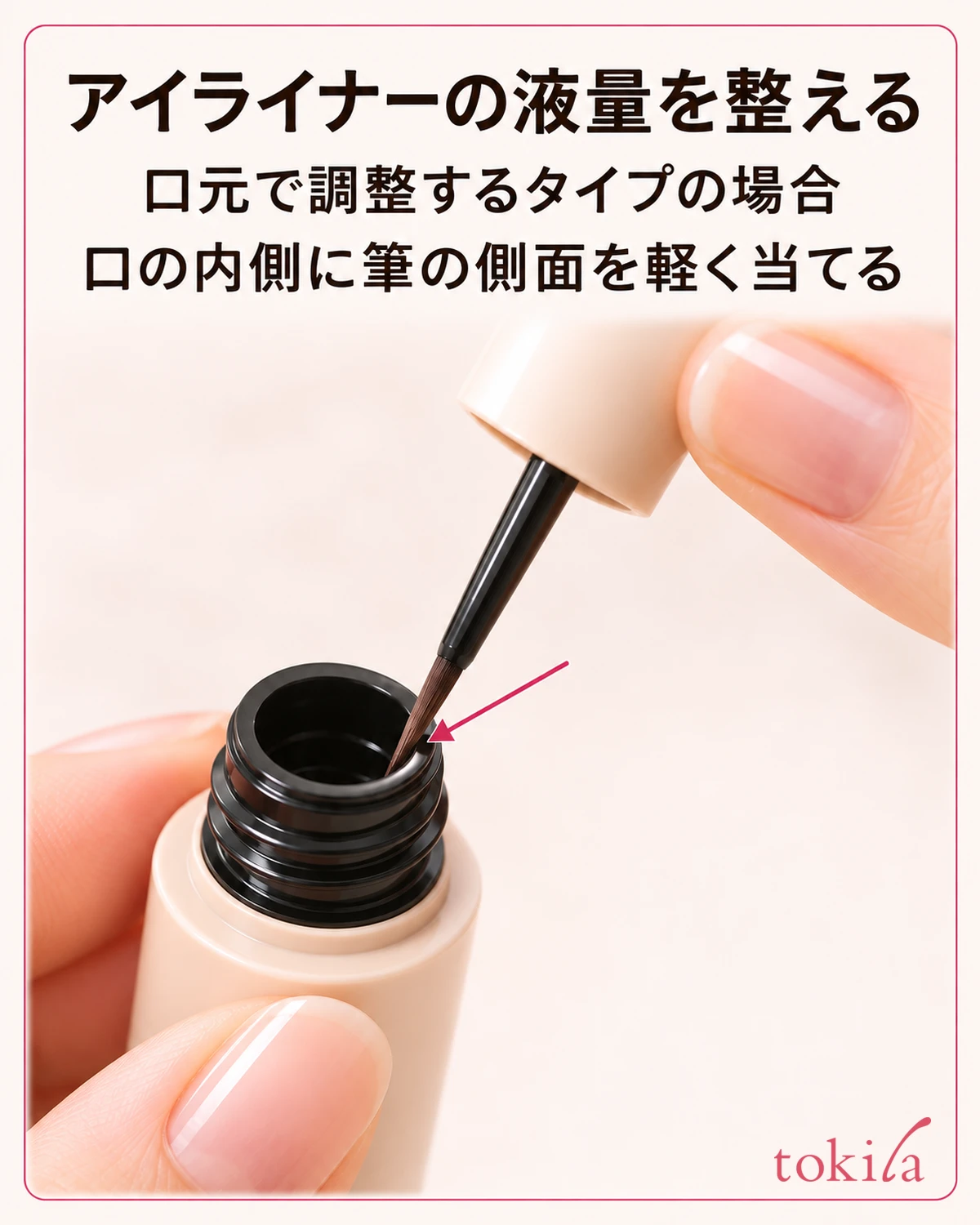
If the directions call for adjusting the amount at the opening, take out the brush and look at the bristles from the front and side. If the liquid covers the shape of the tip and gathers in a round bead, lightly touch that side to the inside of the bottle opening to remove the excess. Pressing the tip hard against the rim or repeatedly scraping the stem can spread the bristles, making it harder to see where the tip will touch.
After one adjustment, lift the brush away from the opening and look at its shape again. If liquid has gathered only on one side, lightly touch just that side to the opening. Instead of wiping both sides the same number of times, look for a neat, unified tip without a round bead of liquid. If it is too dark inside the opening to see where the brush touches, move to a better-lit spot without tilting the bottle to bring liquid up to the opening.
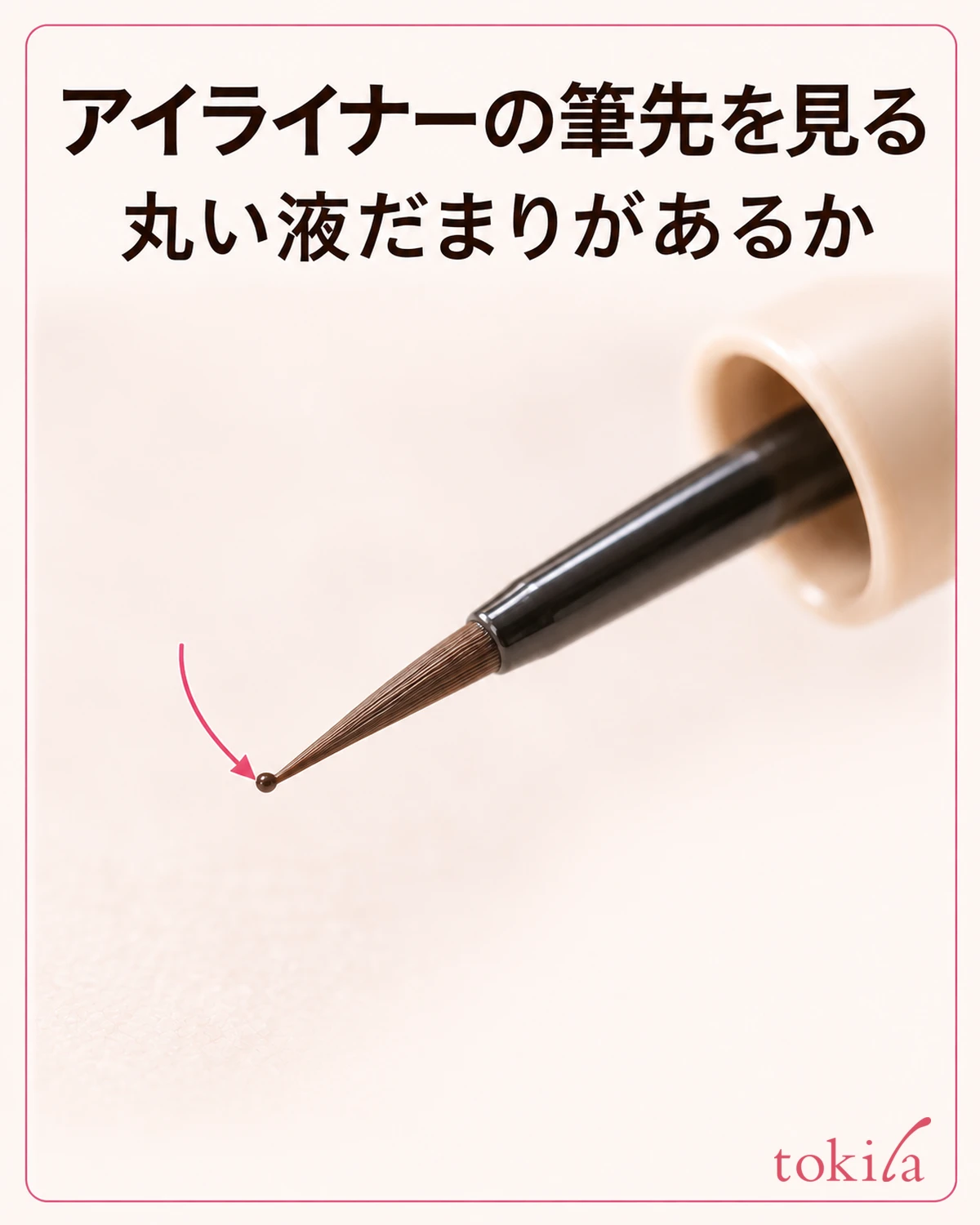
Distinguish a bulge at the tip from a bright spot caused by reflected light. Rotate the brush slightly and look from the side to tell a reflection from an actual rounded bulge in the outline. If the tip already comes to a fine point, there is no need to keep wiping it just to even out the shape.
If you think you removed too much liquid, reload as directed before repeatedly touching the brush to your eye area. Do not add water or toner to thin the liner or mix it with another product. Reload once and look at the tip again. If a heavy initial wipe left the line skipping, adjust only the side where liquid has collected after you reload.
3. Touch the tip to the upper lash line and begin with short strokes
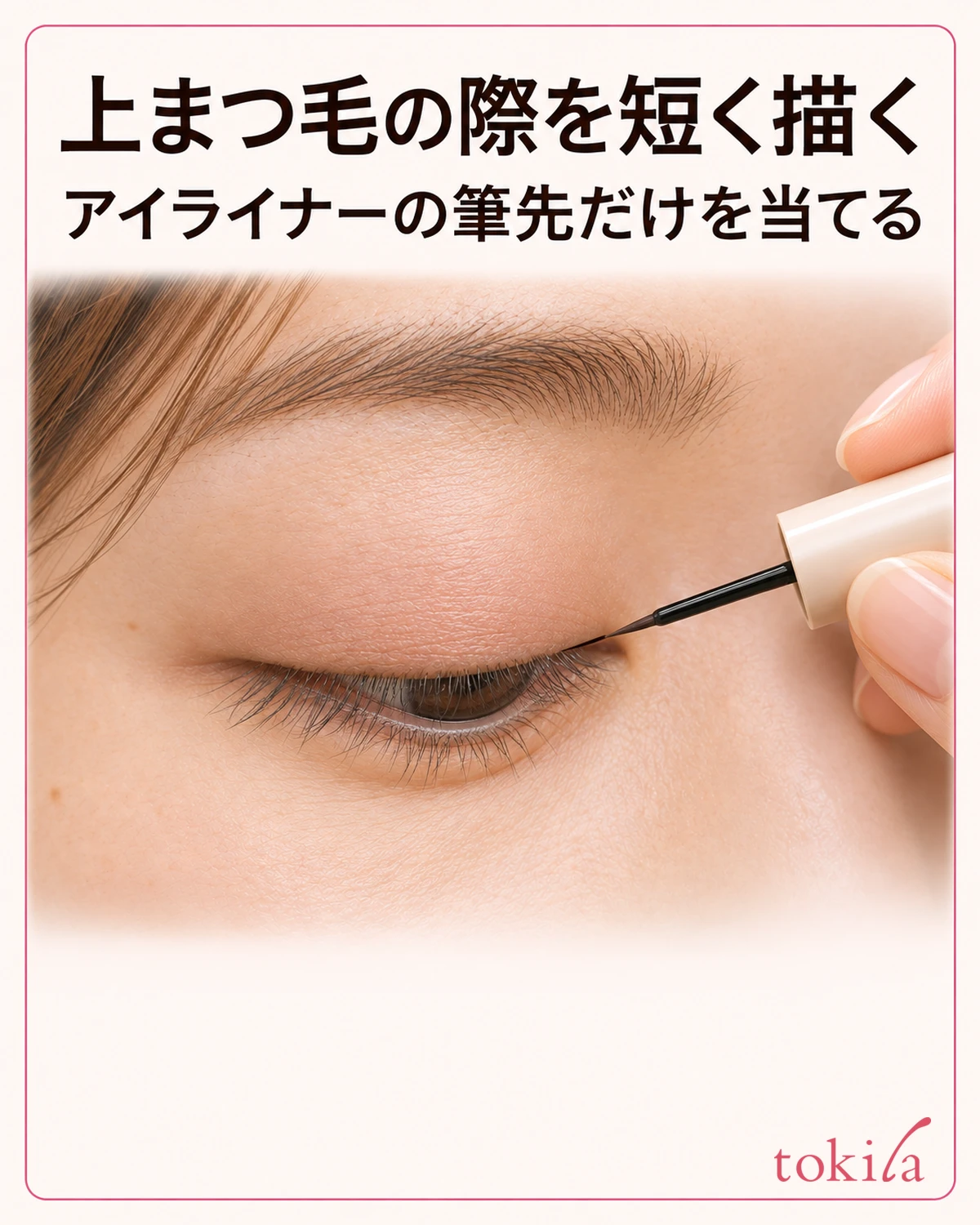
Place the mirror a little lower and look down without lowering your whole face too far so the roots of your upper lashes are easier to see. If you can rest your elbow on a stable surface, watch where the brush tip makes contact and begin with short strokes along the outside edge of the upper lashes. Stay off the waterline and avoid pulling the lid hard enough to shift its position. Check the placement with your eye open too.
If you lay the brush far enough over for its side to touch, more skin than intended may come into contact with it. If your first stroke tends to be thick, try using a smaller point of contact without pressing down. Drawing one short stroke, lifting the brush, and looking before moving to the next section makes it easier to spot where the width changed than trying to fill the lash roots with a long stroke.
If the liner starts going on differently partway through, lift the brush instead of pressing harder and continuing. Look at the shape of the tip. If you add liquid, adjust the amount at the opening again. Start the first stroke after reloading where you still need liner, leaving sections that are already thick enough alone. If the stroke gets thick only after reloading, compare the tip before the first stroke and after reloading before changing how you move your hand.
4. Look at both eyes straight on and join only the gaps you need to
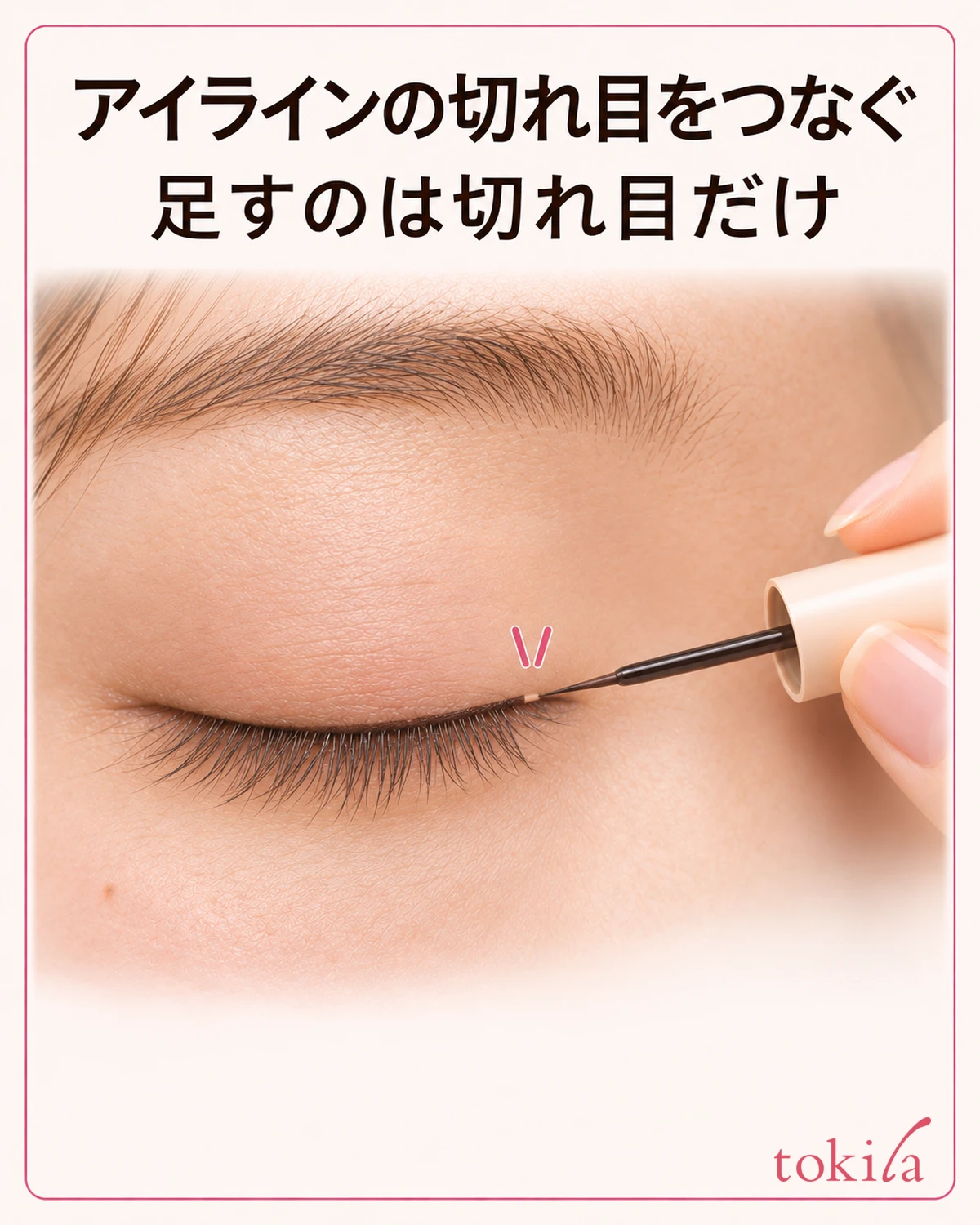
The line can look even when you look down, yet show a different width straight on because of how your lids fold. Bring the mirror back to eye level, open both eyes normally, and distinguish places that look thick from places where the line does not connect. If the two eyes look different, first check that they are equally open and lit.
If there is a small gap and the rest of the line is thick enough, touch the tip to the gap alone to connect it. Using the thickest section as a guide and tracing the full line adds width in places unrelated to the correction. If a section looks too thick, stop adding liner. Remove only the area that needs fixing as directed on your product, and redraw it more finely if necessary.
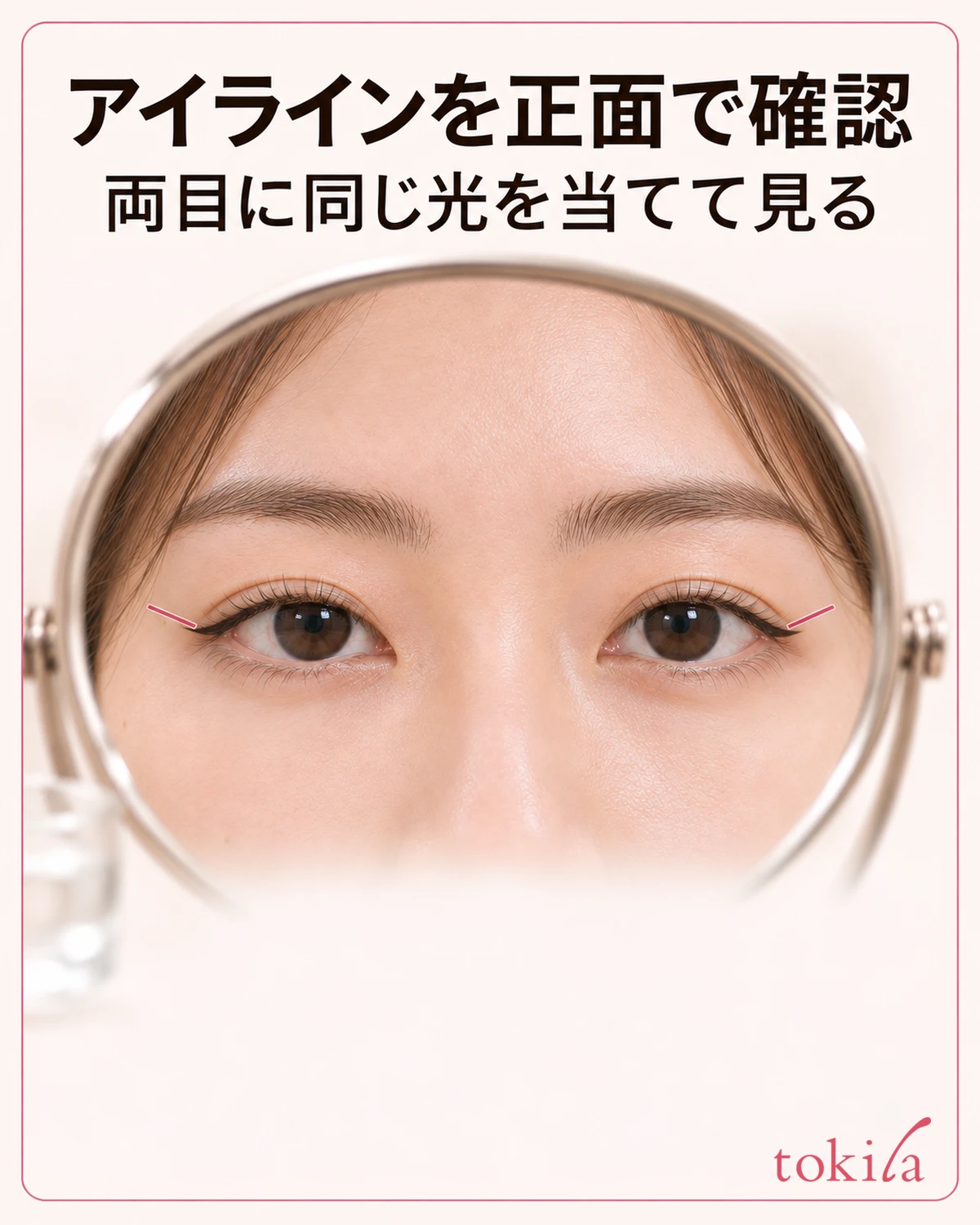
Use a close mirror to check where the tip should touch. To check balance between your eyes, move a little farther from the mirror and look without tilting your face, with equal light on both eyes. Before making changes, see whether a difference you noticed in a close-up view is also visible straight on.
5. Return the brush straight into the bottle after use
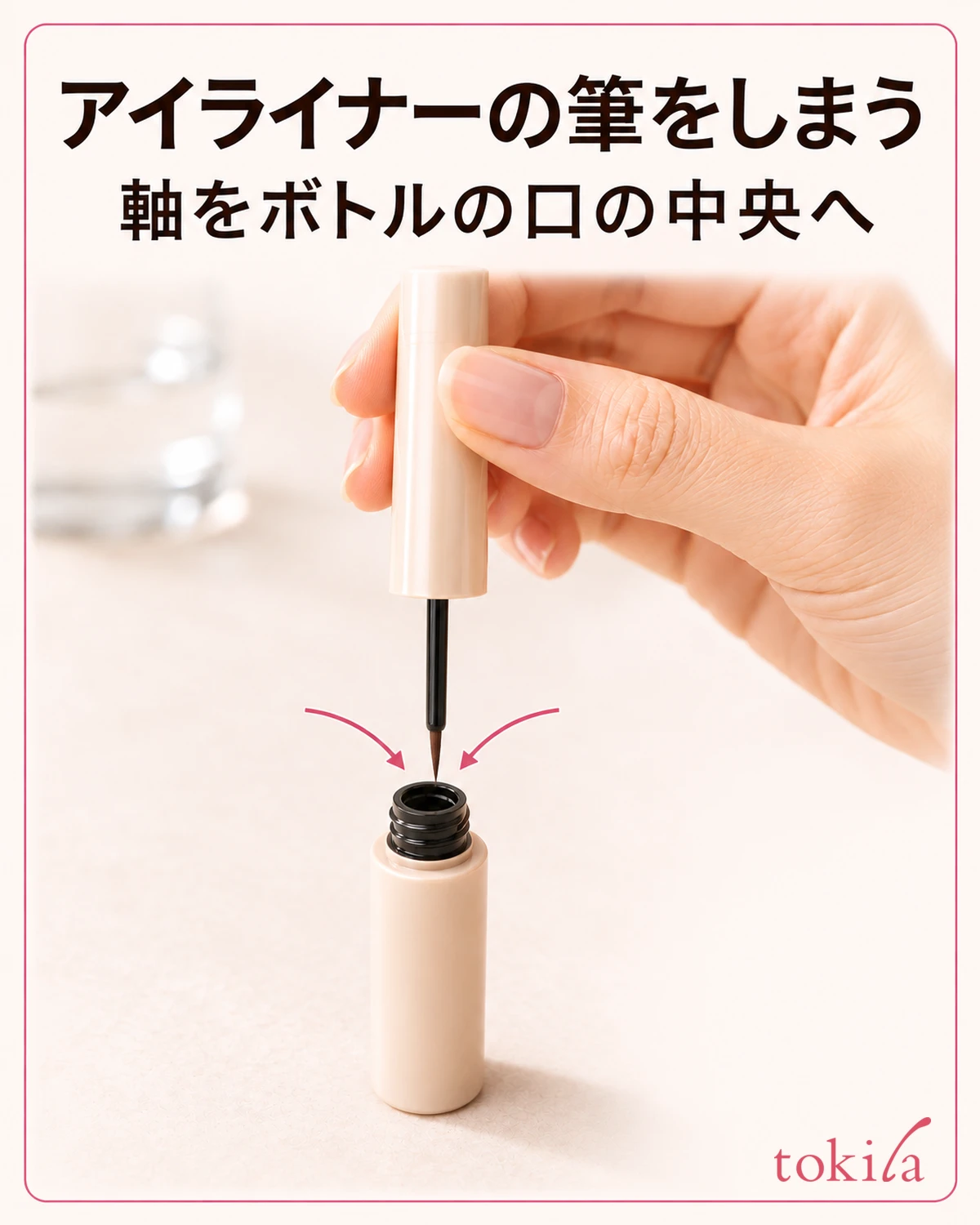
When you finish, keep the bottle upright and line up the stem with the center of the opening. Even if excess liquid is on the opening, do not press the bristles against the outside rim as you return the brush. Guide it in at an angle that keeps it from catching. If liquid remains around the part that opens and closes, check whether the directions say to wipe it. Wiping liquid from the outside and adjusting the amount on the brush at the inside of the opening happen in different places and at different times. Follow the label for cleaning the opening and brush tip. Close the cap properly and store the bottle in the specified position and location.
Next time, recall whether the first stroke was thick or whether the line thickened after you reloaded partway through. If it was the first stroke, check for pooled liquid before bringing the brush to your eye. If it happened partway through, revisit that first stroke after reloading. Looking at one variable at a time, instead of changing the brush angle and liquid amount drastically at once, makes it easier to find an adjustment that works with your bottle.