Bought a facial oil but unsure whether to use it before toner or as the final layer? Although these products all add oil, their place in your routine, amount per use, and the condition of your skin beforehand differ by product. Check the order for your particular bottle, then work on how you spread it over your face.
This article covers cosmetic beauty oils applied to the face. Cleansing oils for removing makeup, bath oils, essential oils for fragrance, and cooking oils are not products to use by the same procedure. Choose a bottle whose labeling and directions confirm facial use.
1. Check that the oil is for the face and whether it goes before or after toner
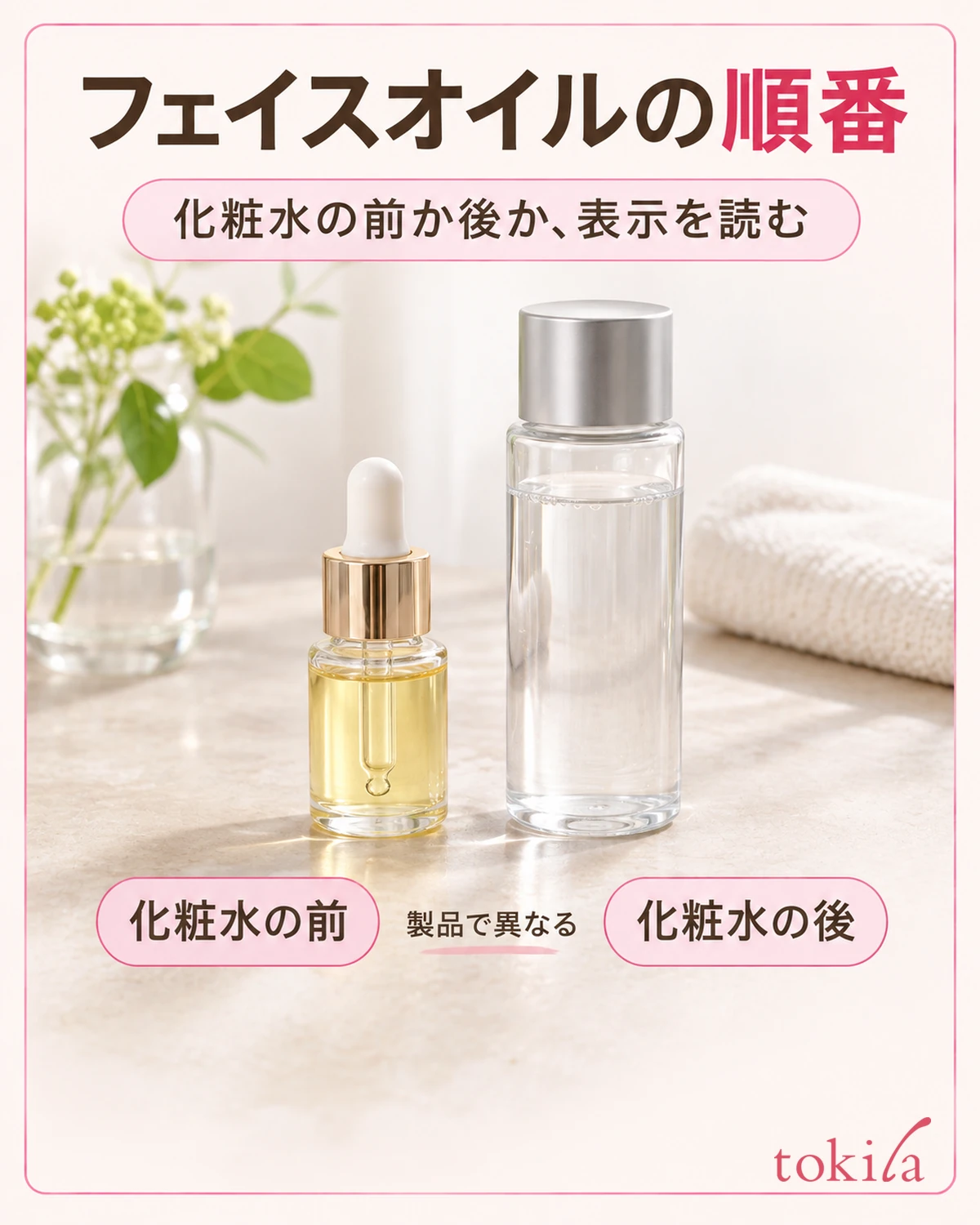
First, check the purpose on the container and box. Even for products used on the face, body, and hair, read the amount and order specified for facial use. Do not decide to apply it to your face solely because you have used it on your body, or extend facial directions to your lips or lash lines. Follow the guidance for each area.
Next, check its position relative to toner. Some products go on before toner and others afterward, so do not decide from appearance that oil always goes last or that a light texture means it goes first. Once you have checked its position, write out where it fits among your usual toner, serum, emulsion, and cream.
Even when directions say to use it after toner, distinguish products intended to replace emulsion or cream from those involving other steps. Adding one oil does not by itself mean you should omit your usual emulsion. Read the guidance for your complete routine and decide what you will use next.
When uncertain, return to the box or enclosed instructions for that exact product name. Do not substitute directions for a similar container or another fragrance; match the product name as well. If the instructions you have do not clarify combined use, setting that combination aside and asking is easier to organize than layering many products in an improvised order.
If you plan to use several serums, also consider what to check before layering serums. Here, we focus on applying one oil to the face; do not judge whether combinations are suitable or the order of penetration from ingredient names alone.
2. Check the amount per use and skin moisture before application

Read the amount per use in the terms used on the current container, such as drops, pumps, or an appropriate amount. Even a single drop differs by dispenser, so do not transfer the drop count you remember from another oil. If directions distinguish an amount for the whole face from an amount for specific areas, check each alongside its intended area.
Next, check the required skin condition before application. If directions say to apply while moisture from toner remains, place the container within reach beforehand so you can continue that step. Do not add an improvised step, such as adding water to your palms, to a product that does not specify it. Read order and moisture conditions together.
Clean your hands and open the container on a stable surface. Tilt dispensers, pumps, and droppers require different movements. Look at the outlet first and dispense in separate, controlled actions. If oil is difficult to dispense, do not keep shaking hard or press the opening against your skin; return to the handling method for that container.
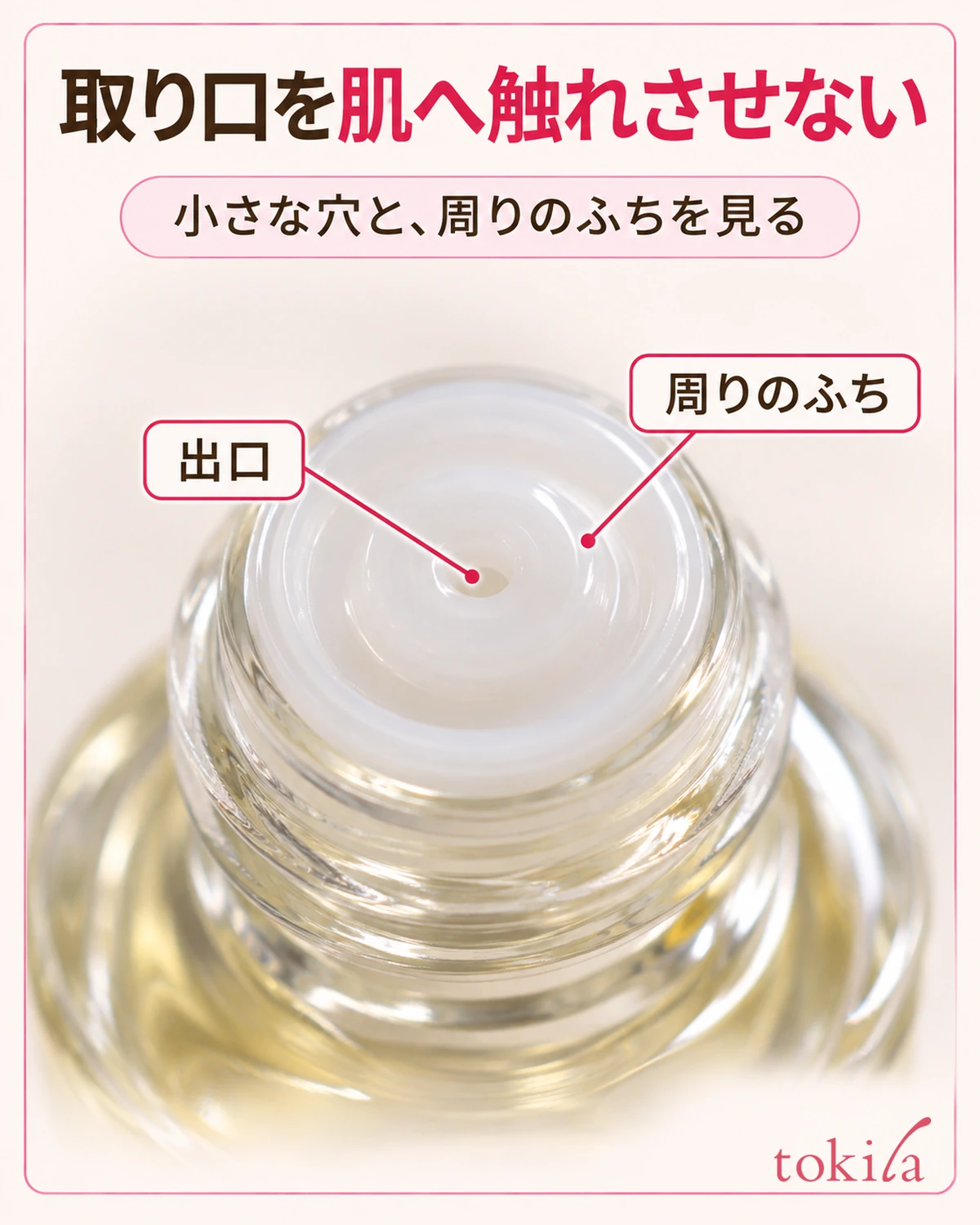
Distinguish the small opening in the inner stopper from liquid remaining on the outer rim. Liquid around the opening does not necessarily mean it is blocked. Inserting a pin or similar object to widen it changes dispensing, so do not dismantle it; follow the care directions.
You do not need to layer extra oil on the same part of your face just to use everything you dispensed. Do not return liquid already dispensed into your hand to the container; review your dispensing action next time. Adjusting your grip and receiving position, rather than repeatedly touching the opening to control the amount, helps you proceed calmly to application.
3. Gently apply the oil spread over your hands, starting at the cheeks

For products whose directions specify applying by hand, spread the prescribed amount over your palms before taking it to your face. If warming it in your hands is instructed, follow that method; prolonged rubbing to create heat is unnecessary. Check whether liquid has collected at the bases of your fingers so it does not transfer all at once to one side.
When spreading from your cheeks, gently rest your palms or finger pads against your skin. Do not turn the motion into forcefully lifting your face, touching it with your nails, or repeatedly rubbing back and forth. Check each cheek once, then transfer the oil spread over your hands to other permitted areas, such as the forehead.
For narrow areas beside the nose and on the chin, check with your finger pads rather than forcing your entire palm into place. Avoid going so close to the eyes that oil enters them, or spreading it inside the nose or mouth. Without directions for the eye area or lips, do not deliberately layer it there merely because it is a facial product.
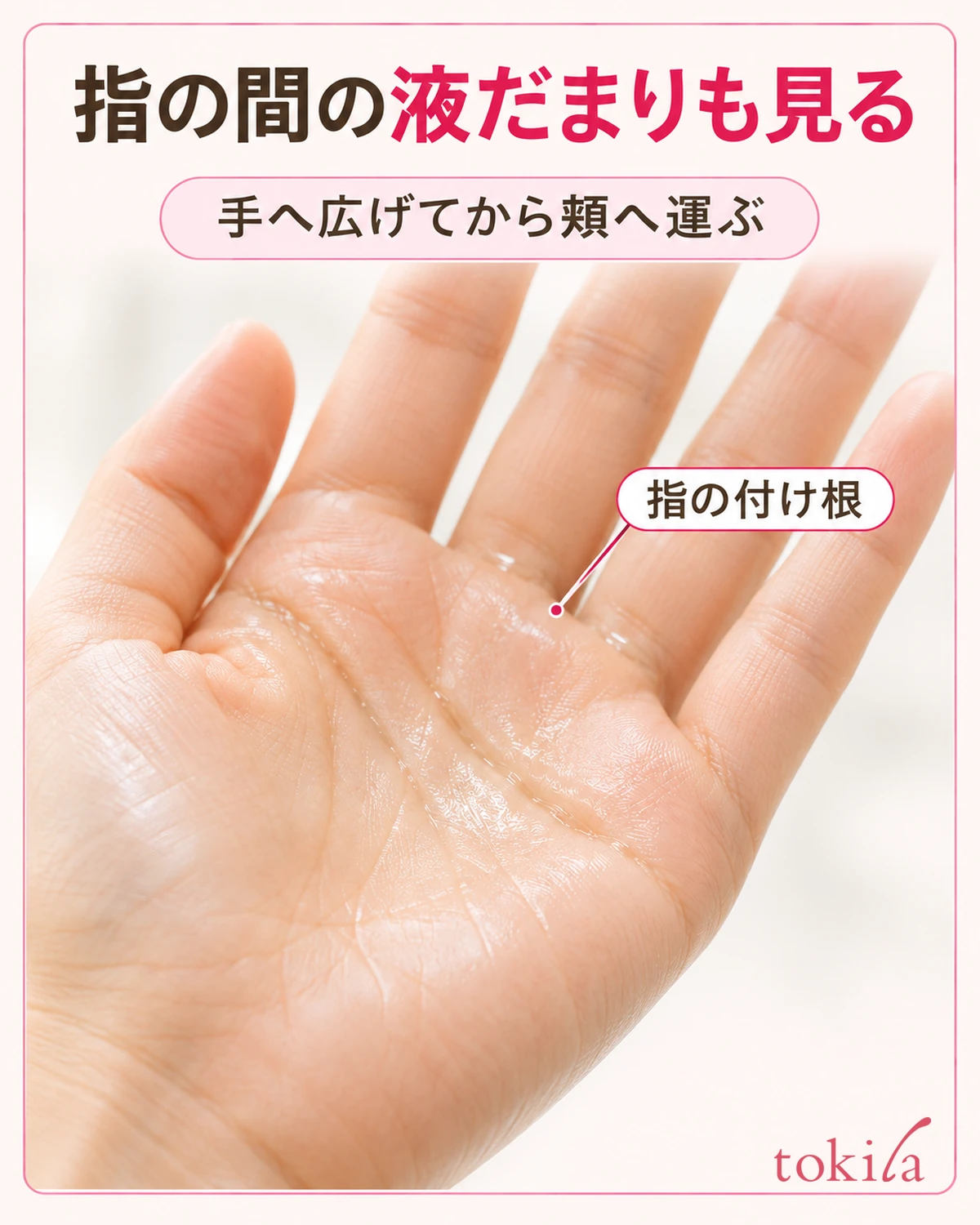
When liquid collects between your fingers or near your wrists, it may transfer mainly to the final spot you touch. Check its position on your hands before the next contact. Spreading oil over your hands is preparation to distribute the amount evenly, not a test of its effects.
Distinguish applying oil from prolonged massage. Even if a product allows massage, do not keep sliding your hands with the everyday application amount when separate massage amounts or procedures are given. Do not use rubbing until your skin feels dry or touching until shine disappears as your stopping point.
4. In the morning, check what remains on the surface before makeup
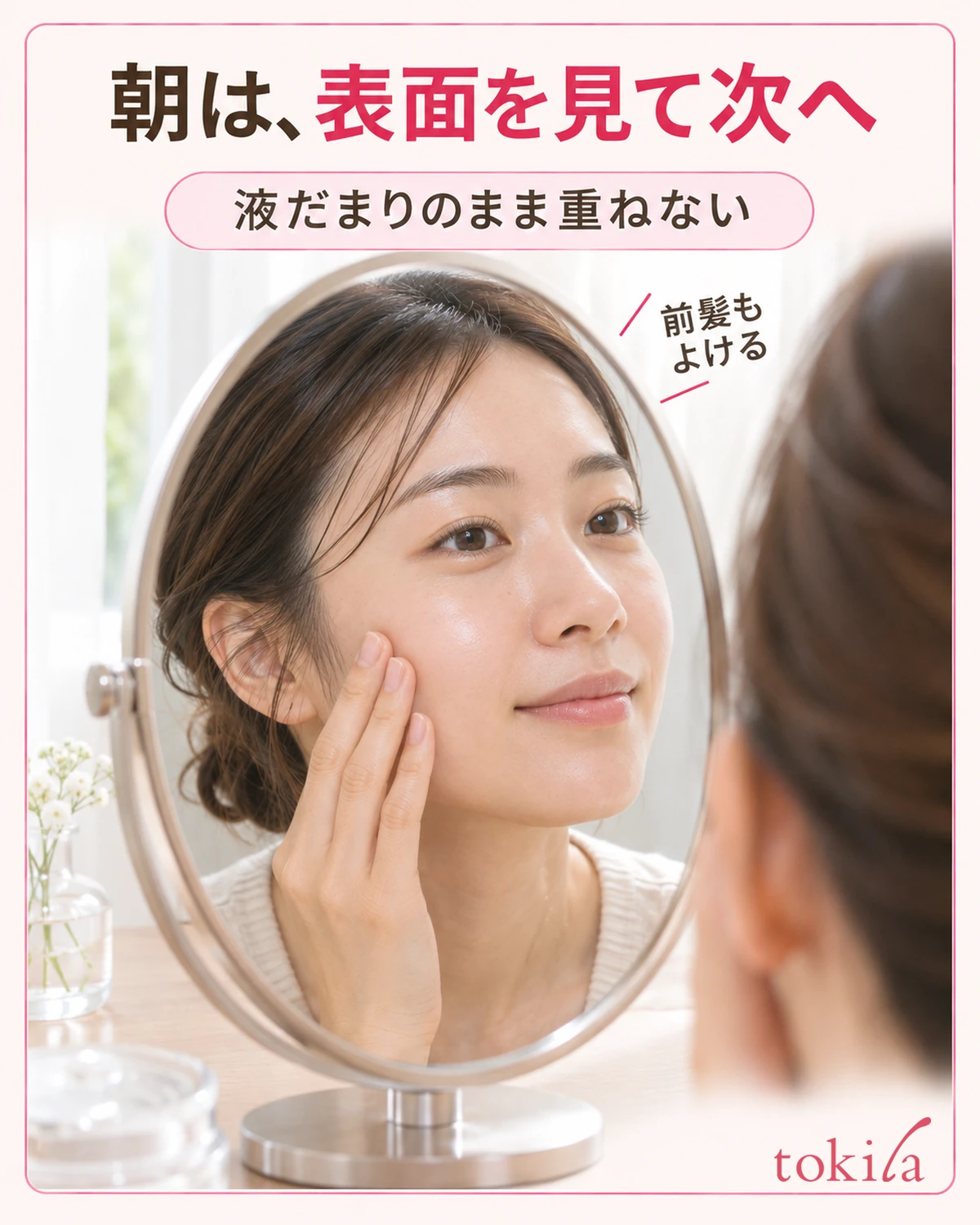
After using a product suitable for morning use, look at the surface in a mirror before layering the next cosmetic. Check whether liquid has gathered on part of a cheek or moved toward the hairline. Shine alone cannot tell you whether moisturization is sufficient or whether the oil has entered the skin.
Avoid hastily adding primer or sunscreen and spreading it as though pushing the oil underneath into your skin. Follow any specified waiting instructions; do not create a universal waiting time for everyone. Start by proceeding through your routine without leaving pools of liquid on the surface.
Use oil separately from sunscreen or foundation unless that combination is explicitly intended for mixing. Even if mixing in your palm looks convenient, it does not necessarily preserve the amount and application-area conditions of each product. Do not reduce your sunscreen amount because you added oil.
If base makeup slides or forms streaks, review the step at which the problem began before adding more powder. Do not assume oil alone is the cause; consider the amount and application of the preceding toner, emulsion, and primer as well. If your morning routine has many steps and the conditions are unclear, putting combined use on hold is an option.
Moving your bangs aside and placing the mirror in a bright spot also makes residue at the hairline easier to see. Check both the whole face and close up, rather than continuing to add oil based only on shine in one spot. The products used next differ at night and in the morning, so do not automatically carry a nighttime amount into the morning; consider the entire routine that day.
5. If it feels heavy, review the amount and application area
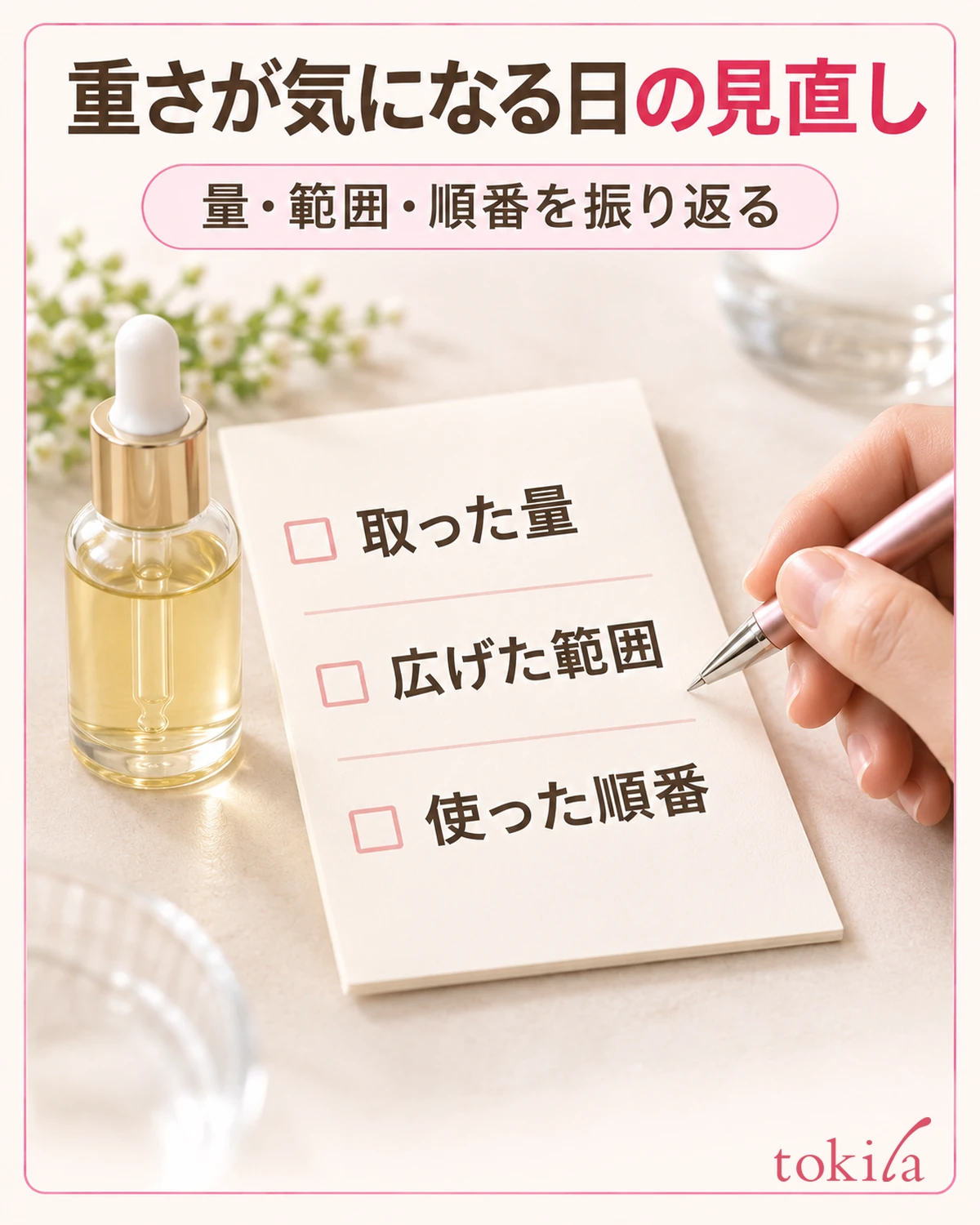
On a day when the oil feels heavy afterward, briefly record the amount dispensed, area covered, and order used. Changing all of these before trying again makes it harder to describe the conditions that caused difficulty. First compare each action with the directions instead of immediately adding your own rules, such as halving the amount.
Treat sensations of heaviness or stickiness separately from abnormalities such as redness, swelling, itching, or irritation. Stop use if abnormalities occur and respond according to the product precautions. Consult a medical professional if symptoms continue. Do not try again while abnormalities remain on the assumption that using less will let you continue.
If it does not fit your usual routine even when used as directed, return to your purpose for introducing that oil before adding more products one after another. Distinguish use before morning makeup from use in evening skincare, and choose the necessary steps within the times the product permits. Do not increase the amount on the assumption that more oil is better.
After use, check how to handle the opening and cap, and return the product to its specified storage conditions. Do not adjust the feel by adding water to make it runnier or by mixing and storing it with other cosmetics in a separate container. If liquid on the outside makes your hands slippery, place it somewhere stable before tidying up.
Think of facial oil as a sequence: check the order, amount, and skin moisture for that bottle, then gently move it from your hands to your cheeks. Separating dispensing from spreading makes your movements easier to review than rushing the finish through repeated rubbing. Set unclear conditions aside and choose a method that fits comfortably into daily skincare.