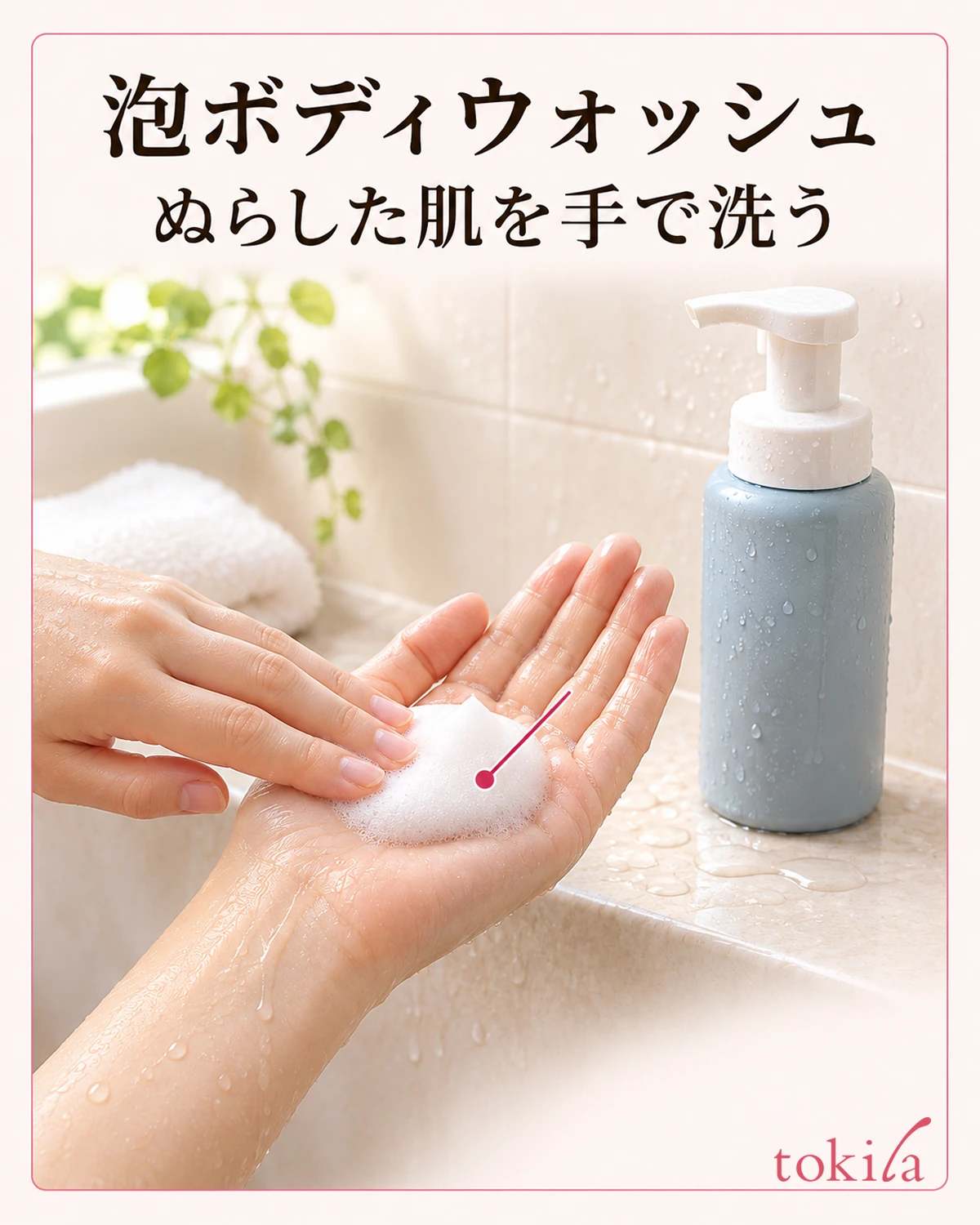
A pump that dispenses body wash as foam lets you take it in your hand and spread it over your body without a foaming net. When you first use it, taking enough for one area, such as an arm, makes it easier to notice where you need more foam than dispensing enough for your whole body at once.
This guide covers pump formulas designed to be spread by hand over wet skin. Check your product label first for how much foam to take, where you can use it, and what to do after washing.
1. Wet your body and choose a place for the pump before dispensing foam
Read the directions on the bottle to see whether the product is meant to be used with your palms. Facial and hand cleansers can also come out as foam, so the shape of the pump alone may be hard to go by. If you keep similar bottles in the shower, check the front to make sure the product is for the body, then read the back for the amount to use and the washing steps.
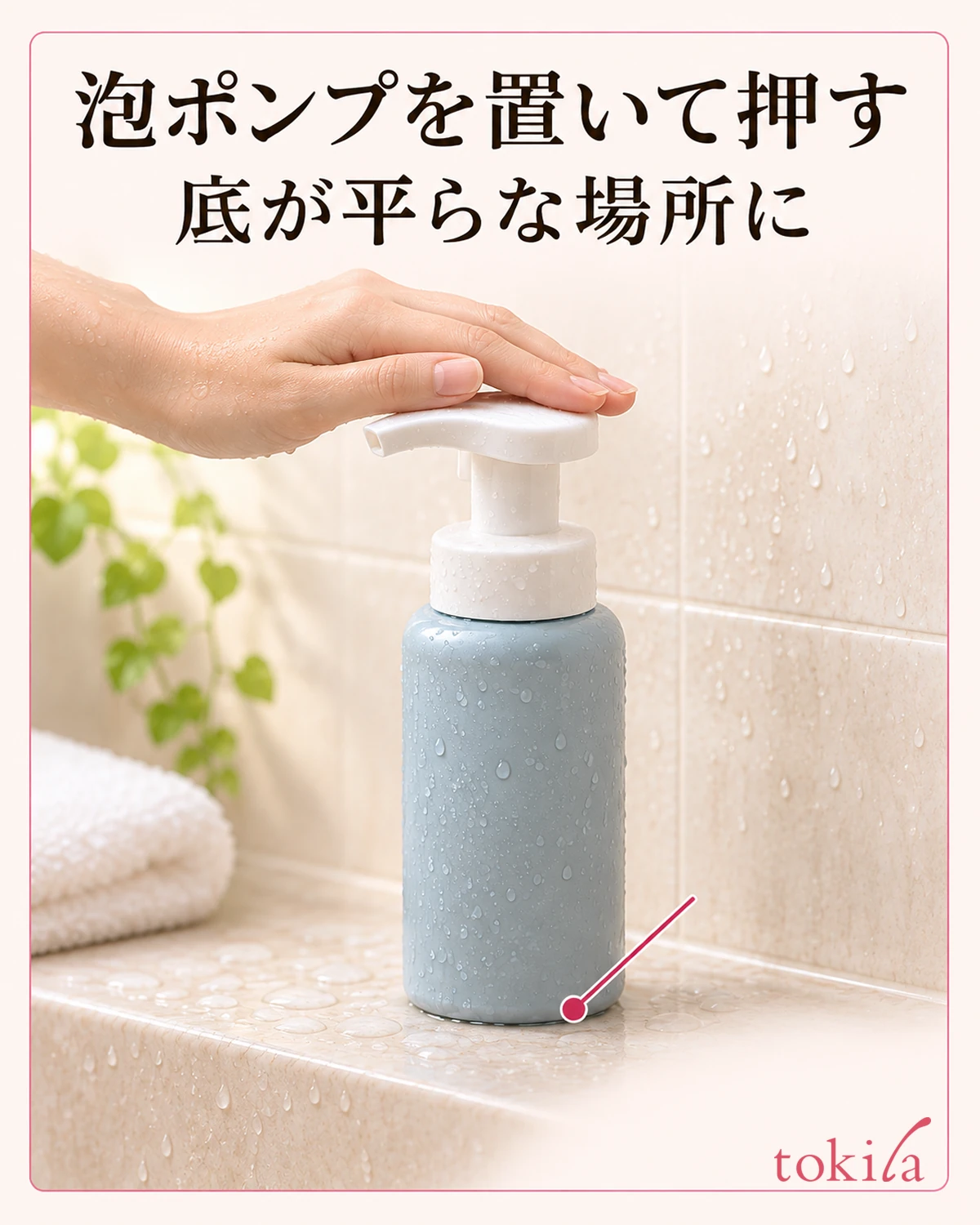
Put the bottle where you can press the pump with one hand and catch the foam with the other. A flat spot that supports the whole base makes it easier to press the pump in place than a sloped tub edge or a wire shelf that moves when pressed. If the bottle wobbles as you press, move it first. Keep it out of the direct spray of the shower.
Wet your body in the shower before dispensing foam. If you start with your arm, run water from elbow to wrist, then bend your arm slightly to wet the inner side as well. If the water is hitting only the outer side, turn your arm to wet the other side before taking foam.
If your skin feels dry by the time you move to the next area, wet it again and then dispense fresh foam. If the shower is hard to handle with foam in your palm, wet the area you need first and set the showerhead down before dispensing.
2. Use the label as a guide and dispense the foam into your palm
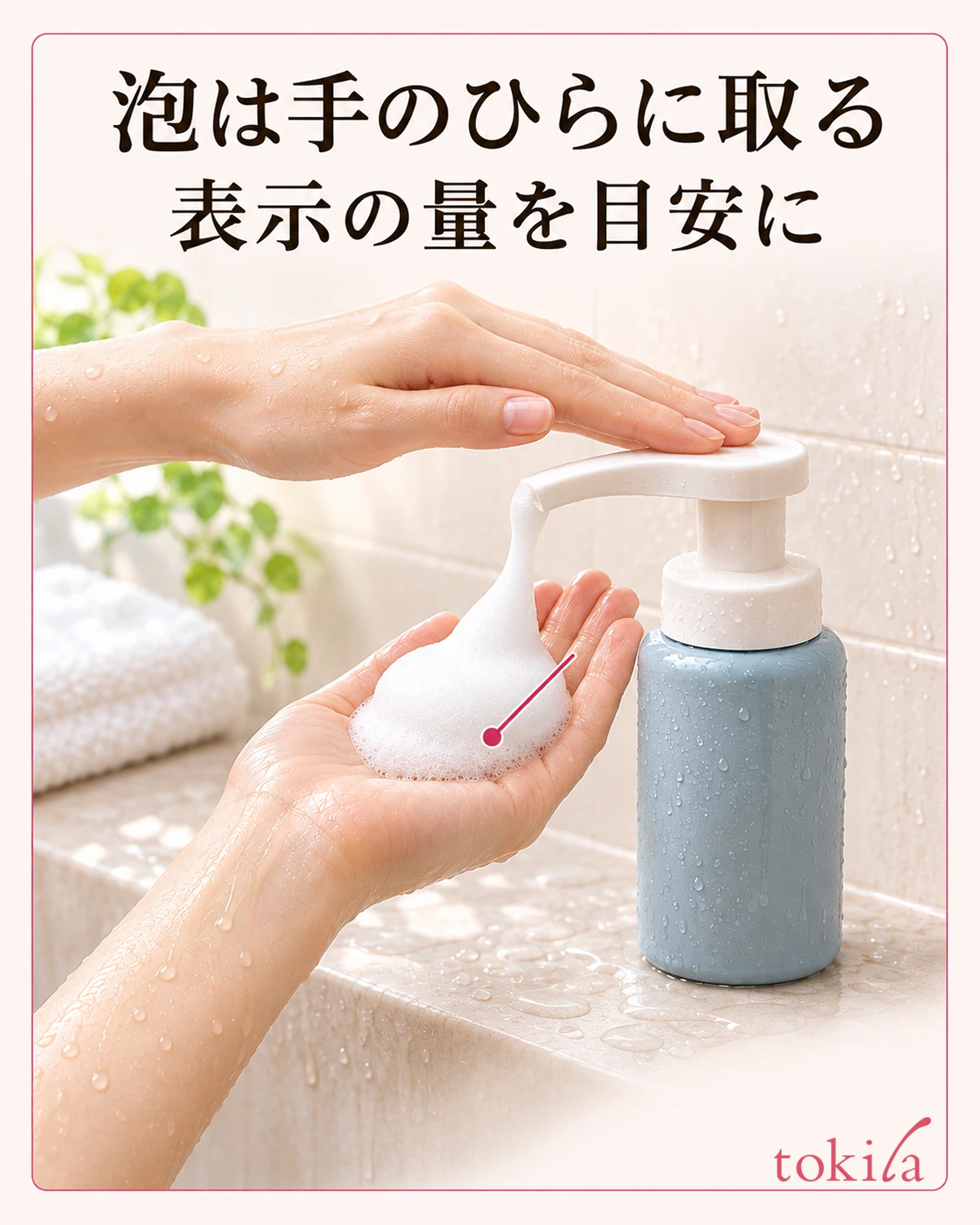
Cup your palm slightly to catch the foam. If the bottle says to take one or two pumps at a time, use that as a guide and move the foam to the area you want to wash. Pump sizes and the amount dispensed per press vary, so the number of presses that worked with your last bottle may not be enough.
Keep your hand slightly below the outlet, leaving the nozzle tip uncovered. If shower water runs into your palm, the foam may wash away before you spread it. Move your hand out of the spray and take fresh foam while the area you plan to wash is still wet.
If the foam falls off as soon as you catch it, bring your hand closer to the area you want to wash instead of carrying it with your arm extended. Dispensing enough for your whole body at once can make it hard to keep track of where you have used it. Spreading it over a defined area, such as both arms, and taking more as you move on makes the amount easier to adjust.
If the pump dispenses watery liquid, check how much remains and whether the refill matches the bottle before pressing it more times. Even a foaming bottle may not work as directed if filled with a different product or diluted with water. If there are instructions for cleaning or refilling the bottle, follow them before attempting to take it apart.
3. Start with a broad area such as an arm and spread the foam with your palm
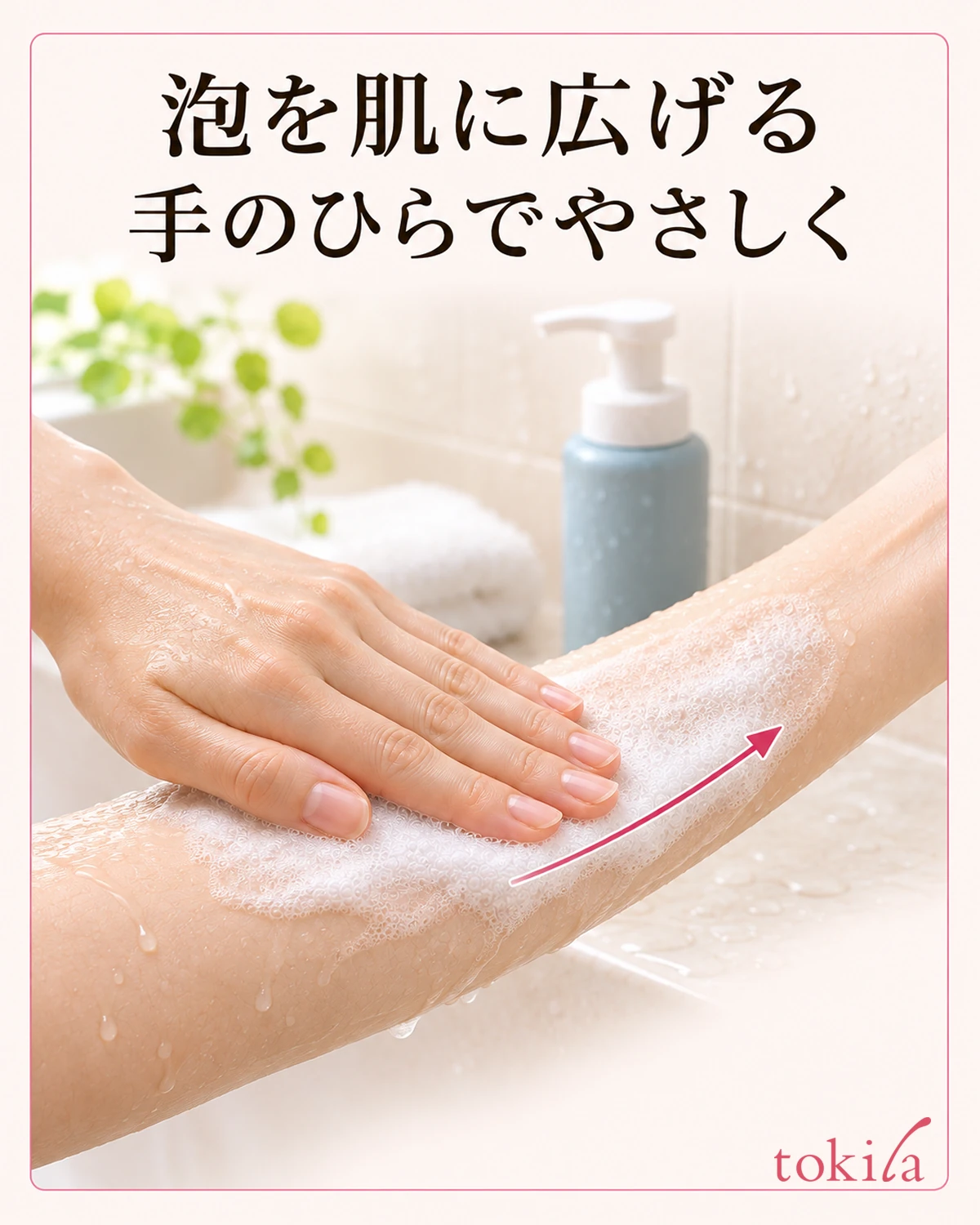
Start on a broad surface that is easy to reach, such as your forearm. Rest your palm against the skin and glide it gently until the foam joins into a layer. If you put foam on your arm and try to spread it to your wrist or shoulder in one go, it may be hard to tell whether you still have foam on your hand by the end. Spread it over the broad part of one arm first, then shift position to see where the foam has not reached.
If you cup your hand tightly, your fingertips may touch the skin first. On a surface like the forearm, keep your fingers relaxed and find an angle at which the heel of your palm and the pads of your fingers touch lightly. There is no need to lean hard enough to crush the foam. If your hand starts to drag as the foam runs low, add more to that area before pressing harder.
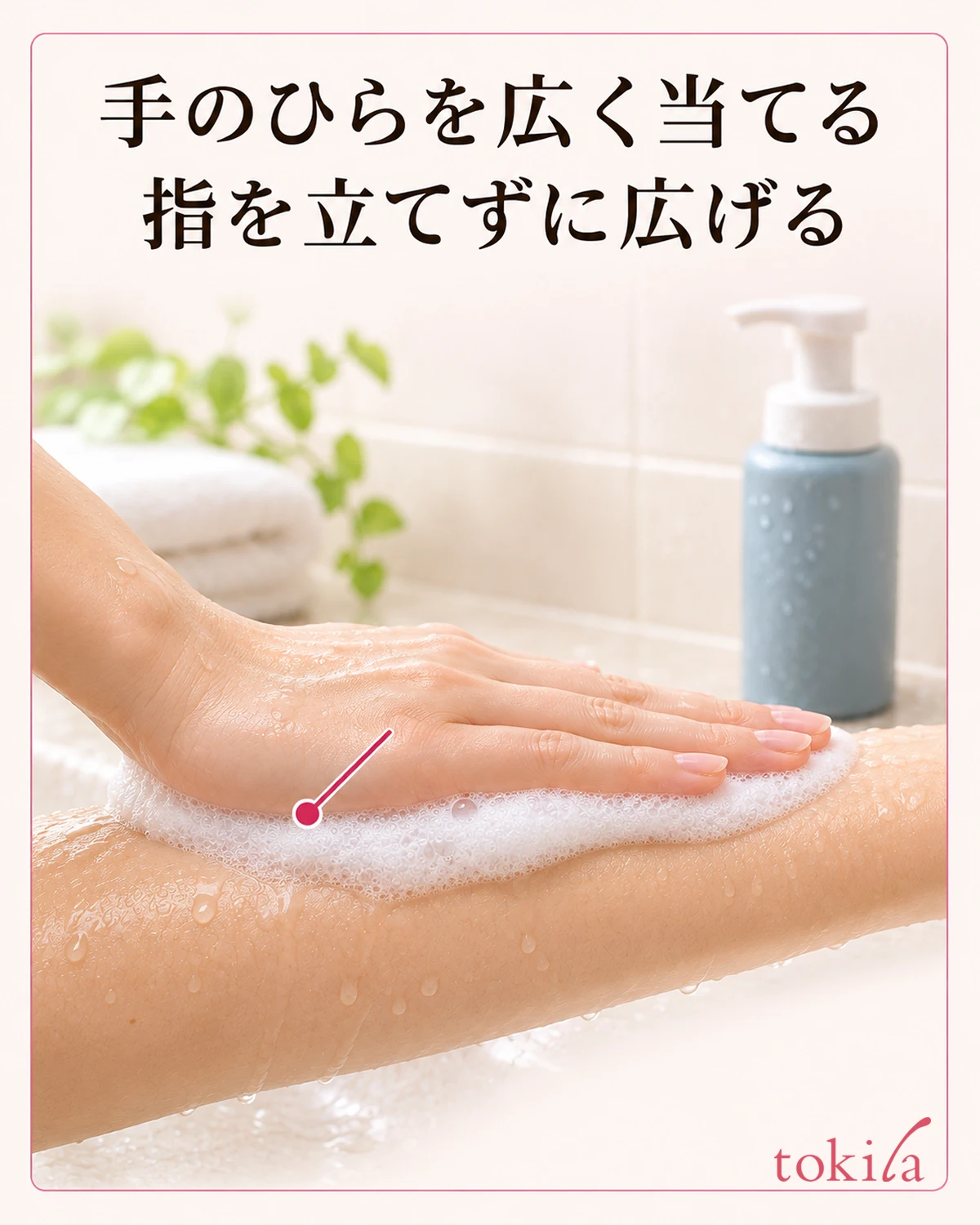
If the foam still scatters as you use your palm, move your arm out of the shower spray. If spreading it remains difficult, shorten the area you cover in one pass. Spreading the foam to the middle of your forearm before moving on, instead of going all the way to your wrist at once, makes it easier to relate the amount you took to the area it covered.
Watch the boundary between where you have spread the foam and where you have yet to wash. That way you can avoid going back and forth repeatedly over one spot. There is no need to judge whether your skin is clean by how the foam looks alone. Use where your hand has passed as a guide and move to the next area.
4. Turn your arm to wash the inside of the elbow and the sides of the arm
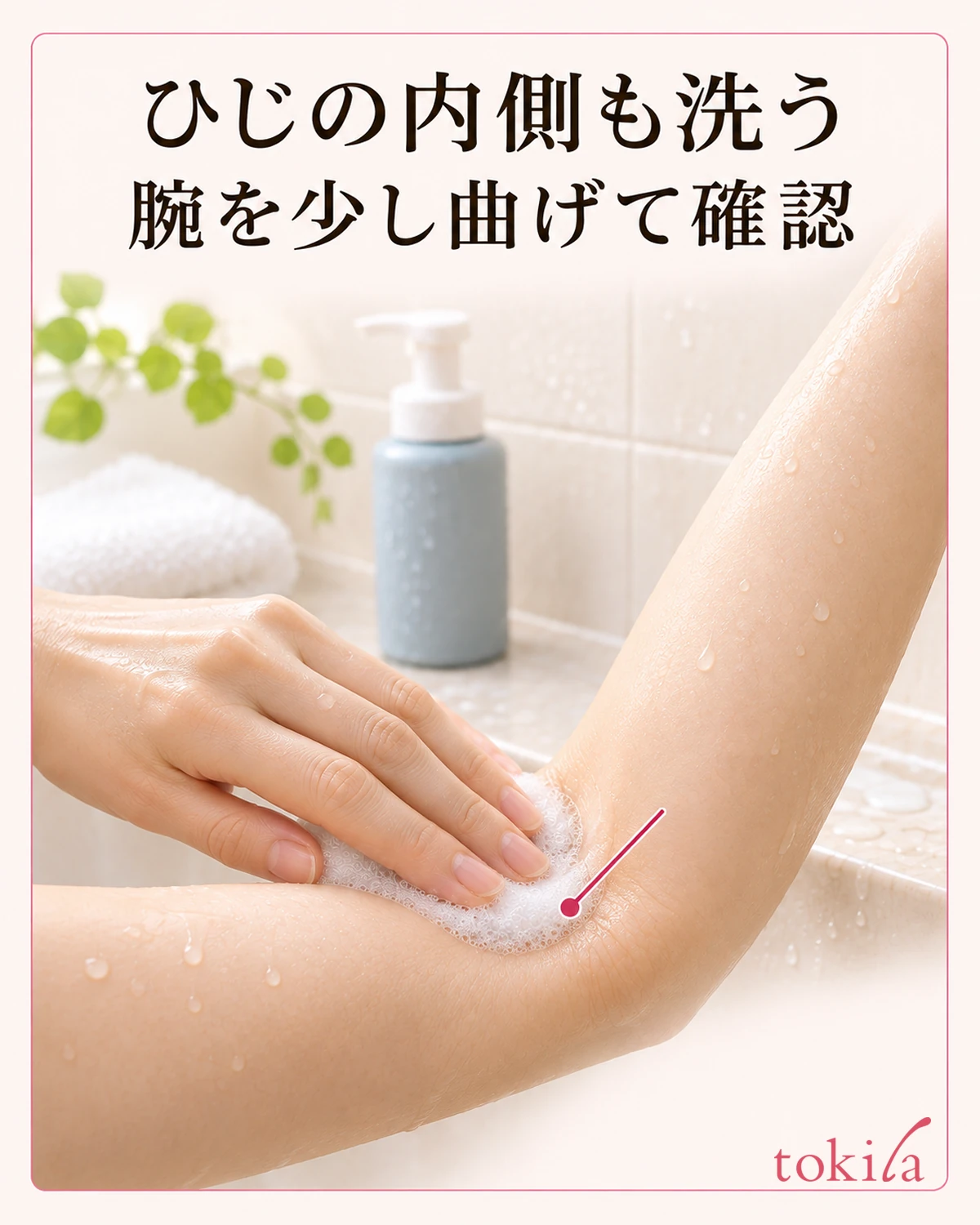
After washing the outside of the arm, turn it palm up to see the inner side more clearly. Bend your elbow slightly so the crease is not deeply folded, and gently wash with the foam left on your hand. For the sides of the wrist, look for the narrow area that comes into view when you turn your arm.
Check whether you have foam left in your palm when moving from shoulder to arm or switching arms. If little foam is visible after washing a broad area, take more using the label as a guide before spreading it, instead of repeatedly passing over smaller areas with the same hand. If it is hard to see inside your elbow while it is bent sharply, straighten it a little to check.
For other areas, change your posture so you can reach them before putting your hand on your skin. Twisting far in the shower to wash a hard-to-reach area can leave you unsteady. See what you can reach comfortably, and follow the product label if it specifies a tool.
5. Rinse away the foam and check the insides of your elbows and your wrists again

Once you finish washing, rinse the foam away with water or lukewarm water. Even when foam is no longer visible on the outside of your forearm, it can remain inside the elbow or around the wrist, so turn your arm as you did when washing. Run water over any spots where foam remains and lightly touch them with the pads of your fingers as you rinse it away.
If you are unsure you have finished rinsing, check whether there is foam on your hand too. If the hand you washed with is still foamy, touching your skin to check can put foam back on it. Rinse your hand first, then run water over any spots you are still unsure about.
The next time you use it, think about whether the foam fell from your hand or ran out as you spread it. If it fell, adjust where you set the showerhead and where you hold your hand to catch the foam. If it ran out, adjust how much skin you wash at a time. If you moisturize after bathing, see how to use body lotion on wet skin for more guidance. Check the lotion label to see whether it is designed for wet skin or for use after toweling off.