You tie your hair back, but only the short hairs on the crown stick out. You go over them with a brush-type hair styler, and now your bangs have clumped together. In that case, before you keep applying product over a wide area, try separating the hairs you want to smooth from the area the brush will touch.
This article covers hair styling products with a brush that smooth short hairs and bangs. They are different in purpose from hair mascara that colors gray hair, and from eyebrow or eyelash cosmetics. Starting from the directions for use of the product you already own, it walks through preparation, spot application, touch-ups and storage.
1. Check that it is meant for hair before you look at the shape of the container
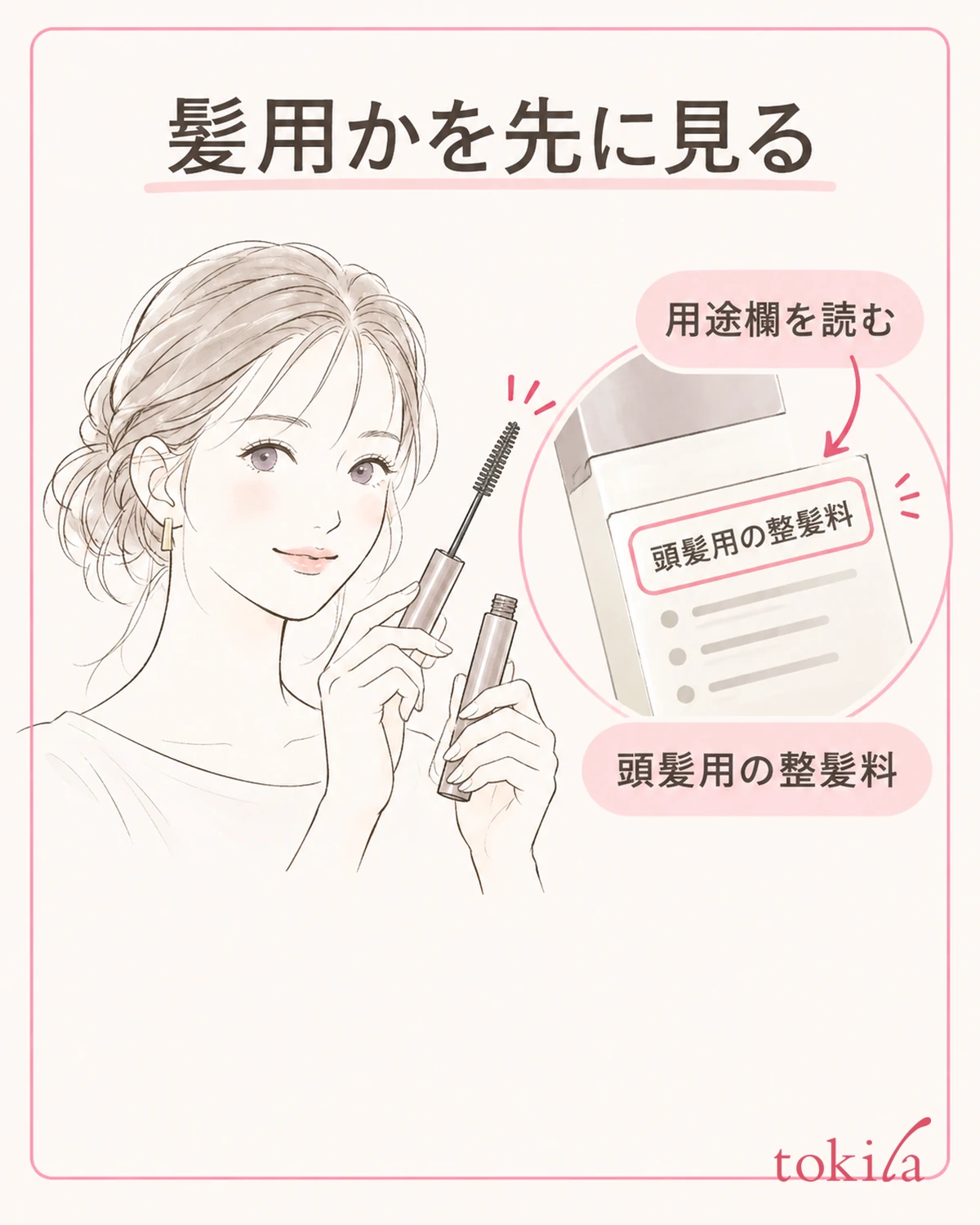
Do not choose by the name "hair mascara" alone; read the intended use on the container or packaging. Tell apart a styler that smooths stray hairs from a product that temporarily colors gray hair and the like. Even containers of a similar shape differ in where you apply them, how they finish and how they come off if their purposes differ.
For a product that smooths short hairs, check where it can be used, such as the crown, the bangs or the sides of an updo. Look at whether the place you want to tidy today is included in the directions before you choose. Do not repurpose a hair brush for eyebrows or eyelashes just because the shapes look alike. Even when you use it near the eyes, use it on hair only.
Also tell apart a stick whose solid surface is pressed directly onto the hair from a type that applies a liquid or gel with a brush. If you carry the pressing motion you learned with a solid product over to a brush, it may touch a wider area than the hairs you intended. Rather than the look of the handle, check the shape of the tip and where the product tells you to use it.
Before choosing, it is easier to compare products if you decide on one situation that bothers you in the mirror. The area you look at differs depending on whether you want to blend a few hairs on the crown or tidy the flow of the bangs. Do not leave the goal of firmly holding all of your hair to a single product; sort out the area where you will use it as a spot product.
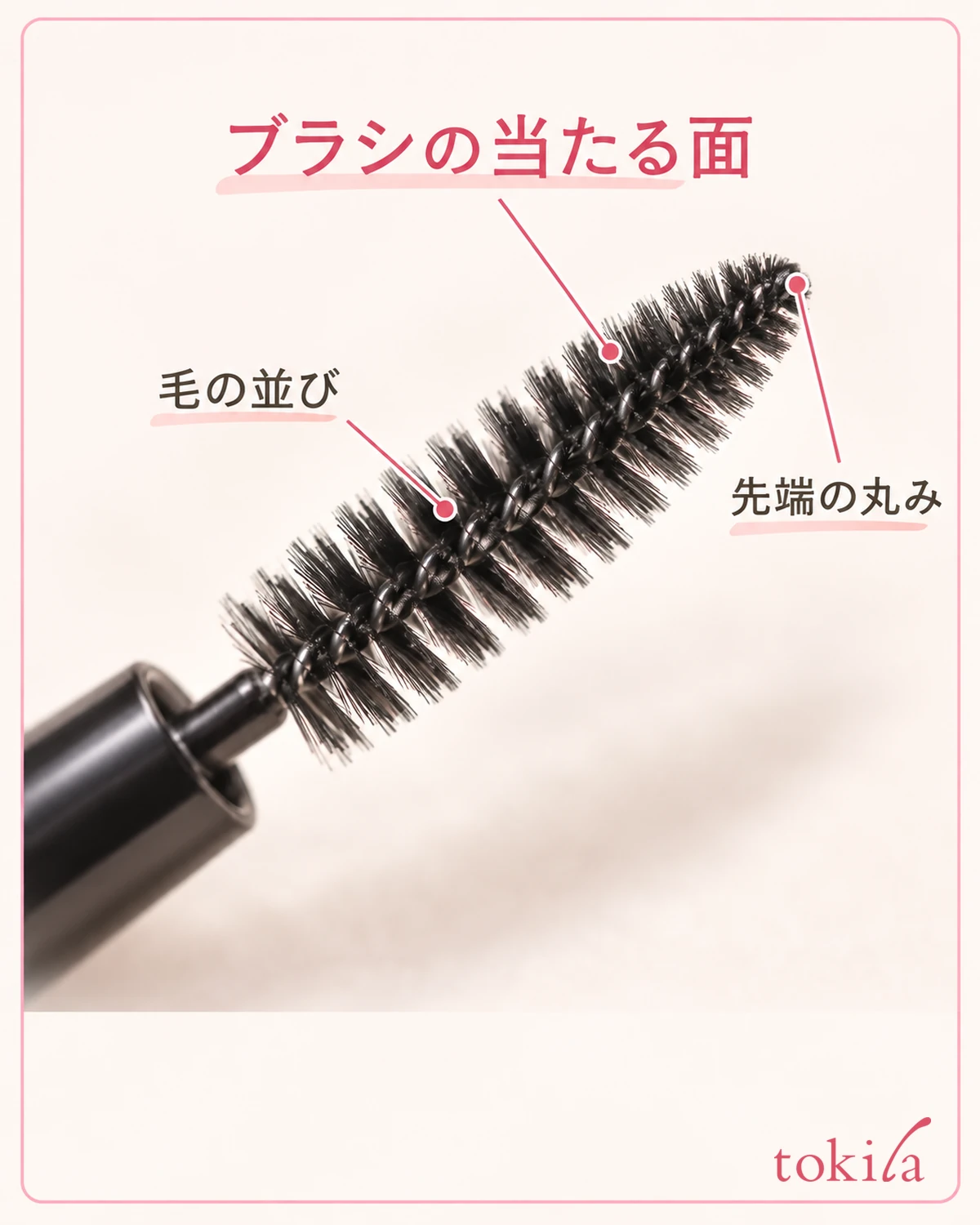
The length of the brush, the density of the bristles and the shape of the tip are also clues for choosing. However, do not assume that bigger is always better at smoothing, or that smaller is easier for anyone to handle. Think about whether the surface that touches the hair will stay within the area you want to tidy. Choose to suit the situations in which you will use it, including your preference for scent and finish.
If you are torn between this and a wax you take in your hand and spread, you can also check how to think about the amount in your hand and how to distribute it in how to review it when hair wax leaves white residue. Instead of thinking that layering another type of styling product will surely solve it, the starting point is to separate the role of each.
2. Check whether your hair is dry, and find the hairs to smooth in the mirror
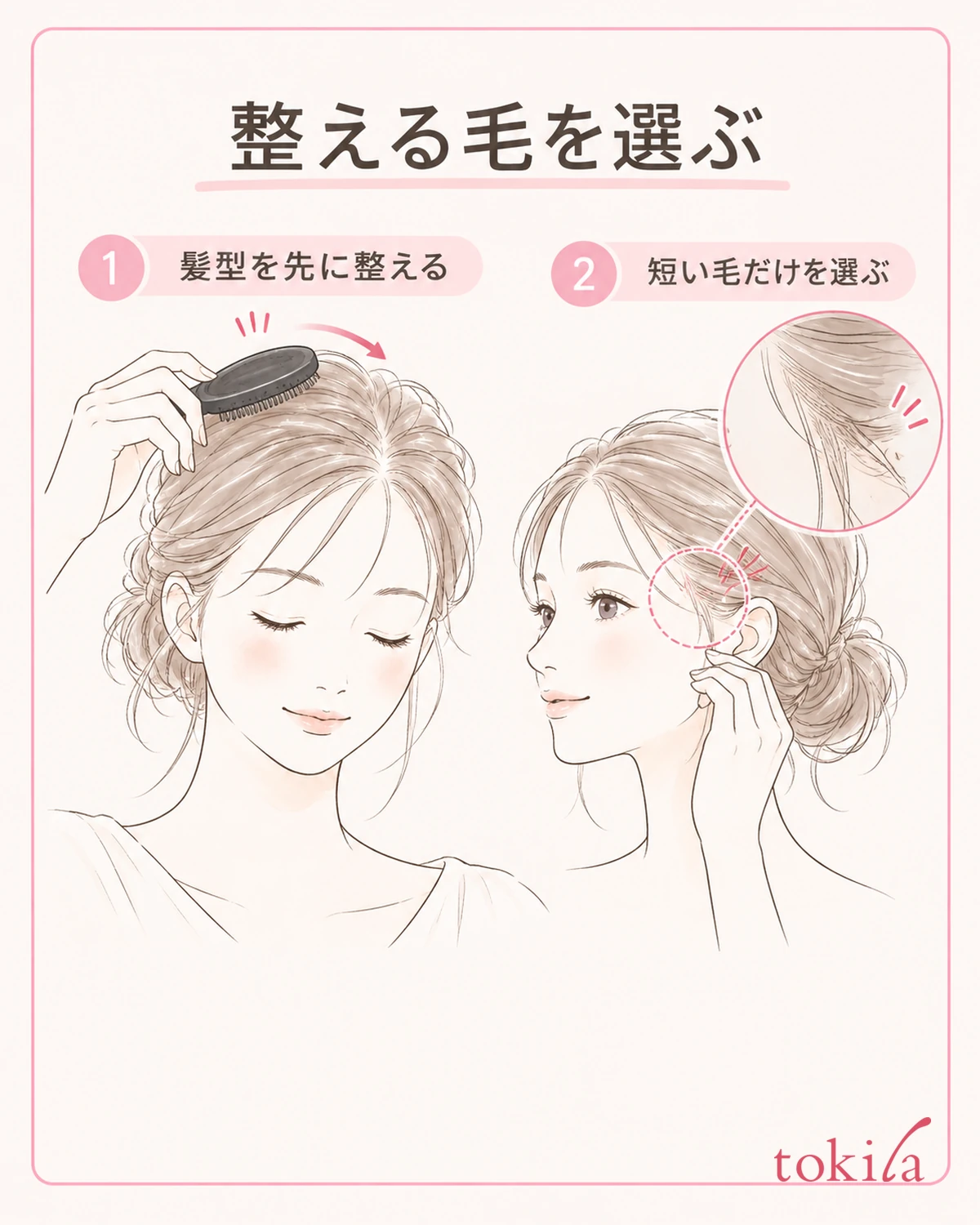
Before touching your hair, read whether the product is for dry hair or whether another condition is specified. After washing in the morning or after getting wet in the rain, your hair is not necessarily in the same state as when you usually finish your style. If it is for dry hair, first bring your hair to the specified condition, and avoid judging the result after applying a lot to wet hair.
First, arrange the overall shape of the hairstyle. If the knot itself has come loose or a long section of hair has fallen, this is a time to retie it or rethink how you fasten it before applying a short-hair styler over a wide area. Do not confuse the job of going over hair with a brush with the job of supporting the weight of a section of hair.
Place the mirror where it does not tie up your hands, and make sure the light is bright enough to see the area you are smoothing. The crown is hard to see from the front alone, so move your face comfortably to check the area. You do not need to press the brush against your head repeatedly to look for the hairs that are standing up. At first, just look while leaving the tool down.
Separate the stray short hairs from the hairs around your face that you want to leave. Flattening every hair is not a condition for a good finish. Narrowing it down to one area you want to change today, such as leaving the light movement of the bangs or tidying only around the knot, helps you decide not to overapply.
If you are already using wax or spray on the same spot, also look back at what you applied and in what order. If you do not know whether you can layer them or how to use them, do not keep adding new products one after another; check the directions of each product. Do not judge the finish of a single product and of several layered products under the same conditions.
On places where the skin is red or injured, do not keep pressing with the brush for the sake of styling. If irritation occurs during use, respond according to the product's cautions instead of putting that day's styling first. You do not need to diagnose the condition of your hair or scalp just because short hairs stick out.
3. Decide which surface of the brush touches, and blend in short stretches
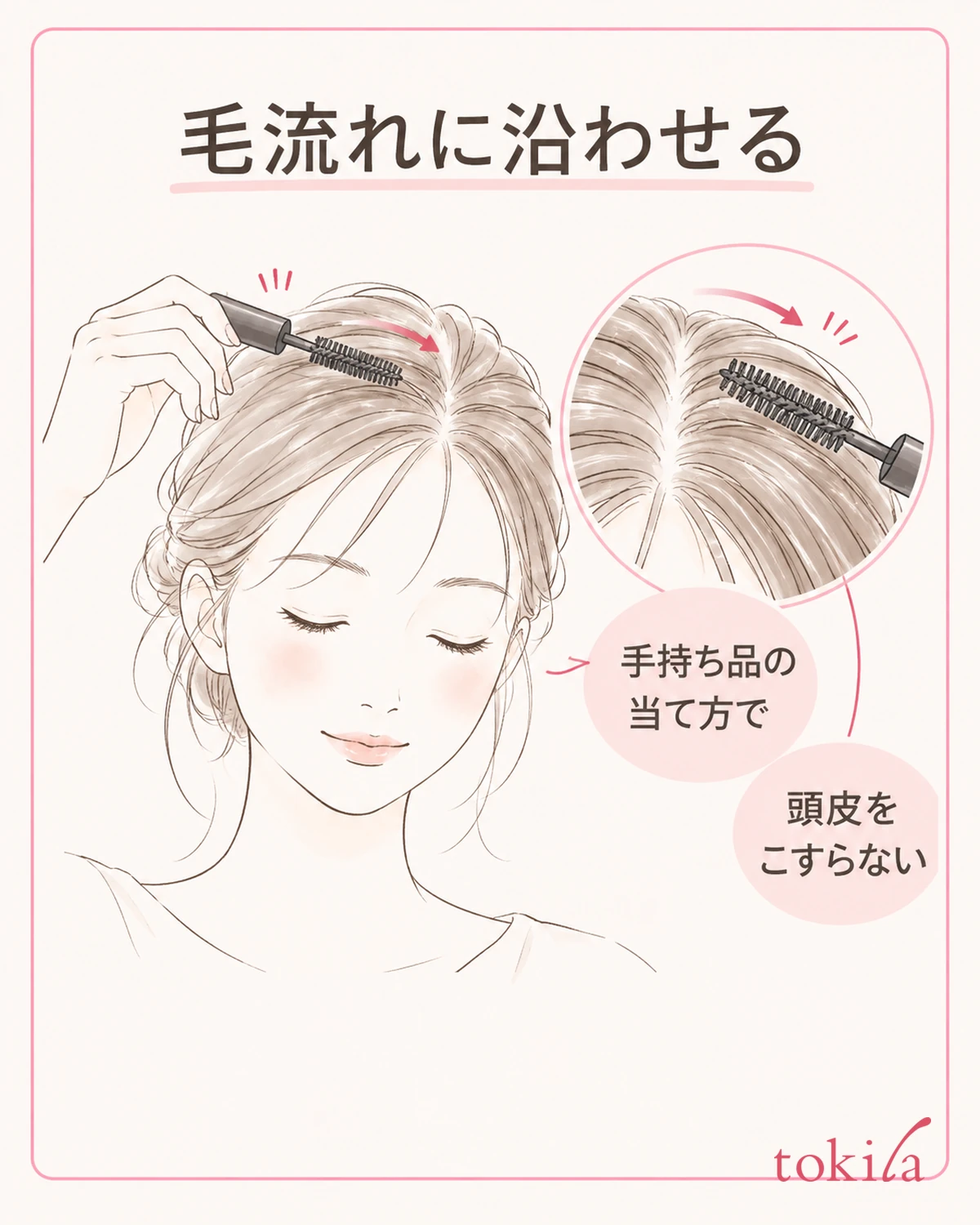
After opening the cap, look at the shape of the brush and the product on it. If it is in an unusual state, such as a large clump at the tip or bent, flattened bristles, do not push it into your hair as it is; check how to handle it. How to reduce the amount of liquid depends on the product's directions, and it is not the case that you should always wipe it off hard on the rim of the container.
Settle your grip, and look in the mirror at the place you will touch first. If the directions say to blend along the direction of the hair, slide the brush in that direction. The aim is not to rub the scalp. As a motion to lay short hairs along the surrounding hair, use only the surface you need, and do not keep going back and forth over a wide area.
For a product whose directions say to lift the brush slightly, follow that way of using it. However, do not invent a figure for how high to lift it that applies to every product. Proceed in the way the product indicates, watching whether the hairs touch the brush and move in the direction you want. Do not make a motion that catches the hairs and pulls hard.
Once you have blended it in, lift the brush away and look. Even if hairs still stick out, before putting the brush back in the container and picking up more, separate the places you have touched from those you have not. If you repeat the motion on areas that are already tidy, the area you apply to becomes wide even though you meant it as spot application.
For the sides and the nape, match what you can see in the mirror with the movement of your hand. Do not swing the brush widely toward places you cannot see; smooth in a direction you can check before moving on. If the shape of your tied-up hair falls apart, do not try to restore it with styling product alone; go back to the step of reviewing the foundation.
For bangs, how you use the product differs depending on whether it smooths the surface or the directions say to put the brush inside. Do not repeat the motion you used on the crown as it is near the eyes. Looking at the specified area, including whether you can hold the bangs away from your face, take care not to point the brush at your eyes or skin.
4. When it clumps, stop before adding more
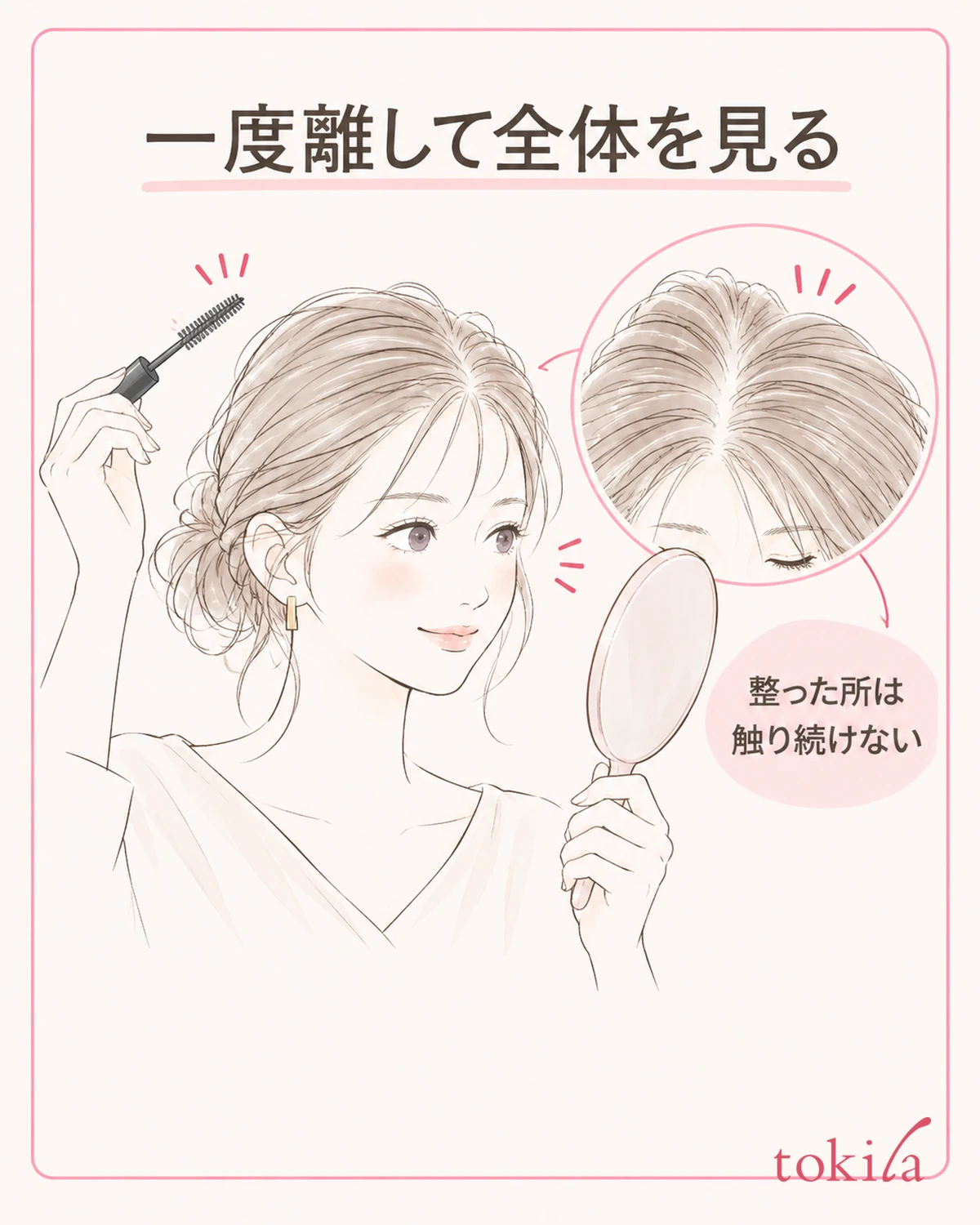
If the bangs gather into thin clumps or only the places you applied look heavy, stop before adding more styling product on top. Short hairs still standing up and a lot of product sticking to the surrounding hair are different states. Even when you see both at once, do not try to fix it only by increasing the amount.
First step back a little from the mirror and look at the whole hairstyle, not just one part. If you keep searching one hair at a time up close, you tend to return to places that are already tidy. Check whether the movement of the bangs and the parting you want to keep are preserved, and do not make the flatness of one part the only measure of the finish.
Whether you can comb it again after it has set, and whether there is a way to fix it, is judged from the label of the product you used. Do not treat forcing a brush through a section of hair that has dried or mixing in water or oil as a common remedy. Rather than piling on fixes that the directions do not give, check how to remove it first.
When the hair snags, more white flakes appear, or the shape falls apart the more you touch it, you can also choose to stop touching up that part. If you have time to wash it again, redo your style following the product's directions for removal. Even if you are about to go out, covering it with another styling product is not a must.
Next time, review just one of these: the area you touch first, the length of the brush strokes, or the timing of picking up more. It is easier to look back if you note what you did, such as "I went over the same spot on the bangs many times." You do not need to deliberately recreate overapplication in order to compare results.
5. Handle the mouth and the brush, and check the closure before carrying it
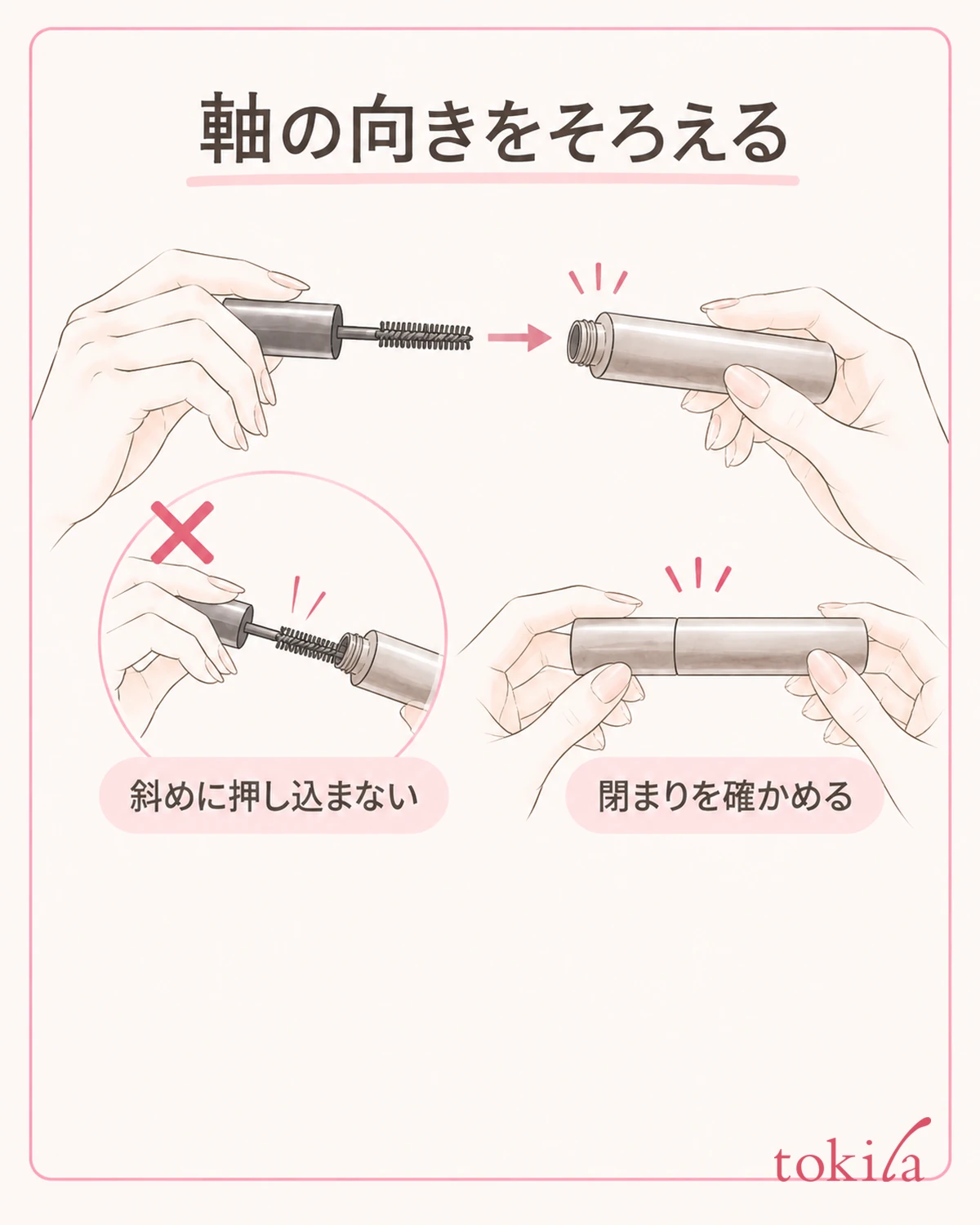
When you finish, check the brush and the mouth of the container. If the bristles are tangled or the shaft is dirty, handle it in a way that matches the care instructions. The brush cannot necessarily be removed and washed with water. Do not add water or another liquid to the container or cut the bristle tips your own way; keep it tidy within the specified range.
For a product whose directions say to wipe the mouth, remove any residue following the directions and close the cap firmly. Look separately at product left on the threads and the amount remaining inside the container. To clean around the mouth, you do not need to push the residue back in.
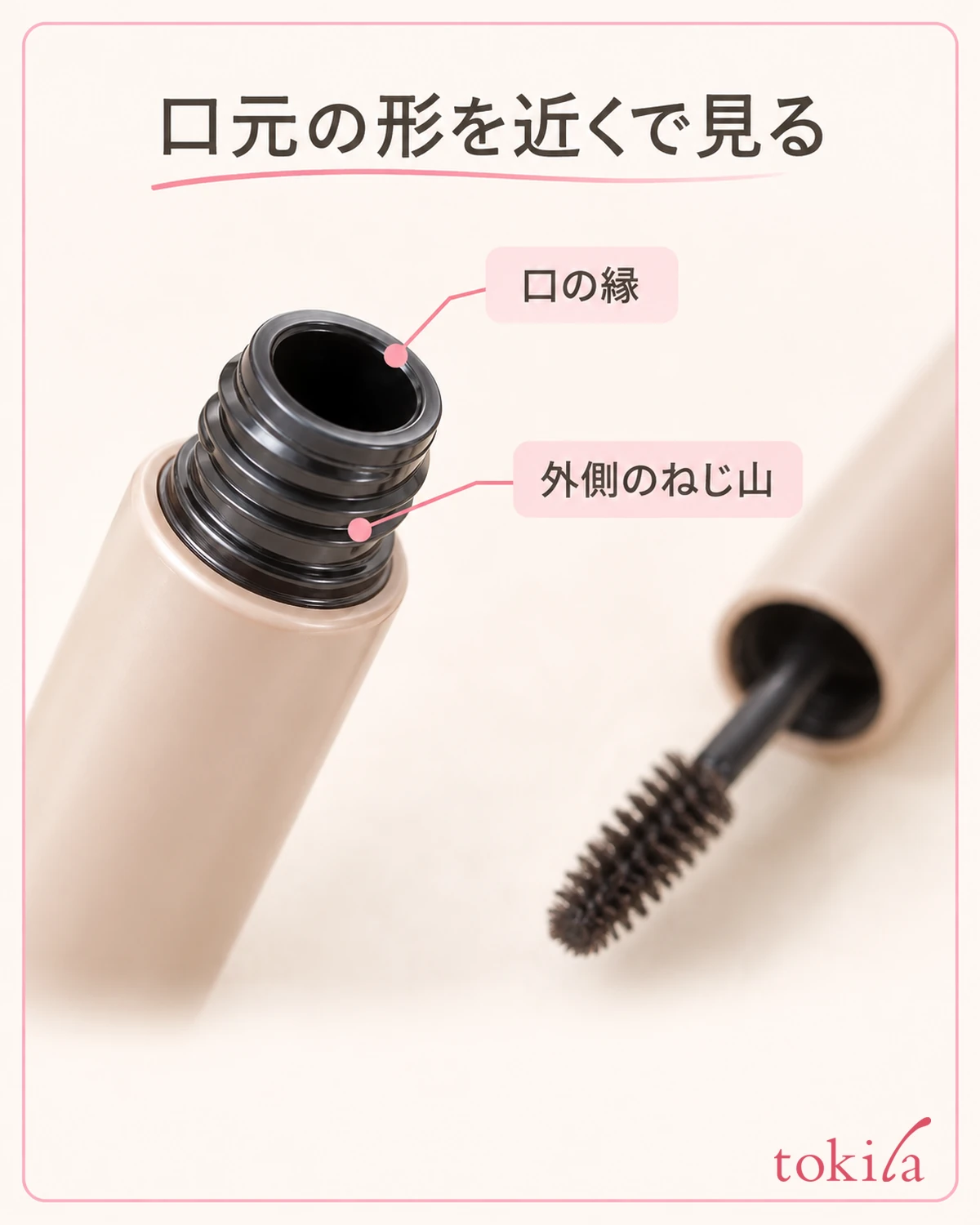
Put the brush in and out with the container and the shaft aligned. If the product warns you not to stir it hard or force it in at an angle, follow that condition. If it will not close, do not force it to turn all the way; review the alignment, residue and the state of the parts.
Before carrying it, check the closure and then put it away. Read your product's cautions about storage temperature and direct sunlight too, and do not make a windowsill or the inside of a car your default place without thinking. Do not leave the brush out in a pouch; store it in a position where it is hard to mix up with other cosmetics.
The next time you use it, recall the place you smoothed last time and one motion that gave you trouble. If it was only the crown, do not extend it to the bangs; if it was only the flow of the bangs, do not apply it all over; start again from the purpose and the area. Use a brush-type hair styler not to erase every hair, but as a tool for choosing the place you want to tidy today.