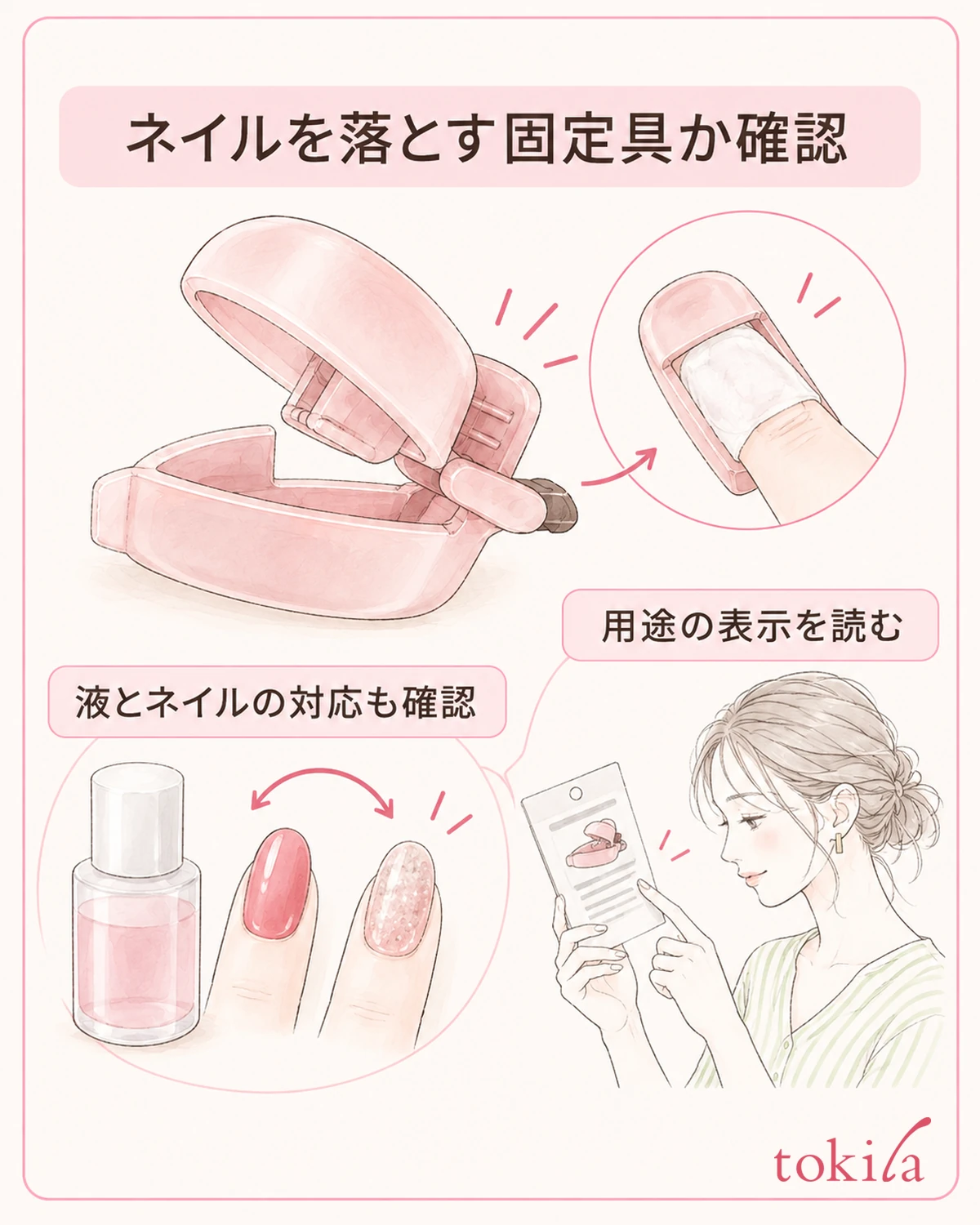
You bought a mascara primer, but are you unsure when to apply it and how dry it should be before layering on top? The basic flow is to use it in the order your primer specifies, then layer the mascara over it. However, some products double as primer, mascara and top coat, so the name or the color of the container alone cannot tell you where to use it.
Here, before adding a lash mascara primer to your routine, we check its purpose, the point at which to layer, the amount to apply and how to remove it as one set. This article does not set a waiting time or number of coats common to all products. First line up the labels of the two products you own, and build a routine that works comfortably from the morning finish to the evening removal.
1.Separate primer from top coat and decide where to use it
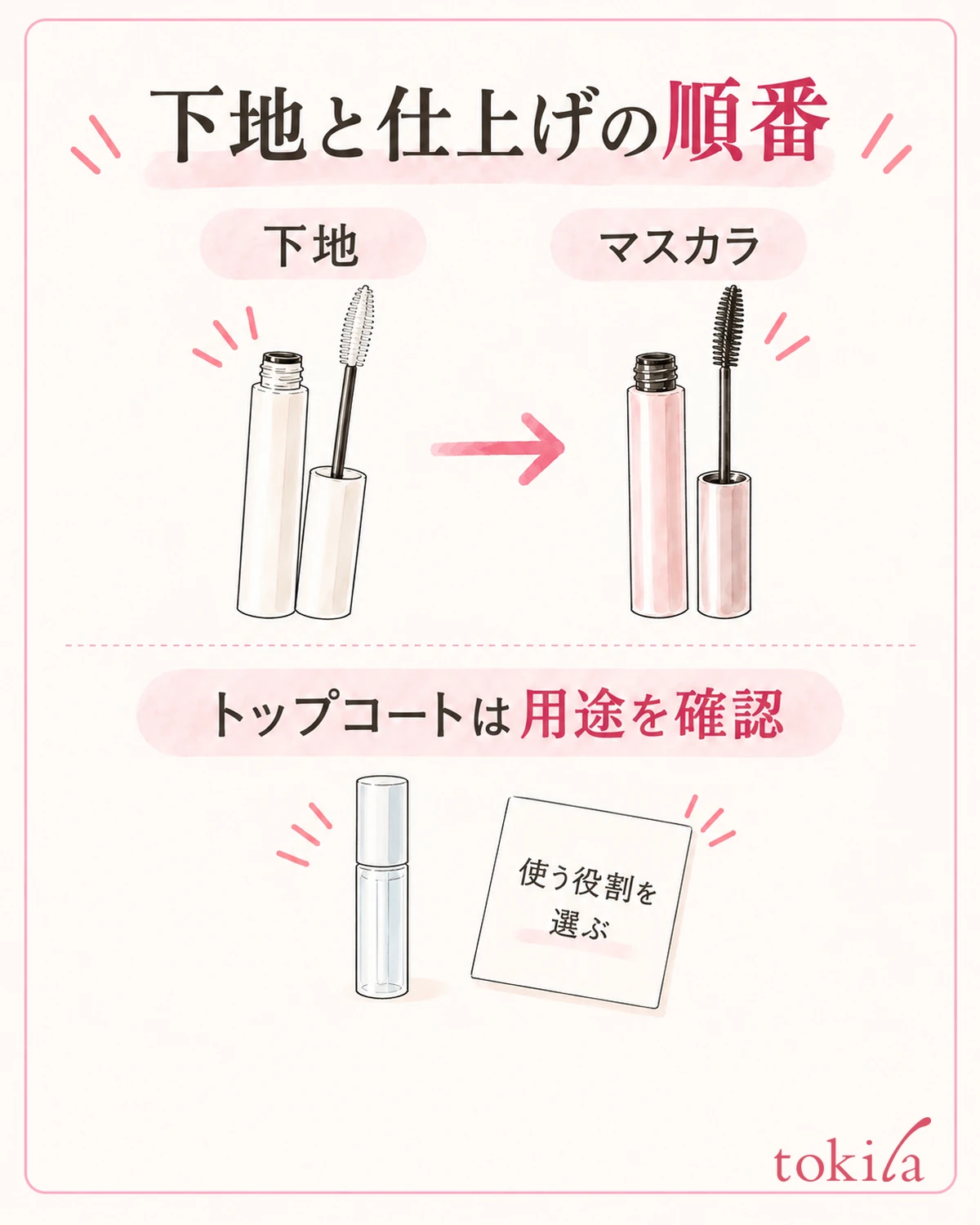
First, read the purpose of the product you want to use on its container or outer box. Products labeled "mascara primer" or "makeup base for lashes," top coats used after mascara, and lash serums used in daily care should not be lined up as if they were the same thing. If a product has several roles, decide first which role you are using it for today.
When you use it as a primer, check the instruction that it is normally applied before the mascara. On the other hand, a product that can be used as a top coat may come with instructions to layer it over the mascara. Even with the same single product, the position changes depending on the purpose, so avoid deciding by looks, such as "it's clear so it goes last" or "it's black so it's mascara only."
Place the primer and the mascara you use to finish separately within reach. If you have the outer box, set it beside them and read the official name together with the directions. When you have two similar containers, checking the name on the bottom or side before use prevents mix-ups better than remembering them by the shape of the cap.
Brow products and brush-type products for tidying short hairs may have similar-looking containers but are not covered here. Do not substitute anything without instructions for use on lashes, and check which area it can be used on. Whether a lash serum can double as a primer should also follow each product's labeling.
If you cannot read the order, you do not need to try applying the steps of a different product. Using only your usual mascara is also an option. Do not make adding a primer a must; combine products only once you understand the roles of the ones you have.
On an outer box that lists several ways of using the product, first read the section on using it as a primer and separate it from the sections on mascara alone or on top coat use. Rather than following every section in one go, pick up only the order that matches the purpose you chose. You may also put a small note of the role you are using beside your mirror.
2.Before applying, make the lashes and the brush easy to see
Prepare a mirror where you can see your eye area and a place where you can keep your hand steady. Rather than hurrying to find a mirror after pulling out the primer brush, settling your posture first makes it easier to keep track of what you are applying to. Because the work is close to your eyes, do not do it while moving or on unstable footing.
If your primer instructs you to use an eyelash curler first, do the shaping before applying the primer. Keep this separate from pressing hard after application to reshape the curl. If you are unsure how the tool is positioned, check where to place an eyelash curler and how to review your tools, and do not increase the pressure when it might pinch your eyelid.
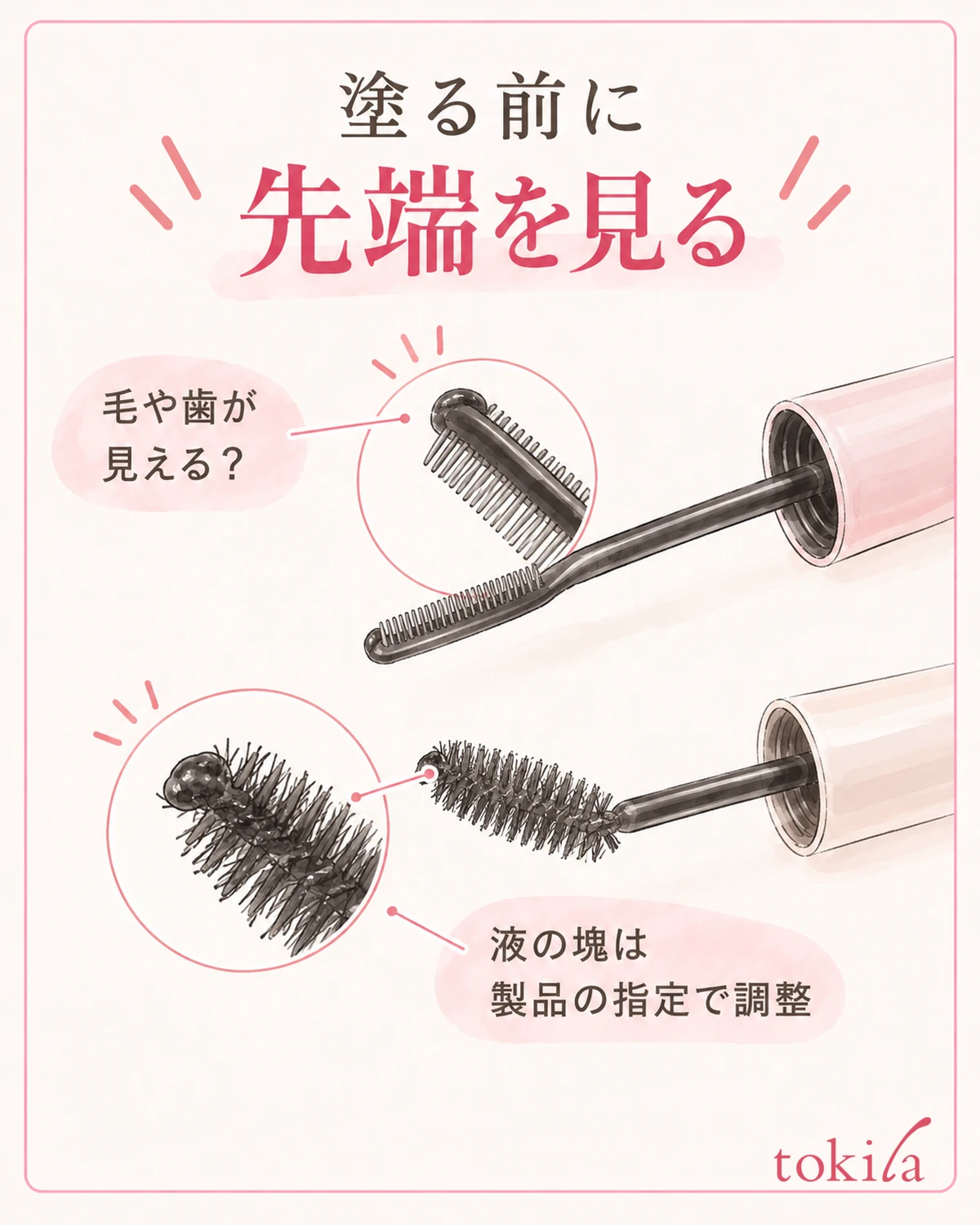
After taking the brush or comb out of the container, look for any large clumps of formula at the tip and whether the bristles or teeth are visible. Distinguish a comb whose teeth look fused by formula from one with just a thin coat, and adjust excess formula according to that product's directions. Wiping every brush the same way is not treated as a common step.
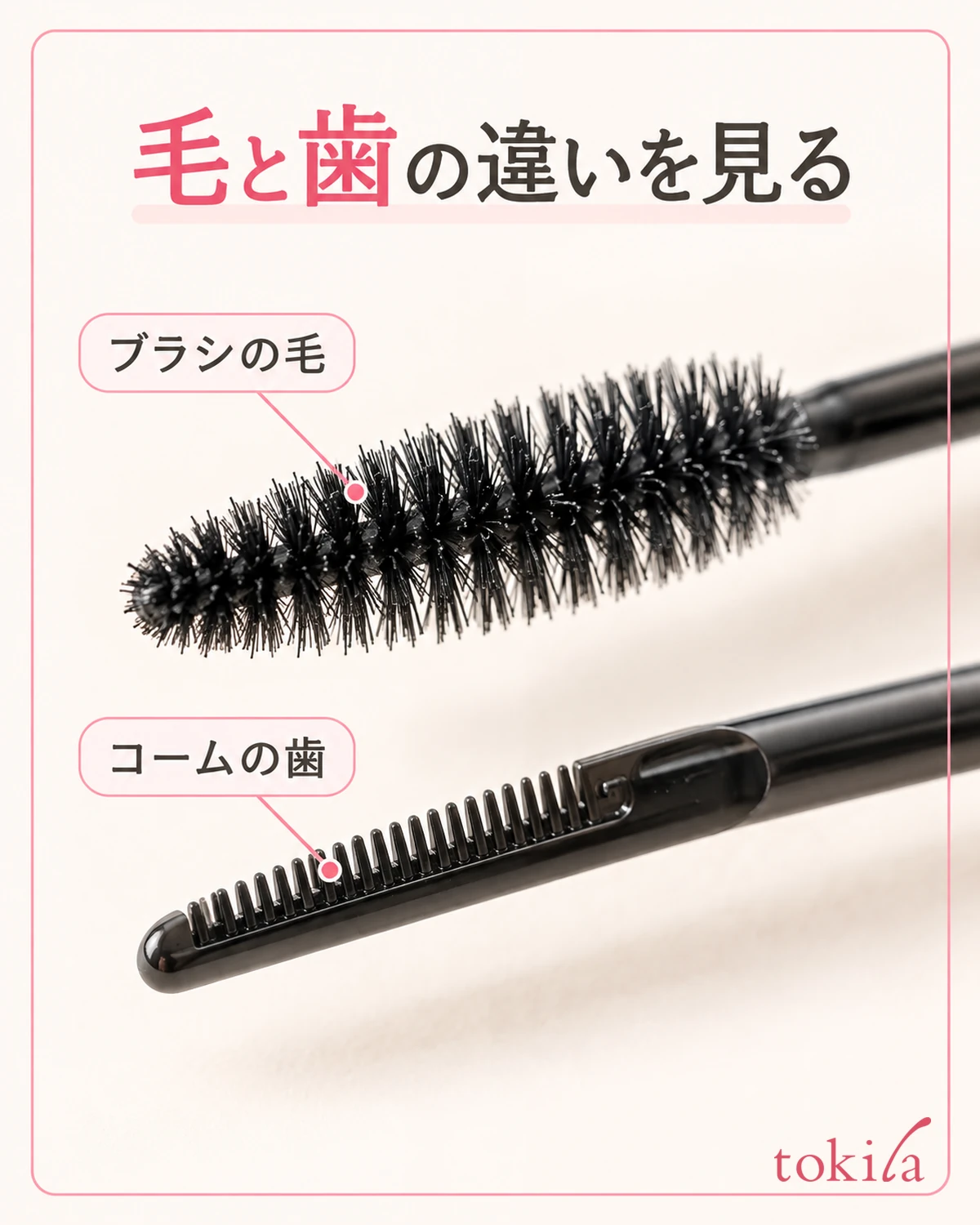
For a comb type, check the arrangement of the teeth; for a brush type, check the direction and tips of the bristles. Even if bends or buildup bother you, do not try to fix them with your own methods, such as scraping with a needle or loosening with water. If something is damaged or abnormal before use, do not bring it near your eyes.
Even if the directions say to place it at the base of the lashes, that does not mean applying the formula to the inner eyelid or mucous membrane. Check the angle at which you can follow the lashes, and move it away once if it is about to get into your eye. Rather than hurrying to layer several products, prioritize being prepared to handle the one you are using calmly.
3.After applying primer, layer according to the drying instructions
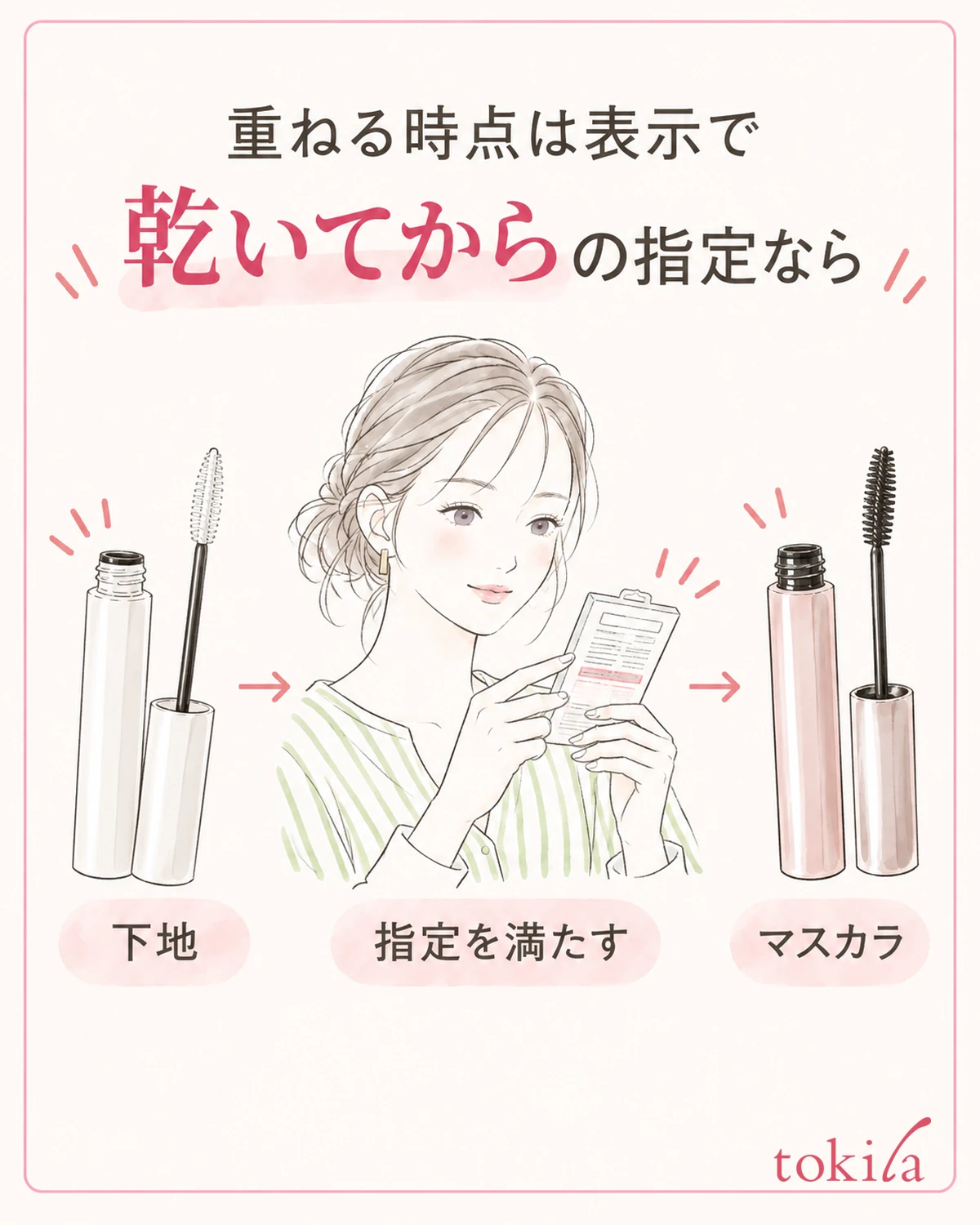
Apply the primer in the direction and amount given in the product's directions. If it says to comb up from root to tip, move along the lashes, and do not go back and forth over one spot many times and create a thick clump. Do not assume everyone should apply the same number of coats; proceed while watching the formula on the brush and how the lashes come together in the mirror.
The next thing to check is the point at which to layer the mascara. If it says "after drying," do not follow immediately after applying the primer; move on to the mascara once that condition is met. Do not reinterpret the label because you want to finish quickly, or use as-is the number of seconds you heard for another product.
If no waiting time is given, do not set a timer common to all products. This is because the type of primer, the amount applied and the surroundings are not necessarily the same. Go back to the directions, and if you cannot decide, check before layering. There is no need to add actions such as pinching the lashes repeatedly with your fingers or blowing a hair dryer from close range.
If you apply too much primer and wrap it with mascara on top, it will not necessarily look natural. If the lashes are in large bundles or there are clumps of formula, stop once before adding the next layer. Do not pull hard at dried clumps or separate them with a sharp object; switch to removing and starting over with a method suited to the product.
Whether a primer is white, colored or looks clear, the conditions for layering are not decided by color alone. Do not take the color disappearing as a sign that it has dried; use the instructions of the product you are using as the standard. Once you understand the order of the two products, close the primer cap before picking up the mascara.
4.Layer the mascara little by little and look at the overall appearance

Once the primer's conditions are met, layer the finishing mascara according to that product's directions. You do not need to apply more formula at once than usual in order to make up for the primer you applied. First look at the state of your lashes and proceed within a range that does not create large clumps at the tips or outer corners.
After doing one side, do not keep your face close to the mirror chasing only the details; step back a little and look at the whole eye area. Check separately the intensity on each side, how the tips come together and whether any has touched the eyelid. Even if the difference between the left and right bothers you, align the direction of the light and the angle of your face and compare before adding repeatedly to the side that looks lighter.
When lashes have joined into thick strands unintentionally, think back on whether it was the primer layer or the mascara applied on top. If you apply a lot of both from the start, it becomes hard to tell where to adjust next. For specific amounts and how to deal with clumps, you can also check how to apply mascara to prevent clumps.
After finishing, adding a top coat is not required. Consider it as a separate step only if a product you own has that purpose and the conditions for layering are clear. Even with one product that doubles as primer and top coat, do not make it a routine in which using it as a primer in the morning automatically means applying it again at the end.
Your preferred finish depends on how much you want to emphasize the length and thickness of your lashes. On days you use a primer, you do not have to make them look darker. Looking from the front and slightly from the side, and stopping the layering when you reach the cohesion you want, is also part of adjusting how you use it.
5.Check how to remove them as a set of two, and keep a note for next time
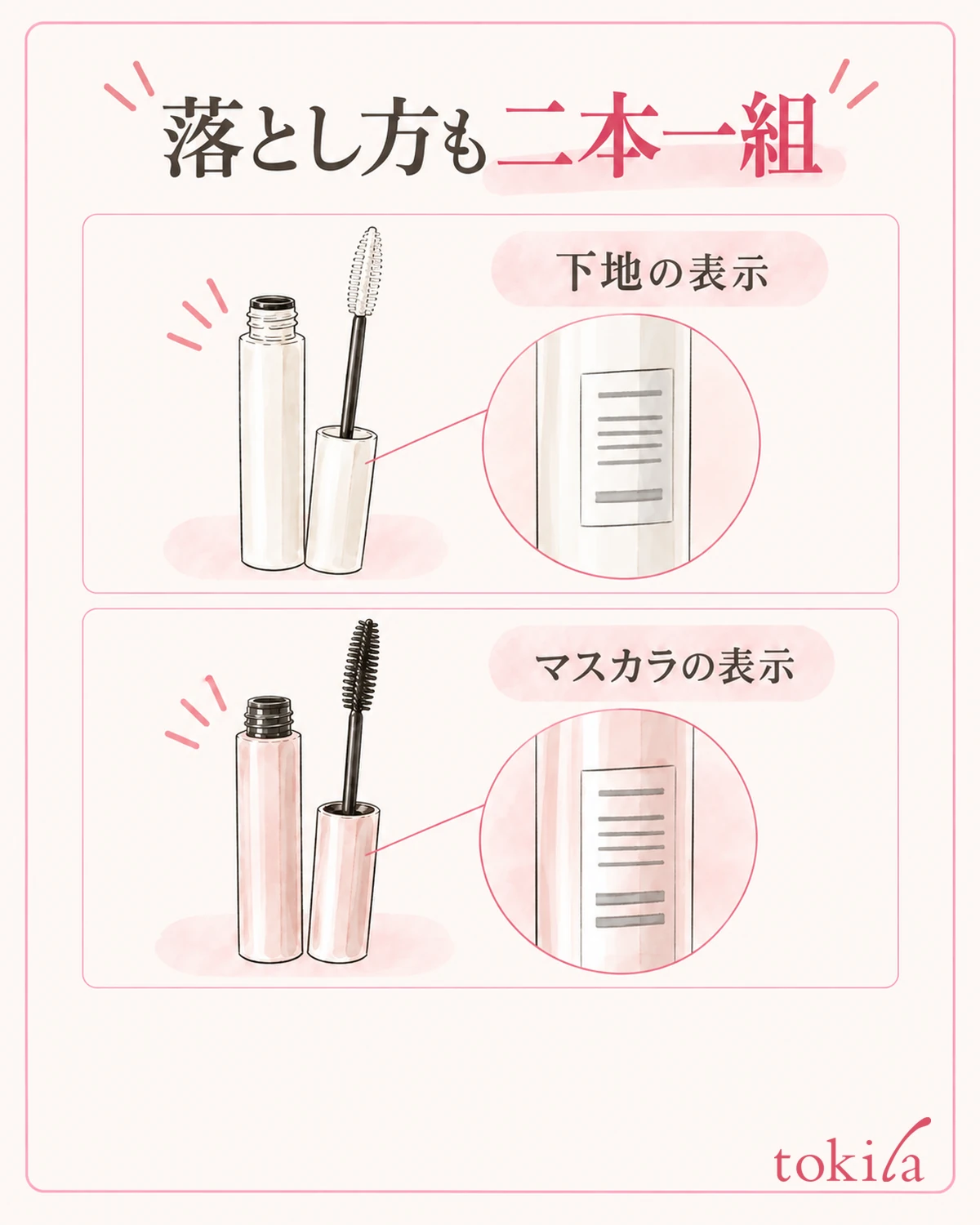
Evening care should not be decided by the mascara on the surface alone. For the primer and the mascara each, check which makeup remover to use and whether there is a step of loosening it with warm water first. Even if the mascara on top comes off with warm water, the whole combination cannot necessarily be removed with warm water alone.
Line up the two products you used and look at their names and removal methods before preparing what you need. If an oil-based makeup remover or an eye makeup remover is specified, also check whether the makeup remover you have is compatible. Before increasing the pressure when it will not come off, the first thing to do is match the products you used with their directions.
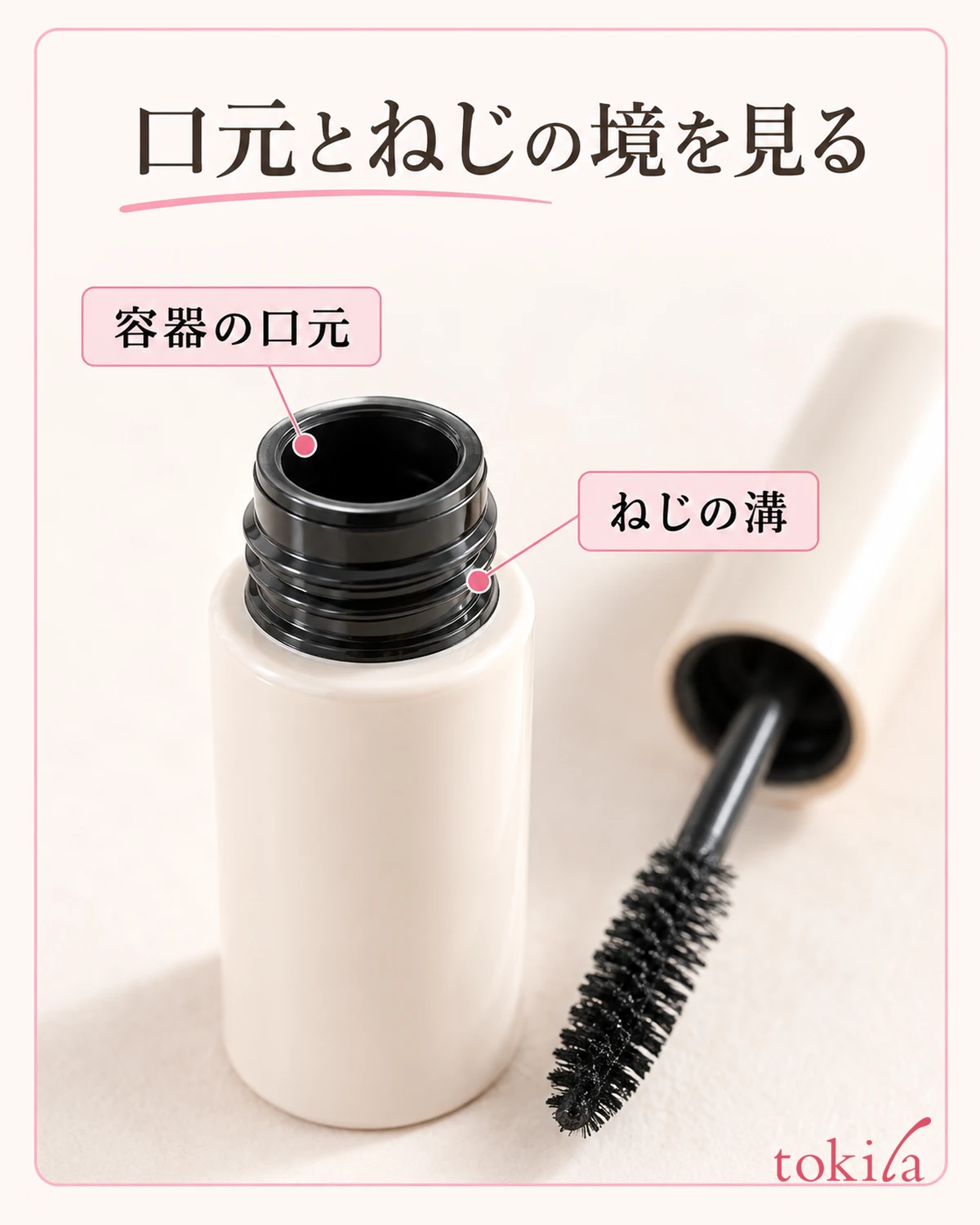
For products whose directions say to wipe the mouth of the container and close the cap, include that care after use. The photo shows the border between the container's threads and its mouth, but that does not mean every container can be taken apart and washed. Even if the formula has dried and become hard to remove, do not dilute it by adding water, toner or another liquid.
For steps using an eye makeup remover, see how to review things when waterproof mascara will not come off. If it gets into your eye or you feel irritation or discomfort, stop using it and respond according to the product's precautions. Do not put continuing to compare the finish first.
For next time, it is enough to briefly note the combination of primer and mascara you used, the point at which you layered, and any spots that bothered you. Make it a record you can return to for a single step, such as "next time, don't layer the primer too much." Thinking about everything from the primer's role to how to remove it as one set makes it easier to choose what to add in the morning, or not to add anything today.
When you change one of the two, note whether you kept the same primer and changed only the mascara, or the reverse. Do not assume the finish and removal will be the same as before; reread the labeling of the new combination. If you jot down the names in the order you used them, it also helps you recall the morning's steps in the evening.