Concealer with a sponge tip is easier to start using once you know where to twist and when to stop. This guide covers the kind that sends concealer to the tip when you turn part of the container. The amount to dispense depends on whether this is your first use or there is already some liquid left on the sponge.
After removing the cap, look at the tip first. Once dispensed, the liquid is hard to put back, so there is no need to start by dispensing enough to cover a large area. Find the part that turns and watch the sponge change as you go. Then dab the concealer little by little where you want coverage.
1. Tell the cap apart from the part you turn to dispense the liquid
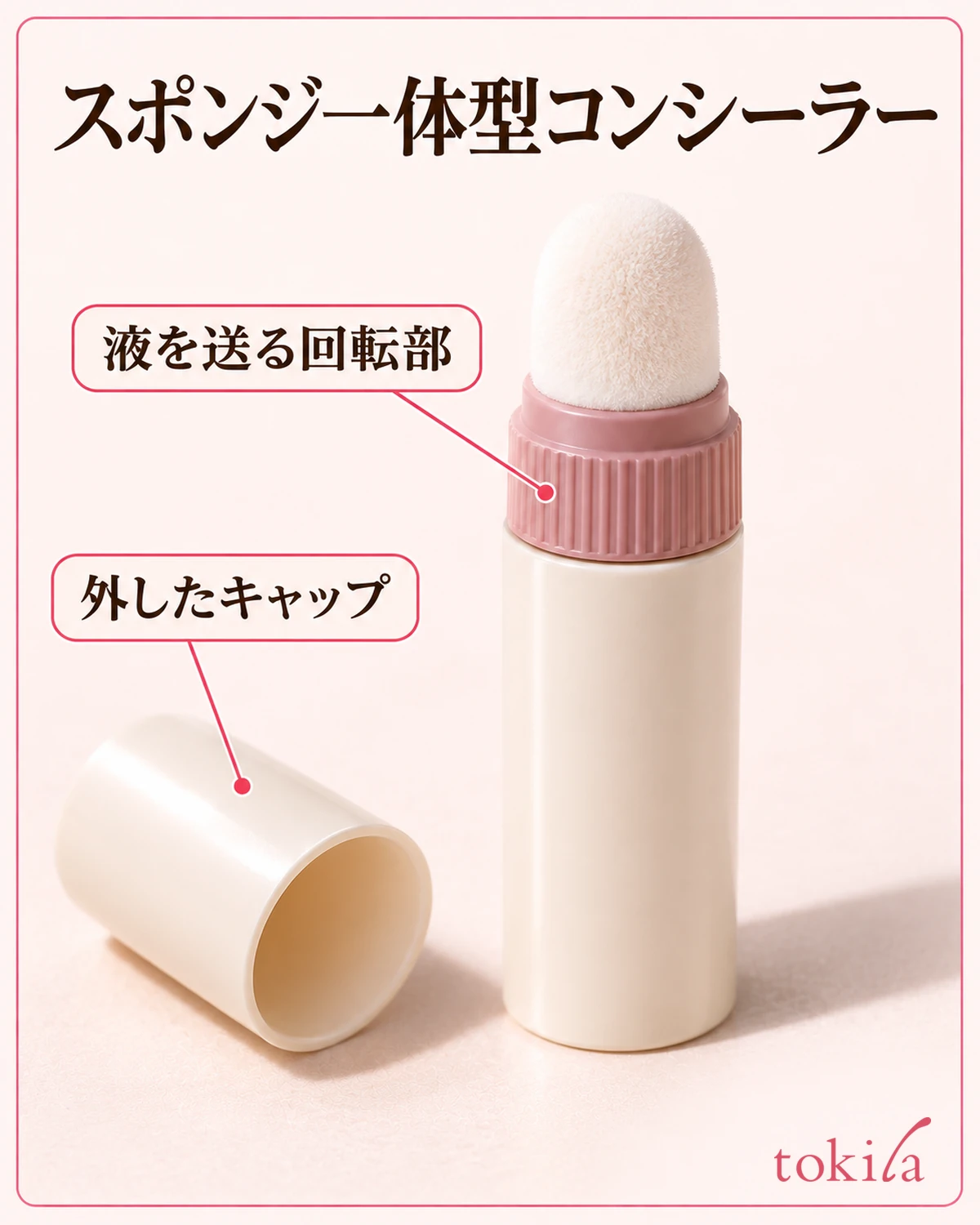
A twist-up sponge-tip concealer has a cap that covers the tip and a moving part that feeds the liquid. Take off the cap and check the container or box to see where to hold it and where to turn it. Similar-looking products may dispense by pressing or use a wand attached to the cap to pick up liquid. Those products have their own instructions.
If you cannot tell where to grip it, reread the directions before twisting the tip or cap. Check any marking that shows the direction to turn. Left and right can appear reversed depending on whether you are looking from above or below, so follow the markings on the container in your hand rather than the direction you remember from another one.
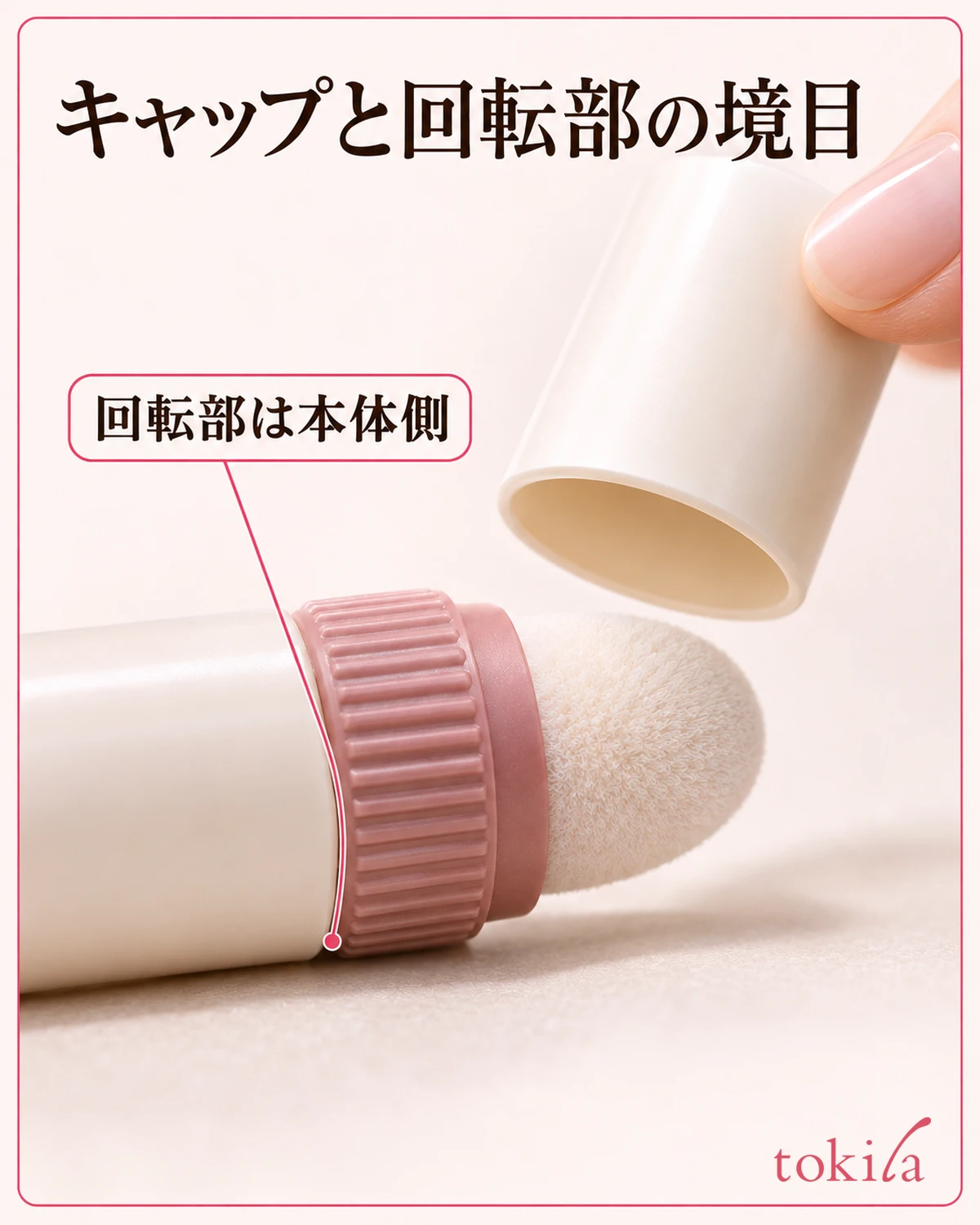
If the container tends to roll on your vanity, wait until you are ready to use it before removing the cap. Hold the body in one hand so you can see the tip and watch both your turning hand and the movement of the container.
Even if the turning part has grooves, do not use the grooves alone to decide where to turn. Some products also have grooves on the piece that holds the sponge. Compare the part shown in the directions with the seams on the actual container. Identify where one hand will hold it still and where the other will turn it so you do not begin by gripping and twisting the tip.
2. On first use, watch the sponge as you turn and stop when the liquid reaches it
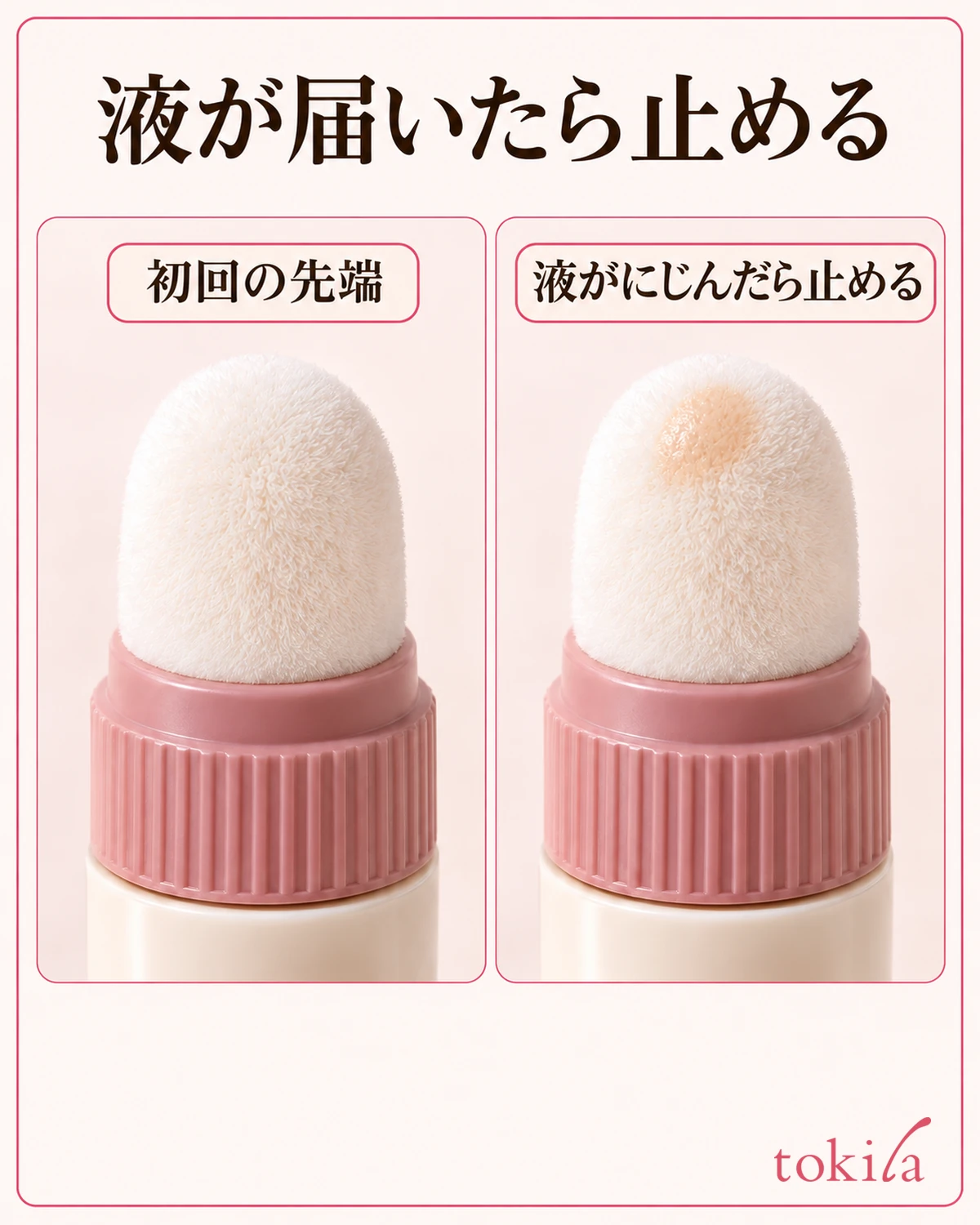
The liquid may not have reached an unused sponge yet. Some products instruct you to turn more than usual on first use while watching the tip. Follow the instructions, pausing after each small turn to see whether liquid has started to seep into the tip. Instead of assuming the same number of turns works for every product, go by the directions and the change you see in the sponge.
As soon as you begin to see the color of the liquid at the tip, pause. Check the directions to see whether you need to add more until the entire sponge is the same color. On later uses, first see what remains on the sponge. If there is a little product there, check whether it is enough to dab on the area you want before repeating the same number of turns.
If nothing comes out even when you follow the directions, double-check which way to turn and which part turns. Avoid pulling on the sponge or prying open the container to get the liquid out. Go back to the instructions to check your technique.
If more comes out at first than you expected, stop turning and use a mirror to check where you want to apply it. You do not need to spread it beyond the area you want to cover just to use up what you dispensed. If the product explains how to deal with excess on the tip, including how to clean it, follow that method.
3. Touch the tip to a small spot and check the amount before blending
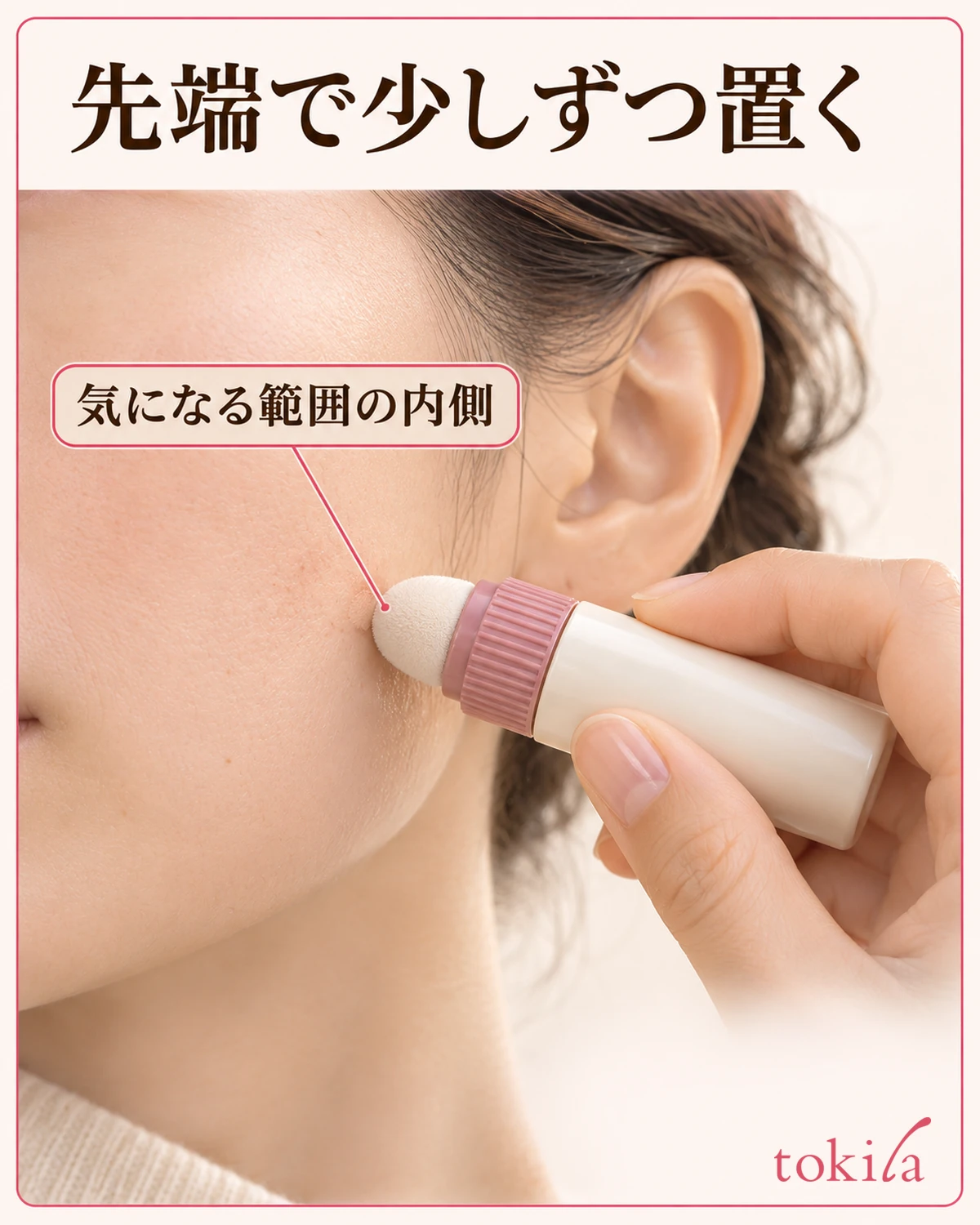
When the liquid reaches the tip, look in a mirror to find the area you want to cover. If the directions say to touch the tip lightly to your skin, start with a small dab inside that area. If you dab several places in a row, it is harder to tell where you put too much. Check how the first dab goes on before moving to another spot.
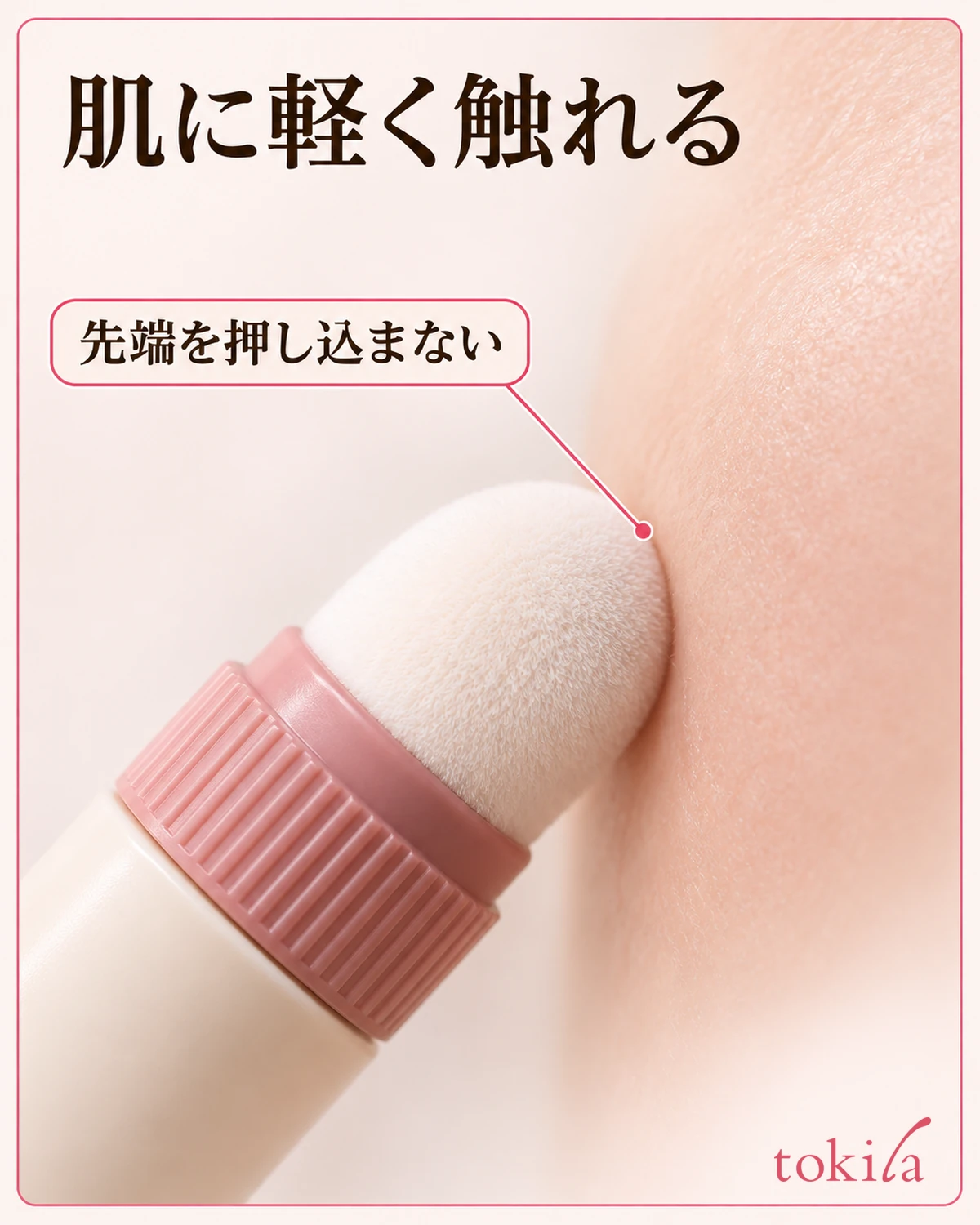
If you want to cover a shadow under your eye, distinguish the area you want to cover from the lash line. Do not turn the container with it close to your face. Move it away if you need to dispense more. Rather than pressing the sponge into your skin to squeeze liquid out, judge by the amount you can see on the tip.
If you are covering several spots, one option is to blend the edge of the first dab before moving on. Check how it looks after it blends into the surrounding base makeup before adding more. This helps keep you from applying too many dots.
4. If the directions call for using the side, blend just around the edges
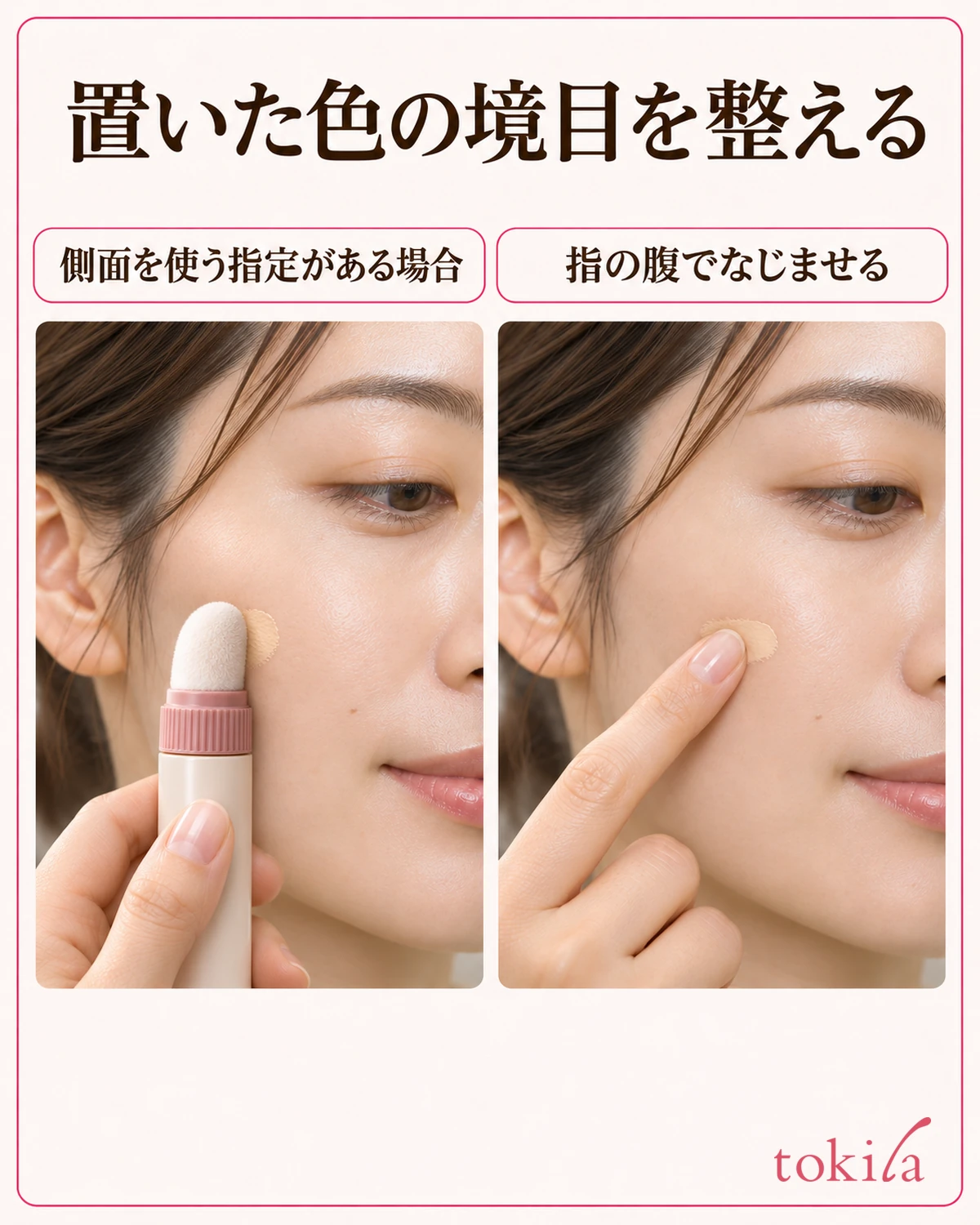
Some products direct you to spread concealer lightly with the side of the sponge, then blend with the pad of a finger. In that case, dab with the tip and spread with the side as two separate motions. Instead of going back and forth repeatedly over the area you want to cover, use short motions where the edge between the concealer and the surrounding skin stands out.
If your product does not tell you to use the side of the sponge, check its instructions instead of judging from the shape of the container. When blending with a finger, use the pad and touch the area lightly. If you are unsure where to soften the edge, see how to check the edges when blending concealer.
Even if the coverage looks lighter, look straight into the mirror before adding more over a wide area. If you apply another layer, go back to the area you originally wanted to cover and dab only where needed. If your under-eye concealer tends to crease, see how to reconsider the amount and area of under-eye concealer.
If you are not sure where to blend, compare the center of the dab with the skin around it in the mirror. If only the edge stands out, touch the perimeter first. Moving the color at the center as well can make it harder to see where you meant to conceal. Use the spot you dabbed first to decide what to leave in place and what to blend.
5. Next time, check the sponge before deciding whether to add more
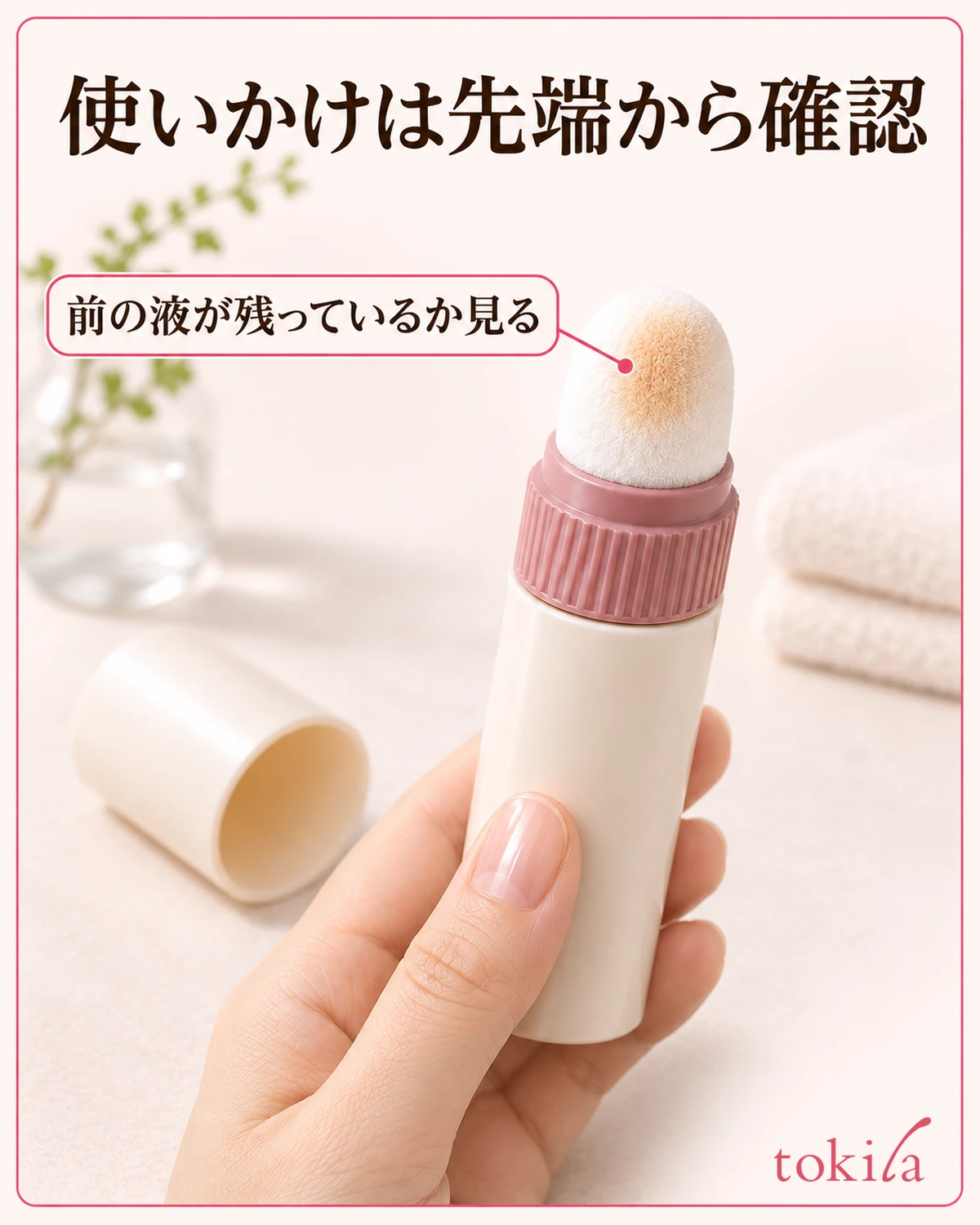
When you are finished, check the alignment of the tip and cap before closing it. Follow the product's directions for caring for the sponge. Do not judge by its appearance whether it can be removed or washed with water. Avoid taking it apart or washing it if the instructions do not say to.
The next time you use it, remove the cap and look at the tip. If it looks different despite not having been used in the meantime, check the product's storage instructions and precautions before turning to add fresh liquid. Turning it the same way you did on the first use every time adds new liquid to what is already there. To start, find where to turn, feed the liquid a little at a time, and dab it where needed. Once you are used to it, add one step before all of these: check what is left on the sponge. You can decide how much to dispense after that.