UV face powder that can be used over makeup is a convenient option for daytime touch-ups. However, lightly dusting on powder does not necessarily provide the UV protection indicated on the label. Read the UV labeling, application order, specified applicator, and amount together, and distinguish your preferred finish from the required method of use.
This article focuses on pressed UV face powder applied with a puff. Loose sunscreen powders and powders with built-in brushes are picked up differently. Start by checking your own container or outer box rather than applying UV powder instructions to ordinary face powder.
1. Read UV labeling and application order separately from powder texture

First, check whether the powder is intended for the face and carries UV protection labeling. A beige or white appearance alone does not establish its role as sunscreen. Even with SPF or PA labeling, read the amount and reapplication conditions rather than planning the day around the numbers alone.
Next, check the application steps. Confirm where it belongs in your combination of products that day, whether after skincare or as a makeup finishing step. Some products recommend using sunscreen or UV primer alongside them. Buying powder need not mean leaving out every product underneath.
When layering products, do not add the primer’s SPF to the powder’s SPF and treat the result as a new protection value. Check each product’s instructions and the areas actually covered. Applying face powder does not cover your ears, neck, or arms, so plan protection for those areas separately.
You also need not continue using a product that feels unsuitable for your skin simply because its protection number is high. Stop using it if abnormalities such as redness or itching occur, and follow its precautions. Consider planning UV protection separately from responding to skin abnormalities.
Everyday outings and prolonged outdoor activity involving sweat involve different conditions. Combine powder with hats and shade rather than relying on its finish alone. To review SPF and PA labeling, seeUV Protection and SPF/PA Basicsas well.
A brighter or smoother-looking makeup finish and UV protection are separate things to check. Neither an absence of visible whiteness in the mirror nor a smooth feel proves that you applied enough. First consider whether you can follow the instructions within today’s makeup routine.
2. Prioritize the product’s recommended amount over using less on the puff

Prepare the supplied or specified puff and check that its powder-contact surface is clean and dry. If hardened dirt or foundation from the previous use remains, consider cleaning it before picking up fresh powder. Do not wet a puff on your own initiative when wet use is not specified.
Pick up pressed powder as instructed. If directions specify both how much of the puff to cover and which part of the face that amount is for, read them together. Do not transfer another product’s guideline, such as “half the surface,” directly to a puff of a different size or shape.
Some UV powders warn that using too little will not provide sufficient UV protection. Do not change the method to shaking almost all the powder off to avoid a powdery finish. If the finish you prefer requires reducing the amount, reconsider the makeup underneath and the combination of products.
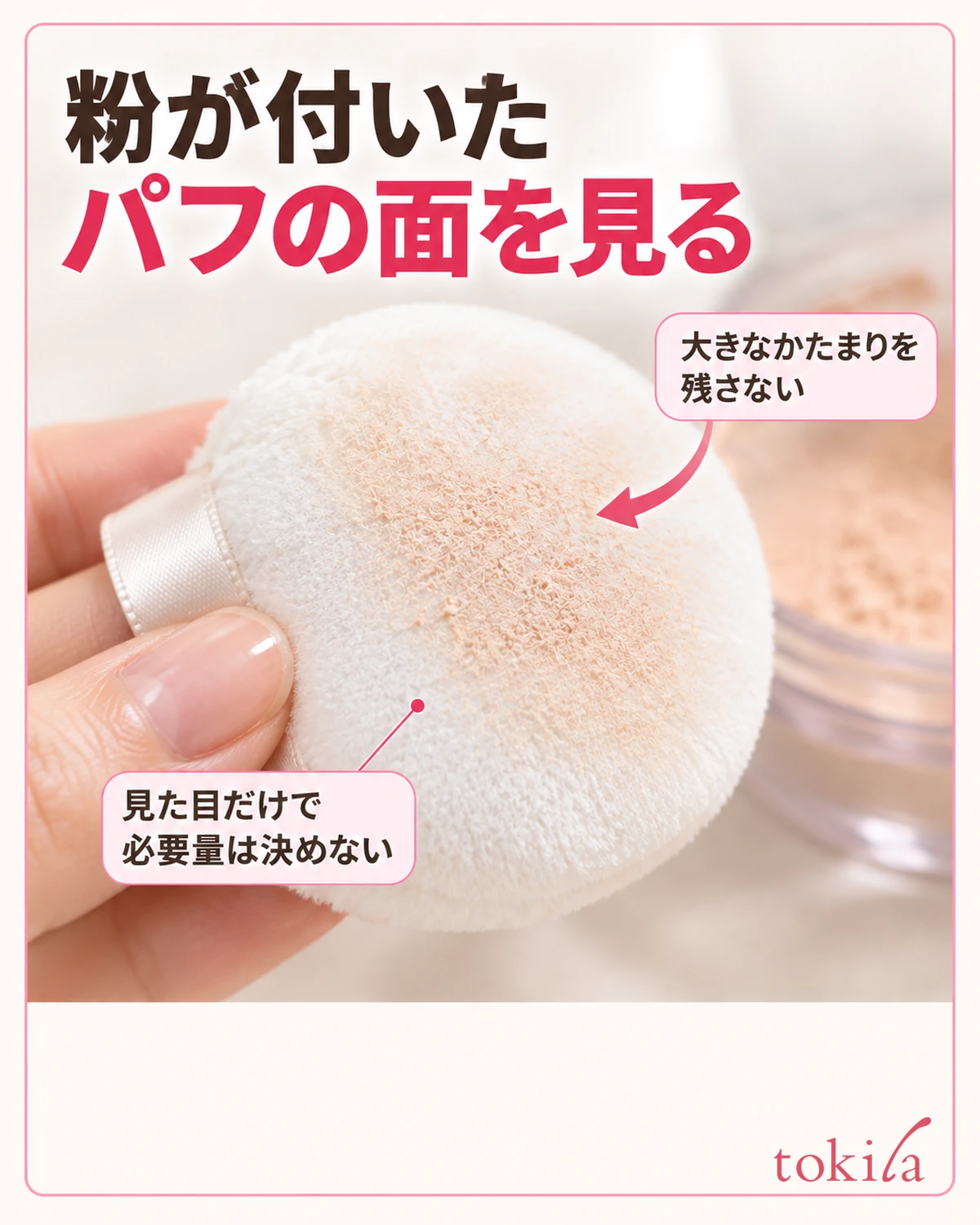
Look at the puff’s surface for large clumps or powder concentrated in one spot. This checks the surface you will bring to your face; it does not measure whether you have enough simply because the powder looks evenly colored. Return to the product’s guidance rather than replacing its amount guideline with appearance alone.
If you want to switch from the supplied puff to brushing on a very thin layer, check the specified applicator first. Changing tools changes the amount picked up and how it spreads. Achieving a preferred appearance with a different tool alone does not establish that you used the labeled amount.
Do not set a universal number of times to pick up more powder either. If an amount is specified for one side of the face, prepare the necessary amount for each side. Stretching one small pickup across the whole face differs from spreading the specified amount in several portions. Understanding this distinction before opening the container makes the process easier.
3. Spread with the puff’s surface from the center of the face outward

For products whose directions specify gliding, place the puff’s soft surface against the face and move gently from the center outward. Spread with the surface rather than pressing hard to embed the powder. Follow pressing instructions when specified instead of rubbing every product on in the same way.
When starting on a cheek, look at the area extending from beside the nose toward the ear. Work while checking where the puff is touching rather than trying to finish with one large sweep. Hold it so fingers and nails do not touch the skin directly, and avoid pressing firmly with just the edge.
Use a mirror to check visible areas around the sides of the nose and hairline. Do not judge coverage near the edges solely by differences in sheen while powder builds up only in the center. Follow precautions and avoid pushing powder into eyes, mucous membranes, or damaged skin.
If primer or foundation shifts significantly, pause before going back and forth over the same area. Check one condition at a time: whether products underneath have settled, whether the puff is dirty, and whether pressure is excessive. Restore the condition before layering rather than adding powder to hold moving base makeup in place.
After finishing one side, pick up the required powder for the other side according to the directions and proceed similarly. Finally, move the mirror back far enough to see the whole face. Whiteness and boundaries can help you check the finish, but a mirror or generated photograph cannot determine the uniformity of invisible UV protection.
4. During the day, address sweat and disturbed makeup before reapplying as directed

During daytime use, check sweat, sebum, and layered makeup as well as whether morning powder remains. Adding a large amount of dry powder directly onto a sweaty surface makes it harder to spread evenly. Gently press with clean tissue or similar material to prepare the surface without rubbing hard.
Do not try to repair gathered, creased foundation just by adding powder either. Decide which area needs a local touch-up, fix the makeup underneath, then return to powder. Distinguishing an entire disturbed cheek from a small area beside the nose helps keep the area you handle from expanding unnecessarily.
Use products suitable for reapplication according to their directions and amounts. Do not invent a fixed rule that one morning application lasts until evening or that all UV powders must be reapplied at the same hourly interval. Check what to do after wiping sweat or contact with water, including for the sunscreen underneath.
The shiny area you want to touch up may differ from the area that needs reapplication. Adding powder only to the nose does not complete protection for the entire face. A portable mirror shows a limited area, so decide where on the face you will apply powder before picking it up.
Use a clean puff surface for outdoor touch-ups too. Avoid repeatedly returning a dirty or damp puff to the powder. If the location or tools are unsuitable, an option is to use shade or a hat while moving somewhere you can touch up calmly, instead of hurriedly layering makeup unevenly.
5. Match removal and puff storage to the products you layered
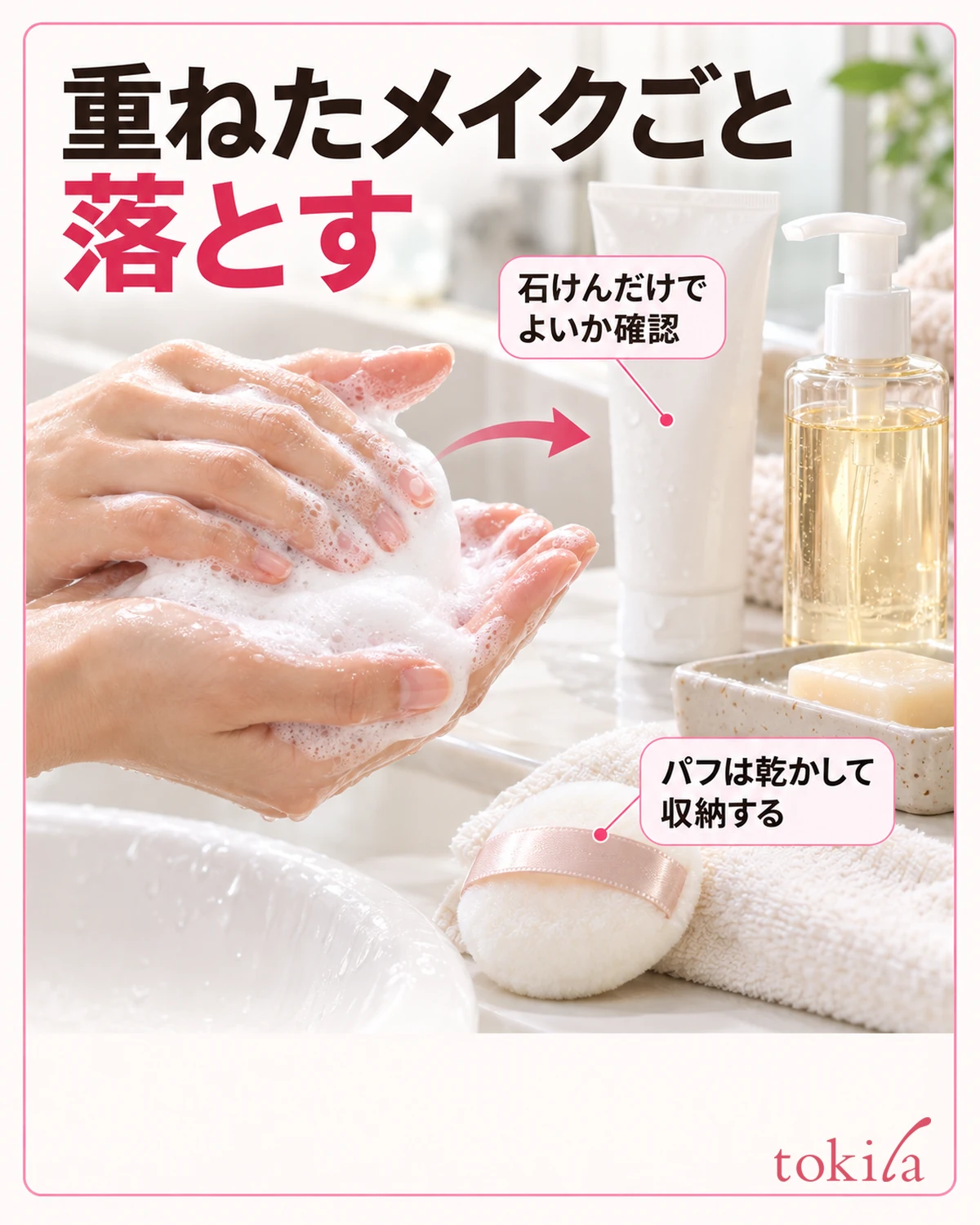
At the end of the day, read the removal directions for powder alone separately from those for makeup underneath. Even if the powder washes off with soap, foundation or sunscreen underneath may require something different. Check which of today’s layered products require makeup remover.
To organize the removal steps,Removing Sunscreen and Layered Makeupmay also help. Do not use hard rubbing until powder disappears as a test of successful removal. Follow the cleanser’s directions for amount, moisture on the hands, and rinsing as well.
Read the puff’s care directions to check whether it is washable and which detergent and drying method to use. Even a washable puff should not be returned to the face with detergent or water remaining; dry it as directed. Do not independently add high heat or forceful twisting to reshape it for faster reuse.
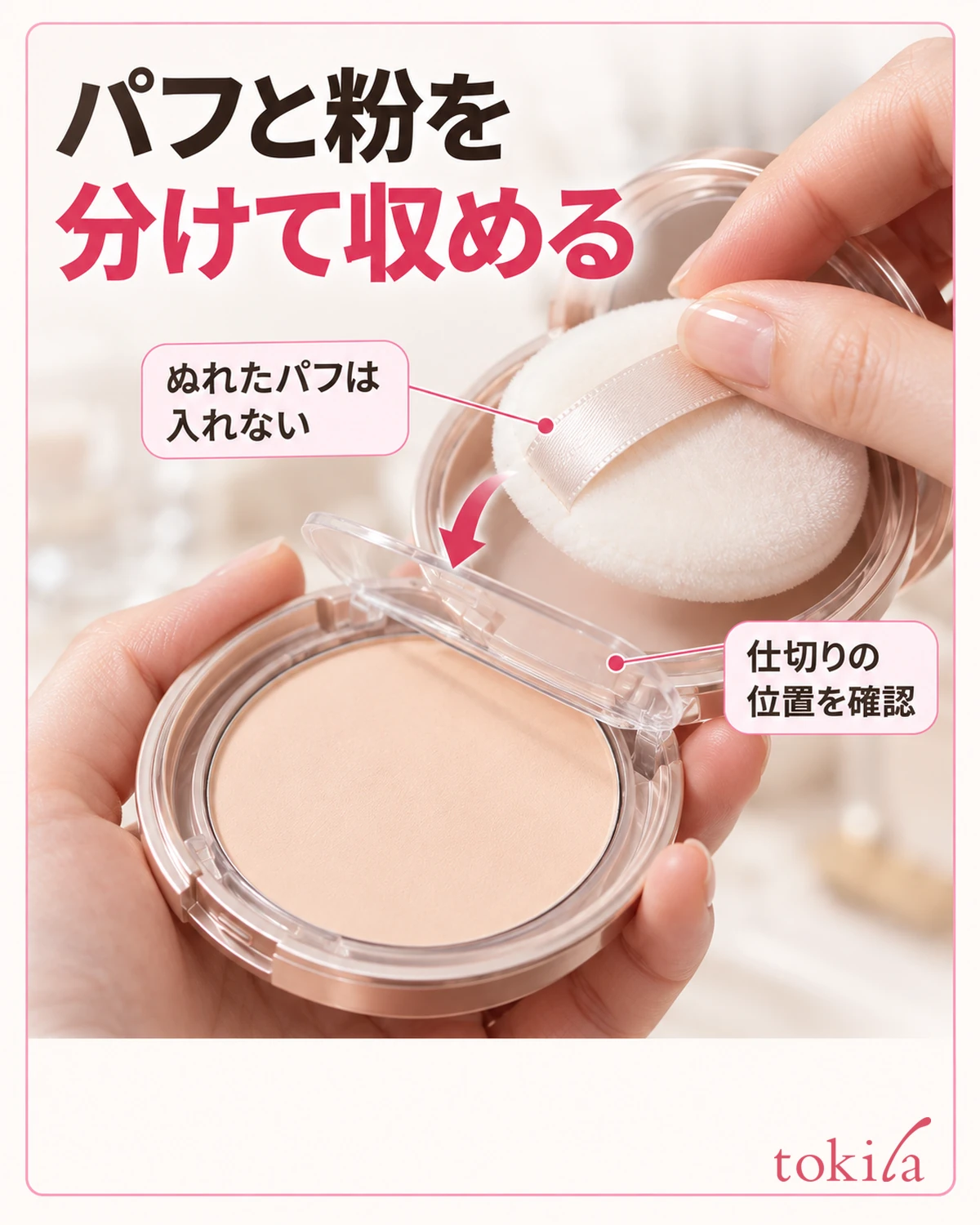
If the container has a divider or puff compartment, store it in the intended place. Check the structure separating a dry puff from the powder rather than deciding the supplied divider is unnecessary. Keeping a wet puff from being enclosed and avoiding forcing the lid shut over trapped objects also prepares it for next time.
When introducing UV powder, remember application order and combined use, the specified amount, and daytime reapplication as a set. Rather than reducing the amount solely for a lighter finish, check whether you can follow the instructions with your own makeup, making it easier to incorporate into outings and touch-ups.