You want to add a sleeping mask to your evening routine but wonder whether it goes before or after cream, or whether you can sleep with it on. Start by checking the application order and how to finish, rather than relying on its name or gel-like appearance. Instead of layering everything over your usual moisturizer, decide what tonight’s product is meant to do so you can prepare more easily.
This guide focuses on gel and cream masks applied to the face and left on overnight without rinsing, organizing their use from evening to the next morning. Treat them separately from sheet masks, packs rinsed off after a set time, and peel-off masks.
1. Read whether it is an overnight leave-on type, its application order, and frequency
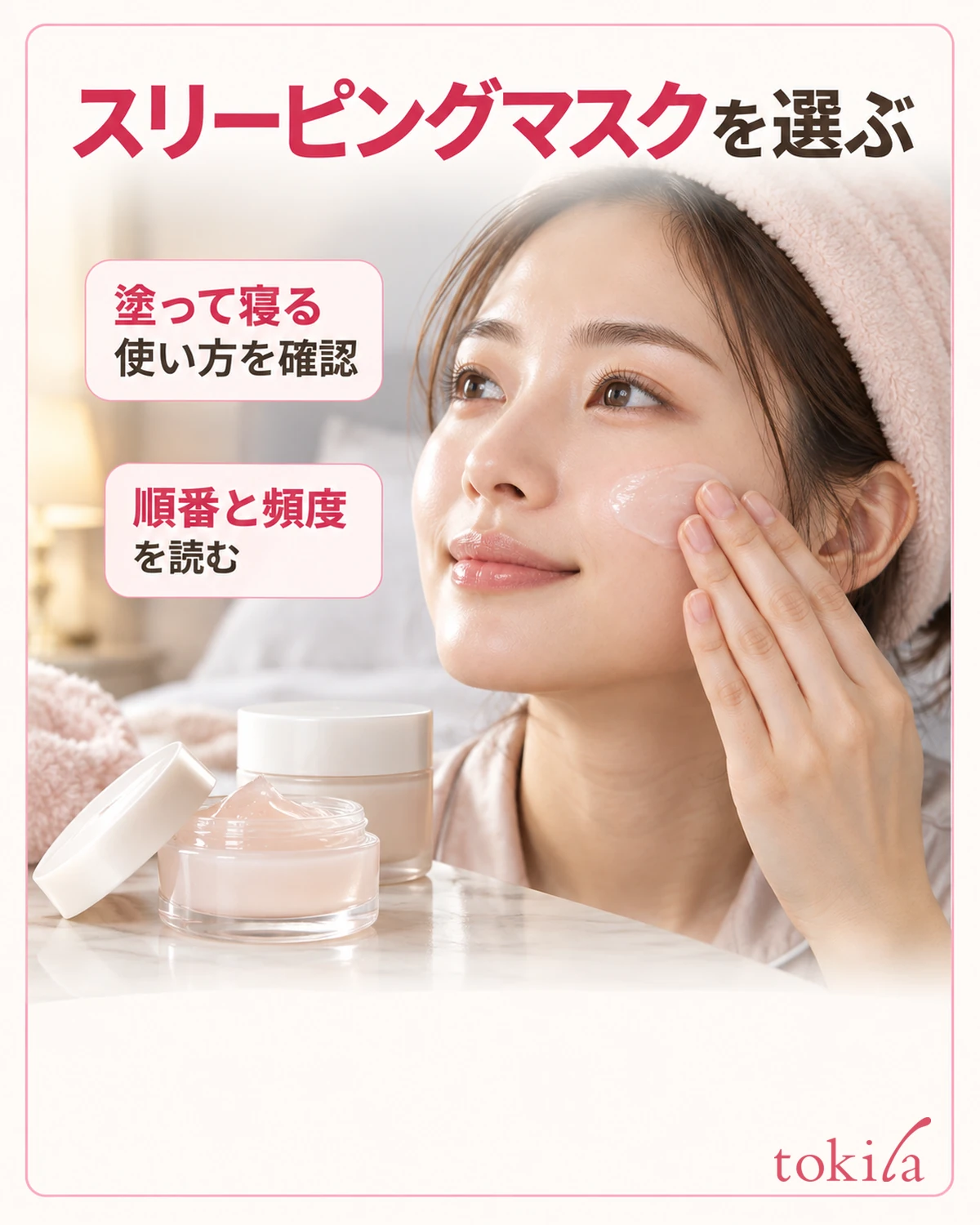
First, read the directions on the container or outer box to see whether they instruct you to sleep with the product on your face. The words “night” or “mask” alone do not tell you whether rinsing is needed. Do not substitute sleeping with a sheet mask on; check the product’s form and how to finish using it together.
Next, read where it belongs in your routine. Some products are added at the end of evening skincare, while others offer guidance on choosing between the mask and cream. Rather than deciding that every sleeping mask goes after cream, organize the combination you will use today.
Check each product to see whether it recommends a few times a week or allows nightly use. There is no need to apply a thicker layer to make up for missed applications. Even if you use certain days as reminders, avoid putting your schedule ahead of your skin’s current condition. If the frequency is unclear, check the instructions before increasing it.
Even a product for the whole face may specify areas to avoid, such as around the eyes or lips. Its intended area differs from that of a lip sleeping mask. Do not substitute a face product for a lip product, or spread a lip product over your whole face; read the application area before preparing.
When choosing, consider whether you want an extra evening step or a different final moisturizer. Rather than deciding only by container size or a rich-looking texture, check whether the order, frequency, and application area fit your routine to reduce uncertainty after purchase.
2. Complete your usual care and take the specified amount for one application
On days you wear makeup or sunscreen, cleanse or wash your face according to how each should be removed. A sleeping mask does not replace cleansing. Then follow the directions for any preceding steps the product requires, such as toner or emulsion.
You do not need to add toner, emulsion, serum, and cream every time. Read the order and combination requirements for the products you have, and decide where the mask belongs. Rather than automatically skipping earlier products because the routine feels heavy, check whether the mask is an alternative to the final cream or an addition afterward.
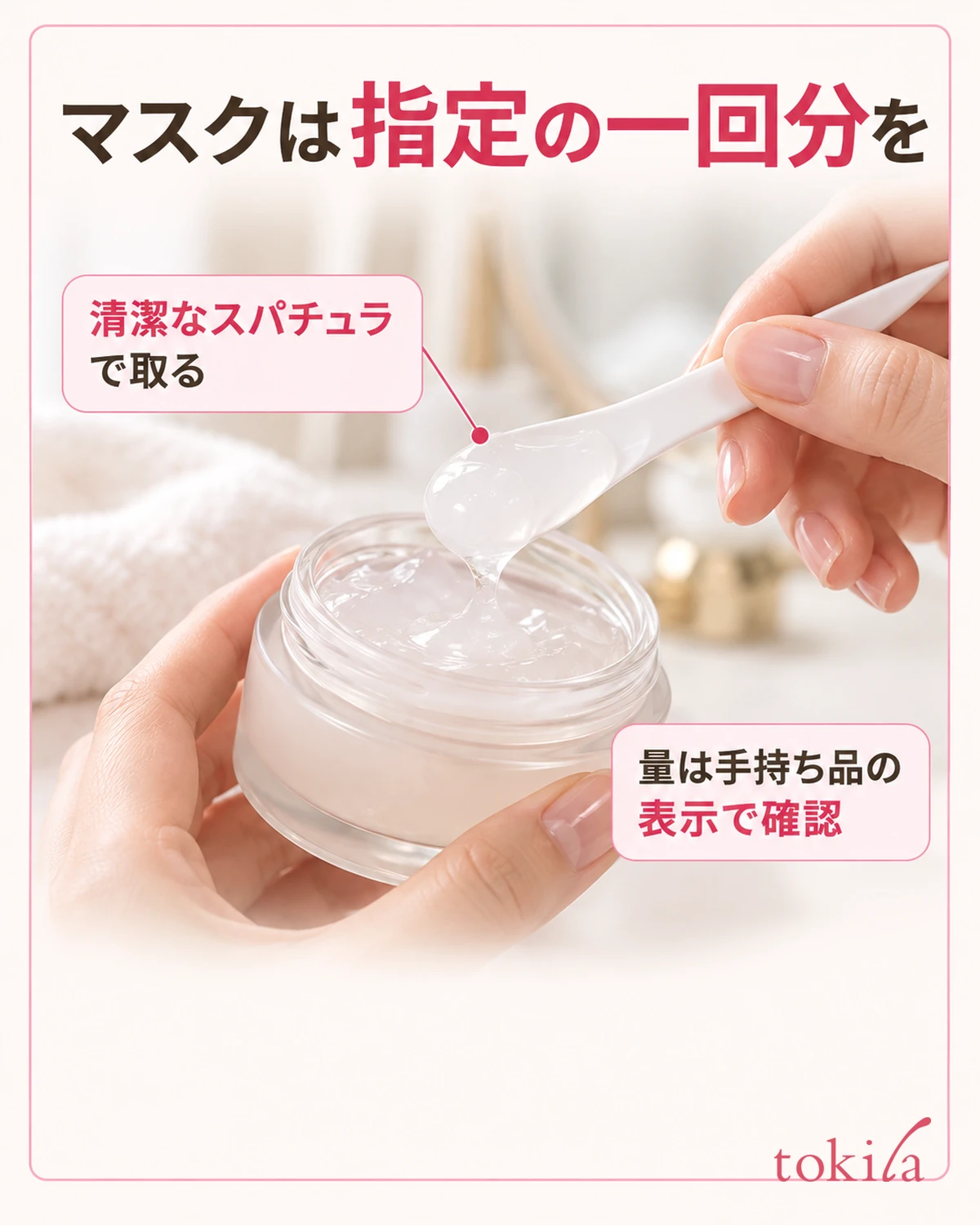
Clean your hands and take one application’s worth with the specified tool, such as a spatula. If a guide such as one scoop of the included spoon or a fruit-sized amount is given, treat it as the amount for that product. One scoop from another product’s spoon may not have the same volume, so do not use the mound in a photo as an amount standard.
Look separately at the handle of the tool and the part that scoops the product. Rather than searching inside the container with your fingers or returning a tool that touched your face directly to the contents, prepare the needed amount in the specified way. Follow the tool’s material and the product’s directions when caring for it to keep it clean.
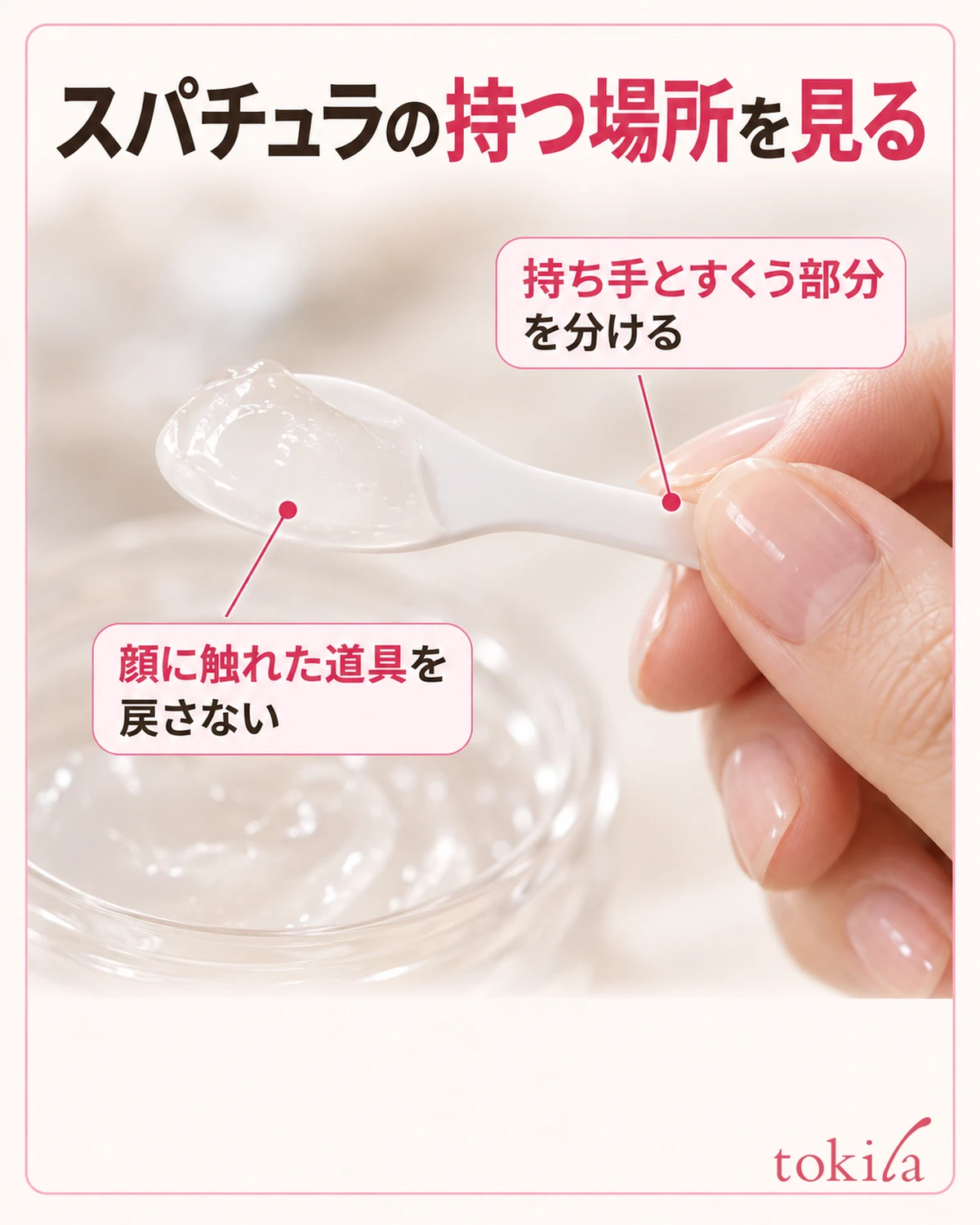
Do not return excess product taken into your hand to the container. Next time, reread the amount guide before dispensing. Instead of spreading tonight’s excess onto your neck or lips, check which areas it can be used on. The amount for the size of your face and the areas where it may be used are separate points to check.
Set the container on a stable surface, avoid carrying it open to your bedside, and close the lid after taking the product. Holding the container while applying also limits your movement as you touch your face. Prepare a mirror and a place to set things down first, separating dispensing from spreading the product over your face.
3. Spread over the specified areas without rubbing to make it disappear
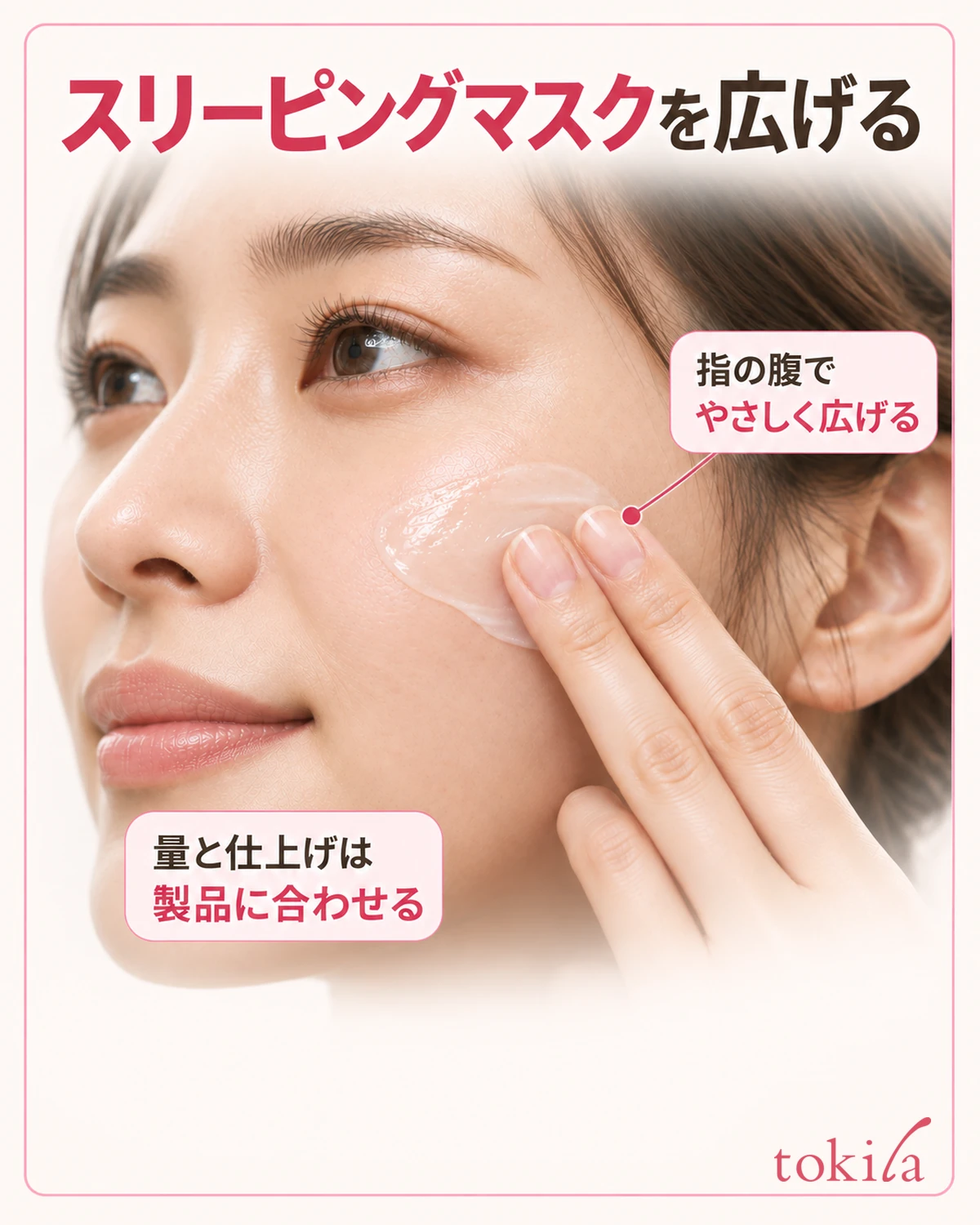
If the product specifies where to place it or the application order, follow those directions. When spreading from the cheeks, use the pads of your fingers without pulling hard on the skin. Avoid turning this into pressing gel in with your nails or repeatedly polishing the same spot back and forth.
Directions to spread evenly over the whole face and directions to cover the skin without fully working the product in describe different finishes. Rather than rubbing until it disappears as you might with your usual emulsion, check how this product says to finish. Conversely, adding a thick layer to a product meant to be worked in thinly is not a universal tip either.
If you are concerned about missed areas, check the coverage in a mirror before bringing your hands back to your face. Prioritize the specified amount and spreading method rather than trying to use up everything left in the container. Avoid treating shiny areas as places where it is “working” or adding unlimited product where the shine has faded.
Keep it away from the eyes and mucous membranes, and respect the areas to avoid. Do not adjust the amount by stretching product from your cheeks toward the eye area. If you notice redness, itching, irritation, or other abnormalities during use, stop and follow the product’s precautions. Do not make waiting until bedtime to see what happens part of the routine.
After spreading, check from a distance that lets you see your whole face. Instead of repeatedly rubbing to erase finger marks, look at the areas covered and around your eyes and mouth. Do not judge the required amount or degree of moisturization by shine alone. Use the mirror to check where you spread it, avoiding extra applications that depart from the product’s directions.
4. Before bed, check the finishing directions instead of touching it again

Check the directions for how thoroughly to work it in after applying and whether you can go to sleep with it on. Do not invent a fixed waiting time for all products. Pressing your face straight into a pillow and repeatedly touching it to check dryness are separate from the application step.
Even if stickiness bothers you, do not automatically change the finish to wiping it off with paper or a towel. Review whether the amounts of earlier products and the portion of mask followed the instructions. Wiping away an entire layer intended to cover the skin just to make it feel dry changes the instructed use.
If hair falls onto your face, moving it aside before applying makes the process easier. Prepare tonight’s setup in advance so you do not keep touching your bangs or pillow and returning the same hand to your cheeks afterward. Do not independently add tools or sheets that tightly cover the face to seal it in.
When putting things away, look at how the inside of the lid meets the container’s rim. Do not close it with a spatula caught across the rim; if a storage location is specified, put it there. If product is on the outside of the container, check the instructions for what can be cleaned, and do not add water inside.
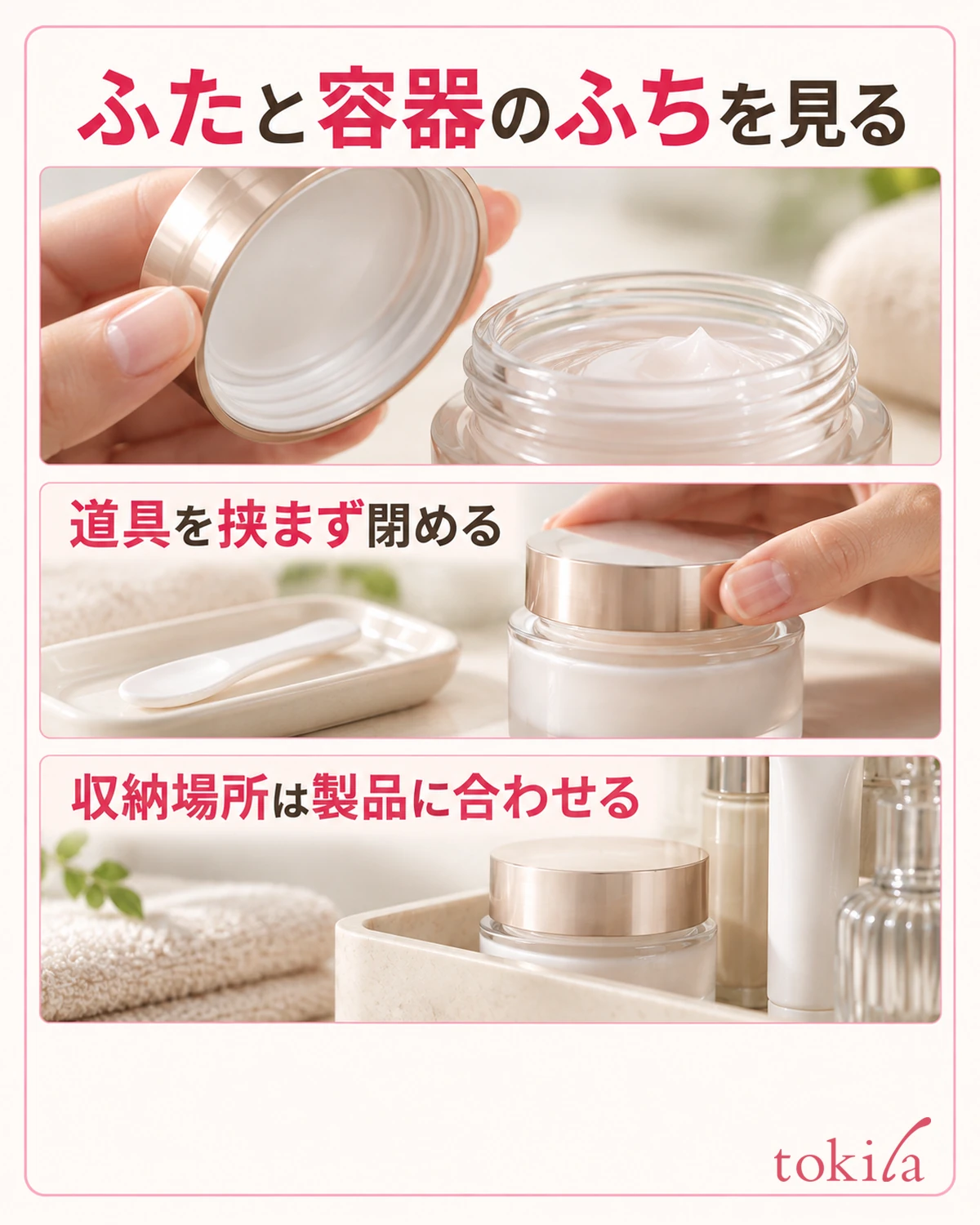
Even when a product allows chilled use, that does not mean every mask belongs in the refrigerator. Room-temperature storage and how to handle a product after chilling depend on the product. Before changing storage conditions for the feel of use, reread the labeling on your current container.
5. Check how to finish the next morning and plan the next application

The next morning, follow the product’s directions, such as rinsing it off or proceeding with your usual face wash. Leaving it on at night does not mean applying makeup the next morning without doing anything else. Check how its directions fit your morning routine, including whether to use cleanser or rinse with water or lukewarm water.
Do not add vigorous rubbing with a dry towel or cotton pad to remove a lingering feel. For a product that instructs washing, rinse as directed and gently press away water with a clean towel. Avoid judging the type of residue or cleansing strength needed solely from how an overnight mask remains on the skin.
Then proceed with morning moisturizing and sunscreen. Using a nighttime mask does not complete the next morning’s sun protection. If layering many products causes makeup to shift, check your morning washing method and application order before independently making large changes to the mask amount.
Decide when to use it next based on the product’s frequency and your skin’s condition. Liking the feel the next morning is not a reason to double the frequency or amount. Conversely, if it feels heavy, review the order, preceding moisturizers, and specified amount one point at a time.
If layered moisturizers feel heavy,reviewing moisturizing gel amounts and layeringcan also help. Rather than making different products’ amounts identical, read it as information to help you build your own routine.
The enjoyment of choosing a sleeping mask lies in having a moisturizing option that fits the flow from evening to the next morning. Order, one application’s amount, the finish after spreading, and the next morning: reading these four points first can reduce last-minute uncertainty and make it easier to fit the product comfortably into your life.