After putting on sunscreen, you got dressed and found a white streak on the inside of your collar. When you rub at it, it spreads, and you are not sure whether to use detergent or bleach. In that case, first read the labels on the garment and the sunscreen, line up the conditions under which it can be washed, and only then start treating it.
This article is a checklist of steps for when sunscreen has transferred onto the collar of a garment. It does not judge the ingredients or how well the mark will come out from the whiteness alone, and it separates how to handle clothes that can be washed at home from the point at which you should stop treating it yourself. Please do not apply the same method to leather accessories, furniture or washing your skin.
1. When you find a white mark, look at its location and condition before rubbing

Take the garment off, lay it on a flat surface, and check the inside and outside of the collar. See whether it is a line-shaped mark from where it touched your neck, a spot that came directly from the container, or whether the color of foundation is mixed in. Do not assume that every white mark you find is sunscreen.
Also recall what you applied and when. Whether you put the garment on right after applying sunscreen or the collar touched your neck after you sweated changes what you should review next time. The color just after it gets wet is not necessarily the same as the color after it dries, so remember the state in which you found it before you handle it.
Before wetting the garment while it is still on, or wiping widely around the mark, check the conditions for care. The starting point is not to press the marked side against other clothes, and not to add water or detergent when you do not know whether the garment can be washed. If you are in a hurry to go out, it is calmer to change into other clothes and check afterward.
Record separately a white deposit, yellowing, and discoloration after detergent or the like has already been applied. In particular, do not treat something that turned pink after bleaching in the same way as a white streak that has not been washed yet. If you do not know what was used, do not add another chemical.
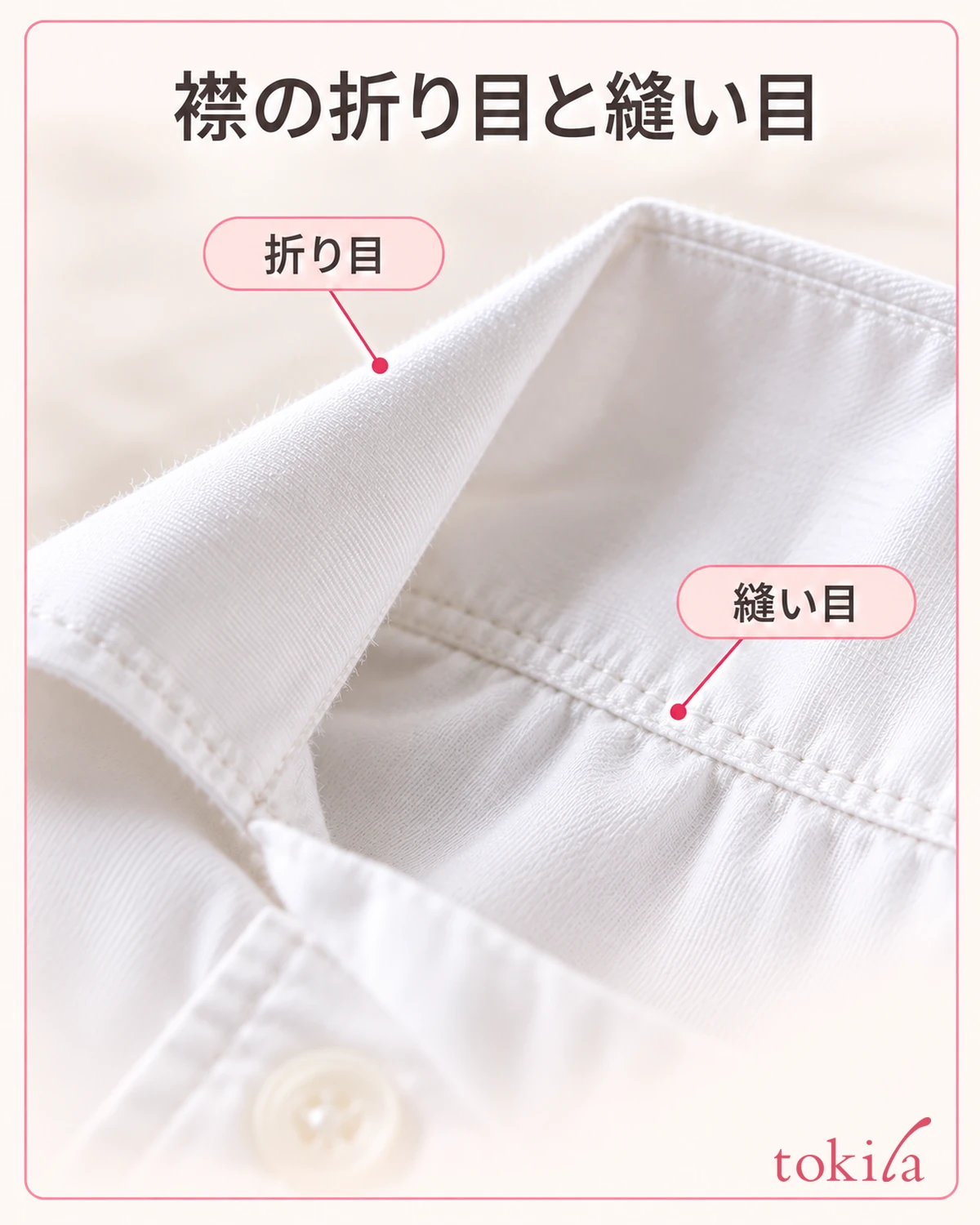
Check not only the fold of the collar but also whether there are marks near the seams or decorations. However, there is no need to pull hard or scrape with a fingernail just to look. If the fabric already has fuzzing or color loss, note that separately from the spread of the stain.
The aim here is not to diagnose the mark completely but to decide what to check next. If you have the sunscreen container, the garment's label and the detergent you are about to use together, you can compare the labels without stopping partway.
2. Read the labels of the garment, the sunscreen and the detergent together

On the garment's care label, check whether it can be washed at home, whether it is hand wash or machine wash, and what water temperature and gentleness of handling are specified. Do not judge by the name of the material alone; also read the text near the label. Cautions such as using a laundry net or about attachments are also conditions that garment requires.
Do not do the spot washing described below on garments that are marked as not to be washed at home. Do not decide that diluted detergent will be fine or try wetting only the collar; consult a dry cleaner or the like. If the label cannot be read or the garment has a special finish, also do not push on toward washing it at home.
Next, read the container or outer box of the sunscreen you used and look for cautions about its transfer to clothing and about laundering. The way to remove it from skin and the way to wash what has transferred to clothing are not the same. Even if it says "can be removed with soap," do not use that as a laundering method for clothes.
For the detergent, check whether it is a type that can be used on that garment, whether it can be used for spot washing, and whether it can be applied undiluted. Do not borrow the amount or waiting time from the directions of a different detergent. For colored or patterned garments and for unbleached ones, also check the cautions about whether it contains optical brighteners.
For example, even for a shirt that can be washed at home, if hand wash is specified, do not go on to the steps that put it straight into the washing machine. Even if the detergent can be used for spot washing, if the garment is not suited to hard scrubbing, do not choose a method that increases the force. Stay within the range that both the garment and the detergent allow.
If the labels seem to contradict each other, do not adopt only the more convenient one; stop the work for a moment. Before increasing the chemicals you use, sort out what conditions you do not know. Checking at the preparation stage makes it easier to decide than searching for a way to remove it after the fabric is damaged.
3. For garments that can be washed at home, start with spot washing that fits the specifications

Proceed only when the garment can be laundered at home and the detergent label also allows spot washing. Open out the collar so the stained position is visible, and handle it according to the detergent's specified amount and directions. If a method of applying it undiluted is specified, use it under that condition, and do not assume that every detergent can be used undiluted.
For fabrics where hand washing is allowed, wash with the amount of force that the garment and detergent allow, such as pinching the affected area lightly. Avoid scrubbing again and again with a hard brush to get rid of the white streak, or twisting the edge of the collar. The more you feel it is not coming out, the more you should look at the condition of the fabric before adding force.
After that, rinse as specified and wash the whole garment by a method that matches its label. Do not put the garment back on with spot-washing detergent still on it; treat everything through rinsing and regular washing as one continuous task. There is no need to match the water temperature, detergent strength and standing time to uniform figures.
One round of care will not necessarily remove it. If you see signs such as color transferring partway through, the fabric becoming fuzzy, or changes around decorations, do not continue with that method. Separate the stain that remains from changes in the fabric, and decide whether it is a condition under which you can wash again or whether to switch to consulting someone.
When you have finished washing, dry it in the way that matches the label and look again at the inside and outside of the collar. Do not decide the mark has gone from how it looks when wet; check how it looks after drying as well. If you compare with photos, use the light from the same place, and do not mistake the reflection of strong lighting for the whiteness of the stain.
When you repeat the care, do not automatically switch to a stronger detergent or hotter water than before. Keep within the ranges specified for the garment and detergent, and note how far you went. Some garments need you to draw the line and say you will not handle it at home any further, rather than adding more steps to remove it.
4. Even on white clothes, do not go straight to chlorine bleach

Some ingredients in sunscreen can react with chlorine bleach and turn pink or another color. Do not assume that because the collar is white you can simply bleach it; avoid using chlorine bleach on garments that have sunscreen on them. This does not mean that the same change happens with every sunscreen.
Do not look only at the garment's bleach symbol and skip the sunscreen's cautions. That a garment can withstand chlorine bleach and that the sunscreen that stuck to it will not react are separate matters. Also tell the detergent bottle and the bleach bottle apart, so you do not mix up similar containers.
Even if it says oxygen-based, it cannot be used freely on every material or finish. Liquid and powder types are also usable on different garments, so do not choose one just because it worked on another garment. This article does not make adding bleach a required step.
If discoloration after bleaching has already happened, note which product you used, the garment's material and care label, and in what order you treated it. Do not try to restore it by mixing in another bleach or a liquid you have at home; follow the cautions of the product you used. If you cannot decide whether to treat it yourself, do not add anything and switch to consulting someone.
When you consult someone, telling them what you did after the sunscreen stuck lets them distinguish it from a stain on which nothing has been done yet. Sort out not only that it "turned white" or "turned pink" but also whether it changed when it first stuck or after washing. Do not assume that a mark you cannot say will come out can definitely be returned to the way it was.
5. Next time, review how you change clothes and the collar that touches your neck

Even when you want to reduce what gets on your clothes, do not reduce the amount of sunscreen on your own or skip applying it to your neck. Follow the directions for the amount and way of applying on the product you have, and then separately review the situations in which the liquid touches clothing directly and the situations in which the collar rubs against the skin you applied it to.
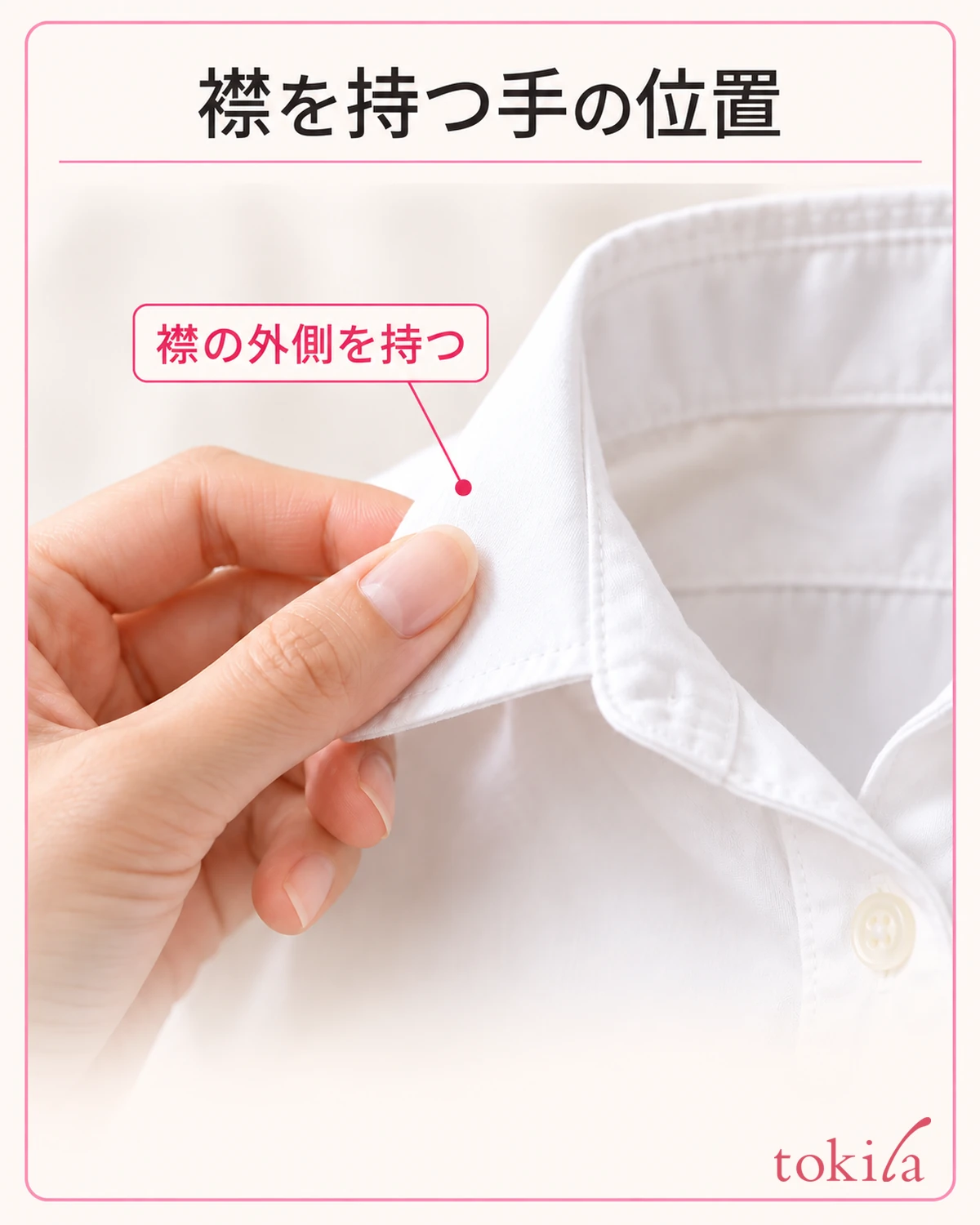
For a product that specifies putting on clothes after it dries, change clothes under that condition. Do not set a waiting time that applies to all products, and do not assume that it will never transfer once it is dry. Pulling a narrow collar through while rubbing it hard against your neck, or grabbing the collar with wet fingers, are also points to check.
Before you change, tidy your hands so that you do not touch the inside of the garment with hands that have liquid on them. When applying after you are dressed, also avoid leaving unapplied areas on your skin just to avoid the collar, and use the product as its label directs so that it does not get directly on the clothing. Choose an order you can follow calmly, suited to the product and the garment.
While out, after you sweat or after the collar has rubbed, check the label's directions for reapplying sunscreen. A white mark on clothing alone does not tell you whether the amount your skin needs is still there. It is important to treat caring for the garment and reapplying to your skin as separate decisions.
If sunscreen and primer come out in flakes on your skin, check how you layer them with the steps for reviewing pilling of sunscreen and primer. It is separate in what it handles from this article, which deals with marks that transferred onto clothing. For choosing clothes around the neckline, you can also use the list of fashion know-how.
For your note for next time, leave one action to carry out, such as "do not touch the collar with fingers that held the container" or "check the product's drying condition before putting on clothes." Check the conditions of the garment, the sunscreen and the detergent, care for it within what can be washed, and review the situation in which it transferred. In this order, choose the method that suits your own clothes.