After dispensing emulsion onto your hand, do you keep stroking only your cheeks? Working from broad areas of the face to smaller ones makes it easier to track where you have applied it. First check the amount for one application and the order stated on your product, then lightly follow the skin with the surface of your hand.
Here we outline the basic movements for facial emulsions whose directions allow application by hand. Products requiring a cotton pad, those used before toner, and daytime UV emulsions each take priority through their own instructions. We also distinguish a sheen that looks moisturizing from an effect that has actually been verified.
1. Check whether the emulsion can be applied by hand and where it belongs in your routine
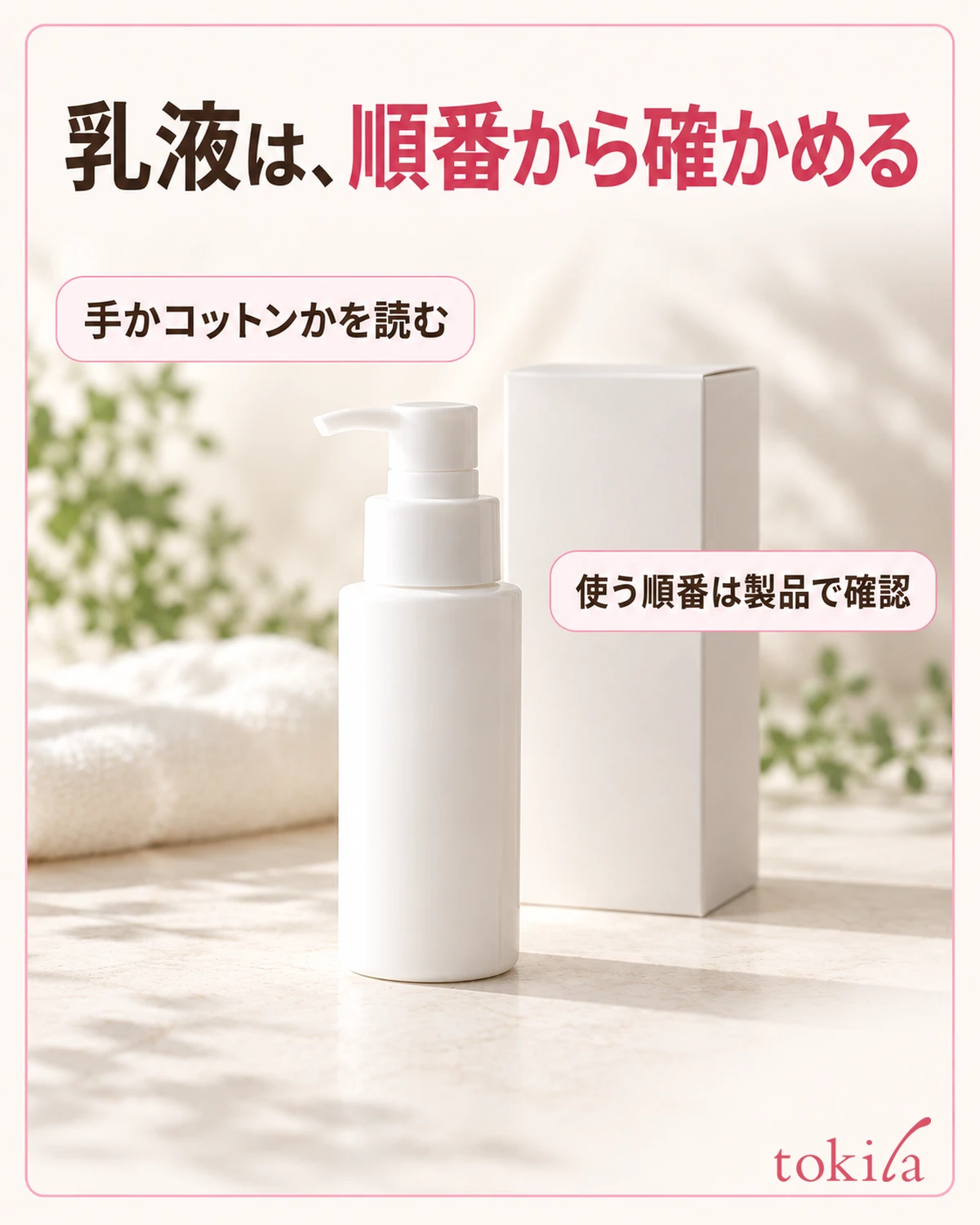
Read the “Directions” on the container or box to find where the emulsion belongs. Some products follow toner, while others are used immediately after cleansing. Do not assume that every white liquid follows the same order; first check what comes before and after the bottle you are using now.
Whether to use your hands or a cotton pad is another point to read alongside the amount. If hand application is permitted, the movements below can serve as a guide. Do not combine different methods, such as switching a product intended for cotton-pad application to your hands while keeping the same amount.
Also check whether it is for morning or evening and which facial areas it can be used on. A moisturizing emulsion and a daytime emulsion that doubles as sunscreen have different purposes and directions for quantity. Do not assume that applying a moisturizing product alone completes UV protection; check its sun-protection labeling separately.
On days when you also use a serum or cream, lay out the order for each. Some routines place cream after emulsion, while others direct you to choose one or the other. Start by checking which steps your current combination requires, rather than deciding first to add more products.
When removing moisture after cleansing, avoid rubbing a towel back and forth firmly. Complete earlier steps, such as toner, according to their directions before moving to emulsion. If redness or irritation is present before touching your skin, follow the precautions before experimenting with application techniques.
If you are unsure about the order when using two or more serums, you can also read where serums belong and how to plan morning and evening routines. You do not have to change the order and amounts of your other products all at once on the day you learn to apply emulsion.
2. Dispense one application onto clean hands to establish an amount boundary
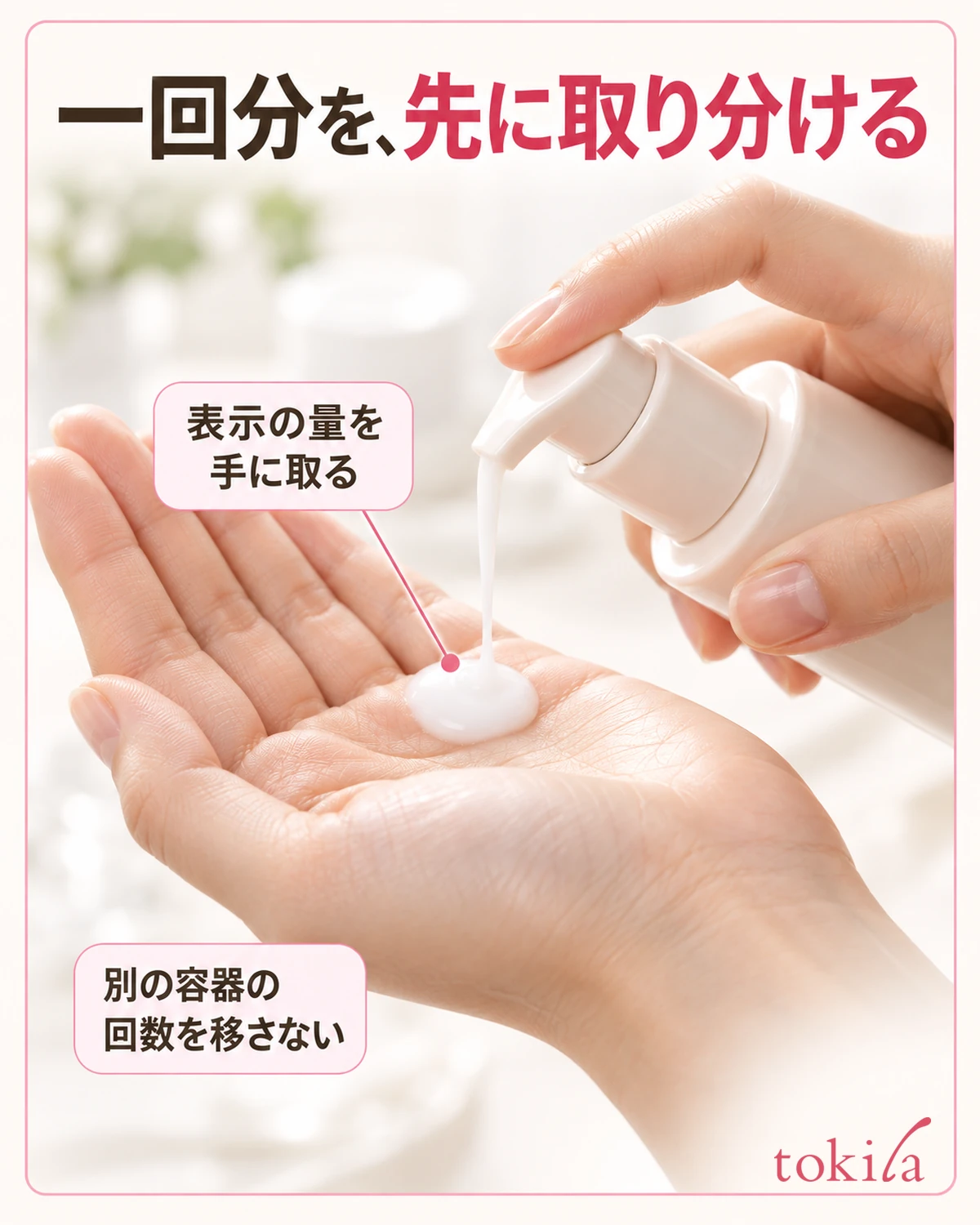
Clean your hands and wipe away any remaining water before dispensing. Gently cup your palm and face the receiving surface upward. Steady both the hand holding the container and the receiving hand, and avoid continuing to dispense where the liquid will run off the edge.
If the amount for one application is given in pump strokes, follow the labeling on that bottle. A single pump does not dispense the same amount from every container. Do not carry over a pump count learned with another emulsion; also check how to dispense it if the instructions specify pressing the pump fully.
Read coin-size guidelines as the size specified for that particular product. Do not convert them into pump counts on your own or treat the size of the white liquid in the article’s photographs as a model of the correct amount. The photographs illustrate hand orientation and contact points.
Looking at the dispensed portion before carrying it to your face helps distinguish using that portion from adding a fresh amount every time you touch a cheek. Be aware of whether you are layering on another full application while still working through the first. There is no need to keep adding directly from the container to different facial areas.
With a pump container, leave a small gap between the outlet and your palm. Instead of pressing your hand against the nozzle, position the receiving surface beneath the falling liquid to separate the outlet from the surface that touches your skin. Do not adjust the amount by blocking the outlet with a finger.
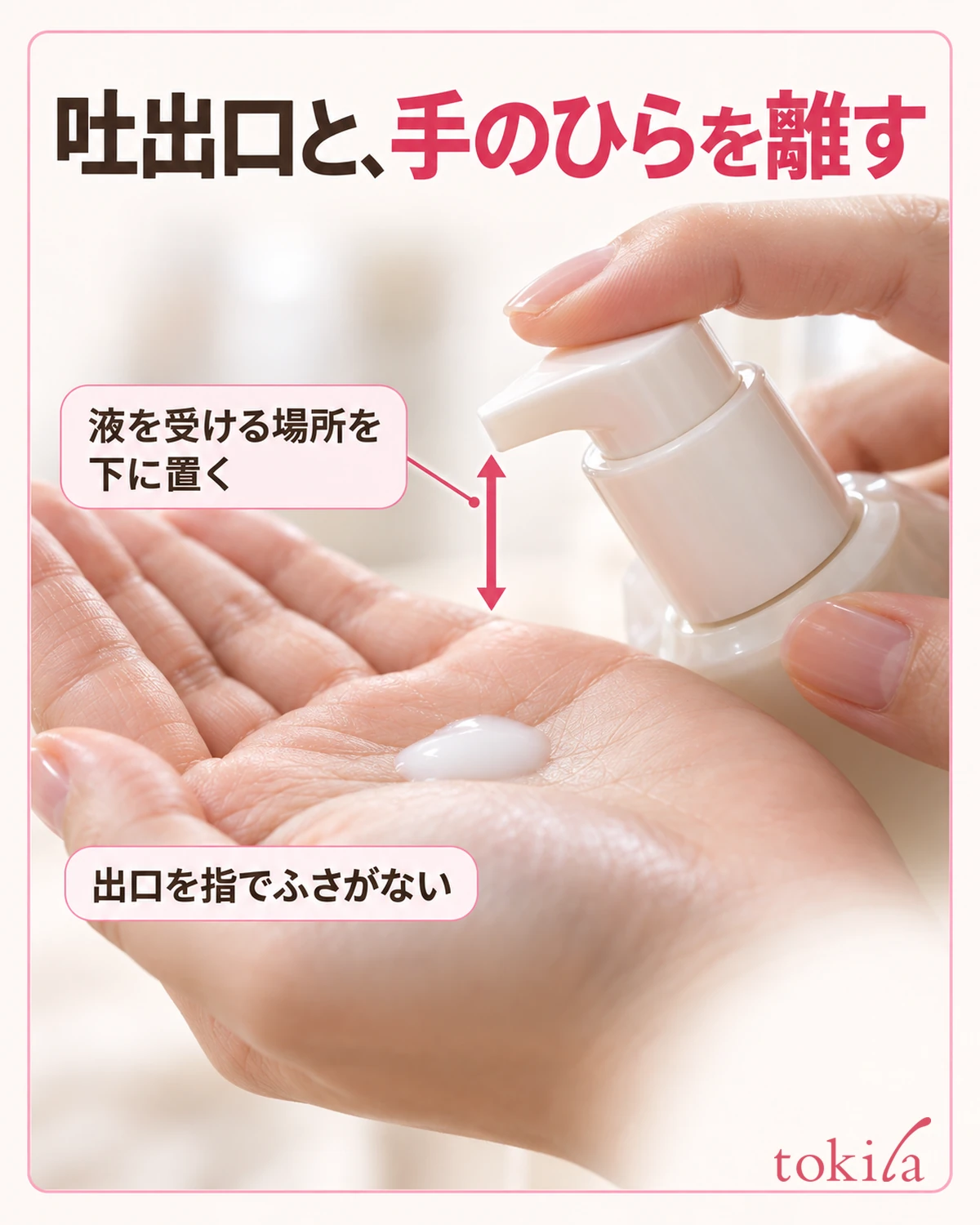
Do not return excess dispensed product to the original container. Rather than applying all of it to your face just to use it up, follow the product’s instructions for handling leftovers. Next time, review dispensing the stated amount and establish a boundary for one application.
When transferring the portion in your palm to your fingers a little at a time, keep the receiving hand facing upward. Set the container on a stable surface first so that you do not turn the emulsion-holding hand downward while picking it up again. If the remainder seems likely to run off while you apply one side, pause and adjust your hand’s orientation.
3. Start with the broad cheeks and gently spread with the pads of your fingers
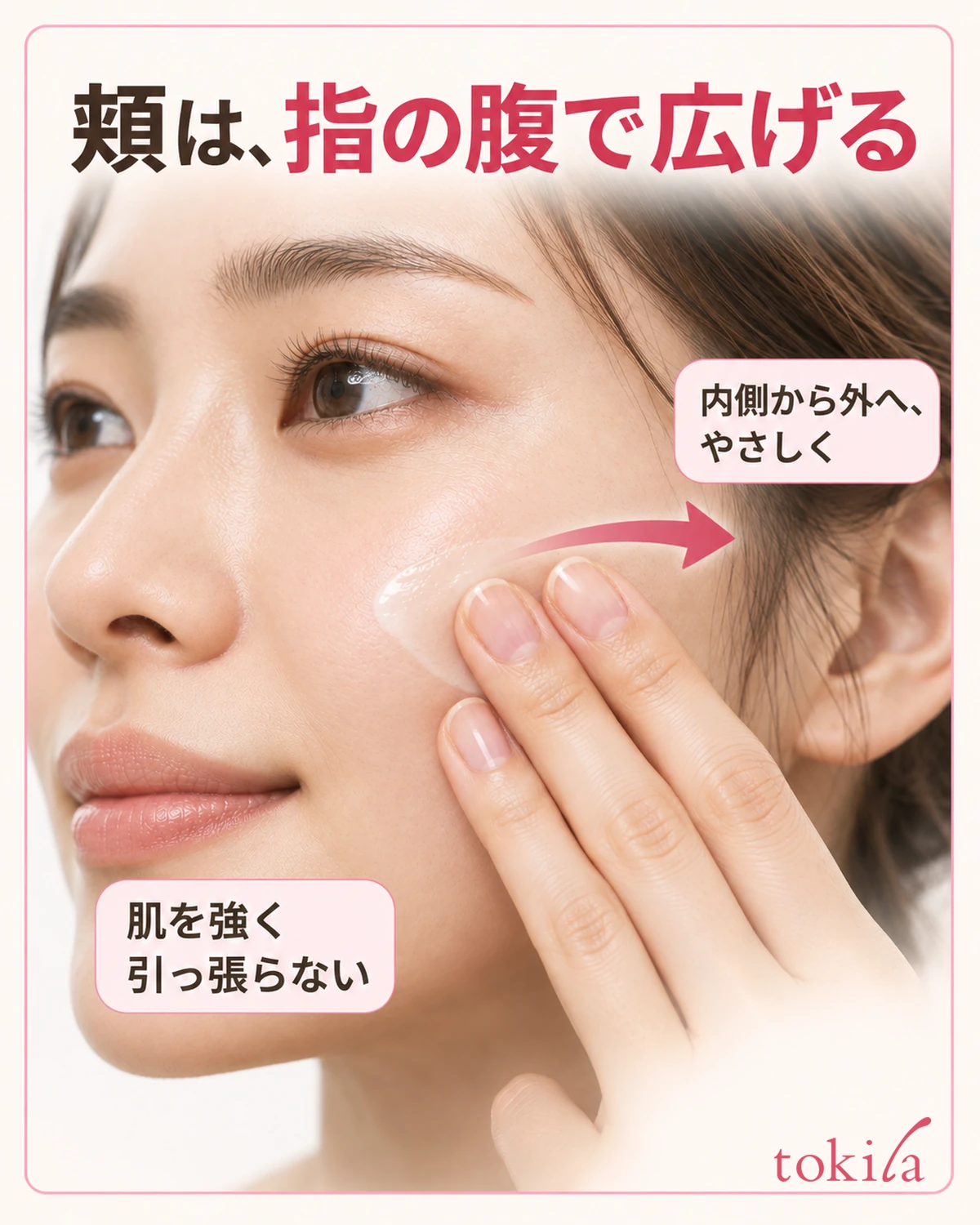
For an emulsion applied by hand, starting with broad areas such as the cheeks makes it easier to track your coverage. Take emulsion onto your finger pads and lightly spread it along the skin from the center of the face outward. Do not lift the cheeks forcefully or press hard enough to pull the skin.
Think of using the pads of your middle or ring fingers as a surface, rather than drawing thin lines with isolated fingertips. Keep your nails off the skin, relax your wrist and fingers, and follow the curve of the cheeks. Everyone need not use the same number of fingers or strokes; choose a surface that can touch comfortably.
After spreading it over one cheek, proceed similarly on the other. Do not concentrate the entire initial portion on one side; distribute it across the areas specified. If a product directs you to dot it on, follow those locations rather than applying the same dot count to another product.
When moving to the forehead, gently spread from the center outward while checking the remaining emulsion and covered areas. Move your bangs aside so that you do not carry emulsion onto the hair itself. A mirror placed far enough away to show both cheeks and the forehead together makes checking easier.
If your fingers seem to catch as you move them, lift your hand before increasing pressure. Check whether the amount matches the stated guideline and whether you are trying to stretch it over areas you have not yet covered. Do not switch to adding water to dilute the emulsion because it does not glide easily.
Do not interpret blending as rubbing for minutes until every trace of whiteness disappears. Once you have spread it as directed, move to the smaller areas. Keep the amount and technique for an extended massage separate from ordinary emulsion application.
4. Use a smaller finger surface around the nose, mouth, and jawline
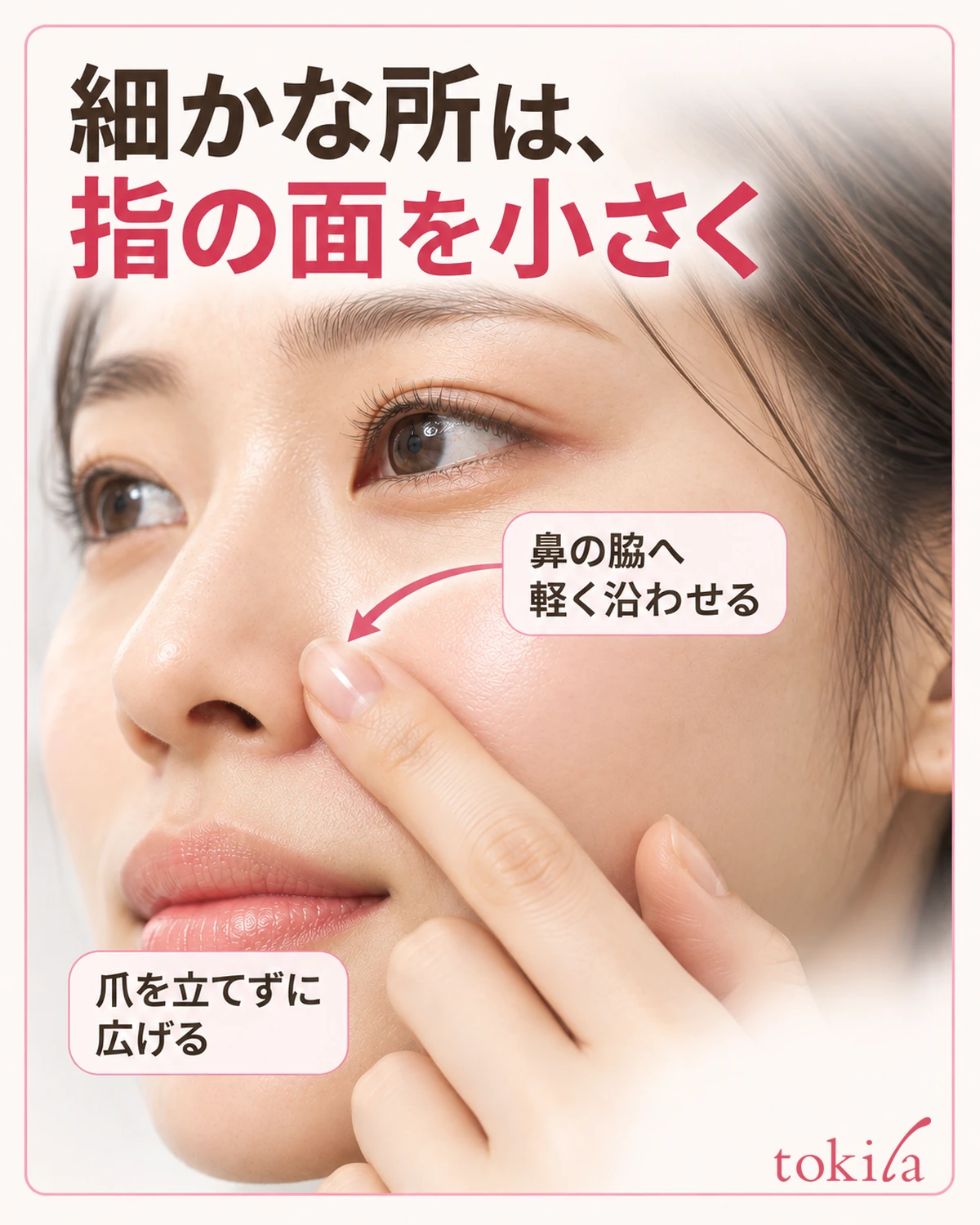
The nose and mouth area can be difficult to reach with the same broad movements used on the cheeks. Use a smaller area of the finger pads and lightly follow the sides of the nose, around the mouth, and the chin in order. Avoid pushing fingertips into hollows or tracing boundaries with your nails.
Even if the product can be used around the eyes, avoid the lash line and getting it into the eyes. Use little pressure on delicate areas and check the permitted application area before touching. If the directions say to avoid the eye area, follow them; “for the whole face” does not automatically mean applying right up to the edges.
Likewise, applying to facial skin around the mouth differs from applying inside the lips. Do not substitute emulsion for lip care; use it where it will not enter the mouth. Even if an area looks dry, check where it may be used and the layering directions before immediately adding several layers.
Finally, look at the jawline. Use a mirror to check which areas from the lower cheeks along the chin contour have been covered and which have not yet been touched. Moving hair away from the outline reveals the boundary between hair and skin. There is no need to coat the entire face again for this small check.
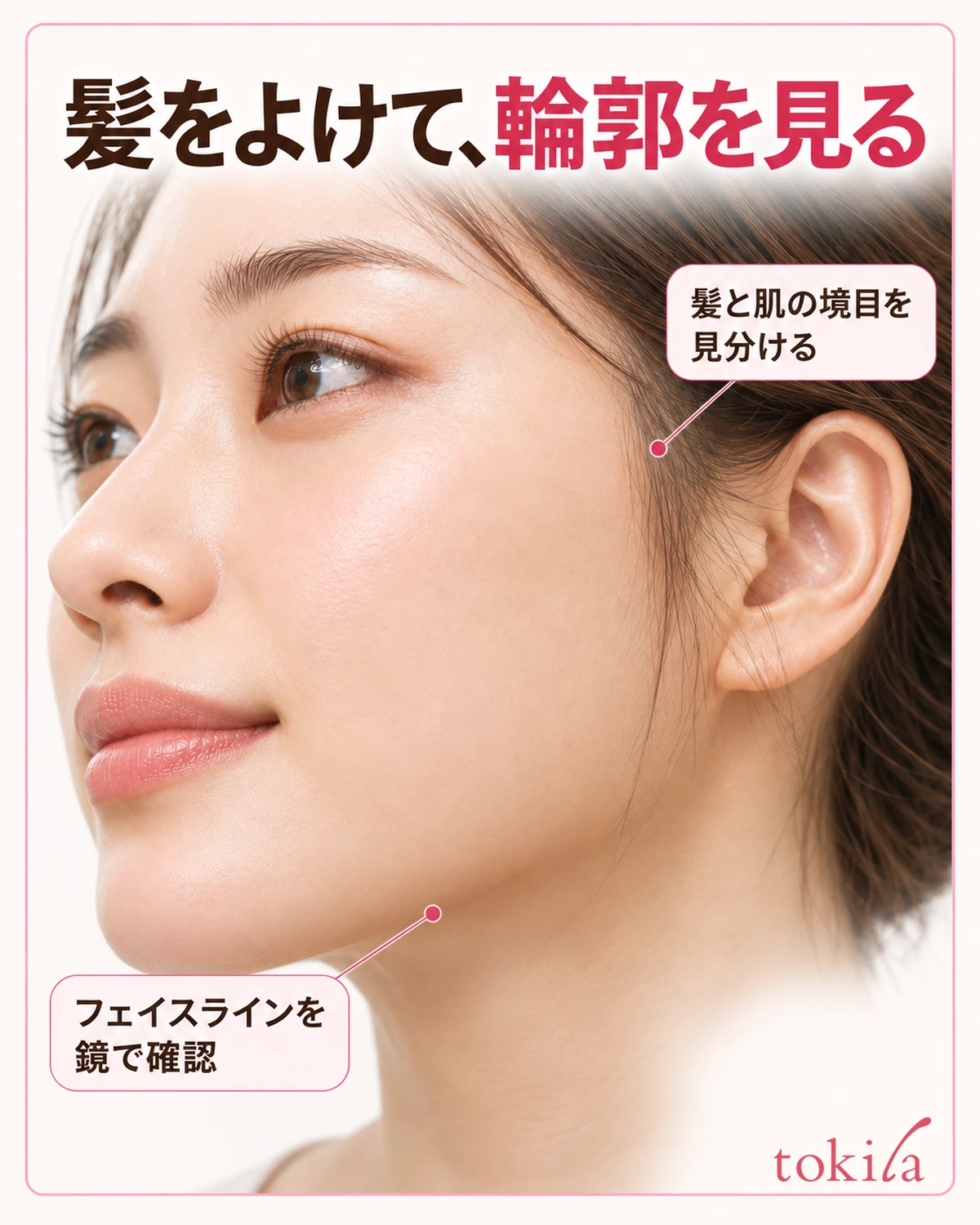
If the product can also be used on the neck, read whether separate amounts and application instructions are provided. Do not assume that what remains after facial use is sufficient or stretch the facial amount over the neck. Adjust the neckline to keep it off clothing and separate the application area from contact with fabric.
If the directions include cupping the face with your palms to finish, touch lightly to blend. Do not assume that stronger pressing delivers ingredients deeper or that longer pressing increases the effect. If pain or irritation occurs, stop using it and follow the precautions rather than continuing with an adjusted touch.
5. Lift your hands to check the finish, and move to UV protection in the morning
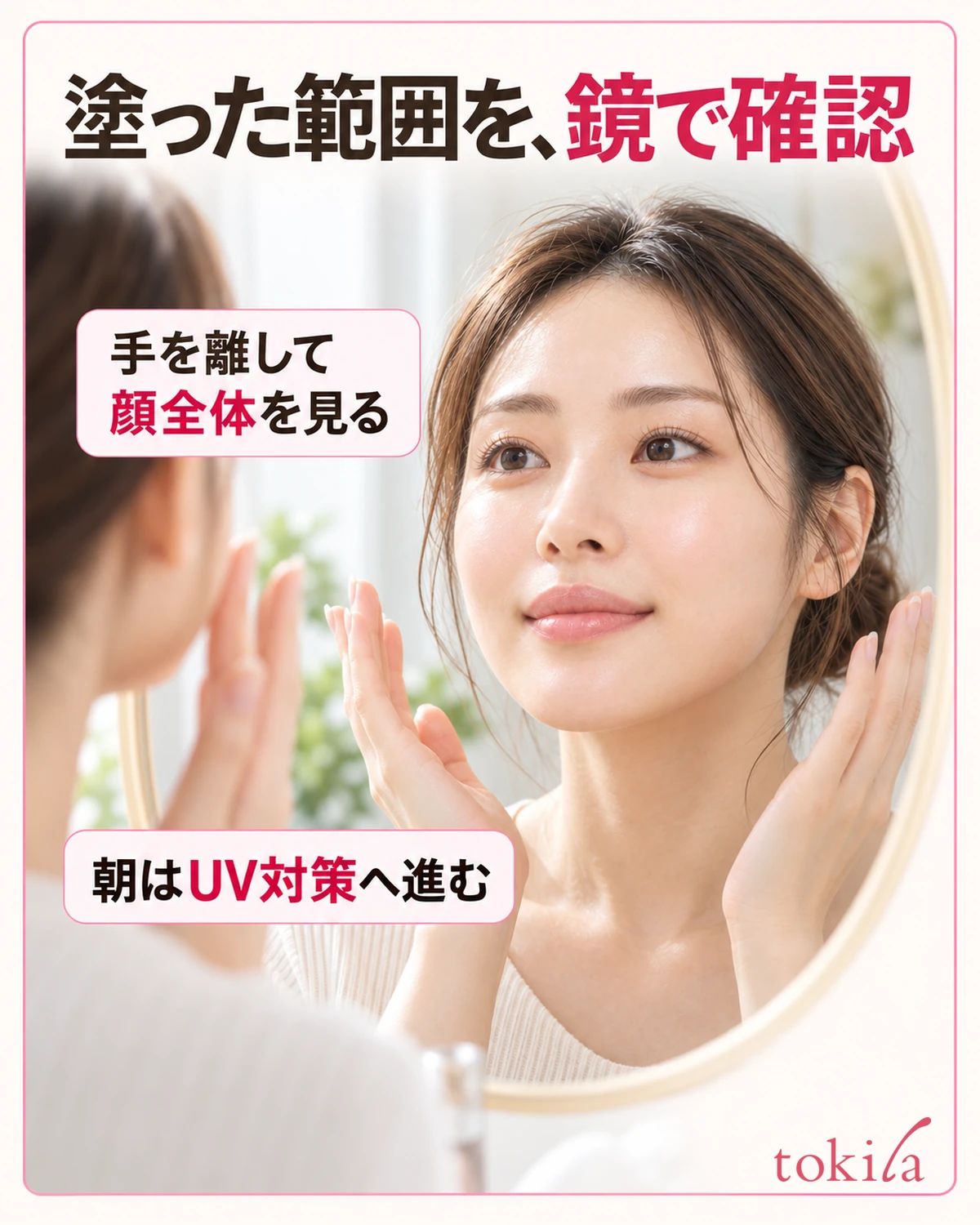
After spreading it throughout, lift your hands and check the cheeks, forehead, nose area, mouth area, and jawline in a mirror. Distinguish areas with thick white liquid remaining from places you intended to cover but have not touched. Sheen alone need not determine overapplication or insufficient moisturizing.
Even if you notice a possible missed spot, check what remains on your hands and the amount directions before dispensing another full portion. If layering is indicated, follow the specified area and amount. Distinguish adding another pump every time you touch the skin from checking the finish.
In the morning, complete the moisturizing you need before moving to sunscreen or the next step. Do not add a method of mixing moisturizing emulsion and sunscreen in your hands and applying them together unless mixing is specified. Also avoid reducing the amount for UV protection according to how the emulsion feels.
Do not set the same number of minutes for every emulsion before makeup. Follow your product’s directions for proceeding to the next step. Even if liquid remains across the surface, review the dispensed amount and spread area rather than immediately covering it with powder, and pause without rubbing.
If little rolled-up flakes appear when layering sunscreen or primer, do not assume that emulsion alone is the cause. Read what to review when skincare or makeup pills and distinguish the step where it began from the products used before and after it. Avoid rubbing it off forcefully.
If it remains difficult to use next time, briefly note how you dispensed one portion, where you applied finger pressure, and what you layered in the morning. The record helps you return one condition at a time to the directions before changing several products at once. Neither the feeling checked by hand nor generated photographs is a test result for penetration or effectiveness.