If the tip of your headband presses behind your ear, or the same spot feels tight when you put on glasses, don't push it further in to hold it. Take it off first and look at the shape of the tip and how things overlap around your ear. You never have to keep wearing it through pain or strong pressure.
This article covers rigid U-shaped headbands: what to check before putting one on, and how to judge whether you can wear it comfortably. Fabric ring-style hair bands are handled differently. It is not about bending the shape wider or adding homemade padding, but about checking the structure and instructions of what you already own so you can choose again.
Find where it presses, and take it off if it hurts
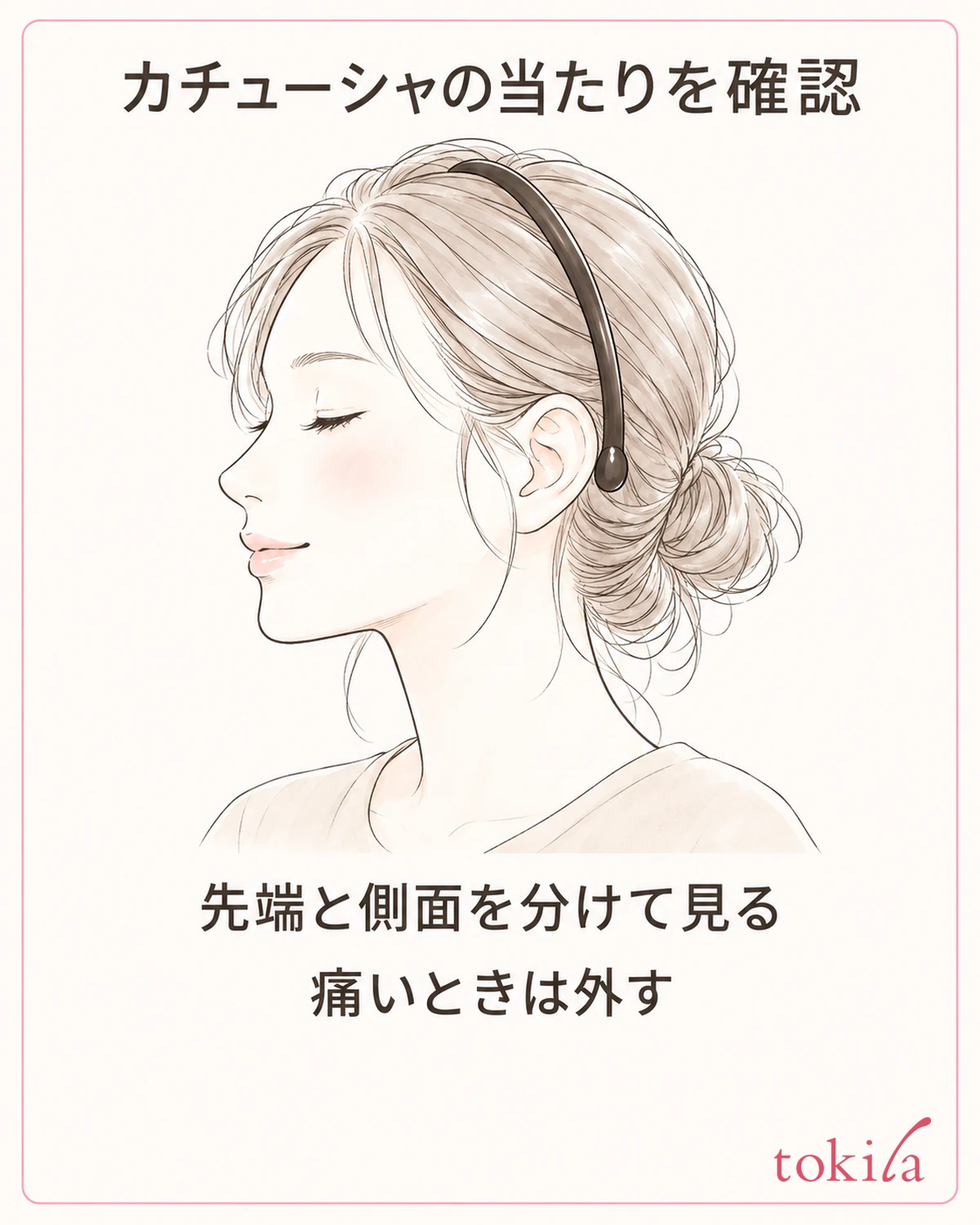
First, look at the area around your ear in a mirror, from the front and from the side. Tell apart whether the tip of the headband is touching behind your ear, whether the band on the side is pressing near your temple, or whether hair is caught and being pulled. Do not press the tip against your skin again to check the spot that bothers you.
If there is pain or strong pressure, take it off instead of continuing to look for a position while wearing it. When you remove it, check where the left and right ends are, and make sure nothing is caught on your hair, glasses, or earrings before you handle it. If something is caught, don't yank it out; make the tangled spot visible and stop moving it.
After taking it off, look at which surface of the tip was facing your ear. The part that touches differs: the rounded end, a fold of fabric, a seam, or the inner cushion. However, you cannot diagnose the cause of the pain or the condition of your skin from appearance alone.
Even if the left and right sides feel different, don't assume the shape of your head is the only cause. The conditions when you put it on may have differed, for example a temple of your glasses overlapping on one side or a strand of hair getting in. First check the hair on both sides and the objects around, and consider whether you can look again under the same conditions.
You don't need to extend the wearing time on the grounds that you can put up with it for a short while. If the pain continues after you take it off, or if you notice itching, swelling, or other abnormalities, stop using it and consult a medical institution if necessary. Checking the position in this article is not a procedure for treating symptoms.
Before adjusting how it looks, put the order first: judge whether it is in a state you can wear. If your hairstyle covers your ears, move the hair aside and check the position rather than pushing the tip deep in so that it is hidden. If you push it in by feel without seeing it, it becomes harder to check what overlaps.
With it off, check the tip, the width, and the inside
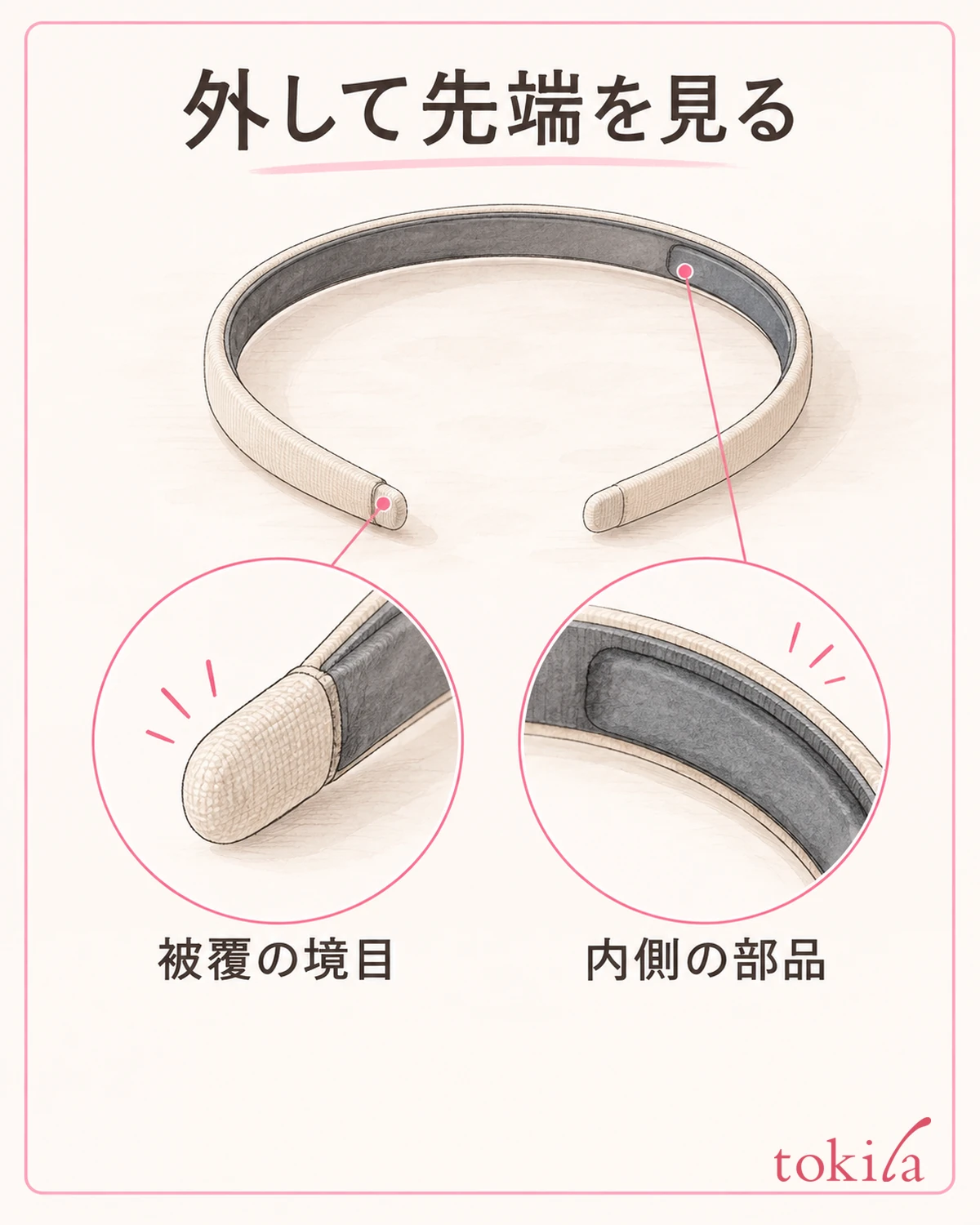
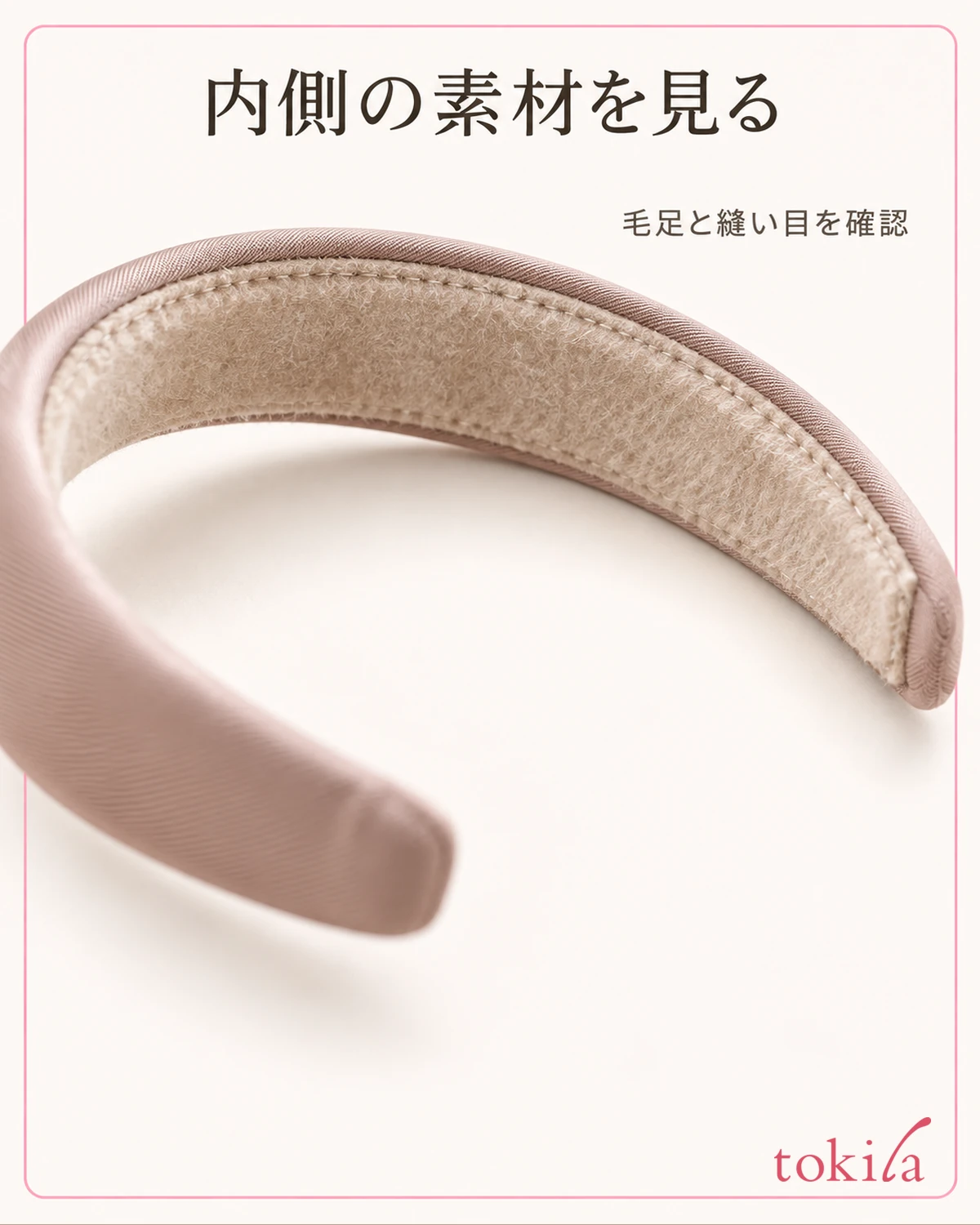
Place it on a desk and look at the left and right tips and the inside. Structures vary: wrapped in fabric, with an exposed resin surface, or fitted with cushions or teeth. Compare it with the shape described in the instructions for the item you own, and check that the tip cover has not slipped on one side only and that no inner part is lifting.
When you look at the tip up close, separate the rounded end from the boundary between the fabric or cover. A visible seam is not necessarily damage, but you can check for an opening that differs from before, an exposed core, cracks, or sharp chips. Do not rub it against your skin or pull off the cover to find out.
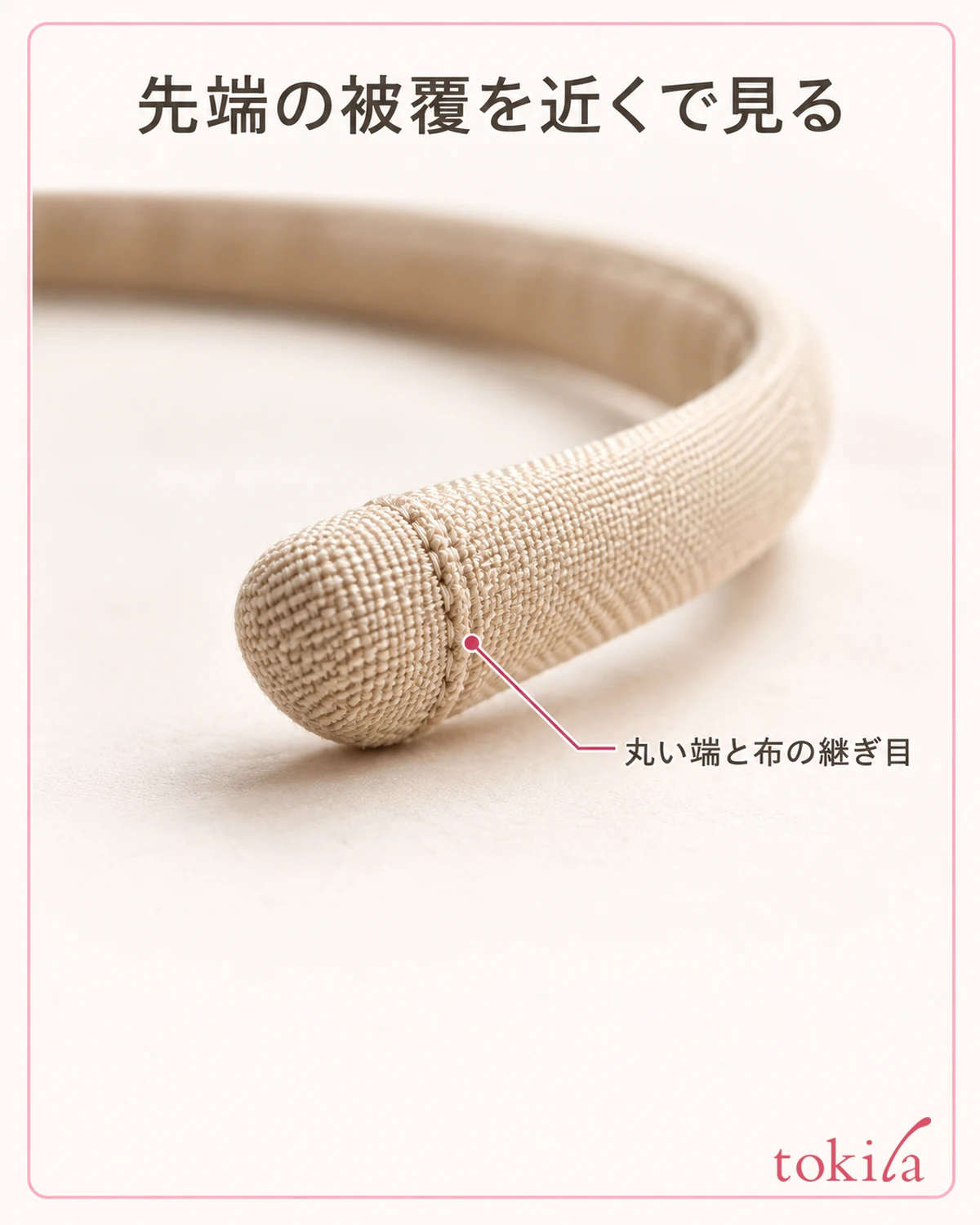
For the width of the band, look separately at the width of the decoration on top of your head and the width of the part heading toward your ear. Some are wide on top but narrow at the tip, and conversely some slim designs are thick on the inside. Don't conclude that the pressure is light just because it looks thin.
Even with a cushion, there is no guarantee that no one will feel pain. Whether the cushion is positioned where it actually presses also differs. Don't choose based only on a description such as soft material; check whether the shape and size are usable for each item you own.
When comparing the left and right on a desk, check them as they sit naturally. Don't press to make them perfectly symmetrical or spread the ends wide. If you bend it without knowing the material of the core or the structure of the covering, it may end up in a different shape or break.
If you find a change that worries you, go back to checking the purchase-time instructions and whether repair is possible, rather than continuing to wear it with forced adjustments. Don't decide by looks alone whether a cover is replaceable or fixed; if you can't tell whether a part may be removed, keep it as it is and ask for advice.
Check how your ear-area hair overlaps with glasses and earrings
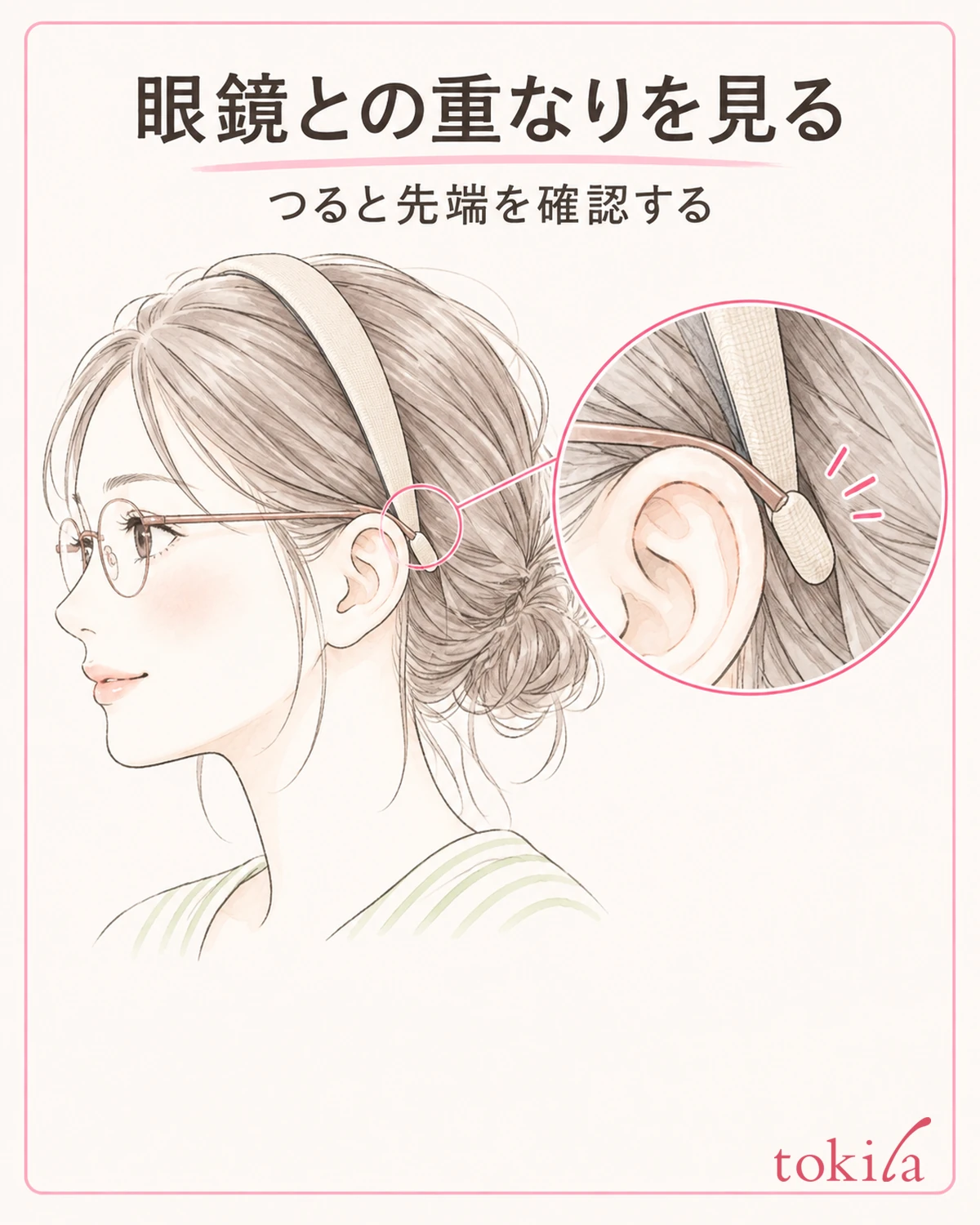
If the structure has no problem and there is no pain or abnormality, lightly part the hair around your ears and then follow the way of wearing described for your item. Don't pull your hair hard to flatten it; make it possible to see in the mirror where the tip settles. Don't make room by folding your ear in.
If you usually wear glasses, also check the state when you have them on. From the side, see whether the temple and the headband overlap in the same place, and whether only one end is lifted. Judge separately whether it works on its own and whether it works together with glasses.
If you have earrings or mask straps, check as well that you haven't pushed them under the tip. You don't need to shift necessary items into an unstable position to avoid overlap. If the combination feels tight, change how you use it that day, for example by taking off the headband or choosing a different hair accessory.
When a strand of hair is caught at an end, don't try to pull it out repeatedly while wearing it; take it off once and tidy the hair. The purpose is not to leave the same amount of loose hair on both sides, but to see whether any hair is being pulled. Check this overlap before adding styling products to hold it in place.
If you switch from a fabric band for face washing, check the purpose and care conditions before reusing a rigid headband after getting it wet. Slipping with fabric bands is covered in the structure of face-washing hair bands and how to tuck hair in. It is important not to transfer the same way of wearing to tools of a different shape.
If it is hard to see the side in a mirror, use a hand mirror or change direction so that you can check around your ear. Don't bend your neck forcibly to see, or pinch the tip and pull it toward your skin. On days when you are wearing many things, you can also sort out the combination before putting it on, for example by taking off earrings you won't use first.
Don't force it in; judge whether the combination is usable
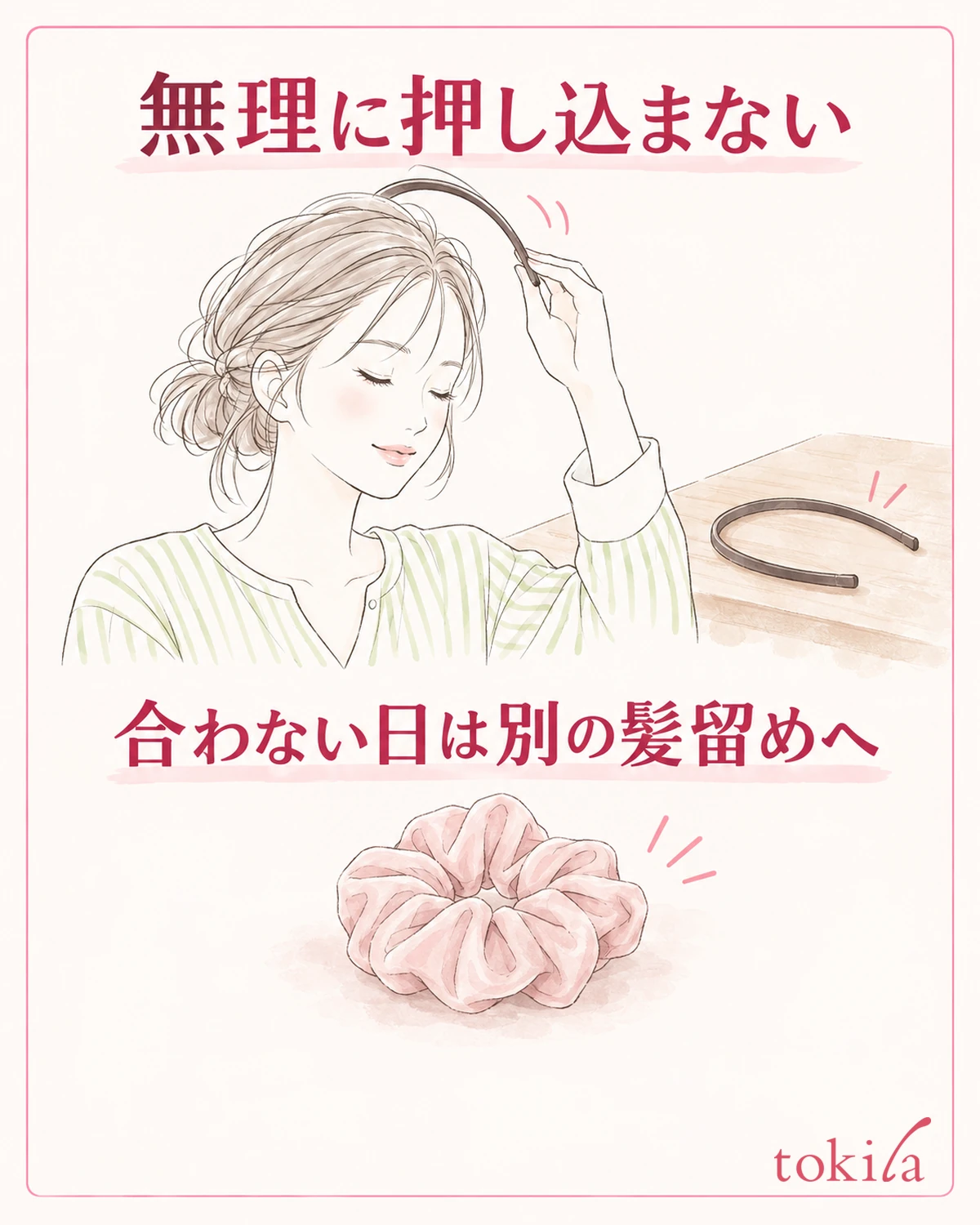
Once it is on, check the position from the front and from the side, and see whether it feels comfortable in your usual posture. Don't make pushing the tip deeper the condition for being finished; judge whether your hair is held in place and whether it overlaps other things around your ear without strain. There is no single fixed position, such as so many centimeters from the ear, for everyone.
If hair keeps coming back and the pressure at the ends is also strong, don't go further toward bending it narrower. It can be hard to meet both the aim of holding hair and a shape that fits your head. You can choose again how to wear it, such as a different width or structure, or gathering your hair at the back.
The combination around your ears changes between days you wear glasses and days you don't. Even a headband that worked before, check whether it can be used comfortably with that day's hair accessories and earrings. Don't overlook the pressure you feel now just because it was fine in the past.
The decision to stop using it is not only for when it looks out of shape. If there is pain, a pulling sensation, or a part that has shifted, take it off on the spot. Stuffing paper or cloth into the tip to make it last until the end of your plans is not offered as a common remedy.
When choosing again, separately from your taste in decoration, check the finish of the tip, the inner structure, the width, and the combination with the glasses you own. Don't reach a conclusion from a single feature such as "wide is comfortable" or "thin doesn't hurt"; compare the conditions under which you can use it comfortably in concrete terms.
If you find yourself fixing the position with one hand again and again while wearing it, take it off and check before you keep doing that. Whether you can go about your day without worrying about the position is also a factor in how easy it is to use. If you choose a loose one and it keeps falling off, don't try to solve it just by tightening the pressure; consider a different structure.
After use, care for it as labeled and store it so it keeps its shape
After taking it off, look for tangled hair or makeup residue, and care for it in a way that suits the material. Even if it is wrapped in fabric, it may not be washable in water. If resin, metal, glued parts, and decorations are combined, check the instructions for your item, covering each of them, before handling it.
Don't use nail polish remover or alcohol on your own judgment to remove dirt. The liquids and wiping methods you can use differ by material, and removing makeup is separate from not damaging the covering or core. If you don't know how to care for it, don't substitute the instructions for a different headband; check what applies.
Even if the fit feels tight, avoid warming it with hot water or a hair dryer to widen it, or hanging it on something heavy to stretch it. Think of how you put it away after use and shape-changing modifications as separate things. Even when a dedicated storage accessory is specified, don't extend the same method to every material.
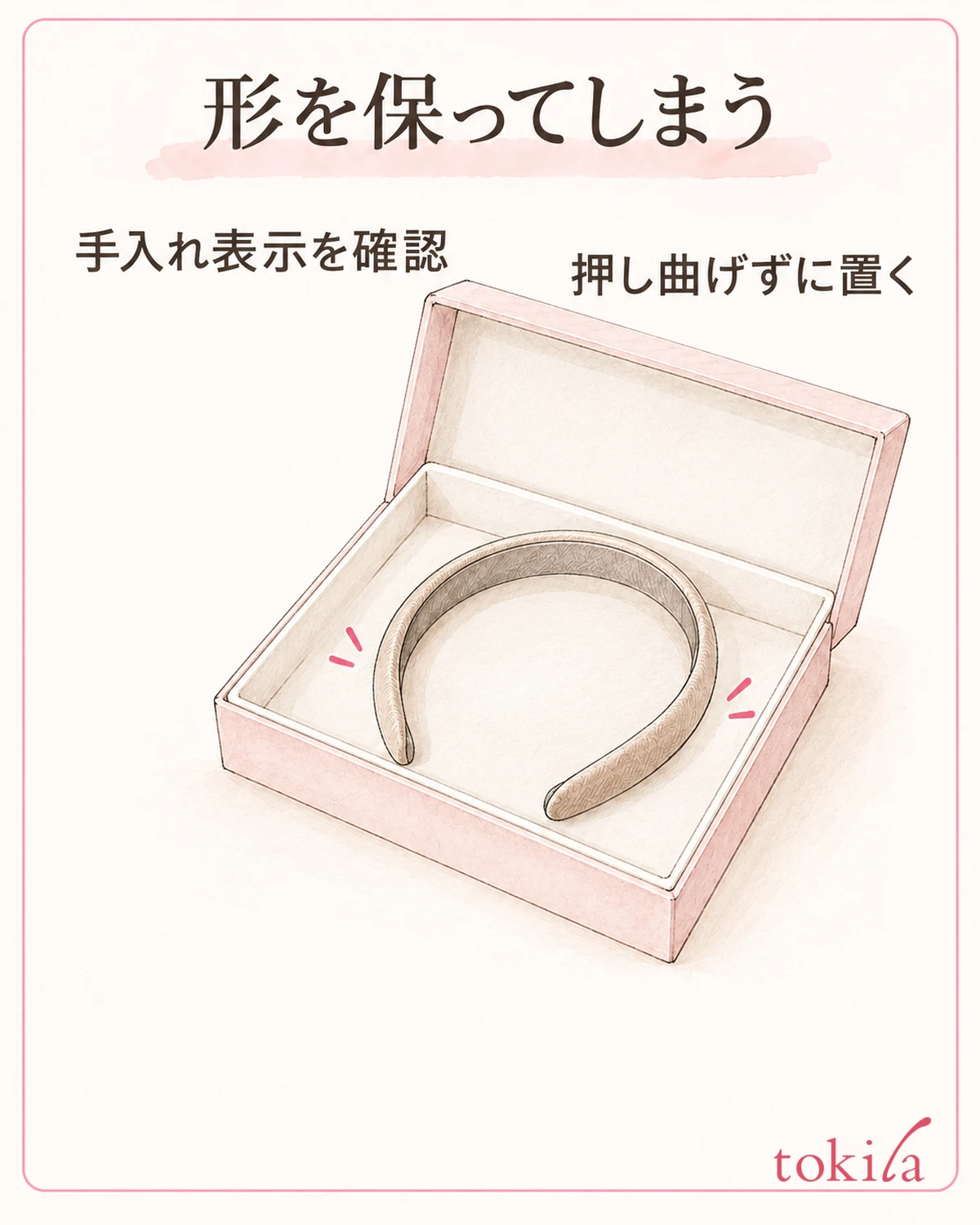
When storing it, don't push it under other things or apply uneven force to the left and right ends. Choose a place where the decoration won't catch on its surroundings and the shape isn't strained. Don't overlap or fold the ends to fit it in a small pouch; check first that it fits in size.
Before the next use as well, look at the covering on the tip, the inner parts, and any cracks or deformation. Remember where it pressed while you wore it, and avoid repeating the same strain with the same combination. Look at the tip and the width, separate how the hair and ear area overlap, and take it off if it doesn't fit. In this order, you can choose the hair accessory for the day.