After using a lipstick, you turn the case but the product won't go back down. Before you hurriedly push the tip with your finger or press it in with the cap, check what kind of case you have. Some designs don't allow the product to be retracted once it is extended, so an unusual movement alone doesn't mean it is broken. Think of stopping and storing it according to the label as two separate things.
This article covers what to check when a stick lipstick feels like it "won't go back" at the point of putting it away. It is not a repair guide for gluing a broken lipstick or reheating it to refill. Check, in order, the labeling on the case, the condition of the product and the twisting mechanism, whether the cap can be closed, and how much to extend next time.
1. Before turning, check on the label whether the case allows retracting
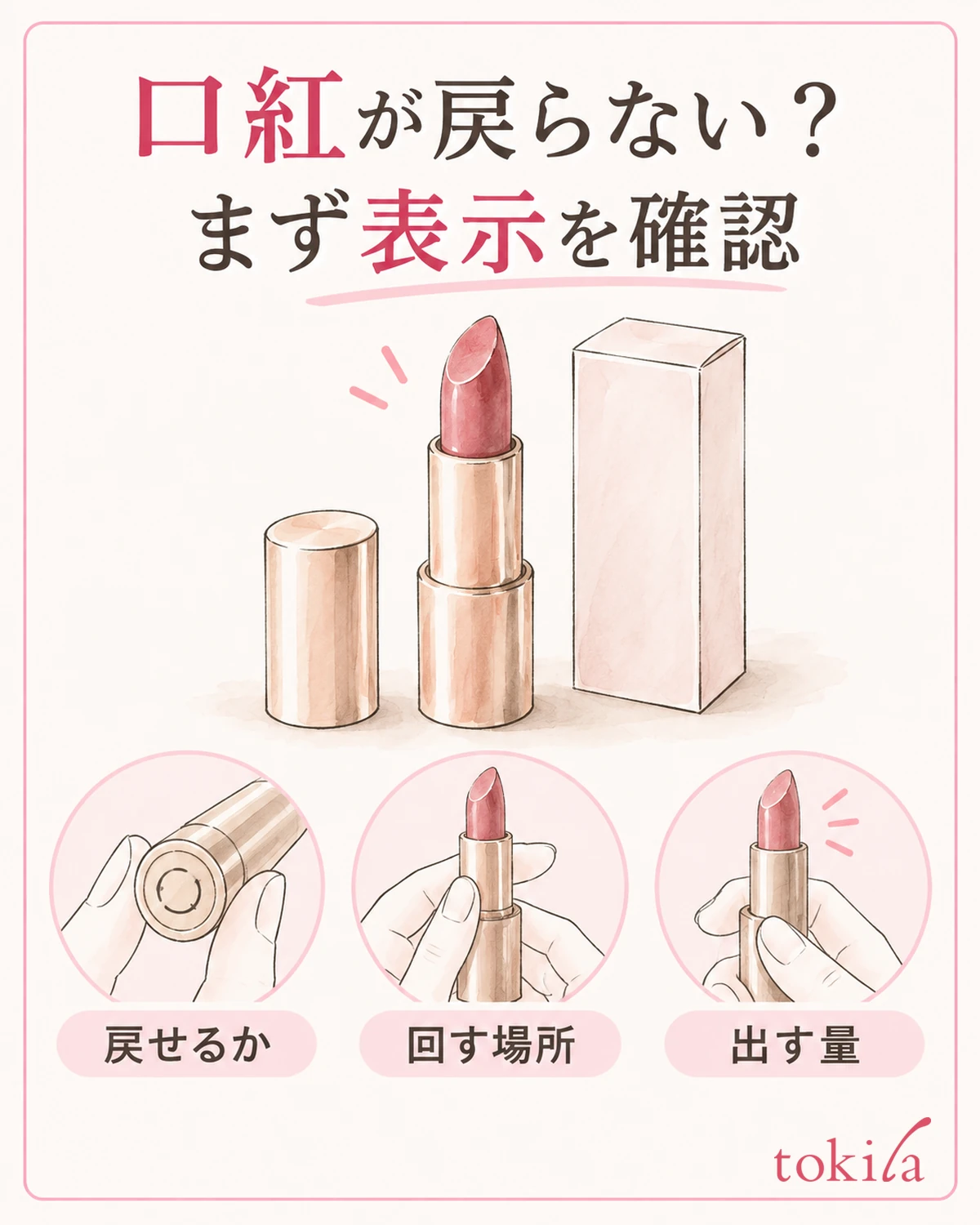
First take the lipstick away from your lips and move to a bright, stable place. Without touching the product, hold the outside of the body and read the directions on the case and outer box. If there is a label such as "cannot be retracted once extended" or "do not extend too far," set aside for now the assumption that you can turn it the other way to put it away.
A slim lipstick, a glossy lipstick, or one that you turn at the base cannot be sorted by looks alone into ones that retract and ones that don't. Cases of similar shape have different mechanisms. Check that the product name or item number matches the description, and don't apply the operation of another lipstick you used before.
When you find the label, look not only at whether it retracts but also at which part to hold, which way to turn, and how far to extend. Don't fix the turning direction for every case as "right to extend, left to retract." The direction is easy to mix up depending on which side you are looking from, so match the position you hold to the diagram in the directions.
If you have thrown away the outer box and lack information, don't turn it around repeatedly in big movements just to check. Note the name left on the body and the label on the base, and stop extending it further until you can confirm the directions for your product. Don't use not knowing as a reason to try applying force.
For a case that cannot be retracted once extended, being unable to retract is itself a feature of the design. On the other hand, if the same lipstick that used to retract has suddenly stopped moving, that change is also something to check. Separating design from change helps narrow down where to look next.
Checking the caution sticker that was on it at purchase and the name on the base of the case as separate pieces of information reduces mix-ups. If you have only a memory of the directions for a different type in the same series after the caution sticker was peeled off, don't keep turning on that basis. Even if the exterior looks similar, take the extra step of confirming that it corresponds to the product you have.
2. Without touching it, separate the tilt of the product from the movement of the turning part
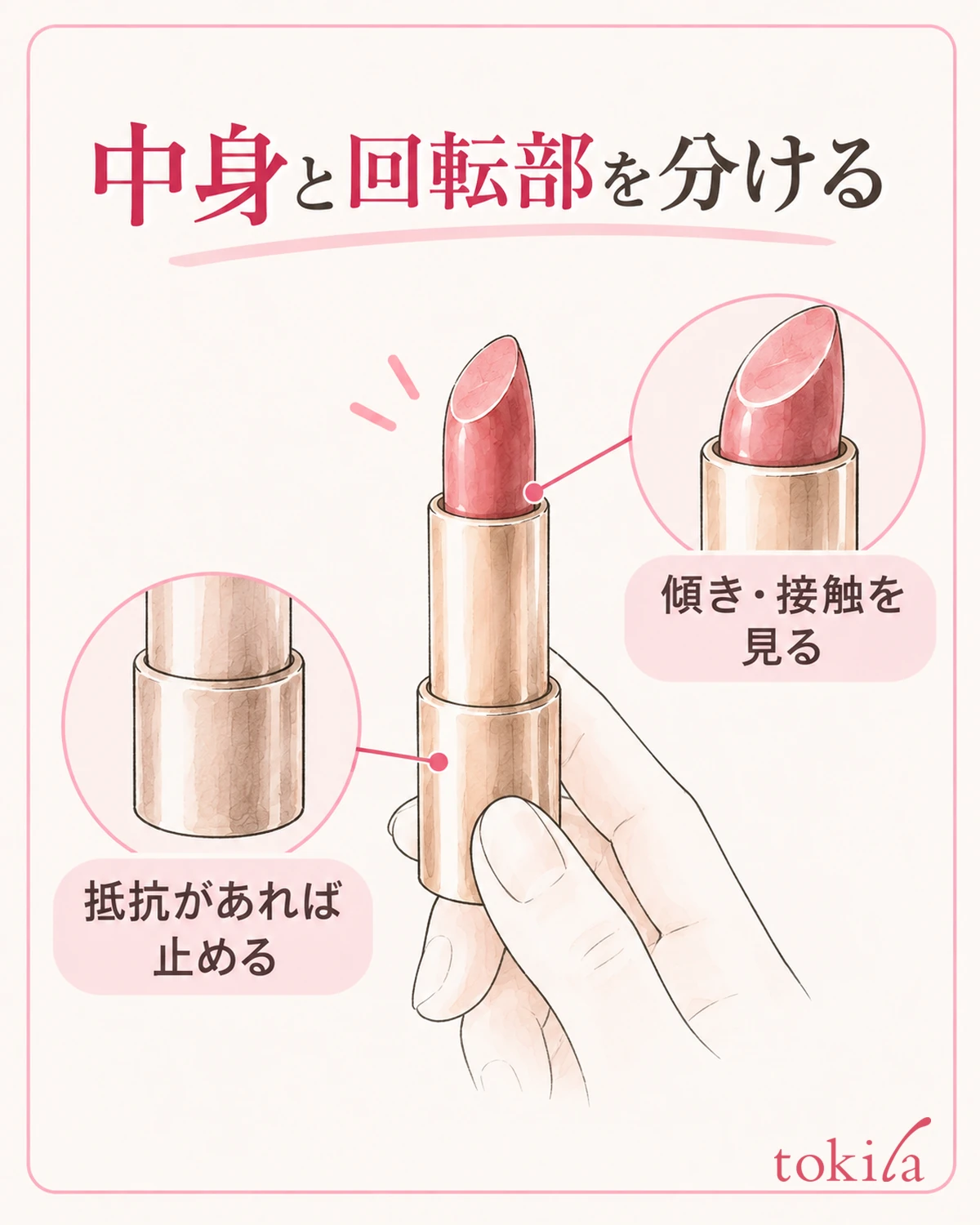
Next, look with your eyes at the exposed product and the rim of the case. If it is leaning and touching the rim, has a crack at the base, or the surface is badly deformed, don't test its strength on your lips or push it back toward the center with your finger. Keep this stage to checking the condition you can see.
Record separately the state where the turning part won't move and the state where the turning part moves but the height of the product doesn't change. You can call both "won't go back," but that is no basis for judging that they have the same cause or can be fixed the same way. Don't take the product out to examine the parts inside; limit yourself to what you can tell from the outside.
Also check the seam between the turning part and the body. Following the diagram in the directions, look at whether you have mistaken where to hold and are gripping the turning part and the body at the same time, or whether you are operating it with the cap still on. A seam alone doesn't mean it can be turned, so decide where to actually move it from your product's directions.
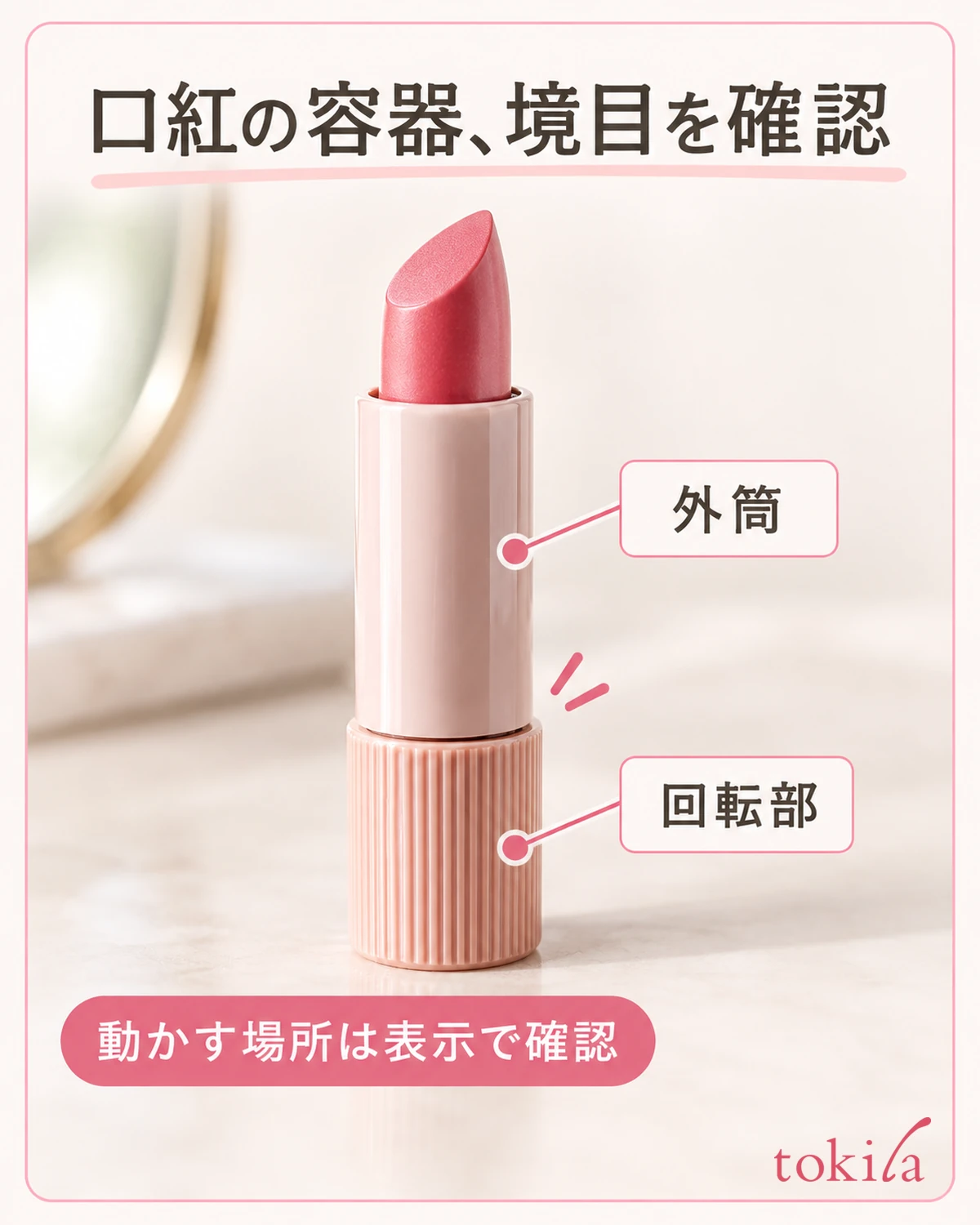
Only when you understand how the product works and have also confirmed that it is a structure that can be retracted, handle it with the specified grip and direction. If the movement is stiff, the product moves at an angle, or it is making more contact with the case, stop rather than trying again and again. Don't make it a procedure with a set number of turns, such as "turn it a few times and it will be fine."
If you noticed a change in some situation, such as after dropping it, leaving it somewhere hot, or just after swapping a part, jot that down briefly. Don't assume that event alone is the cause; treat it as information for stopping use and checking the condition.
When you switch hands during the check, don't use the exposed lipstick as a support. If your fingers might slip and touch the tip, rearrange where you hold it and the space on the desk. Rather than turning a small case while looking at your lips in a mirror, going back to a place where you can see your hands makes it easier to follow what you are moving.
3. Don't push an over-extended product back with your finger or the cap
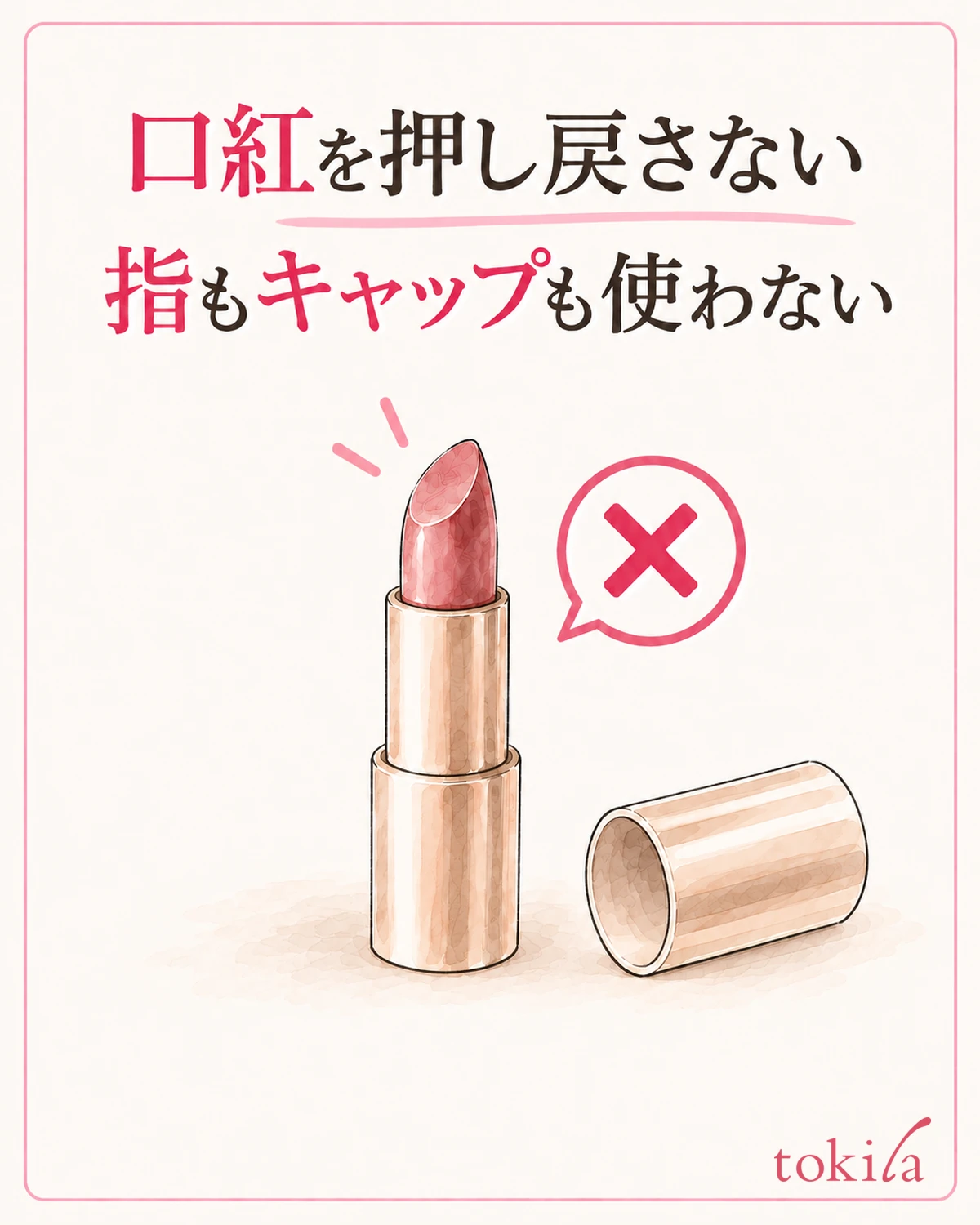
Even if you have extended a non-retractable type too far, don't switch to pushing the tip down to make it shorter. Covering it with tissue and pushing, pressing the tip against a desk, or pushing it back with the bottom of the cap are also not the specified way to store it. Without changing the shape of the product, first stop the extending action.
A soft lipstick can break depending on how far it is extended and how much force is applied. Avoid putting force on the exposed product, such as pinching its side to make it look shorter or supporting the base and bending it back. The guideline for length differs by product, so don't carry the figures of another lipstick over to your own.
Don't make warming it, cooling it, adding liquid, or forcing it into another container a standard procedure for when it won't go back. The more treatments you pile on that aren't in the directions, the harder it becomes to explain the original condition. If it has been left somewhere hot, don't judge from looks alone that it can be used again.
If you can see breakage or wobbling, don't try to use up what remains by applying it as it is. Pressing the tip against your lips may also bring the rim of the case into contact with them. Treat finding ways to use less and continuing to use a product whose shape has collapsed as separate matters.
When you don't know the cause, what you need is not tools for repairing the inside but the product name, the labeling, and the condition you can see from outside. Sort out whether it is a design that can't be retracted or whether it can't perform the movement it should, and until you can judge, don't force the storage to completion.
4. Check that the tip doesn't touch anything, and confirm how to close it
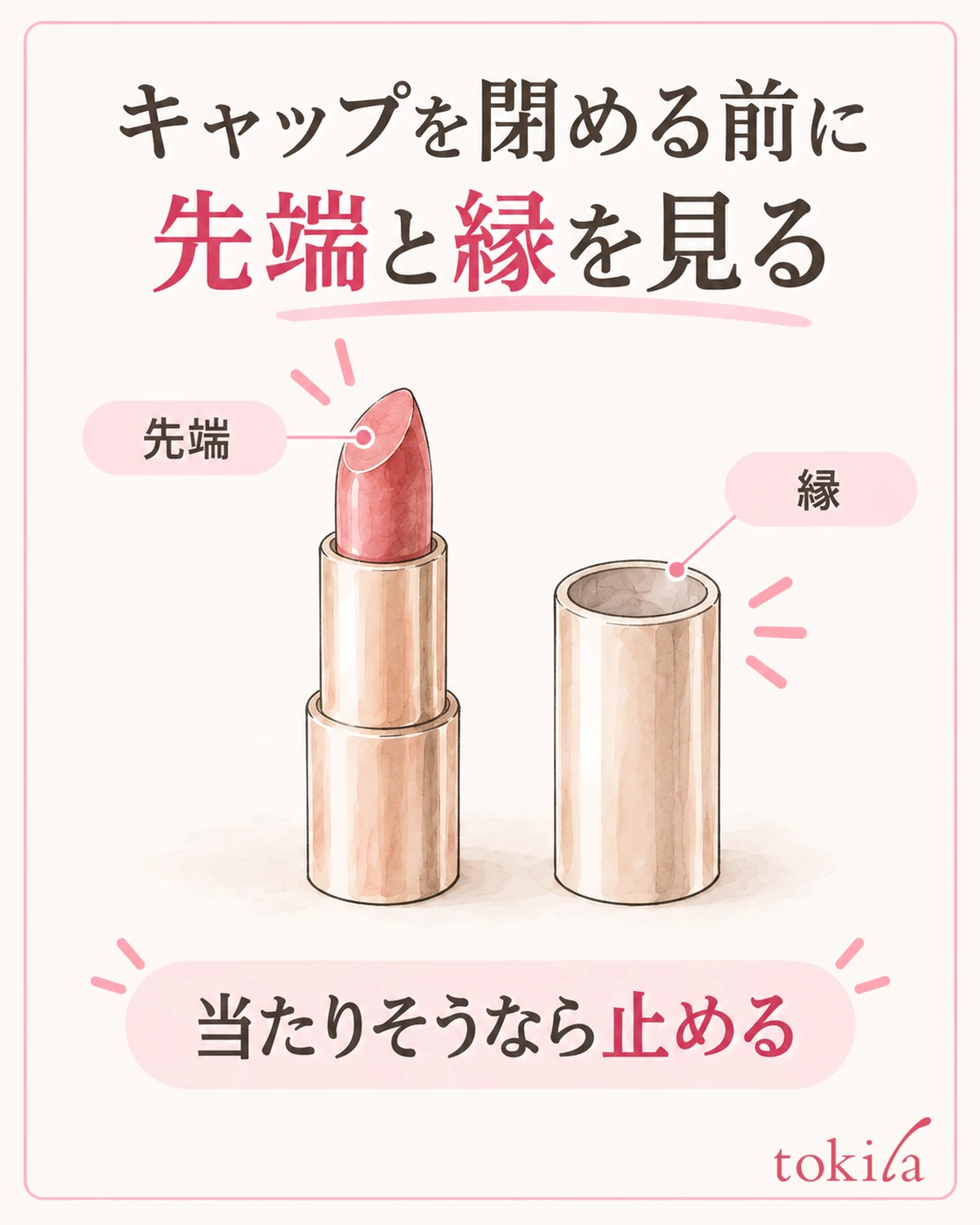
If you were able to handle it as labeled, look at the opening of the cap and the position of the product. Check that the cap belongs to that body and that its rim isn't deformed. Don't put on the lid of another product of similar shape, or test whether it fits by pressing hard; judge with the original combination.
When closing it, follow the directions for your product and watch whether the tip is touching the rim of the cap. If it is hard to close and you only increase the force, the action of closing the lid turns into the action of pushing the product. If it looks like it will touch, stop, and recheck the extended length and whether the structure allows retracting.
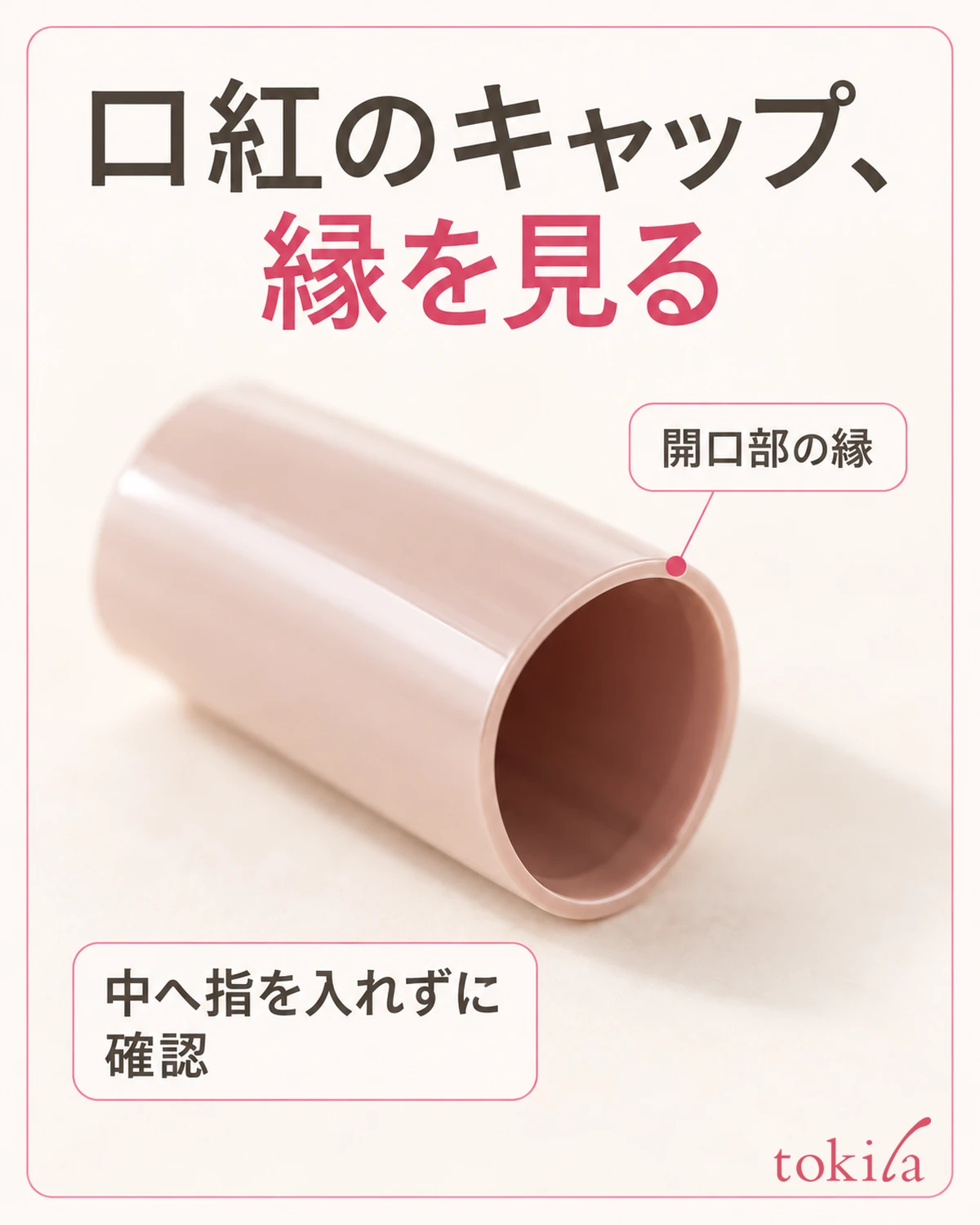
When checking the removed cap, hold it so that you can see the opening. There is no need to insert a finger or cotton swab inside to measure the depth. This visual check is to avoid pushing it all the way in without knowing whether it will hit the product. How to clean dirt inside the cap should also follow how the product is to be handled.
If it is a non-retractable type, a lot is extended, and you can't close it as specified, don't turn it any further to adjust. We don't recommend putting the lipstick bare into a pouch or pressing another bag tightly against it as an ordinary way to store it. Refrain from carrying it until you know how to handle that product.
Even if you manage to close it properly, avoid places with direct sunlight or that easily become hot, and follow the storage label of your product. Check from where you used it to where you put it away, so that you don't leave it near a heater or in a sunlit car.
5. Next time, extend only what you need, and record any changes
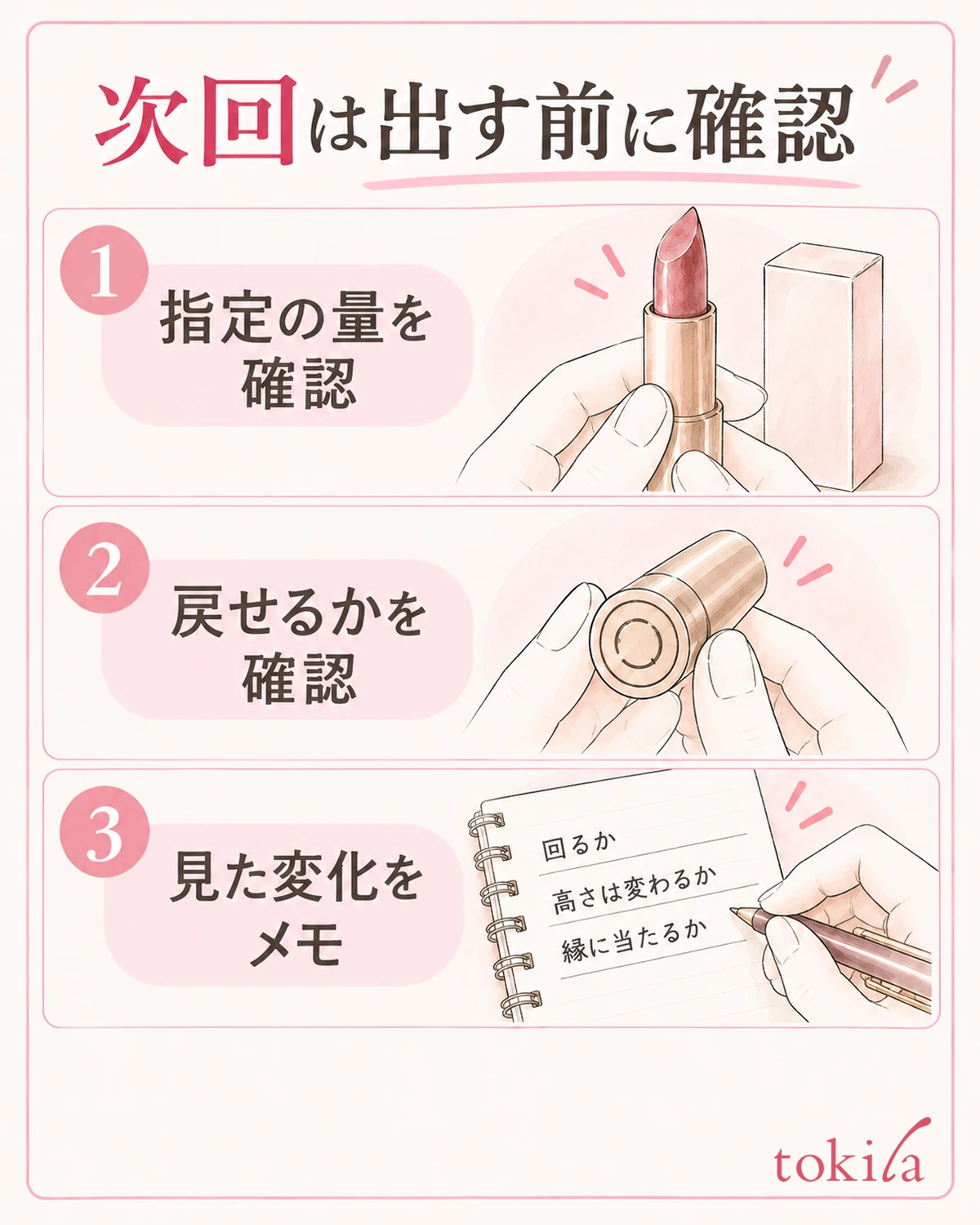
Before you use it next, first check how far your product extends and whether it can be retracted. Even if a short figure is written there, don't guess the length from how it looks in an image; go by what is specified for your actual product. With a non-retractable case in particular, it is important to handle it little by little within the specified range, rather than extending a lot and adjusting afterwards.
Don't choose to extend it to the maximum just to see how much is left. Even with a product that can be retracted, avoid touching the side of a product that is extended long. If a way of checking the remaining amount or a guide for when it is used up is given, match that explanation with the actual movement, and don't infer the internal structure from the extended length alone.
Record the facts you saw briefly, such as "the label said from the start that it can't be retracted," "the turning part moves but the height doesn't change," or "it looks like it will hit the rim when closed." Finishing with just "broken" or "hardened" makes it harder to remember where you checked.
Jot down the product name or item number and when the change began as well. Keep the state before you moved it to another container or removed parts, and use that when you check the directions. This note is not a performance record for the product; it is for sorting out how to handle your own lipstick.
Once you have confirmed the storage problem, if you want to adjust how deep the color is when applied, see also Reviewing the amount, shade and tissue-off of lipstick. Confirm first that the case can be handled normally, and don't mix up the question of how much to apply with how to deal with a product that won't retract.
Separate today's response from prevention next time as well. For the lipstick you can't close right now, confirm what to do for your actual product; next time, read the label before using it. Don't assume that the habit of extending less will fix a container problem that has already happened. If you aren't sure whether you can keep using it, don't test it in your next makeup application and then decide.
When a lipstick won't go back, confirm the design from the label, and separate what you can see from how it moves. Stop before pushing it back or closing it hard. Confirming how your own product is meant to be stored before moving on lets you make a judgment without adding unnecessary actions.