When you look for moisturizers labeled "with ceramides," you will find toners, serums, emulsions, creams, and more. Similar ingredient names do not necessarily mean the same feel or routine. Read the listed names and purposes first, then decide what role you want to add to your current routine to help narrow your options.
Here, we explain what to look at when choosing moisturizers with a focus on ceramides. Rather than ranking them solely by the types or number included, picture how you will use them every day.
1. Compare the words "with ceramides" with the ingredient label
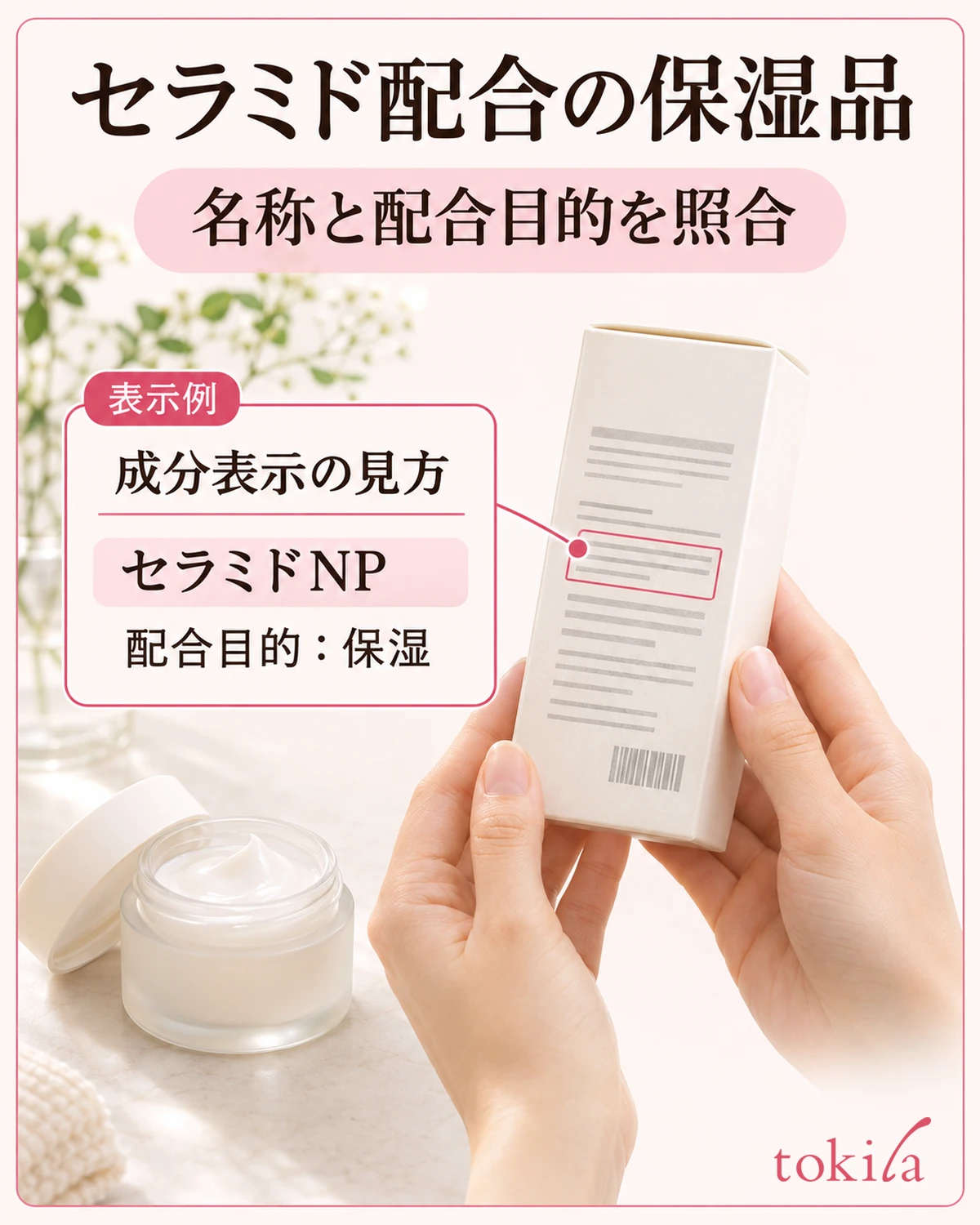
Large wording on the front of a package briefly conveys a product's features. When choosing, go beyond those words and also read the ingredients on the container or box and the explanation of their purposes. Reading the letters after "ceramide," as in "Ceramide NP," "Ceramide AP," and "Ceramide EOP," helps you compare the label with the product description.
Some moisturizing products focused on ceramides use ingredients that work similarly to ceramides. Do not assume that they all contain the same ingredient based only on the front wording. Rather than memorizing long names, check whether the names given in the notes to the product description appear on the label you are holding.
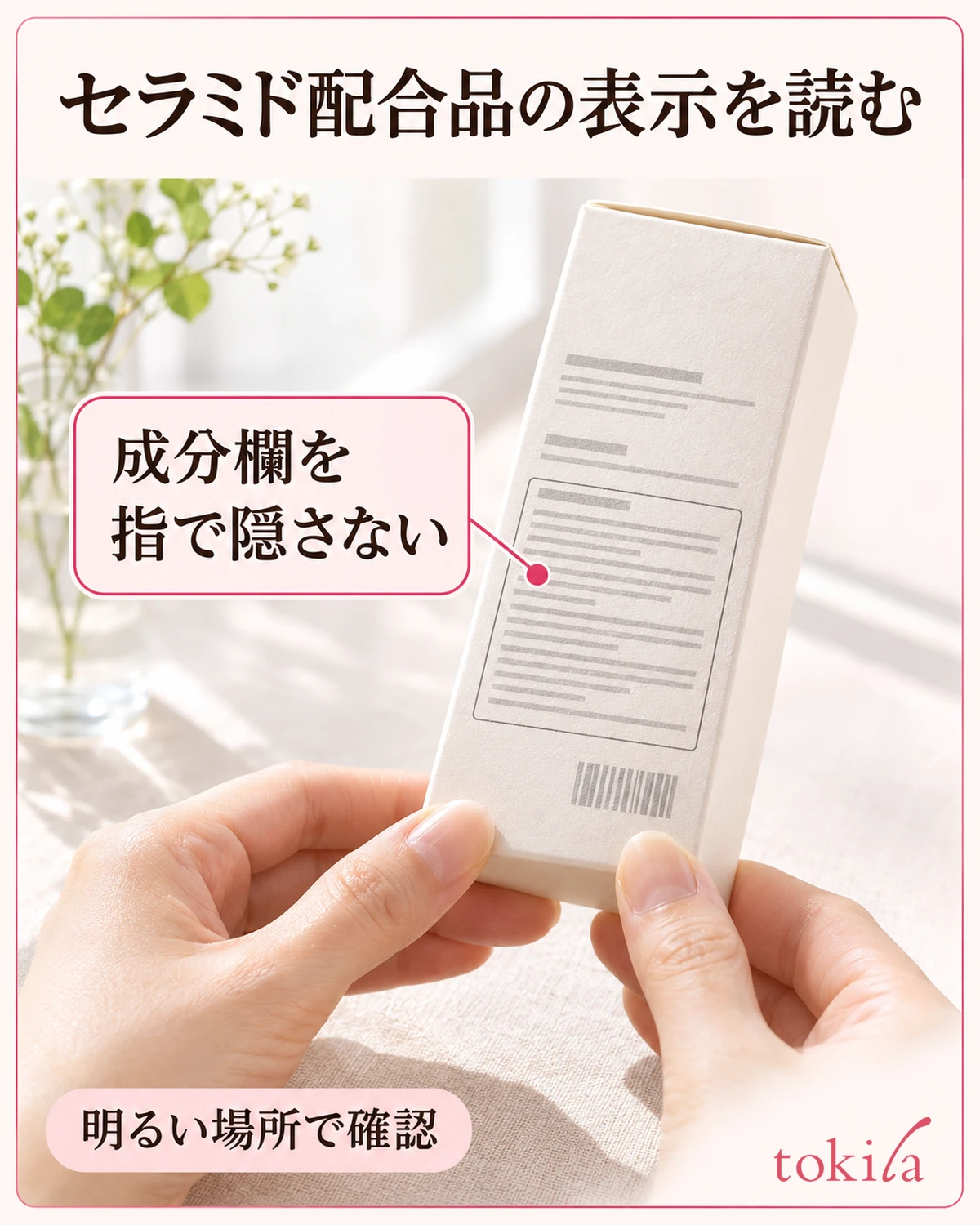
If you can turn the box over and read it before buying, face the ingredient panel toward a bright area. Do not cover small print with your fingers, and check that you are not breaking a name midway. Online, also check that the ingredient panel matches the size and type of the current product you are buying. Even within one series, toners and creams have different combinations of ingredients.
Cosmetics and quasi-drugs differ in how ingredients are labeled and how permitted product benefits are treated. Do not infer that ceramides are active ingredients solely from the word "medicated." Distinguishing an ingredient described as moisturizing from an explanation of an active ingredient helps you organize your expectations.
2. Do not rank products solely by types, counts, or concentration numbers

Seeing several ceramide names together may make you feel that more types would suit you better. However, the number of types is only one piece of product information. That number alone does not tell you the amount included, the feel when spread on skin, or the combination with other ingredients. You do not need to exclude a product just because it contains fewer types.
Read terms such as "human-type" as a starting point for understanding an ingredient's characteristics. The term does not establish that irritation will not occur or that the product suits everyone's skin. If there are ingredients you want to avoid or concerns you noticed with previous products, check ingredients other than ceramides and the precautions as well.
If a concentration is given, check what the number refers to. A percentage of the ingredient itself means something different from a percentage of a raw material or complex containing several ingredients. Do not line up numbers whose subjects are unclear and decide that higher is better. If there is no explanation, leave it unknown in your comparison rather than guessing a conversion.
When narrowing your choices, compare the areas of use before being distracted by the amount of information on the label. Products for the face, body, or specific areas such as around the eyes can have different conditions of use. Even if the ingredient names match, first check whether the product is intended for the area you want to use it on.
It helps to make separate comparison notes for "ingredient name," "purpose," "formula," and "application position." Start by placing two products with the same intended use together and record only the information you can read. Avoid filling unknown fields by guessing amounts from price or equating a longer ingredient name with greater strength; this makes choosing more manageable.
3. Choose toners, serums, emulsions, and creams by when you will use them
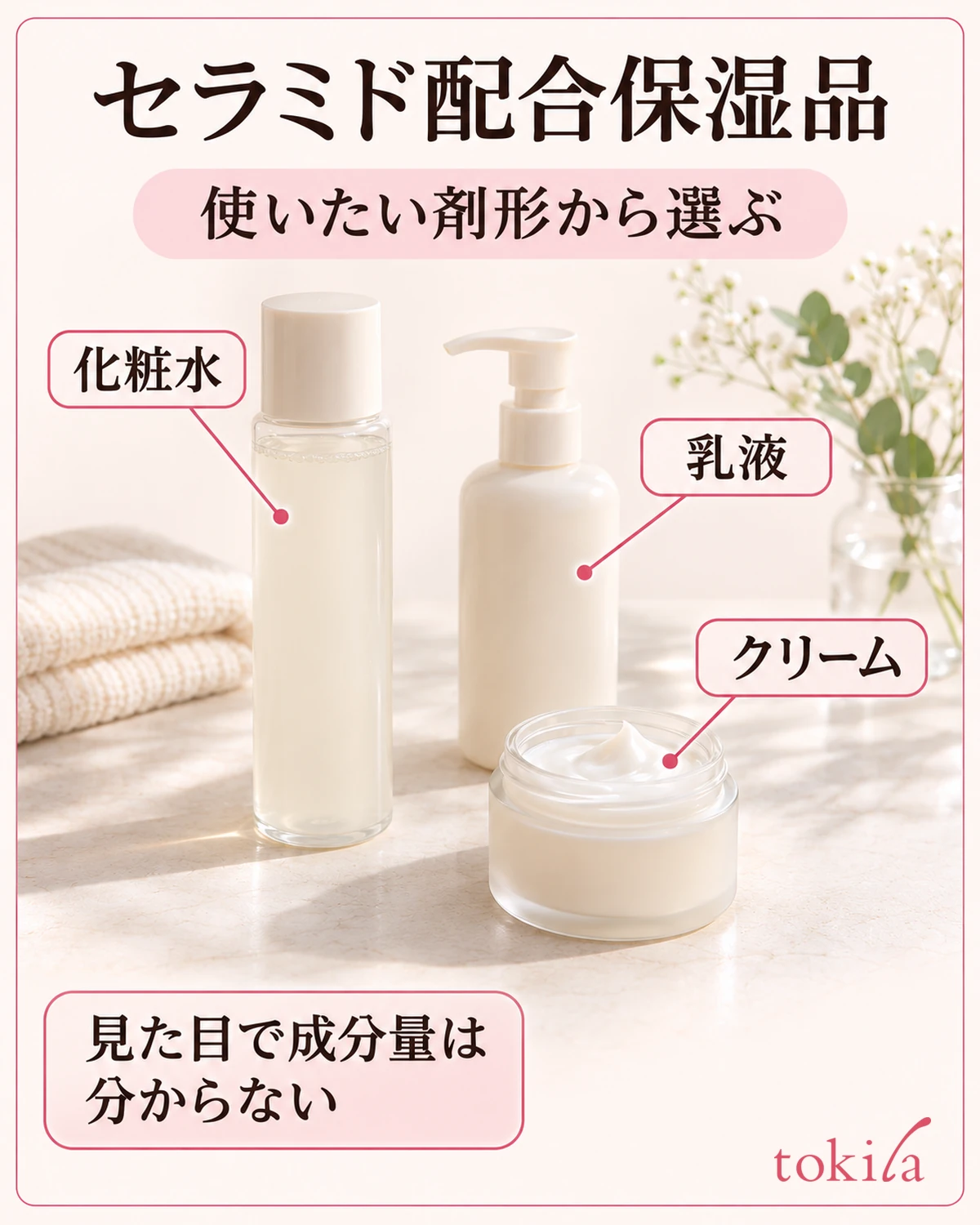
After focusing on ingredients, consider which form of moisturizer you want to use. Do you want to reconsider your current toner, replace an emulsion or cream, or find an additional serum? Deciding on the role first makes it easier to avoid buying several products simply because they contain the same ingredient.
For toners, check instructions for applying with hands or cotton; for serums, check the amount and position in the routine; for emulsions and creams, check the feel after spreading. Read each product's explanation rather than ranking moisturizing strength in a single order based solely on formula names. Whether a liquid is light or thick, its appearance alone cannot tell you the amount of ceramides.
For example, if you use an emulsion in the morning and want to replace only your nighttime cream, first compare creams suitable for nighttime use. Whether you also need to change your toner is a later decision. Rather than making the ingredient itself the goal, start with one part of your current routine you want to change, linking the product you buy with the occasion for using it.
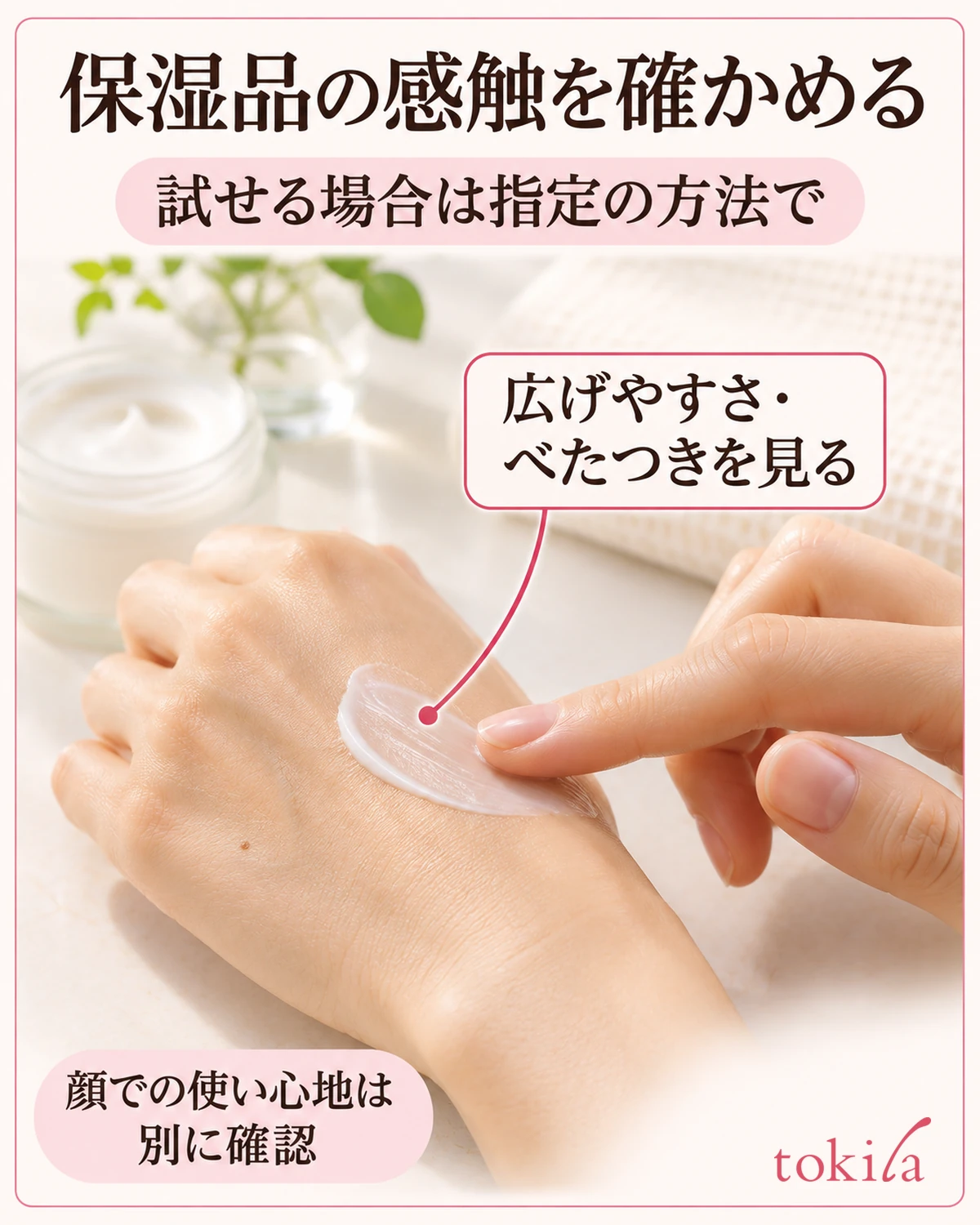
If you can try a product, follow the specified testing method and check spreadability, scent, and tackiness after application. The feel on the back of your hand does not guarantee how it will feel on your face or how unlikely it is to cause irritation. Nor can you tell from the appearance of a white cream or clear liquid that it contains more of a particular ingredient.
For morning use, picture moving on to sunscreen and makeup; for nighttime use, picture the end of your usual routine. Ease of handling the container and dispensing one application are also comparison points for daily use. Even if you like the container, if you find the amount difficult to control, you can consider another form of product with the same intended use.
4. Fit the application order into your existing routine
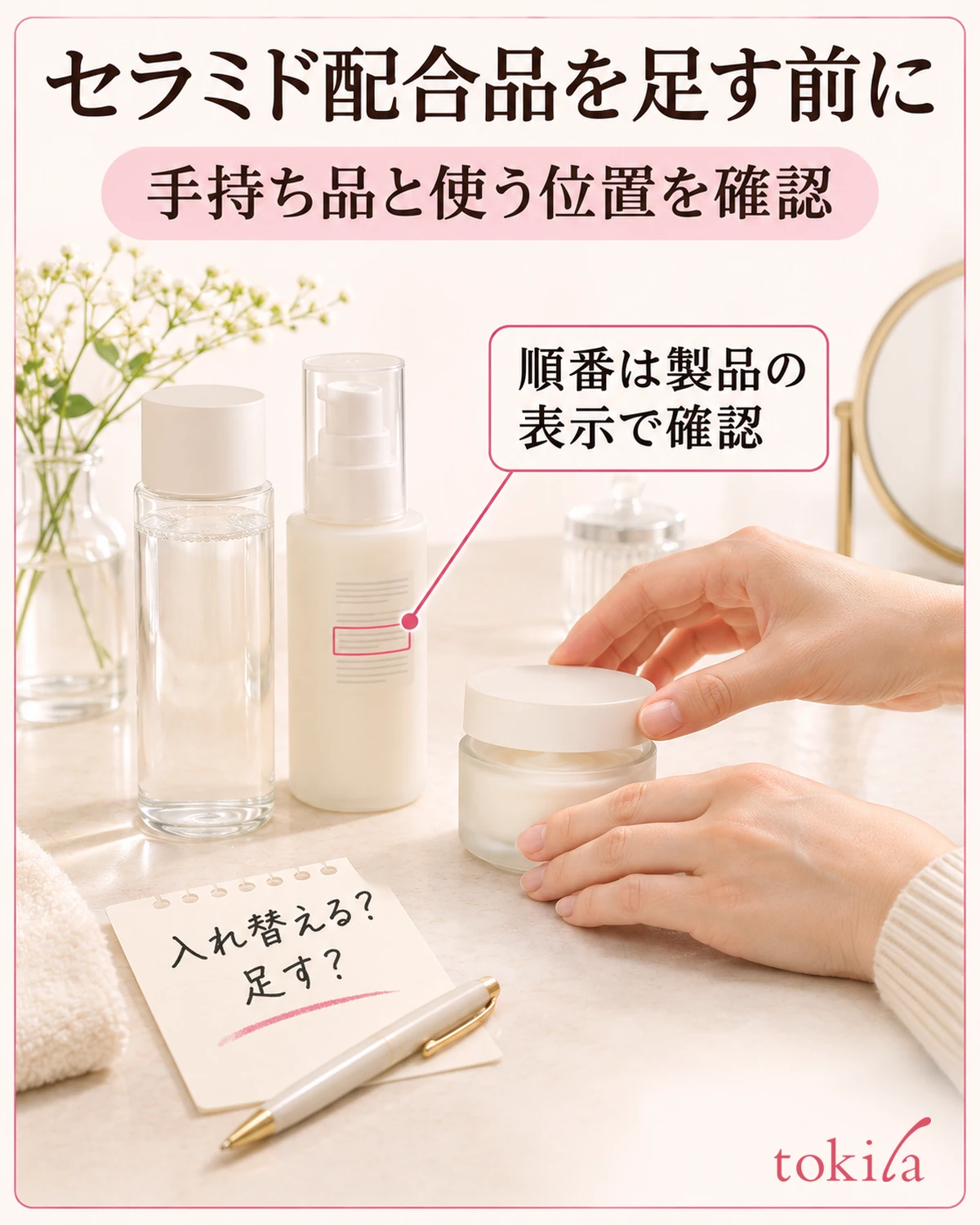
Whether a product contains ceramides does not by itself determine its application order. Read the chosen product's directions to check whether it goes before or after toner and how it relates to emulsion or cream. Deciding on one place within your current lineup reduces uncertainty after purchase.
When adding a moisturizer, decide what to replace and what to keep. For example, if you are looking for a cream, one approach is to compare your current cream with the new candidate without assuming from the outset that you will layer both. Even when layering, check each product's directions and amounts; do not mix them inside a container or dilute them on your own.
If a product specifies different amounts or orders for morning and evening, read both sections. Whether it is rinsed off or left on is another point to check separately from the ingredient name. If you do not know the order relative to your existing products, check the directions for that combination before adding it instead of forcing everything into layers.
When you start using it, use the specified amount as a reference and briefly note the products and order actually used. Introducing several new products at once makes it harder to identify which product or combination to reconsider if the feel concerns you. Rather than replacing everything at once, check each candidate's role one at a time.
For basic spreading techniques after choosing an emulsion, see how to apply facial emulsion. Follow the purchased product's label for specific amounts and areas. You do not need to rub it in forcefully because you think ceramides require a special technique.
5. Separate amount-related concerns from skin condition when starting
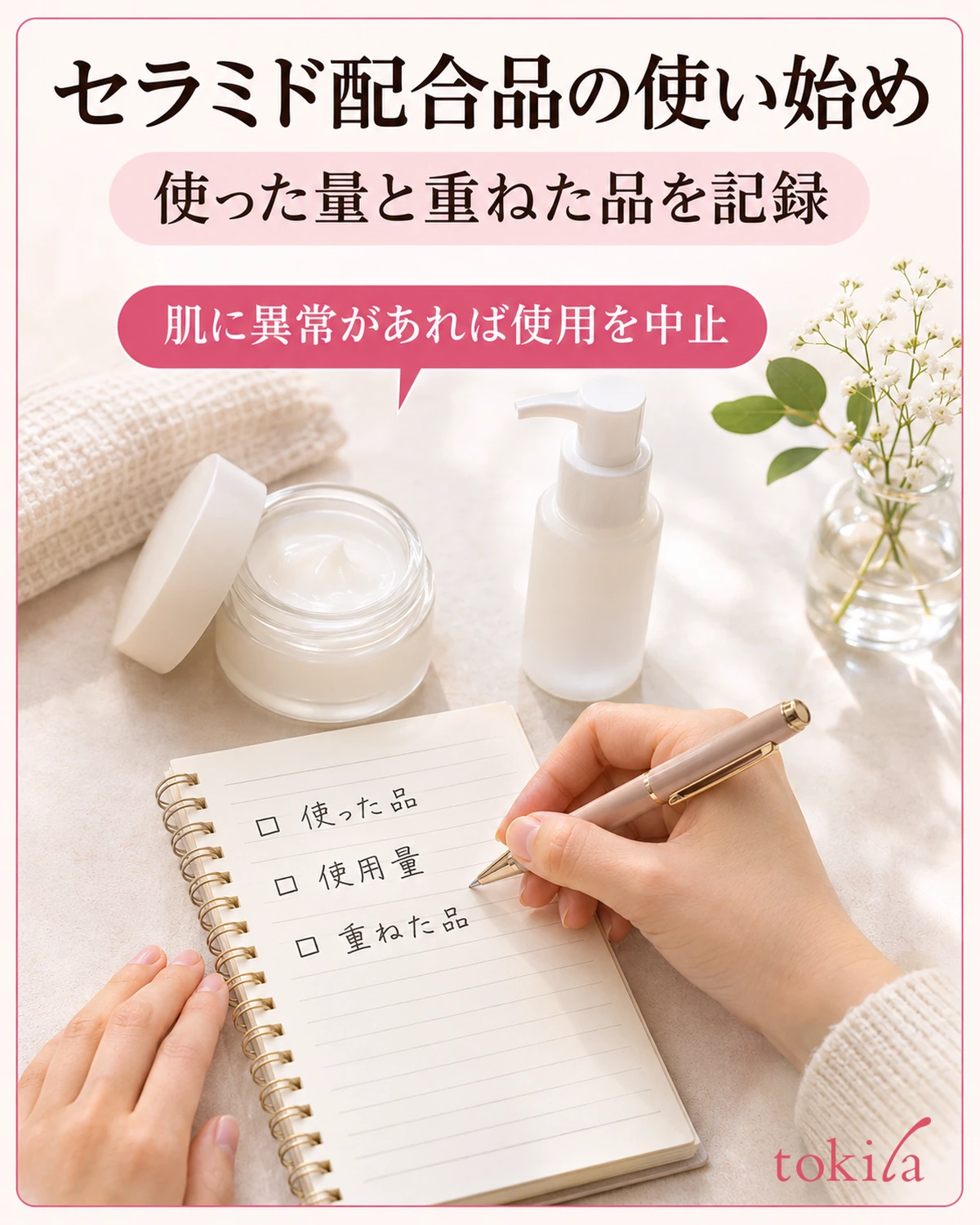
If a product feels heavy after you choose it, first review how much you used and what you layered. Check whether you dispensed more than the labeled amount for one use or layered several moisturizers with the same role. Do not return excess to the container; check whether you can adjust the amount dispensed next time.
However, if you notice redness, swelling, itching, irritation, or other abnormalities, treat these separately from preferences about tackiness and stop using the product. Do not increase the amount or frequency on the assumption that continued use will make you accustomed to a moisturizing ingredient. If abnormalities persist, consult a dermatologist or similar specialist rather than trying to treat symptoms with cosmetics.
Even if dryness concerns you, before immediately layering another ceramide product, review the amount, missed applications, and the steps from cleansing to moisturizing. If tightness after cleansing concerns you, see how to connect cleansing and moisturizing. You cannot diagnose an individual skin condition or determine an ingredient deficiency by appearance alone.
Even if you take before-and-after photos, different lighting directions or camera distances change appearances. Do not treat a few observations as proof of an ingredient's action or your skin's ceramide levels; instead, consider whether it works comfortably as your usual moisturizer. Separate decisions about abnormal skin reactions from comparisons made to find a texture you prefer.
When choosing again, briefly record why it did not suit you within what you actually observed, such as "heavy when layered," "hard to follow with morning makeup," or "scent differs from my preference." Avoid jumping to conclusions about whether the ingredient name itself is good or bad. Narrowing the next comparison, for example to a different formula with the same role, makes choosing easier. Use both label information and everyday feel to guide your choices.