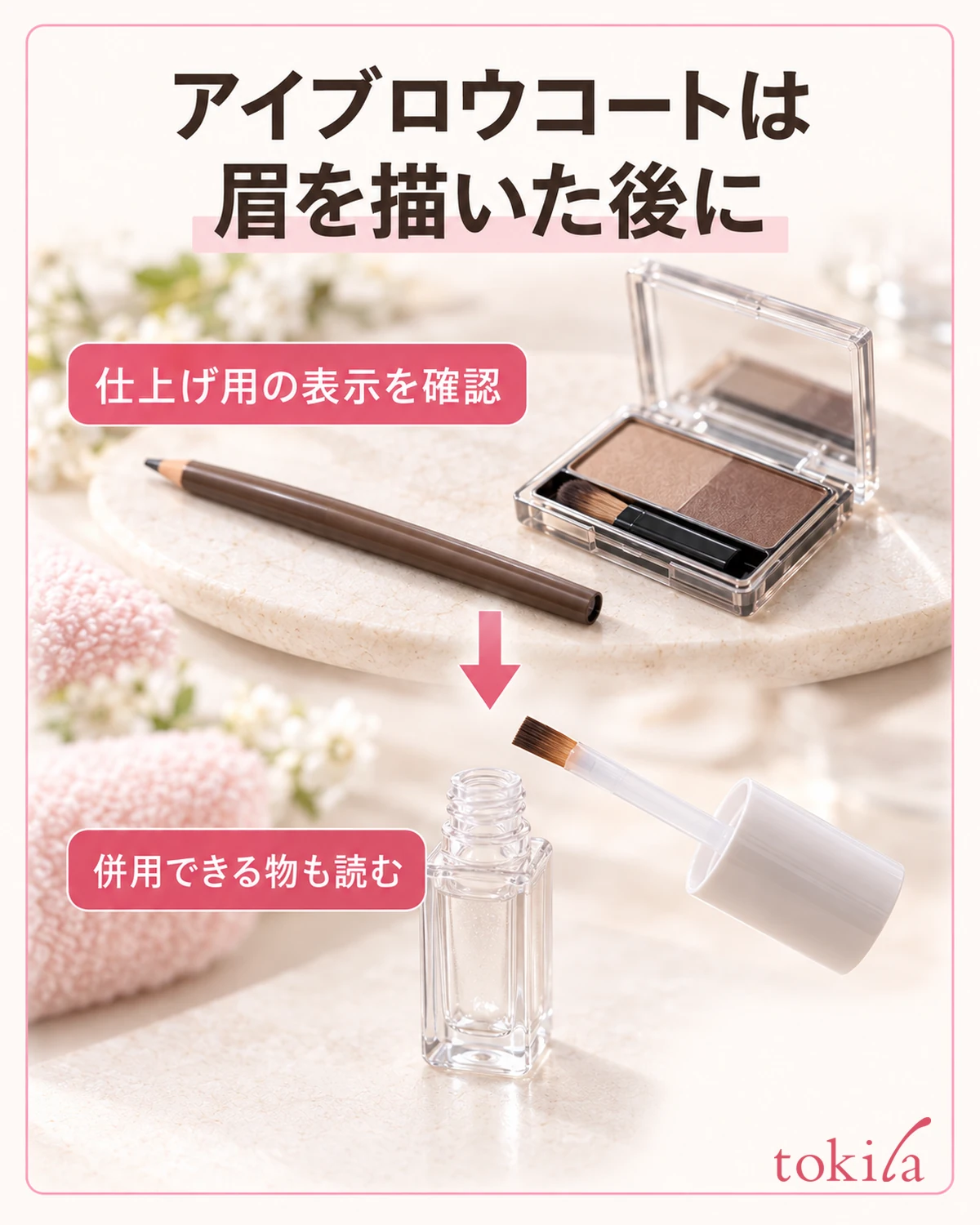
On a day when you wore only sunscreen, is a facial cleanser enough? If you applied foundation over it, do you need your usual makeup remover? If you are unsure when you get home, first check how to remove the sunscreen you used that day and which cosmetics you layered over it.
Some sunscreens wash off with soap, while others require a makeup remover. The format and SPF number alone do not determine the method. Here, we organize the steps for choosing a cleanser you have on hand, working it over the skin, and rinsing off sunscreen applied to the face or body. Treat laundering sunscreen stains on clothing as a separate task.
1. Read the sunscreen's removal instructions
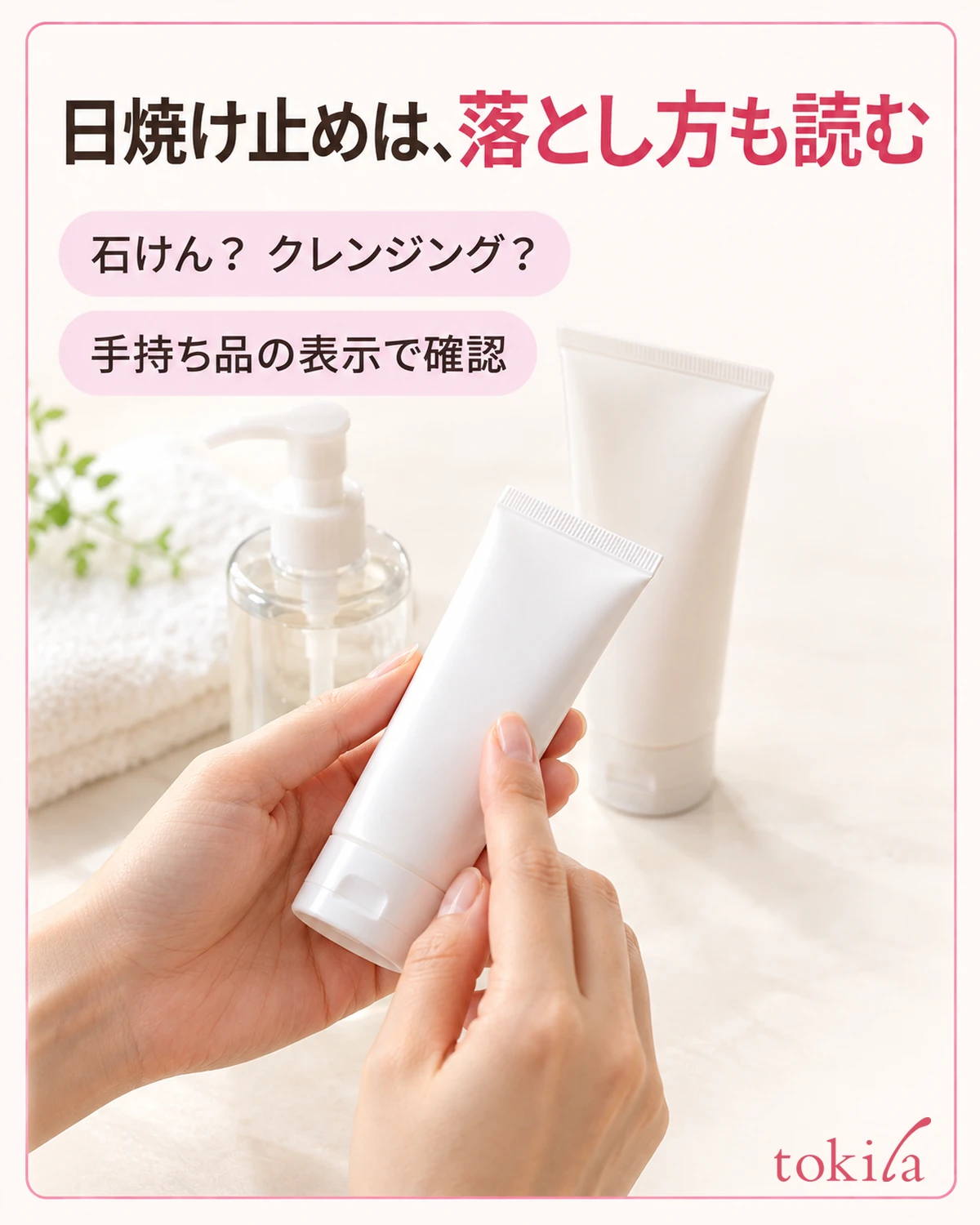
Look for “removal” or “directions” on the container or outer packaging, and read which cleanser is recommended: a facial cleanser, soap, makeup remover, or another type. If you switched sunscreens or used different products on your face and body, start by checking each one.
Even if the label says “removable with soap,” do not interpret that as rinsing with water alone. Use what the instructions call for, such as a cleanser suitable for the face or body. Some products explicitly state that warm water is enough, but do not apply those conditions to other sunscreens.
If a product instructs you to use makeup remover, choose that step even on a sunscreen-only day. Do not change the specified cleanser simply because the product is untinted, looks thin on the skin, or you were outside only briefly.
Read waterproof and water-resistance claims separately from the removal method. Some water-resistant products can be removed with facial cleanser, and a stick format does not always mean soap is enough. Rather than relying on the impression given by the format or numbers, look directly at the removal instructions for the product you used.
If the label has worn off or you cannot identify a product in a travel container, check its outer packaging or the instructions that came with it. Identify the product and confirm its handling instead of trying stronger cleansers one after another without knowing the removal method. Keeping a readable copy of the directions before discarding the container will help next time.
When checking removal instructions before buying, avoid confusing the product with a similarly named item or an older container. Even within the same range, directions may differ between a milk and a stick, or between tinted and untinted versions. Compare the size, format, and name on the container you actually have.
2. Separate layered makeup and the products used on your face and body
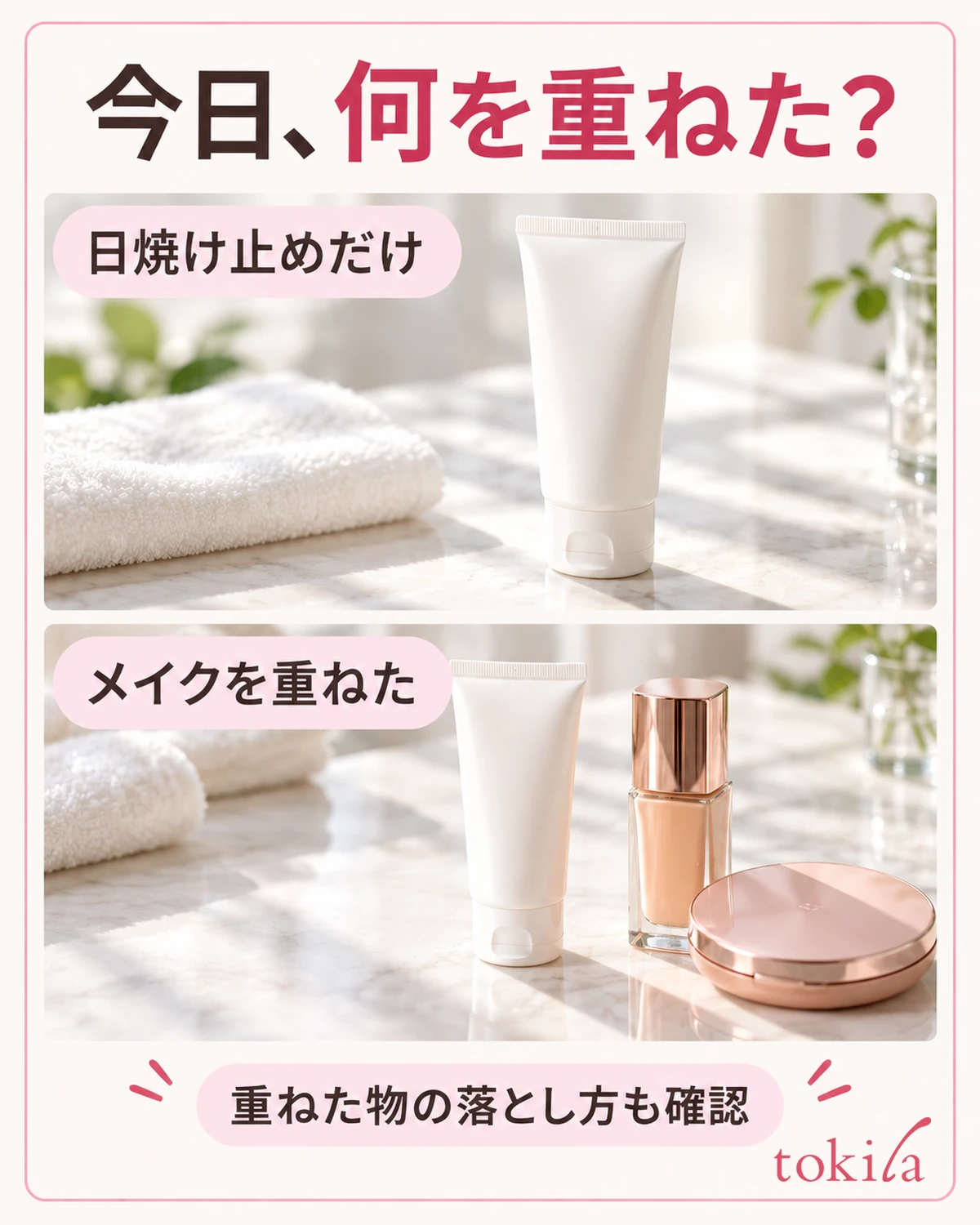
Recall whether you used sunscreen alone or added primer, foundation, face powder, or other products. Even if the sunscreen alone comes off with facial cleanser, the cosmetics applied over it may not come off with the same cleanser. Do not limit the removal task to the sunscreen alone.
Arrange the containers you used by the sink and check which specify makeup remover. On a day when you wore foundation, include its removal directions when choosing the makeup remover you need. Matching the instructions for what you applied and what removes it matters more than using a single brand throughout.
If you wore long-lasting makeup on your eyes or lips, check the removal method for those products separately. Do not assume that rubbing hard with a facial cleanser removes everything. If stubborn mascara remains,checking the mascara's instructions and how to work the remover into itcan also help.
If you used different sunscreens on your face, neck, arms, or other areas, organize them by area. Instructions for a single product may distinguish between areas, such as makeup remover for the face and body wash for the body. Read the permitted areas of use before extending a body cleanser to your face.
If you reapplied with a different sunscreen or added a cosmetic with UV protection, remember to include that product too. Do not plan your evening routine solely from the first sunscreen you used in the morning; check your carry-along pouch and gather the products you put on your skin that day. There is no need to mix several cleansers together in your hands.
For example, if your arms had only sunscreen while your face had foundation over the same sunscreen, the products to remove differ between your face and arms. Read the area and the products used as a pair instead of applying one washing method to your whole body. Do not treat areas without visible cosmetic color as though nothing was applied.
3. Follow the chosen cleanser's amount and wetting order
Once you choose a cleanser, check whether to apply it with dry hands and a dry face or to wet them first. Makeup removers and facial cleansers do not necessarily follow the same sequence. After cleaning your hands, dry them if instructed, or wet them as directed before dispensing the product.
Base the amount on the instructions for the cleanser you are using now. Less is not necessarily gentler, and trying to spread too little over a large area can encourage pressure. Conversely, reapplying sunscreen several times does not mean you should automatically multiply the amount of cleanser.
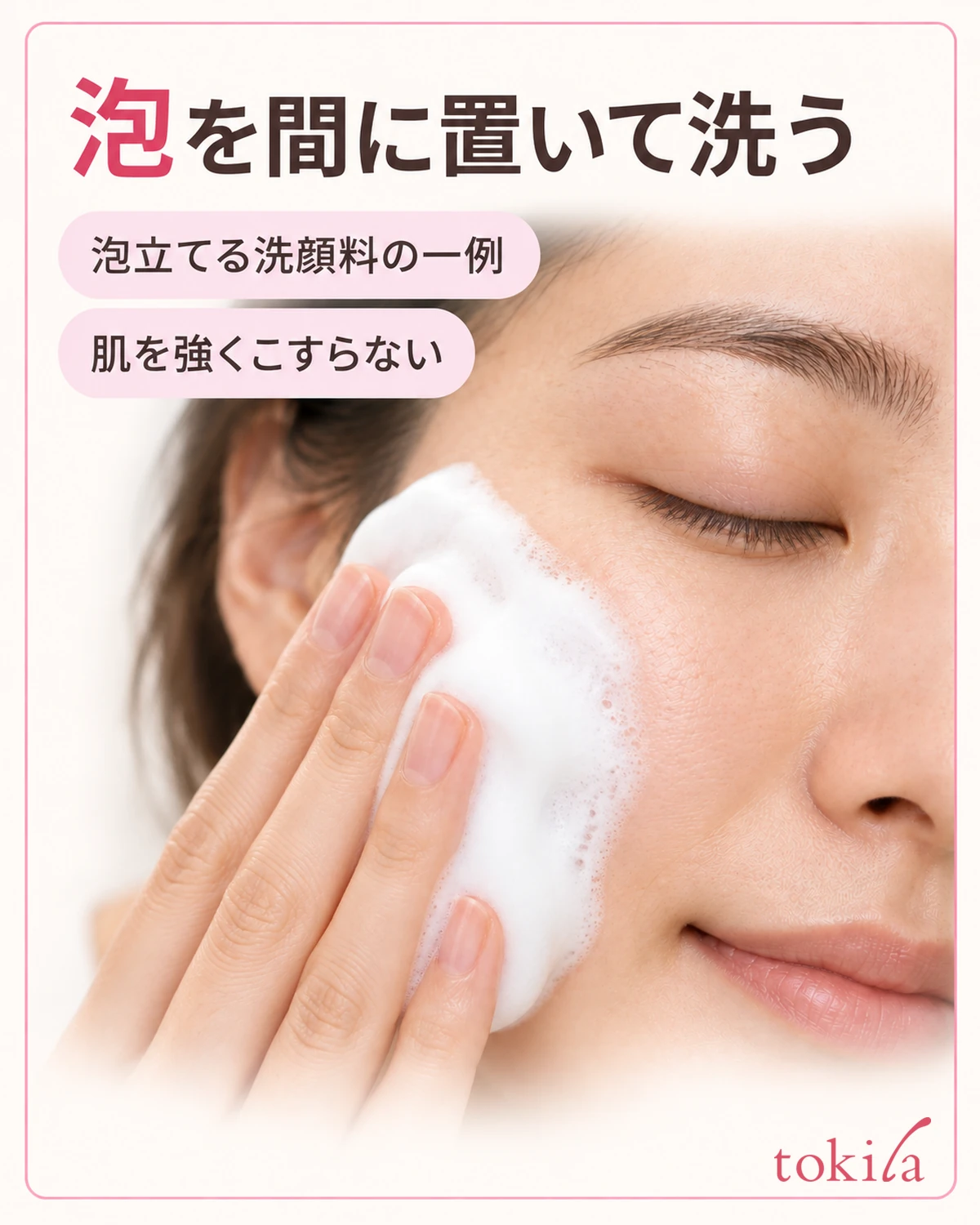
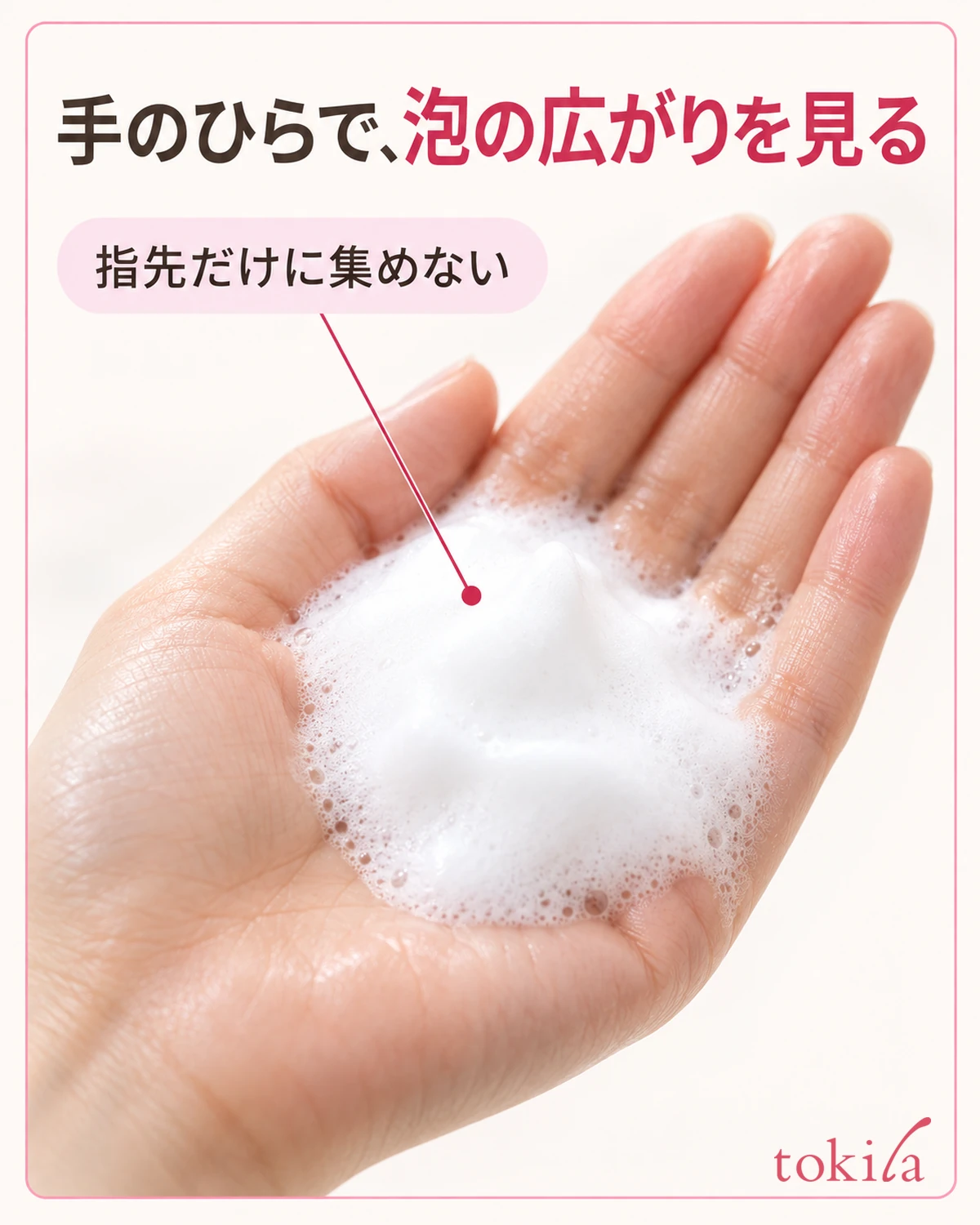
For a cleanser that requires lathering, make the foam in your hands before bringing it to your skin. Keep foam between your finger pads and skin, and spread it without pressing hard enough to move the skin. Follow the directions for a nonfoaming product, and do not add another cleanser to increase the foam.
Look beyond the foam's whiteness to see where it is gathered in your hands. Instead of repeatedly moving over a broad cheek with only a little foam on your fingertips, complete the preparation specified on the label first. You do not need to count the size or quantity of bubbles as evidence that sunscreen has been removed.
If using makeup remover, follow its instructions for working it into makeup and deciding when to rinse. Add water at the indicated stage if emulsification is instructed, but not every product requires continuing until it turns white. Do not keep rubbing your skin to force a color change.
Also follow the product's directions on whether facial cleansing is needed after makeup removal. Do not add a habitual extra step to a product that also cleanses, or skip washing when it is required. The key is to connect the sunscreen's removal directions with the finishing steps for your chosen cleanser.
If the steps are hard to remember, arrange containers in order and place face and body products with different removal methods slightly apart. Read the labels during preparation instead of searching for them with wet hands after you start washing. Once you know the required steps, finish that sequence without adding unnecessary cleansing.
4. Bring cleanser and water to the areas where you applied sunscreen, and rinse thoroughly

Pay attention not only to broad areas such as the cheeks and forehead, but also to the hairline, sides of the nose, and jawline where sunscreen was applied. Moving your bangs aside before washing makes it easier to find areas hidden beneath hair. If you applied sunscreen to your neck or around your ears, use a cleanser suitable for those areas.
Around the ears, distinguish areas covered by hair from the outer skin. There is no need to put cleanser or water into the ears to check them. Gently move hair aside, handle the outer areas where sunscreen was applied, and avoid pulling hard or digging in with your nails.

Rinse by bringing water or lukewarm water to the areas where you spread the cleanser. Do not stop abruptly just because the foam is no longer visible; rinse along the hairline, beneath the chin, and other areas in turn. Instead of directing a strong, hot shower onto your face, choose a way to deliver water that fits your product's instructions.
If your collar covers your neck while washing, first consider whether the clothing can get wet and arrange things so water reaches your skin. Rather than awkwardly rubbing only your neck while dressed, plan a suitable place and routine, such as removal during bathing. Do not repurpose skin cleanser directly as a clothing stain remover.
If you are concerned about residue, check whether water reached the areas already covered with cleanser before dispensing more. Do not set a universal number of rinses; rinse thoroughly according to the product's directions. For preparing the hairline,how to move hair aside and identify the areas to rinsemay also help.
5. If you are unsure it came off, review the steps before rubbing more
Do not judge sunscreen residue only by a moisturized feeling or the presence or absence of fragrance after washing. Whether water beads up or your fingers feel a squeak is not, by itself, proof of complete removal either. Avoid rubbing hard with a towel or scraping the skin with your nails to check.
If something looks white or you notice an unusual deposit, return to the removal label and the steps you actually followed. Review the cleanser used, wetting order, amount, and areas covered in turn. If the product specifies additional washing, follow those conditions.
Do not keep switching to apparently stronger cleansers or add a long massage while unsure whether removal is complete. If removal remains difficult despite following the directions, note the sunscreen, products layered over it, and cleanser, then confirm the handling for that combination.
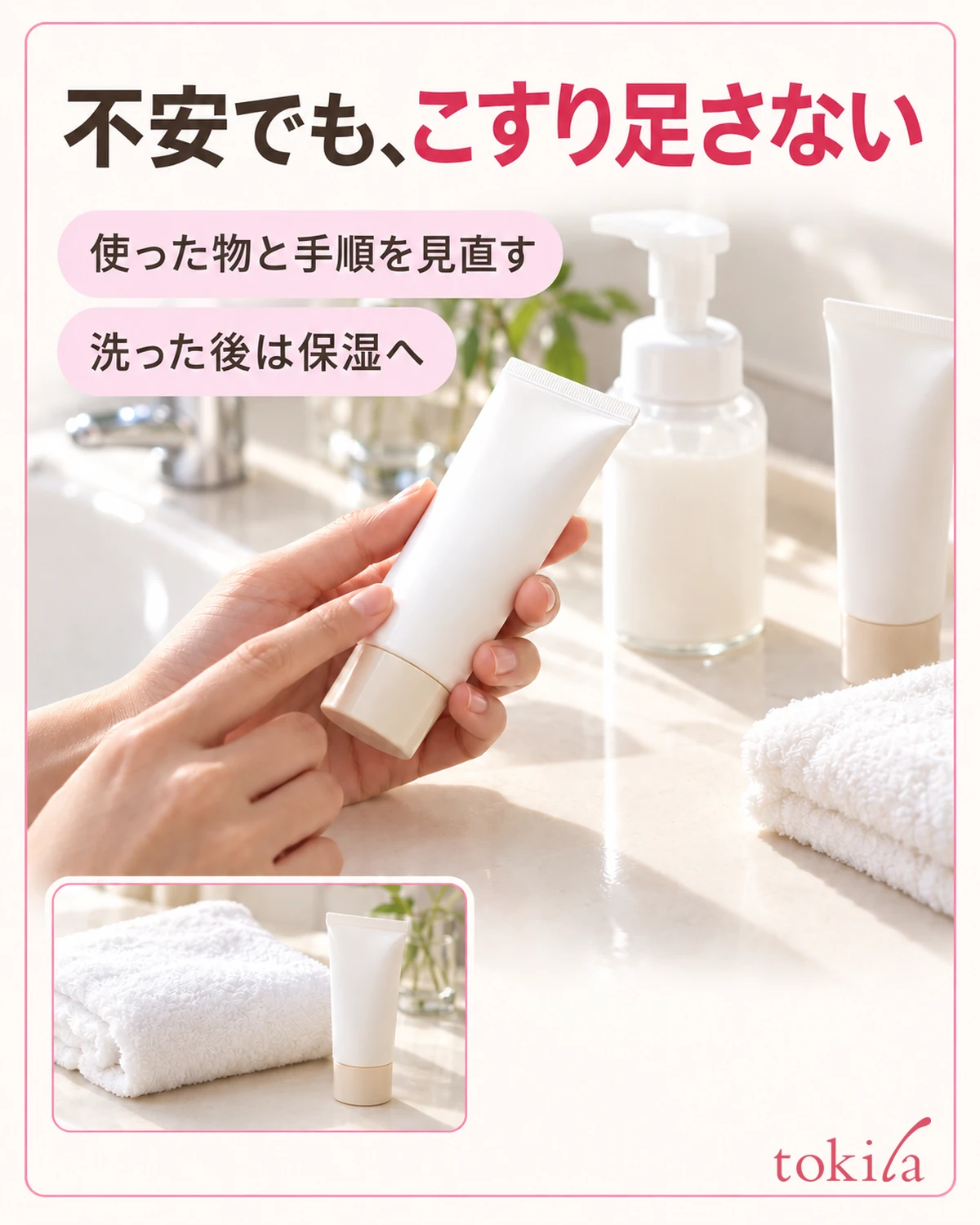
After rinsing, gently press a clean towel against the skin to remove water, then continue with your usual moisturizing routine. If tightness bothers you,reviewing your cleansing conditions and moisturizing routinecan help you distinguish whether it appeared immediately after washing or after drying. If redness, pain, or strong irritation occurs, do not persist by adjusting the washing technique; follow the precautions for use.
When choosing your next sunscreen, consider its removal method too. Knowing which cleanser you can use at home and which makeup you usually layer over it makes it easier to plan the evening routine. Separate the products you used today, read the labels, and wash as directed. Start with the step that left you unsure and work through them one by one.